
Search
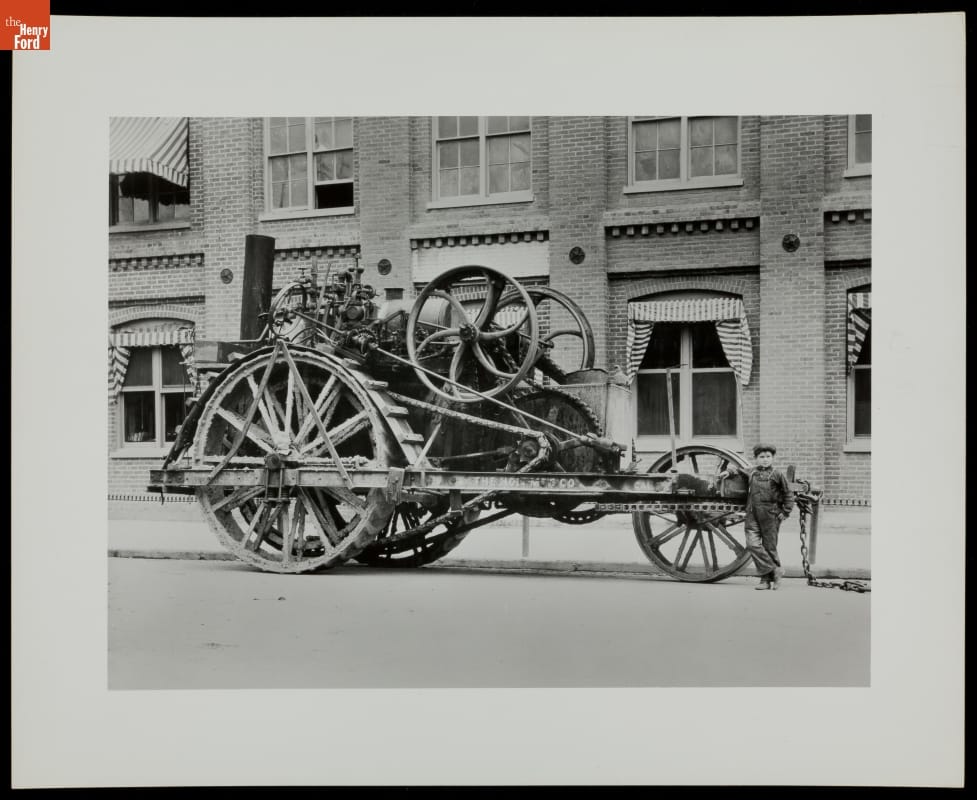
- Young Boy Standing in Front of Holt Steam Traction Engine, circa 1890 - Inventor and entrepreneur Benjamin Holt envisioned a mechanical alternative to horse-drawn machinery. He built an experimental steam traction engine in 1890 (probably the model pictured here), continued to improve his designs, and incorporated the Holt Manufacturing Company two years later. Holt's company became an industry leader and eventually evolved into the hugely successful Caterpillar manufacturing corporation.
- circa 1890
- Collections - Artifact
Young Boy Standing in Front of Holt Steam Traction Engine, circa 1890
Inventor and entrepreneur Benjamin Holt envisioned a mechanical alternative to horse-drawn machinery. He built an experimental steam traction engine in 1890 (probably the model pictured here), continued to improve his designs, and incorporated the Holt Manufacturing Company two years later. Holt's company became an industry leader and eventually evolved into the hugely successful Caterpillar manufacturing corporation.
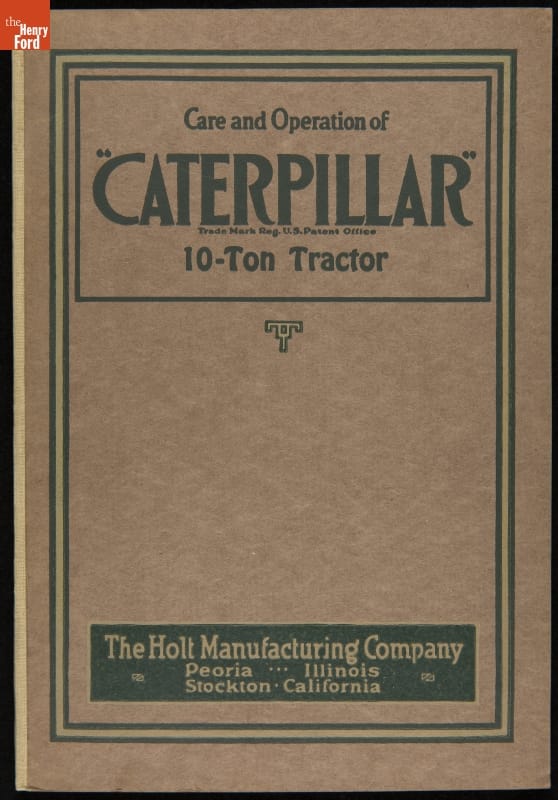
- "Care and Operation of Caterpillar 10-Ton Tractor," 1920 -
- 1920
- Collections - Artifact
"Care and Operation of Caterpillar 10-Ton Tractor," 1920
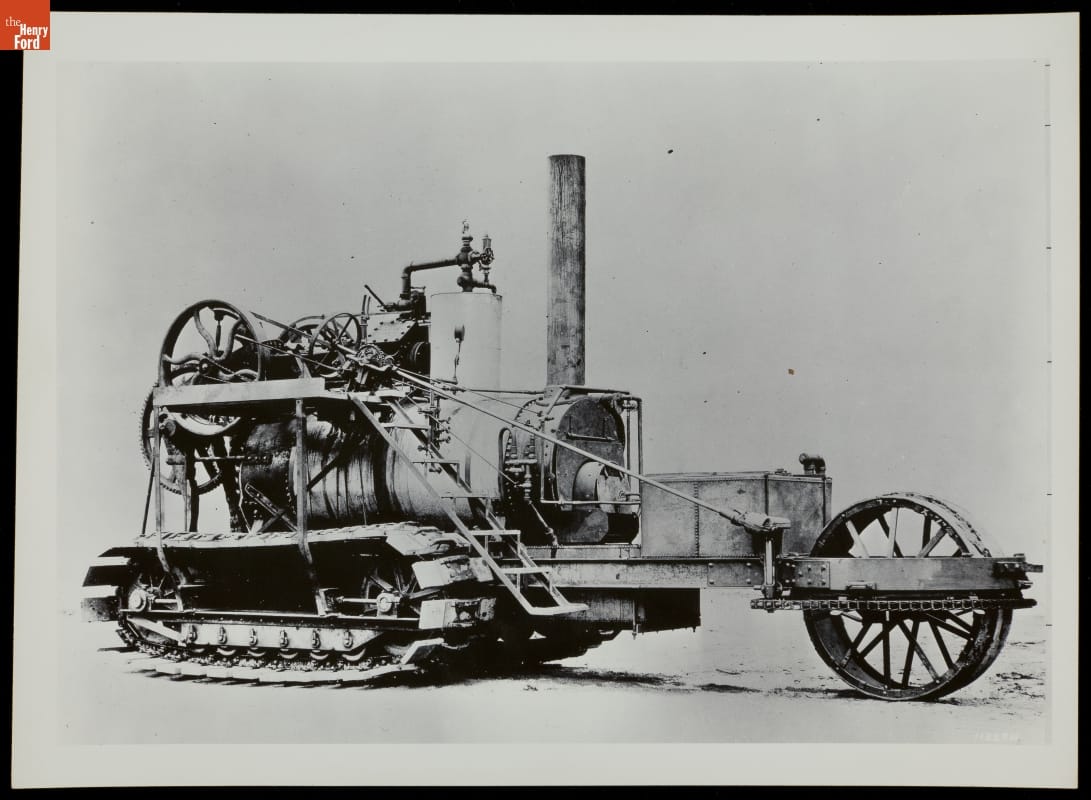
- View of Early Holt Steam Caterpillar Tractor, circa 1900 - American inventor and entrepreneur Benjamin Holt envisioned a practical mechanical alternative to horse-drawn machinery. He designed a continuous track propulsion system - seen on this early model - for the steam traction engine. Holt's company, driven by these innovative "caterpillar" treads, became an industry leader and eventually evolved into the hugely successful Caterpillar manufacturing corporation.
- circa 1900
- Collections - Artifact
View of Early Holt Steam Caterpillar Tractor, circa 1900
American inventor and entrepreneur Benjamin Holt envisioned a practical mechanical alternative to horse-drawn machinery. He designed a continuous track propulsion system - seen on this early model - for the steam traction engine. Holt's company, driven by these innovative "caterpillar" treads, became an industry leader and eventually evolved into the hugely successful Caterpillar manufacturing corporation.
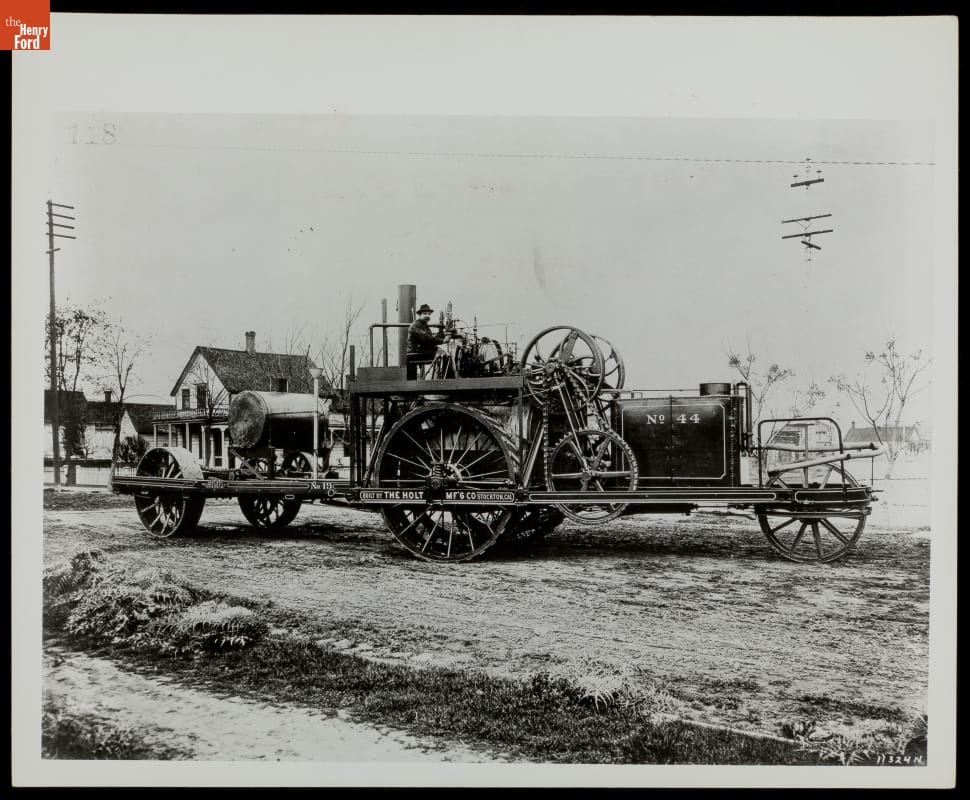
- Man Sitting at Controls of a Modified Holt Traction Steam Engine, circa 1900 - Inventor and entrepreneur Benjamin Holt envisioned a mechanical alternative to horse-drawn machinery. He built an experimental steam traction engine in 1890, continued to improve his designs, and incorporated the Holt Manufacturing Company two years later. The man pictured here operates an early Holt model. Holt's company became an industry leader and eventually evolved into the hugely successful Caterpillar manufacturing corporation.
- circa 1900
- Collections - Artifact
Man Sitting at Controls of a Modified Holt Traction Steam Engine, circa 1900
Inventor and entrepreneur Benjamin Holt envisioned a mechanical alternative to horse-drawn machinery. He built an experimental steam traction engine in 1890, continued to improve his designs, and incorporated the Holt Manufacturing Company two years later. The man pictured here operates an early Holt model. Holt's company became an industry leader and eventually evolved into the hugely successful Caterpillar manufacturing corporation.
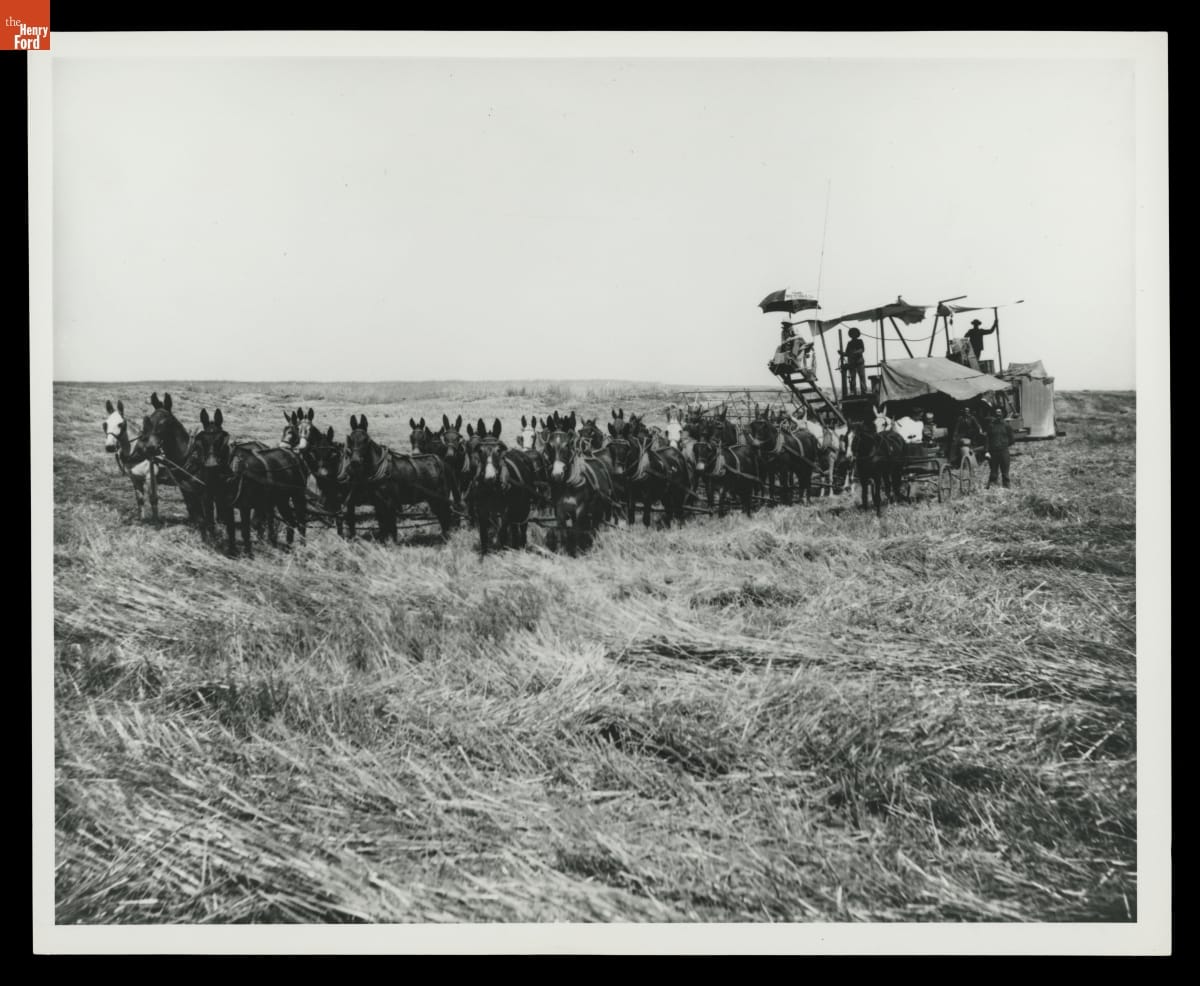
- Holt Side-Hill Combine in the Palouse Hills, Washington, circa 1907 - It took hundreds of years to perfect machinery that could combine the three major steps of harvesting grain: reaping, or cutting the crop; threshing to loosen the grain; and separating the grain from the rest of the plant. Early "combines" like this one were unwieldy and could only be used on very large farms. More compact and versatile self-propelled combines became available in the 1930s.
- circa 1907
- Collections - Artifact
Holt Side-Hill Combine in the Palouse Hills, Washington, circa 1907
It took hundreds of years to perfect machinery that could combine the three major steps of harvesting grain: reaping, or cutting the crop; threshing to loosen the grain; and separating the grain from the rest of the plant. Early "combines" like this one were unwieldy and could only be used on very large farms. More compact and versatile self-propelled combines became available in the 1930s.