
Search
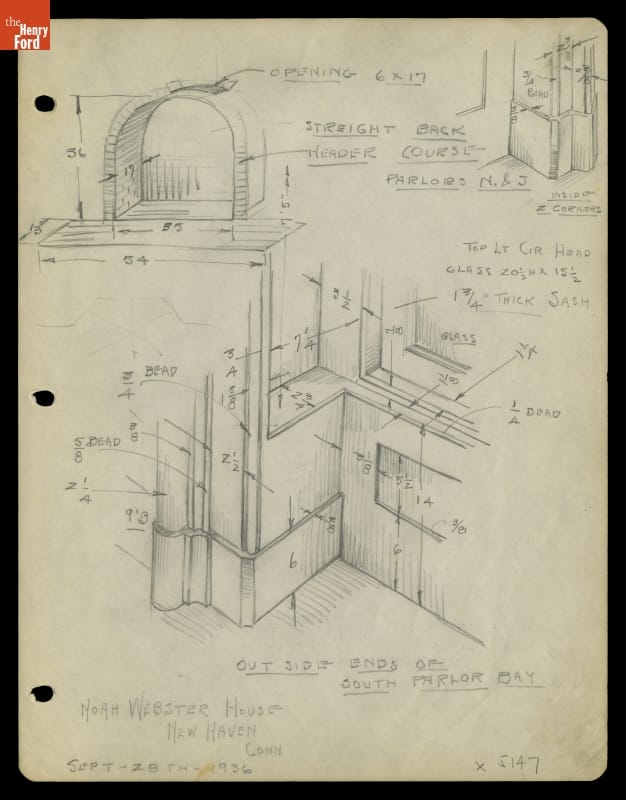
- Drawing, Outside Ends of South Parlor Bay, Noah Webster House, New Haven, Connecticut, September 28, 1936 -
- September 28, 1936
- Collections - Artifact
Drawing, Outside Ends of South Parlor Bay, Noah Webster House, New Haven, Connecticut, September 28, 1936
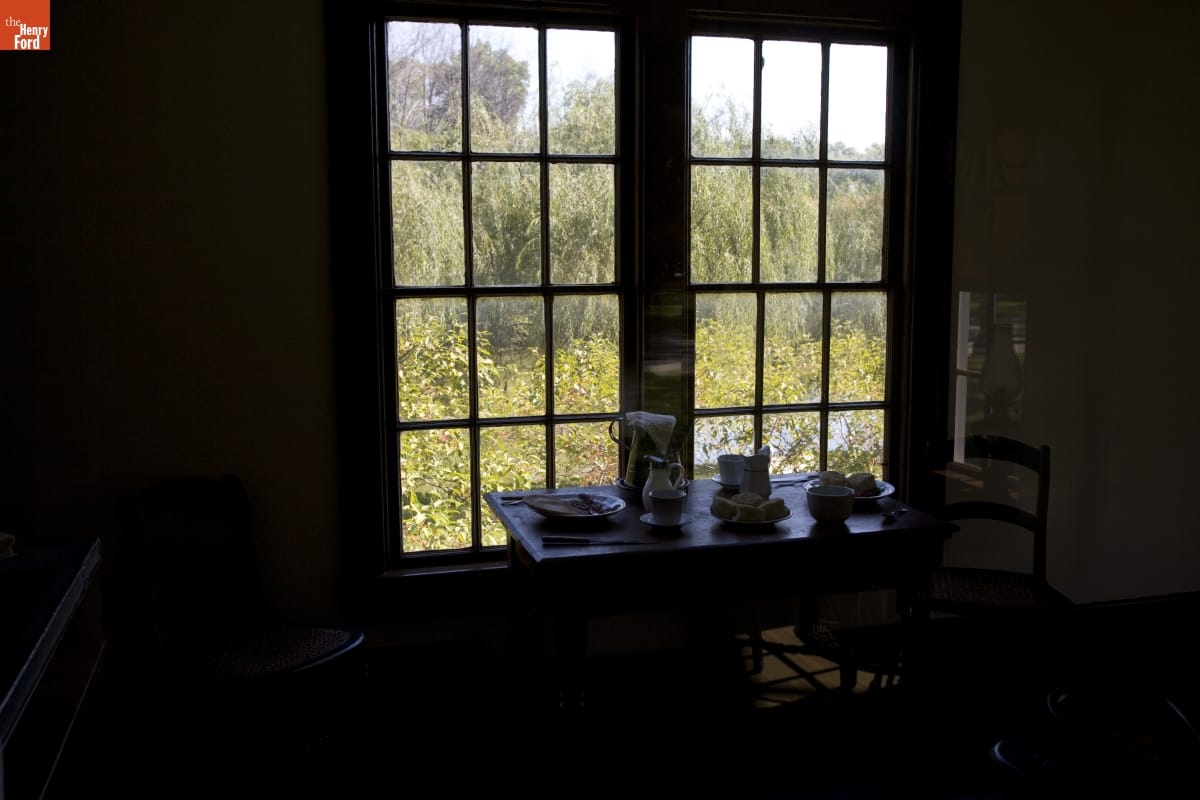
- Chapman Family Home in Greenfield Village, September 2007 - During the 1870s, John B. Chapman and his wife Susie lived in a simple farmhouse. Chapman taught several terms in the one-room schools of his southeast Michigan rural community. Young Henry Ford was one of his pupils. Ford later purchased the home for his outdoor museum in Dearborn, Michigan. This image shows the building's interior as it looked in 2007.
- September 01, 2007
- Collections - Artifact
Chapman Family Home in Greenfield Village, September 2007
During the 1870s, John B. Chapman and his wife Susie lived in a simple farmhouse. Chapman taught several terms in the one-room schools of his southeast Michigan rural community. Young Henry Ford was one of his pupils. Ford later purchased the home for his outdoor museum in Dearborn, Michigan. This image shows the building's interior as it looked in 2007.
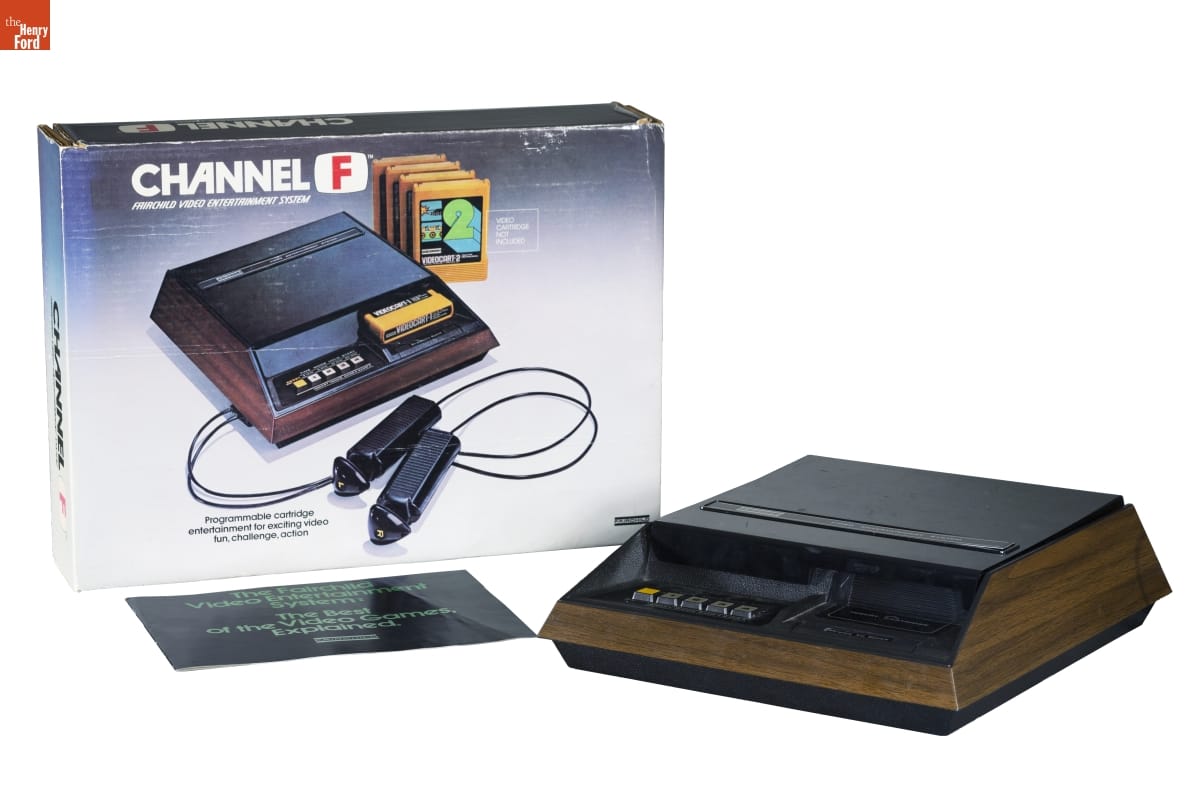
- Fairchild Channel F Video Game System, 1976 - The Fairchild Channel F Video Entertainment System is the first home video game console to include interchangeable cartridges. Jerry Lawson, Fairchild's head of engineering and hardware, co-invented the cartridge, which continues to be adapted into systems today. Lawson was one of the first Black engineers to work in Silicon Valley and was an early member of the Homebrew Computer Club.
- 1976
- Collections - Artifact
Fairchild Channel F Video Game System, 1976
The Fairchild Channel F Video Entertainment System is the first home video game console to include interchangeable cartridges. Jerry Lawson, Fairchild's head of engineering and hardware, co-invented the cartridge, which continues to be adapted into systems today. Lawson was one of the first Black engineers to work in Silicon Valley and was an early member of the Homebrew Computer Club.
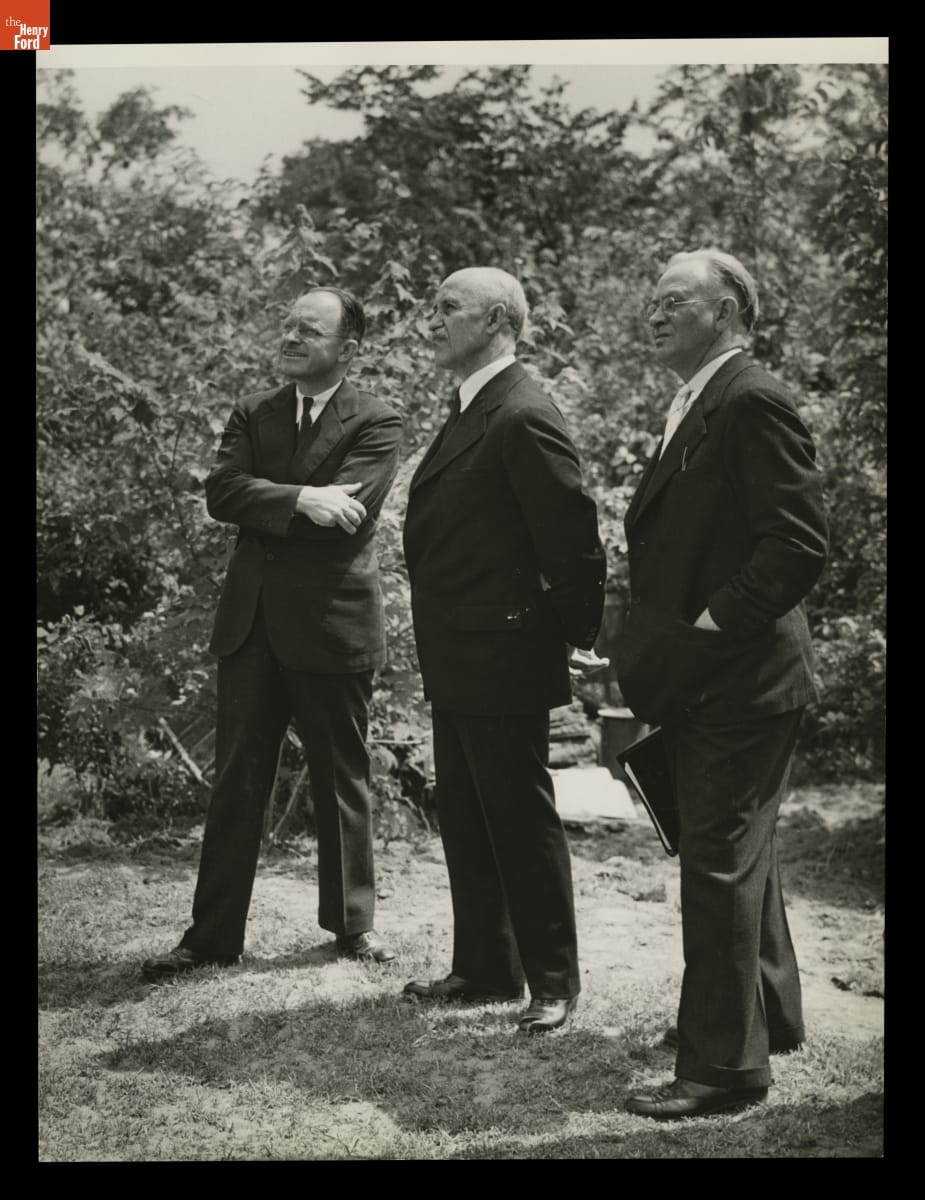
- Fred Black, Orville Wright, and Edward Cutler during Reconstruction of Wright Home in Greenfield Village, June 1937 - Fred Black headed Ford Motor Company's advertising department. As a pilot and aviation enthusiast, Black coordinated relocation of Wright Cycle Shop and the Wright Home from Dayton, Ohio, to Henry Ford's Greenfield Village in Dearborn, Michigan. Architect Edward Cutler oversaw reassembly of the buildings. Orville Wright shared his own unique insights to ensure the project's accuracy.
- June 26, 1937
- Collections - Artifact
Fred Black, Orville Wright, and Edward Cutler during Reconstruction of Wright Home in Greenfield Village, June 1937
Fred Black headed Ford Motor Company's advertising department. As a pilot and aviation enthusiast, Black coordinated relocation of Wright Cycle Shop and the Wright Home from Dayton, Ohio, to Henry Ford's Greenfield Village in Dearborn, Michigan. Architect Edward Cutler oversaw reassembly of the buildings. Orville Wright shared his own unique insights to ensure the project's accuracy.
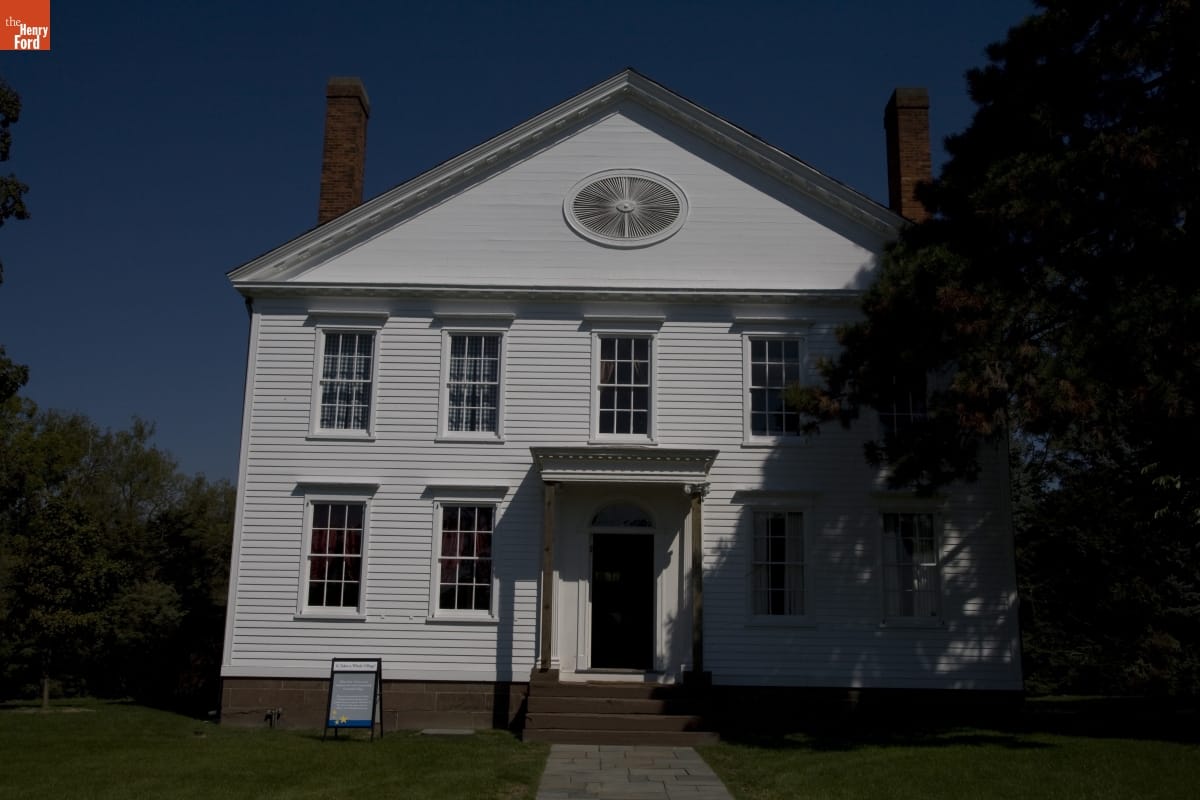
- Noah Webster Home in Greenfield Village, September 2007 - Henry Ford admired textbook pioneer and spelling reformer Noah Webster. Ford purchased Webster's New Haven, Connecticut, home and moved it to Greenfield Village in 1936 to join a growing list of historic buildings in Ford's outdoor museum in Dearborn, Michigan. This image shows the house's exterior in 2007.
- September 01, 2007
- Collections - Artifact
Noah Webster Home in Greenfield Village, September 2007
Henry Ford admired textbook pioneer and spelling reformer Noah Webster. Ford purchased Webster's New Haven, Connecticut, home and moved it to Greenfield Village in 1936 to join a growing list of historic buildings in Ford's outdoor museum in Dearborn, Michigan. This image shows the house's exterior in 2007.
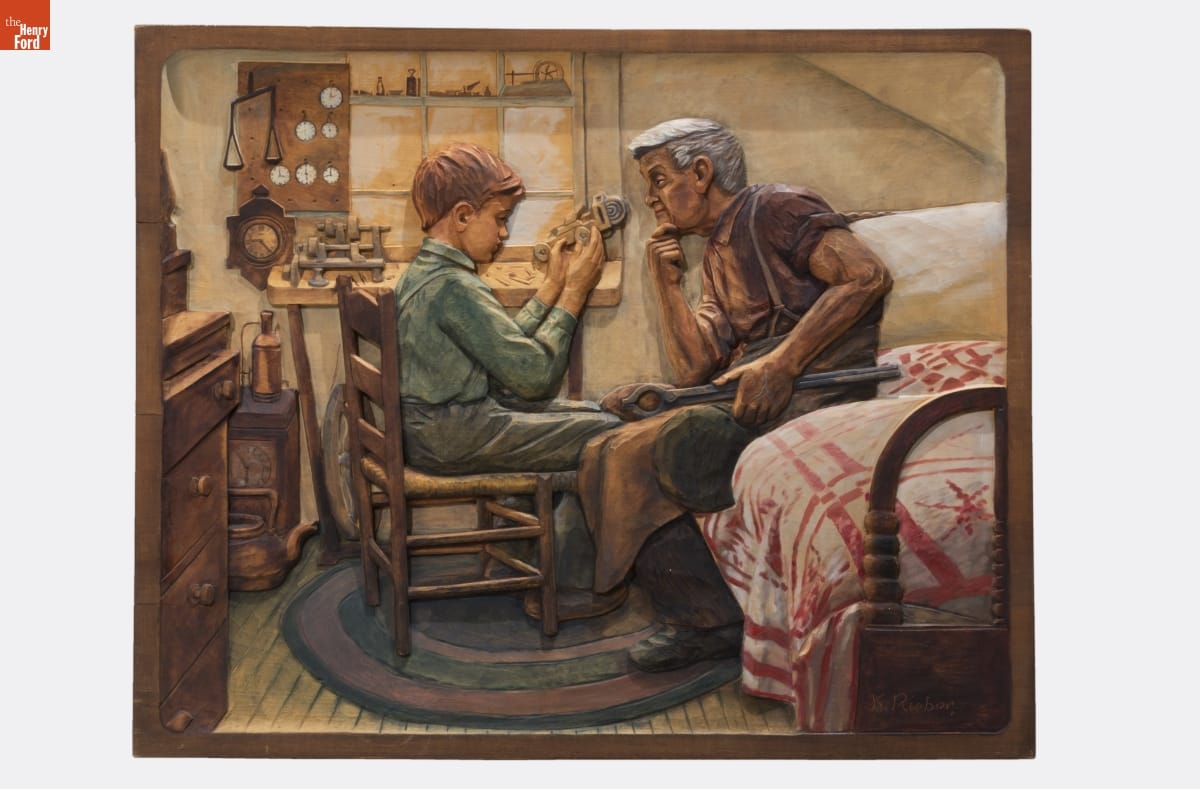
- Carving of Henry Ford, Done in Commemoration of Ford Motor Company's 50th Anniversary, 1954 -
- 1954
- Collections - Artifact
Carving of Henry Ford, Done in Commemoration of Ford Motor Company's 50th Anniversary, 1954
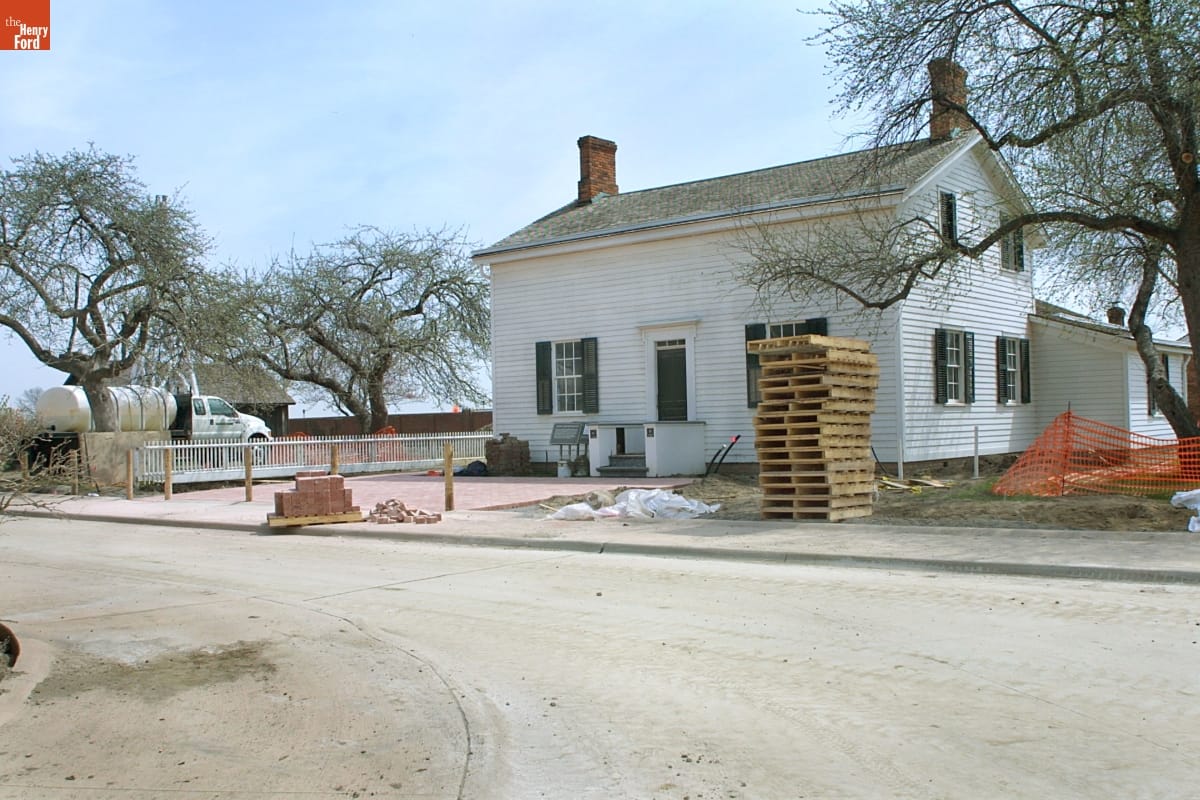
- Ford Home during Greenfield Village Restoration Project, April 2003 - By 2000, Greenfield Village began showing its age. Buildings and crumbling infrastructure desperately needed repair. Museum planners envisioned a revitalized village. They created themed "Historic Districts" by relocating and refurbishing the historic structures. Workers repaved streets and upgraded water, sewer, electric, and gas lines. In June 2003, nine months after restoration began, visitors passed through a new entrance into a reborn Greenfield Village.
- April 01, 2003
- Collections - Artifact
Ford Home during Greenfield Village Restoration Project, April 2003
By 2000, Greenfield Village began showing its age. Buildings and crumbling infrastructure desperately needed repair. Museum planners envisioned a revitalized village. They created themed "Historic Districts" by relocating and refurbishing the historic structures. Workers repaved streets and upgraded water, sewer, electric, and gas lines. In June 2003, nine months after restoration began, visitors passed through a new entrance into a reborn Greenfield Village.
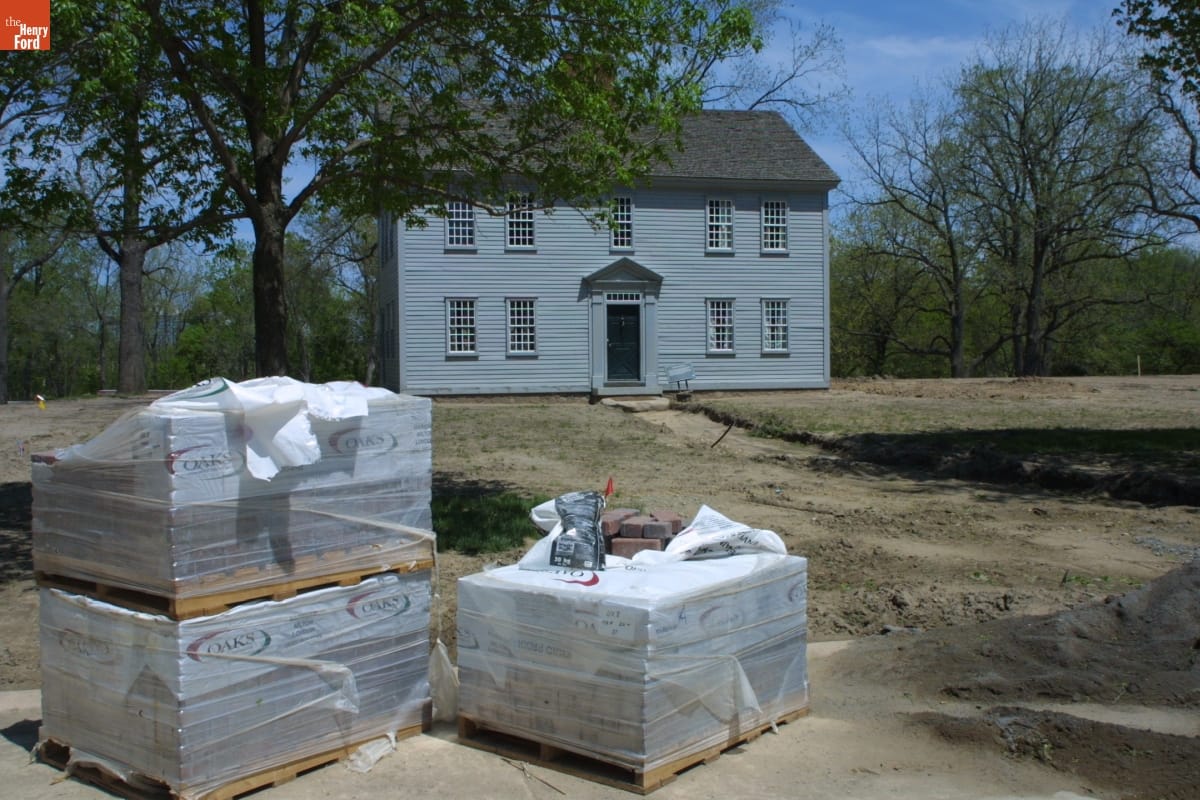
- Giddings Family Home during the Greenfield Village Restoration Project, May 2003 - By 2000, Greenfield Village began showing its age. Buildings and crumbling infrastructure desperately needed repair. Museum planners envisioned a revitalized village. They created themed "Historic Districts" by relocating and refurbishing the historic structures. Workers repaved streets and upgraded water, sewer, electric, and gas lines. In June 2003, nine months after restoration began, visitors passed through a new entrance into a reborn Greenfield Village.
- May 01, 2003
- Collections - Artifact
Giddings Family Home during the Greenfield Village Restoration Project, May 2003
By 2000, Greenfield Village began showing its age. Buildings and crumbling infrastructure desperately needed repair. Museum planners envisioned a revitalized village. They created themed "Historic Districts" by relocating and refurbishing the historic structures. Workers repaved streets and upgraded water, sewer, electric, and gas lines. In June 2003, nine months after restoration began, visitors passed through a new entrance into a reborn Greenfield Village.
- Layout Map of Ford Road and Greenfield Road, Dearborn, Michigan, 1920-1922 -
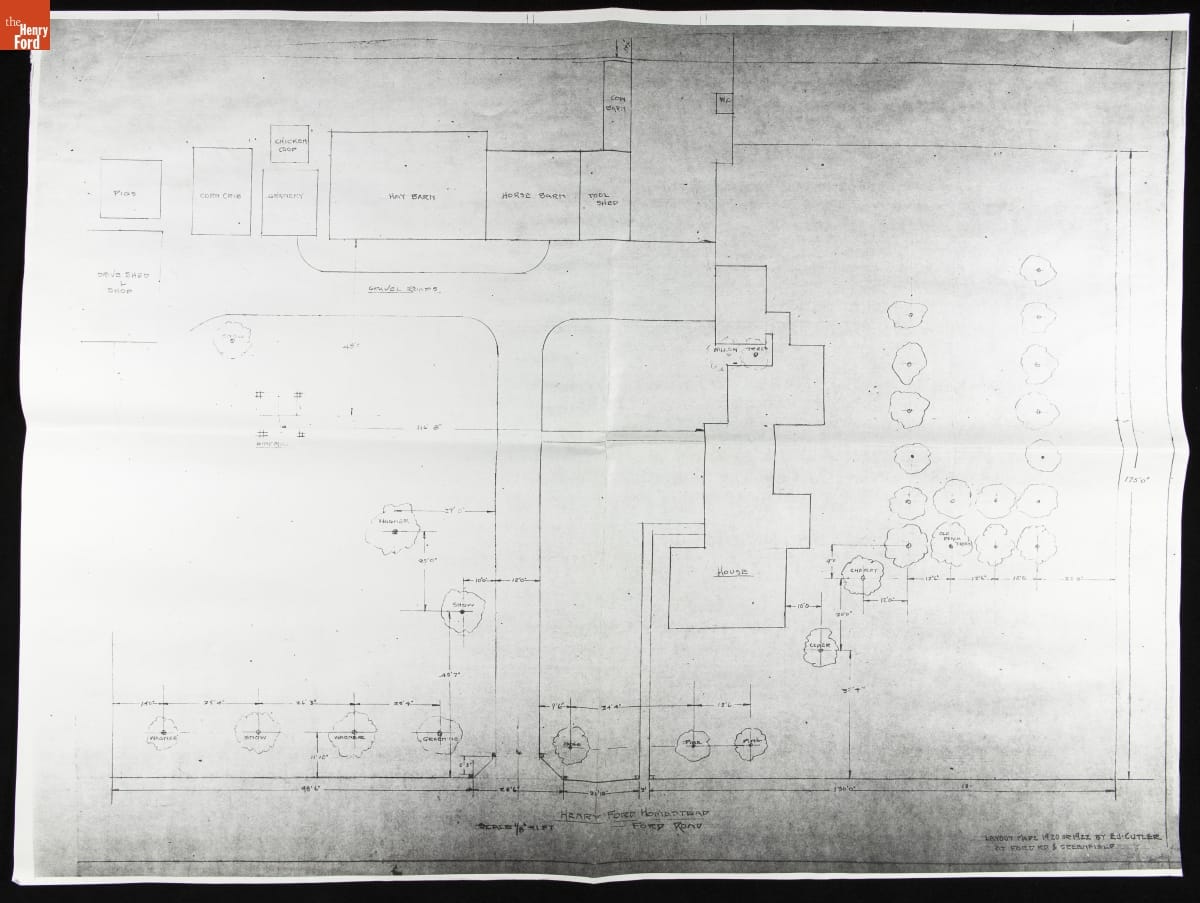
- 1920-1922
- Collections - Artifact
Layout Map of Ford Road and Greenfield Road, Dearborn, Michigan, 1920-1922
- Letter from Richard Trotter to Edsel Ford, Offering to Sell Drawings, March 20, 1924 -
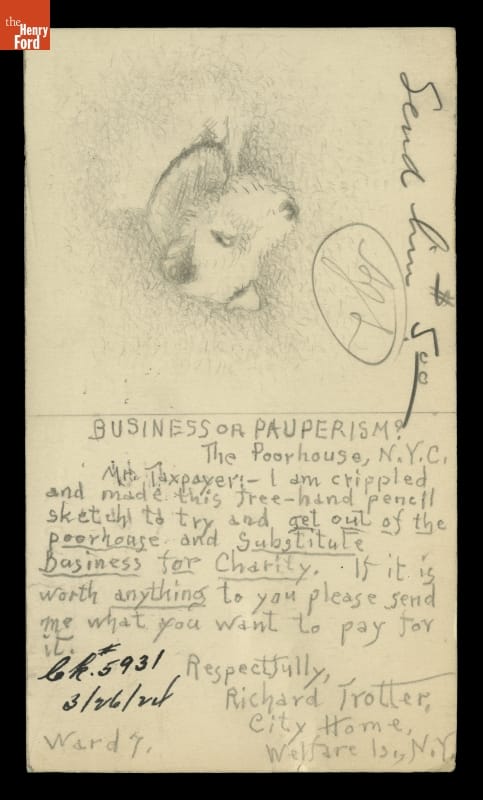
- March 20, 1924
- Collections - Artifact
Letter from Richard Trotter to Edsel Ford, Offering to Sell Drawings, March 20, 1924