
Search
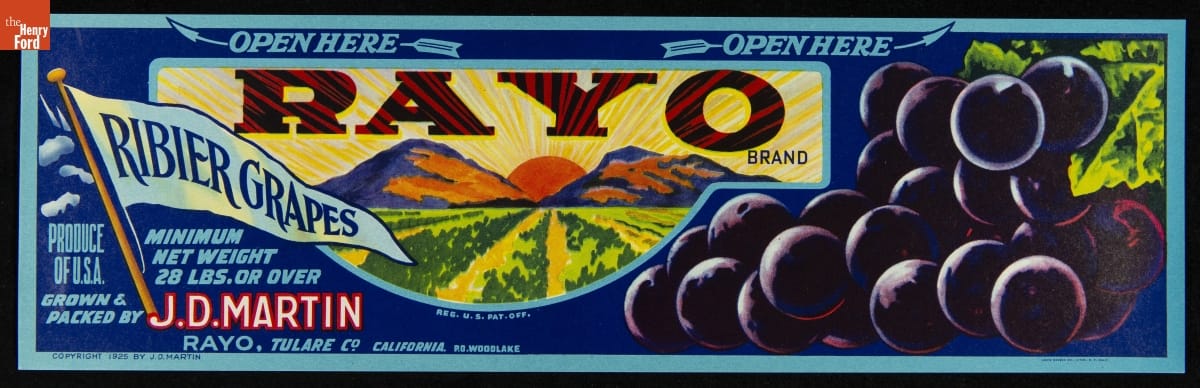
- Crate Label, "Rayo Brand Ribier Grapes," 1925 - In 1869, the transcontinental railroad opened eastern markets to the West Coast produce industry for the first time. As produce companies shipped crates of fruits and vegetables across the country, they needed a way to distinguish their goods from their competitors'. Colorful, eye-catching labels, like this one for Rayo Brand Ribier Grapes, were created to attract grocers purchasing goods from wholesale markets.
- 1925
- Collections - Artifact
Crate Label, "Rayo Brand Ribier Grapes," 1925
In 1869, the transcontinental railroad opened eastern markets to the West Coast produce industry for the first time. As produce companies shipped crates of fruits and vegetables across the country, they needed a way to distinguish their goods from their competitors'. Colorful, eye-catching labels, like this one for Rayo Brand Ribier Grapes, were created to attract grocers purchasing goods from wholesale markets.
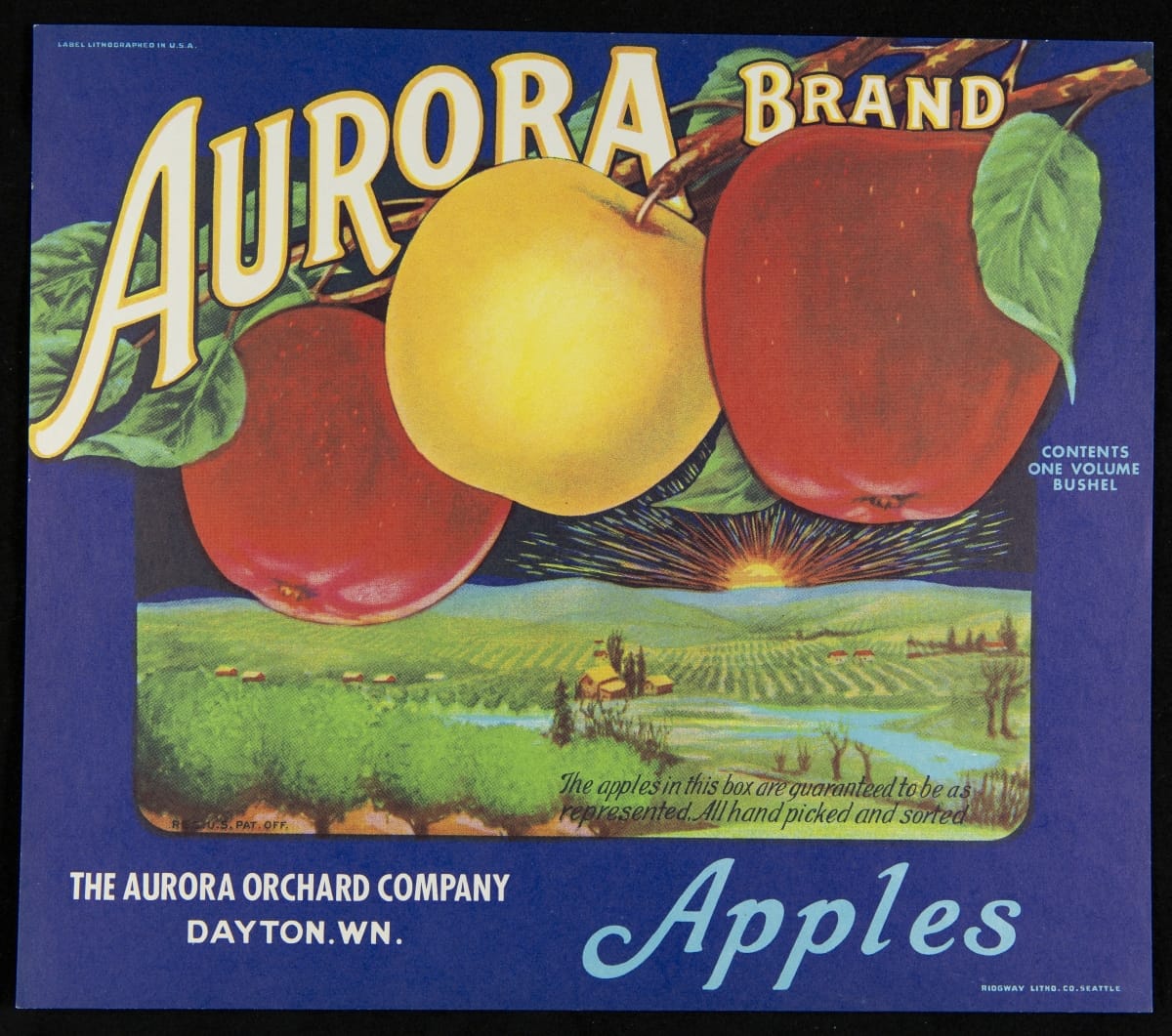
- Crate Label, "Aurora Brand Apples," circa 1940 - In 1869, the transcontinental railroad opened eastern markets to the West Coast produce industry for the first time. As produce companies shipped crates of fruits and vegetables across the country, they needed a way to distinguish their goods from their competitors'. Colorful, eye-catching labels, like this one for Aurora Brand Apples, were created to attract grocers purchasing goods from wholesale markets.
- circa 1940
- Collections - Artifact
Crate Label, "Aurora Brand Apples," circa 1940
In 1869, the transcontinental railroad opened eastern markets to the West Coast produce industry for the first time. As produce companies shipped crates of fruits and vegetables across the country, they needed a way to distinguish their goods from their competitors'. Colorful, eye-catching labels, like this one for Aurora Brand Apples, were created to attract grocers purchasing goods from wholesale markets.
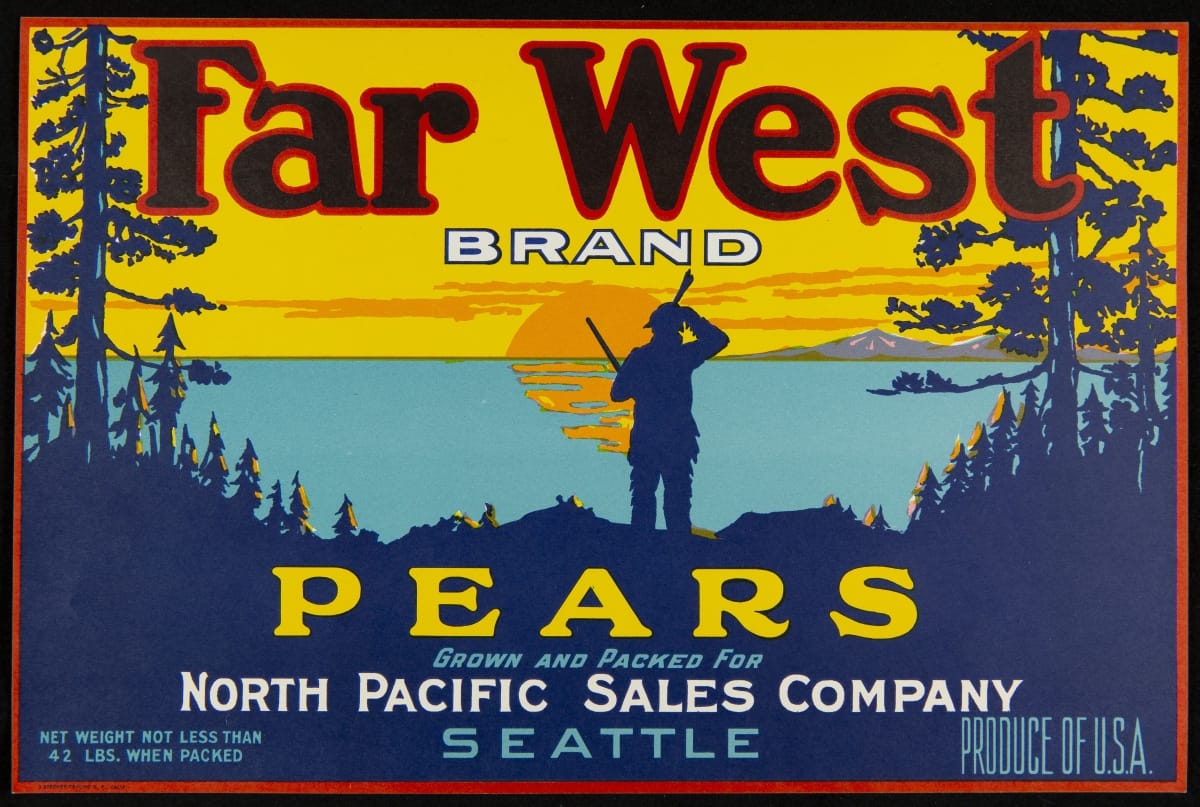
- Crate Label, "Far West Brand Pears," circa 1930 - In 1869, the transcontinental railroad opened eastern markets to the West Coast produce industry for the first time. As produce companies shipped crates of fruits and vegetables across the country, they needed a way to distinguish their goods from their competitors'. Colorful, eye-catching labels, like this one for Far West Brand Pears, were created to attract grocers purchasing goods from wholesale markets.
- circa 1930
- Collections - Artifact
Crate Label, "Far West Brand Pears," circa 1930
In 1869, the transcontinental railroad opened eastern markets to the West Coast produce industry for the first time. As produce companies shipped crates of fruits and vegetables across the country, they needed a way to distinguish their goods from their competitors'. Colorful, eye-catching labels, like this one for Far West Brand Pears, were created to attract grocers purchasing goods from wholesale markets.
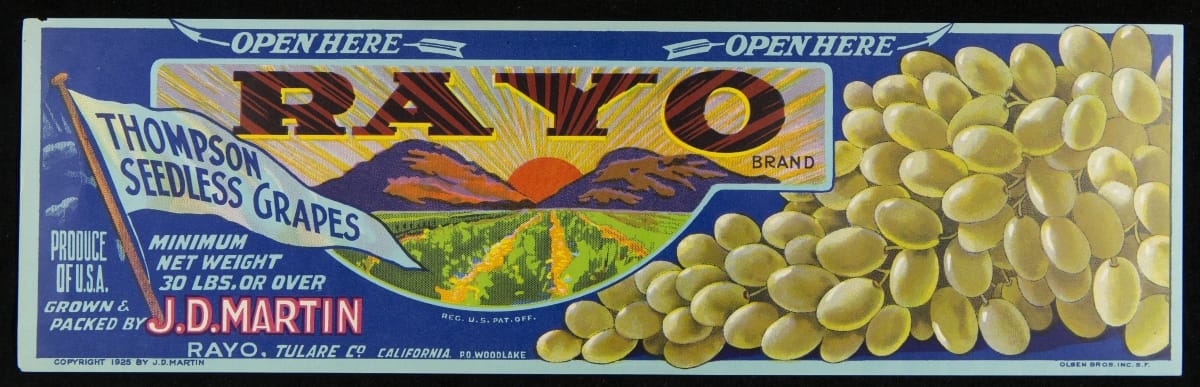
- Crate Label, "Rayo Brand Thompson Seedless Grapes," 1925 - In 1869, the transcontinental railroad opened eastern markets to the West Coast produce industry for the first time. As produce companies shipped crates of fruits and vegetables across the country, they needed a way to distinguish their goods from their competitors'. Colorful, eye-catching labels, like this one for Rayo Brand Thompson Seedless Grapes, were created to attract grocers purchasing goods from wholesale markets.
- 1925
- Collections - Artifact
Crate Label, "Rayo Brand Thompson Seedless Grapes," 1925
In 1869, the transcontinental railroad opened eastern markets to the West Coast produce industry for the first time. As produce companies shipped crates of fruits and vegetables across the country, they needed a way to distinguish their goods from their competitors'. Colorful, eye-catching labels, like this one for Rayo Brand Thompson Seedless Grapes, were created to attract grocers purchasing goods from wholesale markets.