
Search
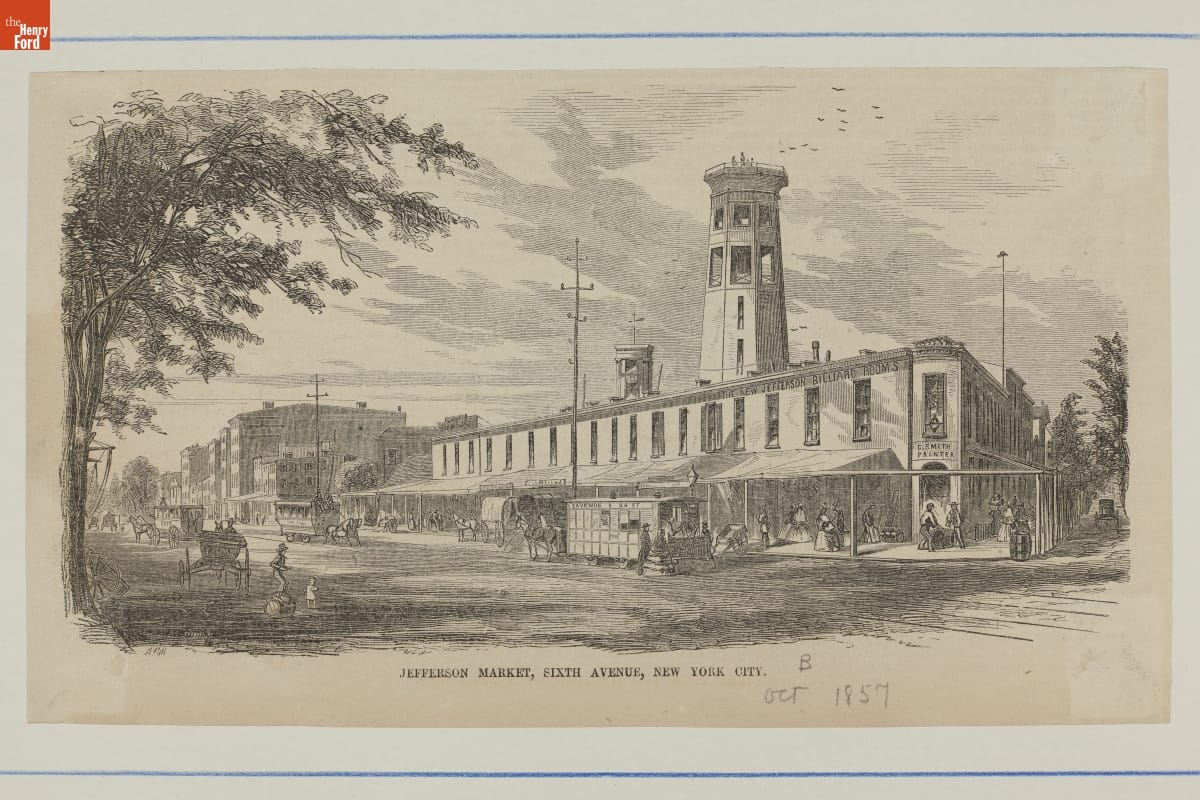
- "Jefferson Market, Sixth Avenue, New York City," 1857 - In the mid-1800s, horse-drawn streetcars provided a convenient and affordable way to get around a growing city. These streetcars traveled the main urban thoroughfares and took passengers to their workplaces, local shops and businesses, parks and other destinations. In this 1857 print, riders get on and off a streetcar at New York's Jefferson Market, while another streetcar approaches from down the street.
- 1857
- Collections - Artifact
"Jefferson Market, Sixth Avenue, New York City," 1857
In the mid-1800s, horse-drawn streetcars provided a convenient and affordable way to get around a growing city. These streetcars traveled the main urban thoroughfares and took passengers to their workplaces, local shops and businesses, parks and other destinations. In this 1857 print, riders get on and off a streetcar at New York's Jefferson Market, while another streetcar approaches from down the street.
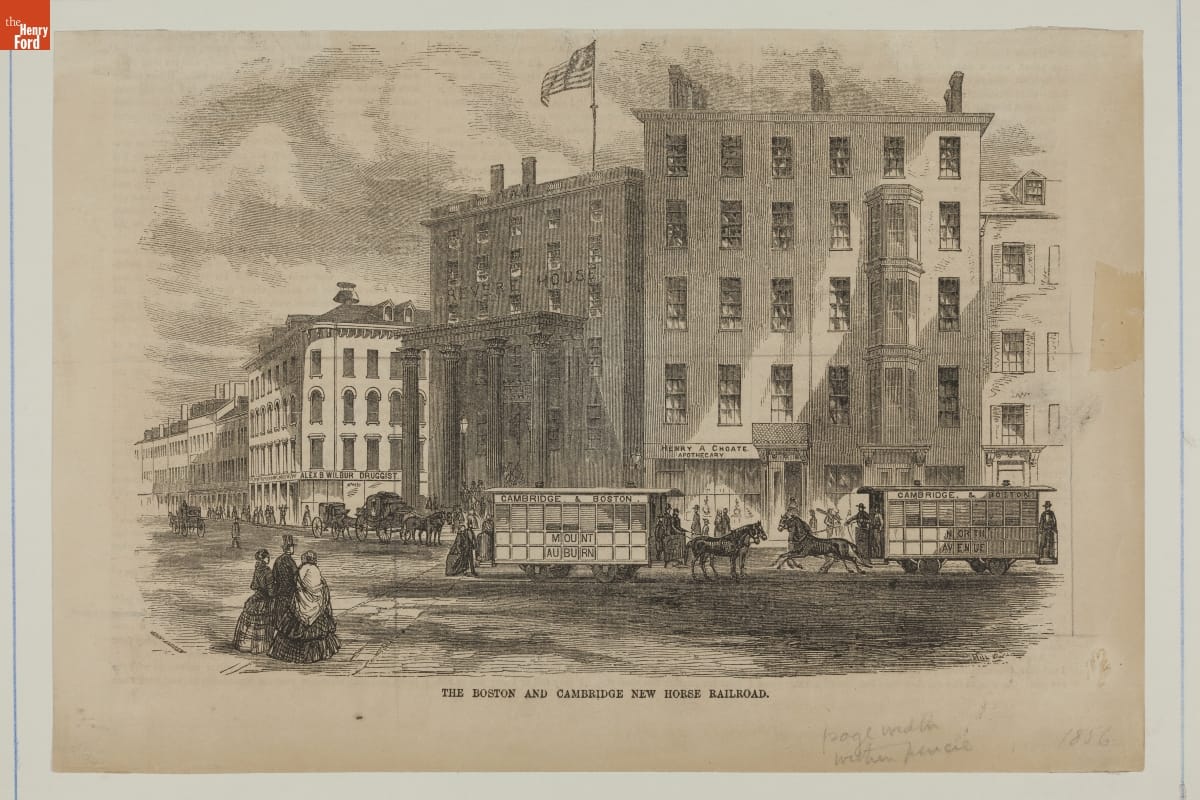
- "The Boston and Cambridge New Horse Railroad," 1856 - This wood engraving depicts the early horse-drawn railroads in 1856 that ran from Boston through Cambridge to Mount Auburn in Massachusetts. The print was originally engraved by printmaker John Andrew for the publication "Ballou's Pictorial."
- 1856
- Collections - Artifact
"The Boston and Cambridge New Horse Railroad," 1856
This wood engraving depicts the early horse-drawn railroads in 1856 that ran from Boston through Cambridge to Mount Auburn in Massachusetts. The print was originally engraved by printmaker John Andrew for the publication "Ballou's Pictorial."
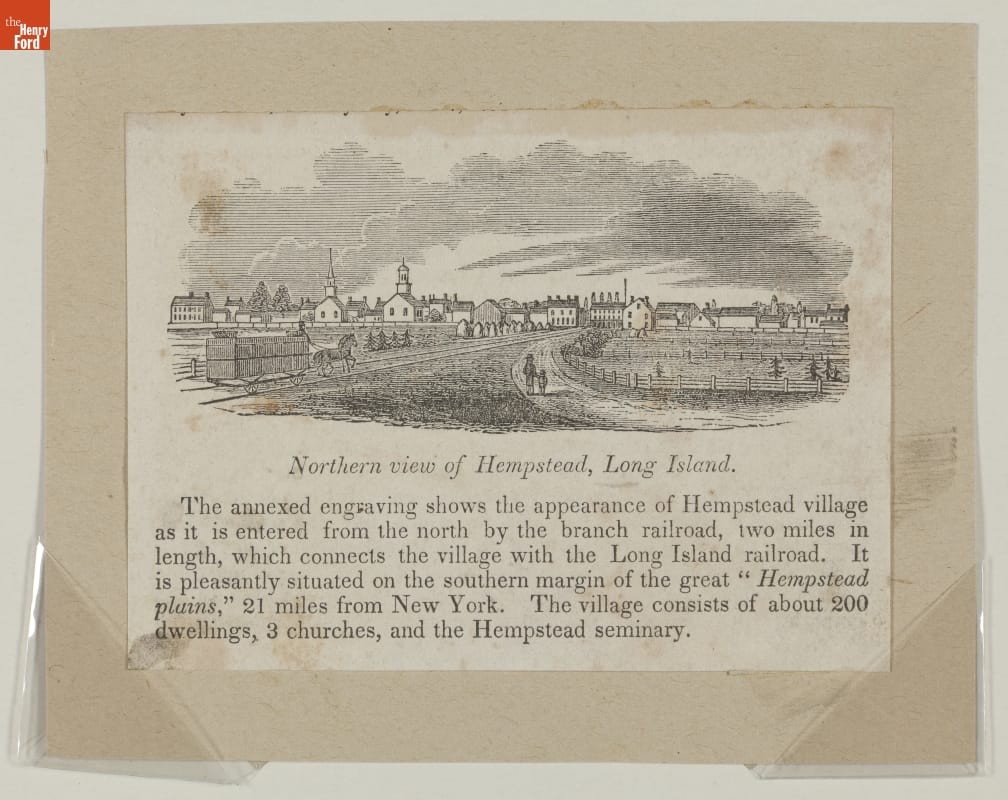
- Wood Engraving, "Northern View of Hempstead, Long Island," circa 1845 - Selecting a railroad's route was a delicate balance between the technical need for easy curves and gentle gradients, and the economic necessity of ready customers. When an important community got bypassed by the mainline, the railroad might build a branch line to it. The Long Island Rail Road built a branch to Hempstead, New York, two miles south of its mainline.
- circa 1845
- Collections - Artifact
Wood Engraving, "Northern View of Hempstead, Long Island," circa 1845
Selecting a railroad's route was a delicate balance between the technical need for easy curves and gentle gradients, and the economic necessity of ready customers. When an important community got bypassed by the mainline, the railroad might build a branch line to it. The Long Island Rail Road built a branch to Hempstead, New York, two miles south of its mainline.
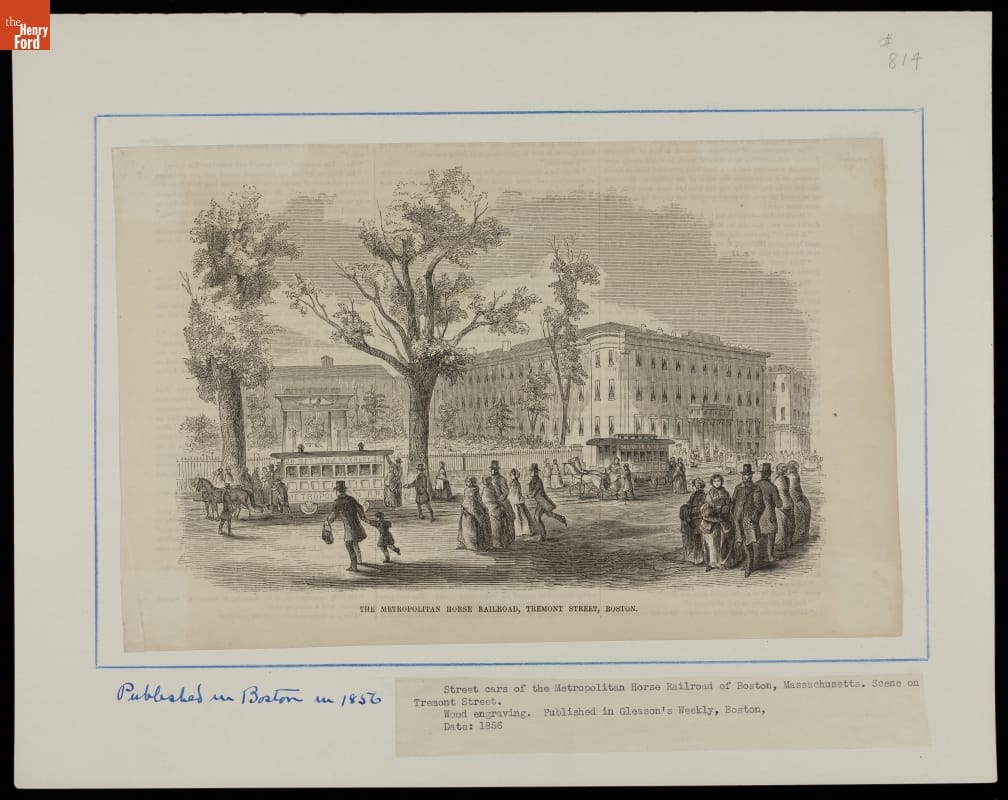
- "Metropolitan Horse Railroad, Tremont Street, Boston," 1856 - City people used streetcars to get to work, do errands, and enjoy leisure activities. But they had to travel on the streetcar's schedule rather than their own.
- 1856
- Collections - Artifact
"Metropolitan Horse Railroad, Tremont Street, Boston," 1856
City people used streetcars to get to work, do errands, and enjoy leisure activities. But they had to travel on the streetcar's schedule rather than their own.
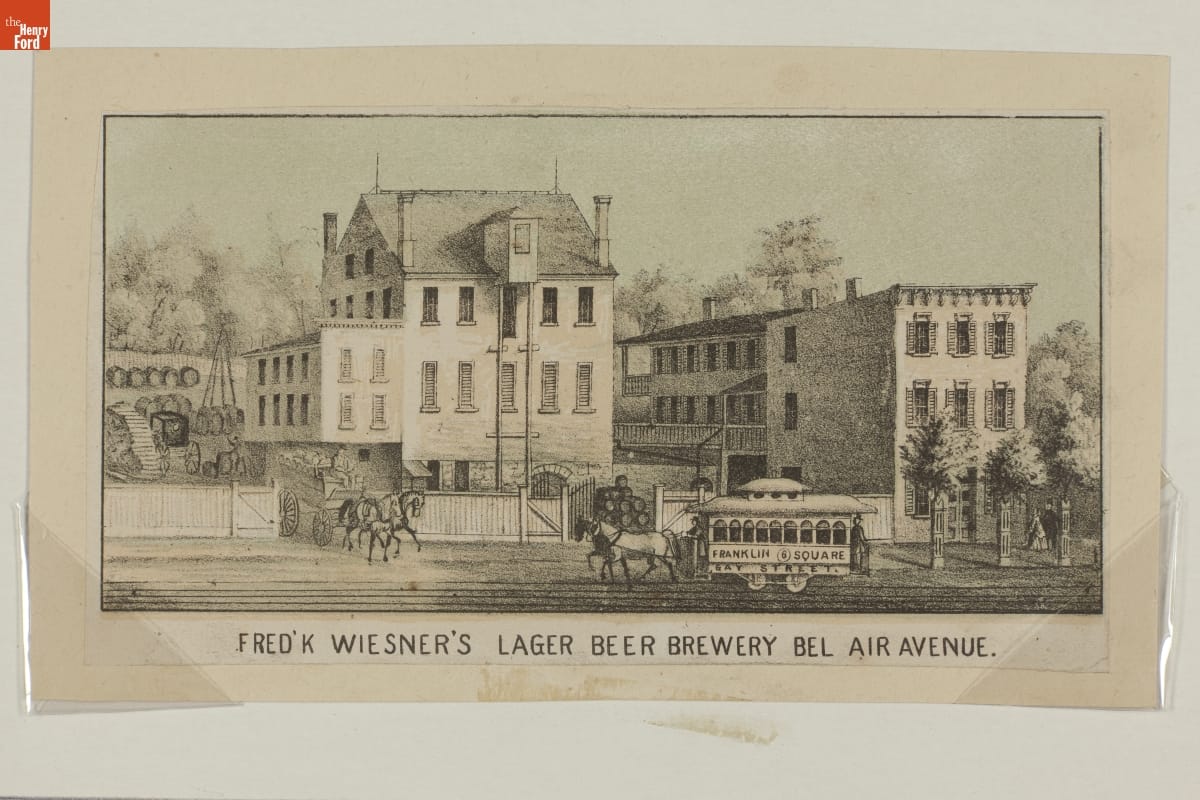
- "Fred'k Weisner's Lager Beer Brewery, Bel Air Avenue," Baltimore, circa 1870 -
- circa 1870
- Collections - Artifact
"Fred'k Weisner's Lager Beer Brewery, Bel Air Avenue," Baltimore, circa 1870
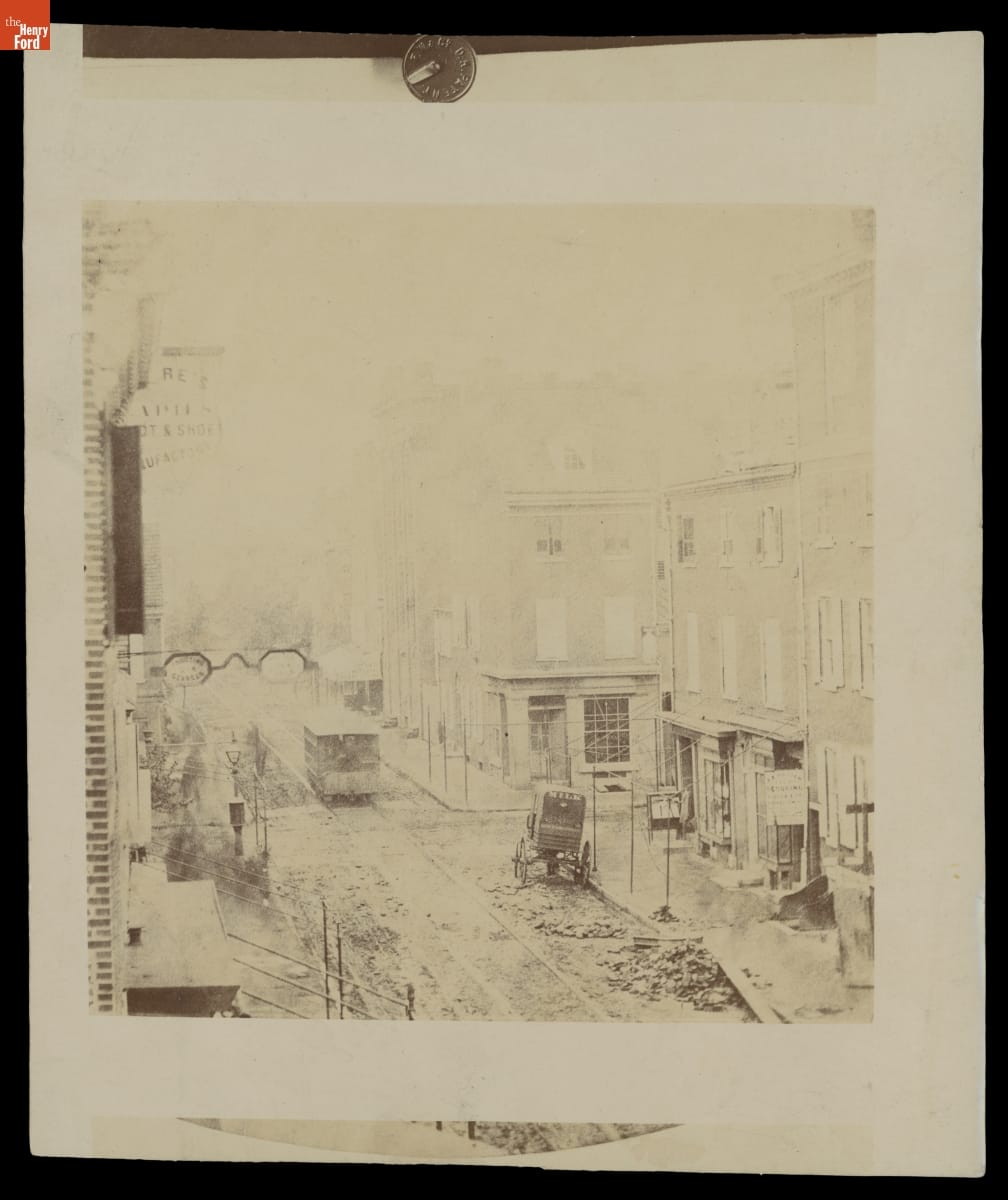
- Milk Delivery Wagon on a City Street in Winter, circa 1865 -
- circa 1865
- Collections - Artifact
Milk Delivery Wagon on a City Street in Winter, circa 1865
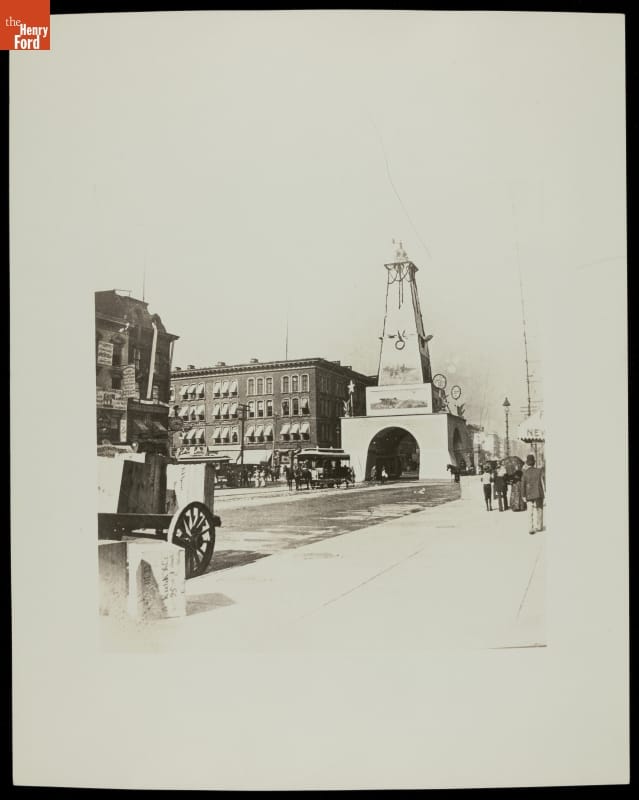
- Woodward and Jefferson Avenues, Detroit, Michigan, 1891 -
- 1891
- Collections - Artifact
Woodward and Jefferson Avenues, Detroit, Michigan, 1891
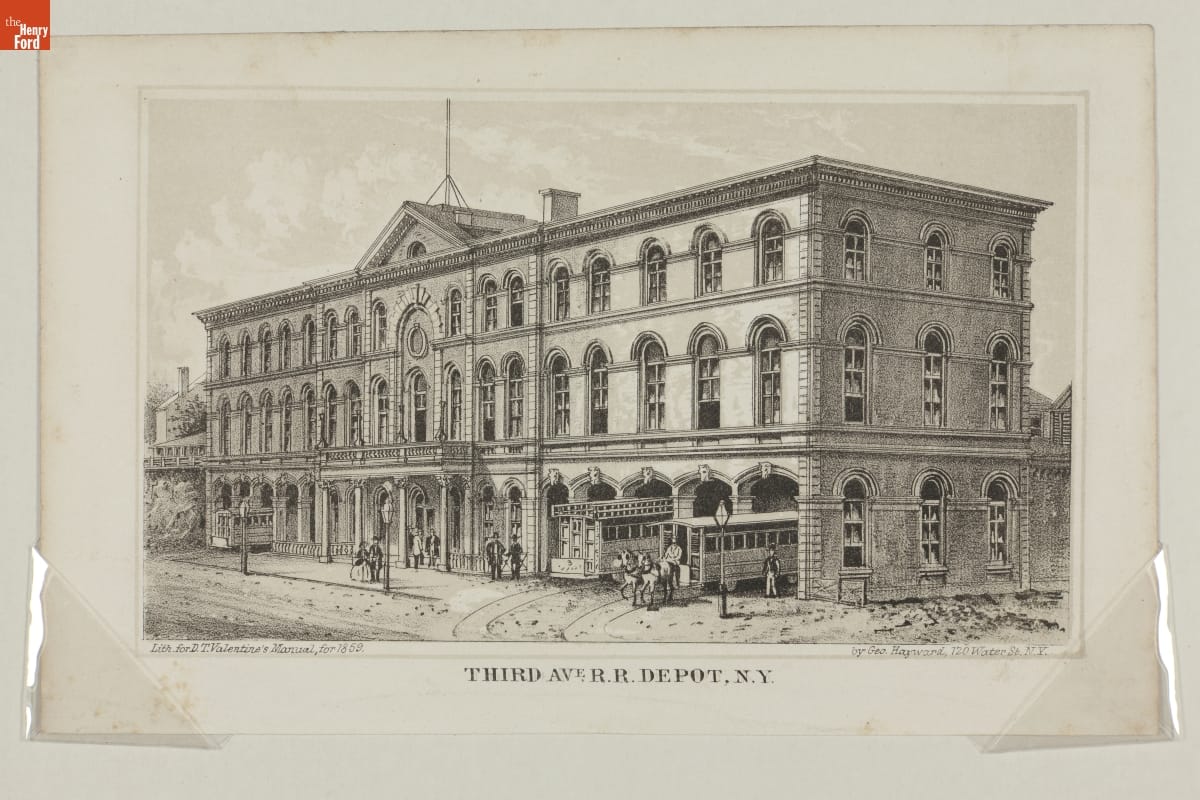
- "Third Ave. R.R. Depot, N.Y.," 1859 - In the mid-1800s, horse-drawn streetcars provided a convenient and affordable way to get around a growing city. These streetcars traveled the main urban thoroughfares and took passengers to their workplaces, local shops and businesses, parks and other destinations. This 1859 print shows several streetcars moving in and out of the Third Avenue Railroad Depot in New York City.
- 1859
- Collections - Artifact
"Third Ave. R.R. Depot, N.Y.," 1859
In the mid-1800s, horse-drawn streetcars provided a convenient and affordable way to get around a growing city. These streetcars traveled the main urban thoroughfares and took passengers to their workplaces, local shops and businesses, parks and other destinations. This 1859 print shows several streetcars moving in and out of the Third Avenue Railroad Depot in New York City.
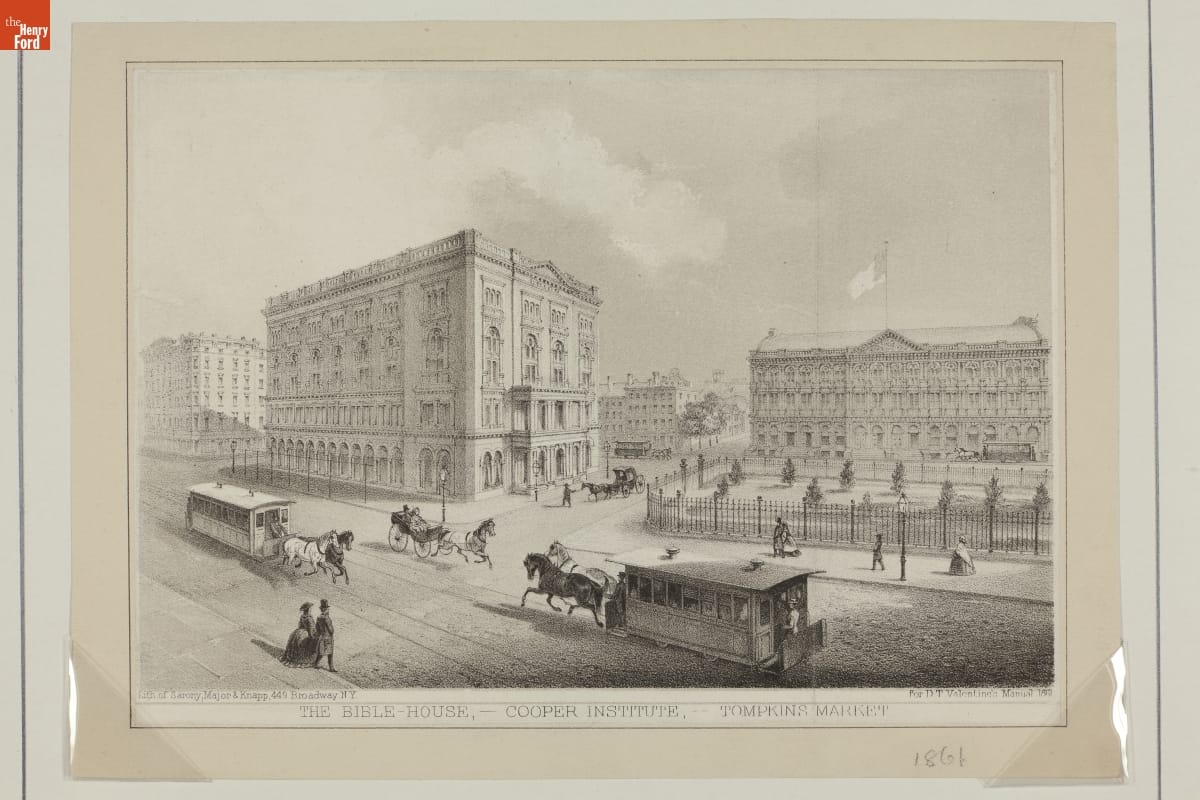
- "Bible-House - Cooper Institute - Tompkins Market," 1861 - This 1861 lithograph depicts the streetcars traversing the streets at Cooper Union in New York City. Horse-drawn rail cars pass by the Tompkins Market and Armory, the Bible House, and the Cooper Institute.
- 1861
- Collections - Artifact
"Bible-House - Cooper Institute - Tompkins Market," 1861
This 1861 lithograph depicts the streetcars traversing the streets at Cooper Union in New York City. Horse-drawn rail cars pass by the Tompkins Market and Armory, the Bible House, and the Cooper Institute.
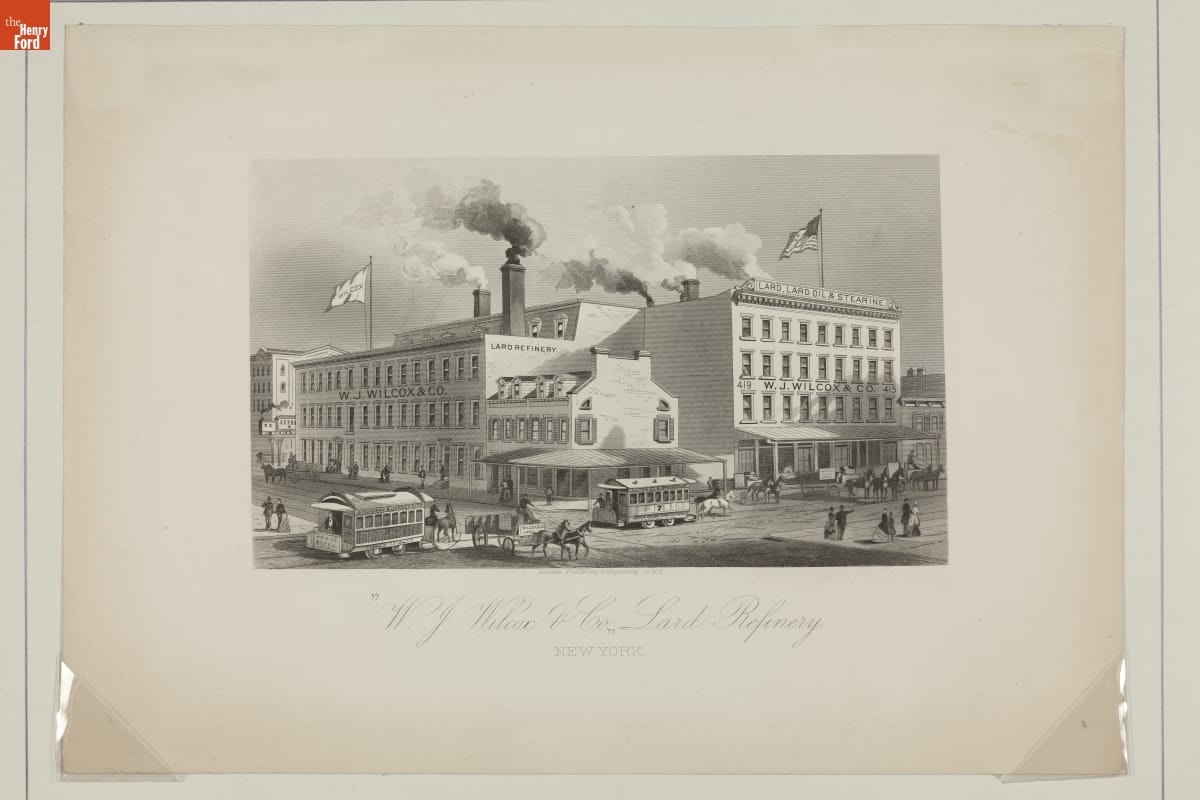
- "W.J. Wilcox & Co., Lard Refinery. New York," circa 1876 - W. J. Wilcox and Company's refined lard (hog fat) and sent its products throughout the world. The company was one of the largest lard refiner and exporter in the late 1800s. The massive factory building and the bustling New York City street scene -- with a variety of transportation options -- depicted in this print conveys the company's commercial importance.
- circa 1876
- Collections - Artifact
"W.J. Wilcox & Co., Lard Refinery. New York," circa 1876
W. J. Wilcox and Company's refined lard (hog fat) and sent its products throughout the world. The company was one of the largest lard refiner and exporter in the late 1800s. The massive factory building and the bustling New York City street scene -- with a variety of transportation options -- depicted in this print conveys the company's commercial importance.