
Search
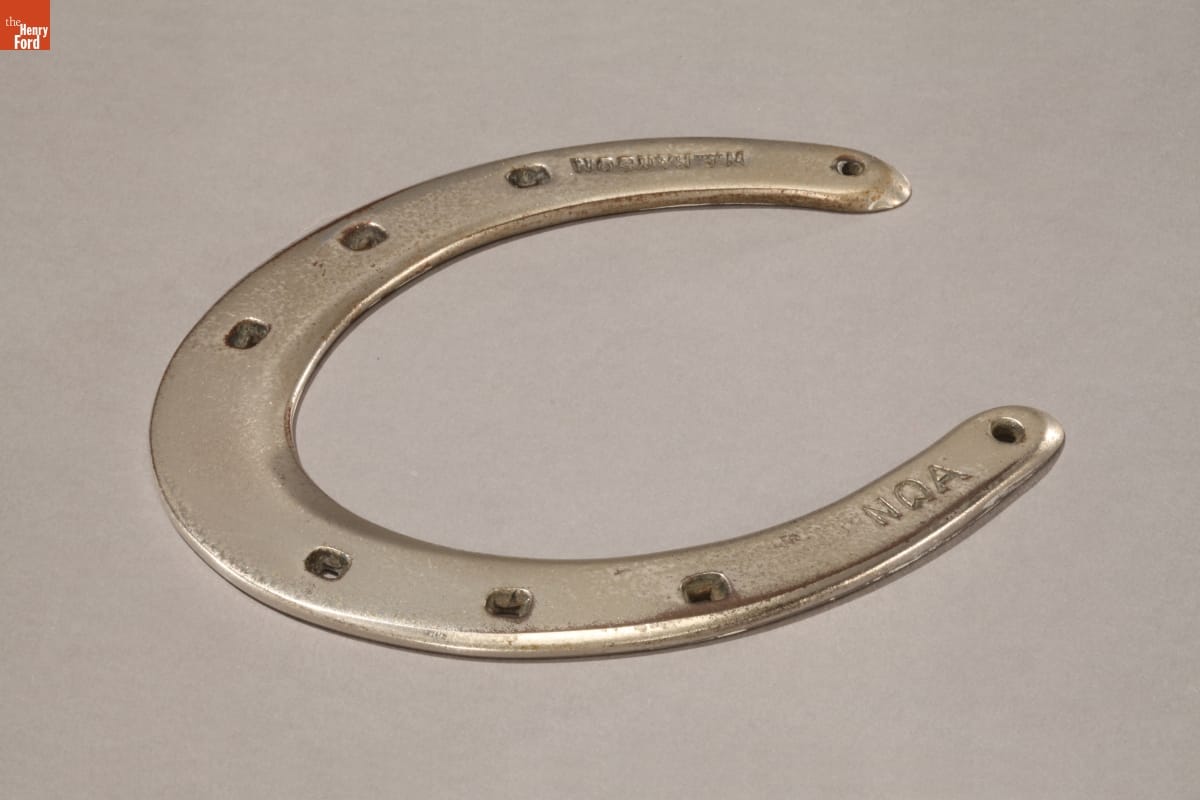
- Horseshoe, 1900-1929 - Horseshoes protect hooves from excessive wear. They are a basic part of the care and maintenance of a horse. In the 19th century horses moved people, freight, money, and information where railroads and waterways did not go. Americans relied on the horse. The demand for a large, healthy horse population and 19th-century industrialization spurred the mass production of horseshoes.
- 1900-1929
- Collections - Artifact
Horseshoe, 1900-1929
Horseshoes protect hooves from excessive wear. They are a basic part of the care and maintenance of a horse. In the 19th century horses moved people, freight, money, and information where railroads and waterways did not go. Americans relied on the horse. The demand for a large, healthy horse population and 19th-century industrialization spurred the mass production of horseshoes.
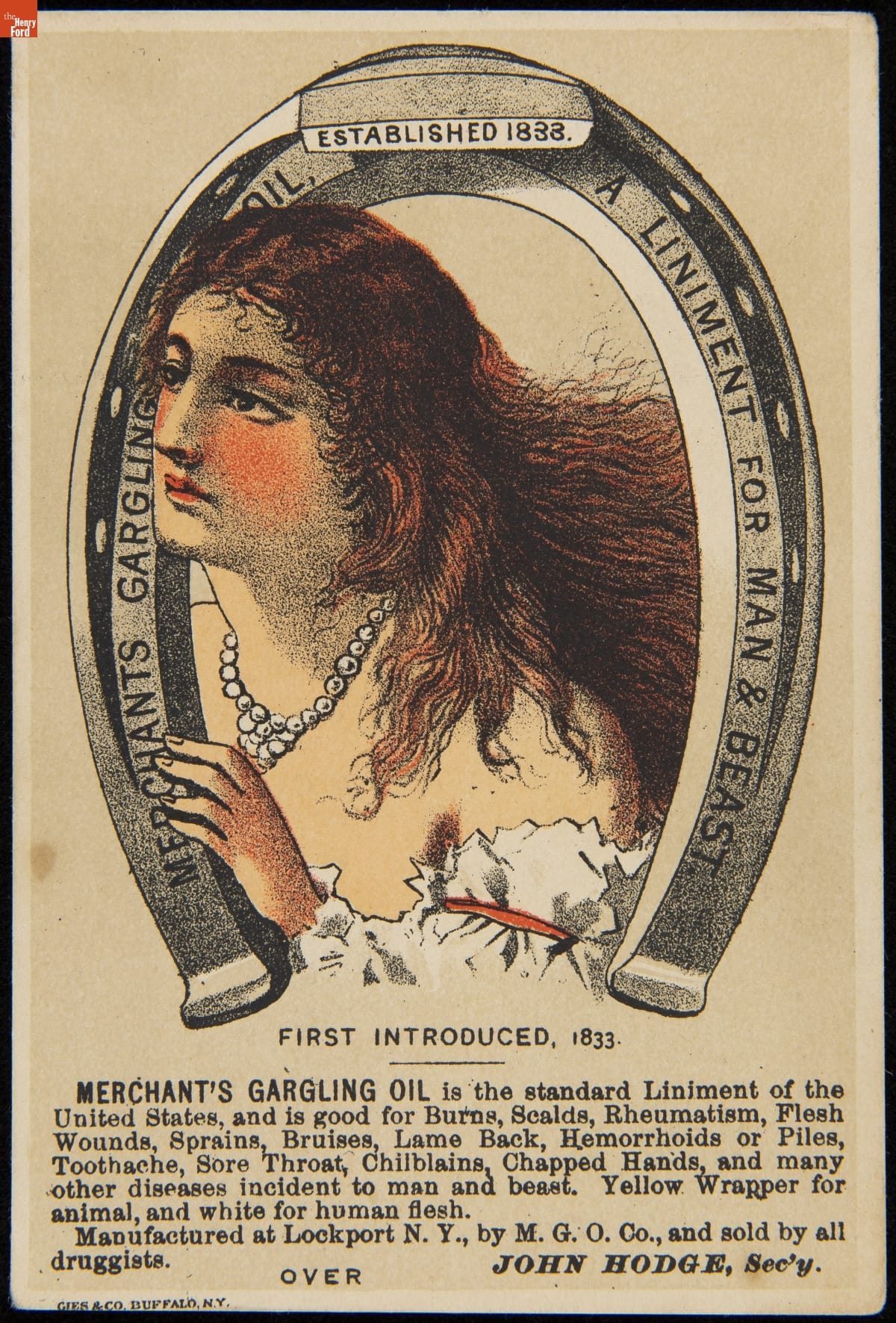
- Trade Card for Merchant's Gargling Oil, Merchant's Gargling Oil Company, circa 1880 - Dr. George Merchant founded the Merchant's Gargling Oil Company in 1833 in Lockport, New York. The company claimed the liniment (not really for "gargling") eased a variety of aches and pains common to "man and beast"--it bottled one version for humans and another for animals. In the late 1800s, the company used almanacs, songbooks, and trade cards to advertise its product.
- circa 1880
- Collections - Artifact
Trade Card for Merchant's Gargling Oil, Merchant's Gargling Oil Company, circa 1880
Dr. George Merchant founded the Merchant's Gargling Oil Company in 1833 in Lockport, New York. The company claimed the liniment (not really for "gargling") eased a variety of aches and pains common to "man and beast"--it bottled one version for humans and another for animals. In the late 1800s, the company used almanacs, songbooks, and trade cards to advertise its product.
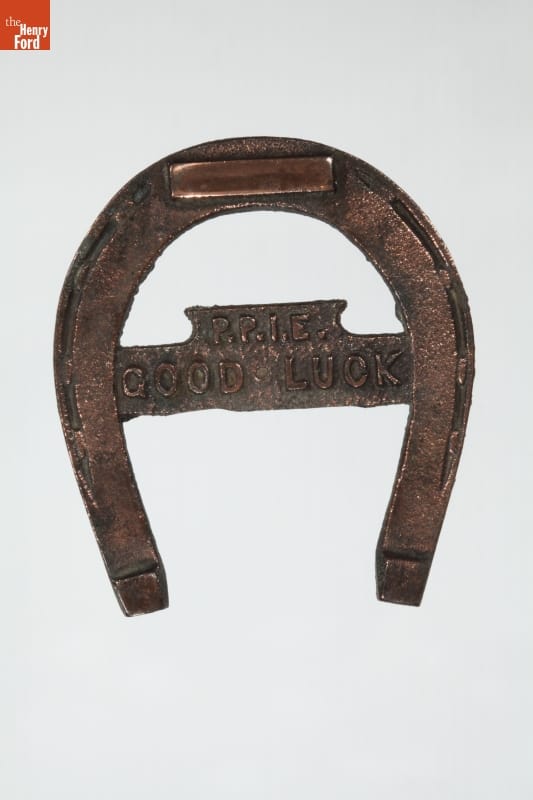
- Panama-Pacific International Exposition "Good Luck" Horseshoe Souvenir, 1915 - The Panama-Pacific International Exposition celebrated the 1914 completion of the Panama Canal and the 400th anniversary of the discovery of the Pacific Ocean. Nearly nineteen million people visited San Francisco, recently recovered from a devastating 1906 earthquake, during the fair in 1915. Many returned home with mementos of the exhibition, such as this souvenir "good luck" horseshoe.
- 1915
- Collections - Artifact
Panama-Pacific International Exposition "Good Luck" Horseshoe Souvenir, 1915
The Panama-Pacific International Exposition celebrated the 1914 completion of the Panama Canal and the 400th anniversary of the discovery of the Pacific Ocean. Nearly nineteen million people visited San Francisco, recently recovered from a devastating 1906 earthquake, during the fair in 1915. Many returned home with mementos of the exhibition, such as this souvenir "good luck" horseshoe.
- Buster Brown Bank, 1905-1930 - Still banks provide a simple way to save money. You place your coin in the slot then let it drop -- there are no mechanical devices. Still banks came in a variety of interesting and decorative shapes. Along with a horse and "Good Luck" horseshoe, this bank depicts Buster Brown and Tige -- popular comic characters in the early 20th century.

- 1905-1930
- Collections - Artifact
Buster Brown Bank, 1905-1930
Still banks provide a simple way to save money. You place your coin in the slot then let it drop -- there are no mechanical devices. Still banks came in a variety of interesting and decorative shapes. Along with a horse and "Good Luck" horseshoe, this bank depicts Buster Brown and Tige -- popular comic characters in the early 20th century.
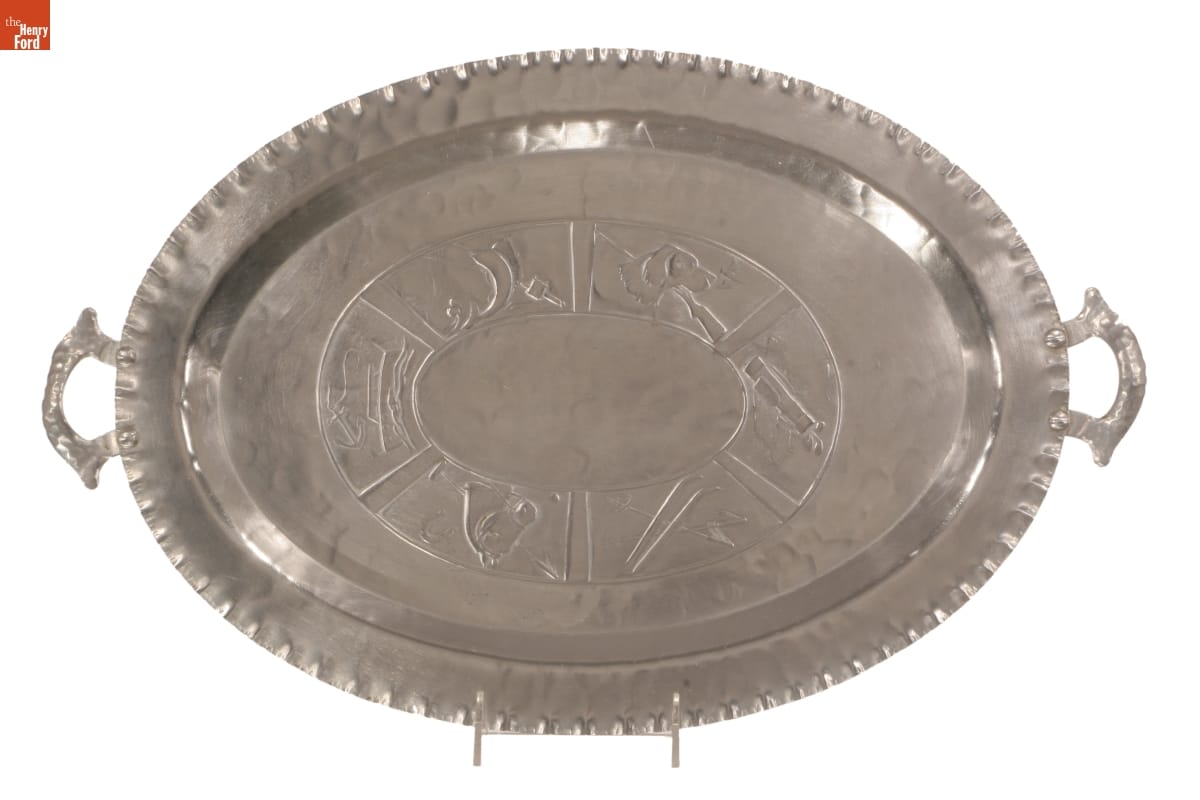
- Everlast "Forged Sports" Tray, 1938-1941 - In 1932, Louis Schnitzer and Nathan Gelfman formed Everlast Metal Products Corporation, producing high-quality, hand-forged aluminum giftware. In an era of growing uniformity via factory production, the "made by hand" aspect of these products held an aesthetic appeal for consumers. In 1933, Everlast introduced its first product line, "Forged Giftware" featuring Colonial Revival inspired designs.
- 1938-1941
- Collections - Artifact
Everlast "Forged Sports" Tray, 1938-1941
In 1932, Louis Schnitzer and Nathan Gelfman formed Everlast Metal Products Corporation, producing high-quality, hand-forged aluminum giftware. In an era of growing uniformity via factory production, the "made by hand" aspect of these products held an aesthetic appeal for consumers. In 1933, Everlast introduced its first product line, "Forged Giftware" featuring Colonial Revival inspired designs.
- Trade Card for Merchant's Gargling Oil, Merchant's Gargling Oil Company, circa 1880 - Dr. George Merchant founded the Merchant's Gargling Oil Company in 1833 in Lockport, New York. The company claimed the liniment (not really for "gargling") eased a variety of aches and pains common to "man and beast"--it bottled one version for humans and another for animals. In the late 1800s, the company used almanacs, songbooks, and trade cards to advertise its product.
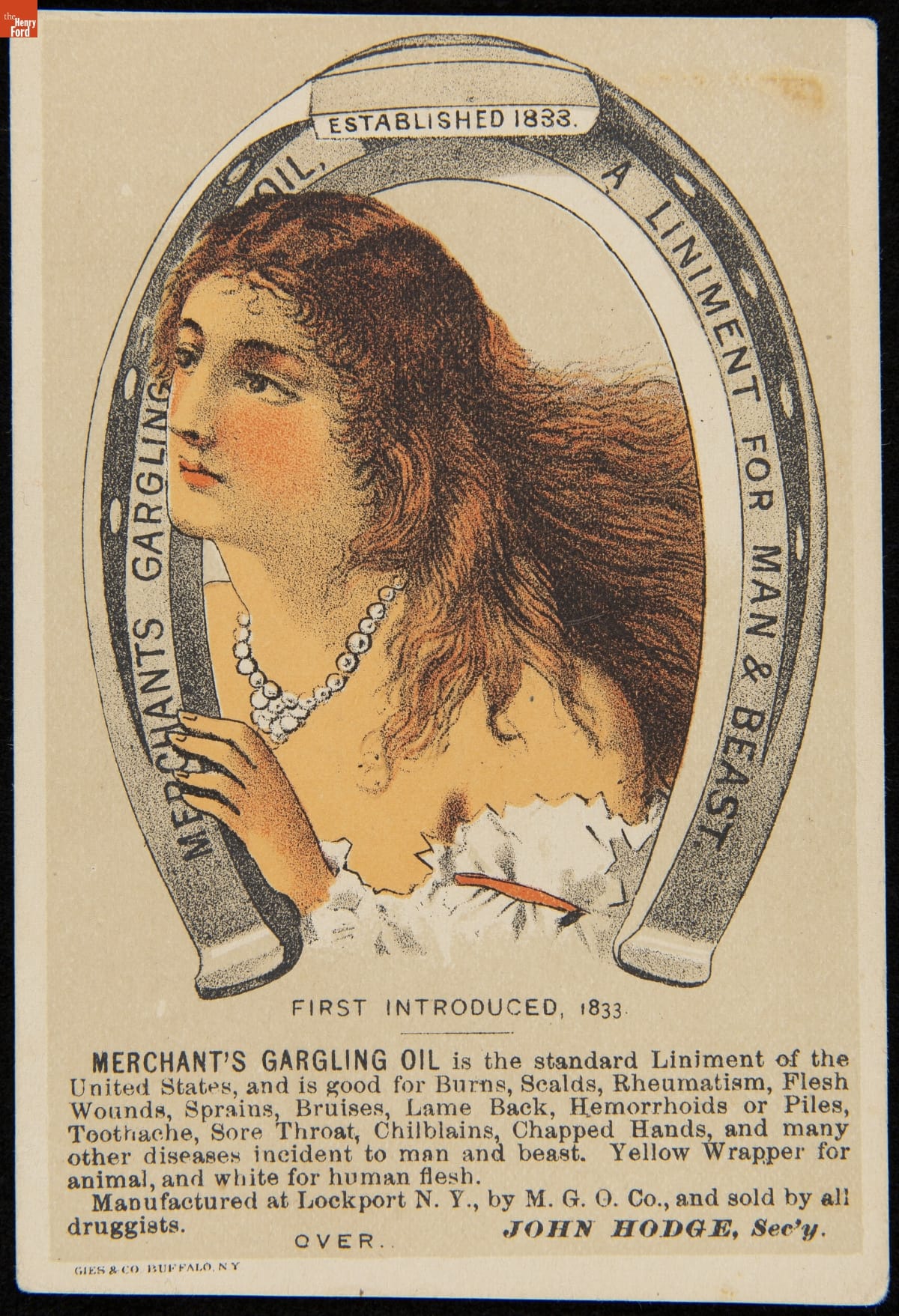
- circa 1880
- Collections - Artifact
Trade Card for Merchant's Gargling Oil, Merchant's Gargling Oil Company, circa 1880
Dr. George Merchant founded the Merchant's Gargling Oil Company in 1833 in Lockport, New York. The company claimed the liniment (not really for "gargling") eased a variety of aches and pains common to "man and beast"--it bottled one version for humans and another for animals. In the late 1800s, the company used almanacs, songbooks, and trade cards to advertise its product.
- Trade Card for Merchant's Gargling Oil, Merchant's Gargling Oil Company, circa 1880 - Dr. George Merchant founded the Merchant's Gargling Oil Company in 1833 in Lockport, New York. The company claimed the liniment (not really for "gargling") eased a variety of aches and pains common to "man and beast"--it bottled one version for humans and another for animals. In the late 1800s, the company used almanacs, songbooks, and trade cards to advertise its product.
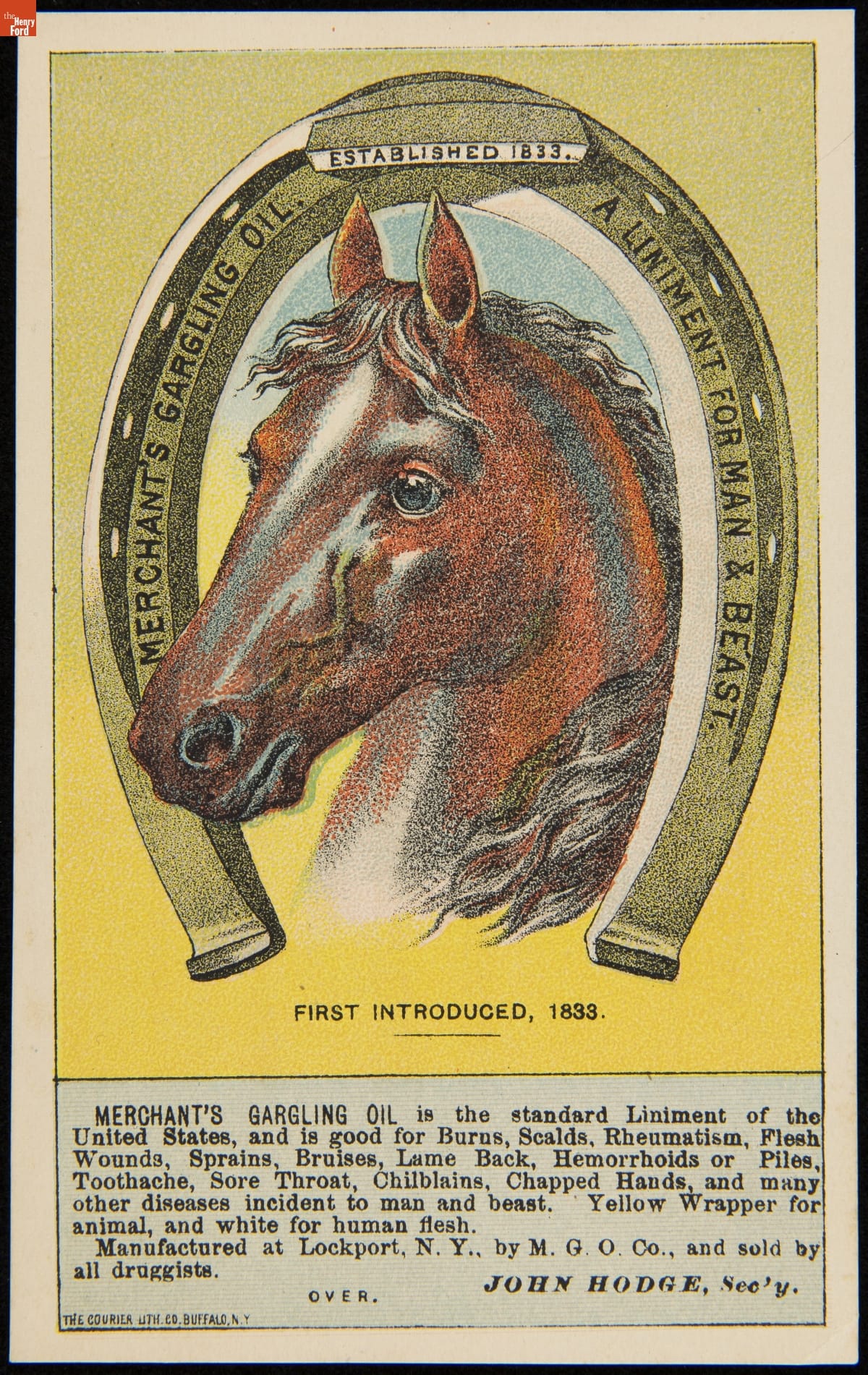
- circa 1880
- Collections - Artifact
Trade Card for Merchant's Gargling Oil, Merchant's Gargling Oil Company, circa 1880
Dr. George Merchant founded the Merchant's Gargling Oil Company in 1833 in Lockport, New York. The company claimed the liniment (not really for "gargling") eased a variety of aches and pains common to "man and beast"--it bottled one version for humans and another for animals. In the late 1800s, the company used almanacs, songbooks, and trade cards to advertise its product.
- Display Case Containing Horseshoes Made by H. A. Meikrantz, 1875-1938 -
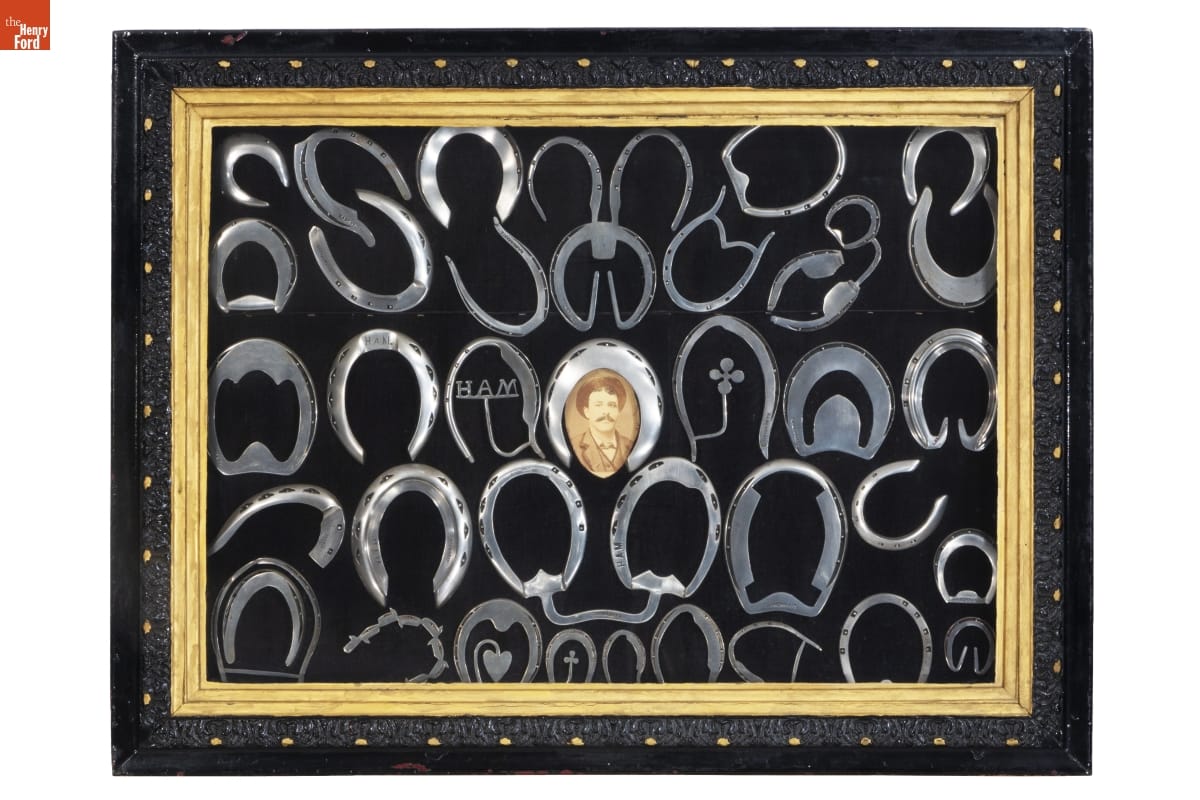
- 1875-1938
- Collections - Artifact
Display Case Containing Horseshoes Made by H. A. Meikrantz, 1875-1938
- Engraving, Horseshoe Manufacturing Machine Patented by United States in 1875 -
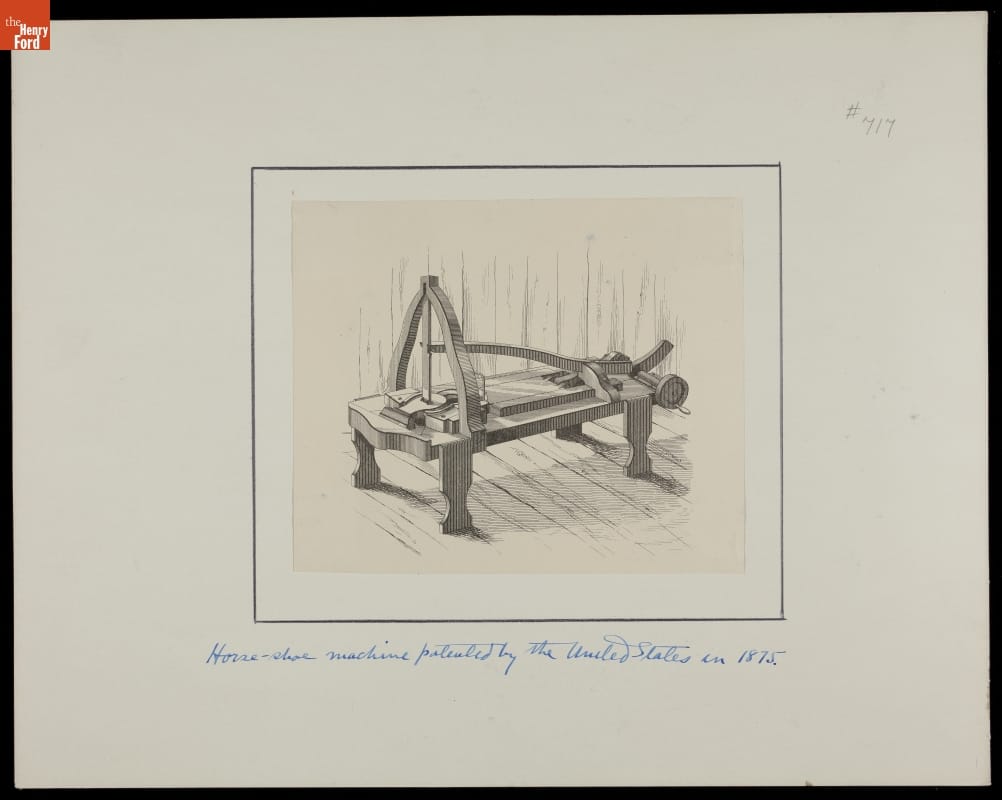
- 1885
- Collections - Artifact
Engraving, Horseshoe Manufacturing Machine Patented by United States in 1875
- Display Case Containing Horseshoes Made by Seymour S. Hopkins and John G. Hopkins, 1912 -
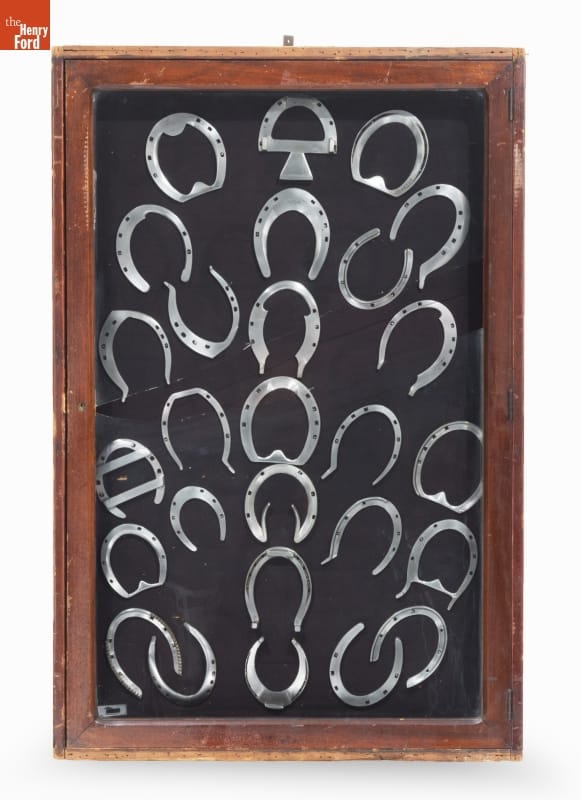
- 1862-1912
- Collections - Artifact
Display Case Containing Horseshoes Made by Seymour S. Hopkins and John G. Hopkins, 1912