
Search
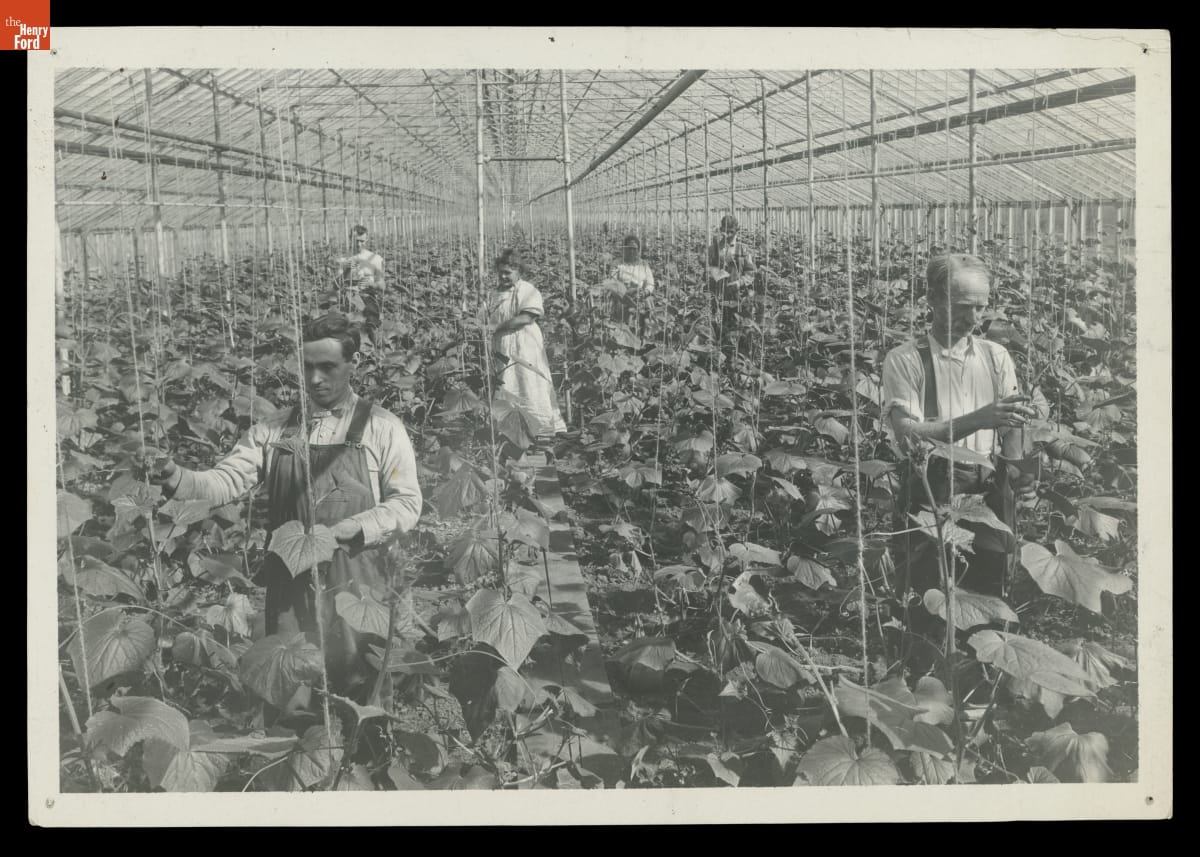
- Workers in a Cucumber Greenhouse, circa 1923 -
- circa 1923
- Collections - Artifact
Workers in a Cucumber Greenhouse, circa 1923
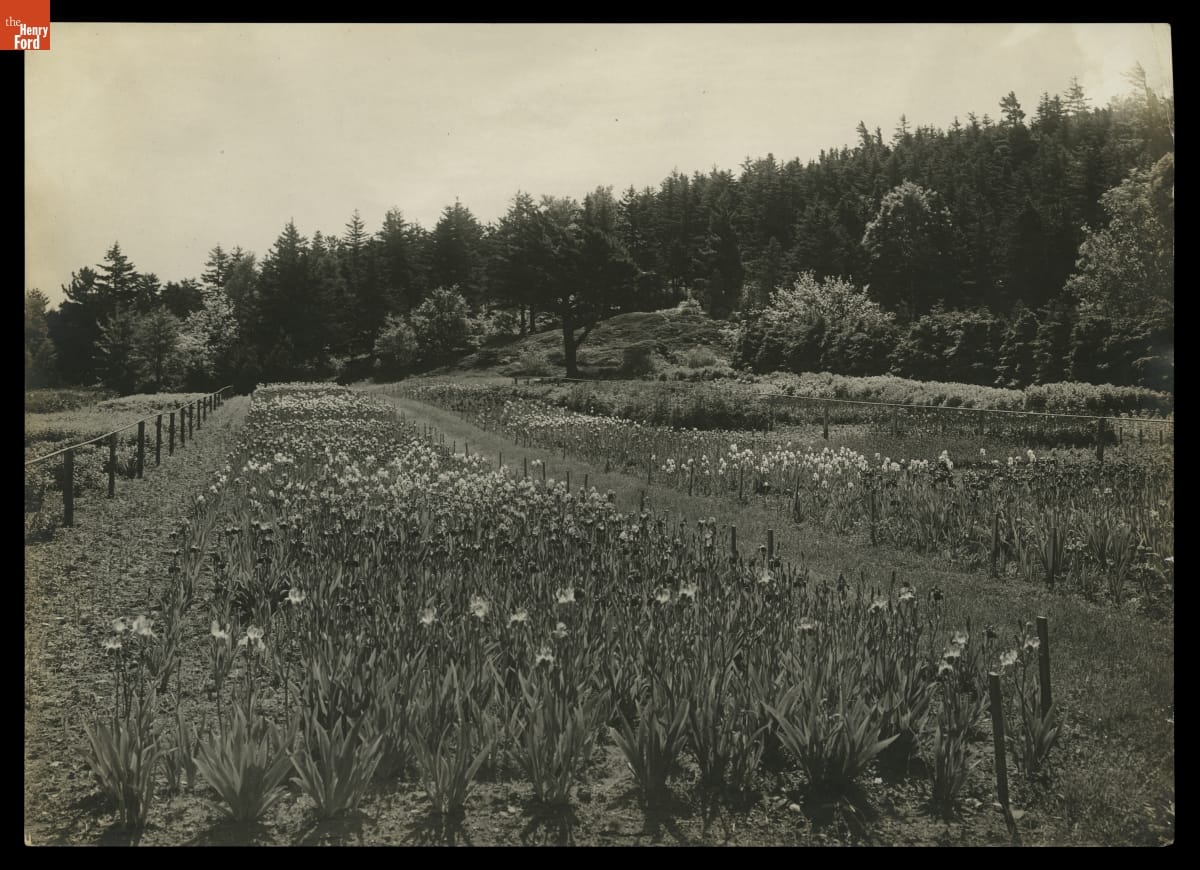
- German Irises Growing in a Nursery, circa 1923 -
- circa 1923
- Collections - Artifact
German Irises Growing in a Nursery, circa 1923
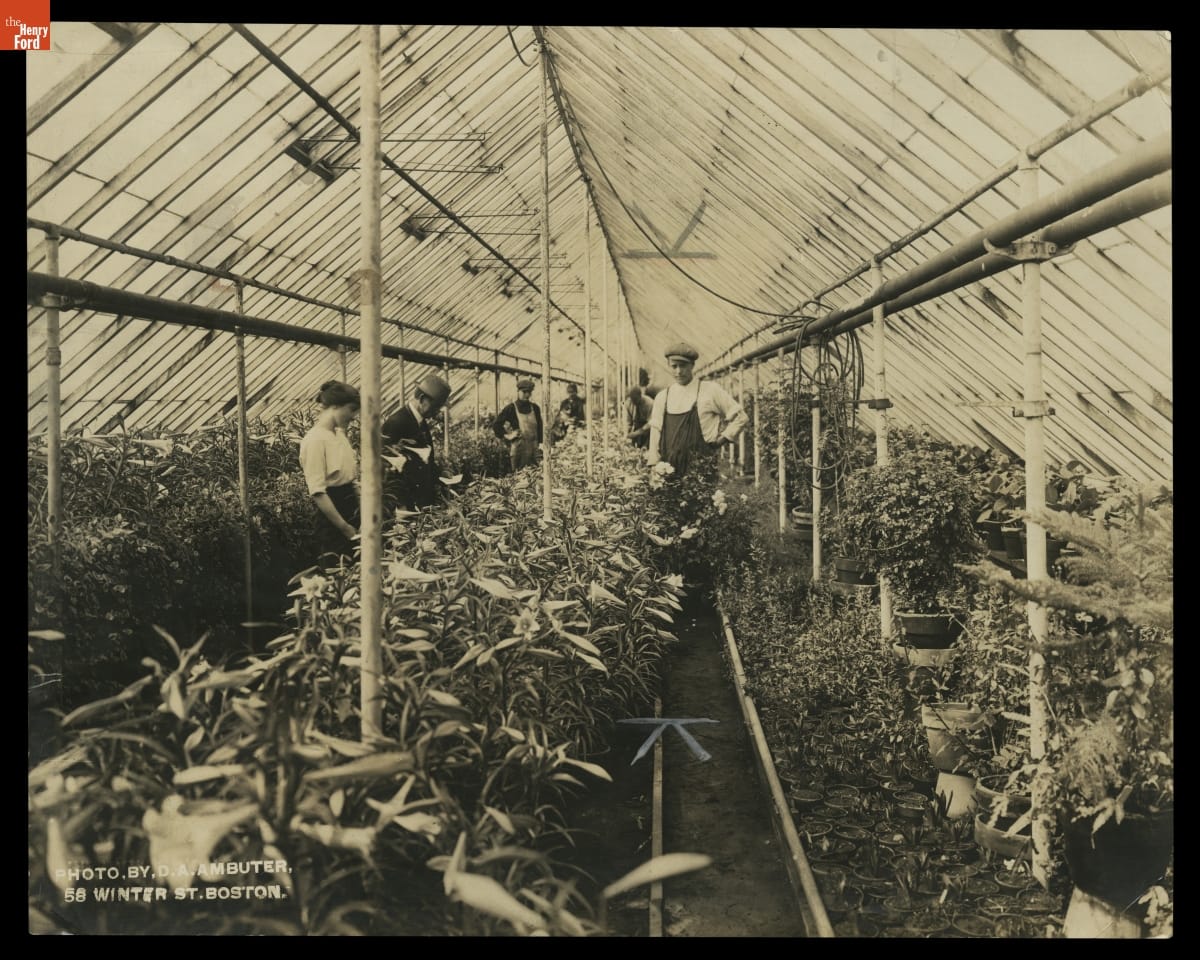
- Workers in a Greenhouse, circa 1923 -
- circa 1923
- Collections - Artifact
Workers in a Greenhouse, circa 1923
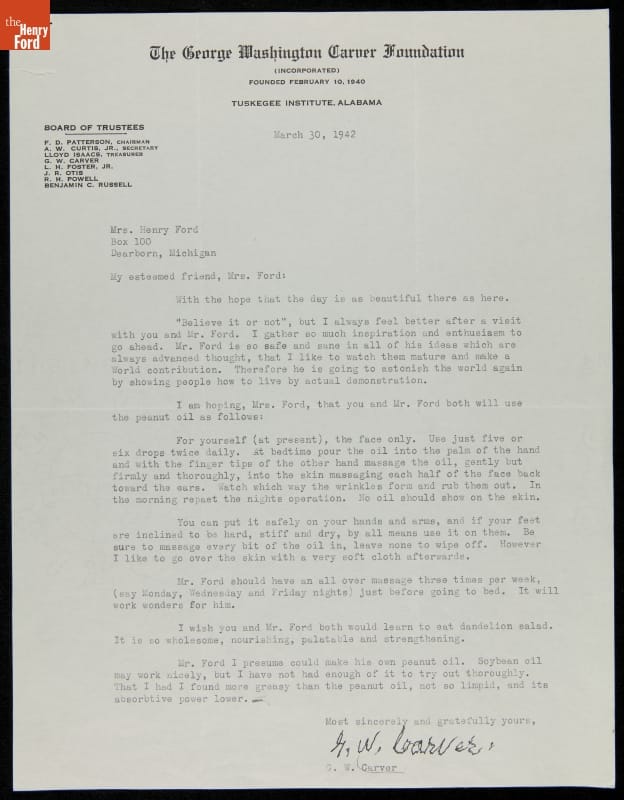
- Letter from George Washington Carver to Clara Ford, March 30, 1942 - George Washington Carver and Henry Ford became friends in the late 1930s, drawn together by a mutual interest in plants and industry. Carver's warm letters to both Henry and Clara Ford speak to the genuine depth of the friendship. In this letter to Clara, which was presumably accompanied a bottle of peanut oil, Carver offered advice on how to use the oil for natural health.
- March 30, 1942
- Collections - Artifact
Letter from George Washington Carver to Clara Ford, March 30, 1942
George Washington Carver and Henry Ford became friends in the late 1930s, drawn together by a mutual interest in plants and industry. Carver's warm letters to both Henry and Clara Ford speak to the genuine depth of the friendship. In this letter to Clara, which was presumably accompanied a bottle of peanut oil, Carver offered advice on how to use the oil for natural health.
- Letter from George Washington Carver to Frank Campsall, September 28, 1942 - George Washington Carver and Henry Ford became friends in the late 1930s, drawn together by a mutual interest in developing new industrial products from the fruits of the soil. Carver's warm letters to Ford, Clara Ford, and Ford's secretary Frank Campsall speak to the genuine depth of the friendship. Carver often gives Ford advice on research avenues to pursue and suggests recipes for natural health.
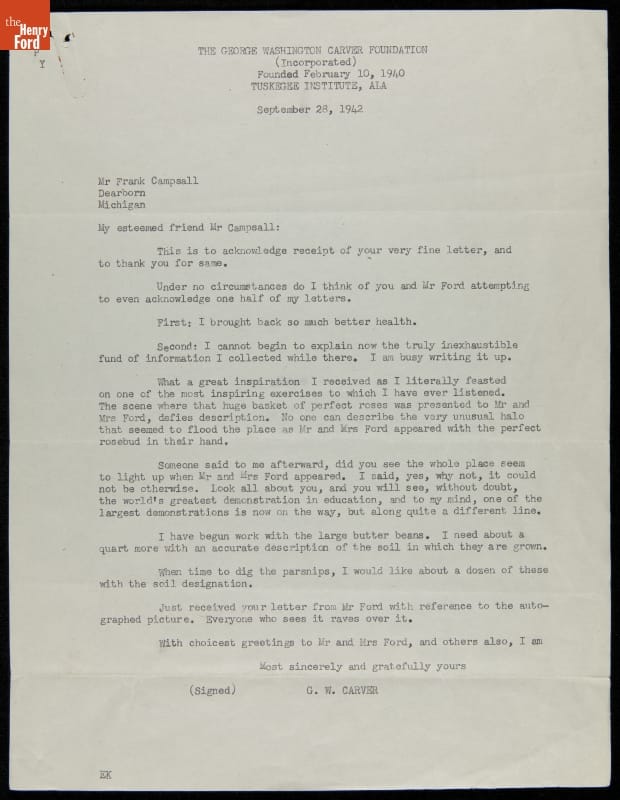
- September 28, 1942
- Collections - Artifact
Letter from George Washington Carver to Frank Campsall, September 28, 1942
George Washington Carver and Henry Ford became friends in the late 1930s, drawn together by a mutual interest in developing new industrial products from the fruits of the soil. Carver's warm letters to Ford, Clara Ford, and Ford's secretary Frank Campsall speak to the genuine depth of the friendship. Carver often gives Ford advice on research avenues to pursue and suggests recipes for natural health.
- How to Grow the Peanut and 105 Ways of Preparing it for Human Consumption, May 1917 - George Washington Carver directed the agricultural Experiment Station at Tuskegee Institute in Alabama. As part of his work, Carver wrote what he called "threefold" agricultural bulletins: they included information for the farmer, for the teacher, and for the housewife. This bulletin on growing and cooking peanuts, along with Carver's other advocacy work, helped popularize the peanut as a useful and nutritious crop for Southern farmers.

- May 01, 1917
- Collections - Artifact
How to Grow the Peanut and 105 Ways of Preparing it for Human Consumption, May 1917
George Washington Carver directed the agricultural Experiment Station at Tuskegee Institute in Alabama. As part of his work, Carver wrote what he called "threefold" agricultural bulletins: they included information for the farmer, for the teacher, and for the housewife. This bulletin on growing and cooking peanuts, along with Carver's other advocacy work, helped popularize the peanut as a useful and nutritious crop for Southern farmers.
- Stark Bro's Nurseries & Orchards Company Trade Card, "Burbank's 5 Greatest Creations," 1901 - Luther Burbank's 1893 catalog, <em>New Creations in Fruits and Flowers</em>, captured the attention of established nursery businesses, including Stark Brothers Nurseries in Missouri. Clarence Stark traveled to California to see Burbank's creations for himself and purchased the rights to sell some of Burbank's plum varieties. This began an exclusive distribution partnership that continued after Burbank's death.
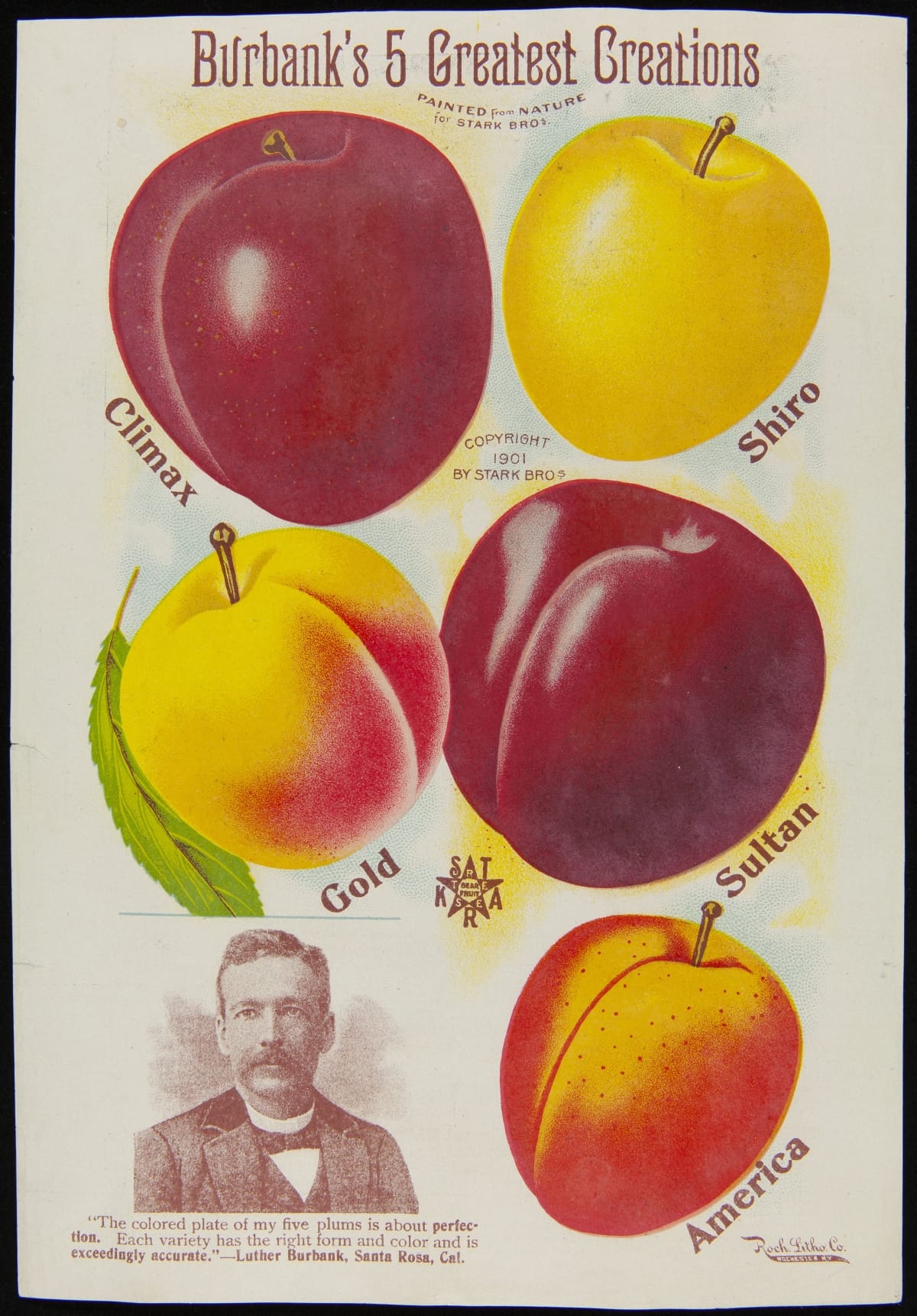
- 1901
- Collections - Artifact
Stark Bro's Nurseries & Orchards Company Trade Card, "Burbank's 5 Greatest Creations," 1901
Luther Burbank's 1893 catalog, New Creations in Fruits and Flowers, captured the attention of established nursery businesses, including Stark Brothers Nurseries in Missouri. Clarence Stark traveled to California to see Burbank's creations for himself and purchased the rights to sell some of Burbank's plum varieties. This began an exclusive distribution partnership that continued after Burbank's death.
- Editorial Rooms and Old Home of Luther Burbank - Santa Rosa, California, 1915 - Luther Burbank (1849-1926), an American horticulturalist and author, gained a reputation for selective breeding that yielded more than 800 new fruits, vegetables, flowers, and other plants. He opened this Bureau of Information in 1910 to sell seeds and souvenirs. The Luther Burbank Society, organized in 1910, used Burbank's old home as an editorial office and the Bureau for storage of their multi-volume series on Burbank, published in 1913-1914.
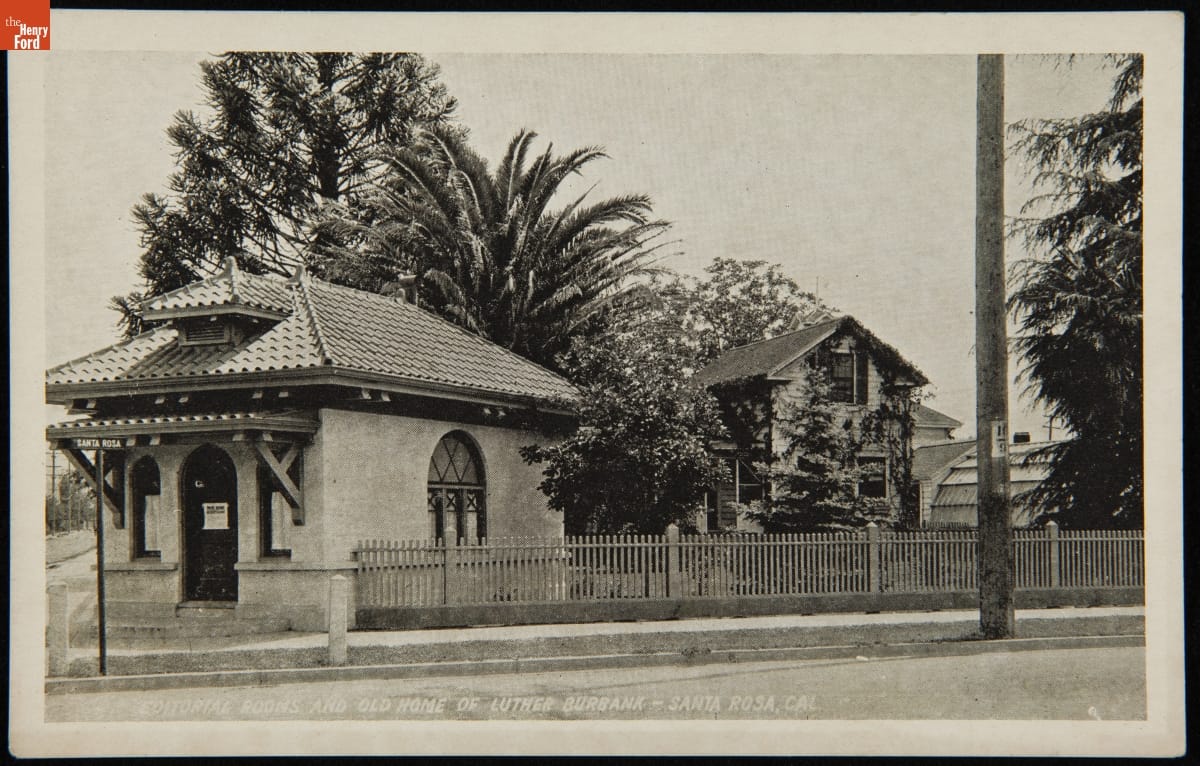
- 1915
- Collections - Artifact
Editorial Rooms and Old Home of Luther Burbank - Santa Rosa, California, 1915
Luther Burbank (1849-1926), an American horticulturalist and author, gained a reputation for selective breeding that yielded more than 800 new fruits, vegetables, flowers, and other plants. He opened this Bureau of Information in 1910 to sell seeds and souvenirs. The Luther Burbank Society, organized in 1910, used Burbank's old home as an editorial office and the Bureau for storage of their multi-volume series on Burbank, published in 1913-1914.
- Luther Burbank's Phenomenal Berry, Selected Hybrid from Cross of California Dewberry and Common Red Raspberry, 1907 - Luther Burbank (1849-1926), an American horticulturalist and author, gained a reputation for selective breeding that yielded more than 800 new fruits, vegetables, flowers, and other plants. By 1906, Burbank's international fame had brought multiple solicitors to his home in Santa Rosa, California, interested in documenting his work. A deal with Minneapolis publisher Dugal Cree resulted in this promotional postcard.
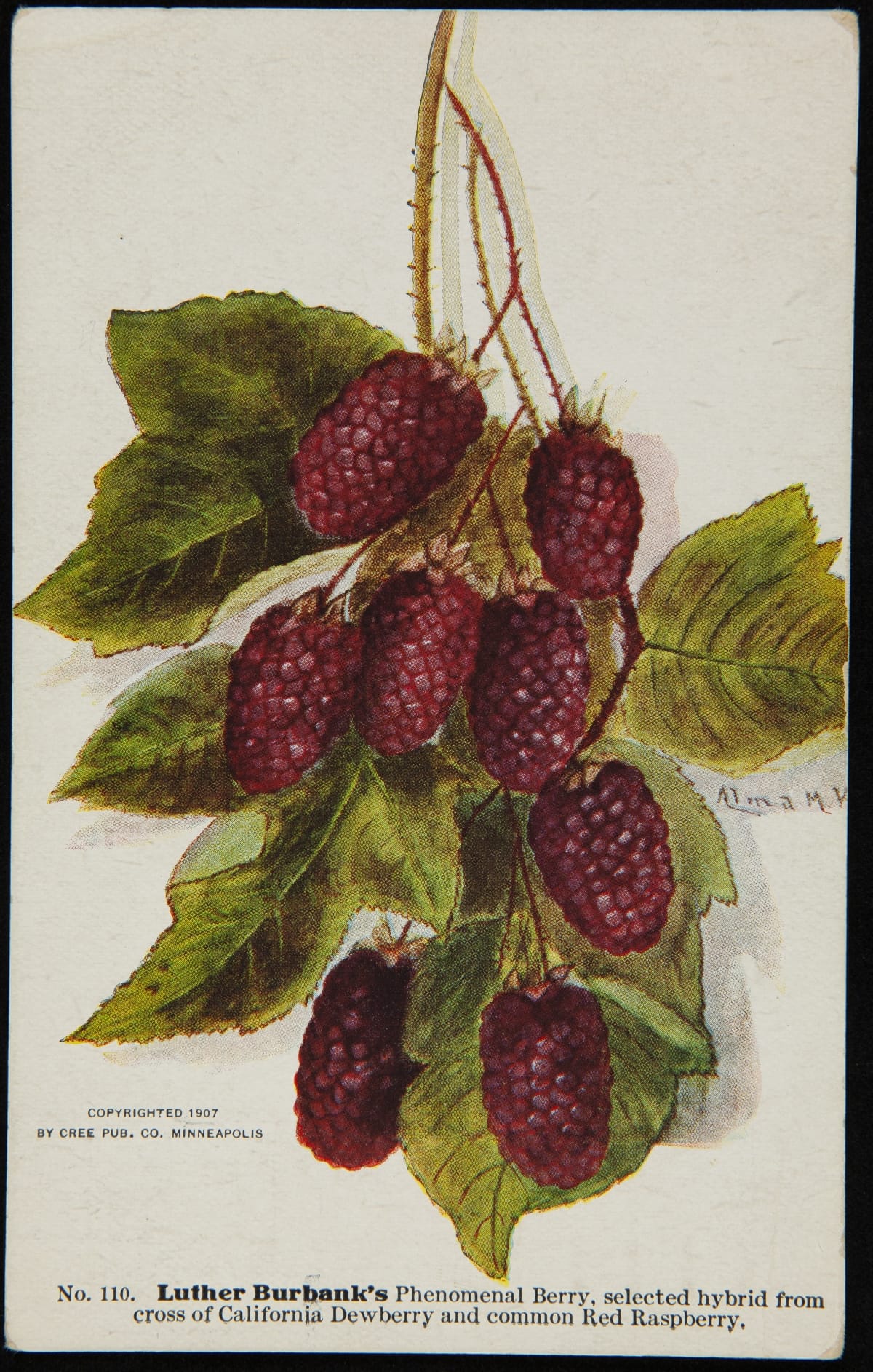
- November 01, 1907
- Collections - Artifact
Luther Burbank's Phenomenal Berry, Selected Hybrid from Cross of California Dewberry and Common Red Raspberry, 1907
Luther Burbank (1849-1926), an American horticulturalist and author, gained a reputation for selective breeding that yielded more than 800 new fruits, vegetables, flowers, and other plants. By 1906, Burbank's international fame had brought multiple solicitors to his home in Santa Rosa, California, interested in documenting his work. A deal with Minneapolis publisher Dugal Cree resulted in this promotional postcard.
- "Luther Burbank's White Blackberry, Iceberg," 1907 - Luther Burbank (1849-1926), an American horticulturalist and author, gained a reputation for selective breeding that yielded more than 800 new fruits, vegetables, flowers, and other plants. By 1906, Burbank's international fame had brought multiple solicitors to his home in Santa Rosa, California, interested in documenting his work. A deal with Minneapolis publisher Dugal Cree resulted in this promotional postcard.
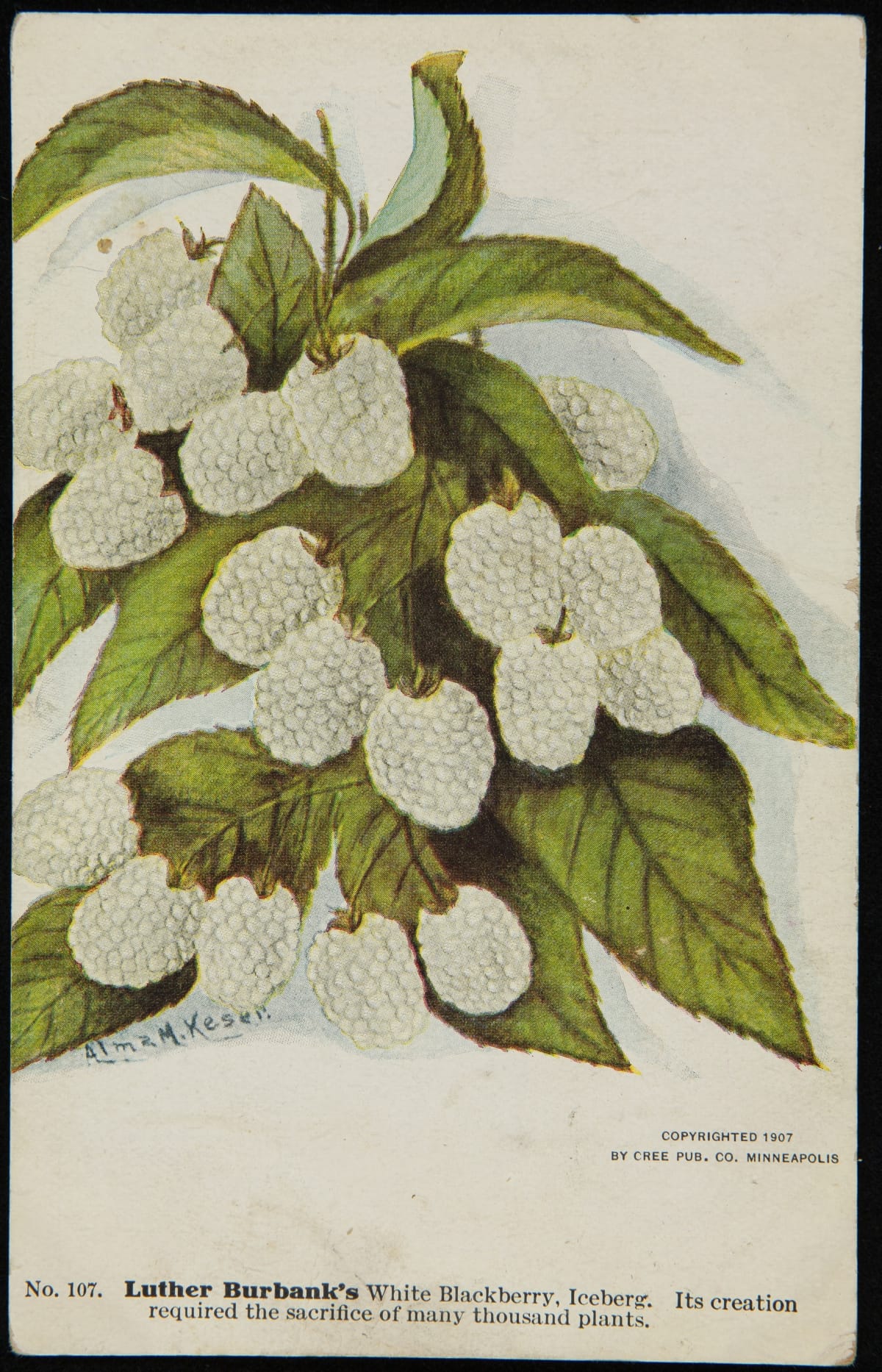
- 1907
- Collections - Artifact
"Luther Burbank's White Blackberry, Iceberg," 1907
Luther Burbank (1849-1926), an American horticulturalist and author, gained a reputation for selective breeding that yielded more than 800 new fruits, vegetables, flowers, and other plants. By 1906, Burbank's international fame had brought multiple solicitors to his home in Santa Rosa, California, interested in documenting his work. A deal with Minneapolis publisher Dugal Cree resulted in this promotional postcard.