
Search
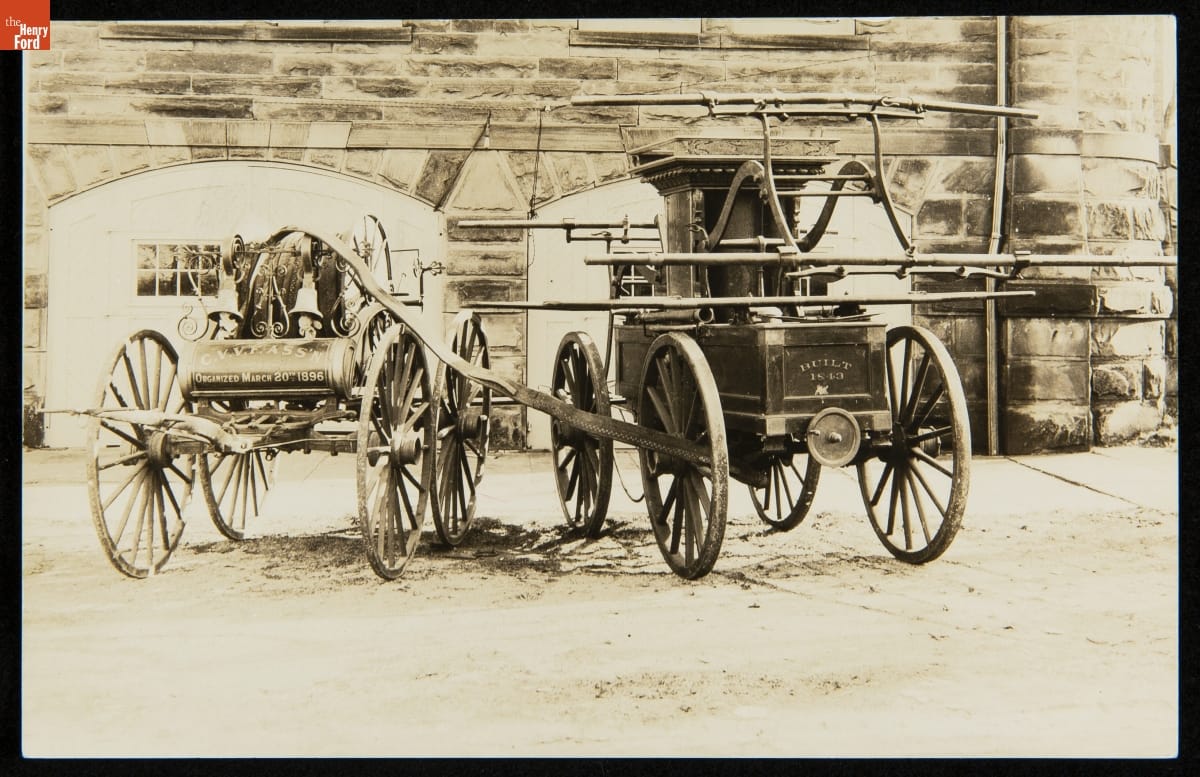
- 1843 Fire Engine and 1830-1880 Fire Hose Carriage, Photographed circa 1930 - American fire departments in the early 19th century operated on hand power. Firefighters activated pump engines by manually pushing on long bars -- called brakes -- to work the pump. In many cases, pump engines and hose carts were even pulled to the scene of a fire by hand. This photograph, taken about 1930, shows fire apparatus from a century earlier.
- circa 1930
- Collections - Artifact
1843 Fire Engine and 1830-1880 Fire Hose Carriage, Photographed circa 1930
American fire departments in the early 19th century operated on hand power. Firefighters activated pump engines by manually pushing on long bars -- called brakes -- to work the pump. In many cases, pump engines and hose carts were even pulled to the scene of a fire by hand. This photograph, taken about 1930, shows fire apparatus from a century earlier.
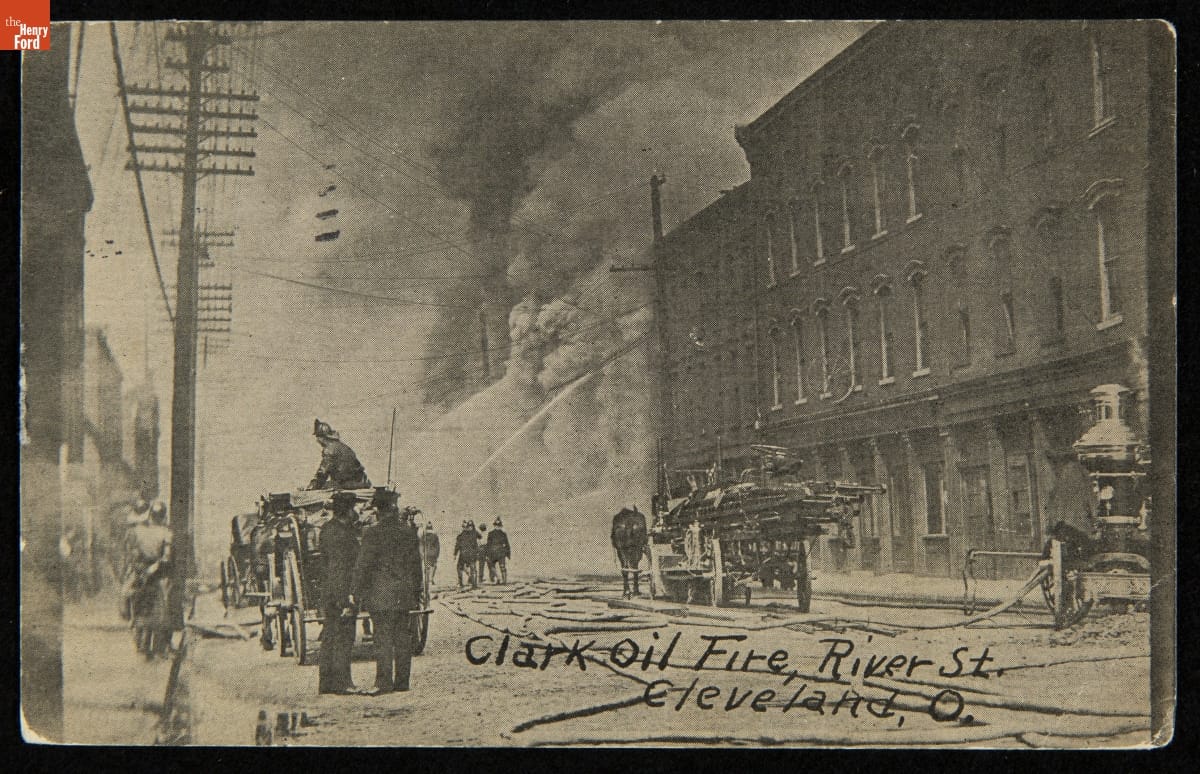
- "Clark Oil Fire, River St., Cleveland, O.," 1912 - This photograph shows the scene of a destructive fire at a Clark Oil facility in Cleveland, Ohio, in 1912. Fire was a constant threat to factories and industrial buildings. Firefighters focused their efforts on saving lives, controlling the fire, and preventing damage to nearby structures.
- January 09, 1912
- Collections - Artifact
"Clark Oil Fire, River St., Cleveland, O.," 1912
This photograph shows the scene of a destructive fire at a Clark Oil facility in Cleveland, Ohio, in 1912. Fire was a constant threat to factories and industrial buildings. Firefighters focused their efforts on saving lives, controlling the fire, and preventing damage to nearby structures.
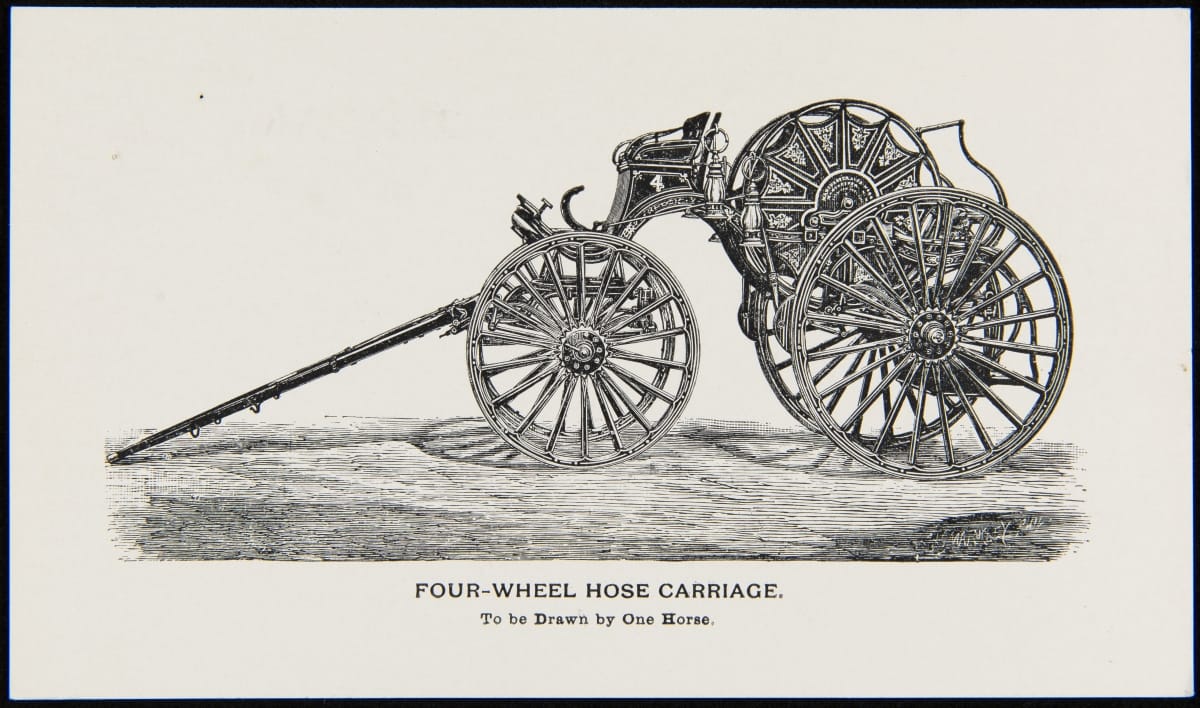
- "Four-Wheel Hose Carriage to be Drawn by One Horse," Postcard from The Old Fire Engine Shop, 1955-1965 - Effective firefighting depended on hoses to carry water from a source to a pumper, and from the pumper to the fire. Hand- or horse-drawn hose carriages transported hoses to the scene of a fire. Because fire departments often participated in community parades, many hose carriages were highly decorated. Larger departments might purchase an ornate hose carriage just for parade use.
- circa 1960
- Collections - Artifact
"Four-Wheel Hose Carriage to be Drawn by One Horse," Postcard from The Old Fire Engine Shop, 1955-1965
Effective firefighting depended on hoses to carry water from a source to a pumper, and from the pumper to the fire. Hand- or horse-drawn hose carriages transported hoses to the scene of a fire. Because fire departments often participated in community parades, many hose carriages were highly decorated. Larger departments might purchase an ornate hose carriage just for parade use.
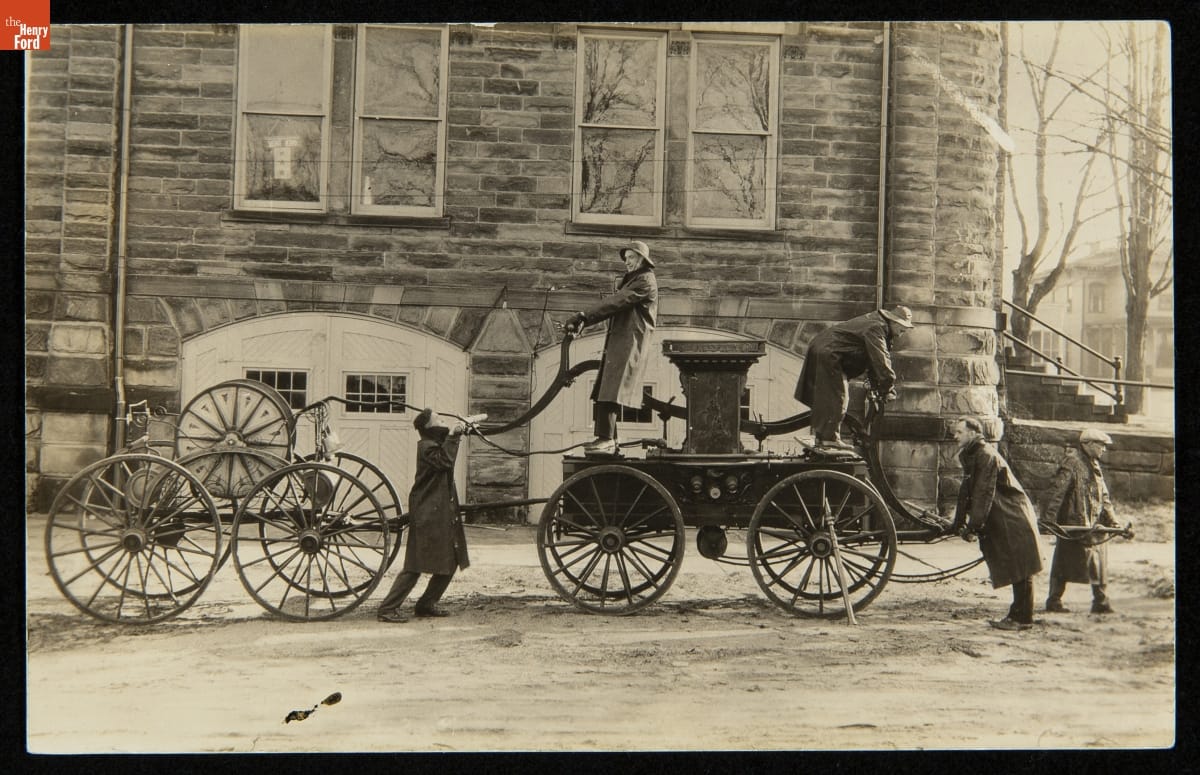
- Men Demonstrating 1840 Fire Engine and 1830-1880 Hose Carriage, circa 1930 - These five firefighters, photographed around 1930, demonstrated the operation of a hand-pumped fire engine from nearly a century earlier. In reality, as many as 20 people would have pushed on the long bars -- called brakes -- to work the pump. Under ideal conditions, the engine might have pumped more than 75 gallons of water per minute.
- circa 1930
- Collections - Artifact
Men Demonstrating 1840 Fire Engine and 1830-1880 Hose Carriage, circa 1930
These five firefighters, photographed around 1930, demonstrated the operation of a hand-pumped fire engine from nearly a century earlier. In reality, as many as 20 people would have pushed on the long bars -- called brakes -- to work the pump. Under ideal conditions, the engine might have pumped more than 75 gallons of water per minute.
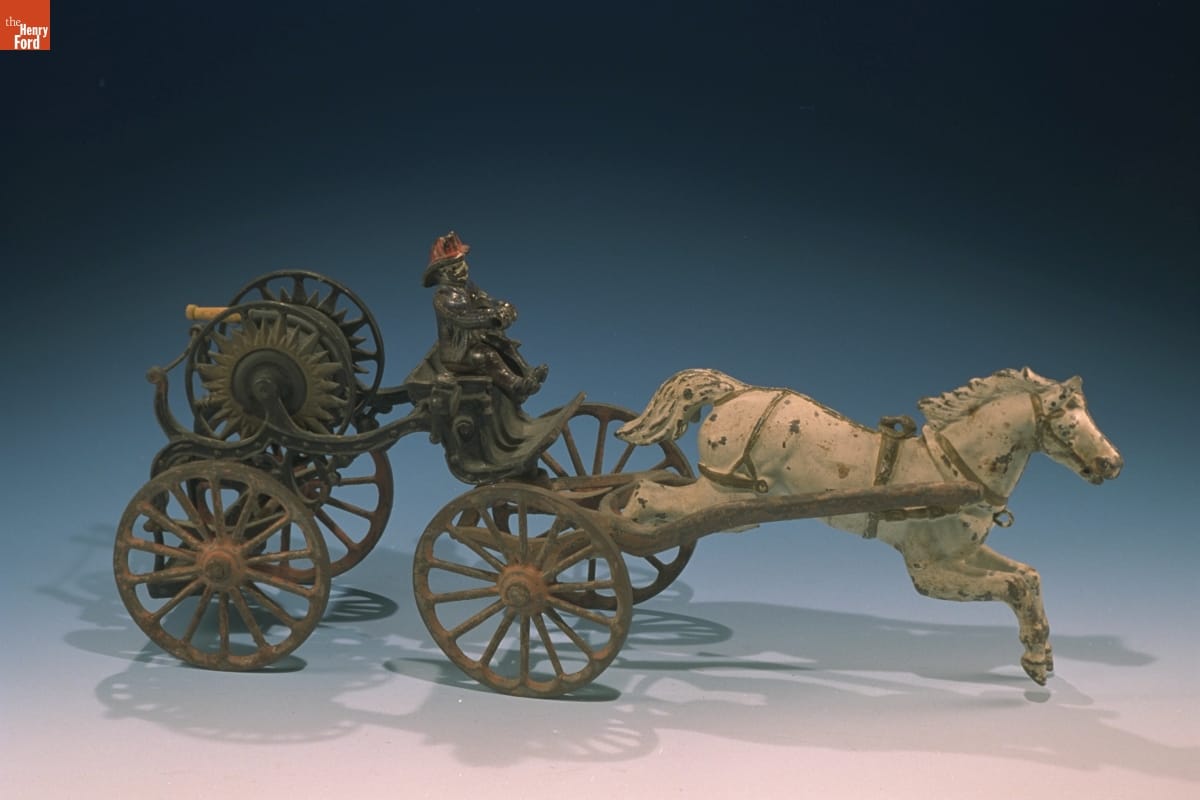
- Hose Carriage Pull Toy, 1890-1910 - Transportation toys have reflected larger technological innovations in society, in both their use of different materials and the types of vehicles they have represented. In 1870, Edward R. Ives joined partner Cornelius Blakeslee to produce clockwork and cast iron toys, such as this hose carriage pull toy, as well as to distribute toys for other manufacturers.
- 1890-1910
- Collections - Artifact
Hose Carriage Pull Toy, 1890-1910
Transportation toys have reflected larger technological innovations in society, in both their use of different materials and the types of vehicles they have represented. In 1870, Edward R. Ives joined partner Cornelius Blakeslee to produce clockwork and cast iron toys, such as this hose carriage pull toy, as well as to distribute toys for other manufacturers.