
Search
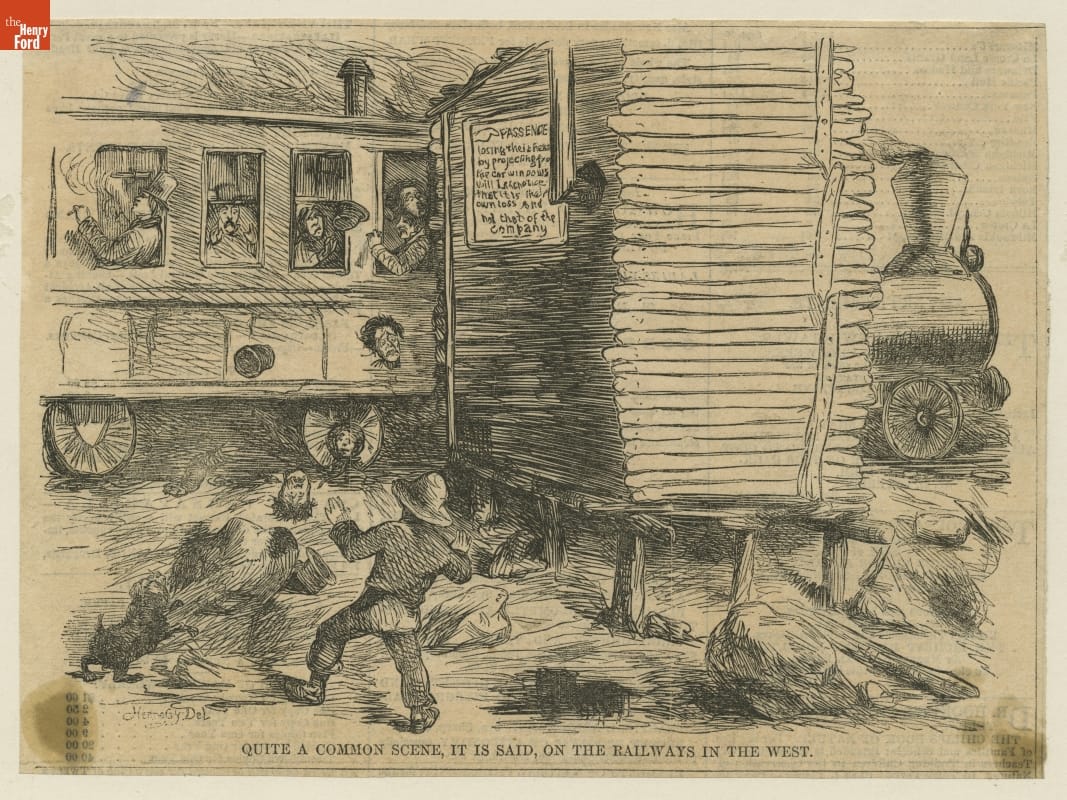
- Wood Engraving, "Quite a Common Scene, it is Said, on the Railways in the West," 1858 - While close clearances -- tight spaces between railroad cars and trackside structures -- did exist, this 1858 illustration from <em>Harper's Weekly</em> exaggerated the dangers faced by passengers who stuck their heads through windows. More likely threats from an open window included sparks, cinders and smoke from the steam locomotive pulling the train -- all of which could irritate eyes and damage clothing.
- 1858
- Collections - Artifact
Wood Engraving, "Quite a Common Scene, it is Said, on the Railways in the West," 1858
While close clearances -- tight spaces between railroad cars and trackside structures -- did exist, this 1858 illustration from Harper's Weekly exaggerated the dangers faced by passengers who stuck their heads through windows. More likely threats from an open window included sparks, cinders and smoke from the steam locomotive pulling the train -- all of which could irritate eyes and damage clothing.
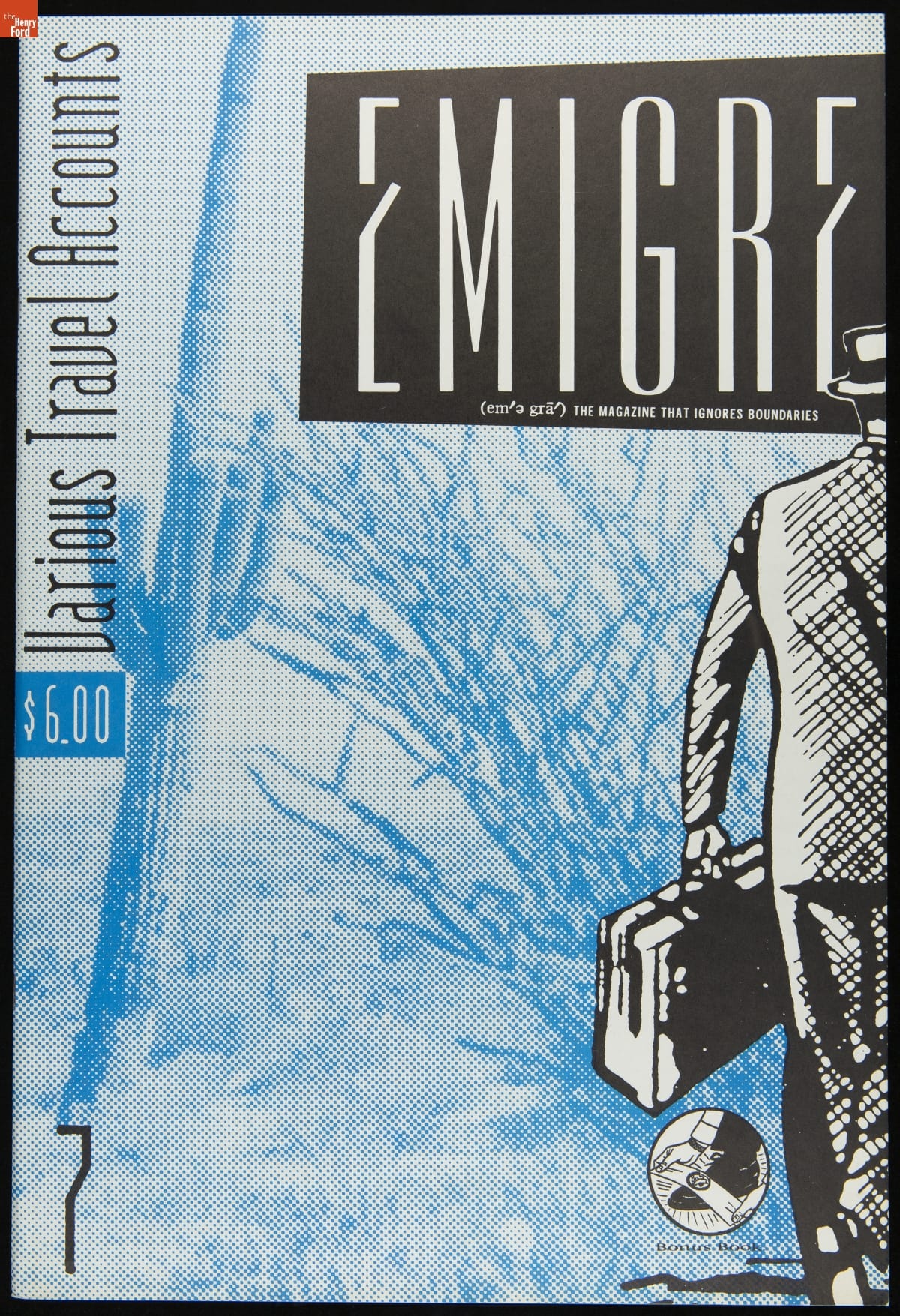
- Magazine, Emigre No. 7, "Various Travel Accounts," 1987 - Emigre is a digital type foundry established by Rudy VanderLans and Zuzana Licko. The company's history is linked with the introduction of the 1984 Macintosh computer, used to design their early bitmapped typefaces. Emigre's digital work gained notoriety -- defying visual communication standards with fractured, layered combinations of text and image. <em>Emigre</em> magazine showcased their fonts and promoted groundbreaking designers.
- 1987
- Collections - Artifact
Magazine, Emigre No. 7, "Various Travel Accounts," 1987
Emigre is a digital type foundry established by Rudy VanderLans and Zuzana Licko. The company's history is linked with the introduction of the 1984 Macintosh computer, used to design their early bitmapped typefaces. Emigre's digital work gained notoriety -- defying visual communication standards with fractured, layered combinations of text and image. Emigre magazine showcased their fonts and promoted groundbreaking designers.
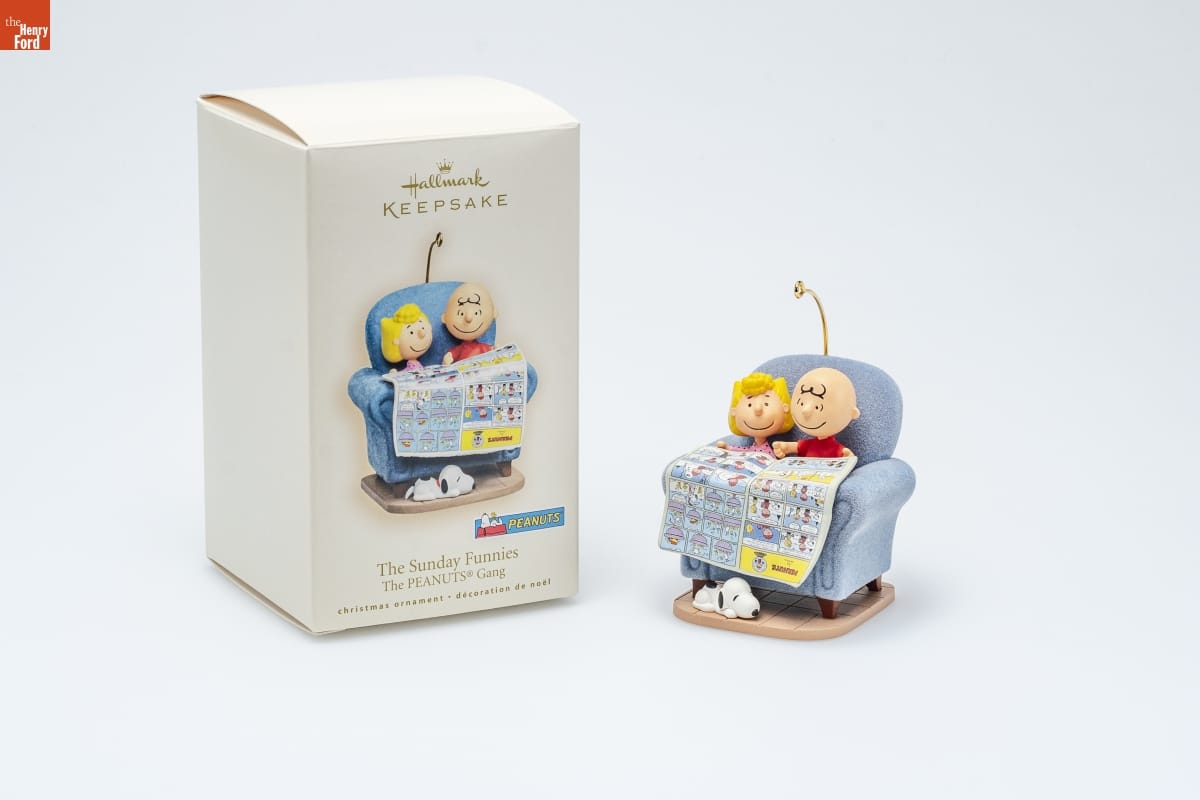
- Hallmark "The PEANUTS Gang Series: The Sunday Funnies" Christmas Ornament, 2007 - Already known for greeting cards, Hallmark introduced a line of Christmas ornaments in 1973. The company's annual release of an increasing array of ornaments revolutionized Christmas decorating, appealing to customers' interest in marking memories and milestones as well as expressing one's personality and unique tastes.
- 2007
- Collections - Artifact
Hallmark "The PEANUTS Gang Series: The Sunday Funnies" Christmas Ornament, 2007
Already known for greeting cards, Hallmark introduced a line of Christmas ornaments in 1973. The company's annual release of an increasing array of ornaments revolutionized Christmas decorating, appealing to customers' interest in marking memories and milestones as well as expressing one's personality and unique tastes.
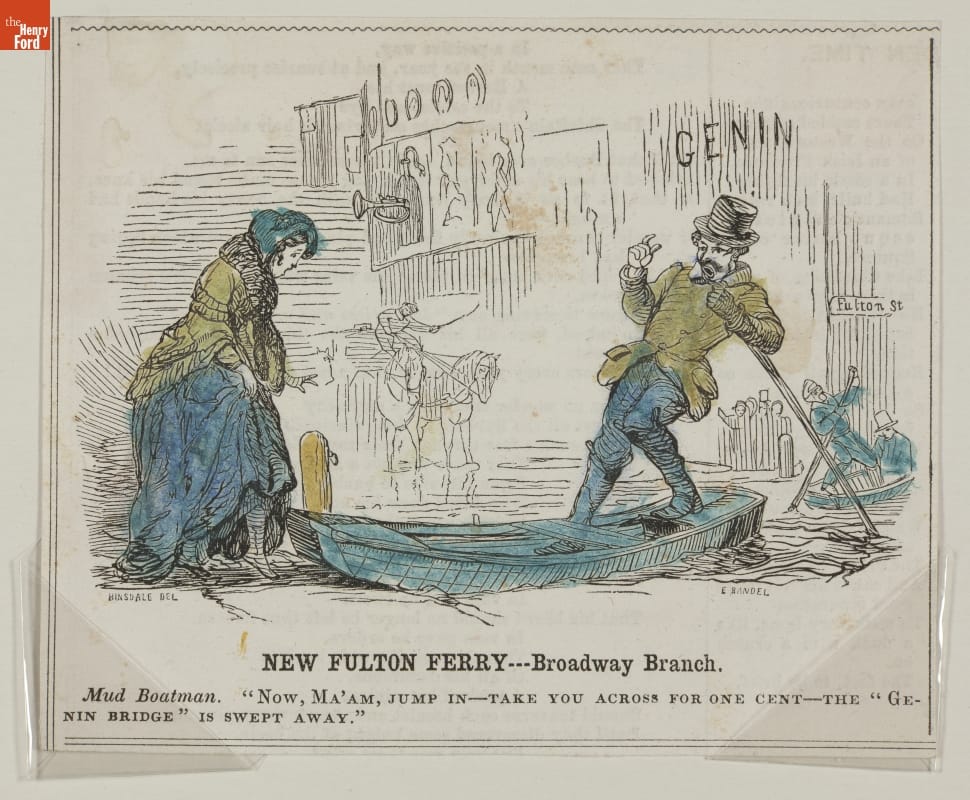
- Cartoon, "New Fulton Ferry - Broadway Branch," circa 1845 -
- circa 1845
- Collections - Artifact
Cartoon, "New Fulton Ferry - Broadway Branch," circa 1845
- Lantern Slide, "Doubt and Despair" Cartoon from the Ram's Horn Magazine, 1890-1910 - Frank Beard (1842-1905), an illustrator, caricaturist, and cartoonist, began his career by sketching scenes of military life for popular publications--such as <em>Harper's Weekly</em>--during the Civil War. His later works promoted Christianity, warned against secularism, and targeted the social ills of the Gilded Age. This slide shows one of his illustrations from <em>The Ram's Horn</em>, a non-denominational Christian periodical.
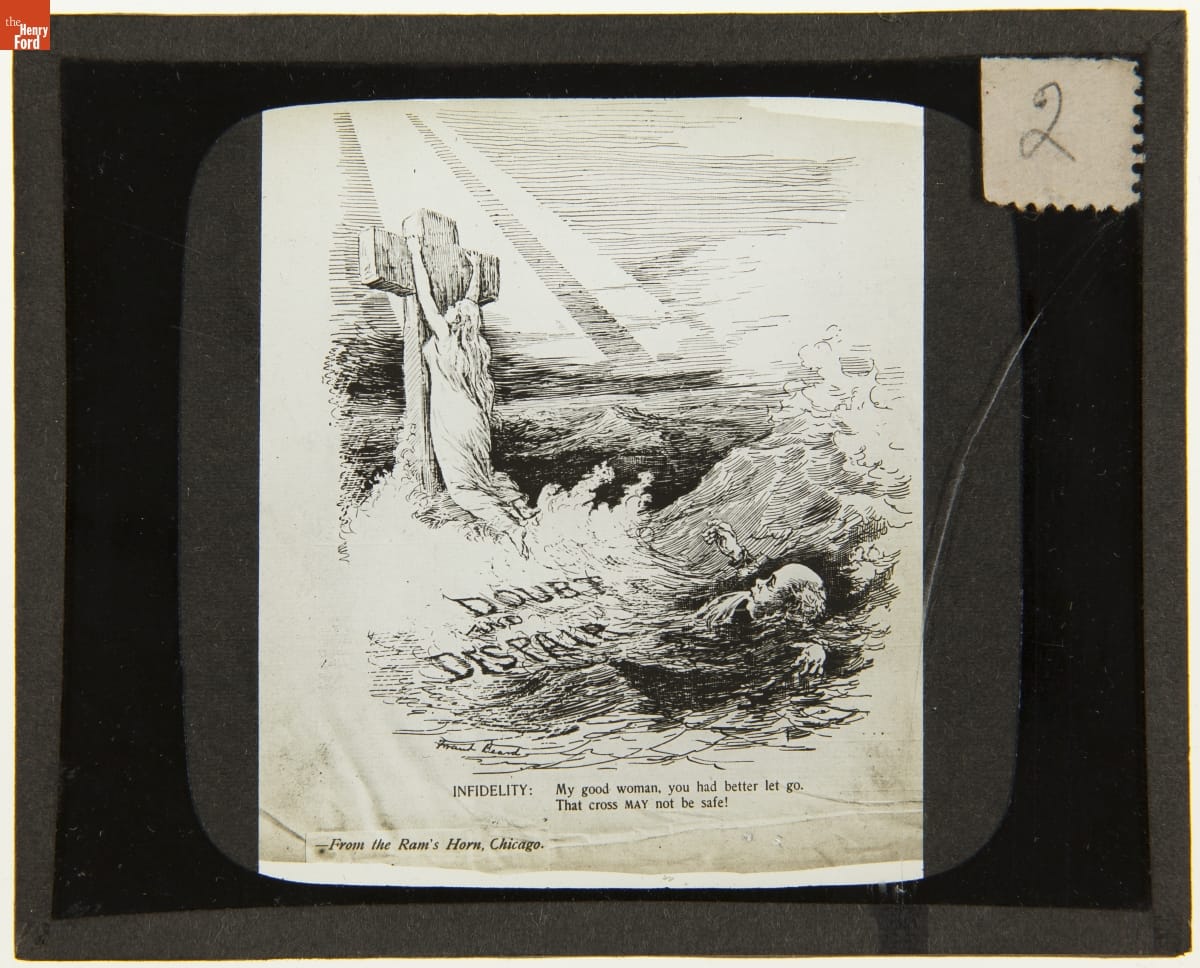
- 1890-1910
- Collections - Artifact
Lantern Slide, "Doubt and Despair" Cartoon from the Ram's Horn Magazine, 1890-1910
Frank Beard (1842-1905), an illustrator, caricaturist, and cartoonist, began his career by sketching scenes of military life for popular publications--such as Harper's Weekly--during the Civil War. His later works promoted Christianity, warned against secularism, and targeted the social ills of the Gilded Age. This slide shows one of his illustrations from The Ram's Horn, a non-denominational Christian periodical.
- Lantern Slide, "O Grave! Where is Thy Victory?" Cartoon, 1895 - Frank Beard (1842-1905), an illustrator, caricaturist, and cartoonist, began his career by sketching scenes of military life for popular publications--such as <em>Harper's Weekly</em>--during the Civil War. His later works promoted Christianity, warned against secularism, and targeted the social ills of the Gilded Age. This slide shows one of his illustrations from <em>The Ram's Horn</em>, a non-denominational Christian periodical.
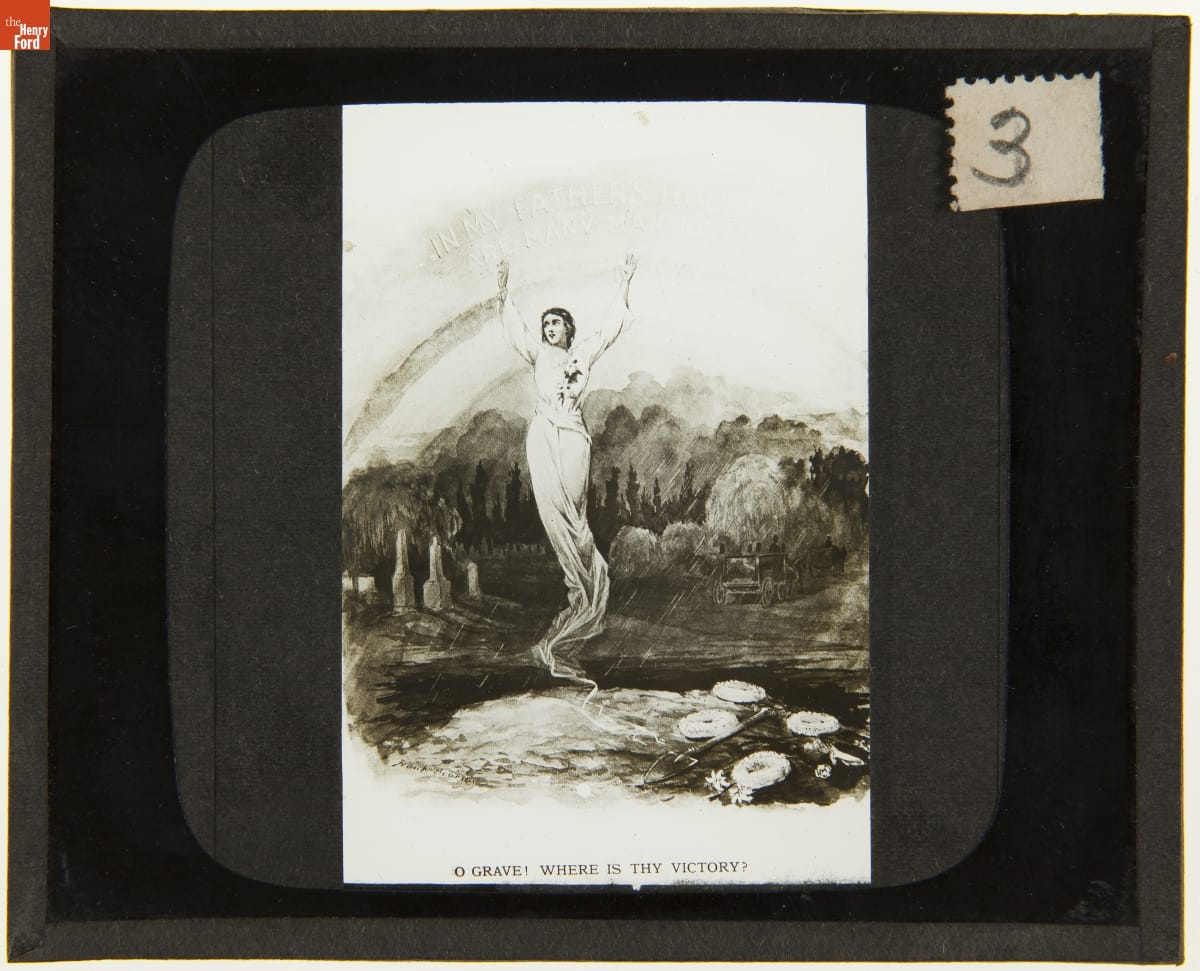
- 1895
- Collections - Artifact
Lantern Slide, "O Grave! Where is Thy Victory?" Cartoon, 1895
Frank Beard (1842-1905), an illustrator, caricaturist, and cartoonist, began his career by sketching scenes of military life for popular publications--such as Harper's Weekly--during the Civil War. His later works promoted Christianity, warned against secularism, and targeted the social ills of the Gilded Age. This slide shows one of his illustrations from The Ram's Horn, a non-denominational Christian periodical.
- Edison Amberol Record, "I Want to be a Janitor's Child," 1912 - In this comic song about class distinctions, a wealthy stockbroker's daughter envies the janitor's girl. This wealthy child lives an overly protected lifestyle and "has" to go to Europe once a year. She prefers the freedom and simpler activities of the lower class janitor's child who doesn't "wear fussed up clothes" and enjoys the amusements at Coney Island twice a week.
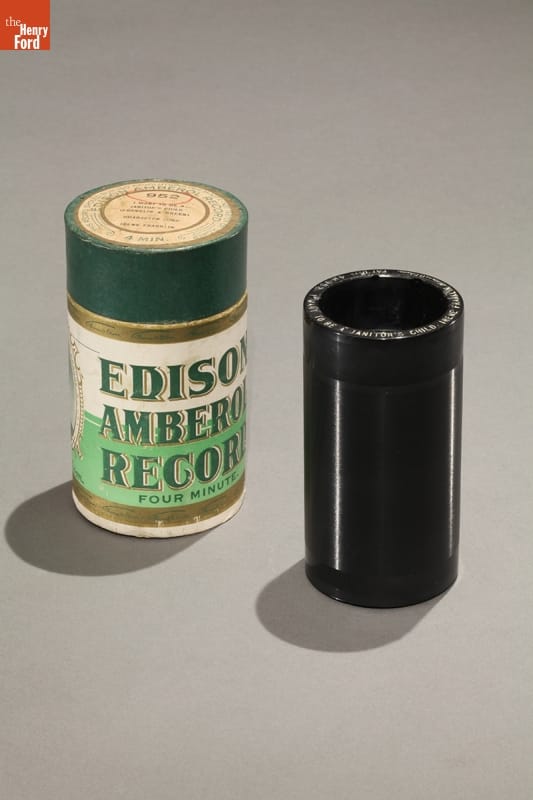
- 1912
- Collections - Artifact
Edison Amberol Record, "I Want to be a Janitor's Child," 1912
In this comic song about class distinctions, a wealthy stockbroker's daughter envies the janitor's girl. This wealthy child lives an overly protected lifestyle and "has" to go to Europe once a year. She prefers the freedom and simpler activities of the lower class janitor's child who doesn't "wear fussed up clothes" and enjoys the amusements at Coney Island twice a week.
- Ford Ice Cream Vendor Trucks, 1925 - Harry Burt, the owner of a candy and ice cream store in Youngstown, Ohio, perfected his chocolate-coated ice cream bar on a stick in 1920. He then hired a crew of salesmen to sell these bars in specially outfitted trucks. In this 1925 photograph, motorized vehicles are lined up ready to sell Harry Burt's Good Humor Ice Cream Suckers.
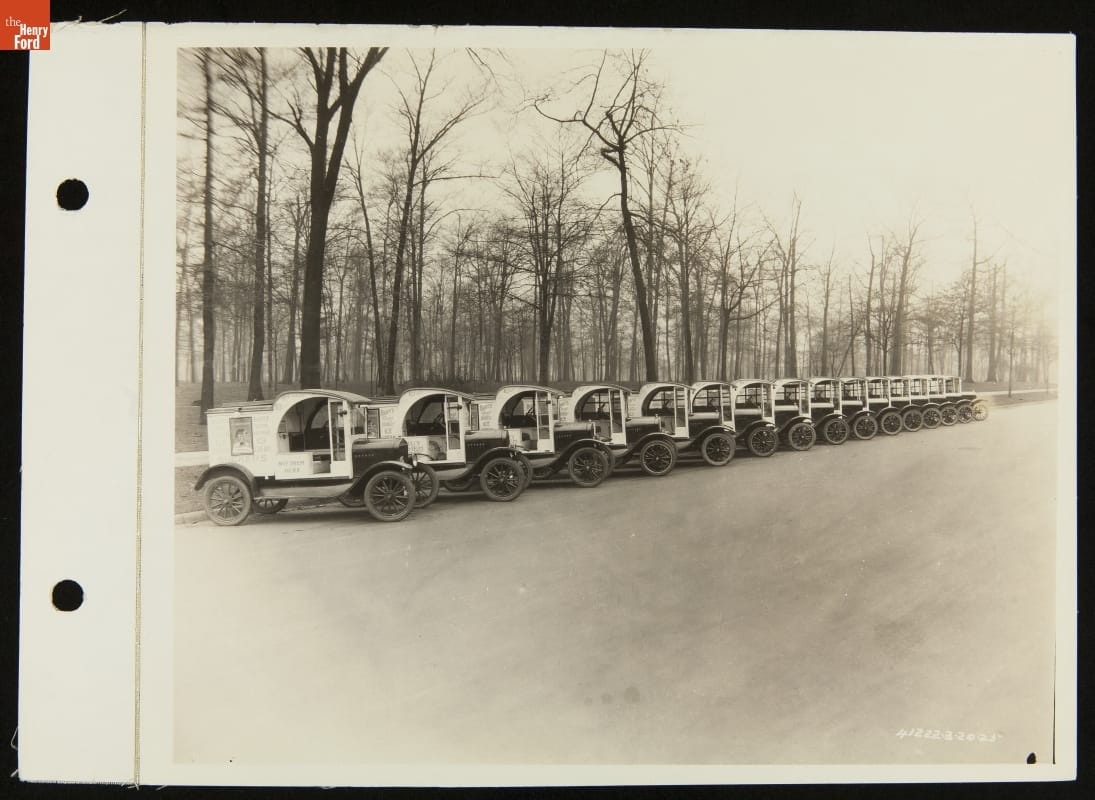
- March 20, 1925
- Collections - Artifact
Ford Ice Cream Vendor Trucks, 1925
Harry Burt, the owner of a candy and ice cream store in Youngstown, Ohio, perfected his chocolate-coated ice cream bar on a stick in 1920. He then hired a crew of salesmen to sell these bars in specially outfitted trucks. In this 1925 photograph, motorized vehicles are lined up ready to sell Harry Burt's Good Humor Ice Cream Suckers.
- Staged Portrait of Two Teenage Boys Fighting, June 28, 1876 - Tintypes, the popular "instant photographs" of the 19th century, could be produced in a matter of minutes at a price most people could afford. Tintypes democratized photography. Beginning in the mid-1850s, they gave more people than ever before the chance to have a real likeness of themselves--capturing unique glimpses of how everyday Americans looked and lived.
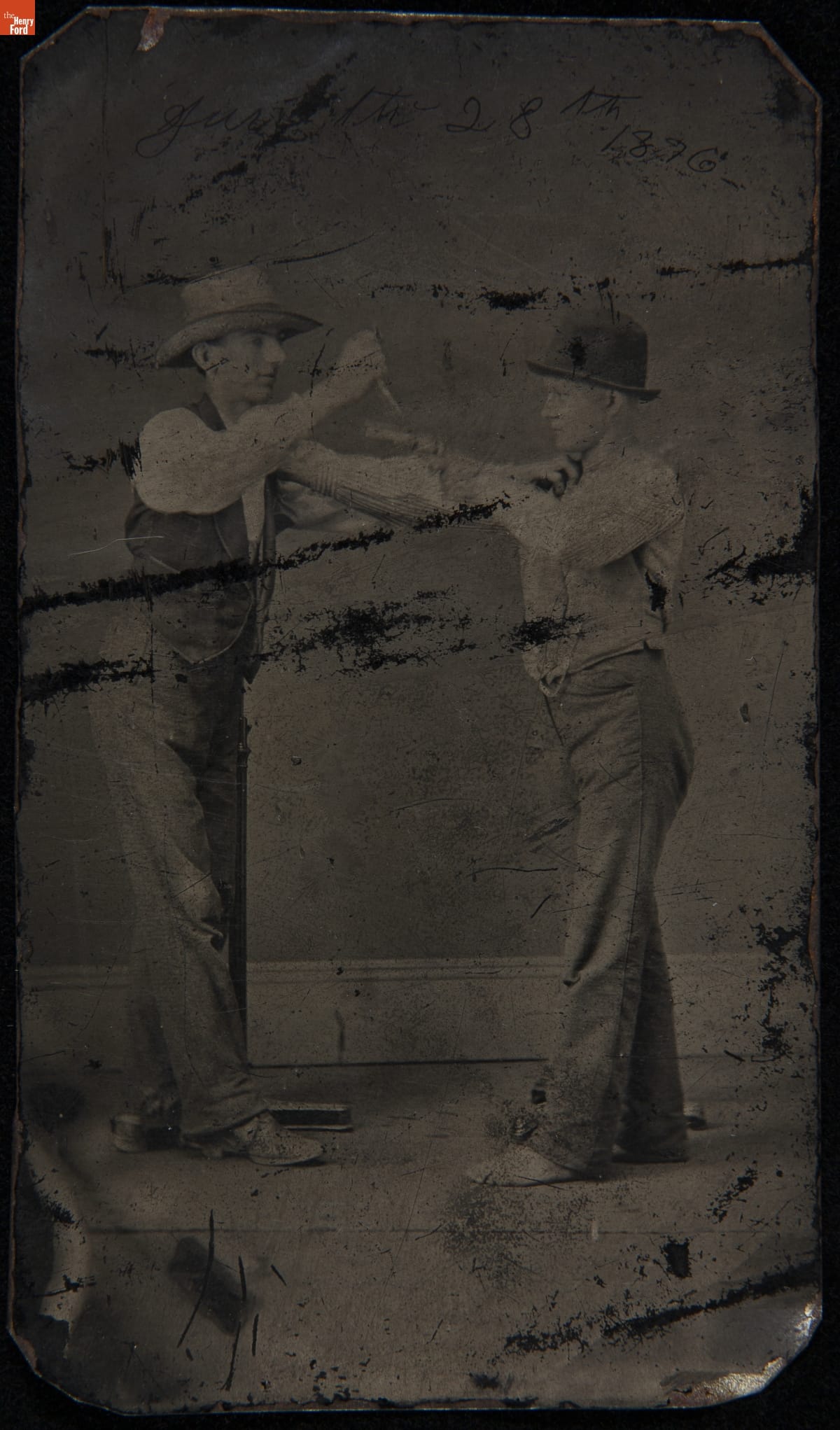
- June 28, 1876
- Collections - Artifact
Staged Portrait of Two Teenage Boys Fighting, June 28, 1876
Tintypes, the popular "instant photographs" of the 19th century, could be produced in a matter of minutes at a price most people could afford. Tintypes democratized photography. Beginning in the mid-1850s, they gave more people than ever before the chance to have a real likeness of themselves--capturing unique glimpses of how everyday Americans looked and lived.
- Etching Proof from a Thomas Nast Drawing, "A Dream, before and after Thanksgiving Dinner," 1878 - Thomas Nast (1840-1902) was an influential illustrator and political cartoonist. Though he is best known for the creation of our modern image of Santa Claus, Nast created many endearing illustrations depicting other holiday activities. This image, originally published in <EM>Harper's Weekly</EM> in 1878, depicts the possible effects of overindulgence on Thanksgiving.
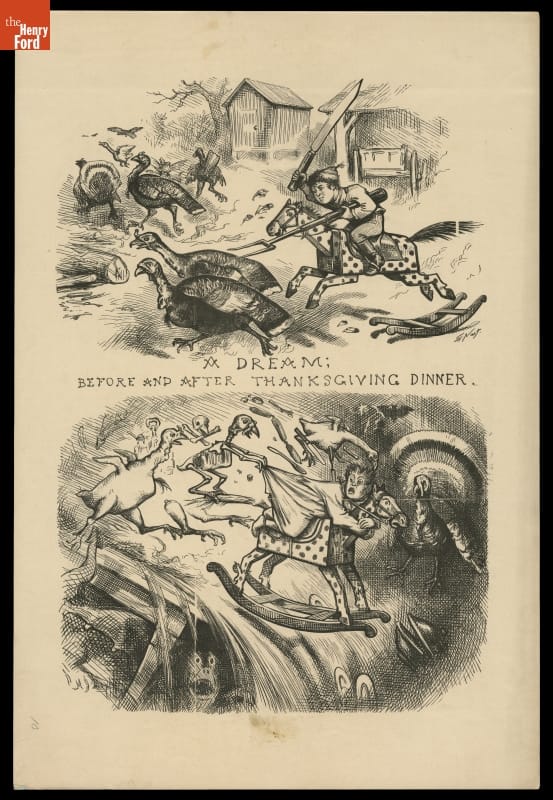
- December 07, 1878
- Collections - Artifact
Etching Proof from a Thomas Nast Drawing, "A Dream, before and after Thanksgiving Dinner," 1878
Thomas Nast (1840-1902) was an influential illustrator and political cartoonist. Though he is best known for the creation of our modern image of Santa Claus, Nast created many endearing illustrations depicting other holiday activities. This image, originally published in Harper's Weekly in 1878, depicts the possible effects of overindulgence on Thanksgiving.