
Search
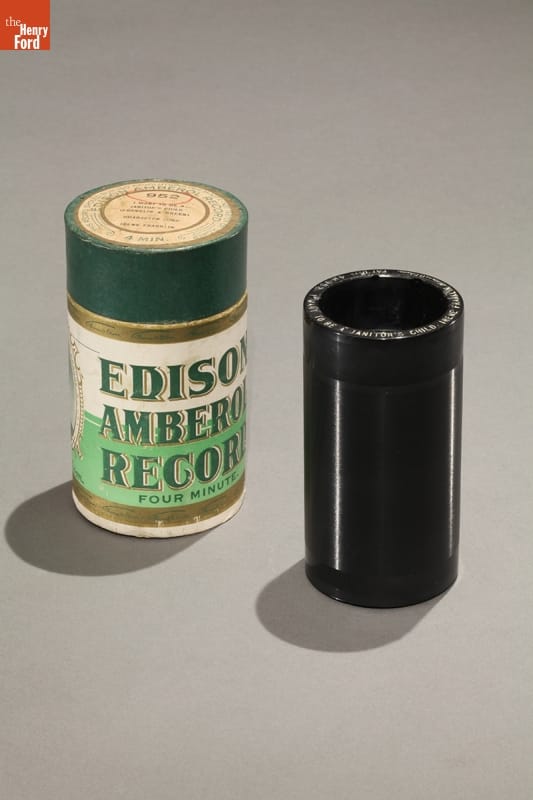
- Edison Amberol Record, "I Want to be a Janitor's Child," 1912 - In this comic song about class distinctions, a wealthy stockbroker's daughter envies the janitor's girl. This wealthy child lives an overly protected lifestyle and "has" to go to Europe once a year. She prefers the freedom and simpler activities of the lower class janitor's child who doesn't "wear fussed up clothes" and enjoys the amusements at Coney Island twice a week.
- 1912
- Collections - Artifact
Edison Amberol Record, "I Want to be a Janitor's Child," 1912
In this comic song about class distinctions, a wealthy stockbroker's daughter envies the janitor's girl. This wealthy child lives an overly protected lifestyle and "has" to go to Europe once a year. She prefers the freedom and simpler activities of the lower class janitor's child who doesn't "wear fussed up clothes" and enjoys the amusements at Coney Island twice a week.
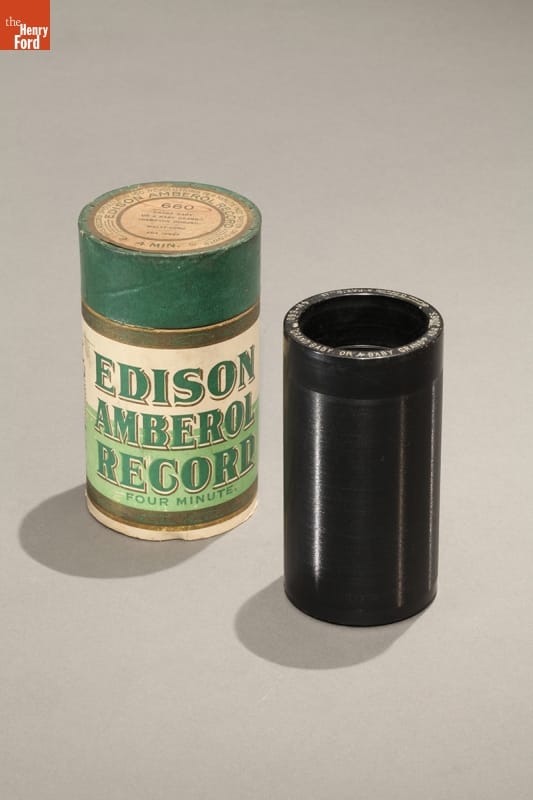
- Edison Amberol Record, "Grand Baby, or a Baby Grand?," 1911 - This humorous take on "class warfare" in urban America was sung in upper class and Irish dialects by Ada Jones. Here a lower class Irishwoman complains about the "high toned" lady in the apartment below whose loud piano playing wakes her baby. The upper class lady then complains that the baby's crying disturbs her. In reality, these two classes would never have shared an apartment building!
- 1911
- Collections - Artifact
Edison Amberol Record, "Grand Baby, or a Baby Grand?," 1911
This humorous take on "class warfare" in urban America was sung in upper class and Irish dialects by Ada Jones. Here a lower class Irishwoman complains about the "high toned" lady in the apartment below whose loud piano playing wakes her baby. The upper class lady then complains that the baby's crying disturbs her. In reality, these two classes would never have shared an apartment building!
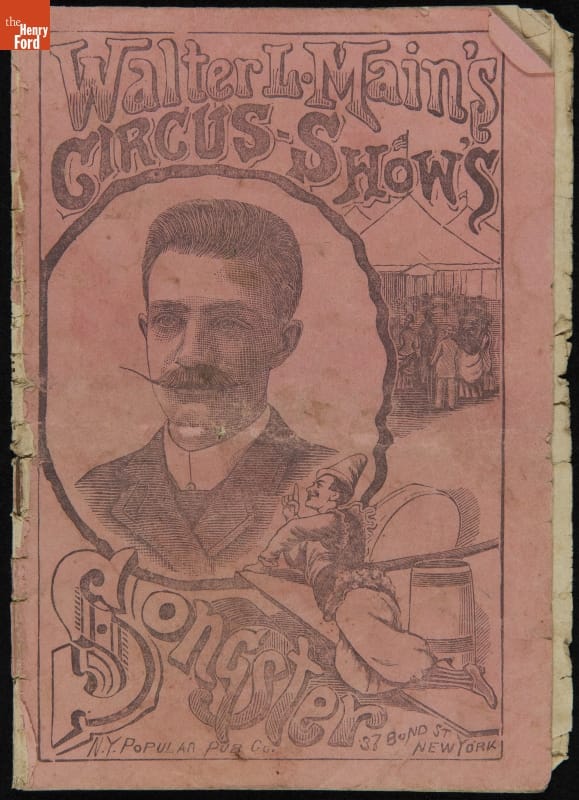
- "Walter L. Main's Circus-Shows Songster," circa 1900 - Many late 19th and early 20th century circuses scheduled additional entertainment after the main show ended. This after-show concert usually had singing, dancing, musical acts or a Wild West exhibition. The concert provided extra revenue for the show's management. Concertgoers had to buy an additional ticket and for a nominal price they could buy a "Songster" filled with texts and lyrics from the performance.
- circa 1900
- Collections - Artifact
"Walter L. Main's Circus-Shows Songster," circa 1900
Many late 19th and early 20th century circuses scheduled additional entertainment after the main show ended. This after-show concert usually had singing, dancing, musical acts or a Wild West exhibition. The concert provided extra revenue for the show's management. Concertgoers had to buy an additional ticket and for a nominal price they could buy a "Songster" filled with texts and lyrics from the performance.
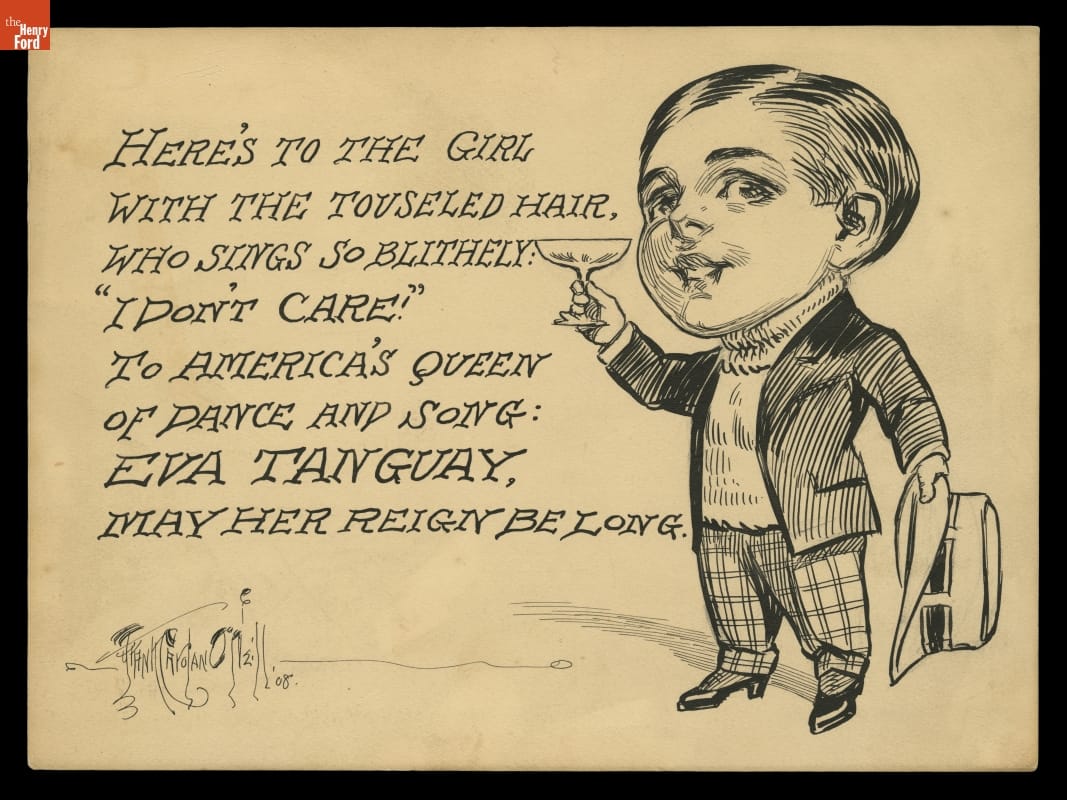
- Tribute to Eva Tanguay by Frank Carolan O'Neill, "Here's to the Girl with the Touseled Hair," 1908 -
- 1908
- Collections - Artifact
Tribute to Eva Tanguay by Frank Carolan O'Neill, "Here's to the Girl with the Touseled Hair," 1908
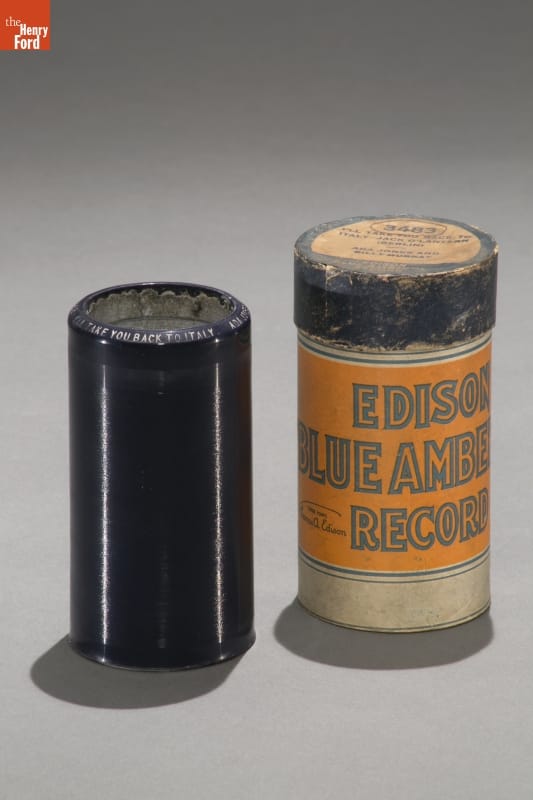
- Blue Amberol Cylinder Record, "I'll Take you Back to Italy," 1918 - Immigrants from southern and eastern Europe came to America in great numbers during the late 19th and early 20th century. Songs like this one had great appeal to the many Americans born in foreign lands who missed their homeland, its customs, and the relatives they left behind.
- 1918
- Collections - Artifact
Blue Amberol Cylinder Record, "I'll Take you Back to Italy," 1918
Immigrants from southern and eastern Europe came to America in great numbers during the late 19th and early 20th century. Songs like this one had great appeal to the many Americans born in foreign lands who missed their homeland, its customs, and the relatives they left behind.
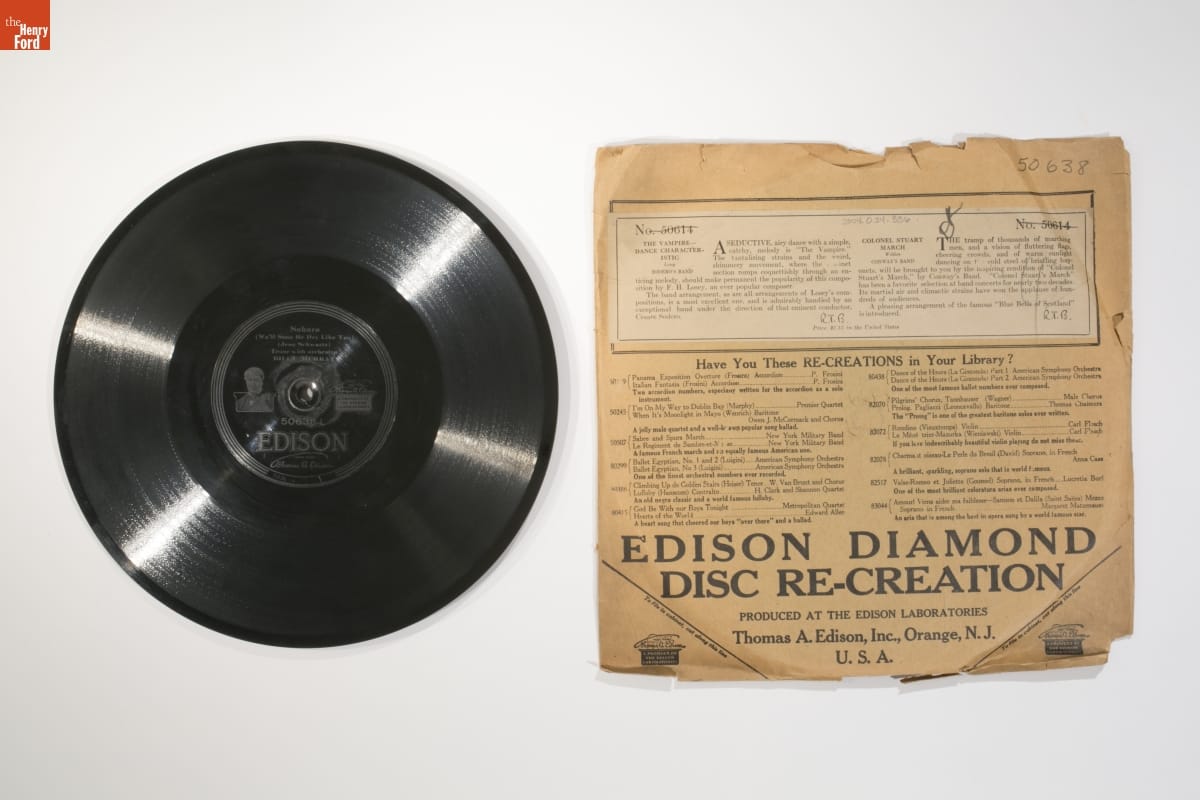
- Edison Diamond Disc Record, "Sahara (Soon We'll be Dry as You)" and "You'd be Surprised," 1919 - This comical song protests against Prohibition, a period from 1920 to 1933 when the United States declared the manufacture, sale, and consumption of alcohol illegal. The Sahara Desert is likened to Prohibition in America: "Sahara, Oh Sahara, we'll soon be dry like you."
- November 01, 1919
- Collections - Artifact
Edison Diamond Disc Record, "Sahara (Soon We'll be Dry as You)" and "You'd be Surprised," 1919
This comical song protests against Prohibition, a period from 1920 to 1933 when the United States declared the manufacture, sale, and consumption of alcohol illegal. The Sahara Desert is likened to Prohibition in America: "Sahara, Oh Sahara, we'll soon be dry like you."