
Search
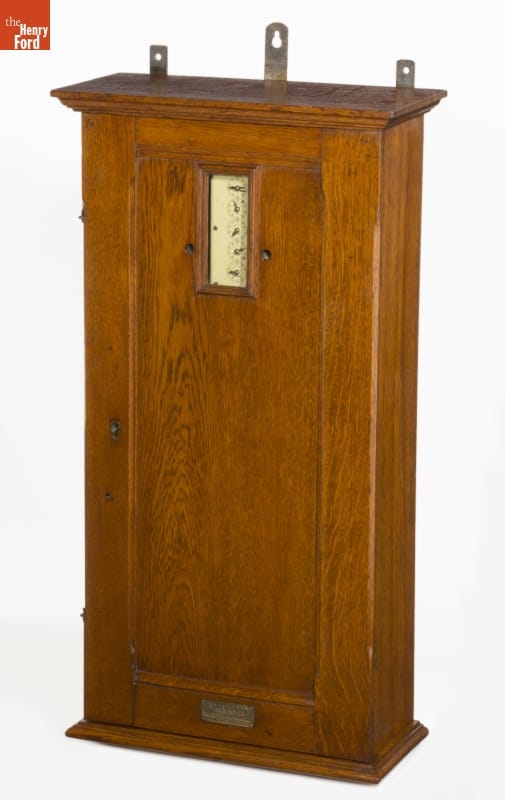
- H. Aron Meter, Used by Budapest General Electric Company, 1898 - Hermann Aron, a German physicist and lecturer-turned-manufacturer, developed a pendulum watt-hour meter in the 1880s for companies that supplied electricity to consumers in Europe's growing urban areas. Swinging pendulums turned hands on dials that accurately registered how much electricity customers used--so companies could charge appropriate rates. Aron's pendulum meters remained practical until less expensive motor meters became standard.
- 1898
- Collections - Artifact
H. Aron Meter, Used by Budapest General Electric Company, 1898
Hermann Aron, a German physicist and lecturer-turned-manufacturer, developed a pendulum watt-hour meter in the 1880s for companies that supplied electricity to consumers in Europe's growing urban areas. Swinging pendulums turned hands on dials that accurately registered how much electricity customers used--so companies could charge appropriate rates. Aron's pendulum meters remained practical until less expensive motor meters became standard.
- Electric Cable, Used in Austrian and Hungarian Submarines during World War I, circa 1914 -
- circa 1914
- Collections - Artifact
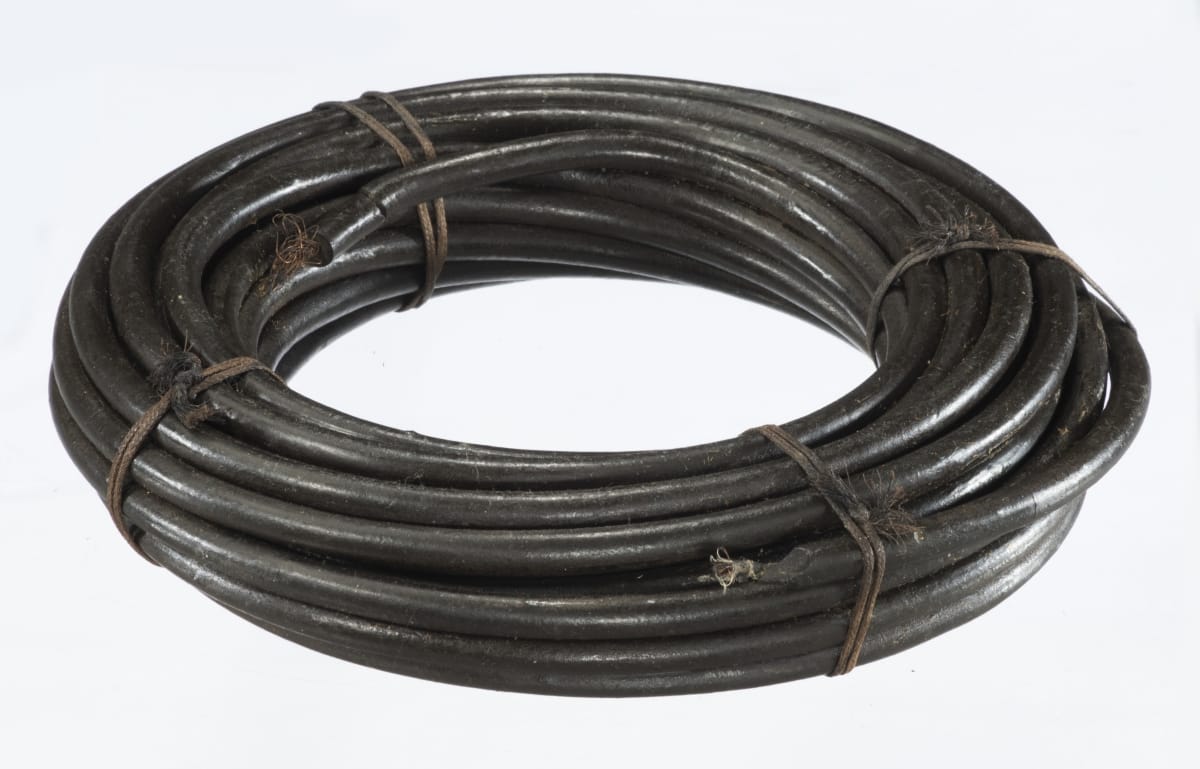
Electric Cable, Used in Austrian and Hungarian Submarines during World War I, circa 1914
- Electric Wire Used in Hungary during World War I, 1914-1918 -
- 1914-1918
- Collections - Artifact
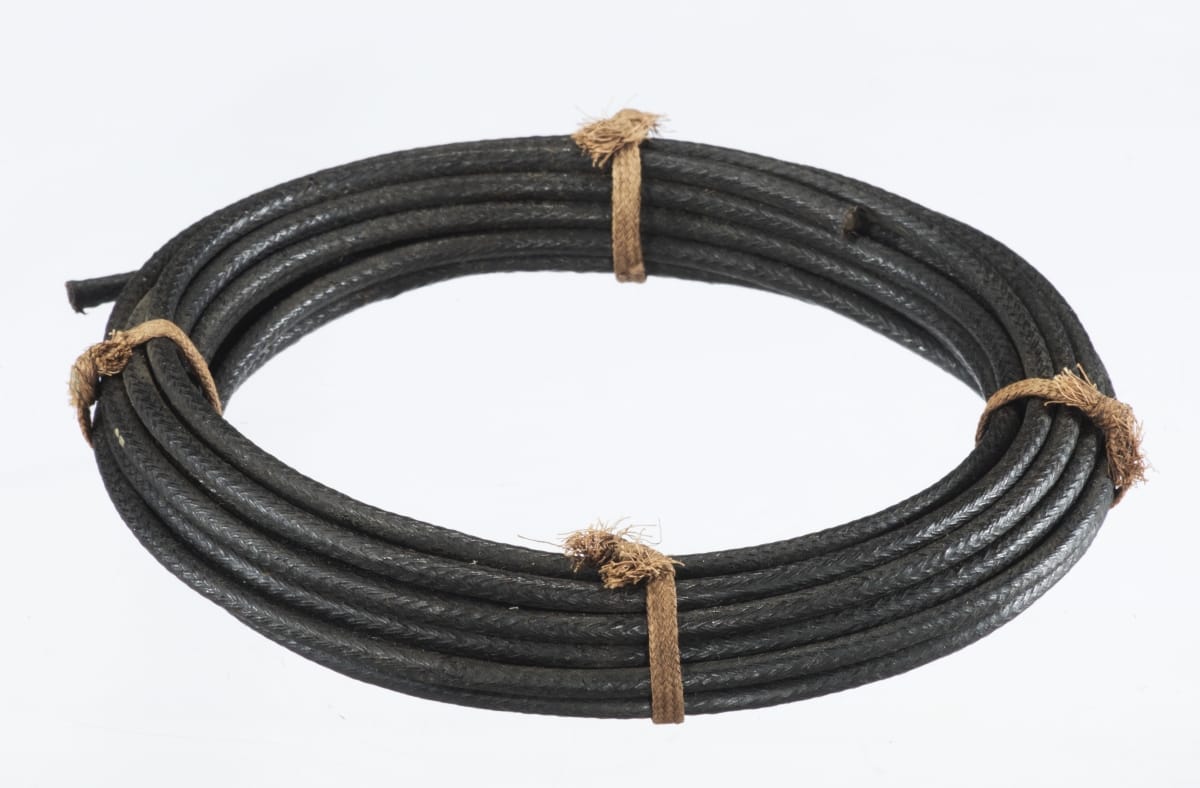
Electric Wire Used in Hungary during World War I, 1914-1918
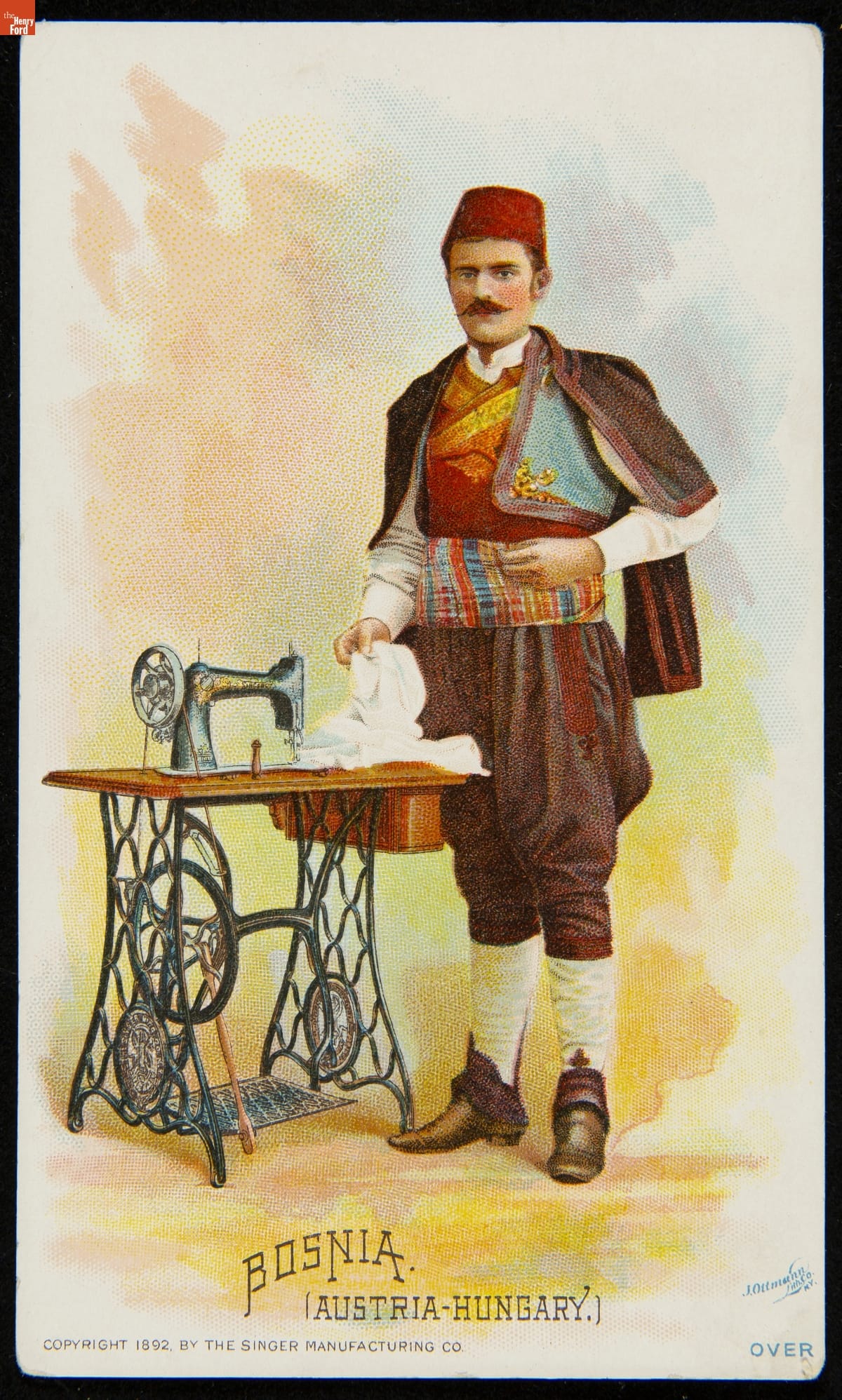
- Trade Card for Singer Sewing Machines, 1892 - As color printing gained momentum in the late 19th century, trade cards became a major means of advertising goods and services. Americans enjoyed and often saved the vibrant little advertisements found in product packages or distributed by local merchants. The Singer Sewing Machine Company had a series of trade cards, like this one, offering images of Singer machine users from around the world in their national dress.
- circa 1892
- Collections - Artifact
Trade Card for Singer Sewing Machines, 1892
As color printing gained momentum in the late 19th century, trade cards became a major means of advertising goods and services. Americans enjoyed and often saved the vibrant little advertisements found in product packages or distributed by local merchants. The Singer Sewing Machine Company had a series of trade cards, like this one, offering images of Singer machine users from around the world in their national dress.
- Trade Card for Singer Sewing Machines, 1892 - As color printing gained momentum in the late 19th century, trade cards became a major means of advertising goods and services. Americans enjoyed and often saved the vibrant little advertisements found in product packages or distributed by local merchants. The Singer Sewing Machine Company had a series of trade cards, like this one, offering images of Singer machine users from around the world in their national dress.
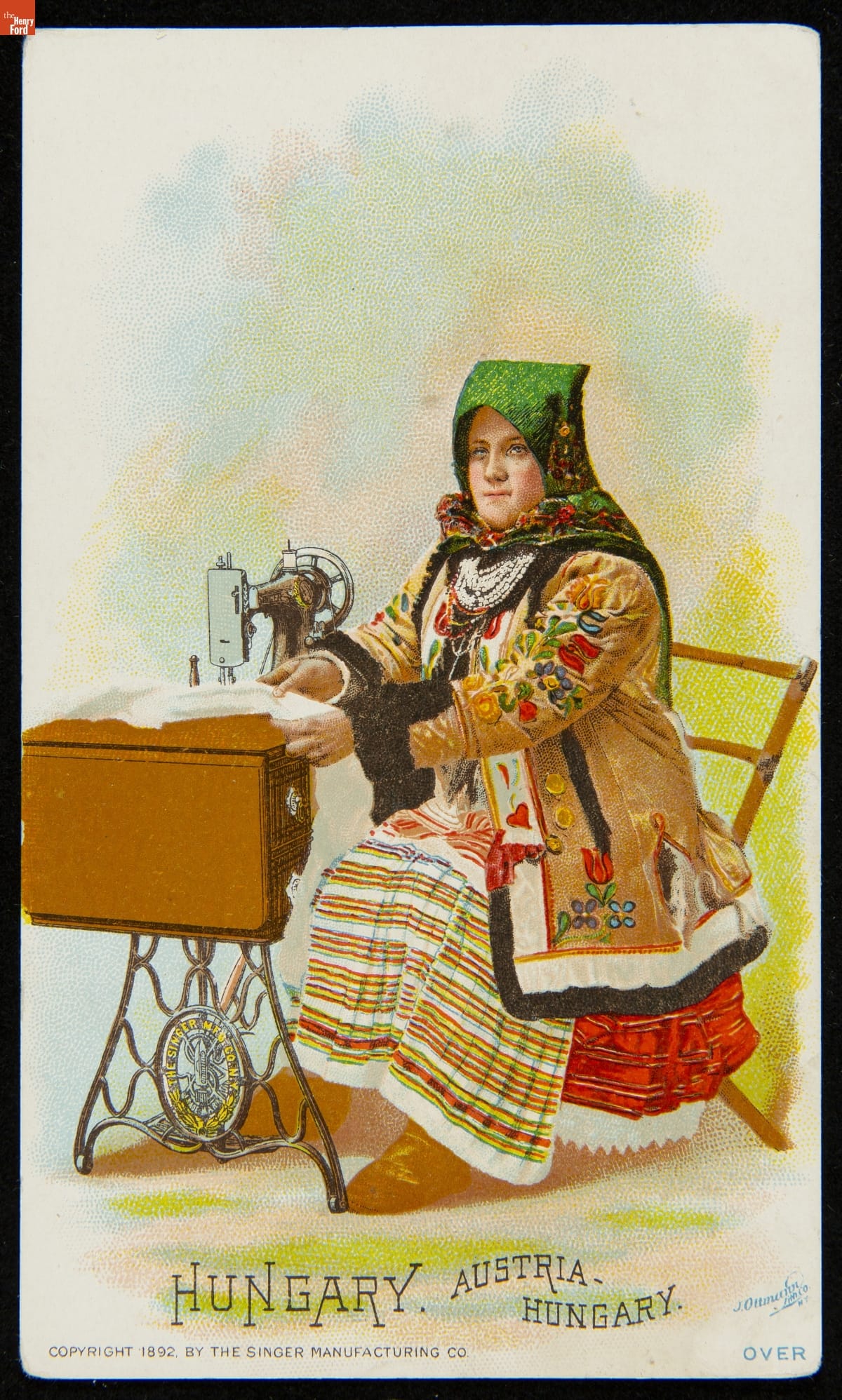
- circa 1892
- Collections - Artifact
Trade Card for Singer Sewing Machines, 1892
As color printing gained momentum in the late 19th century, trade cards became a major means of advertising goods and services. Americans enjoyed and often saved the vibrant little advertisements found in product packages or distributed by local merchants. The Singer Sewing Machine Company had a series of trade cards, like this one, offering images of Singer machine users from around the world in their national dress.
- Trade Card for Singer Sewing Machines, 1892 - As color printing gained momentum in the late 19th century, trade cards became a major means of advertising goods and services. Americans enjoyed and often saved the vibrant little advertisements found in product packages or distributed by local merchants. The Singer Sewing Machine Company had a series of trade cards, like this one, offering images of Singer machine users from around the world in their national dress.
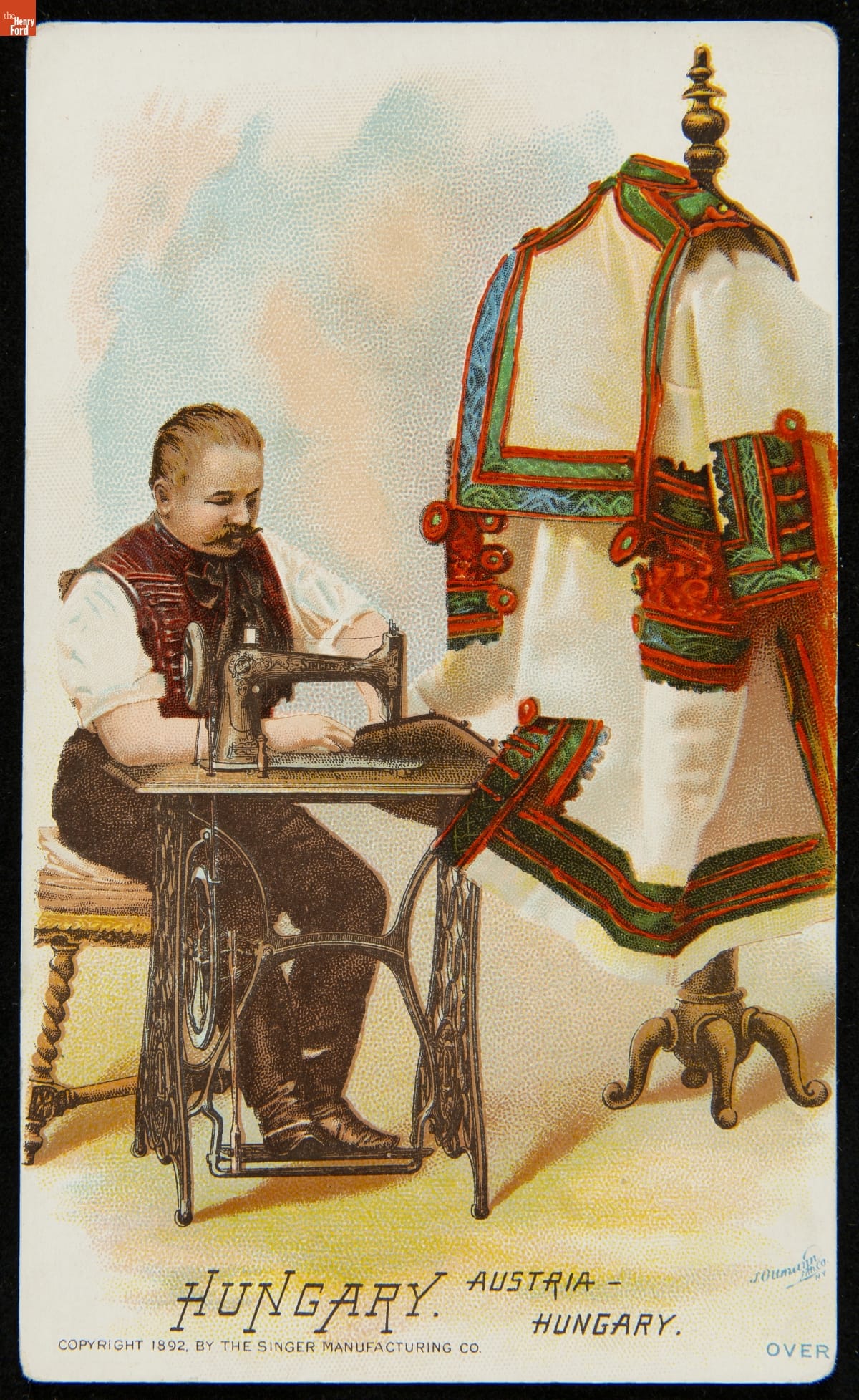
- circa 1892
- Collections - Artifact
Trade Card for Singer Sewing Machines, 1892
As color printing gained momentum in the late 19th century, trade cards became a major means of advertising goods and services. Americans enjoyed and often saved the vibrant little advertisements found in product packages or distributed by local merchants. The Singer Sewing Machine Company had a series of trade cards, like this one, offering images of Singer machine users from around the world in their national dress.
- The House of Heinz, circa 1929 - The H.J. Heinz Company was founded from humble beginnings in 1869. By the turn of the century it had become a well-known manufacturer of processed food. Its rapid success resulted in the expansion of its operations at home and abroad. This booklet from 1929 provides an overview of the many branch factories and buildings operated by the company, referred to as "The House of Heinz."
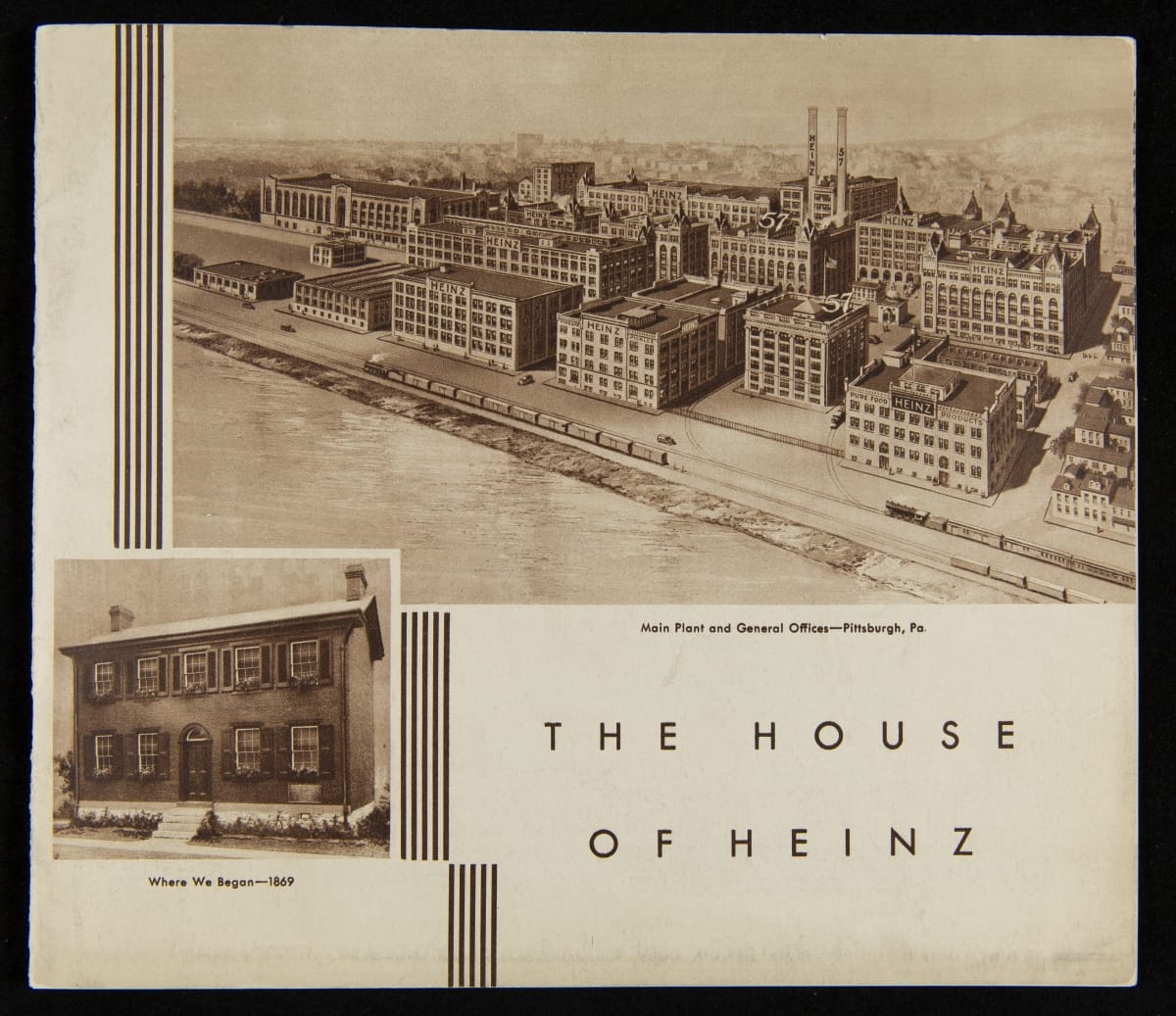
- circa 1929
- Collections - Artifact
The House of Heinz, circa 1929
The H.J. Heinz Company was founded from humble beginnings in 1869. By the turn of the century it had become a well-known manufacturer of processed food. Its rapid success resulted in the expansion of its operations at home and abroad. This booklet from 1929 provides an overview of the many branch factories and buildings operated by the company, referred to as "The House of Heinz."
- H. Aron Type K Meter, Used by Budapest General Electric Company, 1903 - Hermann Aron, a German physicist and lecturer-turned-manufacturer, developed a pendulum watt-hour meter in the 1880s for companies that supplied electricity to consumers in Europe's growing urban areas. Swinging pendulums turned hands on dials that accurately registered how much electricity customers used--so companies could charge appropriate rates. Aron's pendulum meters remained practical until less expensive motor meters became standard.
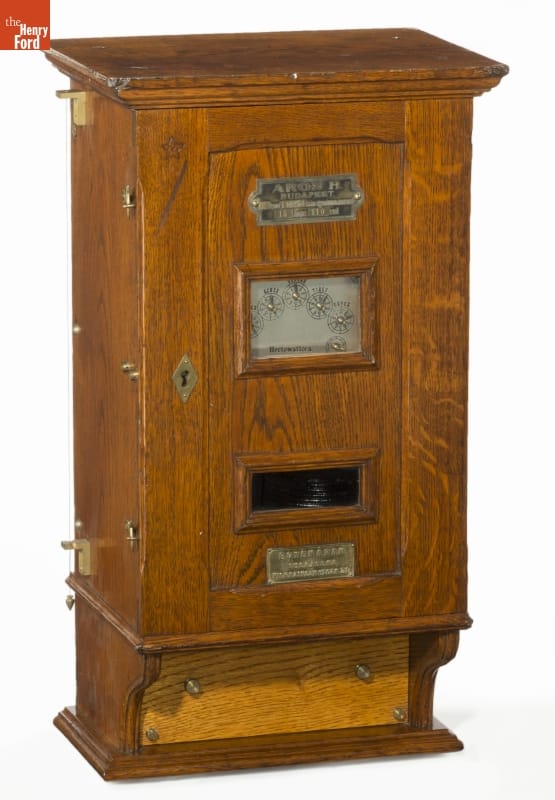
- 1903
- Collections - Artifact
H. Aron Type K Meter, Used by Budapest General Electric Company, 1903
Hermann Aron, a German physicist and lecturer-turned-manufacturer, developed a pendulum watt-hour meter in the 1880s for companies that supplied electricity to consumers in Europe's growing urban areas. Swinging pendulums turned hands on dials that accurately registered how much electricity customers used--so companies could charge appropriate rates. Aron's pendulum meters remained practical until less expensive motor meters became standard.
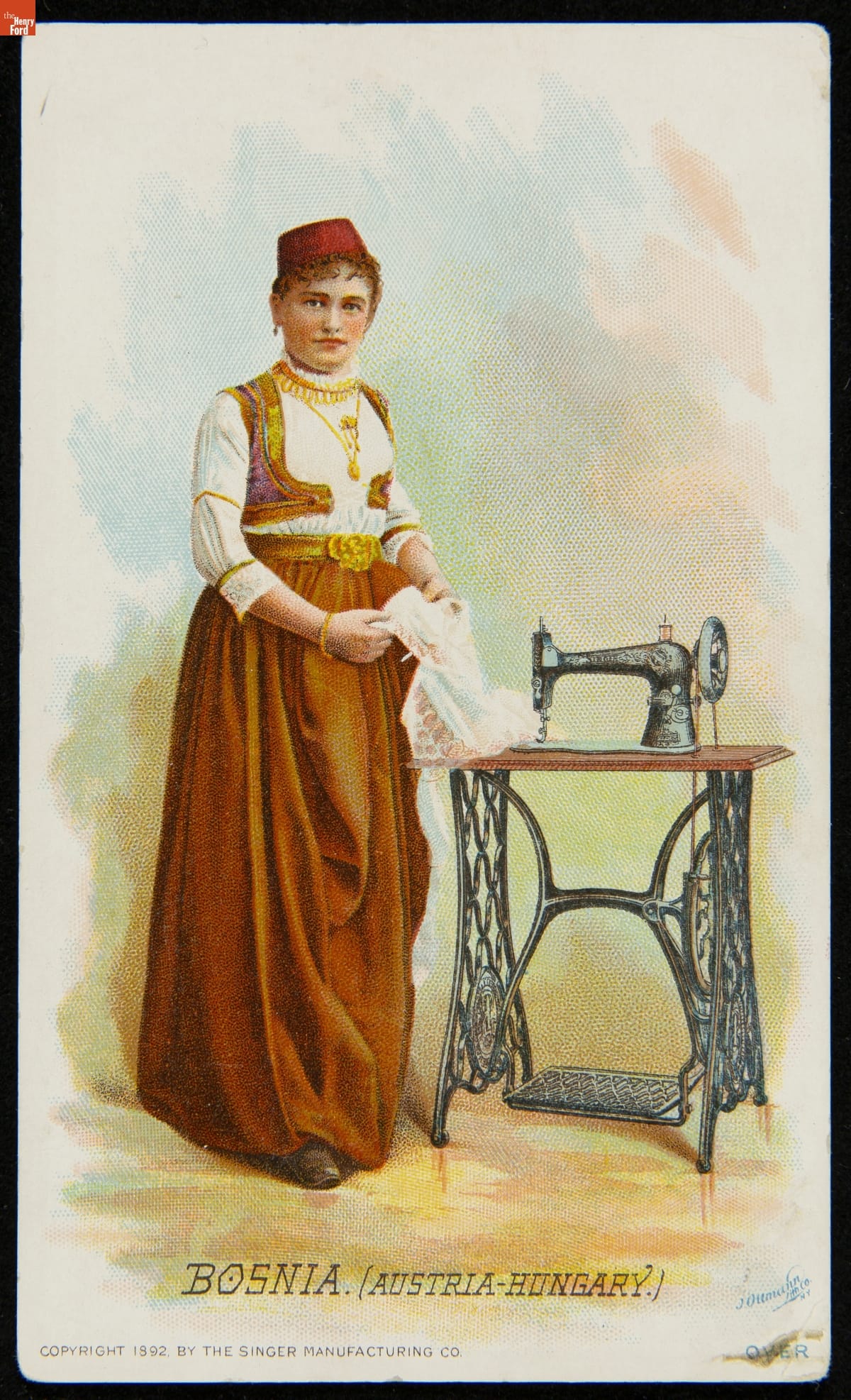
- Trade Card for Singer Sewing Machines, 1892 - As color printing gained momentum in the late 19th century, trade cards became a major means of advertising goods and services. Americans enjoyed and often saved the vibrant little advertisements found in product packages or distributed by local merchants. The Singer Sewing Machine Company had a series of trade cards, like this one, offering images of Singer machine users from around the world in their national dress.
- circa 1892
- Collections - Artifact
Trade Card for Singer Sewing Machines, 1892
As color printing gained momentum in the late 19th century, trade cards became a major means of advertising goods and services. Americans enjoyed and often saved the vibrant little advertisements found in product packages or distributed by local merchants. The Singer Sewing Machine Company had a series of trade cards, like this one, offering images of Singer machine users from around the world in their national dress.
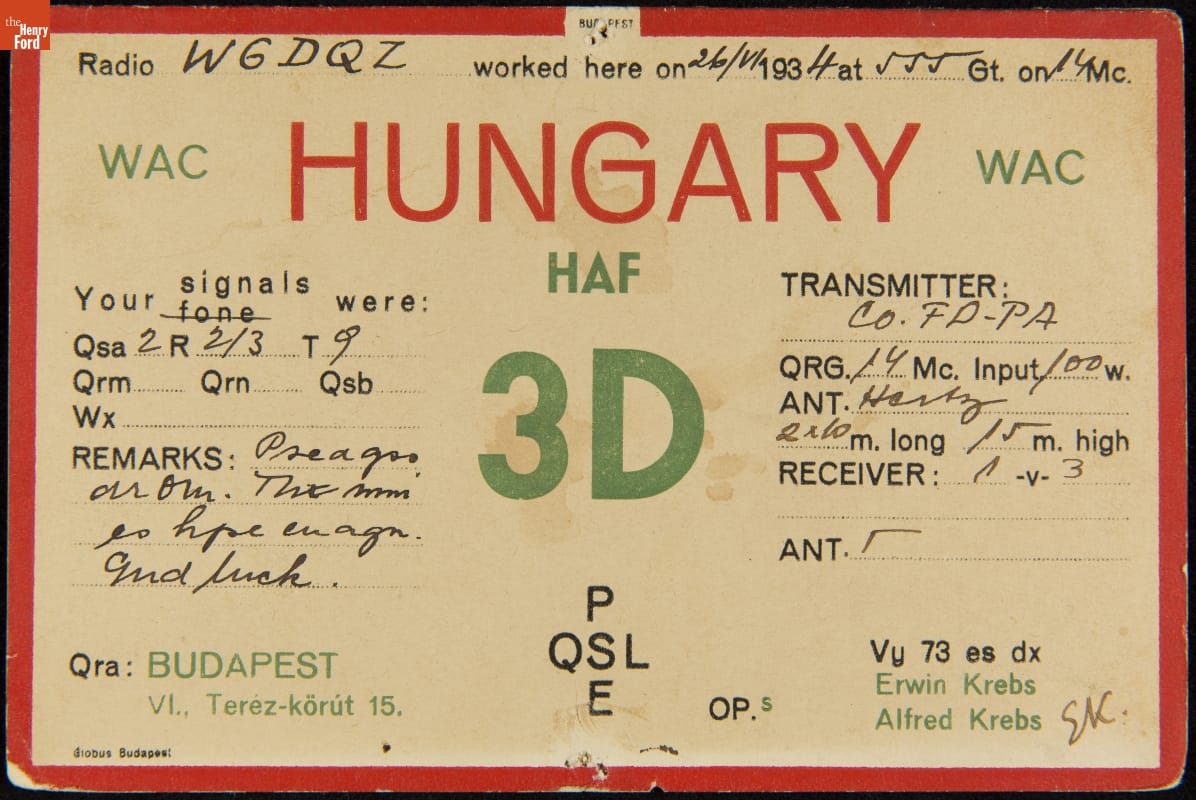
- Elisabeth Bridge Depicted on QSL Card from HAF3D (Budapest, Hungary) to W6DQZ (Hamid Durmisevich, Los Angeles), June 26, 1934 - It was customary for ham radio operators (hams) to exchange these "QSL cards" with one another through the mail after their first conversation. Long-time hams amassed collections of thousands of cards, some from far-flung places. There is a story embedded in each example: the ham's call sign dominates the design, with additional details about location, reception reports, and weather conditions.
- June 26, 1934
- Collections - Artifact
Elisabeth Bridge Depicted on QSL Card from HAF3D (Budapest, Hungary) to W6DQZ (Hamid Durmisevich, Los Angeles), June 26, 1934
It was customary for ham radio operators (hams) to exchange these "QSL cards" with one another through the mail after their first conversation. Long-time hams amassed collections of thousands of cards, some from far-flung places. There is a story embedded in each example: the ham's call sign dominates the design, with additional details about location, reception reports, and weather conditions.