
Search
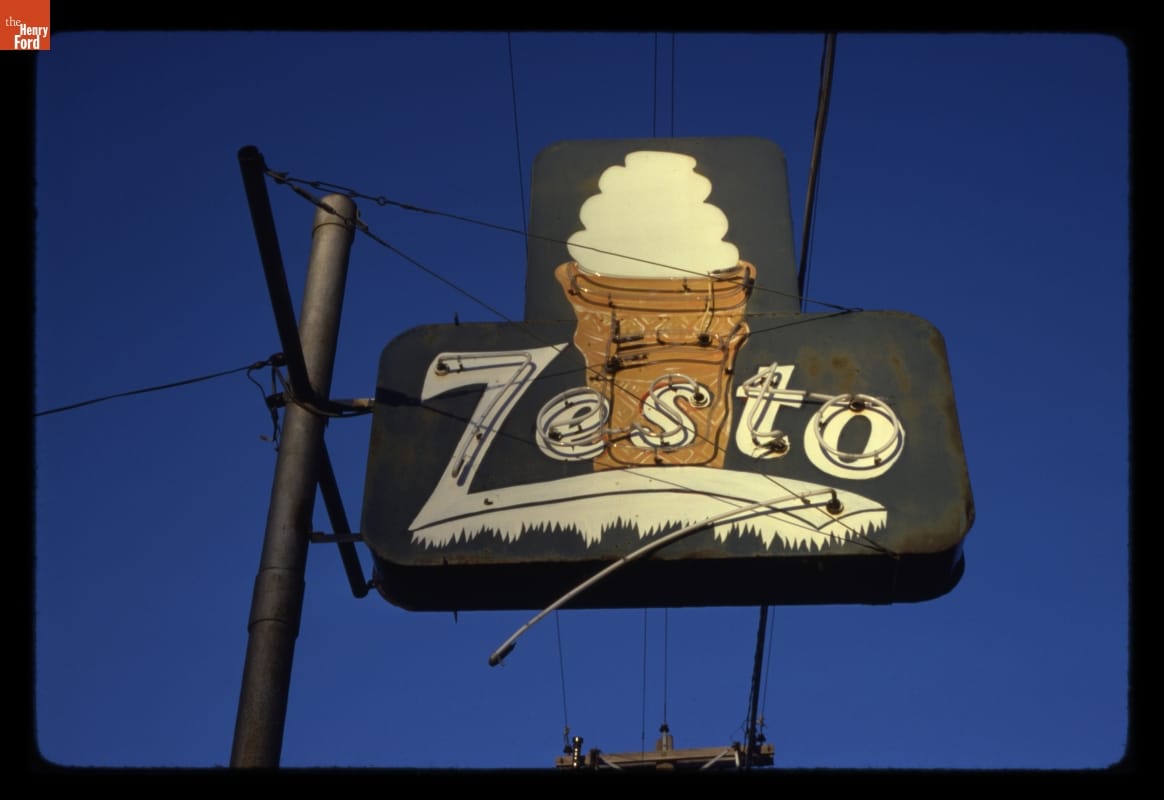
- Zesto, Wichita, Kansas, 1979 - In the mid-1970s, John Margolies began to assemble a visual record of America's built roadside landscape. Over the following three decades, he traveled thousands of miles to photograph the overlooked and often quickly vanishing structures that had grown out of American automobile culture and main street commerce. His photographs of hotels, motels, diners, service stations, drive-ins and attractions celebrate and capture a unique chapter of American history.
- 1979
- Collections - Artifact
Zesto, Wichita, Kansas, 1979
In the mid-1970s, John Margolies began to assemble a visual record of America's built roadside landscape. Over the following three decades, he traveled thousands of miles to photograph the overlooked and often quickly vanishing structures that had grown out of American automobile culture and main street commerce. His photographs of hotels, motels, diners, service stations, drive-ins and attractions celebrate and capture a unique chapter of American history.
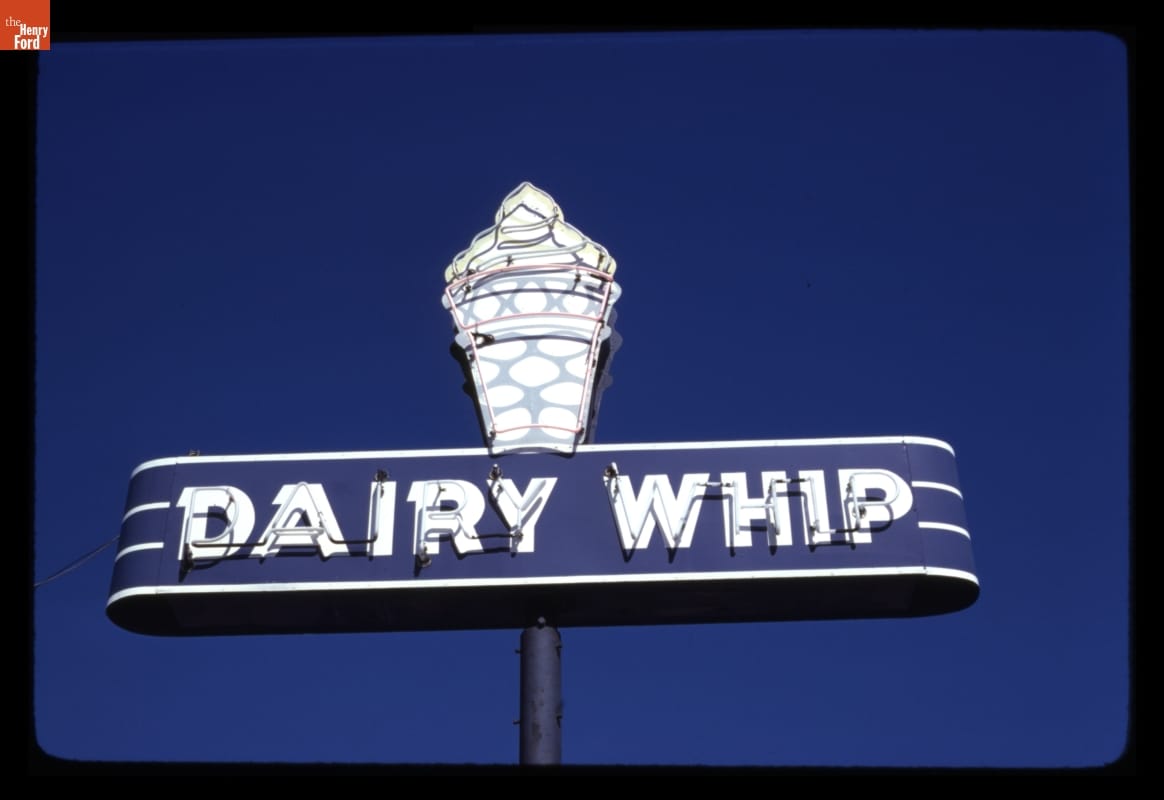
- Dairy Whip, Jackson, Tennessee, 1979 - In the mid-1970s, John Margolies began to assemble a visual record of America's built roadside landscape. Over the following three decades, he traveled thousands of miles to photograph the overlooked and often quickly vanishing structures that had grown out of American automobile culture and main street commerce. His photographs of hotels, motels, diners, service stations, drive-ins and attractions celebrate and capture a unique chapter of American history.
- 1979
- Collections - Artifact
Dairy Whip, Jackson, Tennessee, 1979
In the mid-1970s, John Margolies began to assemble a visual record of America's built roadside landscape. Over the following three decades, he traveled thousands of miles to photograph the overlooked and often quickly vanishing structures that had grown out of American automobile culture and main street commerce. His photographs of hotels, motels, diners, service stations, drive-ins and attractions celebrate and capture a unique chapter of American history.
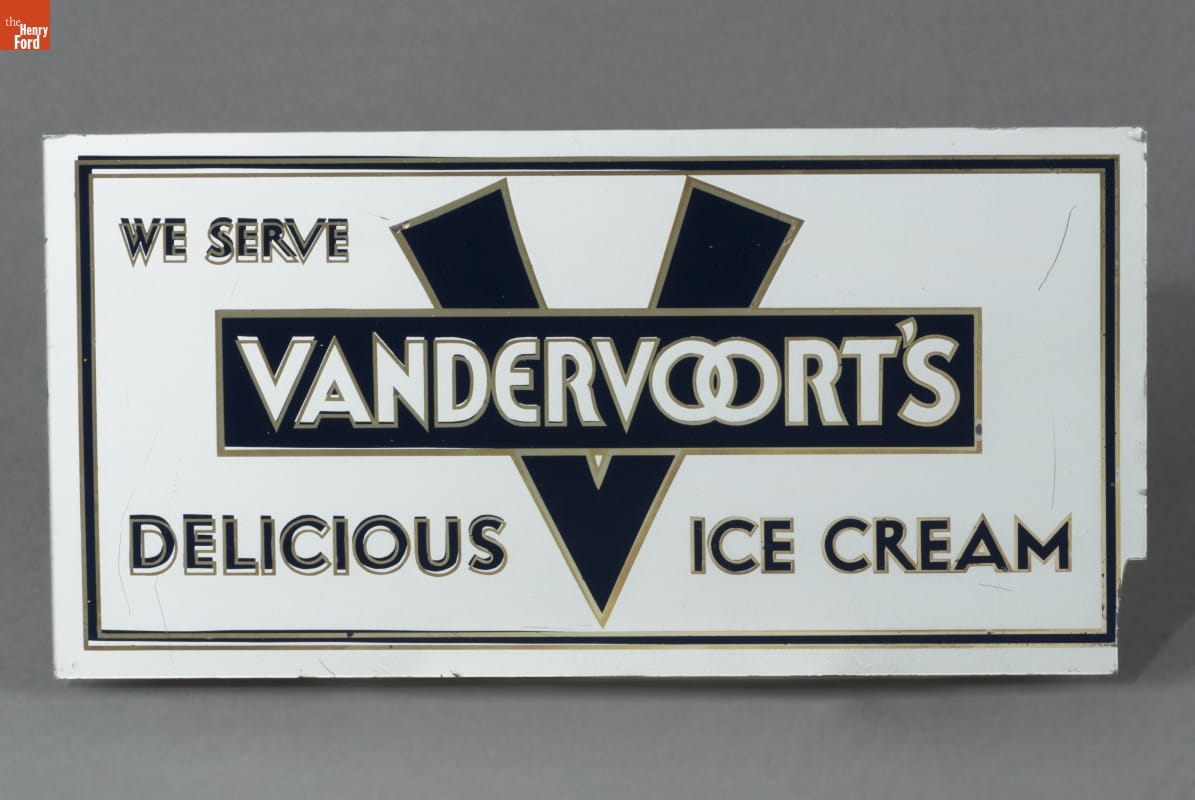
- Vandervoort's Ice Cream Sign -
- Collections - Artifact
Vandervoort's Ice Cream Sign
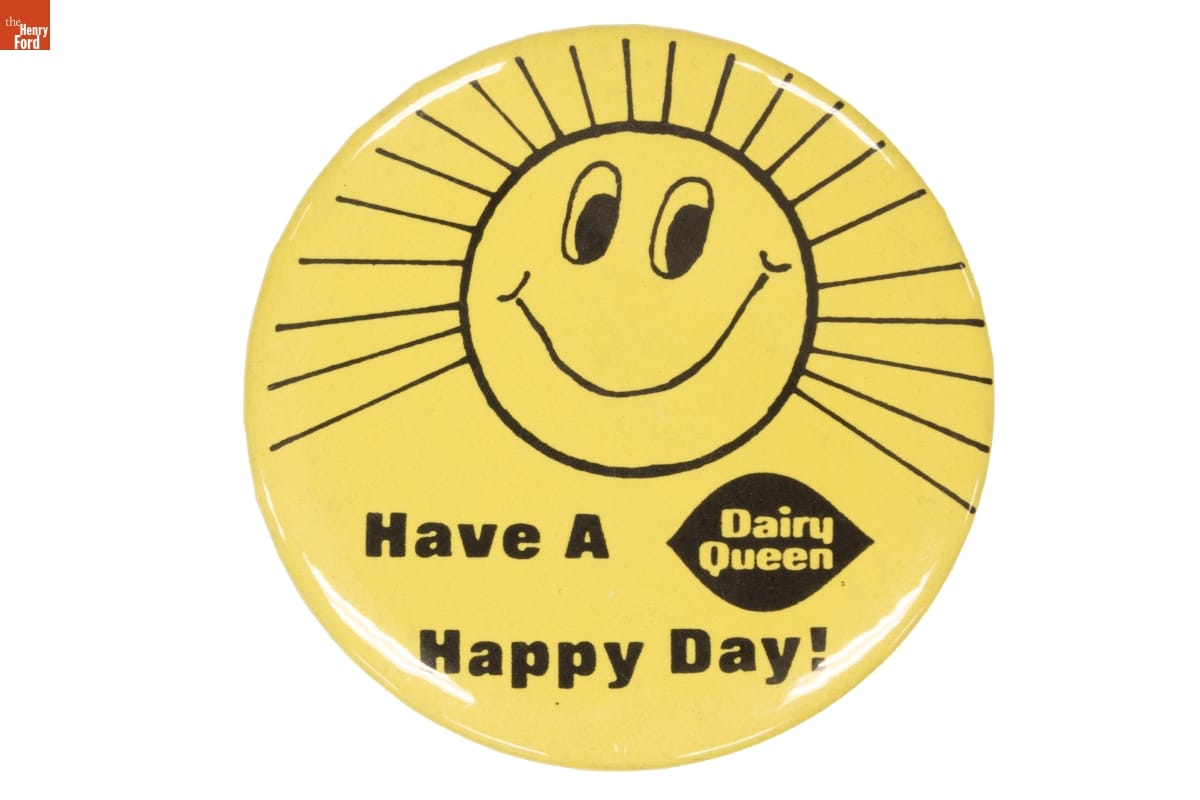
- "Have A Happy Day! Dairy Queen" Button, 1978-1984 - The first Dairy Queen restaurant opened in Joliet, Illinois, in 1940. Since then, the company expanded with franchises offering fast food and brand-named frozen dairy products, including Dilly Bars, Peanut Buster Parfaits, and Blizzards. Many customers remember the signature curly top on Dairy Queen soft-serve ice cream cones. A franchise employee wore this button in the late 1970s and early 1980s.
- 1978-1984
- Collections - Artifact
"Have A Happy Day! Dairy Queen" Button, 1978-1984
The first Dairy Queen restaurant opened in Joliet, Illinois, in 1940. Since then, the company expanded with franchises offering fast food and brand-named frozen dairy products, including Dilly Bars, Peanut Buster Parfaits, and Blizzards. Many customers remember the signature curly top on Dairy Queen soft-serve ice cream cones. A franchise employee wore this button in the late 1970s and early 1980s.
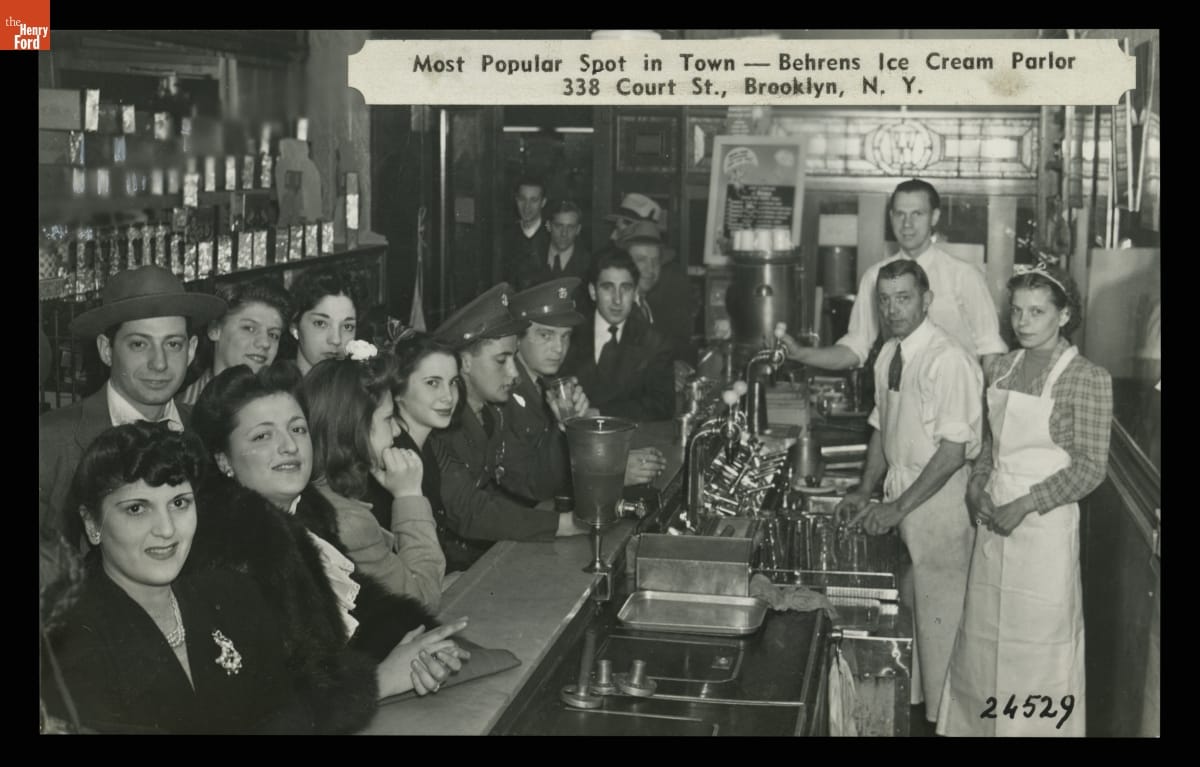
- Behrens Ice Cream Parlor, Brooklyn, New York, 1935-1950 - Photographic cards like this one, with their glued-on labels, were a preliminary step taken by Dexter Press before producing postcards for small-business owners to mail or hand out. In the 1940s, when this photograph was taken, this Brooklyn, New York, ice cream parlor claimed to be the "most popular spot in town." The business was sold in the late 1950s.
- 1935-1950
- Collections - Artifact
Behrens Ice Cream Parlor, Brooklyn, New York, 1935-1950
Photographic cards like this one, with their glued-on labels, were a preliminary step taken by Dexter Press before producing postcards for small-business owners to mail or hand out. In the 1940s, when this photograph was taken, this Brooklyn, New York, ice cream parlor claimed to be the "most popular spot in town." The business was sold in the late 1950s.
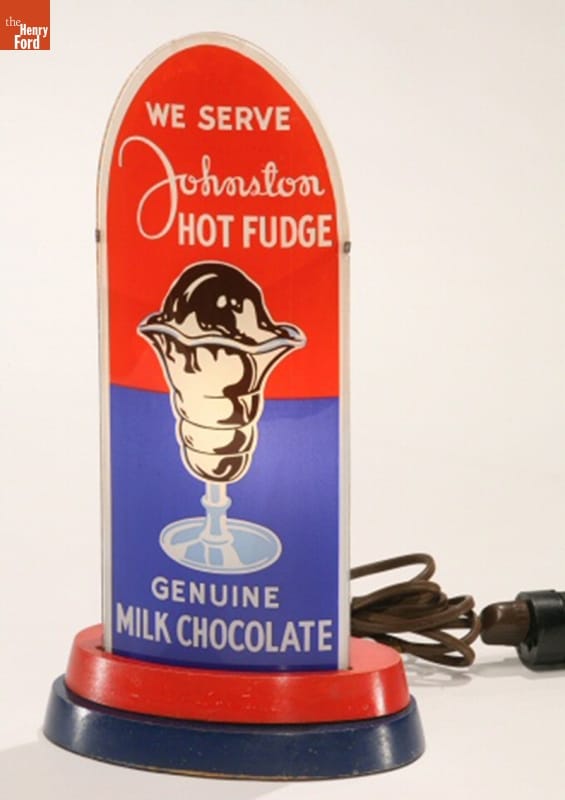
- Johnston Hot Fudge Sign, circa 1940 - Ice cream sundaes--ice cream topped with flavored syrup--were first referred to as "soda-less sodas." C.C. Brown, a Los Angeles ice cream parlor operator, is generally credited for introducing the hot fudge sundae in 1906. This electrically lit sign, from about 1940, would have attracted attention from the counter or shelf of a soda fountain.
- circa 1940
- Collections - Artifact
Johnston Hot Fudge Sign, circa 1940
Ice cream sundaes--ice cream topped with flavored syrup--were first referred to as "soda-less sodas." C.C. Brown, a Los Angeles ice cream parlor operator, is generally credited for introducing the hot fudge sundae in 1906. This electrically lit sign, from about 1940, would have attracted attention from the counter or shelf of a soda fountain.
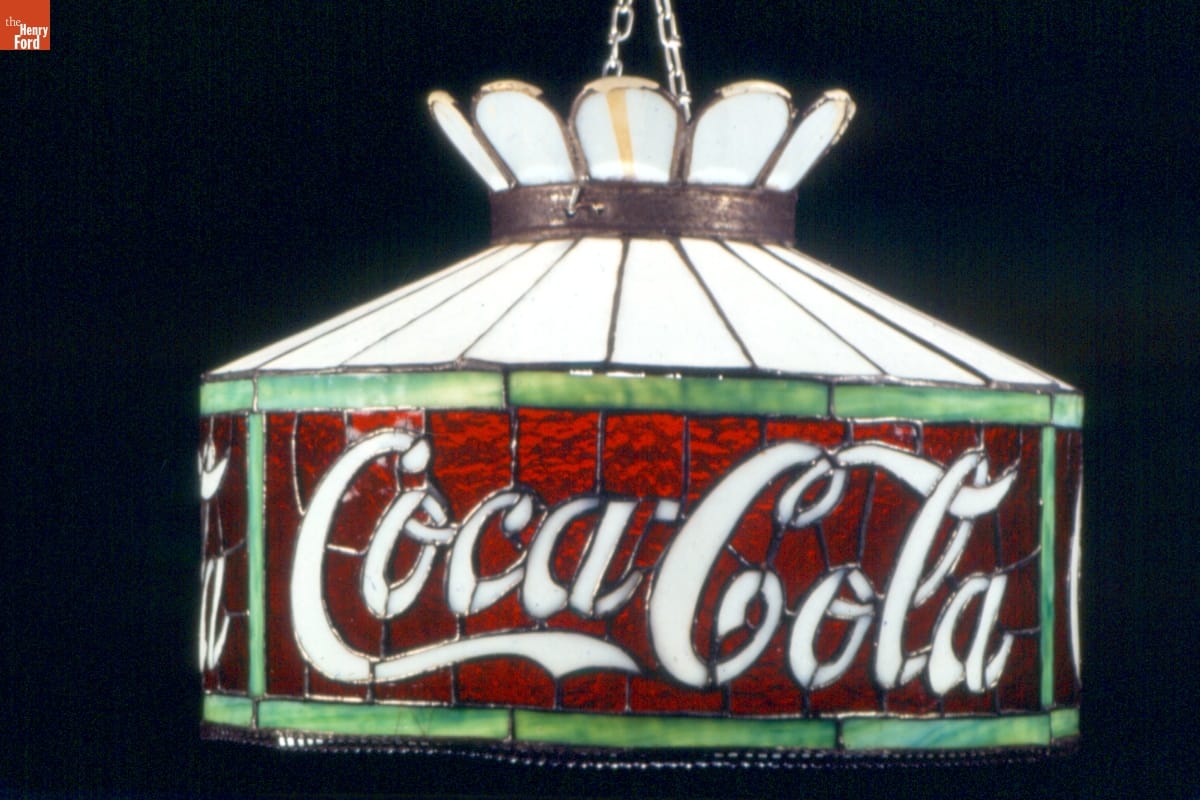
- Coca-Cola Chandelier, Used in Eurich's Ice Cream Parlor, circa 1900 - This chandelier originally hung in an early 20th-century Detroit area store -- one that probably sold ice cream and fountain drinks and sodas. The glowing light was a perfect way to advertise Coca-Cola -- a drink available at the store's counter. And the Tiffany-inspired glass shade would have evoked a high-quality status to the store it graced.
- circa 1900
- Collections - Artifact
Coca-Cola Chandelier, Used in Eurich's Ice Cream Parlor, circa 1900
This chandelier originally hung in an early 20th-century Detroit area store -- one that probably sold ice cream and fountain drinks and sodas. The glowing light was a perfect way to advertise Coca-Cola -- a drink available at the store's counter. And the Tiffany-inspired glass shade would have evoked a high-quality status to the store it graced.
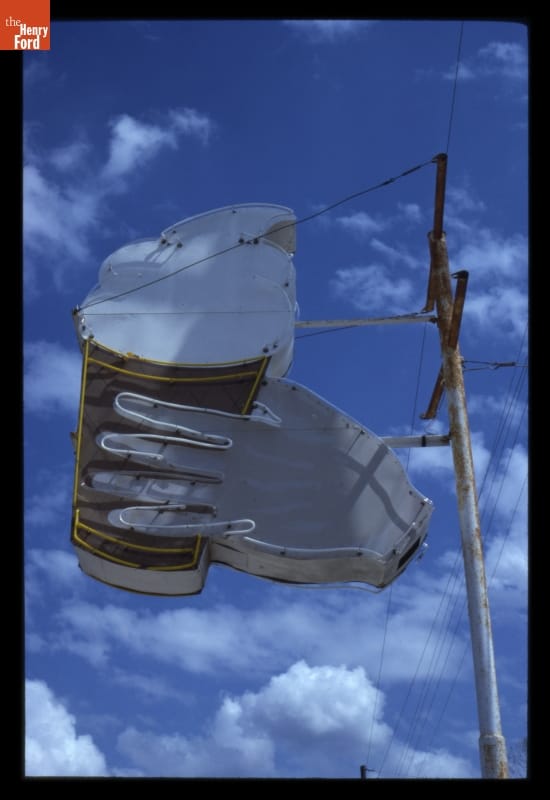
- Snow Top Drive In Sign, Livingston, Louisiana, 1982 - In the mid-1970s, John Margolies began to assemble a visual record of America's built roadside landscape. Over the following three decades, he traveled thousands of miles to photograph the overlooked and often quickly vanishing structures that had grown out of American automobile culture and main street commerce. His photographs of hotels, motels, diners, service stations, drive-ins and attractions celebrate and capture a unique chapter of American history.
- 1982
- Collections - Artifact
Snow Top Drive In Sign, Livingston, Louisiana, 1982
In the mid-1970s, John Margolies began to assemble a visual record of America's built roadside landscape. Over the following three decades, he traveled thousands of miles to photograph the overlooked and often quickly vanishing structures that had grown out of American automobile culture and main street commerce. His photographs of hotels, motels, diners, service stations, drive-ins and attractions celebrate and capture a unique chapter of American history.
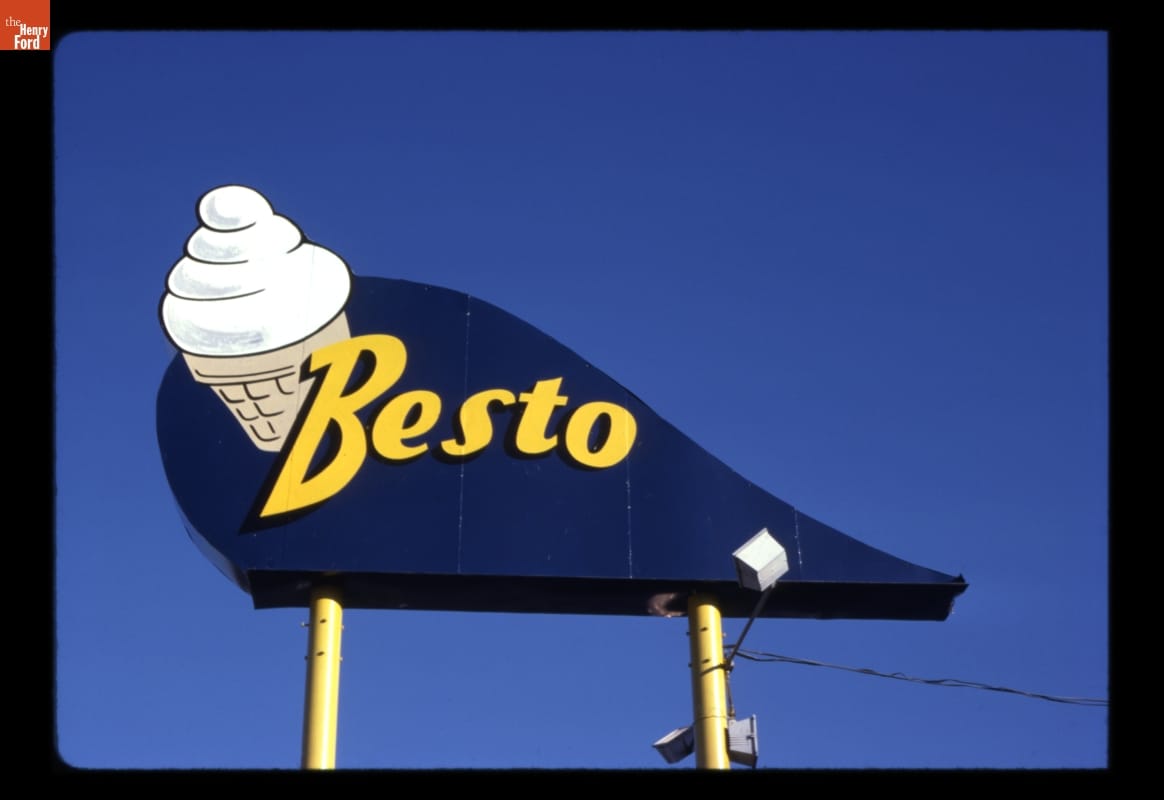
- Besto Ice Cream Sign, Anderson, South Carolina, 1988 - In the mid-1970s, John Margolies began to assemble a visual record of America's built roadside landscape. Over the following three decades, he traveled thousands of miles to photograph the overlooked and often quickly vanishing structures that had grown out of American automobile culture and main street commerce. His photographs of hotels, motels, diners, service stations, drive-ins and attractions celebrate and capture a unique chapter of American history.
- 1988
- Collections - Artifact
Besto Ice Cream Sign, Anderson, South Carolina, 1988
In the mid-1970s, John Margolies began to assemble a visual record of America's built roadside landscape. Over the following three decades, he traveled thousands of miles to photograph the overlooked and often quickly vanishing structures that had grown out of American automobile culture and main street commerce. His photographs of hotels, motels, diners, service stations, drive-ins and attractions celebrate and capture a unique chapter of American history.
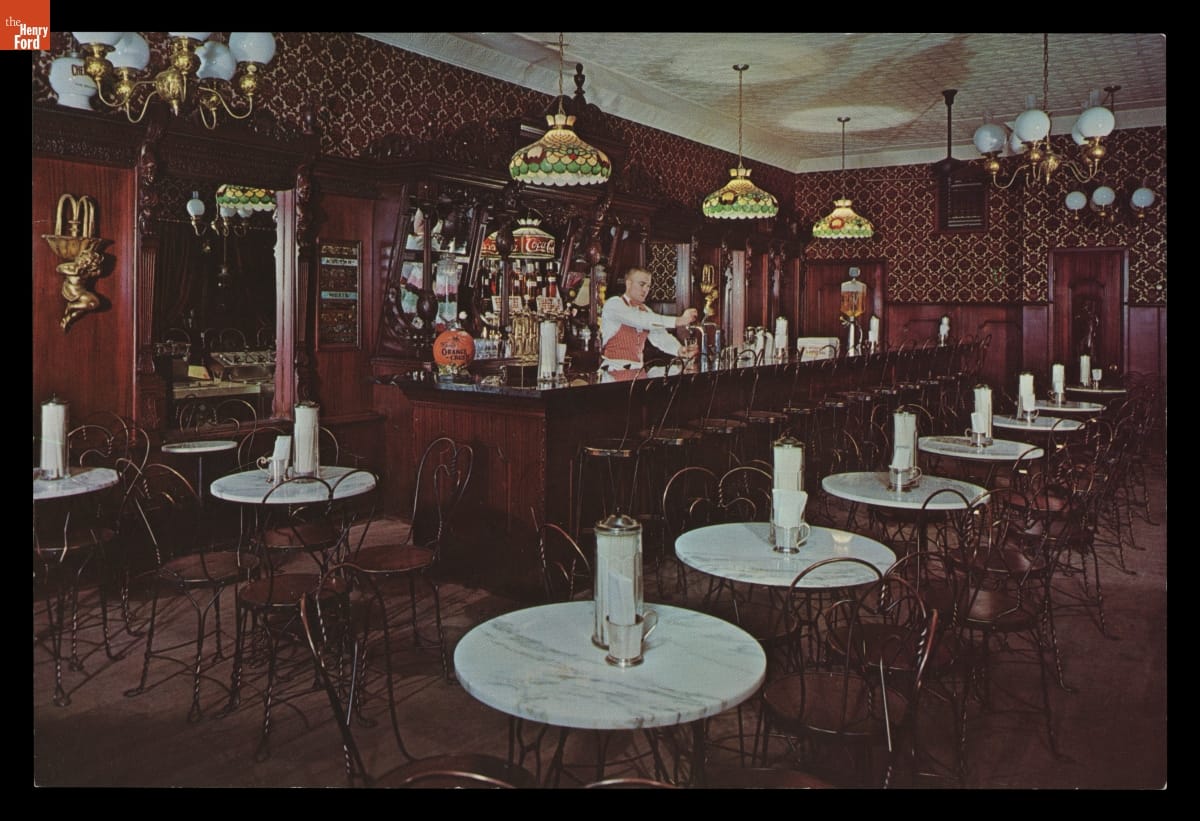
- Eurich's Ice Cream Parlor, Dearborn, Michigan, circa 1962 -
- circa 1962
- Collections - Artifact
Eurich's Ice Cream Parlor, Dearborn, Michigan, circa 1962