
Search
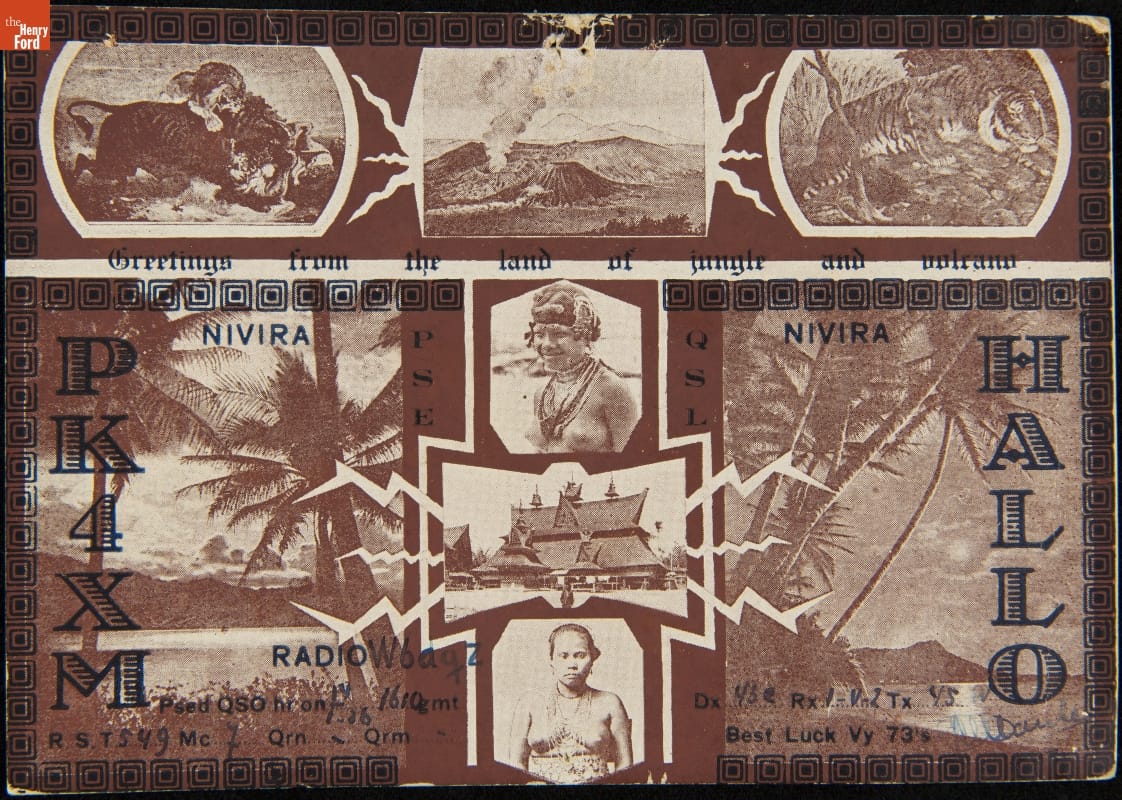
- QSL Card from PK4XM (E. Marcks, Sumatra, East Indies) to W6DQZ (Hamid Durmisevich, Los Angeles, California), January 14, 1936 - It was customary for ham radio operators (hams) to exchange these "QSL cards" with one another through the mail after their first conversation. Long-time hams amassed collections of thousands of cards, some from far-flung places. There is a story embedded in each example: the ham's call sign dominates the design, with additional details about location, reception reports, and weather conditions.
- January 14, 1936
- Collections - Artifact
QSL Card from PK4XM (E. Marcks, Sumatra, East Indies) to W6DQZ (Hamid Durmisevich, Los Angeles, California), January 14, 1936
It was customary for ham radio operators (hams) to exchange these "QSL cards" with one another through the mail after their first conversation. Long-time hams amassed collections of thousands of cards, some from far-flung places. There is a story embedded in each example: the ham's call sign dominates the design, with additional details about location, reception reports, and weather conditions.
- Christmas Card, "Joy for the World's Children," circa 1960 -
- circa 1960
- Collections - Artifact
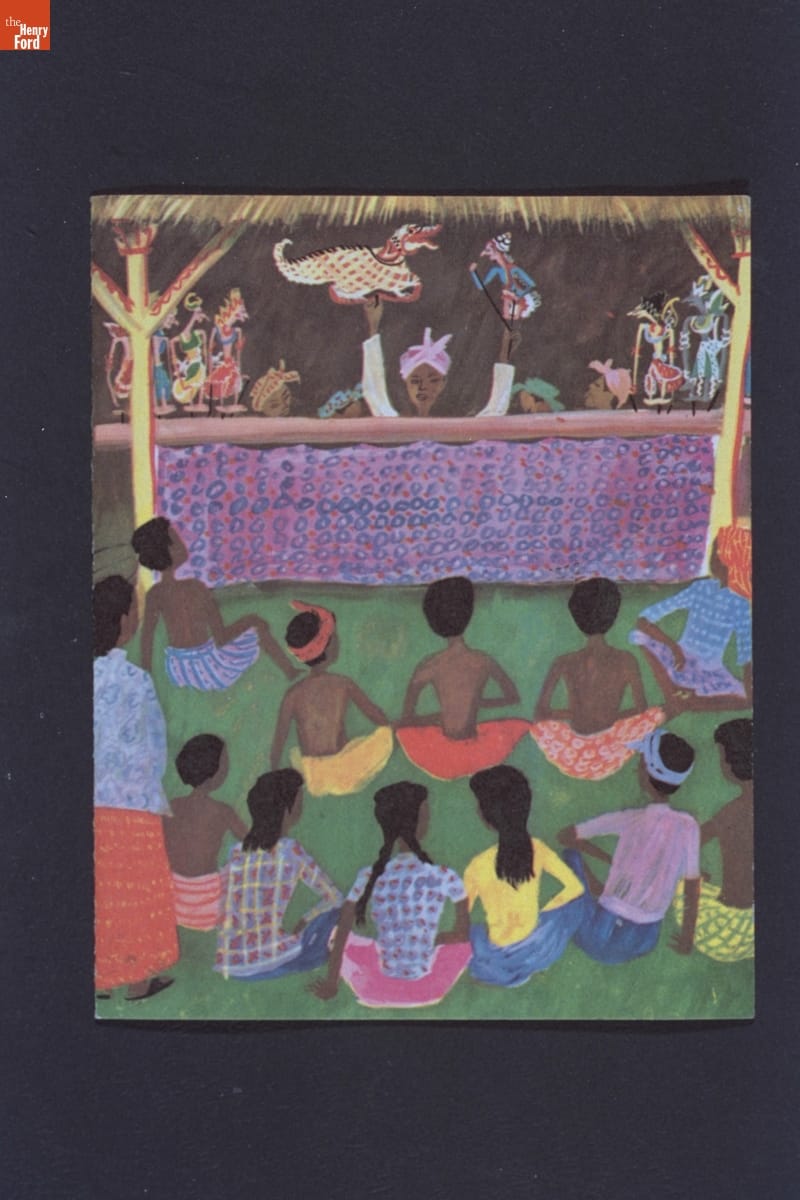
Christmas Card, "Joy for the World's Children," circa 1960
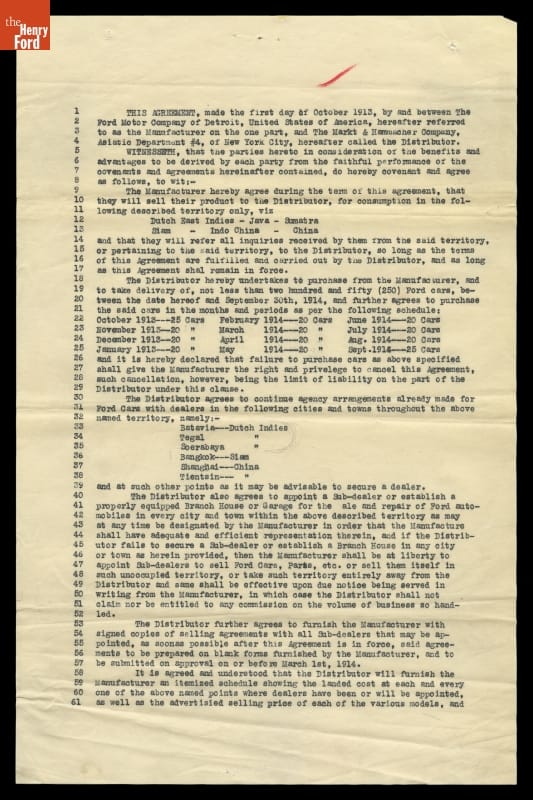
- Dealer Agreement Between Ford Motor Company and Markt & Hammacher Company, 1913 - Though it operated some direct-sales offices in major cities, Ford Motor Company sold most of its Model T cars through franchise agreements with independent dealers. Each franchisee received the right to sell Ford cars within a specific territory. Ford encouraged dealers by offering discounts and rebates to high sellers. But low-selling dealers risked losing their territories.
- October 01, 1913
- Collections - Artifact
Dealer Agreement Between Ford Motor Company and Markt & Hammacher Company, 1913
Though it operated some direct-sales offices in major cities, Ford Motor Company sold most of its Model T cars through franchise agreements with independent dealers. Each franchisee received the right to sell Ford cars within a specific territory. Ford encouraged dealers by offering discounts and rebates to high sellers. But low-selling dealers risked losing their territories.