
Search
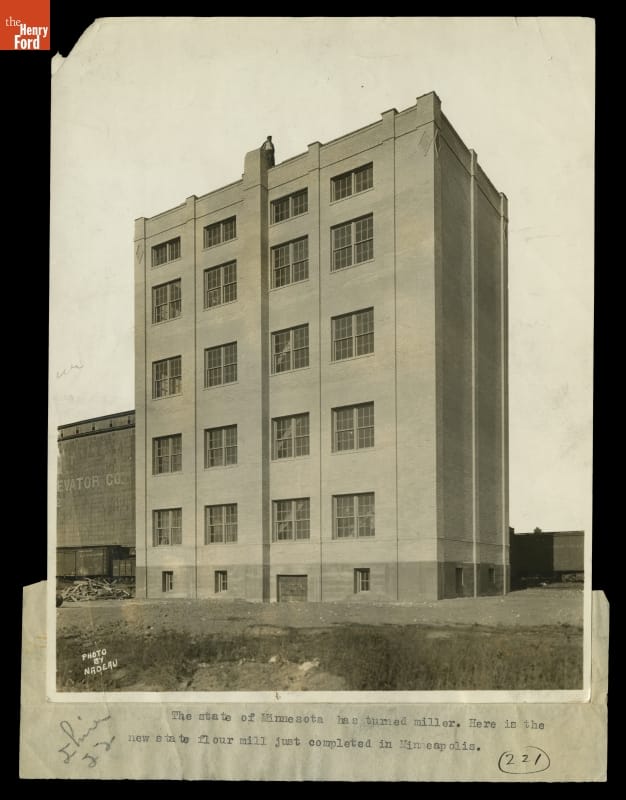
- Newly Completed State Flour Mill, Minneapolis, Minnesota, 1921-1922 -
- 1921-1922
- Collections - Artifact
Newly Completed State Flour Mill, Minneapolis, Minnesota, 1921-1922
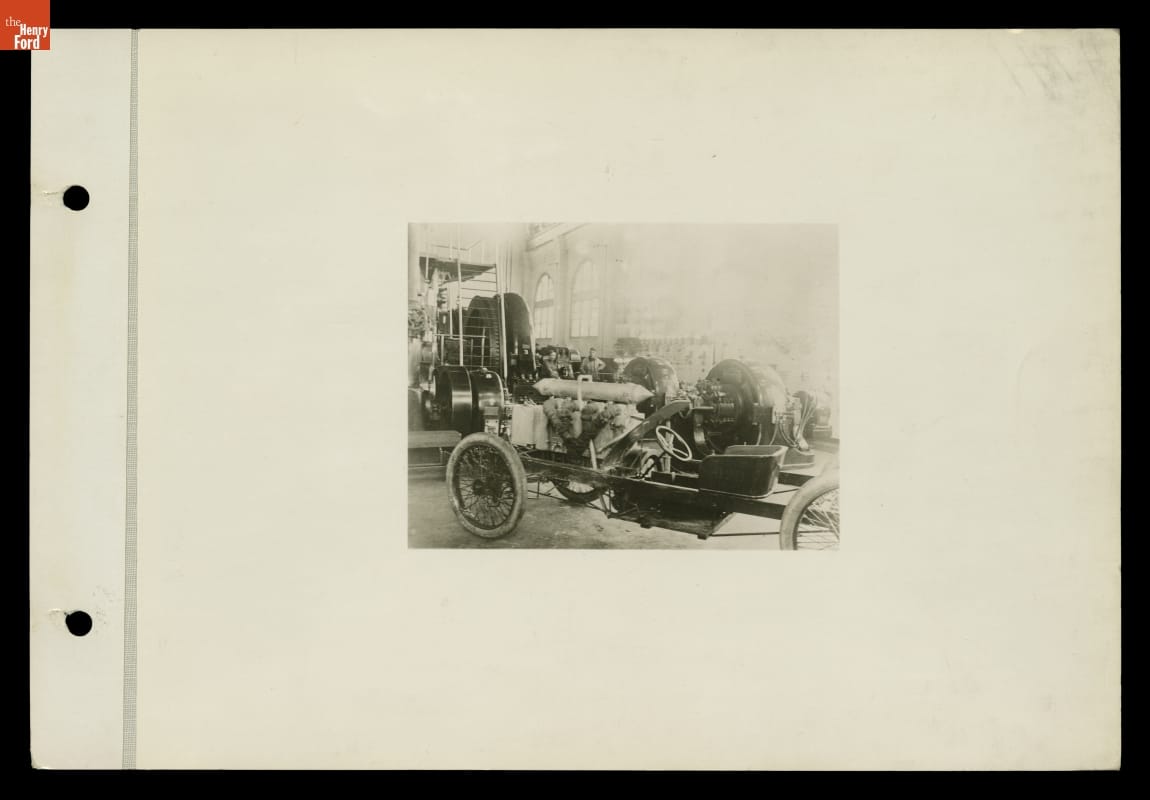
- Ford "Arrow" Race Car at the Detroit United Railway Powerhouse, 1904 - Henry Ford's "Arrow" race car sat in Detroit United Railway's New Baltimore, Michigan, powerhouse in 1904. On January 12, 1904, Ford set an official speed record of 91.37 mph while driving "Arrow" on frozen Lake St. Clair. "Arrow" was virtually identical to Ford's "999" race car, apart from the V-shaped intake manifold on "Arrow" versus the U-shaped manifold on "999."
- 1904
- Collections - Artifact
Ford "Arrow" Race Car at the Detroit United Railway Powerhouse, 1904
Henry Ford's "Arrow" race car sat in Detroit United Railway's New Baltimore, Michigan, powerhouse in 1904. On January 12, 1904, Ford set an official speed record of 91.37 mph while driving "Arrow" on frozen Lake St. Clair. "Arrow" was virtually identical to Ford's "999" race car, apart from the V-shaped intake manifold on "Arrow" versus the U-shaped manifold on "999."
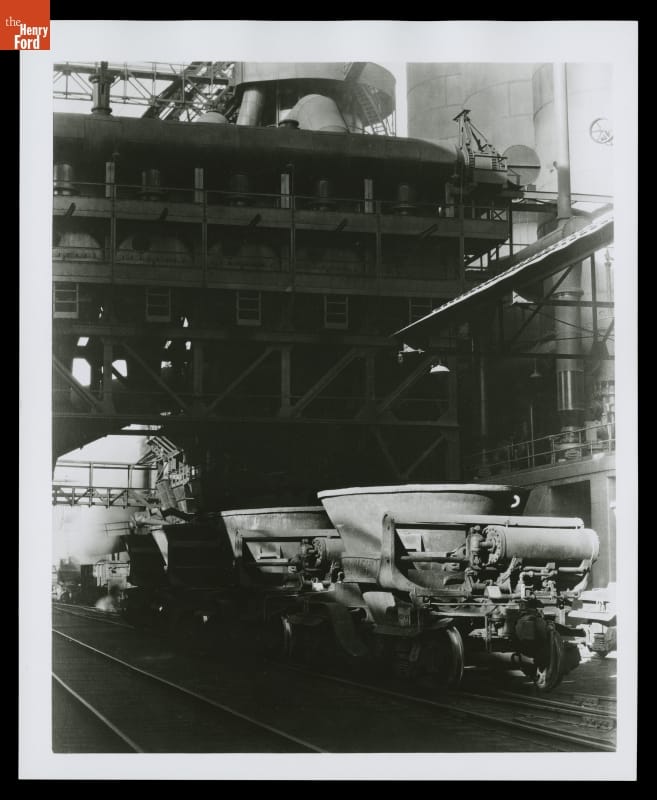
- Slag Buggies at Ford Rouge Plant, 1927 - These slag pots transported white-hot slag to cooling pits at Ford's River Rouge Plant. Slag is a by-product of the iron-making process. It was skimmed from the blast furnaces and caught in the buggies waiting below. After it cooled, workers recovered the slag to produce cement for plant use and sale to the public.
- 1927
- Collections - Artifact
Slag Buggies at Ford Rouge Plant, 1927
These slag pots transported white-hot slag to cooling pits at Ford's River Rouge Plant. Slag is a by-product of the iron-making process. It was skimmed from the blast furnaces and caught in the buggies waiting below. After it cooled, workers recovered the slag to produce cement for plant use and sale to the public.
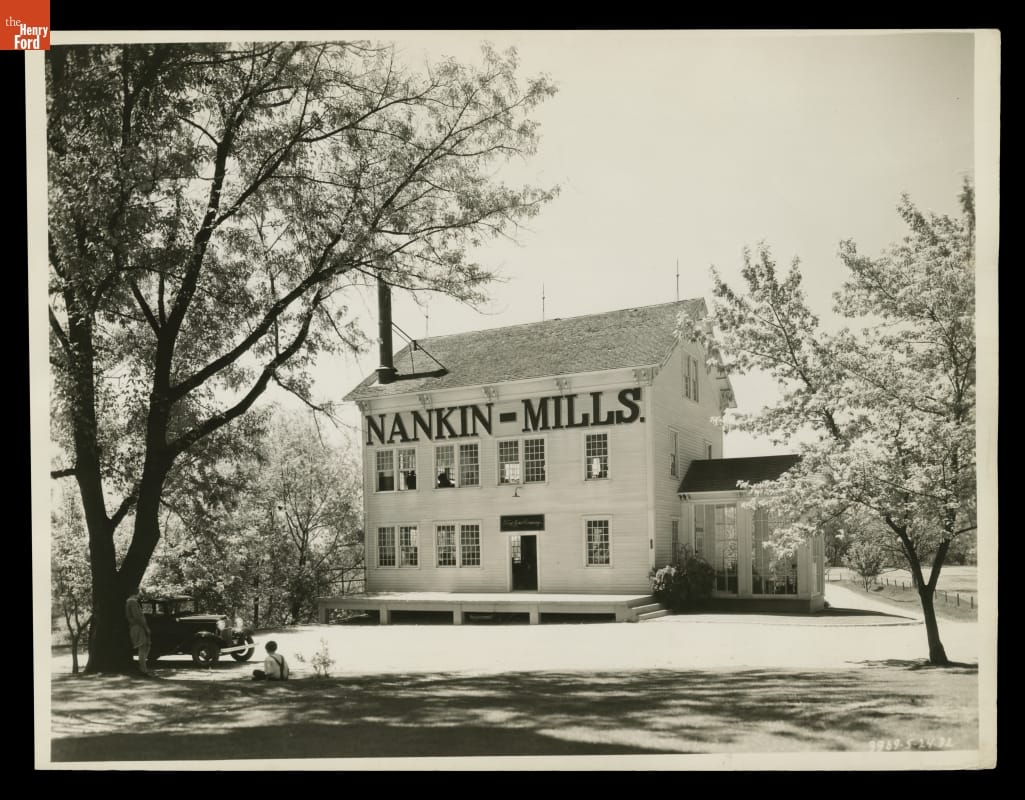
- Ford Village Industries Nankin Mills Plant, 1932 - In the early 1920s, Henry Ford began locating small hydroelectrically powered plants in rural southeast Michigan. These "Village Industries" employed local people who could maintain farms while working at the factory. This Westland-area plant opened in an old flour mill in 1921. Workers here produced tool and die work and performed special engraving and defense experiment work during World War II.
- May 24, 1932
- Collections - Artifact
Ford Village Industries Nankin Mills Plant, 1932
In the early 1920s, Henry Ford began locating small hydroelectrically powered plants in rural southeast Michigan. These "Village Industries" employed local people who could maintain farms while working at the factory. This Westland-area plant opened in an old flour mill in 1921. Workers here produced tool and die work and performed special engraving and defense experiment work during World War II.
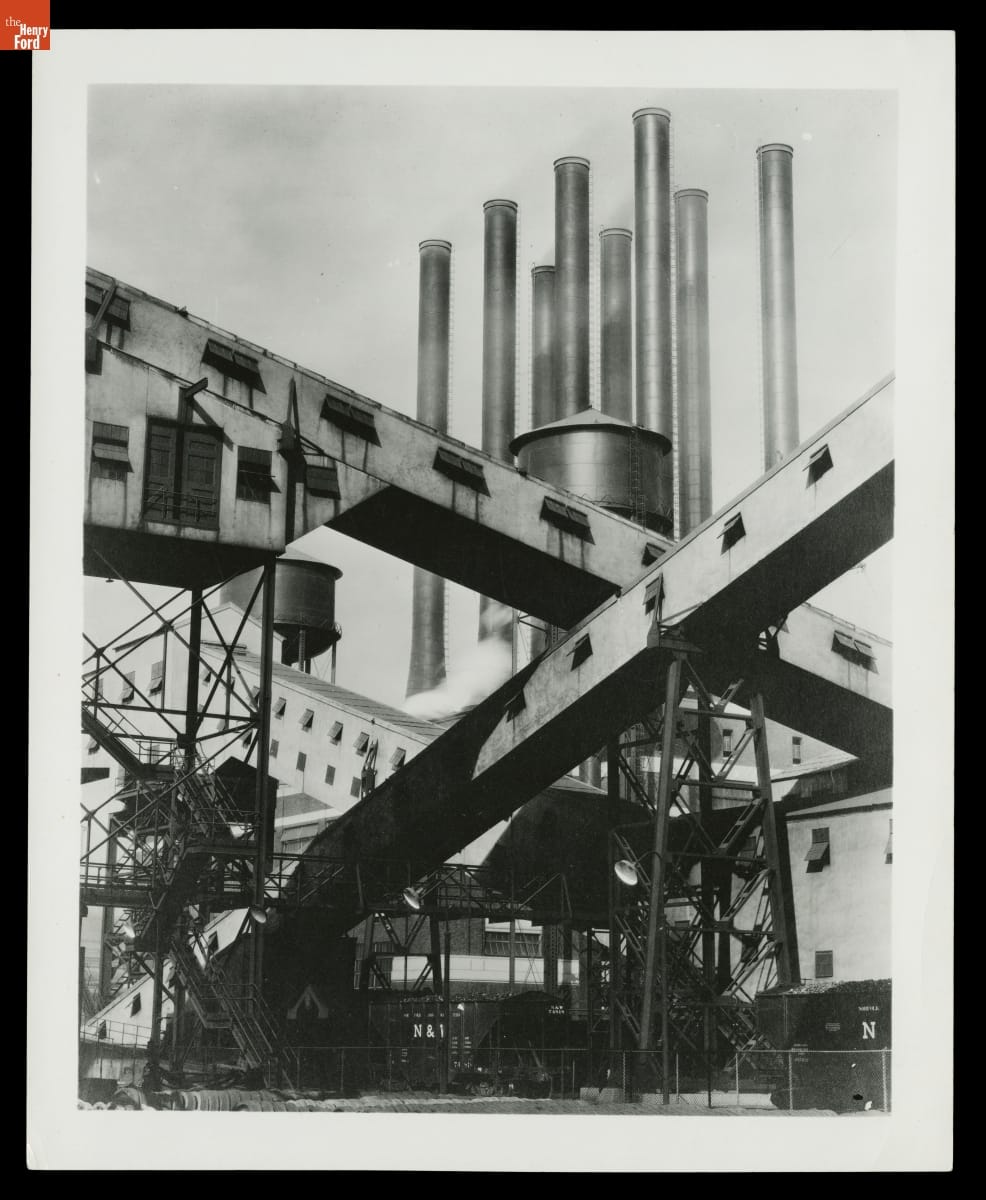
- Criss-crossed Conveyors at Ford Rouge Plant, 1927 - In 1927, Ford Motor Company commissioned Charles Sheeler to do a series of documentary photographs of its River Rouge industrial complex near Dearborn, Michigan. The conveyors moved coal and coke to the pulverizing building and screening stations. Coke made from coal was used in the steelmaking process of the blast furnaces. This vigorous photograph shows Sheeler's ability to form a compelling image from a complicated scene.
- 1927
- Collections - Artifact
Criss-crossed Conveyors at Ford Rouge Plant, 1927
In 1927, Ford Motor Company commissioned Charles Sheeler to do a series of documentary photographs of its River Rouge industrial complex near Dearborn, Michigan. The conveyors moved coal and coke to the pulverizing building and screening stations. Coke made from coal was used in the steelmaking process of the blast furnaces. This vigorous photograph shows Sheeler's ability to form a compelling image from a complicated scene.
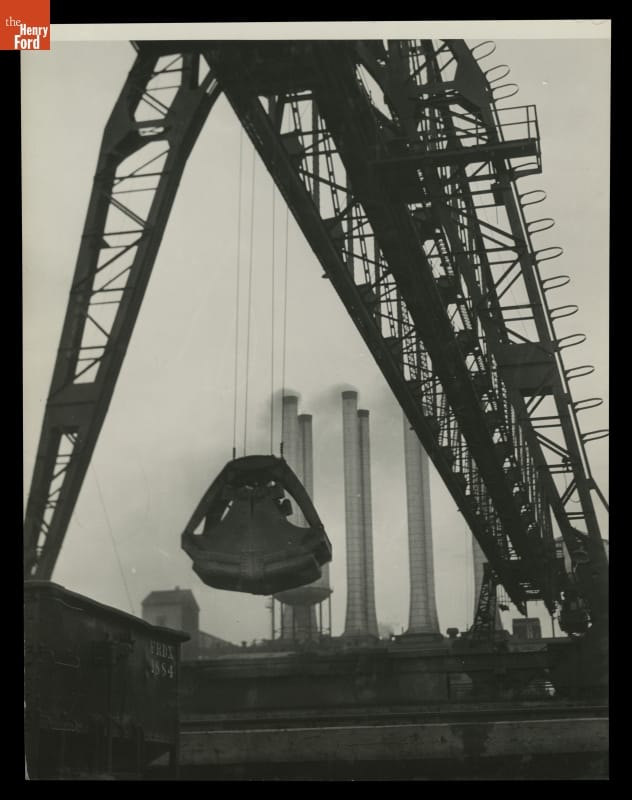
- Ore Bridge Crane at Ford Rouge Plant, 1932 - The suspended bucket in this photograph is an ore unloader. Workers at docks on the River Rouge scooped iron ore from the holds of freighters into the jaws of these unloaders. The large aerial shovels carried their loads along transfer cranes and deposited them into concrete-walled storage bins. Workers at Ford's Rouge Plant used the ore to produce steel.
- June 22, 1932
- Collections - Artifact
Ore Bridge Crane at Ford Rouge Plant, 1932
The suspended bucket in this photograph is an ore unloader. Workers at docks on the River Rouge scooped iron ore from the holds of freighters into the jaws of these unloaders. The large aerial shovels carried their loads along transfer cranes and deposited them into concrete-walled storage bins. Workers at Ford's Rouge Plant used the ore to produce steel.
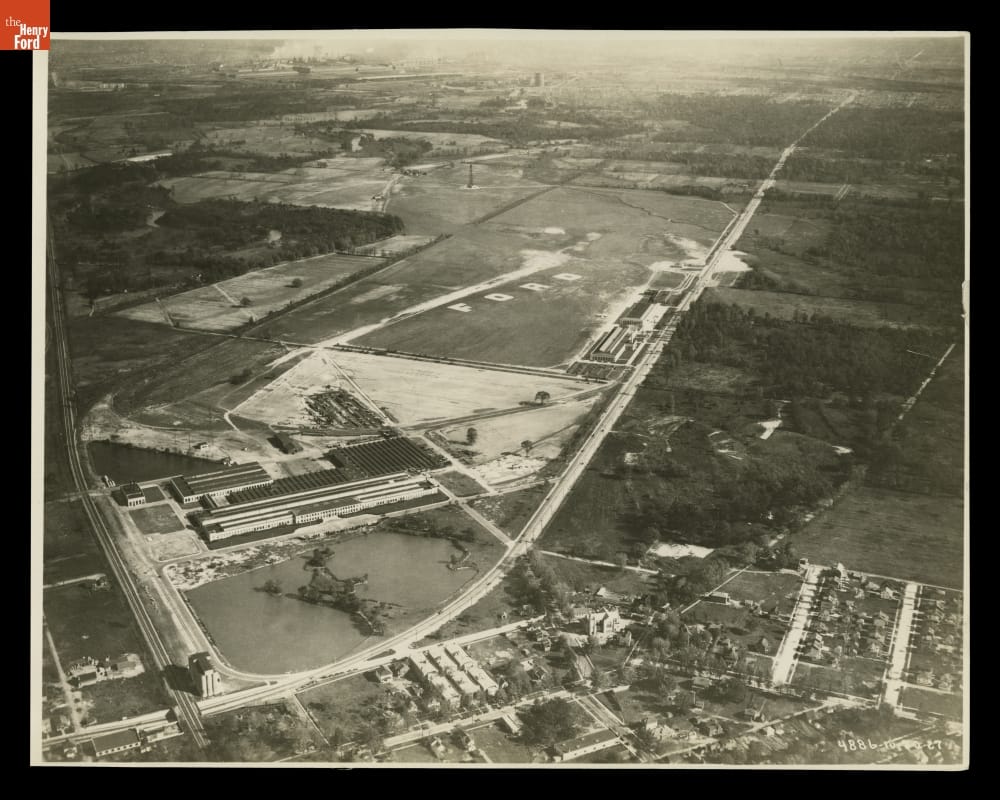
- Aerial View of Ford Airport and Ford Engineering Building, Dearborn, Michigan, October 1927 - Ford Airport in Dearborn, Michigan, was formally opened in 1925. This 1927 aerial view shows the large open field with its grass runways flanked on the south (center right) by a small passenger terminal, airplane hangar, and Ford's airplane factory. An airship mooring mast is visible at the airport's far eastern end.
- October 20, 1927
- Collections - Artifact
Aerial View of Ford Airport and Ford Engineering Building, Dearborn, Michigan, October 1927
Ford Airport in Dearborn, Michigan, was formally opened in 1925. This 1927 aerial view shows the large open field with its grass runways flanked on the south (center right) by a small passenger terminal, airplane hangar, and Ford's airplane factory. An airship mooring mast is visible at the airport's far eastern end.
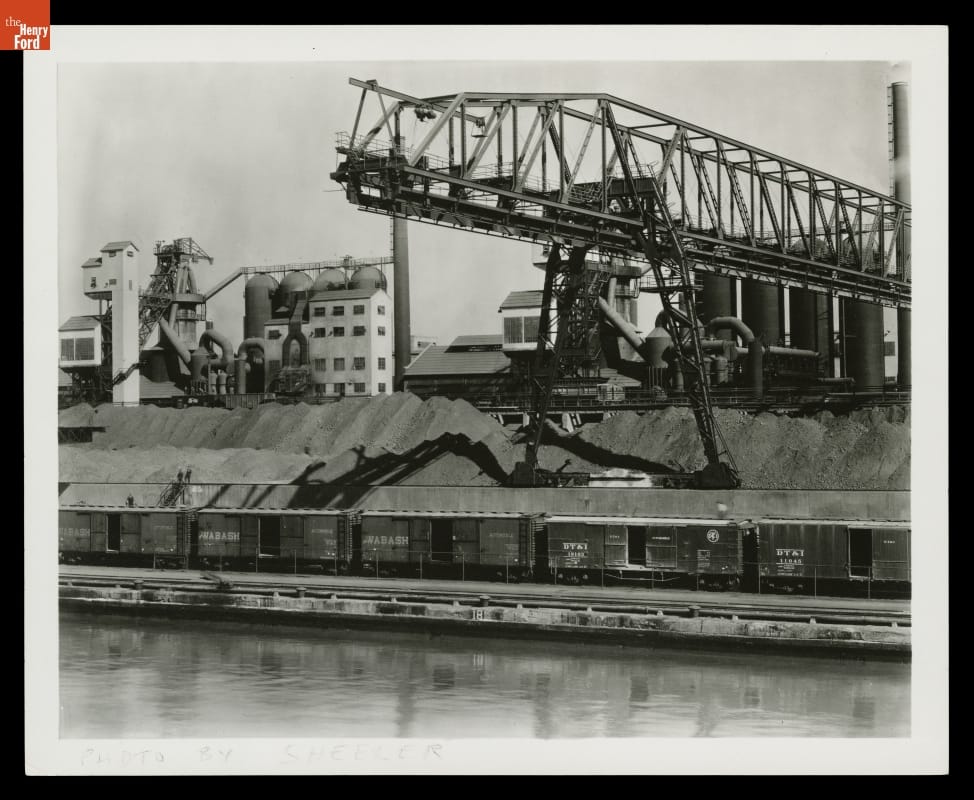
- Boat Slip at Ford Rouge Plant, 1927 - In 1927 Ford Motor Company commissioned Charles Sheeler to do a series of documentary photographs of its River Rouge industrial complex near Dearborn, Michigan. The enormous traveling bridge crane dominates this photograph of the storage bins next to the boat slip. It unloads iron ore, limestone, and coal from ships and trains. The railroad cars in front contrast with the background architectural elements.
- 1927
- Collections - Artifact
Boat Slip at Ford Rouge Plant, 1927
In 1927 Ford Motor Company commissioned Charles Sheeler to do a series of documentary photographs of its River Rouge industrial complex near Dearborn, Michigan. The enormous traveling bridge crane dominates this photograph of the storage bins next to the boat slip. It unloads iron ore, limestone, and coal from ships and trains. The railroad cars in front contrast with the background architectural elements.
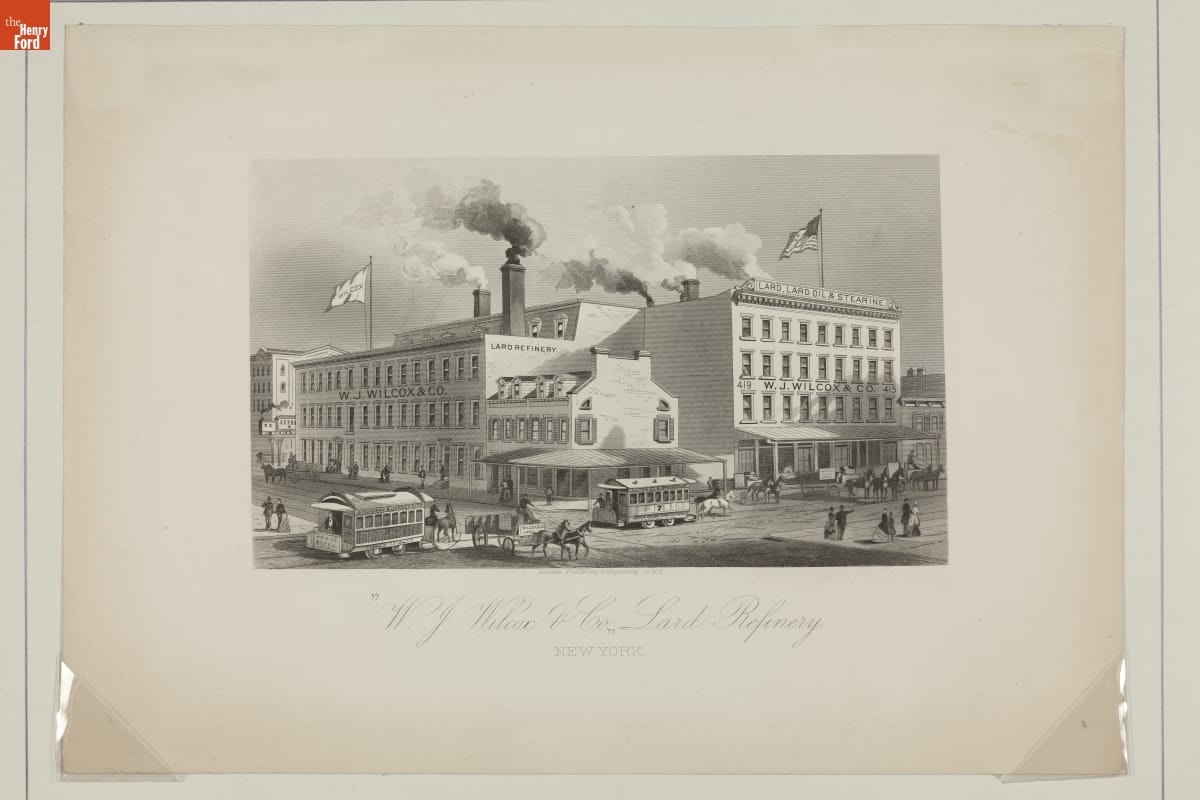
- "W.J. Wilcox & Co., Lard Refinery. New York," circa 1876 - W. J. Wilcox and Company's refined lard (hog fat) and sent its products throughout the world. The company was one of the largest lard refiner and exporter in the late 1800s. The massive factory building and the bustling New York City street scene -- with a variety of transportation options -- depicted in this print conveys the company's commercial importance.
- circa 1876
- Collections - Artifact
"W.J. Wilcox & Co., Lard Refinery. New York," circa 1876
W. J. Wilcox and Company's refined lard (hog fat) and sent its products throughout the world. The company was one of the largest lard refiner and exporter in the late 1800s. The massive factory building and the bustling New York City street scene -- with a variety of transportation options -- depicted in this print conveys the company's commercial importance.
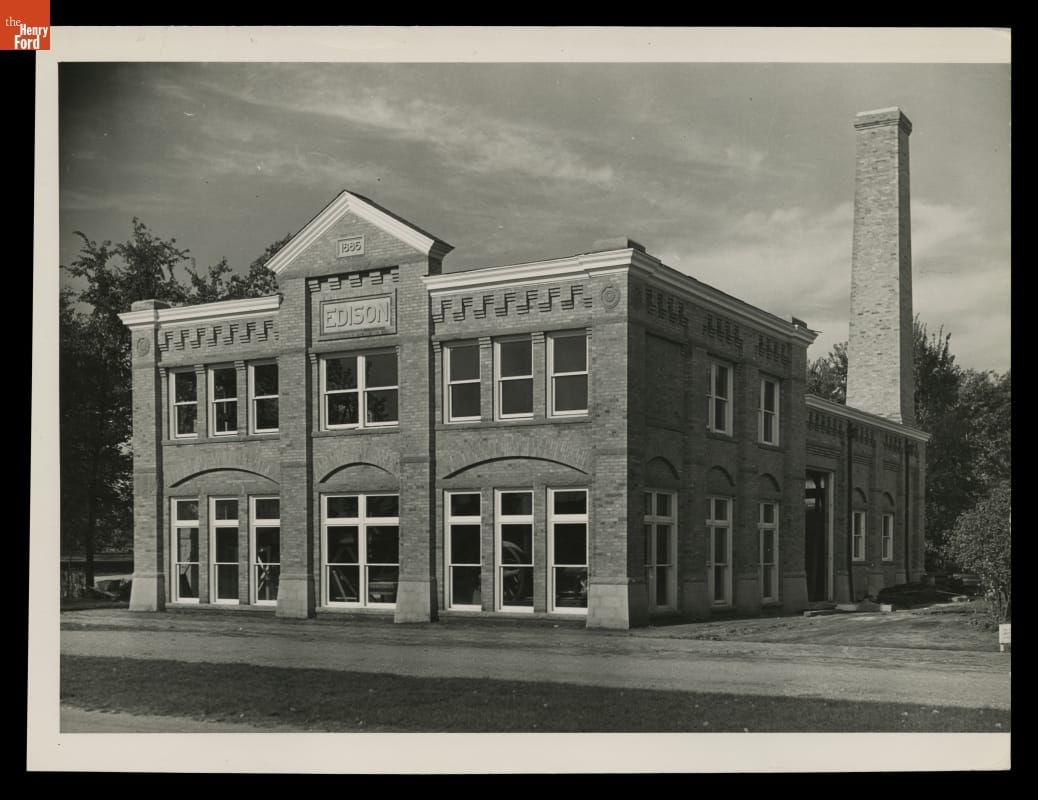
- Edison Illuminating Company's Station A in Greenfield Village, September 1944 - Henry Ford constructed this power plant as an edited, scaled-down version of the Detroit station where he had worked. Here, Ford also housed one of Edison's most startling electrical devices -- the only surviving "Jumbo" dynamo from Manhattan's Pearl Street Station. While chief engineer at the Edison Illuminating Company Henry Ford built his first car -- and had his first meeting with Thomas Edison.
- September 29, 1944
- Collections - Artifact
Edison Illuminating Company's Station A in Greenfield Village, September 1944
Henry Ford constructed this power plant as an edited, scaled-down version of the Detroit station where he had worked. Here, Ford also housed one of Edison's most startling electrical devices -- the only surviving "Jumbo" dynamo from Manhattan's Pearl Street Station. While chief engineer at the Edison Illuminating Company Henry Ford built his first car -- and had his first meeting with Thomas Edison.