
Search
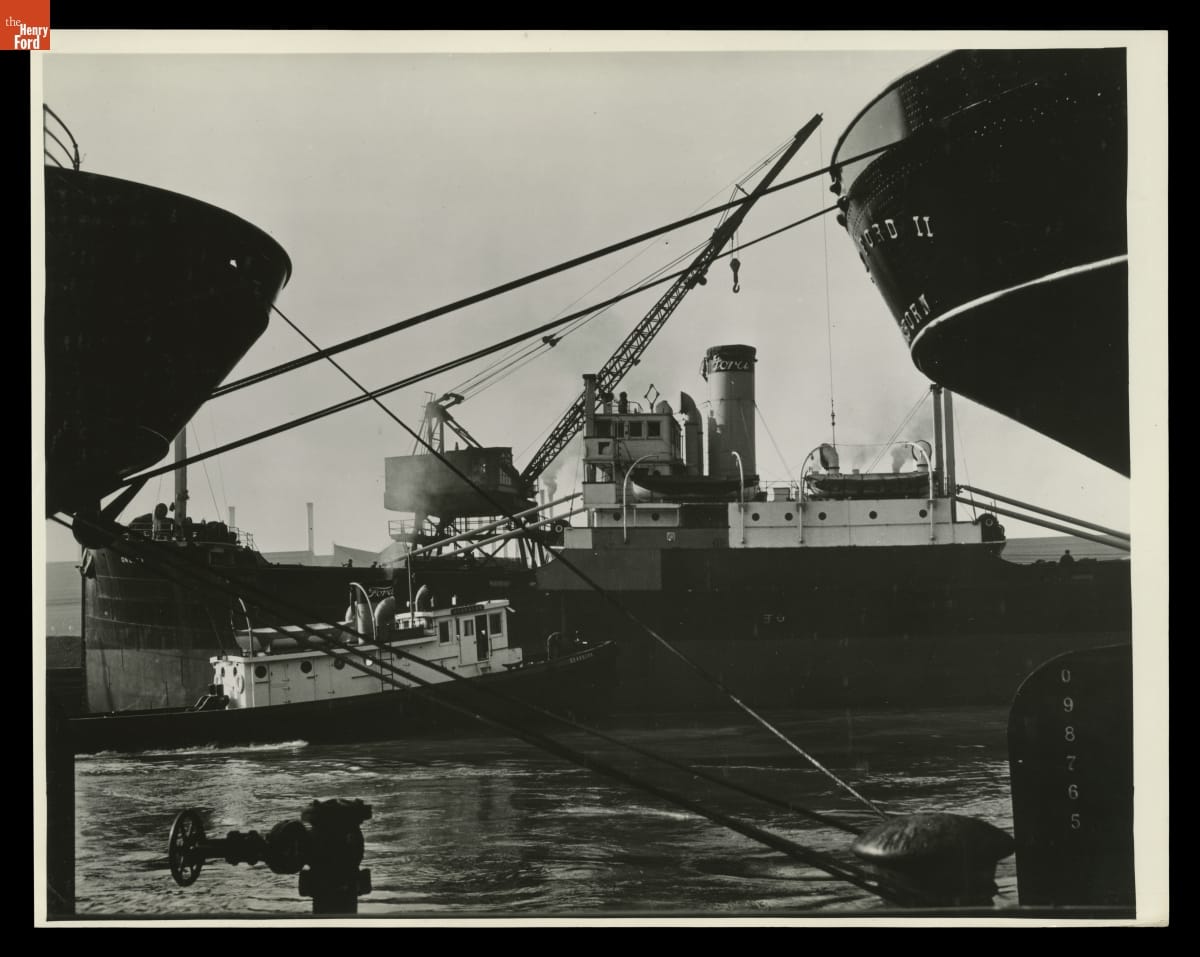
- Ford Motor Company Tugboat "Dearborn," January 1937 - Ford Motor Company's tugboat <em>Dearborn</em> was built in 1932 by Great Lakes Engineering. Eighty-five feet long and rated at 660 horsepower, it was smaller than other tugs in Ford's fleet. The <em>Dearborn</em> mostly worked inside the Ford Rouge plant's harbor, shuttling barges between the harbor and the Rouge River proper. Ford sold the <em>Dearborn</em> in 1946.
- January 06, 1937
- Collections - Artifact
Ford Motor Company Tugboat "Dearborn," January 1937
Ford Motor Company's tugboat Dearborn was built in 1932 by Great Lakes Engineering. Eighty-five feet long and rated at 660 horsepower, it was smaller than other tugs in Ford's fleet. The Dearborn mostly worked inside the Ford Rouge plant's harbor, shuttling barges between the harbor and the Rouge River proper. Ford sold the Dearborn in 1946.
- Aerial View of Ford Rouge Plant, 1930 - This aerial view shows Ford Motor Company's sprawling Rouge plant--the largest, most efficient manufacturing complex of its time. Ford established its administrative headquarters here in 1928, around the same time the company began manufacturing automobiles from start to finish at the plant. The Rouge became not only central to Ford's operation but an icon of modern industrial efficiency.
- 1930
- Collections - Artifact
Aerial View of Ford Rouge Plant, 1930
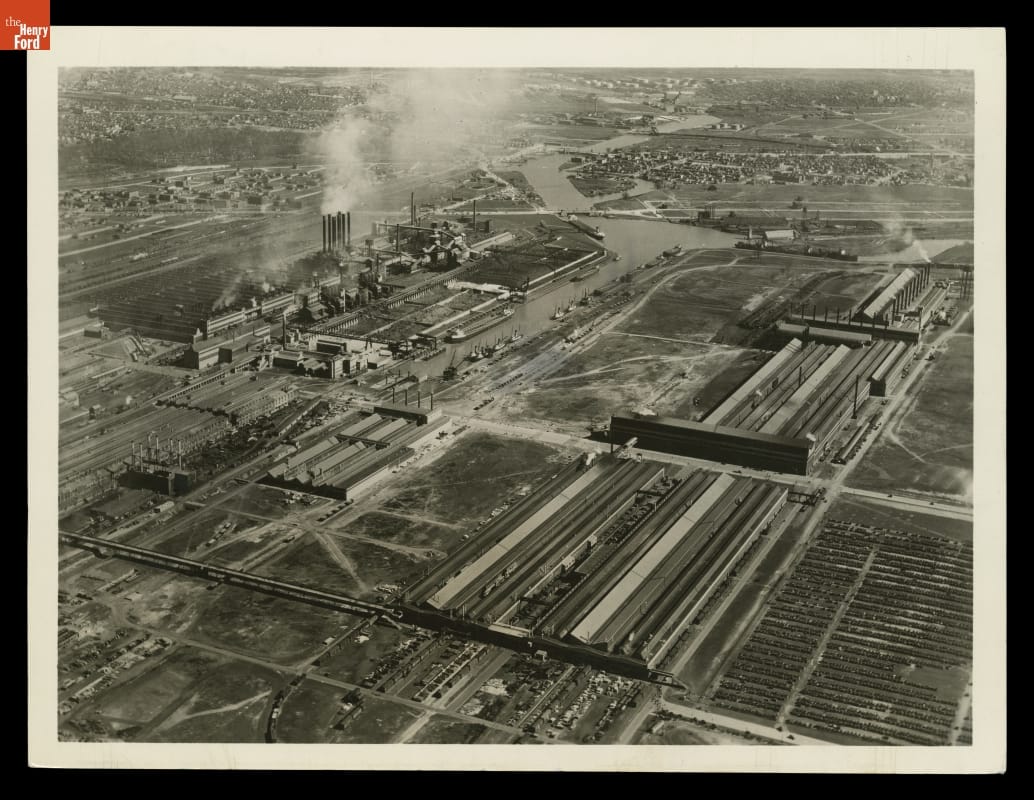
This aerial view shows Ford Motor Company's sprawling Rouge plant--the largest, most efficient manufacturing complex of its time. Ford established its administrative headquarters here in 1928, around the same time the company began manufacturing automobiles from start to finish at the plant. The Rouge became not only central to Ford's operation but an icon of modern industrial efficiency.
- Aerial View of Ford Motor Company Rouge Complex, Dearborn, Michigan, 1930 - This aerial view shows Ford Motor Company's sprawling Rouge plant--the largest, most efficient manufacturing complex of its time. Ford established its administrative headquarters here in 1928, around the same time the company began manufacturing automobiles from start to finish at the plant. The Rouge became not only central to Ford's operation but an icon of modern industrial efficiency.
- September 09, 1930
- Collections - Artifact
Aerial View of Ford Motor Company Rouge Complex, Dearborn, Michigan, 1930
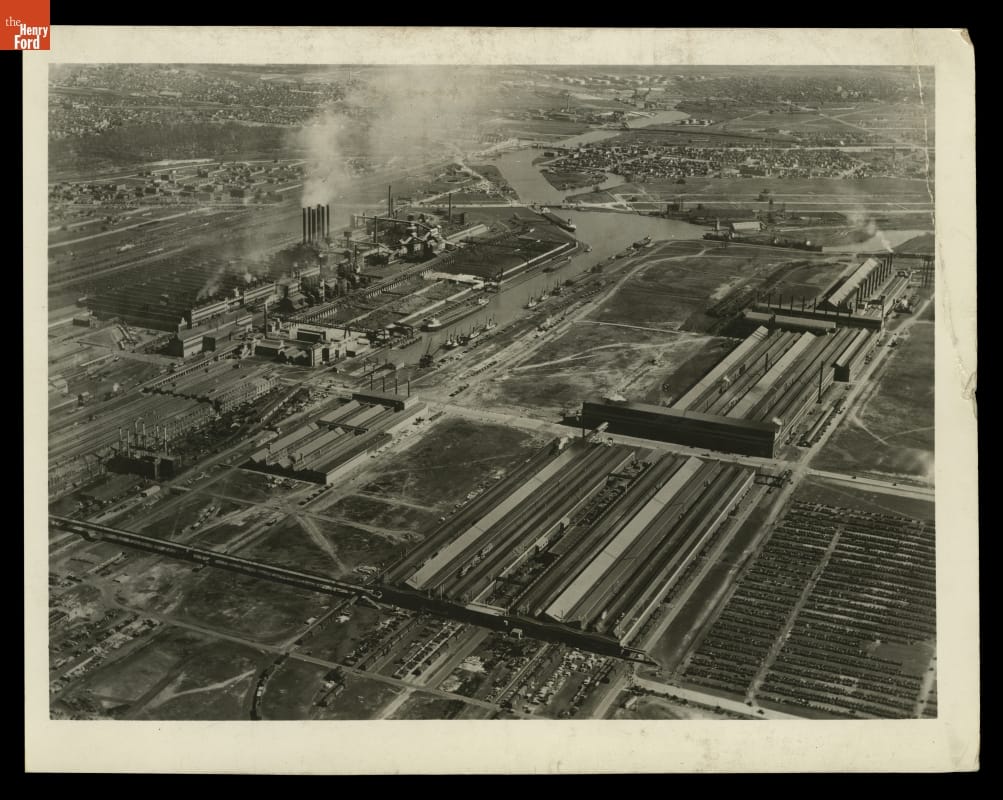
This aerial view shows Ford Motor Company's sprawling Rouge plant--the largest, most efficient manufacturing complex of its time. Ford established its administrative headquarters here in 1928, around the same time the company began manufacturing automobiles from start to finish at the plant. The Rouge became not only central to Ford's operation but an icon of modern industrial efficiency.
- Aerial View of Rouge Plant Showing UAW Activists, December 23, 1937 - The struggle to unionize Ford Motor Company workers was long and--at times--violent. This aerial photograph shows a United Auto Workers (UAW) demonstration at Ford's Rouge Plant in December 1937. Three and a half years later, following a turbulent ten-day strike in April 1941, Ford became the last major automotive manufacturer to recognize the UAW and agree to a union contract.
- December 23, 1937
- Collections - Artifact
Aerial View of Rouge Plant Showing UAW Activists, December 23, 1937
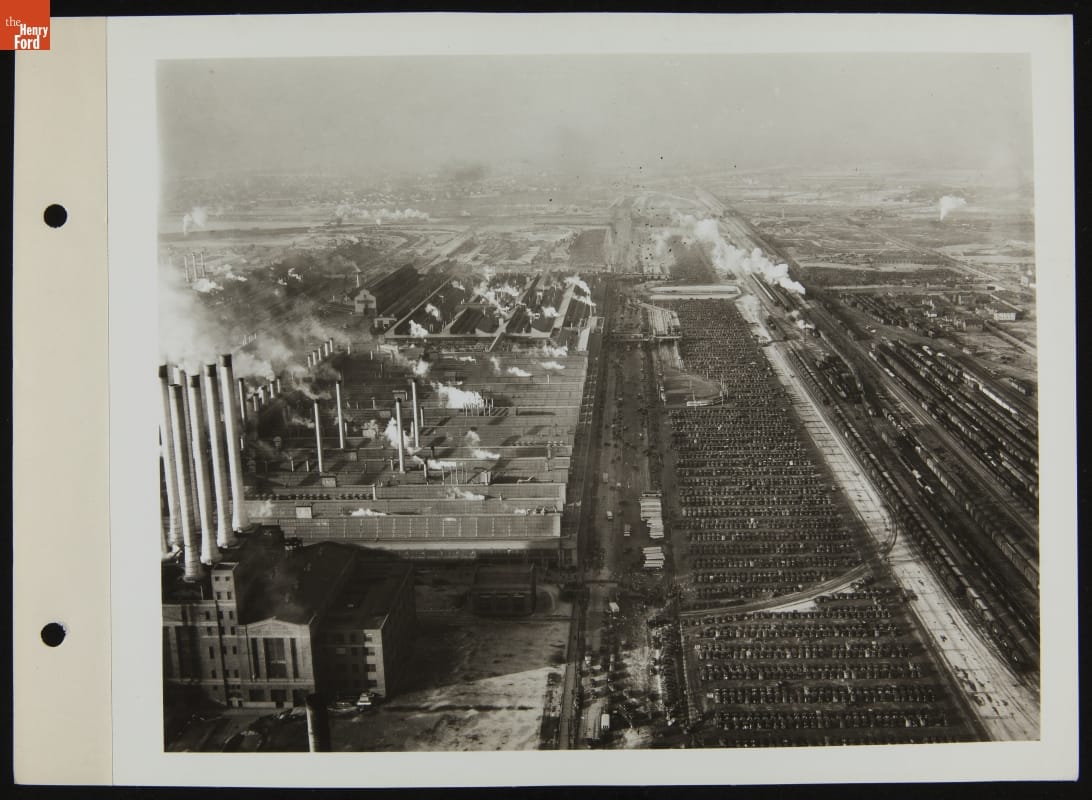
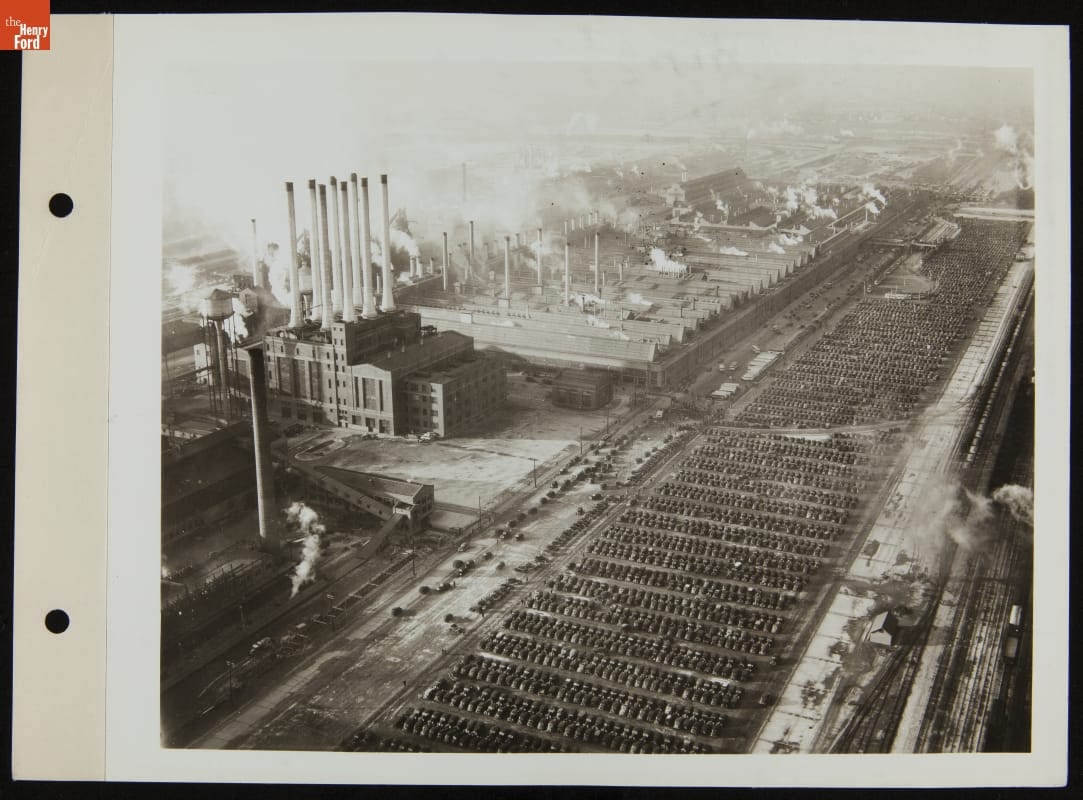
The struggle to unionize Ford Motor Company workers was long and--at times--violent. This aerial photograph shows a United Auto Workers (UAW) demonstration at Ford's Rouge Plant in December 1937. Three and a half years later, following a turbulent ten-day strike in April 1941, Ford became the last major automotive manufacturer to recognize the UAW and agree to a union contract.
- Aerial View of Rouge Plant Showing UAW Activists, December 23, 1937 - The struggle to unionize Ford Motor Company workers was long and--at times--violent. This aerial photograph shows a United Auto Workers (UAW) demonstration at Ford's Rouge Plant in December 1937. Three and a half years later, following a turbulent ten-day strike in April 1941, Ford became the last major automotive manufacturer to recognize the UAW and agree to a union contract.
- December 23, 1937
- Collections - Artifact
Aerial View of Rouge Plant Showing UAW Activists, December 23, 1937
The struggle to unionize Ford Motor Company workers was long and--at times--violent. This aerial photograph shows a United Auto Workers (UAW) demonstration at Ford's Rouge Plant in December 1937. Three and a half years later, following a turbulent ten-day strike in April 1941, Ford became the last major automotive manufacturer to recognize the UAW and agree to a union contract.
- Aerial View of Rouge Plant and Surrounding Area, December 23, 1937 - The struggle to unionize Ford Motor Company workers was long and--at times--violent. This aerial photograph shows Ford's Rouge Plant during a United Auto Workers (UAW) demonstration in December 1937. Three and a half years later, following a turbulent ten-day strike in April 1941, Ford became the last major automotive manufacturer to recognize the UAW and agree to a union contract.
- December 23, 1937
- Collections - Artifact
Aerial View of Rouge Plant and Surrounding Area, December 23, 1937
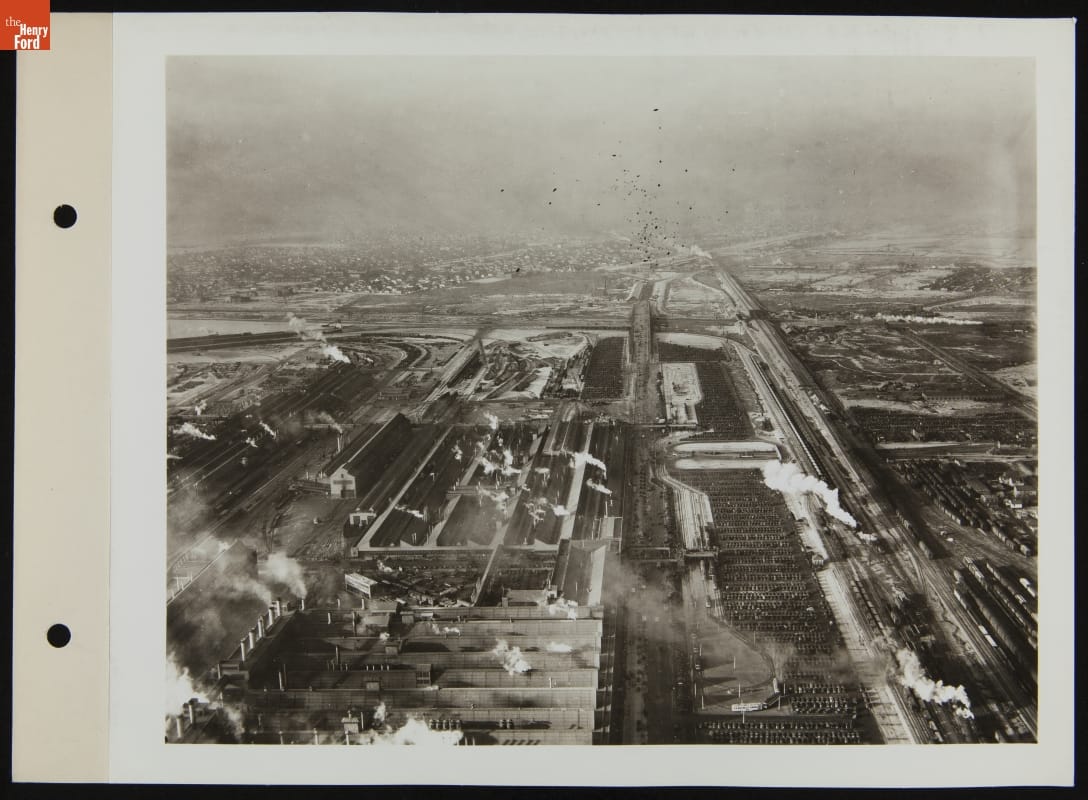
The struggle to unionize Ford Motor Company workers was long and--at times--violent. This aerial photograph shows Ford's Rouge Plant during a United Auto Workers (UAW) demonstration in December 1937. Three and a half years later, following a turbulent ten-day strike in April 1941, Ford became the last major automotive manufacturer to recognize the UAW and agree to a union contract.
- Ford Motor Company--Plant Construction--Dearborn Engineering Lab--1923-1924--Item34 - In 1923, construction began on Ford Motor Company's first purpose-built engineering laboratory building. The massive Albert Kahn-designed structure -- essentially a single light-filled room -- housed tool design, production engineering, and experimental engineering research departments. It also housed the offices and presses for the <EM>Dearborn Independent</EM>, and space for Henry Ford's growing artifact collection. The building was completed in December 1924.
- October 15, 1923
- Collections - Artifact
Ford Motor Company--Plant Construction--Dearborn Engineering Lab--1923-1924--Item34
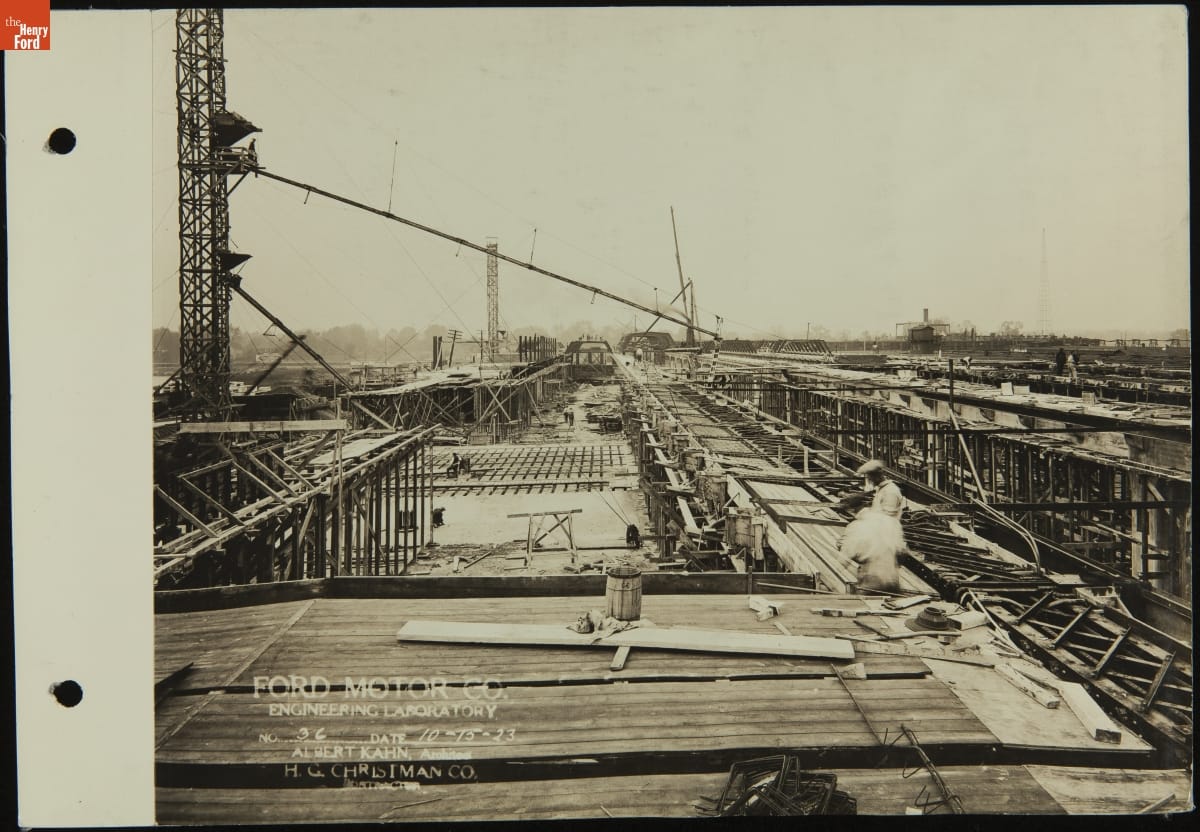
In 1923, construction began on Ford Motor Company's first purpose-built engineering laboratory building. The massive Albert Kahn-designed structure -- essentially a single light-filled room -- housed tool design, production engineering, and experimental engineering research departments. It also housed the offices and presses for the Dearborn Independent, and space for Henry Ford's growing artifact collection. The building was completed in December 1924.
- H.K. Porter Company Catalog, "Porter Steam Locomotives," 1943 - Founded in 1866, the H.K. Porter Company of Pittsburgh, Pennsylvania, built light industrial locomotives. These smaller engines were used in mines, mills, factories, construction sites, agricultural operations, and other specialized applications. Porter manufactured more than 8,000 steam, gasoline, and diesel-powered locomotives before exiting the business in 1950.
- 1943
- Collections - Artifact
H.K. Porter Company Catalog, "Porter Steam Locomotives," 1943
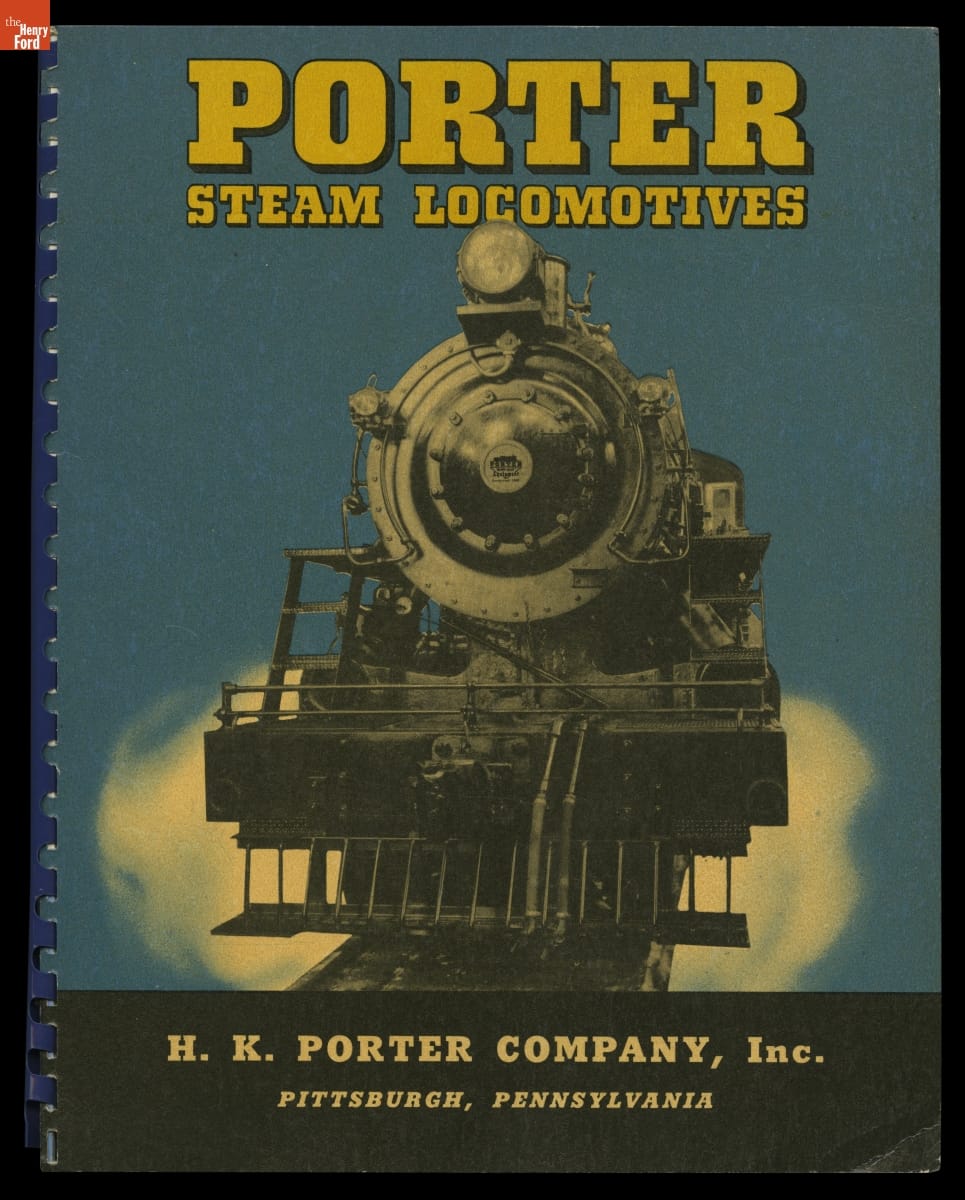
Founded in 1866, the H.K. Porter Company of Pittsburgh, Pennsylvania, built light industrial locomotives. These smaller engines were used in mines, mills, factories, construction sites, agricultural operations, and other specialized applications. Porter manufactured more than 8,000 steam, gasoline, and diesel-powered locomotives before exiting the business in 1950.
- Buy Victory Bonds for Industrial Expansion, circa 1917 -

- circa 1917
- Collections - Artifact
Buy Victory Bonds for Industrial Expansion, circa 1917
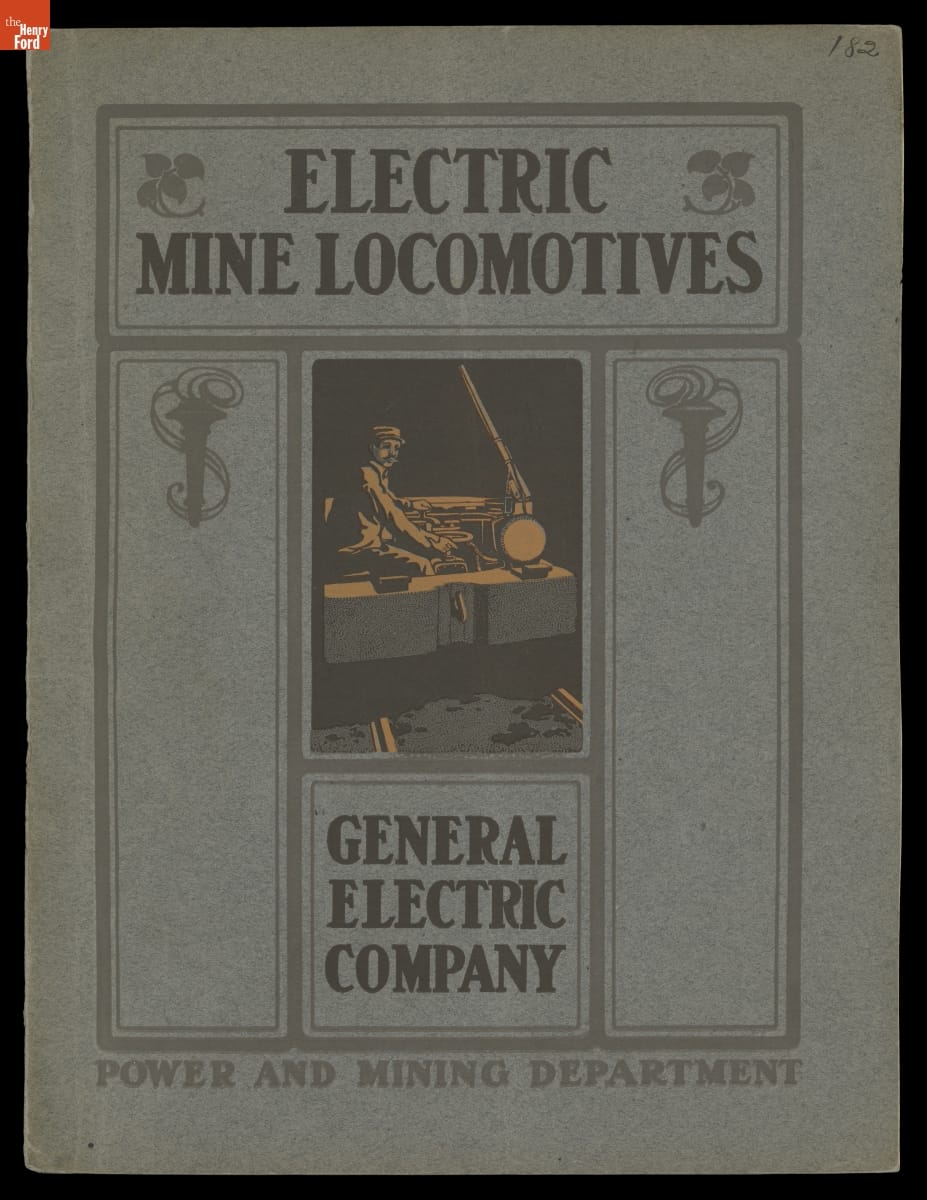
- General Electric Company Catalog, "Electric Mine Locomotives," 1904 - At the turn of the 20th century, General Electric manufactured several models of electric locomotives for use in underground mines -- where smoke and soot from steam locomotives was dangerous and impractical. These small mine locomotives collected electricity from overhead lines or third rails that ran alongside the track. GE also built larger electric locomotives for use with conventional railcars aboveground.
- 1904
- Collections - Artifact
General Electric Company Catalog, "Electric Mine Locomotives," 1904
At the turn of the 20th century, General Electric manufactured several models of electric locomotives for use in underground mines -- where smoke and soot from steam locomotives was dangerous and impractical. These small mine locomotives collected electricity from overhead lines or third rails that ran alongside the track. GE also built larger electric locomotives for use with conventional railcars aboveground.