
Search
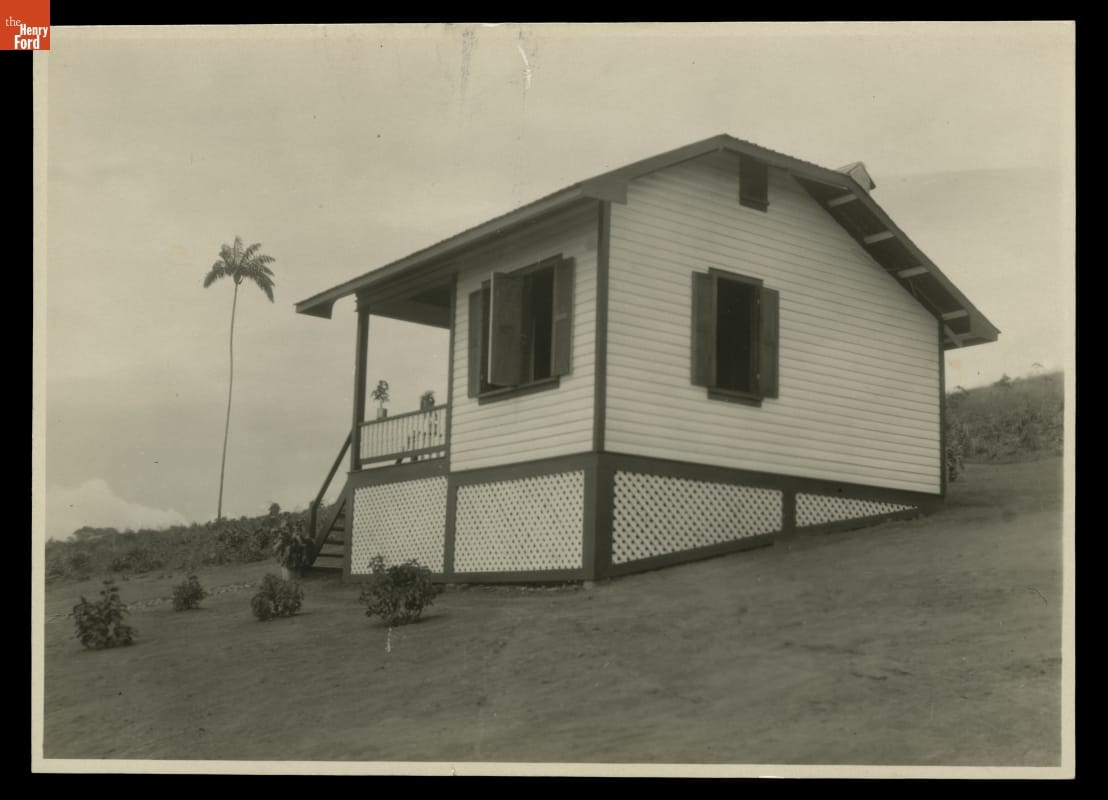
- Employee Housing, Fordlandia, Brazil, June 1932 - In 1928, Ford Motor Company established Fordlandia, a 2.5 million-acre rubber plantation and industrial town, in the Amazon Rainforest. Native workers rioted two years later against imposed American work rules and behavioral restrictions. To alleviate tensions, Ford began building new housing and other amenities. The building designs, however, were patterned after management's Midwestern American aesthetics -- inappropriate for Brazil's tropical climate.
- June 20, 1932
- Collections - Artifact
Employee Housing, Fordlandia, Brazil, June 1932
In 1928, Ford Motor Company established Fordlandia, a 2.5 million-acre rubber plantation and industrial town, in the Amazon Rainforest. Native workers rioted two years later against imposed American work rules and behavioral restrictions. To alleviate tensions, Ford began building new housing and other amenities. The building designs, however, were patterned after management's Midwestern American aesthetics -- inappropriate for Brazil's tropical climate.
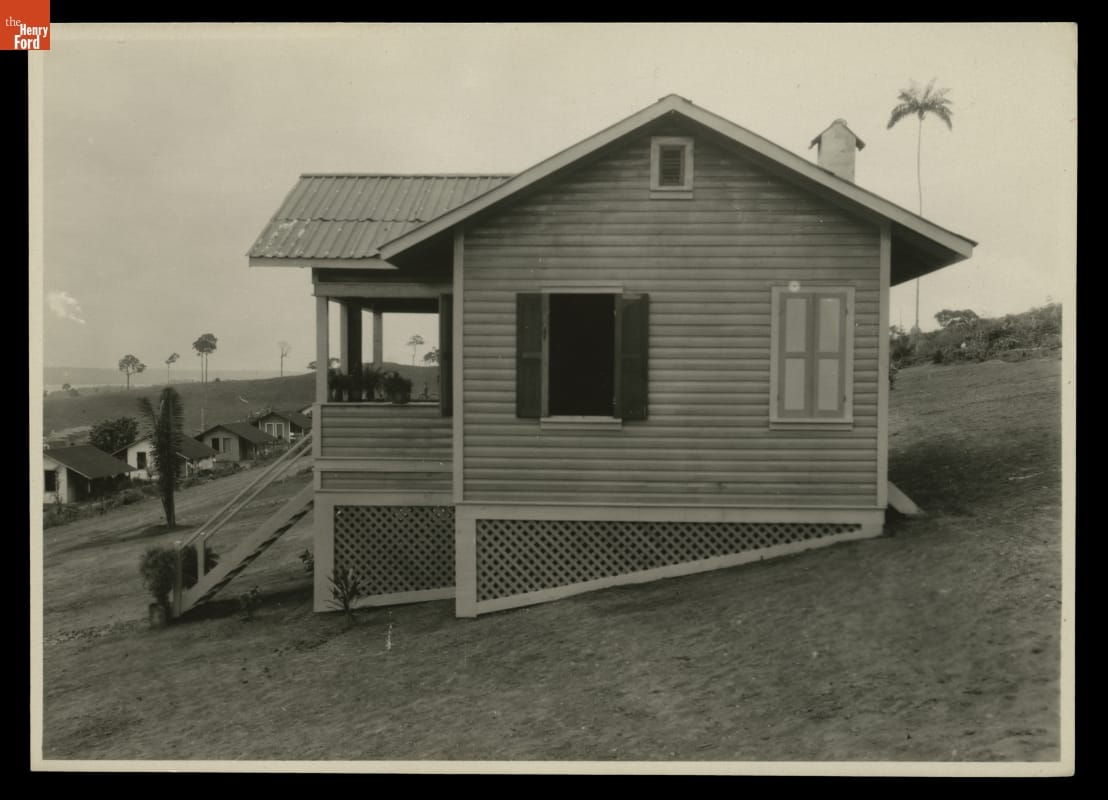
- Employee Housing, Fordlandia, Brazil, June 1932 - In 1928, Ford Motor Company established Fordlandia, a 2.5 million-acre rubber plantation and industrial town, in the Amazon Rainforest. Native workers rioted two years later against imposed American work rules and behavioral restrictions. To alleviate tensions, Ford began building new housing and other amenities. The building designs, however, were patterned after management's Midwestern American aesthetics -- inappropriate for Brazil's tropical climate.
- June 20, 1932
- Collections - Artifact
Employee Housing, Fordlandia, Brazil, June 1932
In 1928, Ford Motor Company established Fordlandia, a 2.5 million-acre rubber plantation and industrial town, in the Amazon Rainforest. Native workers rioted two years later against imposed American work rules and behavioral restrictions. To alleviate tensions, Ford began building new housing and other amenities. The building designs, however, were patterned after management's Midwestern American aesthetics -- inappropriate for Brazil's tropical climate.
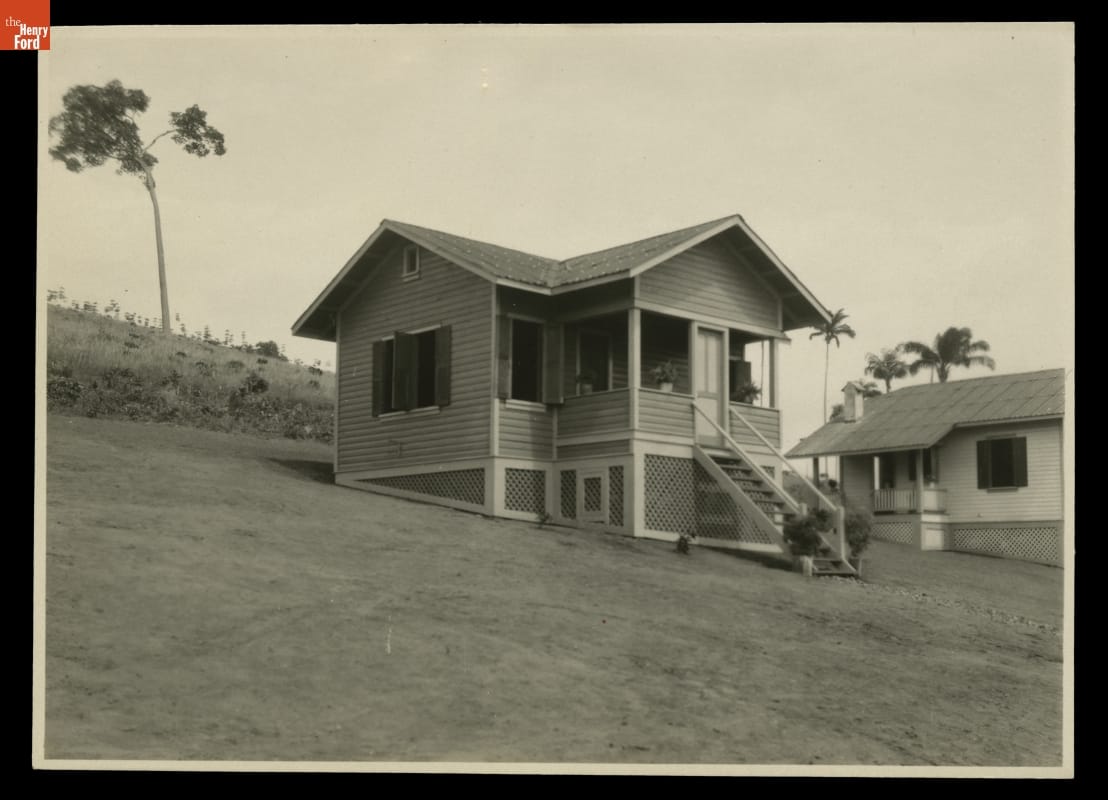
- Employee Housing, Fordlandia, Brazil, June 1932 - In 1928, Ford Motor Company established Fordlandia, a 2.5 million-acre rubber plantation and industrial town, in the Amazon Rainforest. Native workers rioted two years later against imposed American work rules and behavioral restrictions. To alleviate tensions, Ford began building new housing and other amenities. The building designs, however, were patterned after management's Midwestern American aesthetics -- inappropriate for Brazil's tropical climate.
- June 20, 1932
- Collections - Artifact
Employee Housing, Fordlandia, Brazil, June 1932
In 1928, Ford Motor Company established Fordlandia, a 2.5 million-acre rubber plantation and industrial town, in the Amazon Rainforest. Native workers rioted two years later against imposed American work rules and behavioral restrictions. To alleviate tensions, Ford began building new housing and other amenities. The building designs, however, were patterned after management's Midwestern American aesthetics -- inappropriate for Brazil's tropical climate.
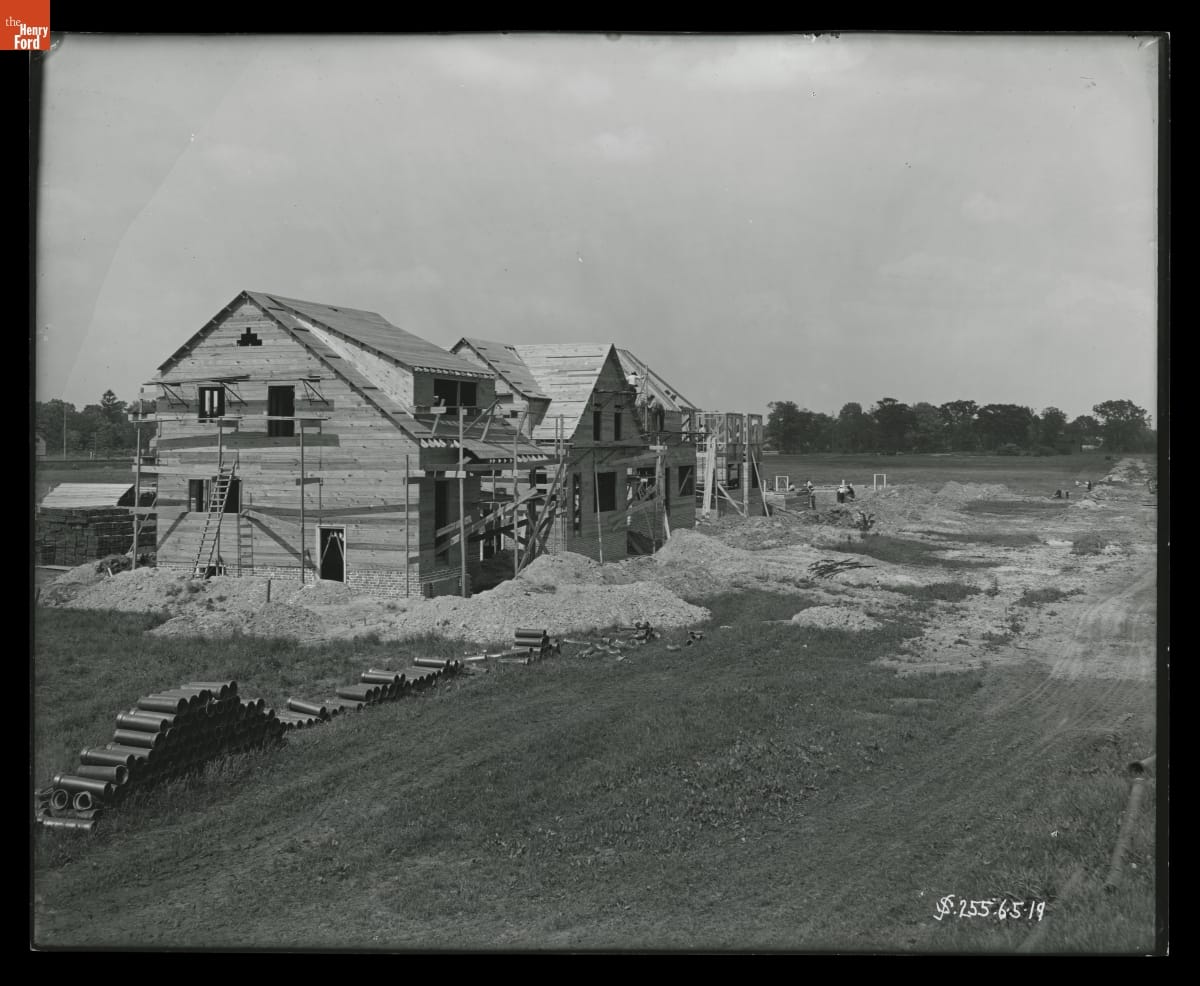
- Ford Homes District Construction on Nona Street, Dearborn, Michigan, June 1919 - In 1919, Edsel Ford and Ernest Liebold, Henry Ford's executive secretary, organized the Dearborn Realty and Construction Company to develop some of Henry Ford's extensive land holdings. Before the end of 1921, the company built 250 houses in what became the Ford Homes District in Dearborn, Michigan. Standardized designs and fixtures saved time and reduced construction costs in the project.
- June 05, 1919
- Collections - Artifact
Ford Homes District Construction on Nona Street, Dearborn, Michigan, June 1919
In 1919, Edsel Ford and Ernest Liebold, Henry Ford's executive secretary, organized the Dearborn Realty and Construction Company to develop some of Henry Ford's extensive land holdings. Before the end of 1921, the company built 250 houses in what became the Ford Homes District in Dearborn, Michigan. Standardized designs and fixtures saved time and reduced construction costs in the project.
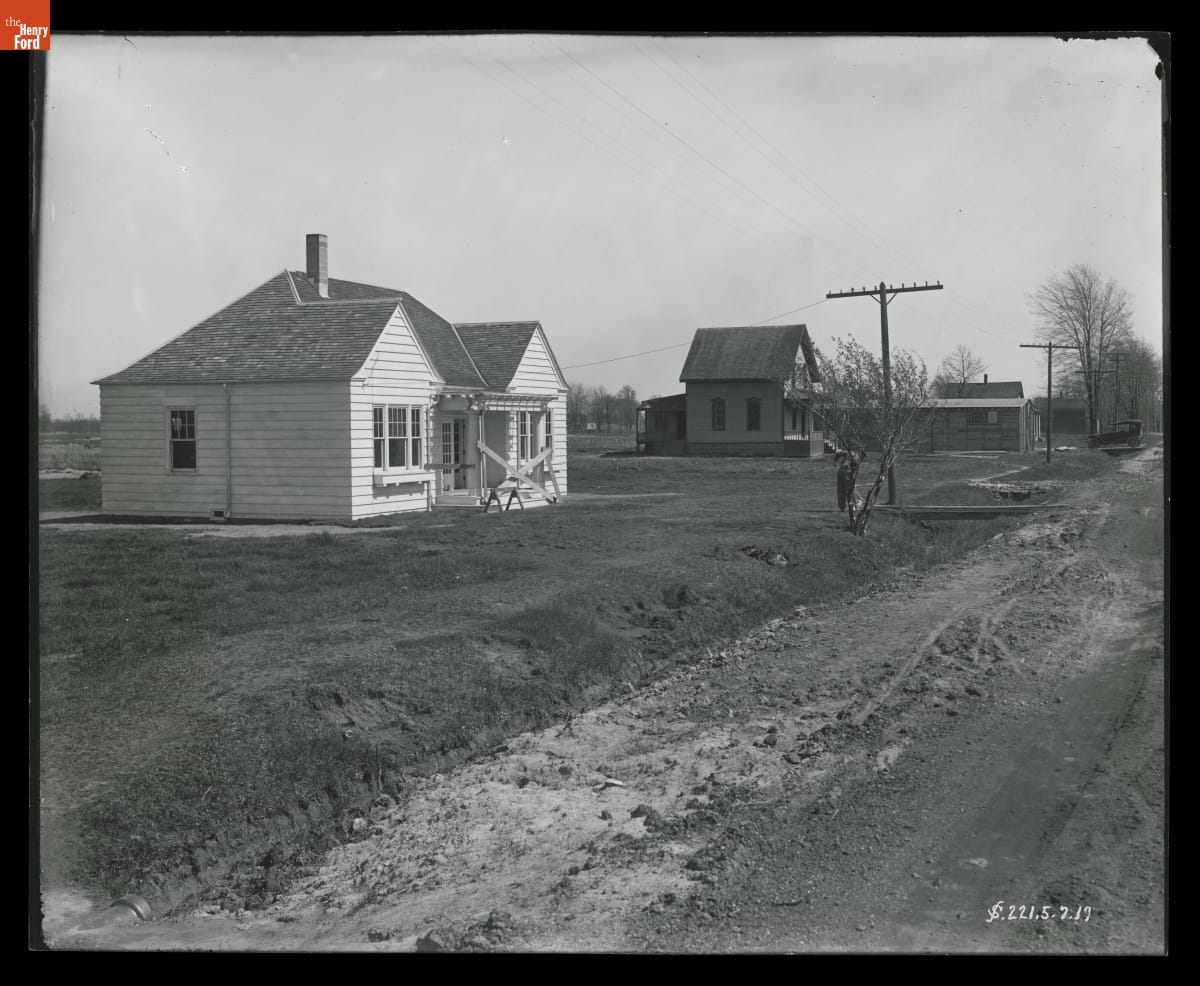
- Dearborn Realty and Construction Company Office on Park Street, Dearborn, Michigan, May 1919 - The Dearborn Realty and Construction Company was organized in January 1919 with Ernest Liebold, Henry Ford's executive secretary, as president and Edsel Ford as vice president. The company's first project was the construction and sale of 250 houses for white-collar Ford employees in what became the Ford Homes District in Dearborn, Michigan.
- May 07, 1919
- Collections - Artifact
Dearborn Realty and Construction Company Office on Park Street, Dearborn, Michigan, May 1919
The Dearborn Realty and Construction Company was organized in January 1919 with Ernest Liebold, Henry Ford's executive secretary, as president and Edsel Ford as vice president. The company's first project was the construction and sale of 250 houses for white-collar Ford employees in what became the Ford Homes District in Dearborn, Michigan.
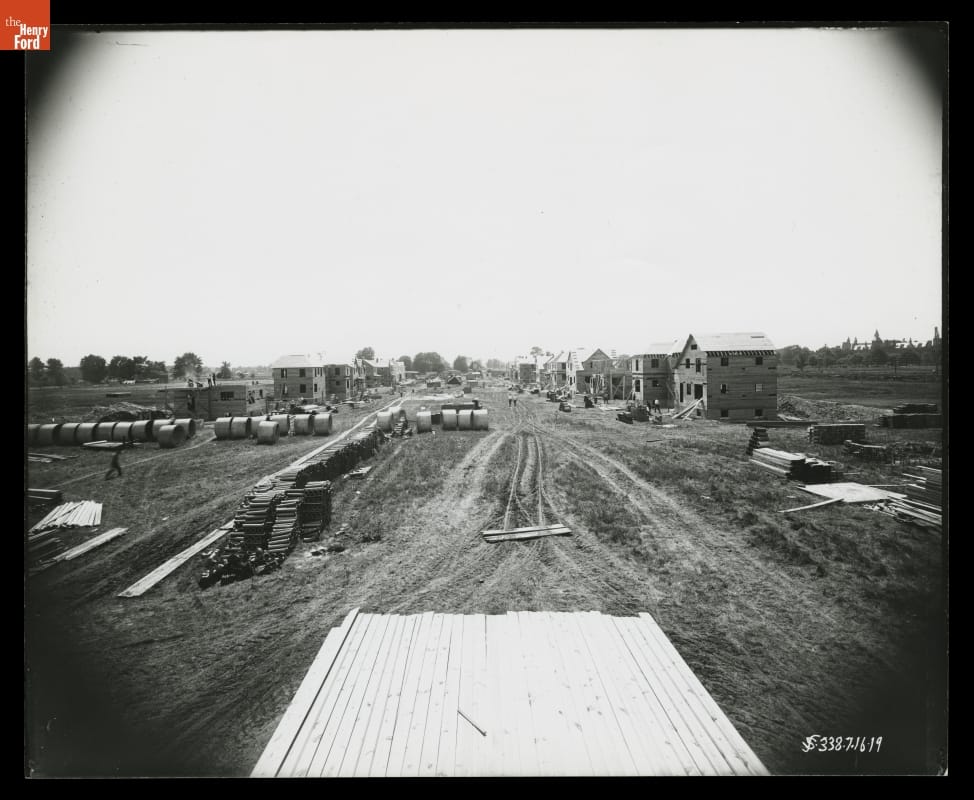
- Ford Homes District Construction on Nona Street, Dearborn, Michigan, 1919 - In 1919, Edsel Ford and Ernest Liebold, Henry Ford's executive secretary, organized the Dearborn Realty and Construction Company to develop some of Henry Ford's extensive land holdings. Before the end of 1921, the company built 250 houses in what became the Ford Homes District in Dearborn, Michigan. Standardized designs and fixtures saved time and reduced construction costs in the project.
- July 16, 1919
- Collections - Artifact
Ford Homes District Construction on Nona Street, Dearborn, Michigan, 1919
In 1919, Edsel Ford and Ernest Liebold, Henry Ford's executive secretary, organized the Dearborn Realty and Construction Company to develop some of Henry Ford's extensive land holdings. Before the end of 1921, the company built 250 houses in what became the Ford Homes District in Dearborn, Michigan. Standardized designs and fixtures saved time and reduced construction costs in the project.
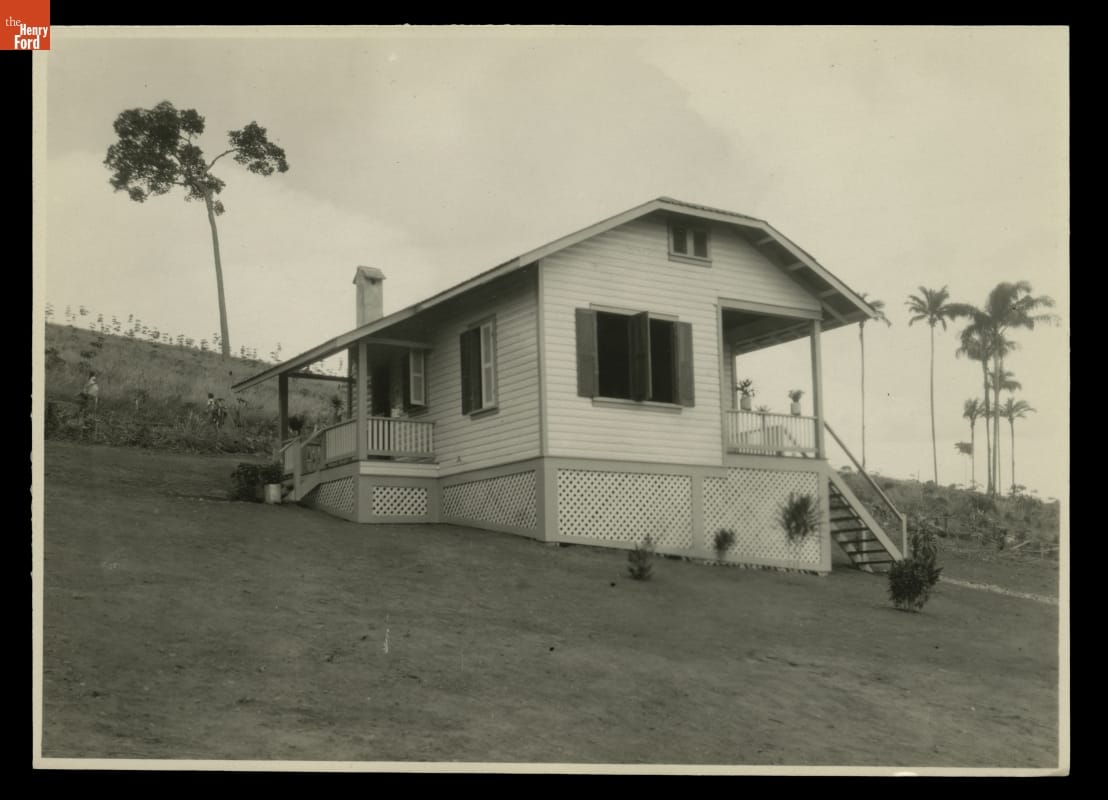
- Employee Housing, Fordlandia, Brazil, June 1932 - In 1928, Ford Motor Company established Fordlandia, a 2.5 million-acre rubber plantation and industrial town, in the Amazon Rainforest. Native workers rioted two years later against imposed American work rules and behavioral restrictions. To alleviate tensions, Ford began building new housing and other amenities. The building designs, however, were patterned after management's Midwestern American aesthetics -- inappropriate for Brazil's tropical climate.
- June 20, 1932
- Collections - Artifact
Employee Housing, Fordlandia, Brazil, June 1932
In 1928, Ford Motor Company established Fordlandia, a 2.5 million-acre rubber plantation and industrial town, in the Amazon Rainforest. Native workers rioted two years later against imposed American work rules and behavioral restrictions. To alleviate tensions, Ford began building new housing and other amenities. The building designs, however, were patterned after management's Midwestern American aesthetics -- inappropriate for Brazil's tropical climate.
- Photograph Album, California Packing Corporation Operations, circa 1922 -
- circa 1922
- Collections - Artifact
Photograph Album, California Packing Corporation Operations, circa 1922
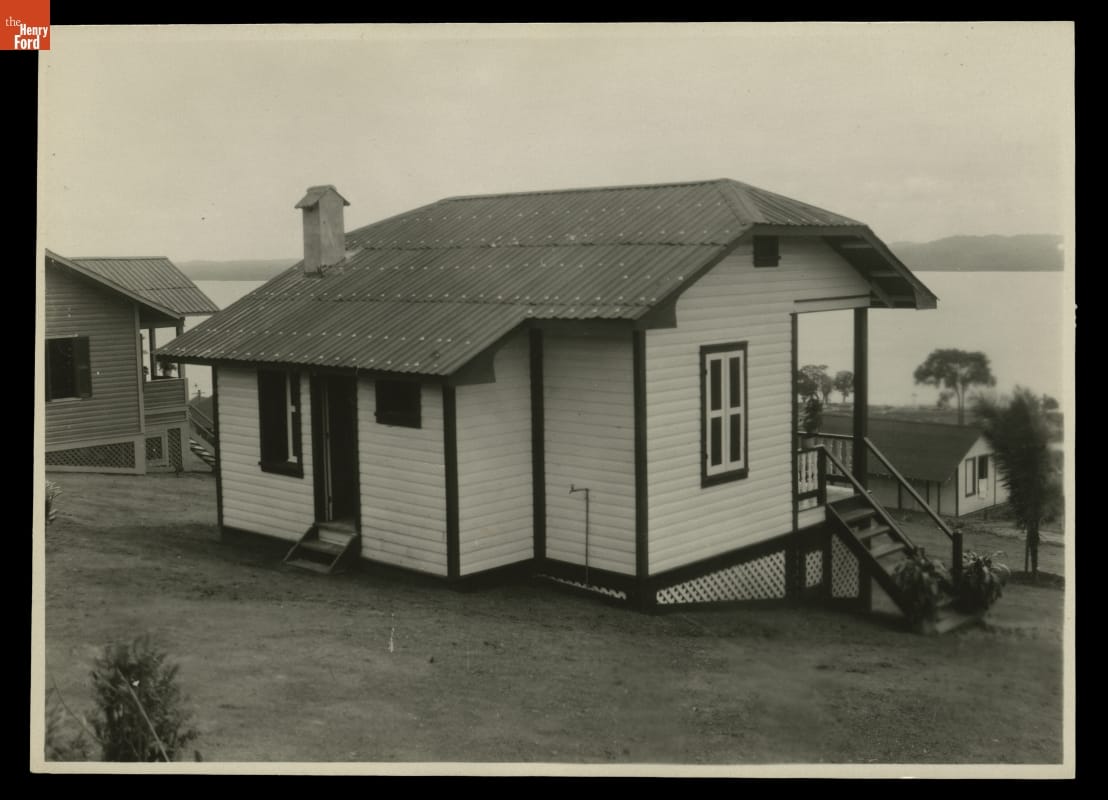
- Employee Housing, Fordlandia, Brazil, June 1932 - In 1928, Ford Motor Company established Fordlandia, a 2.5 million-acre rubber plantation and industrial town, in the Amazon Rainforest. Native workers rioted two years later against imposed American work rules and behavioral restrictions. To alleviate tensions, Ford began building new housing and other amenities. The building designs, however, were patterned after management's Midwestern American aesthetics -- inappropriate for Brazil's tropical climate.
- June 20, 1932
- Collections - Artifact
Employee Housing, Fordlandia, Brazil, June 1932
In 1928, Ford Motor Company established Fordlandia, a 2.5 million-acre rubber plantation and industrial town, in the Amazon Rainforest. Native workers rioted two years later against imposed American work rules and behavioral restrictions. To alleviate tensions, Ford began building new housing and other amenities. The building designs, however, were patterned after management's Midwestern American aesthetics -- inappropriate for Brazil's tropical climate.
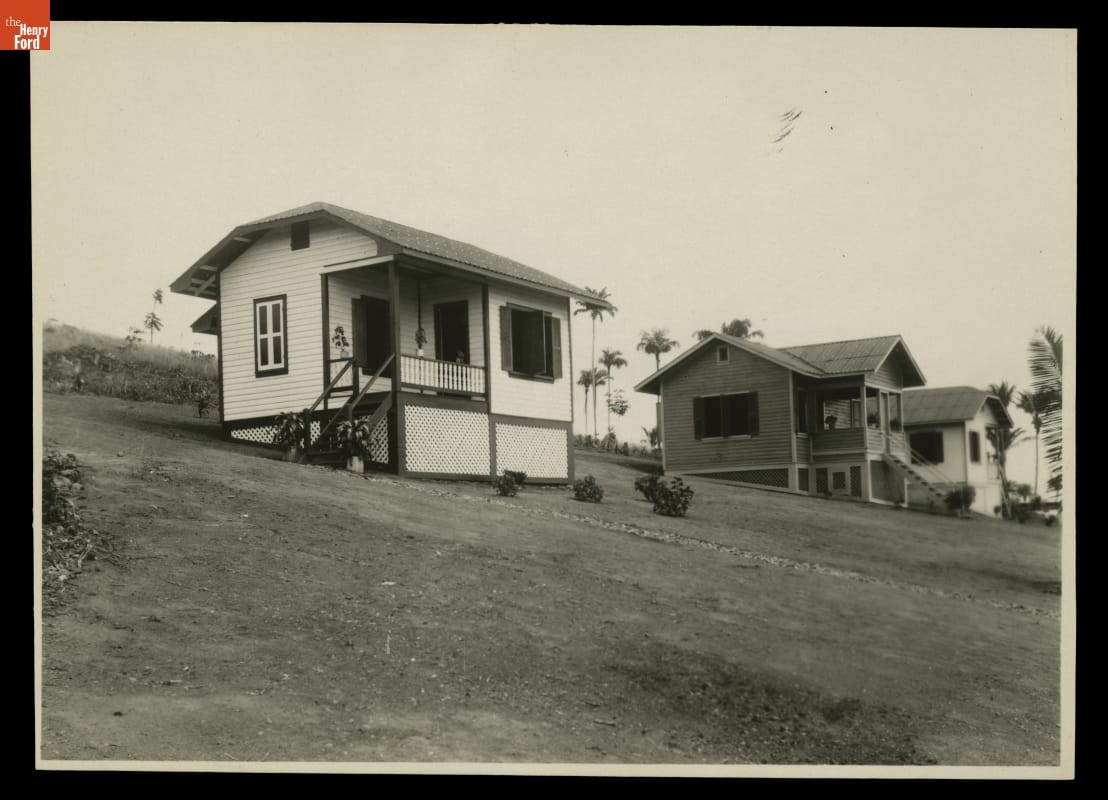
- Employee Housing, Fordlandia, Brazil, June 1932 - In 1928, Ford Motor Company established Fordlandia, a 2.5 million-acre rubber plantation and industrial town, in the Amazon Rainforest. Native workers rioted two years later against imposed American work rules and behavioral restrictions. To alleviate tensions, Ford began building new housing and other amenities. The building designs, however, were patterned after management's Midwestern American aesthetics -- inappropriate for Brazil's tropical climate.
- June 20, 1932
- Collections - Artifact
Employee Housing, Fordlandia, Brazil, June 1932
In 1928, Ford Motor Company established Fordlandia, a 2.5 million-acre rubber plantation and industrial town, in the Amazon Rainforest. Native workers rioted two years later against imposed American work rules and behavioral restrictions. To alleviate tensions, Ford began building new housing and other amenities. The building designs, however, were patterned after management's Midwestern American aesthetics -- inappropriate for Brazil's tropical climate.