
Search
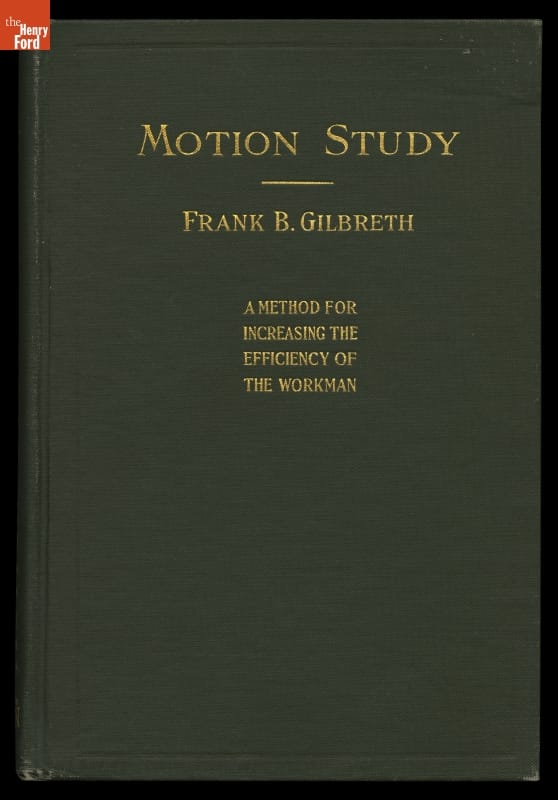
- Book, "Motion Study: A Method for Increasing the Efficiency of the Workman," 1911 -
- 1911
- Collections - Artifact
Book, "Motion Study: A Method for Increasing the Efficiency of the Workman," 1911
- "Frederick W. Taylor, Father of Scientific Management," Volume 1, 1923 -

- 1923
- Collections - Artifact
"Frederick W. Taylor, Father of Scientific Management," Volume 1, 1923
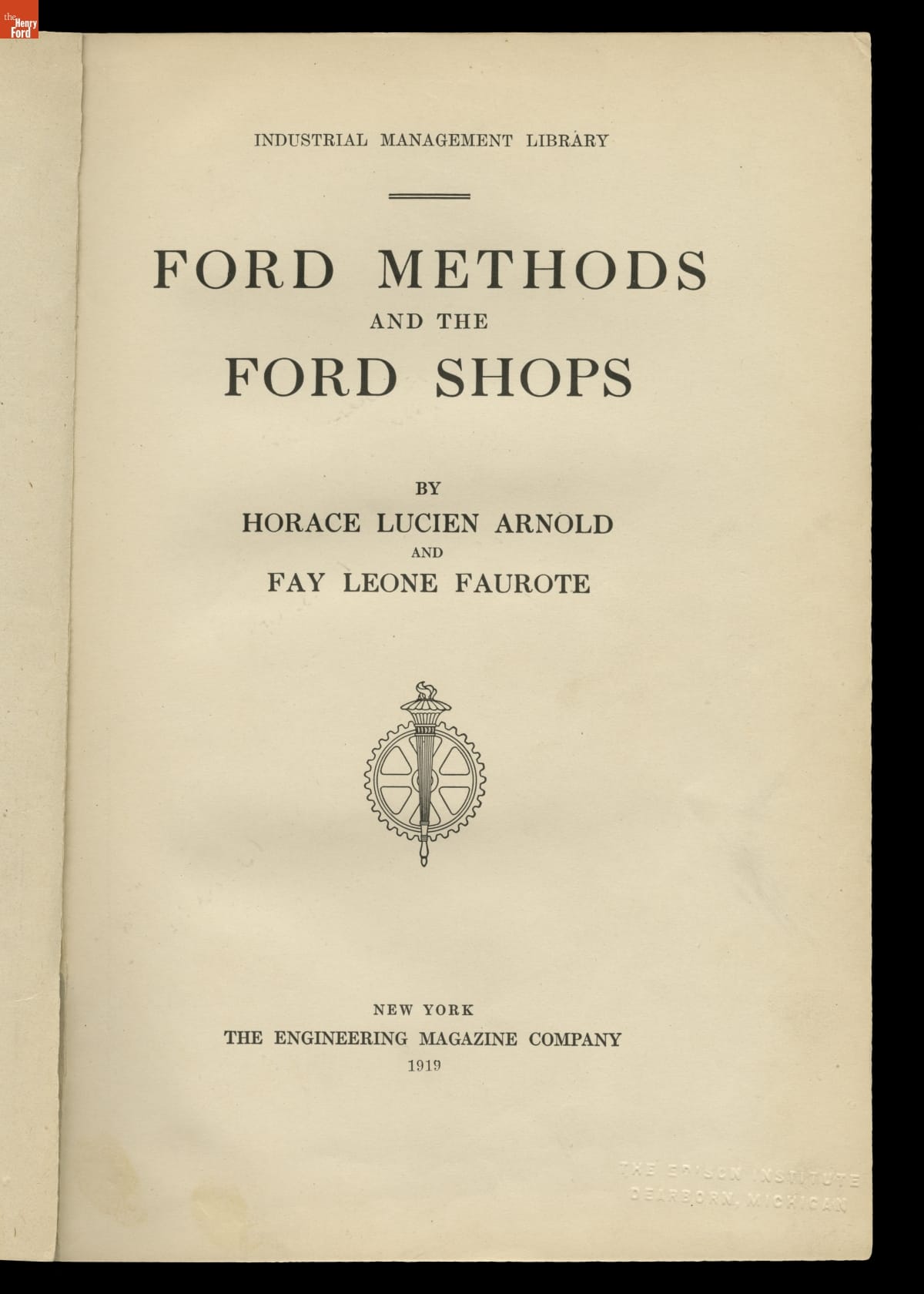
- "Ford Methods and the Ford Shops," 1919 - This book tells the story of Ford's financial, industrial, and mechanical success. It was the brainstorm of the editors at <EM>Engineering Magazine</EM>, who felt that it would benefit other manufacturers, managers, and engineers. The diversity of immigrants lured to Detroit to pursue automotive jobs -- many of them non-English-speaking -- is evident in the sample form published on page 59.
- 1915
- Collections - Artifact
"Ford Methods and the Ford Shops," 1919
This book tells the story of Ford's financial, industrial, and mechanical success. It was the brainstorm of the editors at Engineering Magazine, who felt that it would benefit other manufacturers, managers, and engineers. The diversity of immigrants lured to Detroit to pursue automotive jobs -- many of them non-English-speaking -- is evident in the sample form published on page 59.
- Book, "Fatigue Study: A First Step in Motion Study," 1918 -
- 1918
- Collections - Artifact
Book, "Fatigue Study: A First Step in Motion Study," 1918
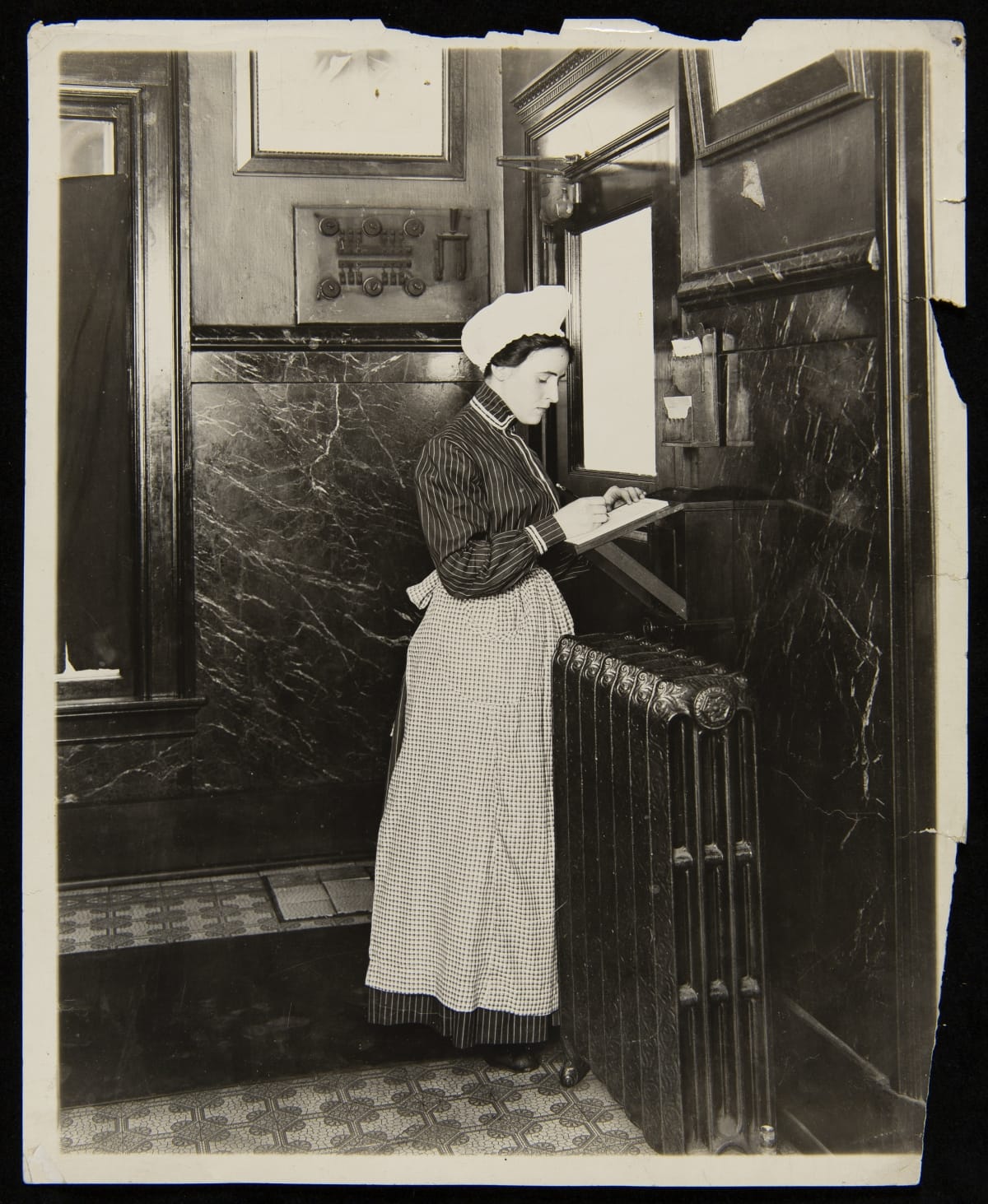
- Employee at Suggestion Box, H. J. Heinz Company, circa 1895 - Recognizing that the success of his business relied on his employees, H.J. Heinz provided his employees with exemplary amenities and conveniences such as a swimming pool, gymnasium, large dining rooms, and self-improvement classes. Employees were also given access to a suggestion box where one could offer a better way to do something with the incentive of a reward or promotion for doing so.
- circa 1895
- Collections - Artifact
Employee at Suggestion Box, H. J. Heinz Company, circa 1895
Recognizing that the success of his business relied on his employees, H.J. Heinz provided his employees with exemplary amenities and conveniences such as a swimming pool, gymnasium, large dining rooms, and self-improvement classes. Employees were also given access to a suggestion box where one could offer a better way to do something with the incentive of a reward or promotion for doing so.
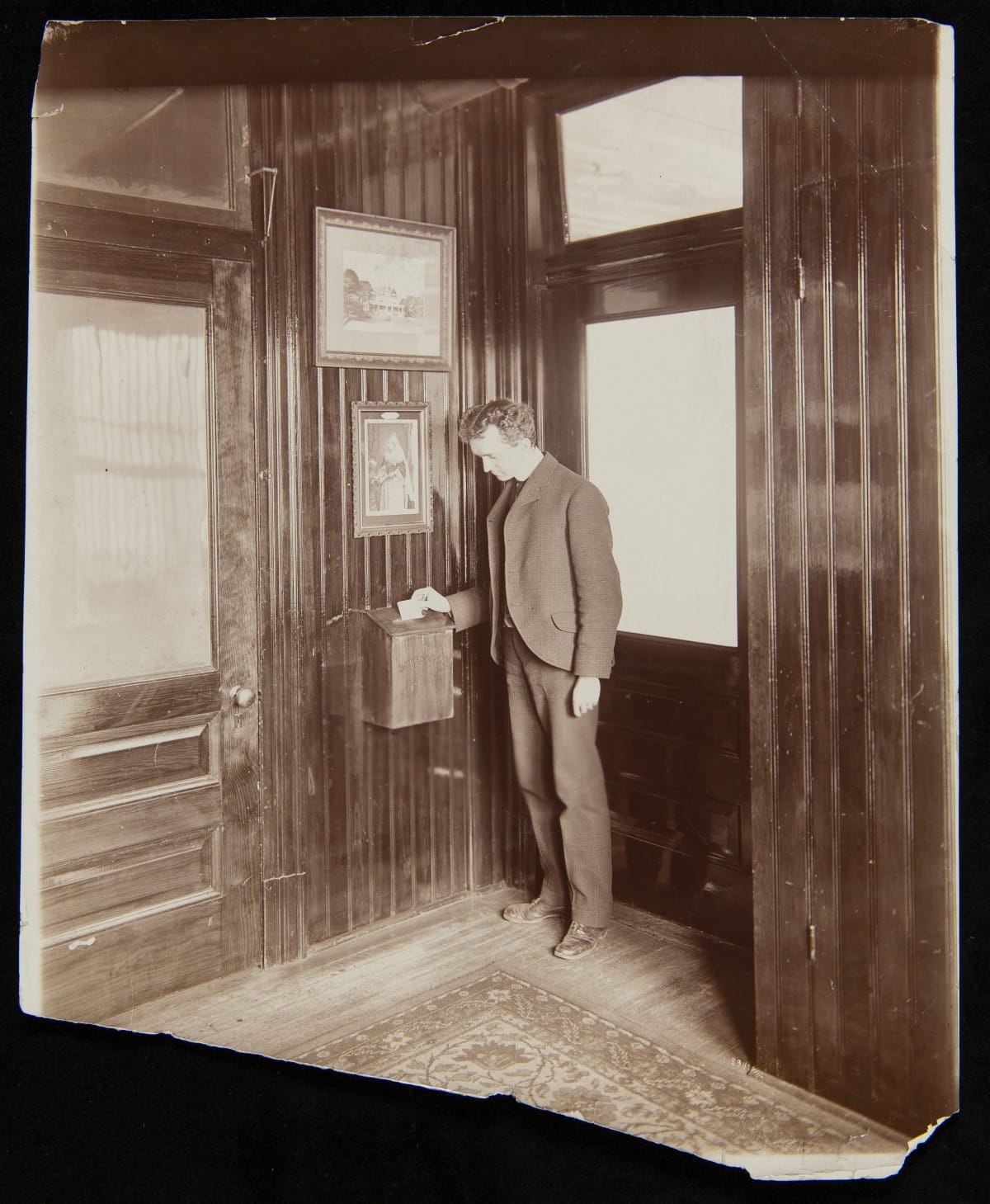
- Employee at Suggestion Box, H. J. Heinz Company, London, England, circa 1895 - Recognizing that the success of his business relied on his employees, H.J. Heinz provided his employees with exemplary amenities and conveniences such as a swimming pool, gymnasium, large dining rooms, and self-improvement classes. Employees were also given access to a suggestion box where one could offer a better way to do something with the incentive of a reward or promotion for doing so.
- circa 1895
- Collections - Artifact
Employee at Suggestion Box, H. J. Heinz Company, London, England, circa 1895
Recognizing that the success of his business relied on his employees, H.J. Heinz provided his employees with exemplary amenities and conveniences such as a swimming pool, gymnasium, large dining rooms, and self-improvement classes. Employees were also given access to a suggestion box where one could offer a better way to do something with the incentive of a reward or promotion for doing so.
- "Frederick W. Taylor, Father of Scientific Management," Volume 2, 1923 -

- 1923
- Collections - Artifact
"Frederick W. Taylor, Father of Scientific Management," Volume 2, 1923
- Willow Run Bomber Plant Manual, 1943-1944 - Ford Motor Company built everything from jeeps to generators during World War II, but nothing captured the public's imagination like Ford's B-24 bomber plant at Willow Run, where one new airplane was completed every 63 minutes. This manual documents the carefully planned assembly process that allowed complex bombers to be built using the same mass production techniques Ford pioneered for its automobiles.
- 1943-1944
- Collections - Artifact
Willow Run Bomber Plant Manual, 1943-1944
Ford Motor Company built everything from jeeps to generators during World War II, but nothing captured the public's imagination like Ford's B-24 bomber plant at Willow Run, where one new airplane was completed every 63 minutes. This manual documents the carefully planned assembly process that allowed complex bombers to be built using the same mass production techniques Ford pioneered for its automobiles.