
Search
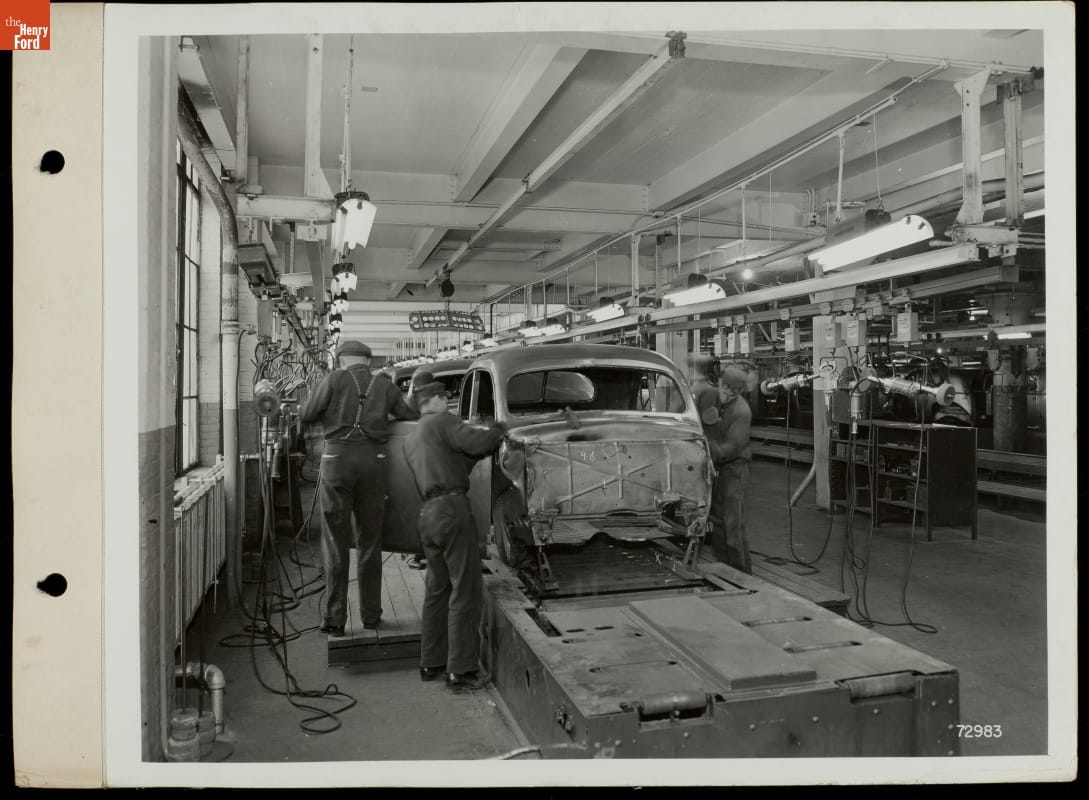
- Preparing Car Bodies for Painting, Ford Rouge Plant Assembly Line, 1940 - Engineers at Ford's Highland Park plant had fine-tuned the moving assembly line. With this experience in hand, Ford created the "B" Building at its new River Rouge complex with extensive conveyer systems to accommodate the flow of parts and assembly processes. These workers inspect vehicles on the body assembly line. From here, bodies moved along to the paint shop.
- January 16, 1940
- Collections - Artifact
Preparing Car Bodies for Painting, Ford Rouge Plant Assembly Line, 1940
Engineers at Ford's Highland Park plant had fine-tuned the moving assembly line. With this experience in hand, Ford created the "B" Building at its new River Rouge complex with extensive conveyer systems to accommodate the flow of parts and assembly processes. These workers inspect vehicles on the body assembly line. From here, bodies moved along to the paint shop.
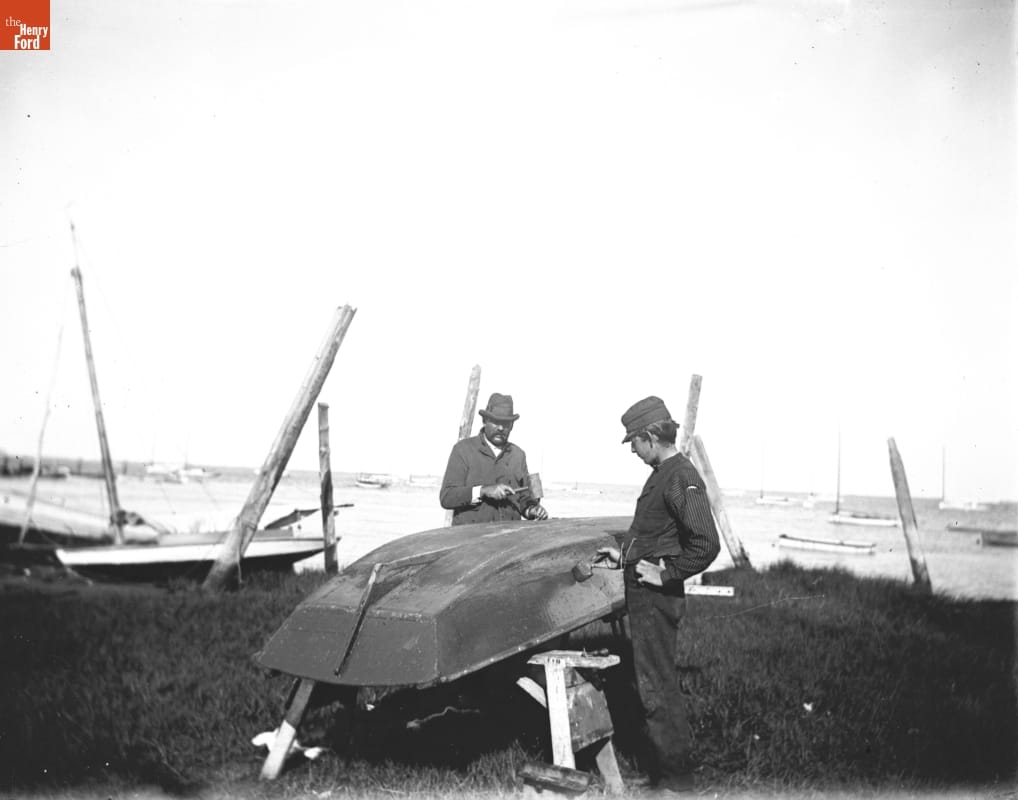
- Painting Boat, Canarsie, Brooklyn, New York, 1890-1915 - In 1890, Jenny Young Chandler, 25 years old and recently widowed, began working for the <EM>New York Herald</EM>. As a photojournalist and feature writer, Chandler captured life in Brooklyn, New York, and vicinity. By 1922, the time of her death, she had produced over 800 glass plate negatives. Her sensitive, insightful photographs depict people from all walks of life and the world in which they lived.
- 1890-1915
- Collections - Artifact
Painting Boat, Canarsie, Brooklyn, New York, 1890-1915
In 1890, Jenny Young Chandler, 25 years old and recently widowed, began working for the New York Herald. As a photojournalist and feature writer, Chandler captured life in Brooklyn, New York, and vicinity. By 1922, the time of her death, she had produced over 800 glass plate negatives. Her sensitive, insightful photographs depict people from all walks of life and the world in which they lived.
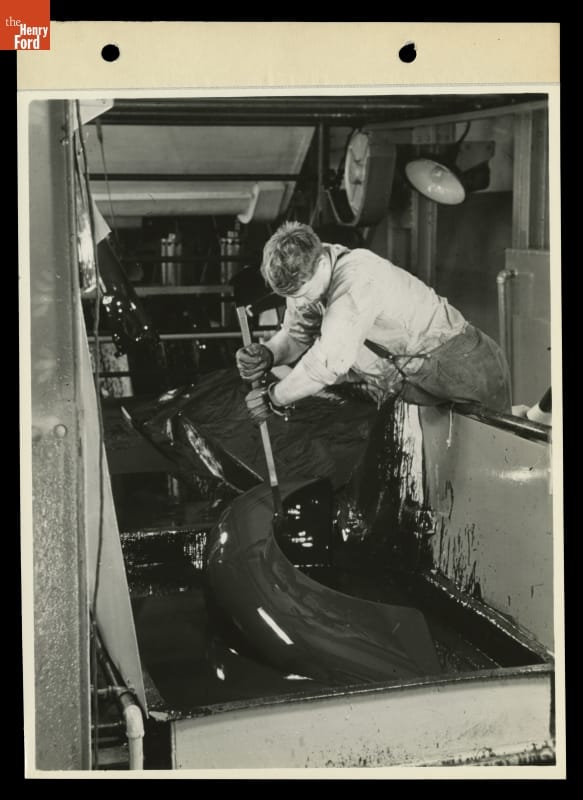
- Painting Automobile Fenders, Ford Rouge Plant, 1938 - In the 1930s, workers at Ford Motor Company's Rouge plant painted vehicle bodies and components in a variety of colors. Prior to painting, sheet metal parts like these fenders were coated with a thin layer of zinc phosphate to improve paint adhesion and protect from rusting -- a process called bonderizing. Each fender was then dipped into a vat of paint.
- February 02, 1938
- Collections - Artifact
Painting Automobile Fenders, Ford Rouge Plant, 1938
In the 1930s, workers at Ford Motor Company's Rouge plant painted vehicle bodies and components in a variety of colors. Prior to painting, sheet metal parts like these fenders were coated with a thin layer of zinc phosphate to improve paint adhesion and protect from rusting -- a process called bonderizing. Each fender was then dipped into a vat of paint.
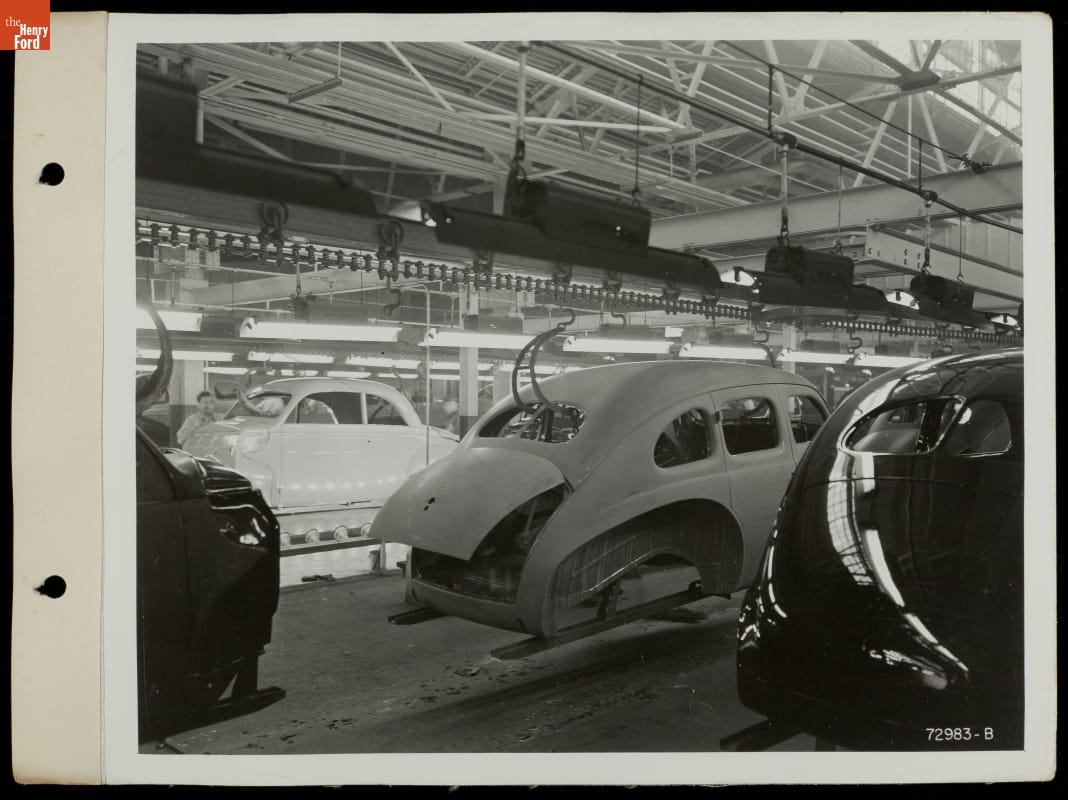
- Painted and Unpainted Car Bodies on Conveyor Lines, Ford Rouge Plant, 1940 - Engineers at Ford's Highland Park plant had fine-tuned the moving assembly line. With this experience in hand, Ford created the "B" Building at its new River Rouge complex with extensive conveyer systems to accommodate the flow of parts and assembly processes. Here, elevated conveyors move vehicles through body assembly on the "B" Building's second floor.
- January 16, 1940
- Collections - Artifact
Painted and Unpainted Car Bodies on Conveyor Lines, Ford Rouge Plant, 1940
Engineers at Ford's Highland Park plant had fine-tuned the moving assembly line. With this experience in hand, Ford created the "B" Building at its new River Rouge complex with extensive conveyer systems to accommodate the flow of parts and assembly processes. Here, elevated conveyors move vehicles through body assembly on the "B" Building's second floor.
- Car Bodies Being Sprayed on Assembly Line, Ford Rouge Plant, 1940 -
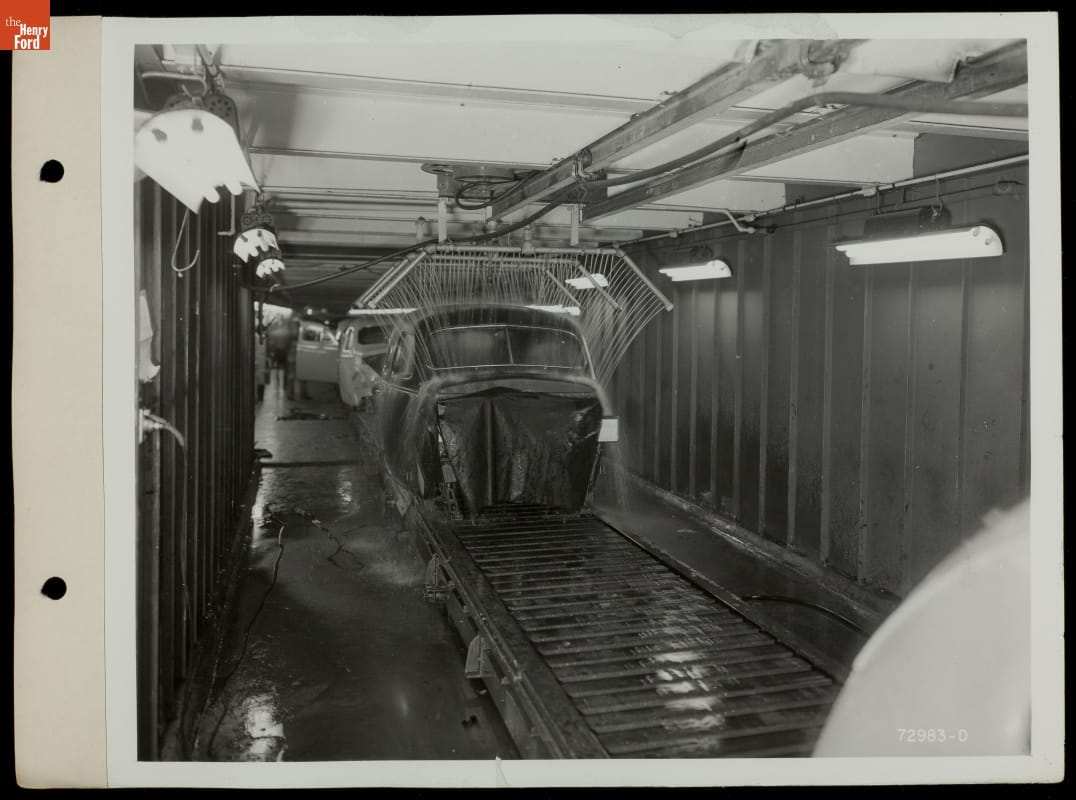
- January 16, 1940
- Collections - Artifact
Car Bodies Being Sprayed on Assembly Line, Ford Rouge Plant, 1940
- Spraying Lacquer on Ford Automobile Bodies at Briggs Manufacturing Company, Detroit, Michigan, 1933 -
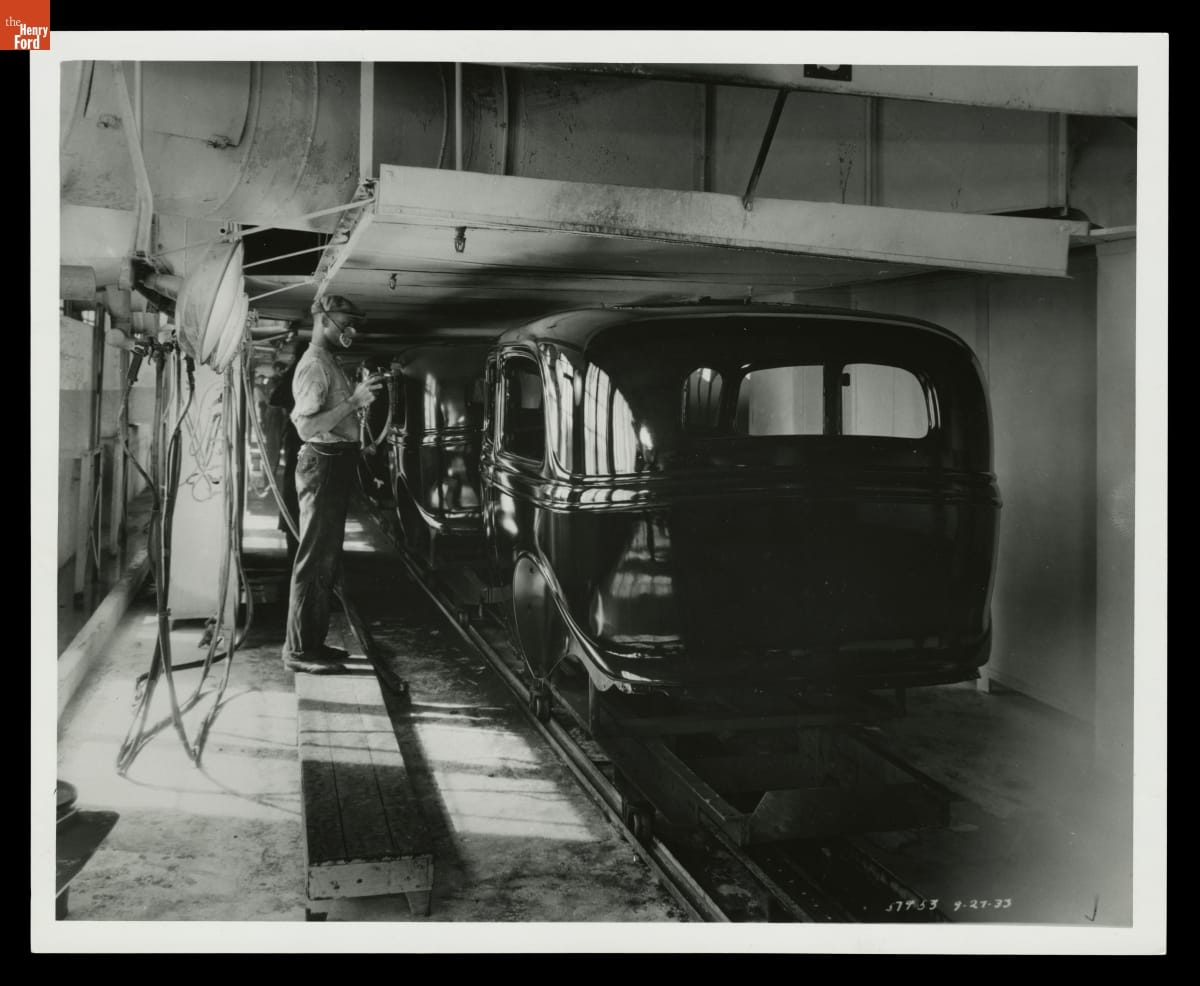
- 1933
- Collections - Artifact
Spraying Lacquer on Ford Automobile Bodies at Briggs Manufacturing Company, Detroit, Michigan, 1933