
Search
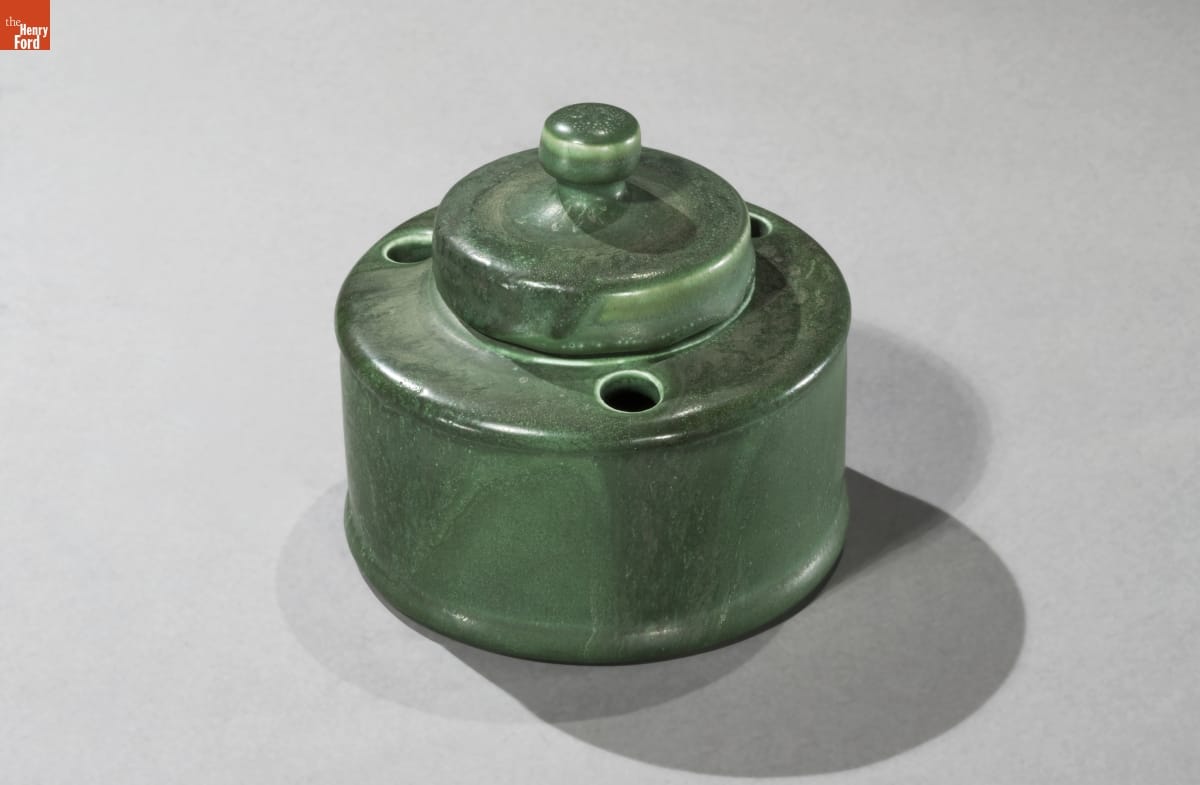
- Inkwell, 1904-1917 - Cadman Robertson joined Hampshire Pottery in 1904 and began developing decorative household items covered with an attractive thick brown, red, blue, or green glaze. The Keene, New Hampshire, company continued to produce similar wares for a few years after Robertson's sudden death in 1914. The company was sold in 1917 and focused on making commercial China for restaurants and hotels. The factory closed in 1923.
- 1904-1917
- Collections - Artifact
Inkwell, 1904-1917
Cadman Robertson joined Hampshire Pottery in 1904 and began developing decorative household items covered with an attractive thick brown, red, blue, or green glaze. The Keene, New Hampshire, company continued to produce similar wares for a few years after Robertson's sudden death in 1914. The company was sold in 1917 and focused on making commercial China for restaurants and hotels. The factory closed in 1923.
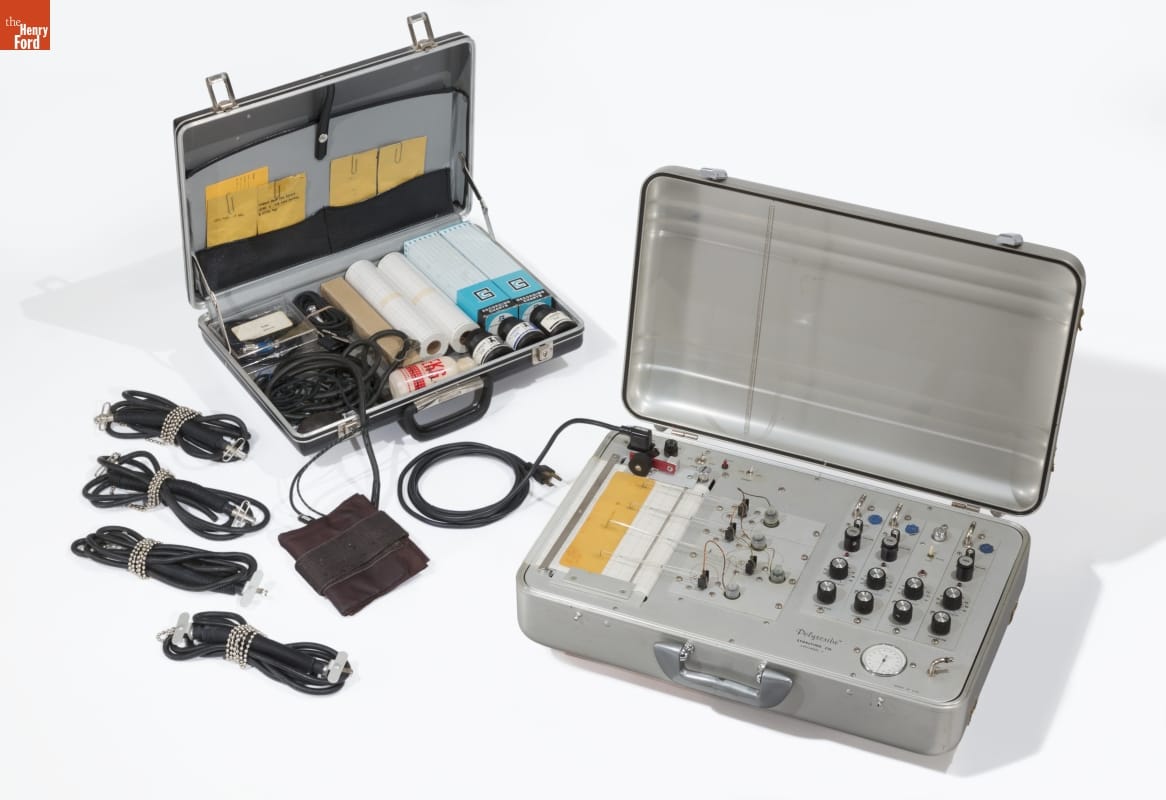
- Polyscribe Model 22770 Polygraph Machine and Accessories Kit, 1974-1977 - Polygraphs are more popularly known as "lie detector" machines. They measure a person's pulse, breathing rate, perspiration, and blood pressure. Polygraphs convert this data into electronic signals; inking arms output this information onto paper charts. Trained examiners interpret the results, to determine guilt or innocence. The polygraph has been called out as unethical and legally inadmissible in some cases.
- 1974-1977
- Collections - Artifact
Polyscribe Model 22770 Polygraph Machine and Accessories Kit, 1974-1977
Polygraphs are more popularly known as "lie detector" machines. They measure a person's pulse, breathing rate, perspiration, and blood pressure. Polygraphs convert this data into electronic signals; inking arms output this information onto paper charts. Trained examiners interpret the results, to determine guilt or innocence. The polygraph has been called out as unethical and legally inadmissible in some cases.
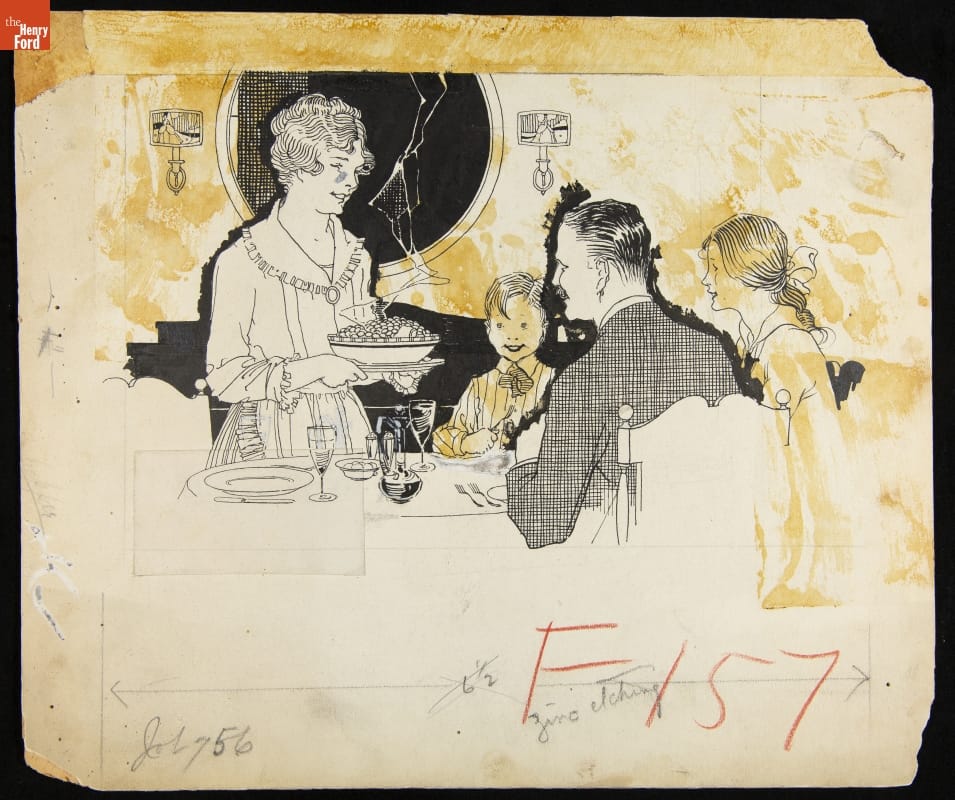
- Drawing of a Woman Serving Heinz Baked Beans to Her Family, circa 1920 - The H.J. Heinz Company employed ambitious and comprehensive advertising strategies to meet consumers at home, in stores, and everywhere in between. Product marketing strongly targeted housewives and women, assuring them that Heinz products were superior. These advertisements, like the one seen here, typically featured a woman purchasing, preparing, cooking, or serving Heinz products to their families.
- circa 1920
- Collections - Artifact
Drawing of a Woman Serving Heinz Baked Beans to Her Family, circa 1920
The H.J. Heinz Company employed ambitious and comprehensive advertising strategies to meet consumers at home, in stores, and everywhere in between. Product marketing strongly targeted housewives and women, assuring them that Heinz products were superior. These advertisements, like the one seen here, typically featured a woman purchasing, preparing, cooking, or serving Heinz products to their families.
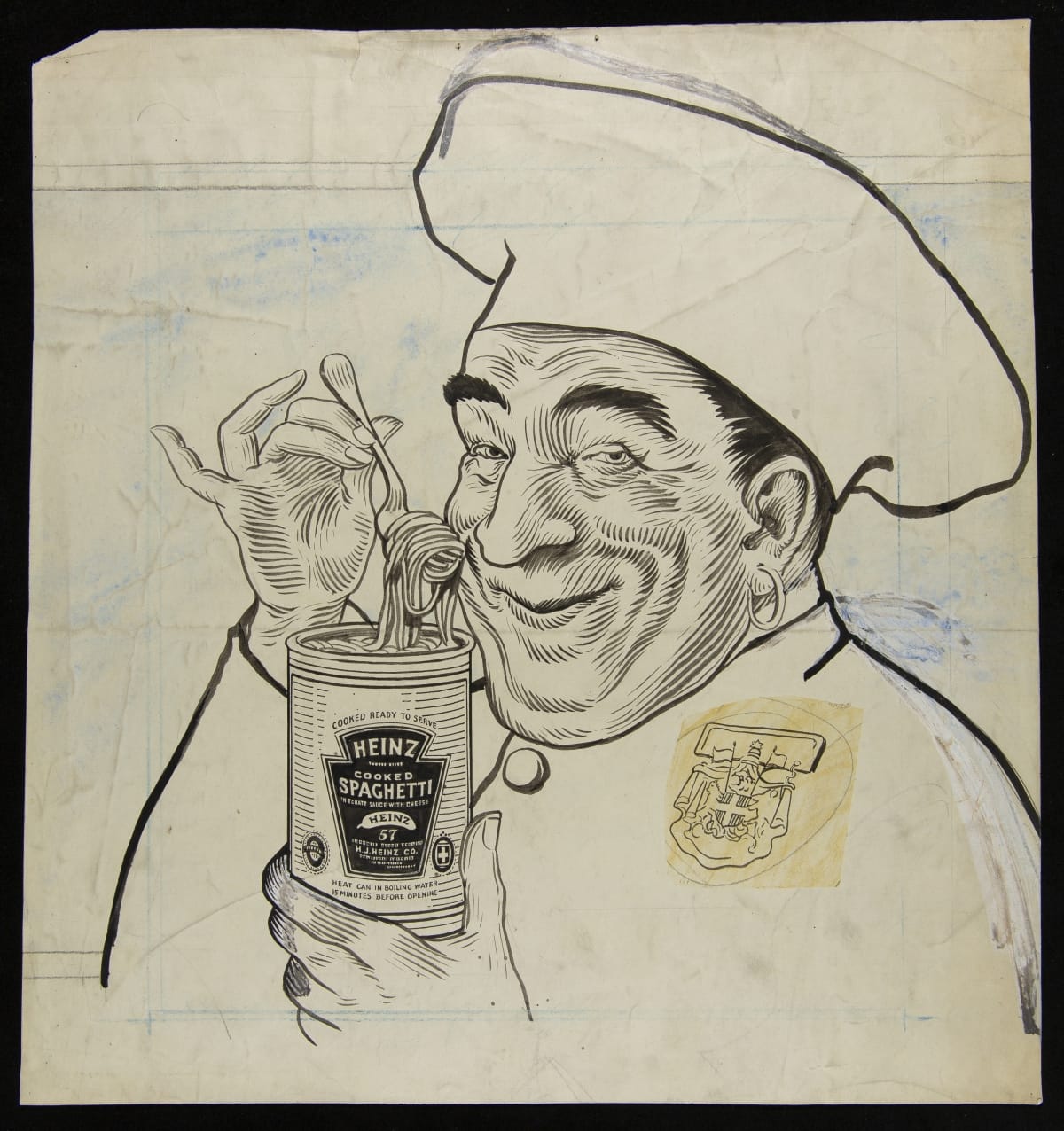
- Advertising Layout Showing Chef with Heinz Cooked Spaghetti, circa 1925 - The H.J. Heinz Company employed ambitious and comprehensive advertising strategies to meet consumers at home, in stores, and everywhere in between. Advertising layouts were a step in the marketing process where the drawing, size, color, and arrangement were taken into consideration before the final advertisement was created. This layout shows a Heinz advertisement for its heat-to-serve spaghetti.
- circa 1925
- Collections - Artifact
Advertising Layout Showing Chef with Heinz Cooked Spaghetti, circa 1925
The H.J. Heinz Company employed ambitious and comprehensive advertising strategies to meet consumers at home, in stores, and everywhere in between. Advertising layouts were a step in the marketing process where the drawing, size, color, and arrangement were taken into consideration before the final advertisement was created. This layout shows a Heinz advertisement for its heat-to-serve spaghetti.
- Inkwell, 1890-1920 -
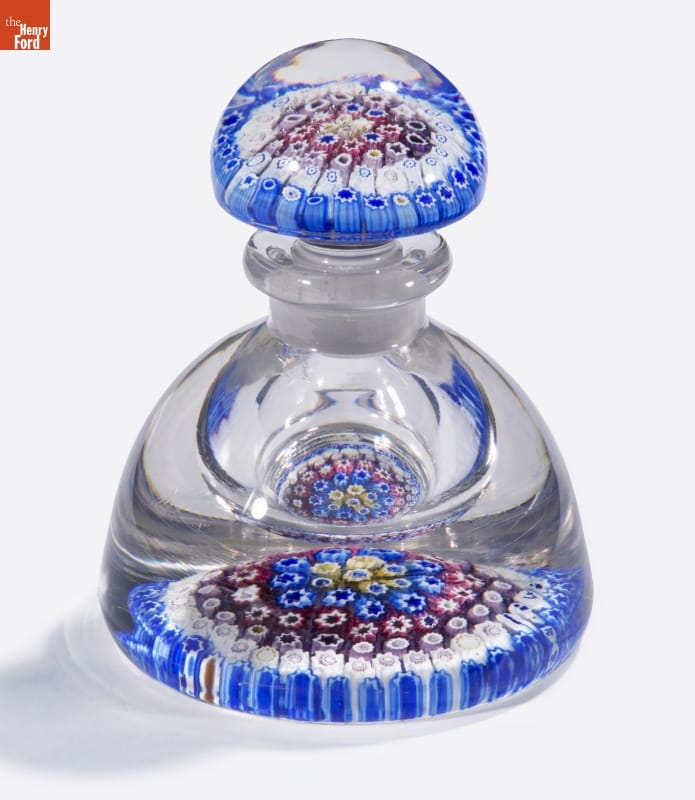
- 1890-1920
- Collections - Artifact
Inkwell, 1890-1920
- Inkwell, 1790-1820 -
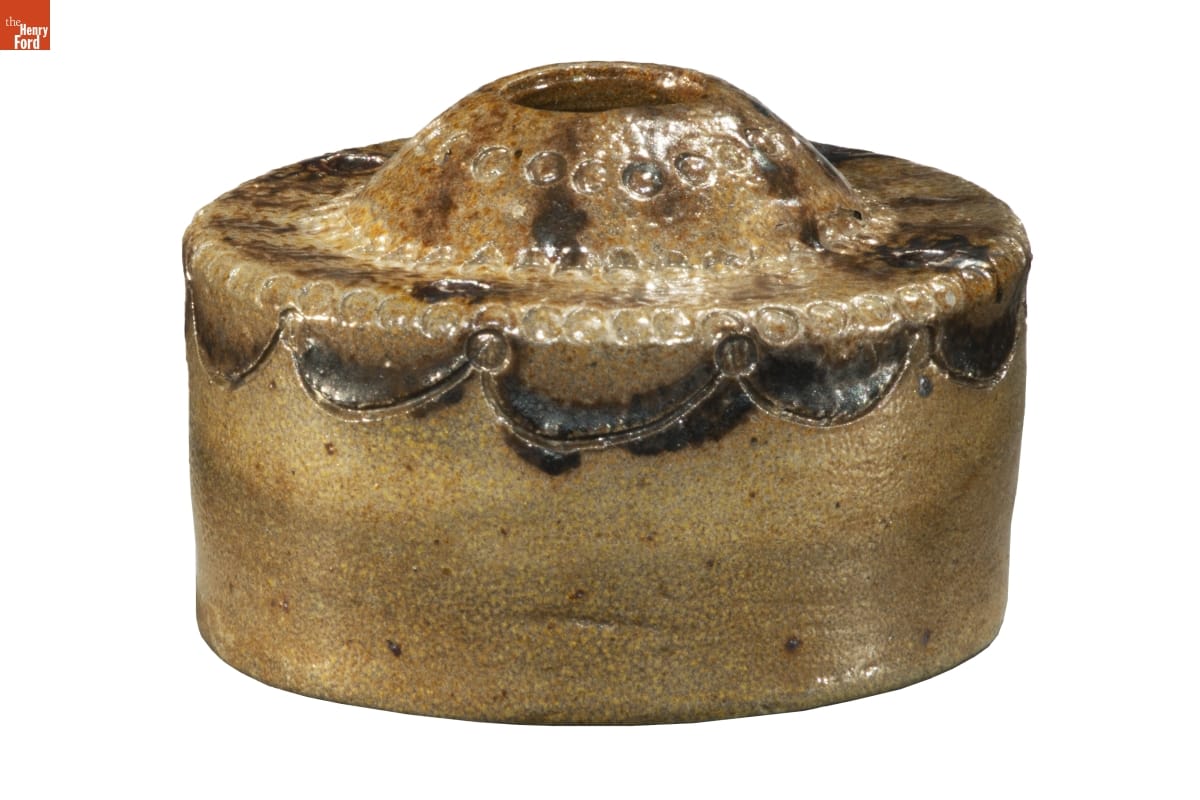
- 1790-1820
- Collections - Artifact
Inkwell, 1790-1820
- Stafford's Fountain Pen Ink Bottle, 1924-1950 -
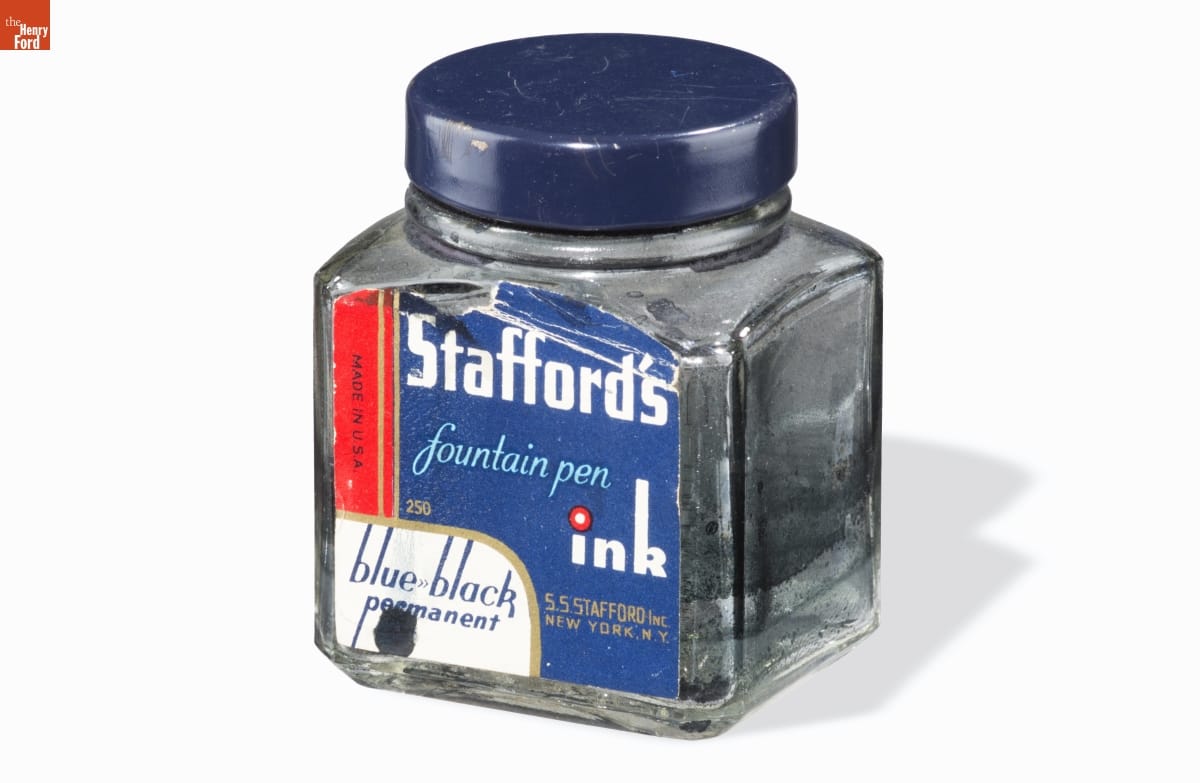
- 1924-1950
- Collections - Artifact
Stafford's Fountain Pen Ink Bottle, 1924-1950
- Invitation to a Party, circa 1960 -
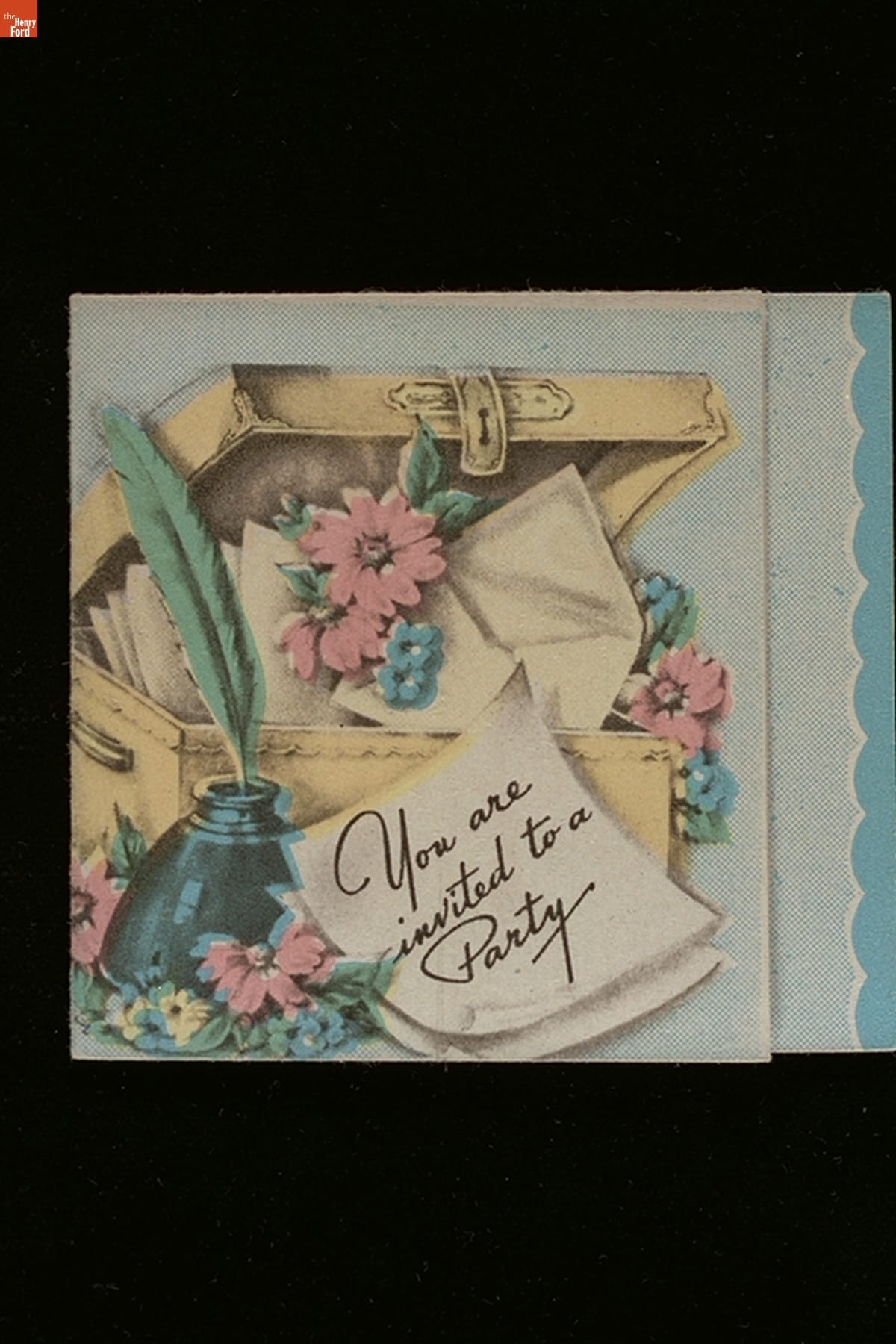
- circa 1960
- Collections - Artifact
Invitation to a Party, circa 1960
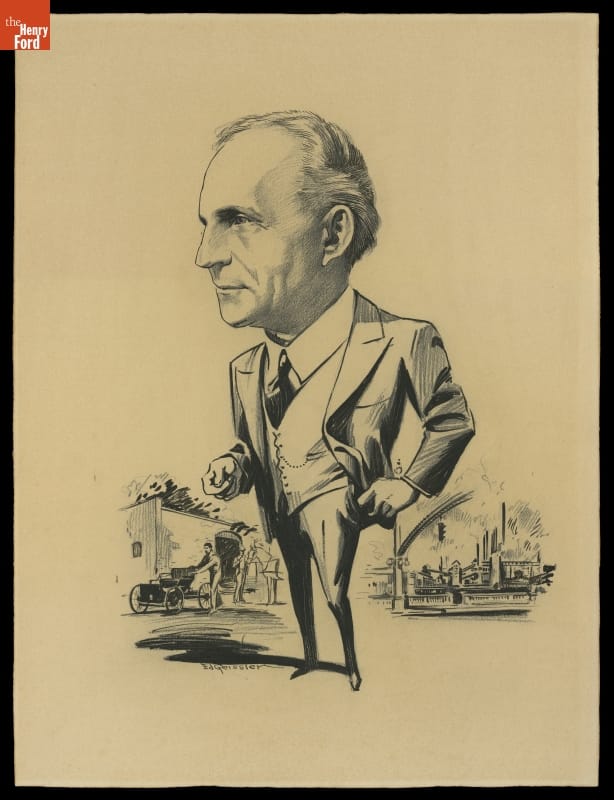
- Caricature Drawing of Henry Ford, circa 1935 - Artist Ed Geissler created this caricature of Henry Ford around 1935. It has the auto magnate flanked by two important locations. At left is the shed on Bagley Avenue in Detroit -- where Ford built his original Quadricycle in 1896. At right is the Rouge factory complex in Dearborn -- the heart of Ford Motor Company's operations in the mid-1930s.
- Collections - Artifact
Caricature Drawing of Henry Ford, circa 1935
Artist Ed Geissler created this caricature of Henry Ford around 1935. It has the auto magnate flanked by two important locations. At left is the shed on Bagley Avenue in Detroit -- where Ford built his original Quadricycle in 1896. At right is the Rouge factory complex in Dearborn -- the heart of Ford Motor Company's operations in the mid-1930s.
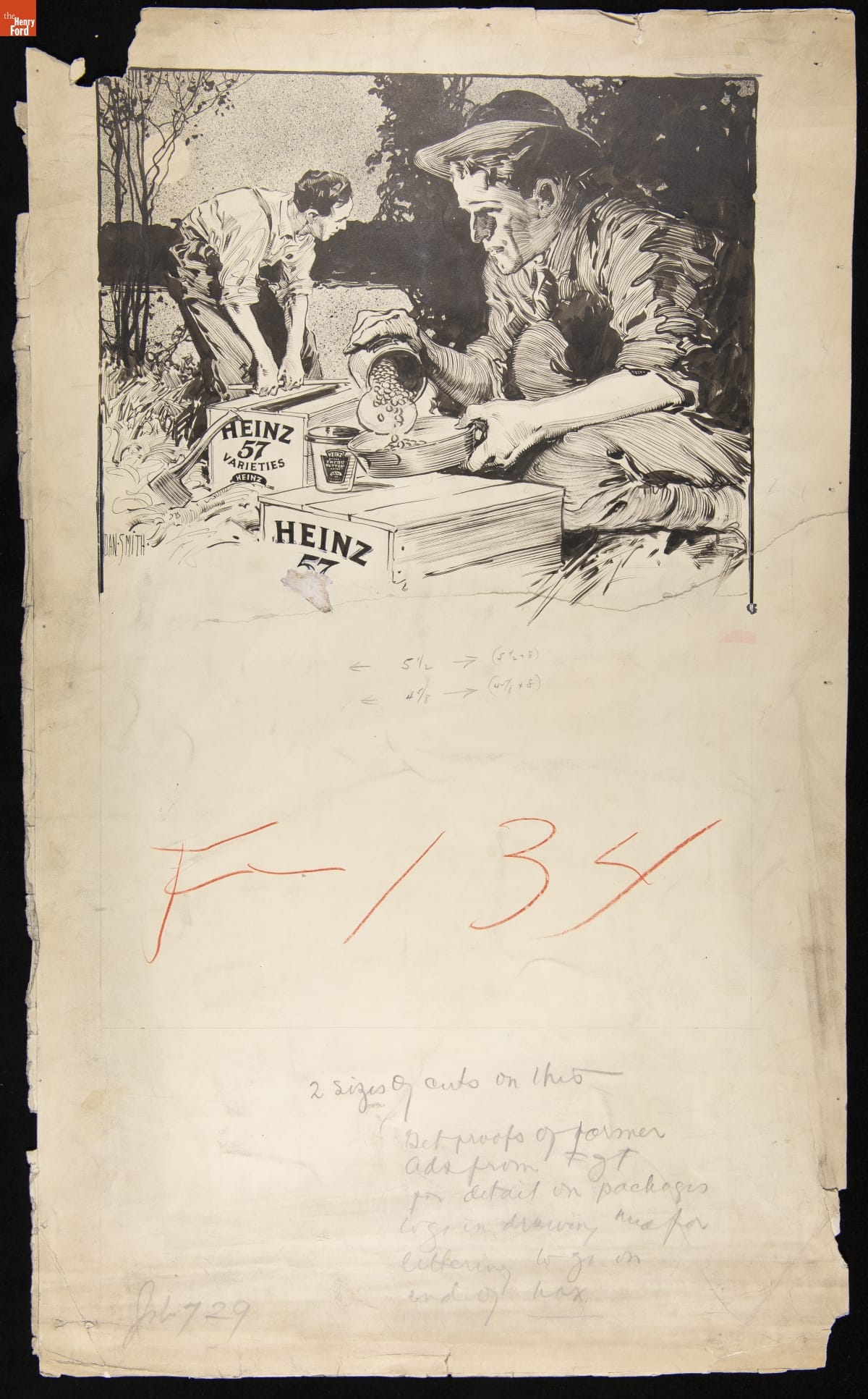
- Advertising Layout Illustration of Campers Preparing to Eat Heinz Products, circa 1925 - The H.J. Heinz Company employed ambitious and comprehensive advertising strategies to meet consumers at home, in stores, and everywhere in between. Some product marketing included showing that Heinz products were suitable for any occasion, event, or outing. This advertising layout shows campers eating Heinz products.
- circa 1925
- Collections - Artifact
Advertising Layout Illustration of Campers Preparing to Eat Heinz Products, circa 1925
The H.J. Heinz Company employed ambitious and comprehensive advertising strategies to meet consumers at home, in stores, and everywhere in between. Some product marketing included showing that Heinz products were suitable for any occasion, event, or outing. This advertising layout shows campers eating Heinz products.