
Search
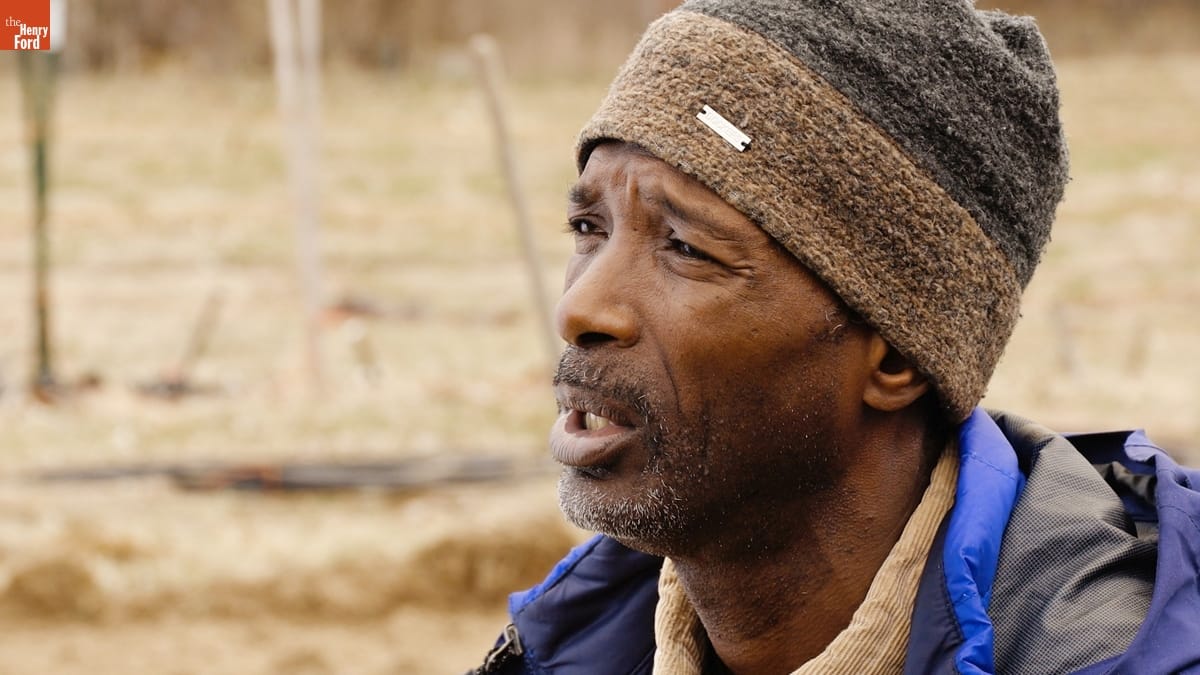
- "What is an Entrepreneur?" Clip from Interview with Melvin Parson, April 5, 2019 - Melvin Parson, founder of We The People Growers Association, was the Spring 2019 Entrepreneur-In-Residence at The Henry Ford, funded by the William Davidson Foundation Initiative for Entrepreneurship. During his interview, Parson explains his journey and mission towards securing equality and social justice through urban farming, comparing it to taking a seat at the table as a full member of society.
- April 05, 2019
- Collections - Artifact
"What is an Entrepreneur?" Clip from Interview with Melvin Parson, April 5, 2019
Melvin Parson, founder of We The People Growers Association, was the Spring 2019 Entrepreneur-In-Residence at The Henry Ford, funded by the William Davidson Foundation Initiative for Entrepreneurship. During his interview, Parson explains his journey and mission towards securing equality and social justice through urban farming, comparing it to taking a seat at the table as a full member of society.
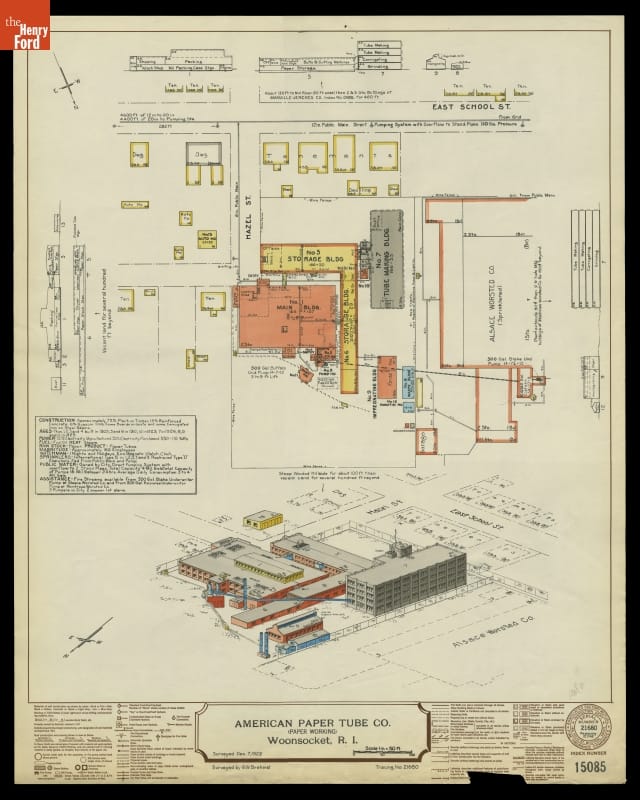
- Fire Insurance Map of the American Paper Tube Co., Woonsocket, Rhode Island, Surveyed December 7, 1929 - Fire insurance maps provided information to insurance companies about potential risks to homes, businesses, and factories. These maps -- with their easily identifiable symbols and color-coding -- depicted structural features, types of construction, and locations of fire hazards. Armed with this information, insurance underwriters could propose reasonable rates and offer protection against possible catastrophic financial loss in the event of a fire.
- December 07, 1929
- Collections - Artifact
Fire Insurance Map of the American Paper Tube Co., Woonsocket, Rhode Island, Surveyed December 7, 1929
Fire insurance maps provided information to insurance companies about potential risks to homes, businesses, and factories. These maps -- with their easily identifiable symbols and color-coding -- depicted structural features, types of construction, and locations of fire hazards. Armed with this information, insurance underwriters could propose reasonable rates and offer protection against possible catastrophic financial loss in the event of a fire.
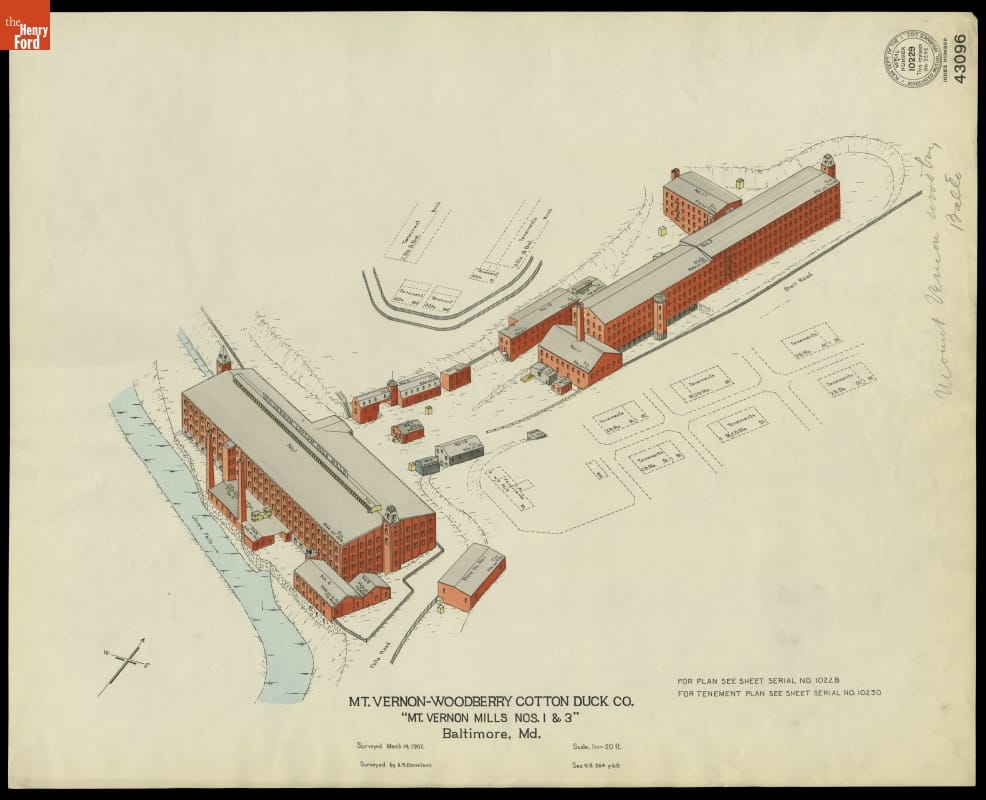
- Fire Insurance Map of the Mt. Vernon-Woodberry Cotton Duck Co., Baltimore, Maryland, Surveyed March 14, 1902 - Fire insurance maps provided information to insurance companies about potential risks to homes, businesses, and factories. These maps -- with their easily identifiable symbols and color-coding -- depicted structural features, types of construction, and locations of fire hazards. Armed with this information, insurance underwriters could propose reasonable rates and offer protection against possible catastrophic financial loss in the event of a fire.
- March 14, 1902
- Collections - Artifact
Fire Insurance Map of the Mt. Vernon-Woodberry Cotton Duck Co., Baltimore, Maryland, Surveyed March 14, 1902
Fire insurance maps provided information to insurance companies about potential risks to homes, businesses, and factories. These maps -- with their easily identifiable symbols and color-coding -- depicted structural features, types of construction, and locations of fire hazards. Armed with this information, insurance underwriters could propose reasonable rates and offer protection against possible catastrophic financial loss in the event of a fire.
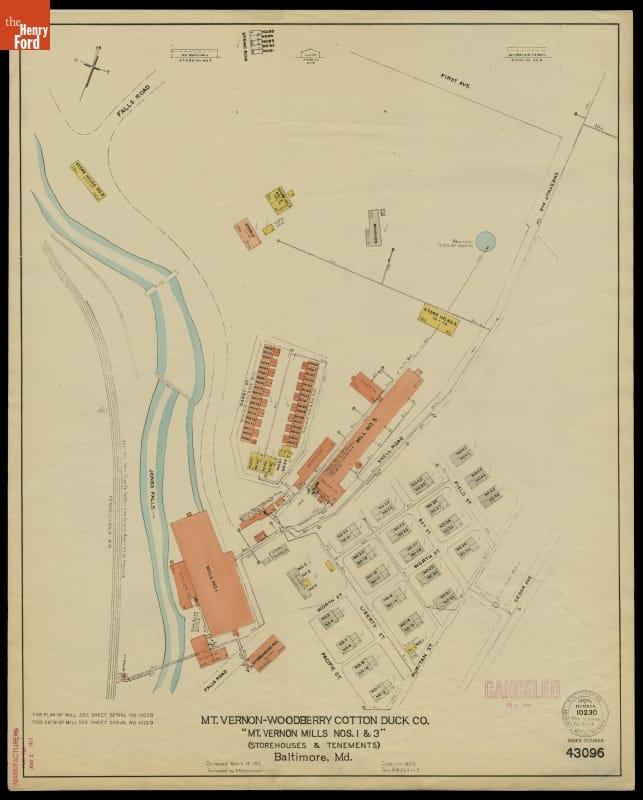
- Fire Insurance Map of the Mt. Vernon-Woodberry Cotton Duck Co., Baltimore, Maryland, Surveyed March 14, 1912 - Fire insurance maps provided information to insurance companies about potential risks to homes, businesses, and factories. These maps -- with their easily identifiable symbols and color-coding -- depicted structural features, types of construction, and locations of fire hazards. Armed with this information, insurance underwriters could propose reasonable rates and offer protection against possible catastrophic financial loss in the event of a fire.
- March 14, 1912
- Collections - Artifact
Fire Insurance Map of the Mt. Vernon-Woodberry Cotton Duck Co., Baltimore, Maryland, Surveyed March 14, 1912
Fire insurance maps provided information to insurance companies about potential risks to homes, businesses, and factories. These maps -- with their easily identifiable symbols and color-coding -- depicted structural features, types of construction, and locations of fire hazards. Armed with this information, insurance underwriters could propose reasonable rates and offer protection against possible catastrophic financial loss in the event of a fire.
- County Fire Insurance Mark -
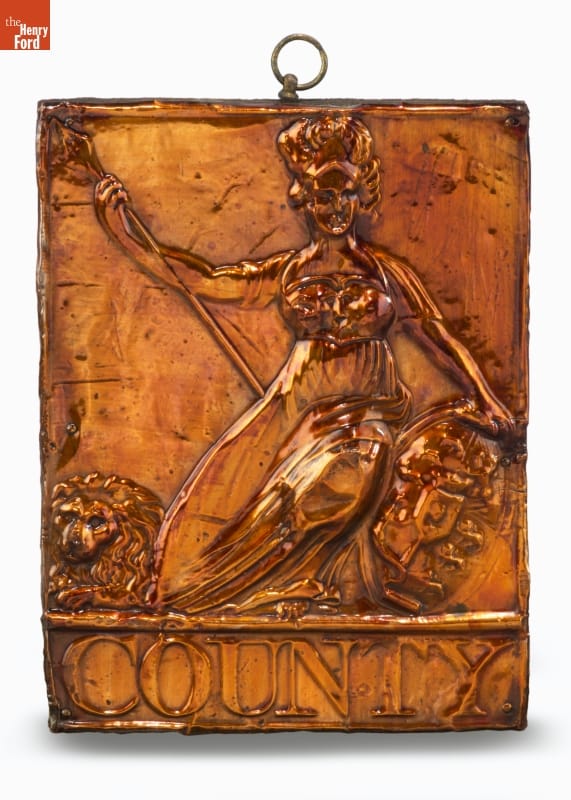
- Collections - Artifact
County Fire Insurance Mark
- Fire Bucket, Used by Levi Huntington, circa 1795 - Many home and business owners in colonial and early America kept leather fire buckets in case of emergency. When a fire broke out in the community, owners tossed their buckets into the street, where firefighters and local citizens used them to carry water to put out the fire. Buckets decorated with names, initials and numbers helped owners identify their buckets after the fire had been extinguished.
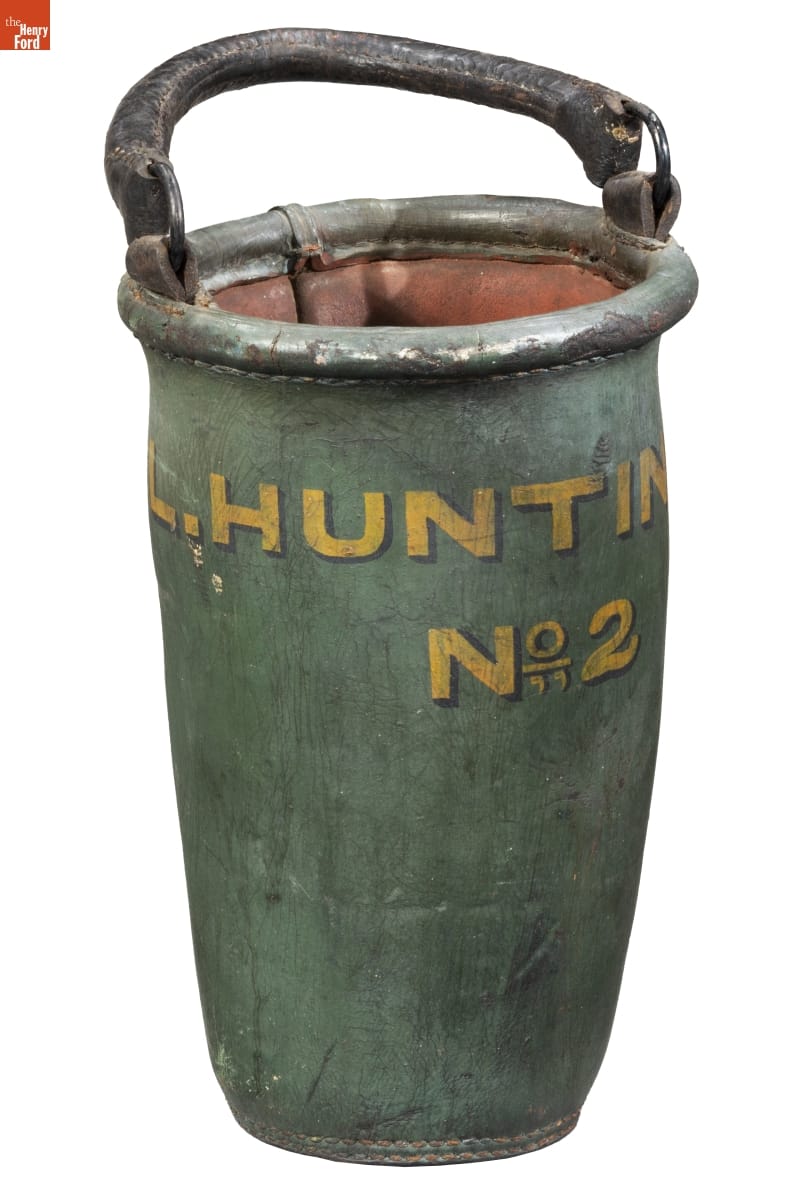
- circa 1795
- Collections - Artifact
Fire Bucket, Used by Levi Huntington, circa 1795
Many home and business owners in colonial and early America kept leather fire buckets in case of emergency. When a fire broke out in the community, owners tossed their buckets into the street, where firefighters and local citizens used them to carry water to put out the fire. Buckets decorated with names, initials and numbers helped owners identify their buckets after the fire had been extinguished.
- Fire Insurance Map of Winter Bros. Co., Wrentham, Massachusetts, Surveyed June 4, 1931 - Fire insurance maps provided information to insurance companies about potential risks to homes, businesses, and factories. These maps -- with their easily identifiable symbols and color-coding -- depicted structural features, types of construction, and locations of fire hazards. Armed with this information, insurance underwriters could propose reasonable rates and offer protection against possible catastrophic financial loss in the event of a fire.
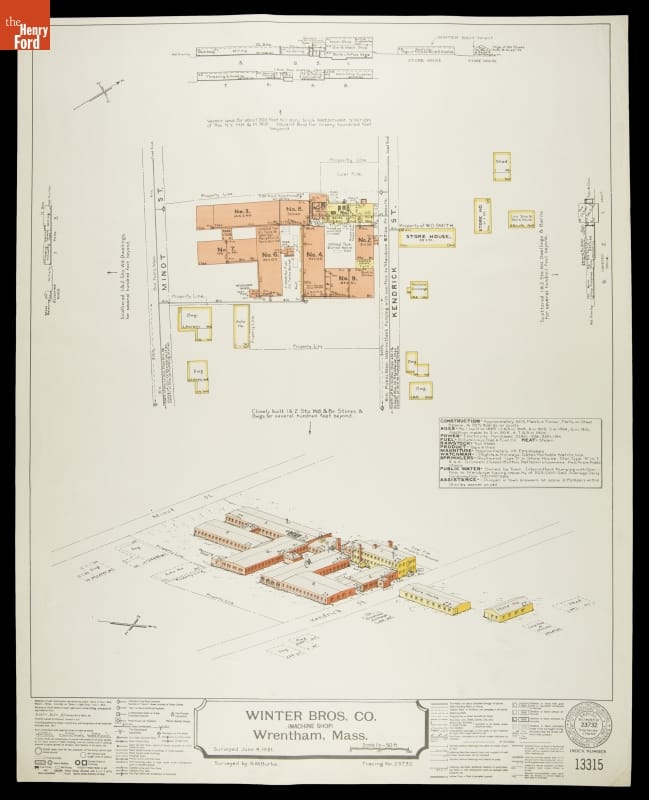
- June 04, 1931
- Collections - Artifact
Fire Insurance Map of Winter Bros. Co., Wrentham, Massachusetts, Surveyed June 4, 1931
Fire insurance maps provided information to insurance companies about potential risks to homes, businesses, and factories. These maps -- with their easily identifiable symbols and color-coding -- depicted structural features, types of construction, and locations of fire hazards. Armed with this information, insurance underwriters could propose reasonable rates and offer protection against possible catastrophic financial loss in the event of a fire.
- Metropolitan Life Insurance Company Calendar for 1909 -
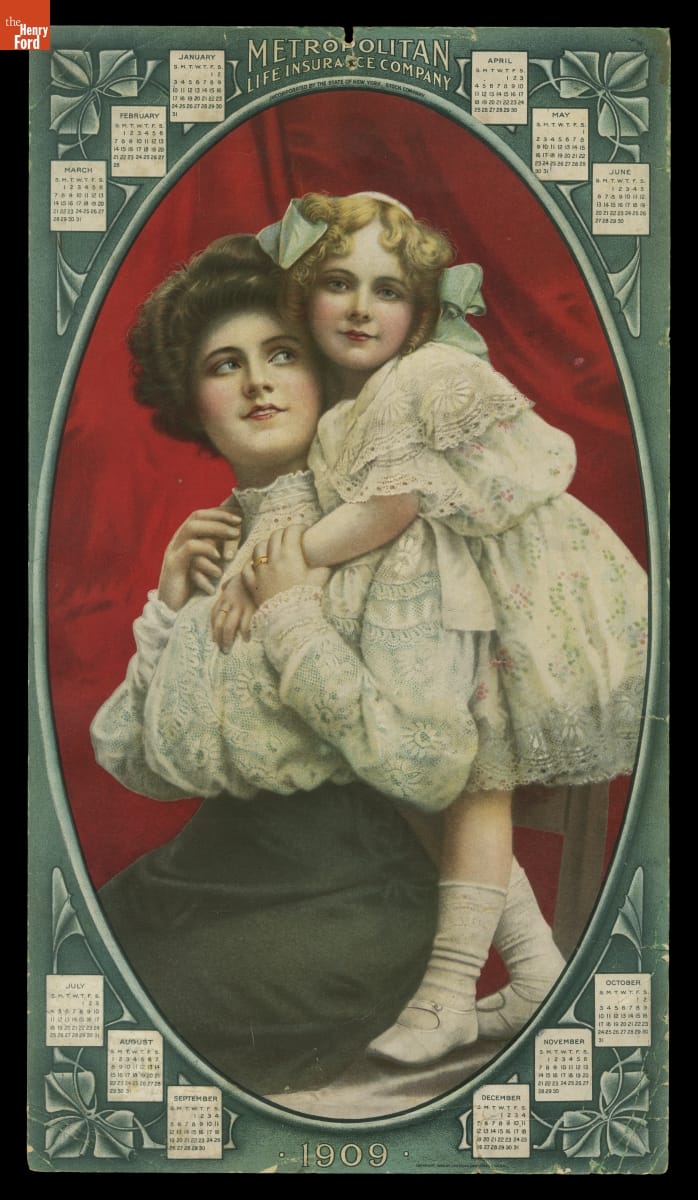
- 1909
- Collections - Artifact
Metropolitan Life Insurance Company Calendar for 1909
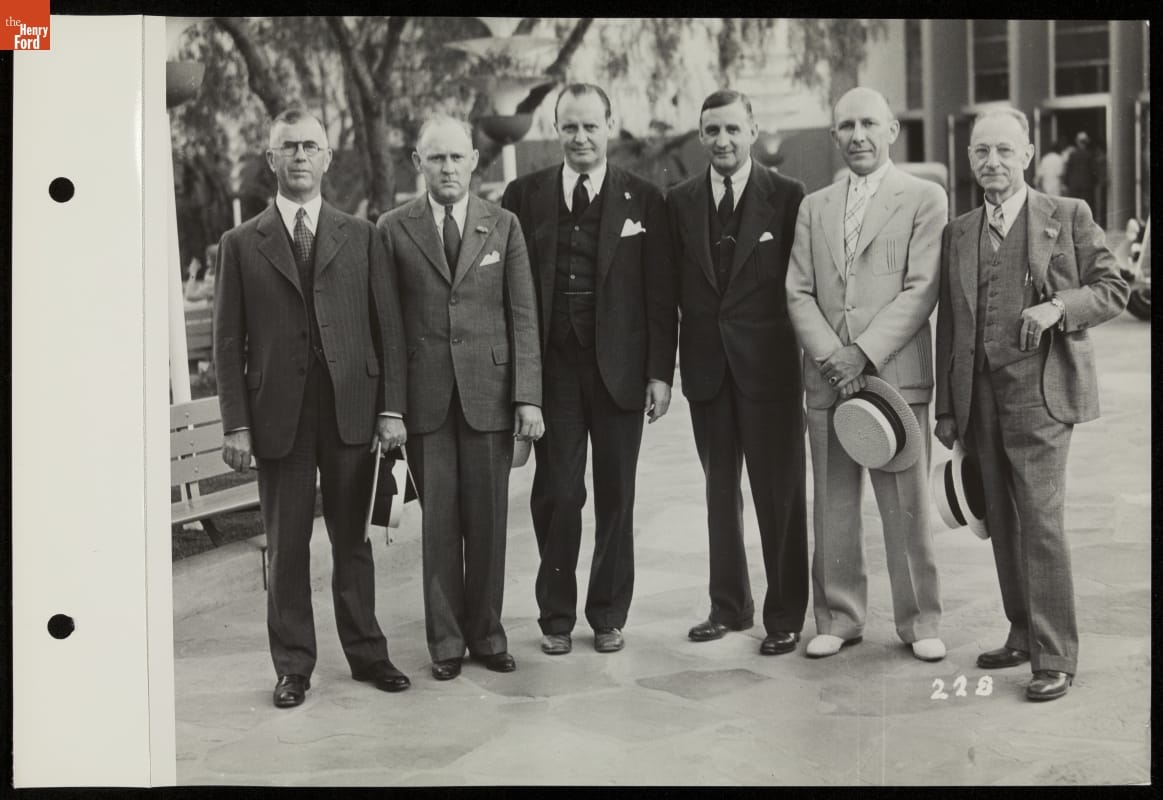
- Guests of the Ford Motor Company in the Courtyard of the Ford Building, California Pacific International Exposition, San Diego, 1935 - Ford Motor Company poured resources into the 1935 California Pacific International Exposition in San Diego, constructing the fair's largest and most popular exhibition. Ford's massive steel and concrete building enclosed an open-air courtyard featuring a V-8 emblem-shaped fountain. This group of New York Life Insurance executives posed in the space, where guests could rest and enjoy daily musical performances.
- 1935
- Collections - Artifact
Guests of the Ford Motor Company in the Courtyard of the Ford Building, California Pacific International Exposition, San Diego, 1935
Ford Motor Company poured resources into the 1935 California Pacific International Exposition in San Diego, constructing the fair's largest and most popular exhibition. Ford's massive steel and concrete building enclosed an open-air courtyard featuring a V-8 emblem-shaped fountain. This group of New York Life Insurance executives posed in the space, where guests could rest and enjoy daily musical performances.
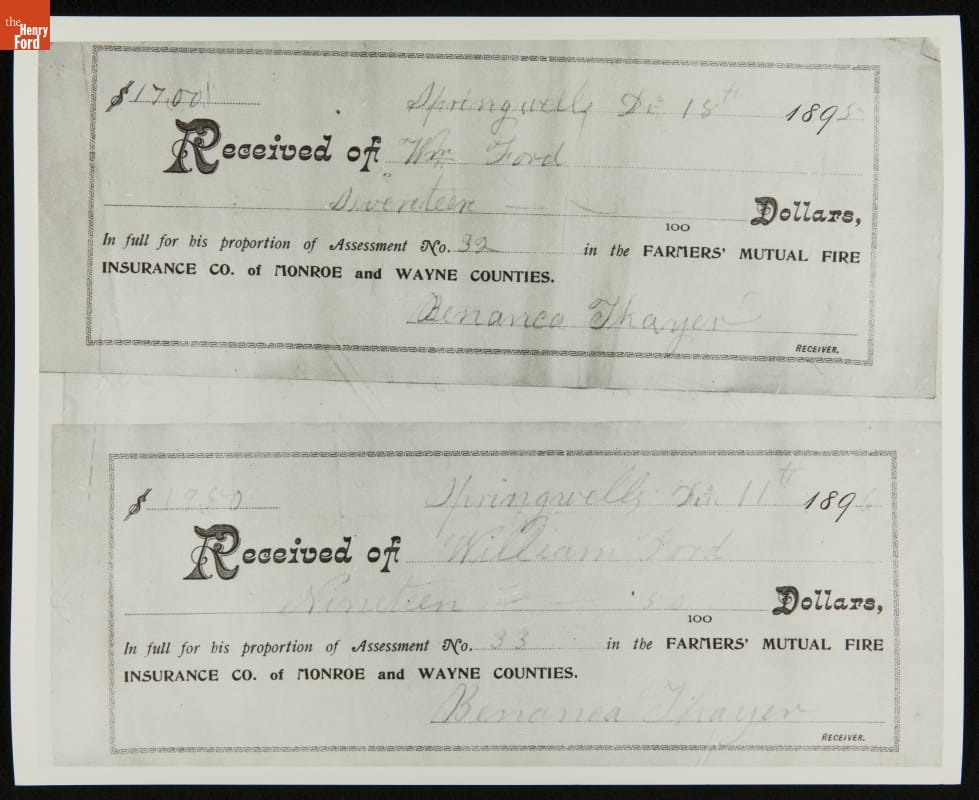
- Receipts for Insurance Payments Made by William Ford (Henry Ford's Father), Springwells Township, Michigan, 1895 - When William Ford, Henry Ford's father, emigrated from Ireland in 1847 at the age of twenty he had little wealth. William settled near family in southeast Michigan and eventually purchased a tract of land. By the late 19th century, William was a prosperous farmer and secure enough to protect his property with insurance.
- 1895
- Collections - Artifact
Receipts for Insurance Payments Made by William Ford (Henry Ford's Father), Springwells Township, Michigan, 1895
When William Ford, Henry Ford's father, emigrated from Ireland in 1847 at the age of twenty he had little wealth. William settled near family in southeast Michigan and eventually purchased a tract of land. By the late 19th century, William was a prosperous farmer and secure enough to protect his property with insurance.