
Search
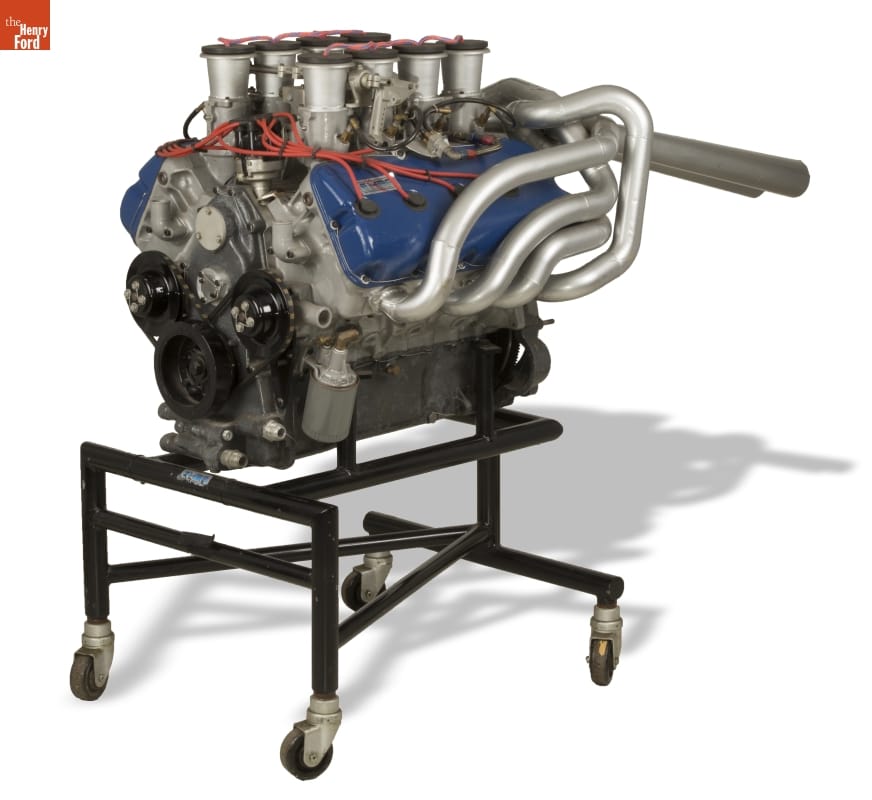
- Ford "Calliope" V-8 Automobile Engine, 1968 - Ford engineers developed the aluminum-block 427-cubic-inch "calliope" engine for the 1968 Le Mans 24-hour race. Three valves per cylinder were connected to pushrods driven by twin camshafts in the block. The distinctive fuel injector stacks above each cylinder, resembling whistles on a musical calliope, gave the engine its nickname. Rules changes at Le Mans prevented the engine from ever racing.
- 1968
- Collections - Artifact
Ford "Calliope" V-8 Automobile Engine, 1968
Ford engineers developed the aluminum-block 427-cubic-inch "calliope" engine for the 1968 Le Mans 24-hour race. Three valves per cylinder were connected to pushrods driven by twin camshafts in the block. The distinctive fuel injector stacks above each cylinder, resembling whistles on a musical calliope, gave the engine its nickname. Rules changes at Le Mans prevented the engine from ever racing.
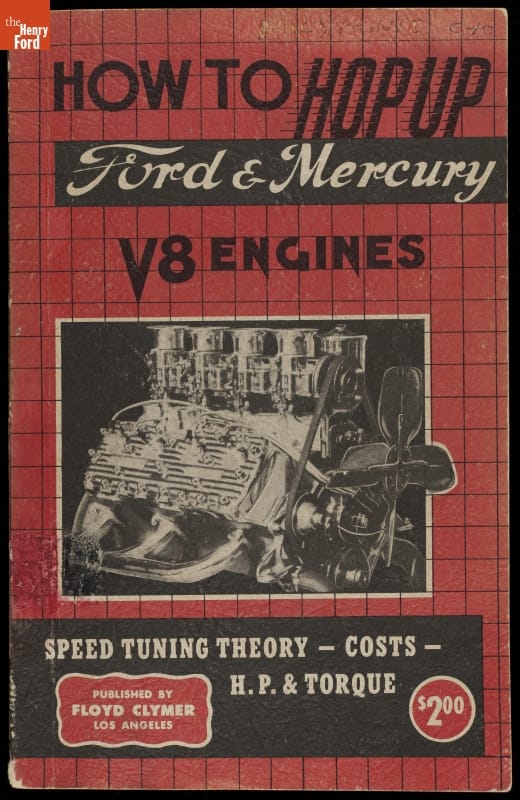
- "How to Hop Up Ford & Mercury V-8 Engines," 1951 - How do you go fast if you can't purchase a powerful engine? The size and weight of a stock V-8 engine built by Ford and Mercury offered racers an affordable option. And rodders could eke out more horsepower by relying on this book.
- 1951
- Collections - Artifact
"How to Hop Up Ford & Mercury V-8 Engines," 1951
How do you go fast if you can't purchase a powerful engine? The size and weight of a stock V-8 engine built by Ford and Mercury offered racers an affordable option. And rodders could eke out more horsepower by relying on this book.
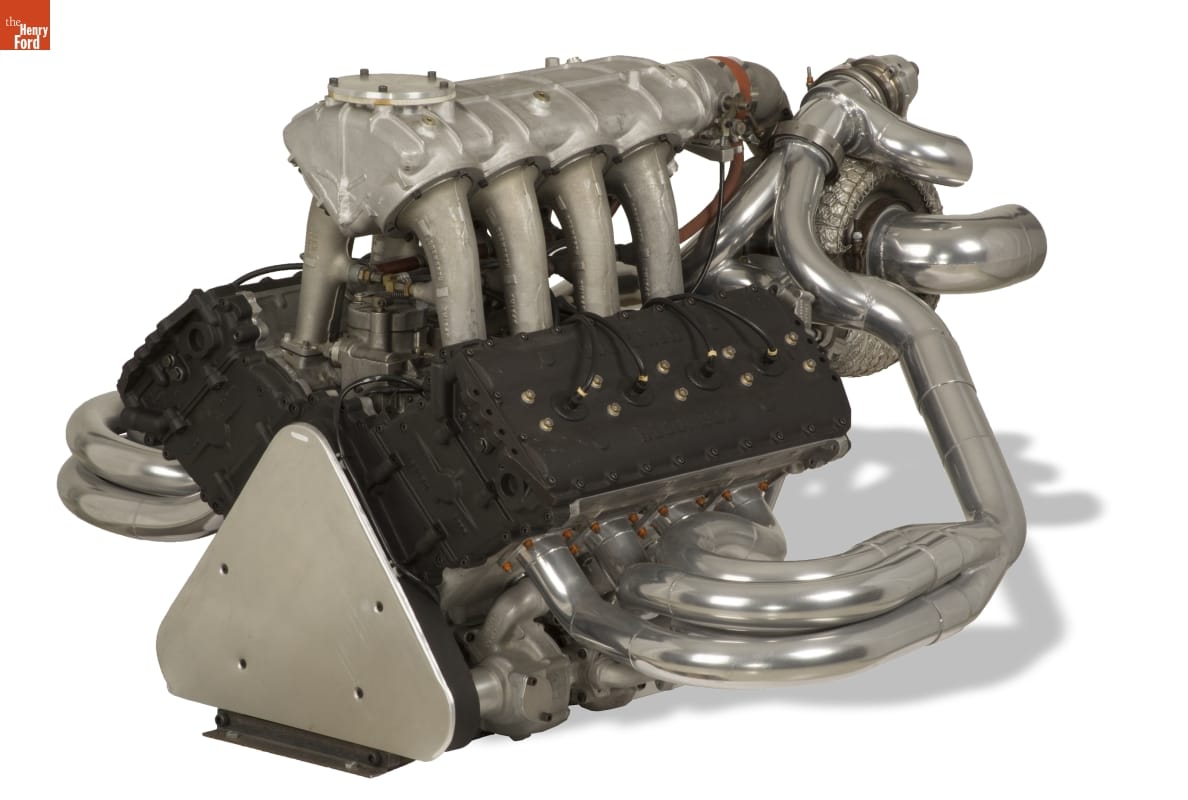
- Cosworth DFX V-8 Engine, 1975-1985 - The Cosworth DFX engine won its first race in 1976. The turbocharged V-8, based on an earlier Formula One engine designed by British firm Cosworth and funded by Ford Motor Company, dominated Indy car racing well into the 1980s. Cosworth DFX engines powered all ten Indianapolis 500 winners between 1978 and 1987.
- 1975-1985
- Collections - Artifact
Cosworth DFX V-8 Engine, 1975-1985
The Cosworth DFX engine won its first race in 1976. The turbocharged V-8, based on an earlier Formula One engine designed by British firm Cosworth and funded by Ford Motor Company, dominated Indy car racing well into the 1980s. Cosworth DFX engines powered all ten Indianapolis 500 winners between 1978 and 1987.
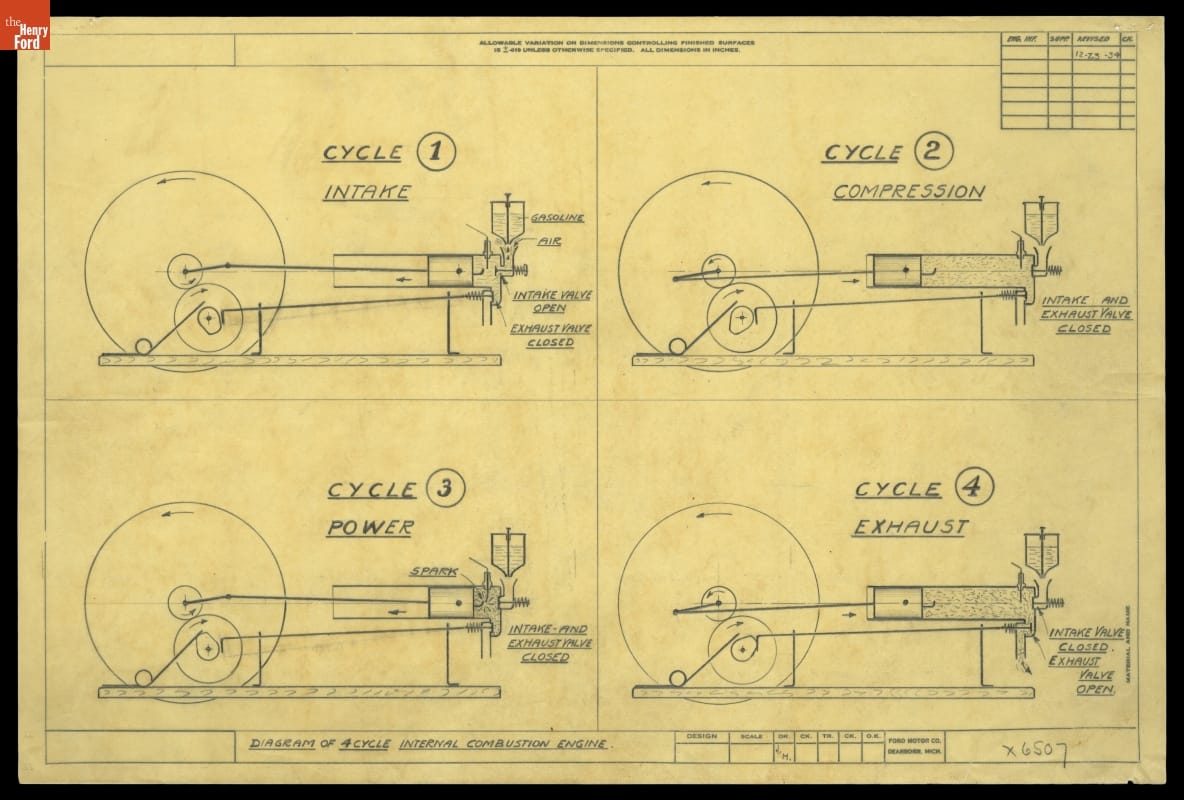
- Drawing of the 1893 Kitchen Sink Engine, "Diagram of 4 Cycle Internal Combustion Engine" - This 1934 diagram uses Henry Ford's experimental 1893 Kitchen Sink Engine to illustrate the operation of a four-stroke internal combustion engine. Stroke one draws air and fuel into the cylinder. Stroke two compresses the air-fuel mixture. In the power stroke, a spark ignites the mixture which forces the piston down, turning the crankshaft. Stroke four pushes exhaust from the cylinder.
- December 23, 1934
- Collections - Artifact
Drawing of the 1893 Kitchen Sink Engine, "Diagram of 4 Cycle Internal Combustion Engine"
This 1934 diagram uses Henry Ford's experimental 1893 Kitchen Sink Engine to illustrate the operation of a four-stroke internal combustion engine. Stroke one draws air and fuel into the cylinder. Stroke two compresses the air-fuel mixture. In the power stroke, a spark ignites the mixture which forces the piston down, turning the crankshaft. Stroke four pushes exhaust from the cylinder.
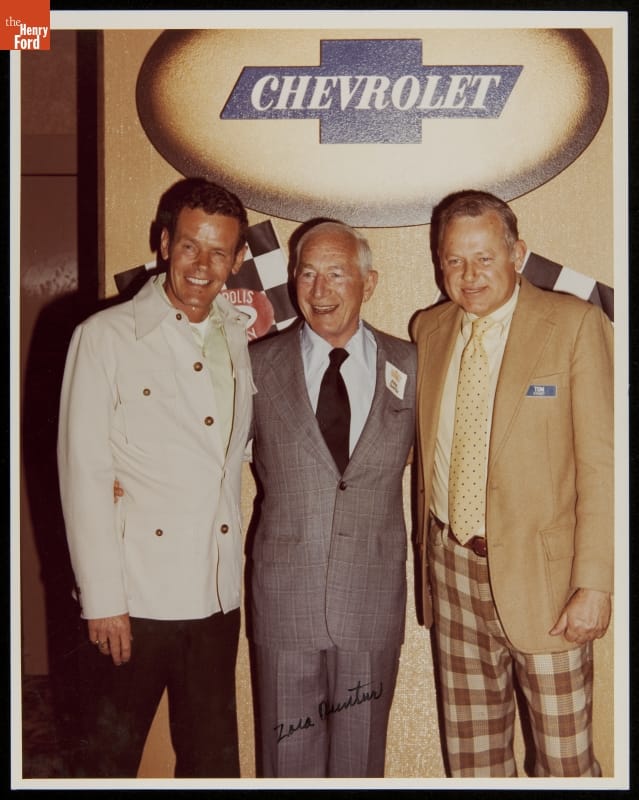
- Bobby Unser Collection--Photographs--Family--Clayton Dynamometer--Item5 - Bobby Unser earned a place among automobile racing's greats, having successfully competed in nearly every form of the sport. The racing career of this three-time Indianapolis 500 winner and 13-time Pikes Peak International Hill Climb winner spanned more than 30 years. This photograph -- only one of thousands donated by Bobby and Lisa Unser to The Henry Ford -- helps to document his career.
- circa 1980
- Collections - Artifact
Bobby Unser Collection--Photographs--Family--Clayton Dynamometer--Item5
Bobby Unser earned a place among automobile racing's greats, having successfully competed in nearly every form of the sport. The racing career of this three-time Indianapolis 500 winner and 13-time Pikes Peak International Hill Climb winner spanned more than 30 years. This photograph -- only one of thousands donated by Bobby and Lisa Unser to The Henry Ford -- helps to document his career.
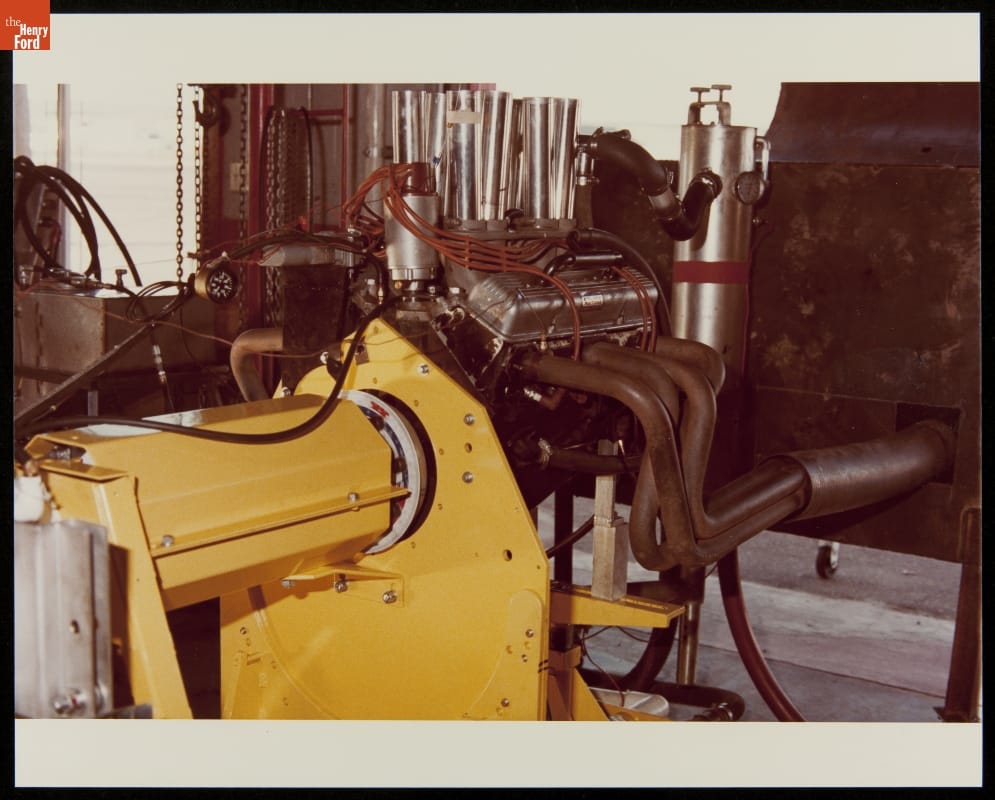
- Bobby Unser Collection--Photographs--Family--Clayton Dynamometer--Item6 - Bobby Unser earned a place among automobile racing's greats, having successfully competed in nearly every form of the sport. The racing career of this three-time Indianapolis 500 winner and 13-time Pikes Peak International Hill Climb winner spanned more than 30 years. This photograph -- only one of thousands donated by Bobby and Lisa Unser to The Henry Ford -- helps to document his career.
- circa 1980
- Collections - Artifact
Bobby Unser Collection--Photographs--Family--Clayton Dynamometer--Item6
Bobby Unser earned a place among automobile racing's greats, having successfully competed in nearly every form of the sport. The racing career of this three-time Indianapolis 500 winner and 13-time Pikes Peak International Hill Climb winner spanned more than 30 years. This photograph -- only one of thousands donated by Bobby and Lisa Unser to The Henry Ford -- helps to document his career.
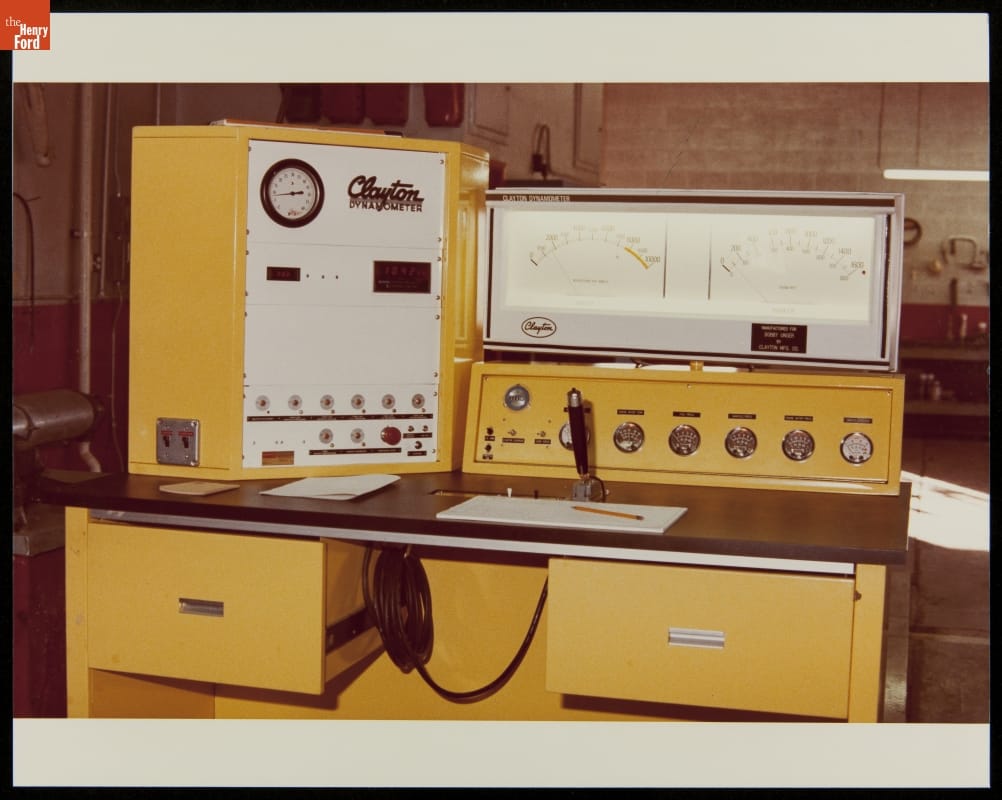
- Bobby Unser Collection--Photographs--Family--Clayton Dynamometer--Item11 - Bobby Unser earned a place among automobile racing's greats, having successfully competed in nearly every form of the sport. The racing career of this three-time Indianapolis 500 winner and 13-time Pikes Peak International Hill Climb winner spanned more than 30 years. This photograph -- only one of thousands donated by Bobby and Lisa Unser to The Henry Ford -- helps to document his career.
- circa 1980
- Collections - Artifact
Bobby Unser Collection--Photographs--Family--Clayton Dynamometer--Item11
Bobby Unser earned a place among automobile racing's greats, having successfully competed in nearly every form of the sport. The racing career of this three-time Indianapolis 500 winner and 13-time Pikes Peak International Hill Climb winner spanned more than 30 years. This photograph -- only one of thousands donated by Bobby and Lisa Unser to The Henry Ford -- helps to document his career.
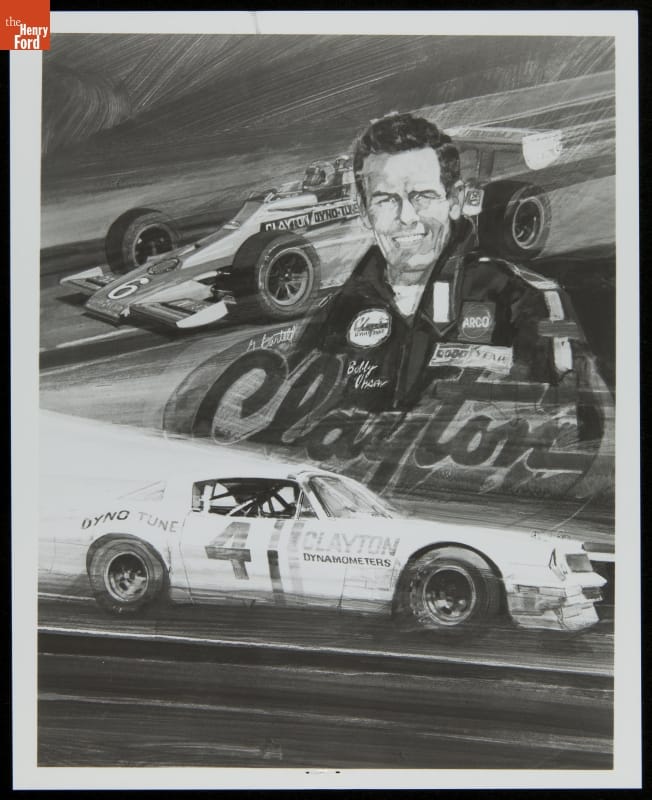
- Bobby Unser Collection--Photographs--Family--Clayton Dynamometer--Item17 - Bobby Unser earned a place among automobile racing's greats, having successfully competed in nearly every form of the sport. The racing career of this three-time Indianapolis 500 winner and 13-time Pikes Peak International Hill Climb winner spanned more than 30 years. This photograph -- only one of thousands donated by Bobby and Lisa Unser to The Henry Ford -- helps to document his career.
- circa 1980
- Collections - Artifact
Bobby Unser Collection--Photographs--Family--Clayton Dynamometer--Item17
Bobby Unser earned a place among automobile racing's greats, having successfully competed in nearly every form of the sport. The racing career of this three-time Indianapolis 500 winner and 13-time Pikes Peak International Hill Climb winner spanned more than 30 years. This photograph -- only one of thousands donated by Bobby and Lisa Unser to The Henry Ford -- helps to document his career.
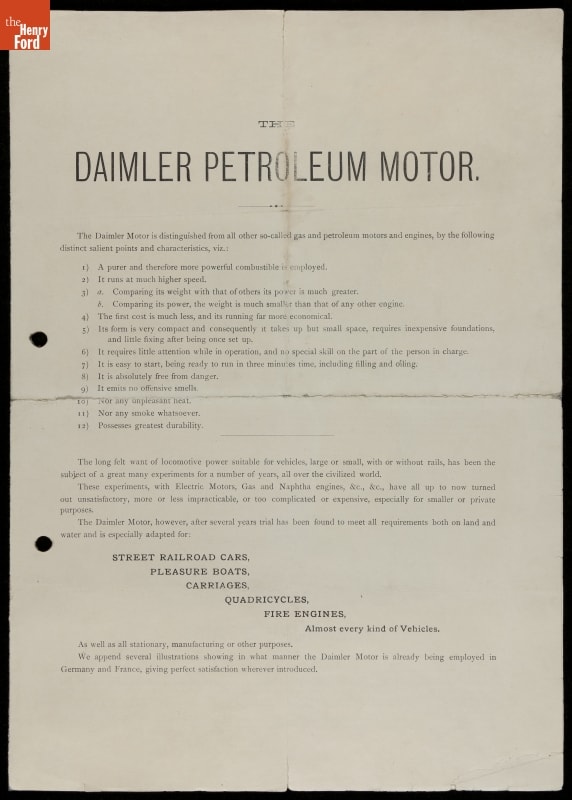
- Sales Brochure, "The Daimler Petroleum Motor," circa 1895 - German engineer Gottlieb Daimler developed small, high-speed engines in the 1880s. Daimler built the world's first internal combustion motorcycle in 1885, and he built an automobile the following year. With Wilhelm Maybach, Daimler formed Daimler Motors Corporation in 1890 to manufacture engines. The company began producing automobiles in 1892. Daimler Motors merged with Benz & Company in 1926.
- circa 1895
- Collections - Artifact
Sales Brochure, "The Daimler Petroleum Motor," circa 1895
German engineer Gottlieb Daimler developed small, high-speed engines in the 1880s. Daimler built the world's first internal combustion motorcycle in 1885, and he built an automobile the following year. With Wilhelm Maybach, Daimler formed Daimler Motors Corporation in 1890 to manufacture engines. The company began producing automobiles in 1892. Daimler Motors merged with Benz & Company in 1926.
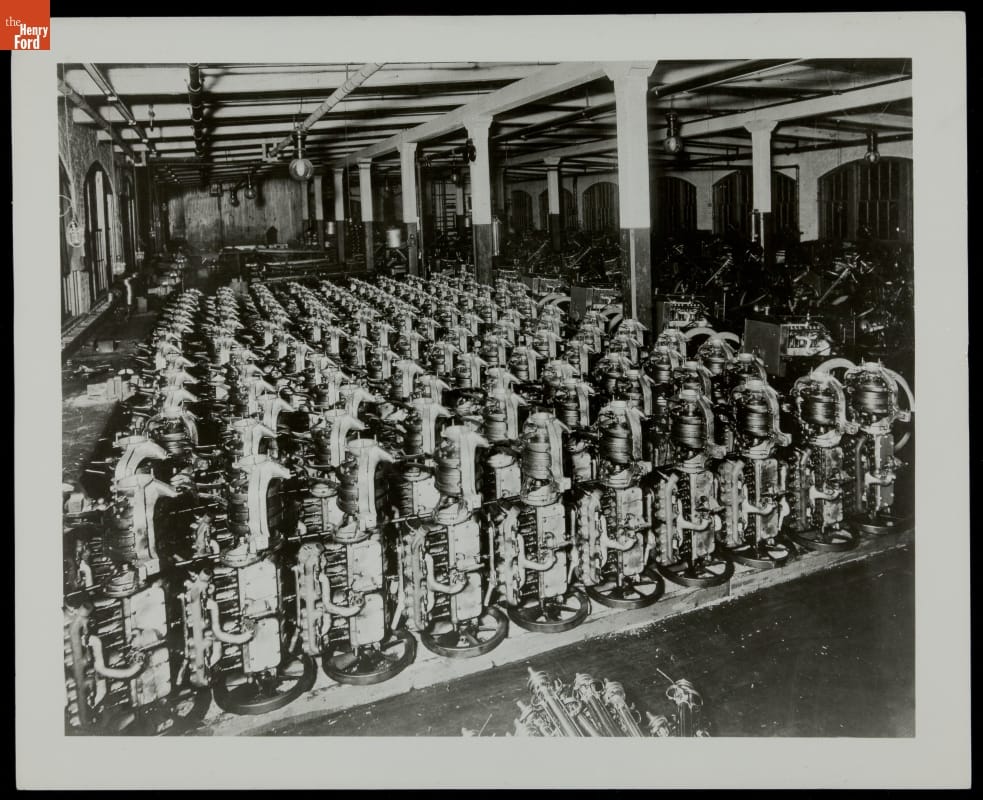
- Ford Model N Engine Blocks and Chassis in Assembly Room, Piquette Avenue Plant, Detroit, Michigan, 1906 - In 1906 Ford Model Ns were assembled on the third floor of Ford Motor Company's Piquette Avenue factory in Detroit. Cars were put together by crews moving from vehicle to vehicle. No one had yet conceived of the moving assembly line. Here, behind rows on Model N chassis, engines are stored on their noses to conserve space.
- November 01, 1906
- Collections - Artifact
Ford Model N Engine Blocks and Chassis in Assembly Room, Piquette Avenue Plant, Detroit, Michigan, 1906
In 1906 Ford Model Ns were assembled on the third floor of Ford Motor Company's Piquette Avenue factory in Detroit. Cars were put together by crews moving from vehicle to vehicle. No one had yet conceived of the moving assembly line. Here, behind rows on Model N chassis, engines are stored on their noses to conserve space.