
Search
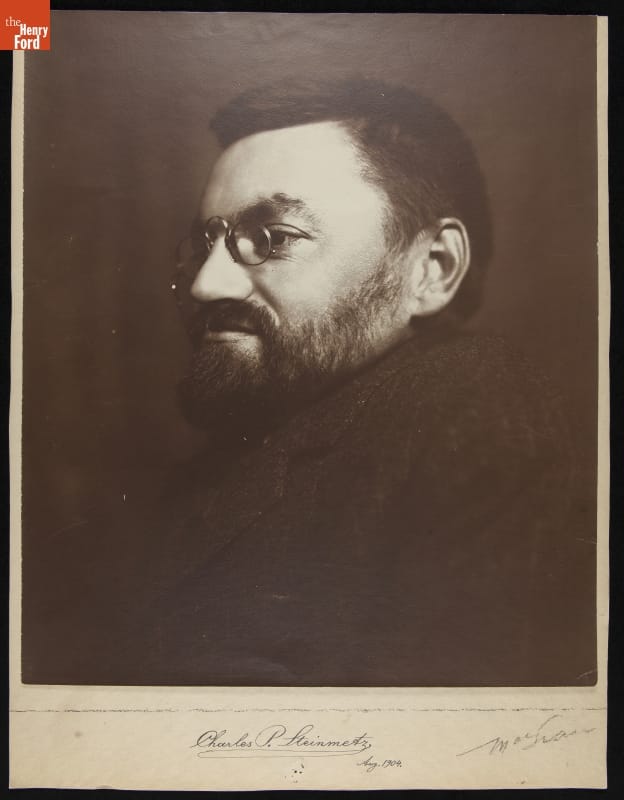
- Charles Steinmetz, August 1904 - Charles Steinmetz excelled at applying mathematical theory and scientific methods to practical engineering, helping define the role of "scientist-engineer" in the American electrical industry. Steinmetz developed important theories on alternating currents, conducted breakthrough experiments on power loss, and authored a number of influential textbooks. His innovations shaped the electrical engineering profession and improved and expanded electrical distribution systems.
- August 01, 1904
- Collections - Artifact
Charles Steinmetz, August 1904
Charles Steinmetz excelled at applying mathematical theory and scientific methods to practical engineering, helping define the role of "scientist-engineer" in the American electrical industry. Steinmetz developed important theories on alternating currents, conducted breakthrough experiments on power loss, and authored a number of influential textbooks. His innovations shaped the electrical engineering profession and improved and expanded electrical distribution systems.
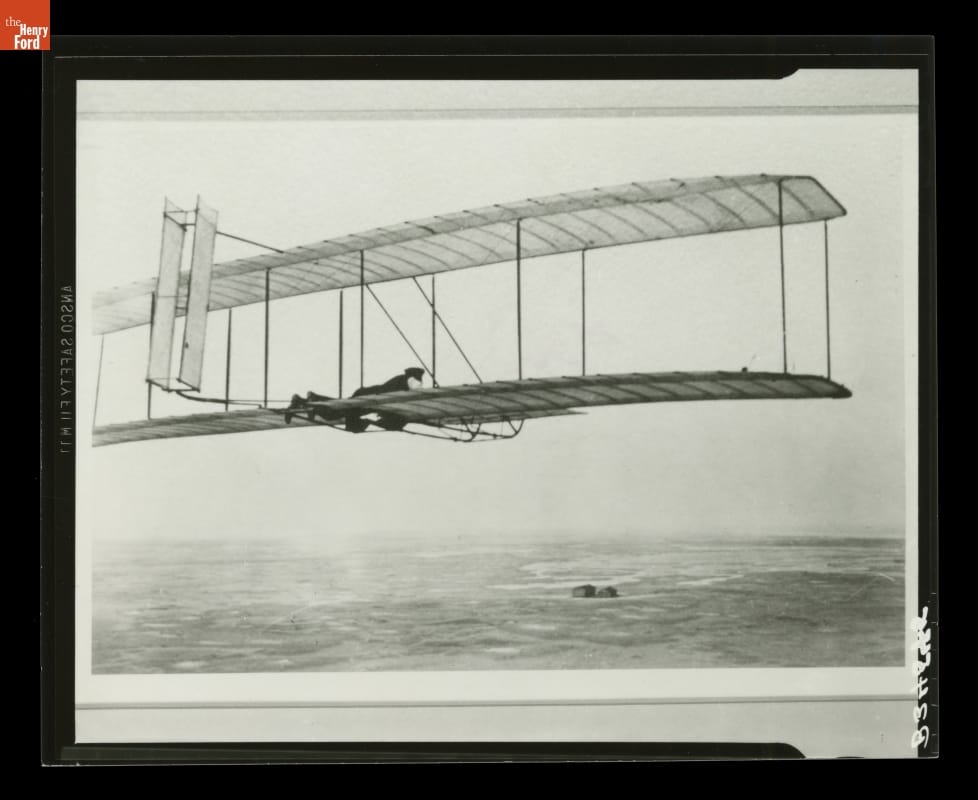
- Wright Brothers Piloting Their 1902 Glider in 1903, Kill Devil Hills, North Carolina - The Wright brothers' 1902 glider was their third aircraft tested at Kill Devil Hills in as many years. It was also the first built with aerodynamic calculations based on the Wrights' own wind tunnel tests. The improvements in performance were stunning. The brothers made more than 700 glides in 1902. Many were over 500 feet long, and some exceeded 600 feet.
- October 21, 1903
- Collections - Artifact
Wright Brothers Piloting Their 1902 Glider in 1903, Kill Devil Hills, North Carolina
The Wright brothers' 1902 glider was their third aircraft tested at Kill Devil Hills in as many years. It was also the first built with aerodynamic calculations based on the Wrights' own wind tunnel tests. The improvements in performance were stunning. The brothers made more than 700 glides in 1902. Many were over 500 feet long, and some exceeded 600 feet.
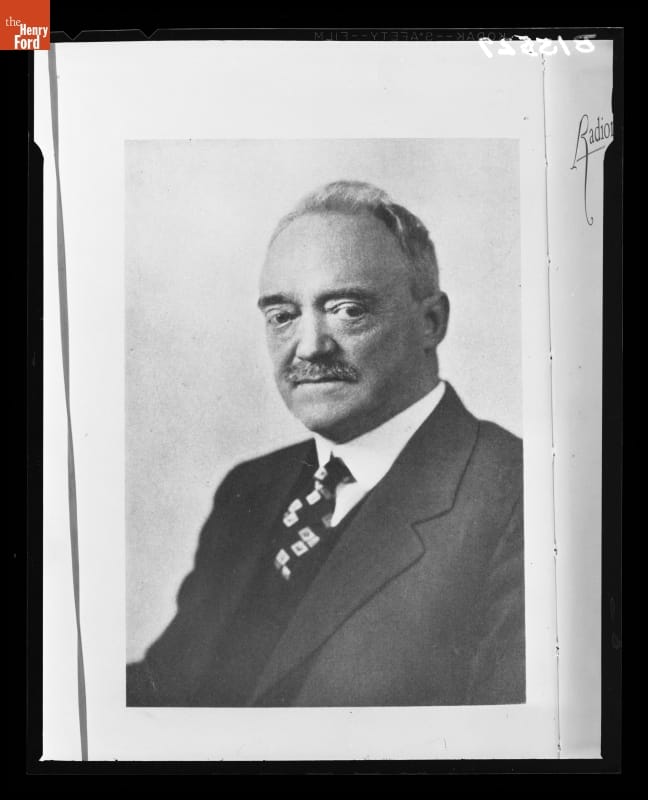
- Portrait of Charles Francis Jenkins, circa 1925 - Charles Francis Jenkins was a pioneering technology inventor. He made discoveries and improvements with motion picture cameras, mechanical scanning television, facsimile technology, and the transfer of images over wireless radio. Jenkins's television station W3XK began operating in 1928--it is believed to be the oldest station in the United States.
- circa 1925
- Collections - Artifact
Portrait of Charles Francis Jenkins, circa 1925
Charles Francis Jenkins was a pioneering technology inventor. He made discoveries and improvements with motion picture cameras, mechanical scanning television, facsimile technology, and the transfer of images over wireless radio. Jenkins's television station W3XK began operating in 1928--it is believed to be the oldest station in the United States.
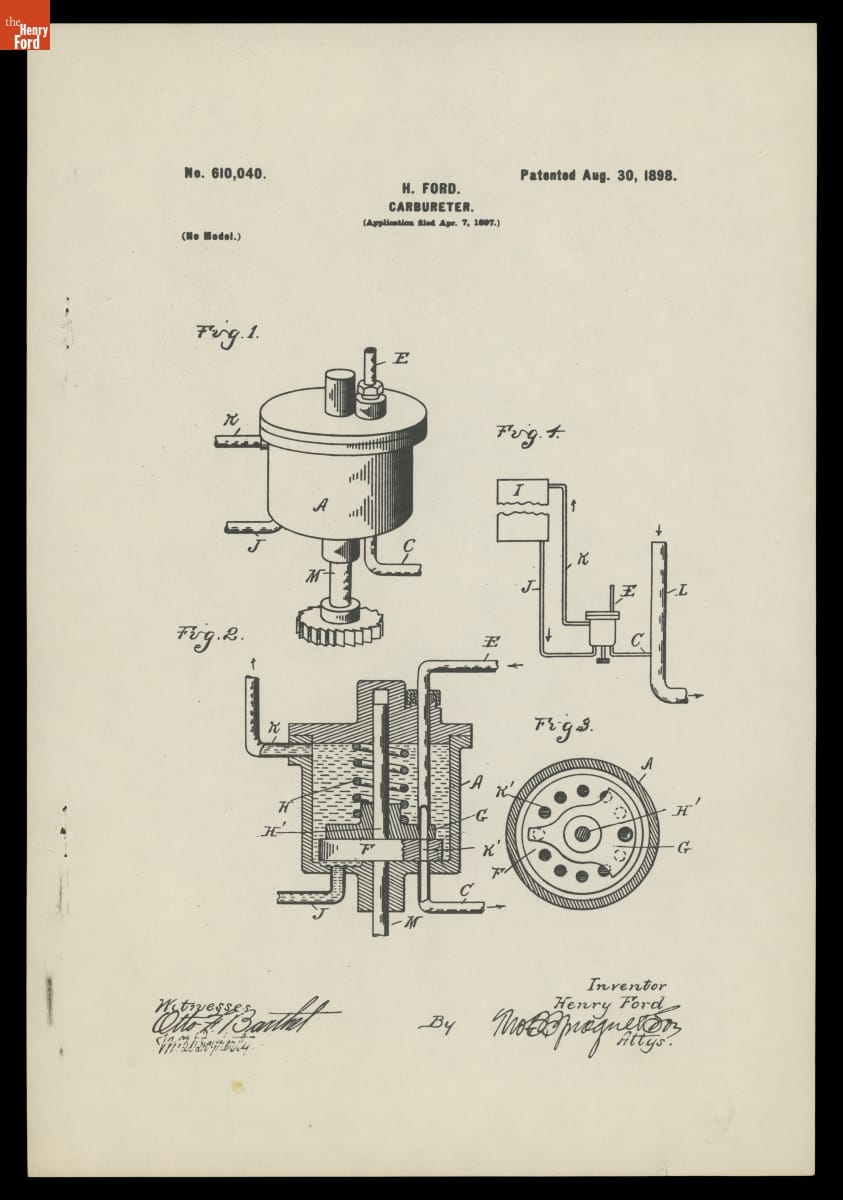
- Patent #610,040, Carburetor Improvements by Henry Ford, Granted August 30, 1898 - Henry Ford received a patent in August 1898 for an improved automobile carburetor -- the device that mixes the fuel and air sent to an engine's cylinders. It was part of Ford's work to design and build his first marketable automobile. Ford's first company, the Detroit Automobile Company, was formed in July 1899 but closed after 15 months.
- August 30, 1898
- Collections - Artifact
Patent #610,040, Carburetor Improvements by Henry Ford, Granted August 30, 1898
Henry Ford received a patent in August 1898 for an improved automobile carburetor -- the device that mixes the fuel and air sent to an engine's cylinders. It was part of Ford's work to design and build his first marketable automobile. Ford's first company, the Detroit Automobile Company, was formed in July 1899 but closed after 15 months.
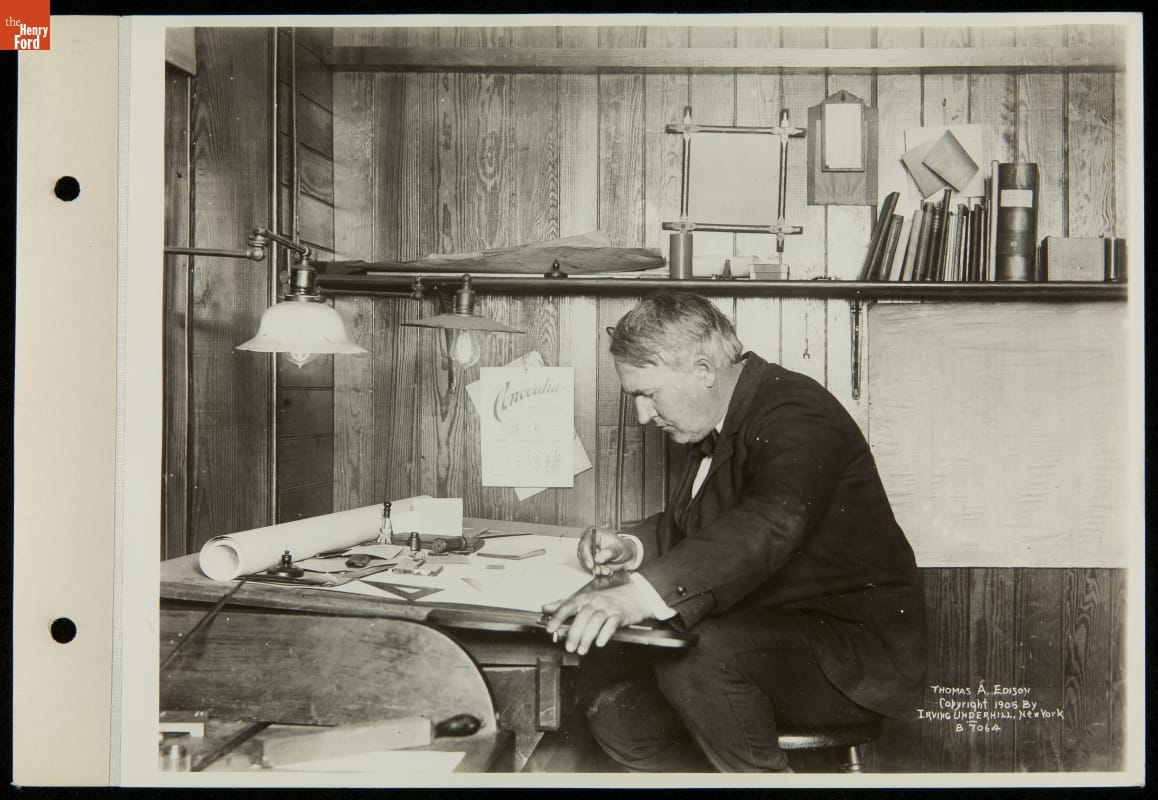
- Thomas Edison at His Laboratory in West Orange, New Jersey, 1898 - This photograph shows inventor Thomas Alva Edison at work in his West Orange, New Jersey, laboratory. Edison directed teams of research assistants here for nearly fifty years -- from 1887 until his death in 1931. More than half of Edison's 1,093 patents resulted from the collaborative work done in this complex, which became a model for modern research and development laboratories.
- November 05, 1929
- Collections - Artifact
Thomas Edison at His Laboratory in West Orange, New Jersey, 1898
This photograph shows inventor Thomas Alva Edison at work in his West Orange, New Jersey, laboratory. Edison directed teams of research assistants here for nearly fifty years -- from 1887 until his death in 1931. More than half of Edison's 1,093 patents resulted from the collaborative work done in this complex, which became a model for modern research and development laboratories.
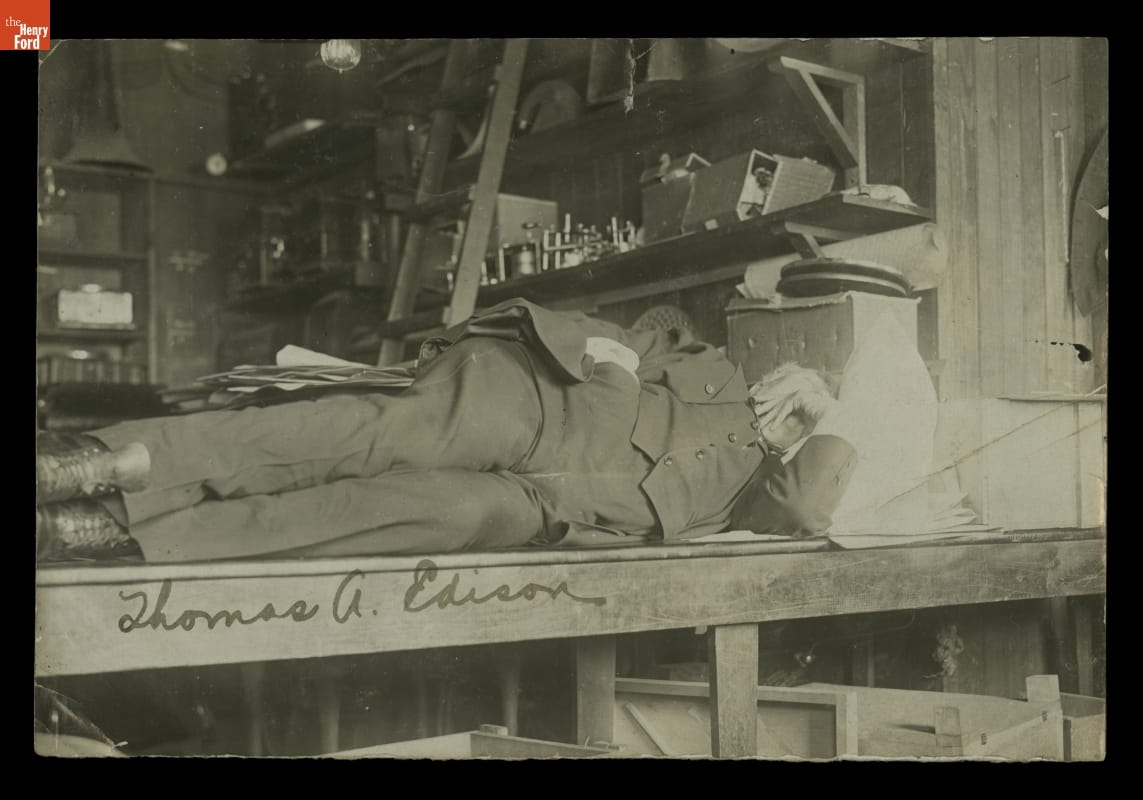
- Thomas Edison Napping at His West Orange Laboratory, New Jersey, circa 1924 -
- circa 1924
- Collections - Artifact
Thomas Edison Napping at His West Orange Laboratory, New Jersey, circa 1924
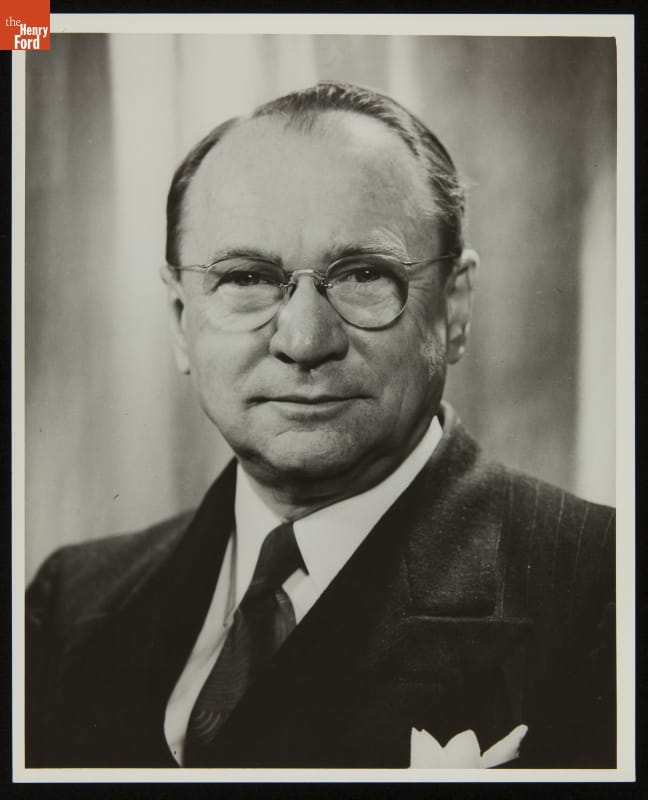
- Portrait of Vladimir. K. Zworykin, 1930-1950 - Vladimir Zworykin was an early pioneer of television development, employed by Westinghouse and the Radio Corporation of America. Zworykin's iconoscope and kinescope picture tubes were breakthroughs in television history. Together they allowed electronic television to become a viable technology. Zworykin also headed the creation of the electron microscope and infrared tubes used in night vision "sniperscopes" during WWII.
- 1930-1950
- Collections - Artifact
Portrait of Vladimir. K. Zworykin, 1930-1950
Vladimir Zworykin was an early pioneer of television development, employed by Westinghouse and the Radio Corporation of America. Zworykin's iconoscope and kinescope picture tubes were breakthroughs in television history. Together they allowed electronic television to become a viable technology. Zworykin also headed the creation of the electron microscope and infrared tubes used in night vision "sniperscopes" during WWII.
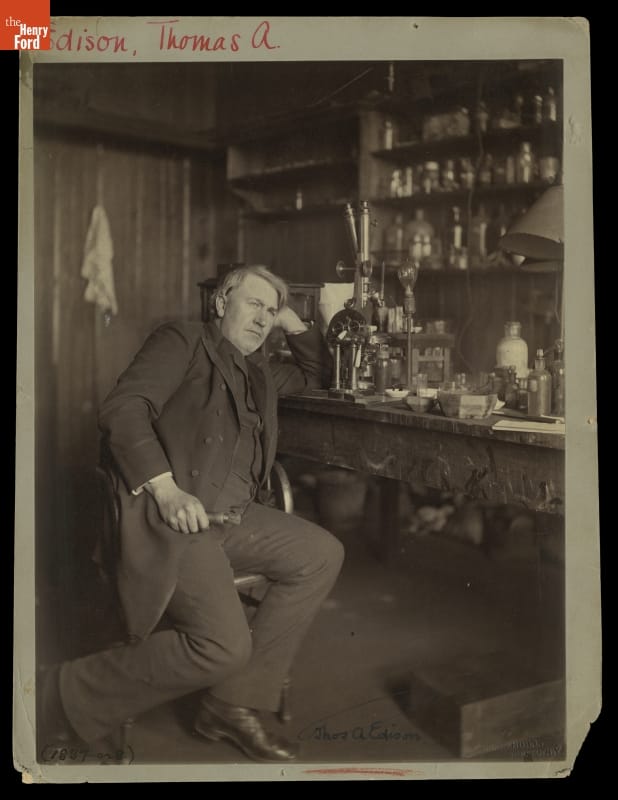
- Thomas Edison at West Orange Laboratory, New Jersey, 1887-1888 -
- 1887-1888
- Collections - Artifact
Thomas Edison at West Orange Laboratory, New Jersey, 1887-1888
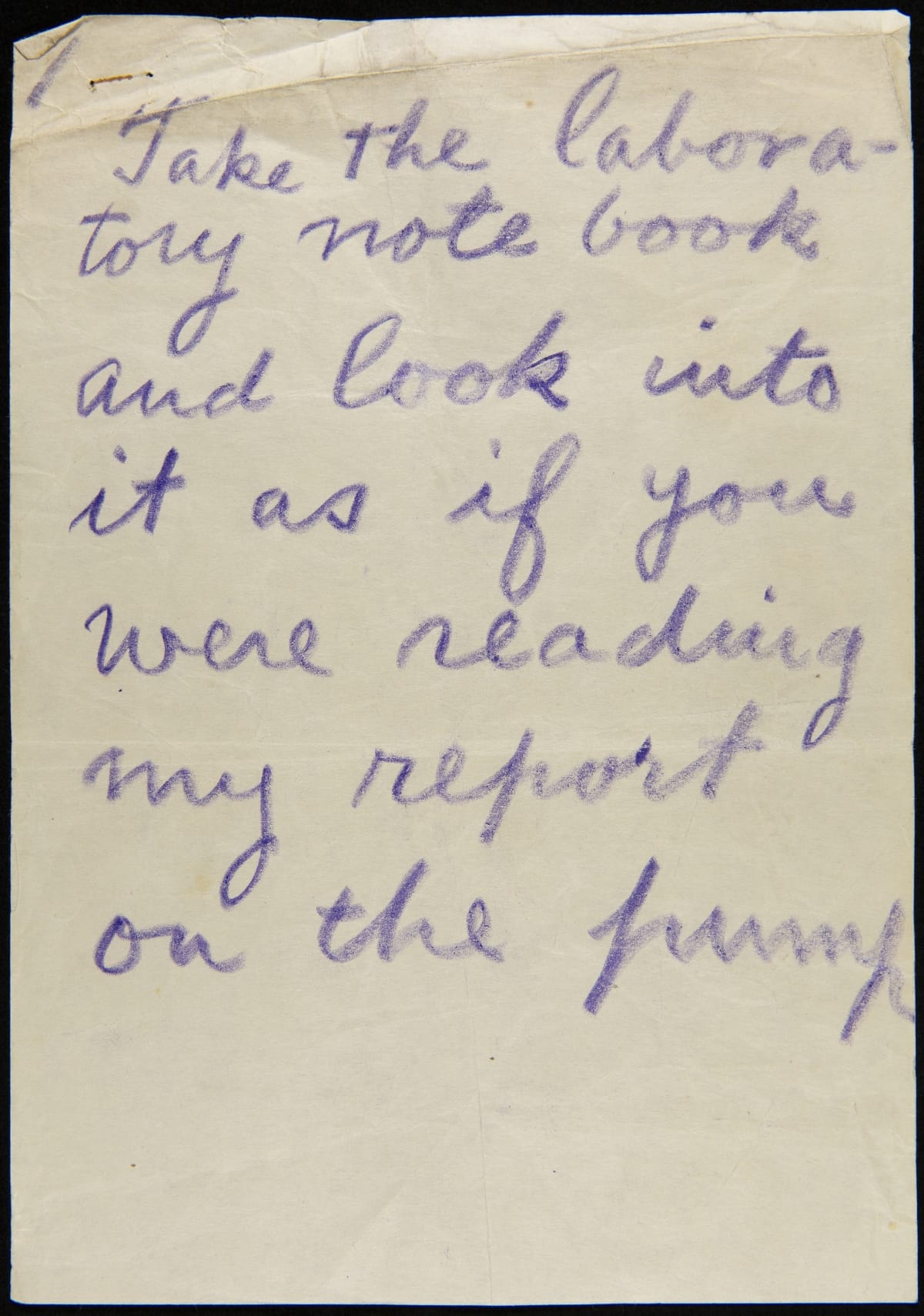
- Francis Jehl's Notes to Thomas Edison for the Incandescent Lamp Lighting during Light's Golden Jubilee, 1929 - To celebrate the 50th anniversary of the incandescent electric lamp, Henry Ford hosted the Light's Golden Jubilee event in Dearborn, Michigan. During the festivities, Thomas Edison and former assistant Francis Jehl re-enacted the 1879 test of Edison's first successful light bulb in Greenfield Village's detailed reproduction of his Menlo Park Laboratory. Jehl provided the elderly inventor with handwritten notes to help guide Edison through the re-enactment.
- October 21, 1929
- Collections - Artifact
Francis Jehl's Notes to Thomas Edison for the Incandescent Lamp Lighting during Light's Golden Jubilee, 1929
To celebrate the 50th anniversary of the incandescent electric lamp, Henry Ford hosted the Light's Golden Jubilee event in Dearborn, Michigan. During the festivities, Thomas Edison and former assistant Francis Jehl re-enacted the 1879 test of Edison's first successful light bulb in Greenfield Village's detailed reproduction of his Menlo Park Laboratory. Jehl provided the elderly inventor with handwritten notes to help guide Edison through the re-enactment.
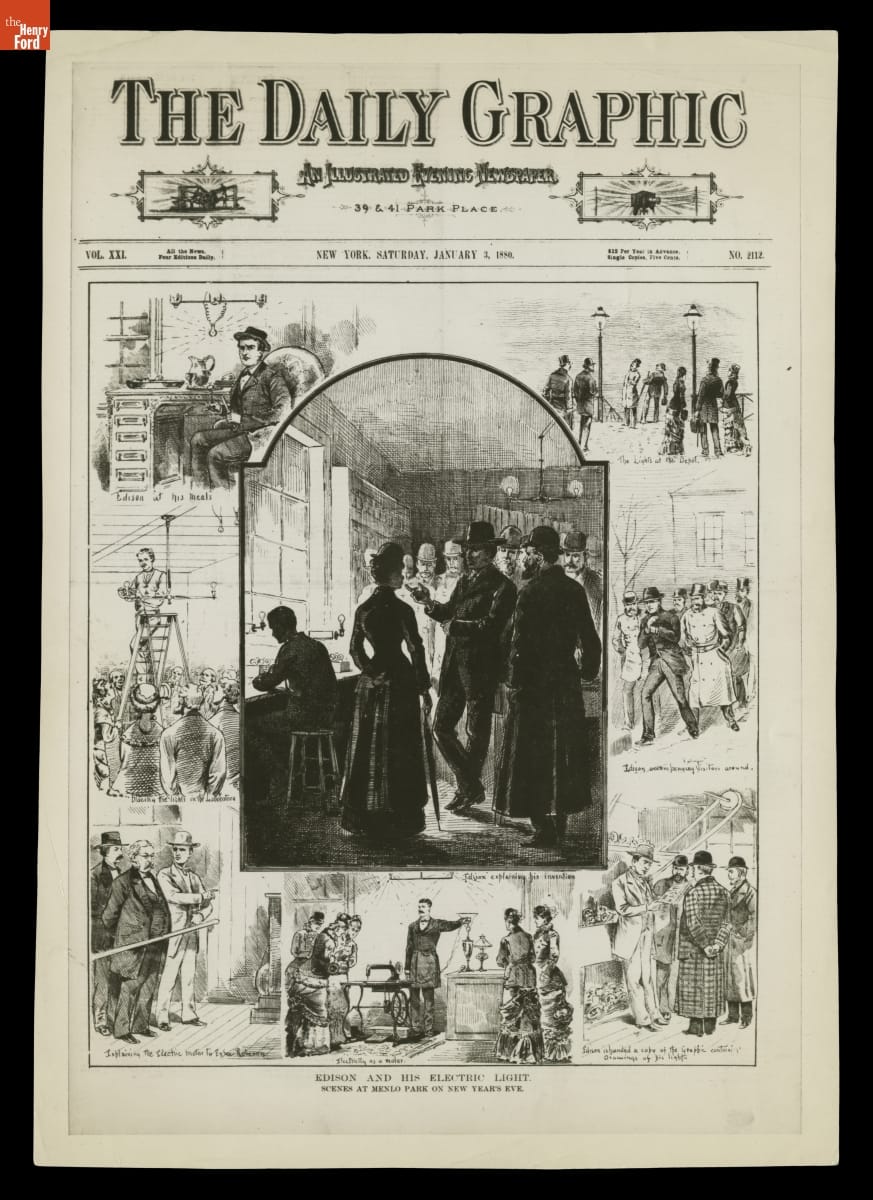
- Cover of The Daily Graphic Newspaper for January 3, 1880, "Edison and His Electric Light" -
- December 31, 1879
- Collections - Artifact
Cover of The Daily Graphic Newspaper for January 3, 1880, "Edison and His Electric Light"