
Search
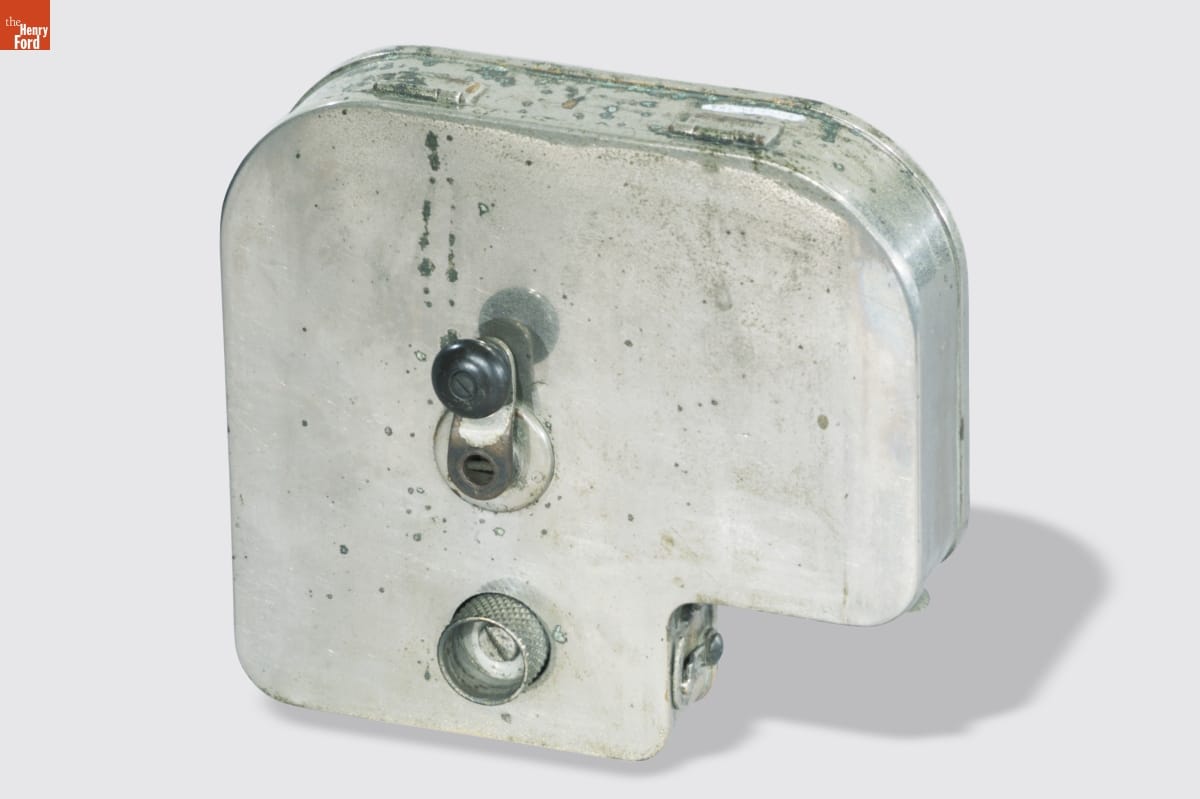
- Veeder Mfg. Co. Counter, 1899-1928 - Curtis H. Veeder formed the Veeder Manufacturing Company of Hartford, Connecticut, in 1895 to manufacture cyclometers -- devices that measured the distance traveled by bicycles. Veeder expanded its product range to include a variety of counting machines. After merging with the Root Company in 1928, Veeder-Root became the leading manufacturer of fuel-measuring devices used in gasoline pumps.
- 1899-1928
- Collections - Artifact
Veeder Mfg. Co. Counter, 1899-1928
Curtis H. Veeder formed the Veeder Manufacturing Company of Hartford, Connecticut, in 1895 to manufacture cyclometers -- devices that measured the distance traveled by bicycles. Veeder expanded its product range to include a variety of counting machines. After merging with the Root Company in 1928, Veeder-Root became the leading manufacturer of fuel-measuring devices used in gasoline pumps.
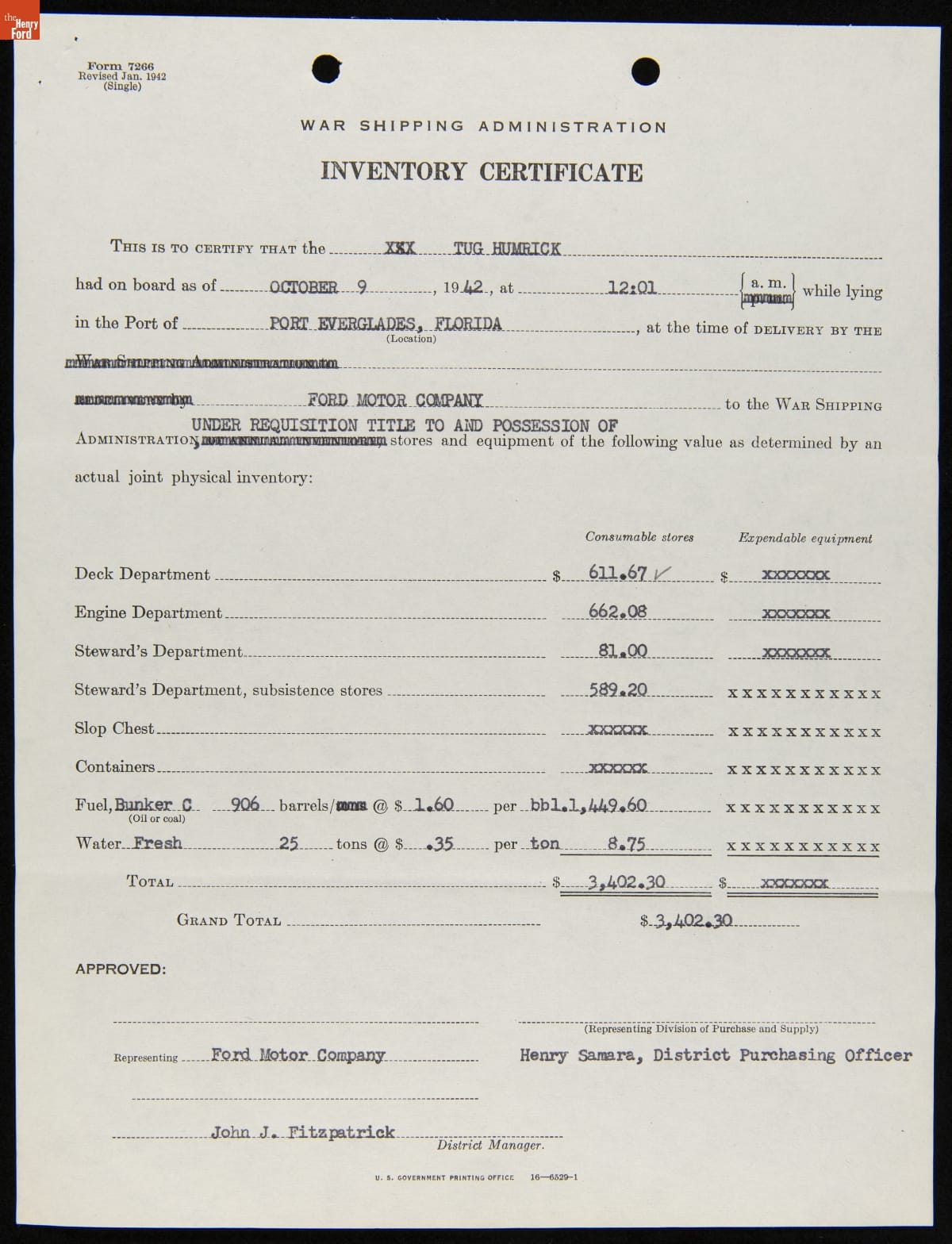
- War Shipping Administration Inventory Certificate for Ford Tugboat "Humerick," October 9, 1942 - Ford Motor Company owned a fleet of barges, tugs, canal boats, cargo carriers, and ocean freighters that transported company products and materials before the Second World War. In 1942, with growing military demands, the United States began requisitioning all available ships for wartime service. Government maritime and shipping administrations worked with Ford to identify and acquire ships needed for the war effort.
- October 09, 1942
- Collections - Artifact
War Shipping Administration Inventory Certificate for Ford Tugboat "Humerick," October 9, 1942
Ford Motor Company owned a fleet of barges, tugs, canal boats, cargo carriers, and ocean freighters that transported company products and materials before the Second World War. In 1942, with growing military demands, the United States began requisitioning all available ships for wartime service. Government maritime and shipping administrations worked with Ford to identify and acquire ships needed for the war effort.
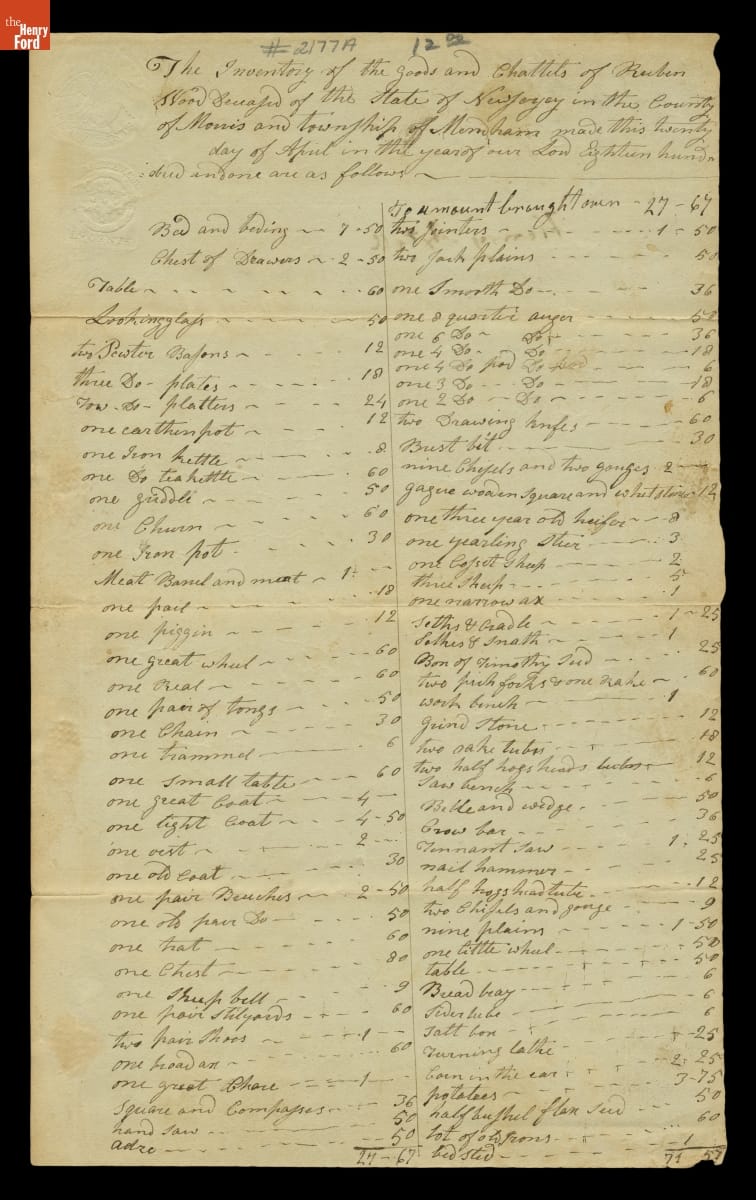
- Estate Inventory of Ruben Wood, Filed April 20, 1801 -
- April 20, 1801
- Collections - Artifact
Estate Inventory of Ruben Wood, Filed April 20, 1801
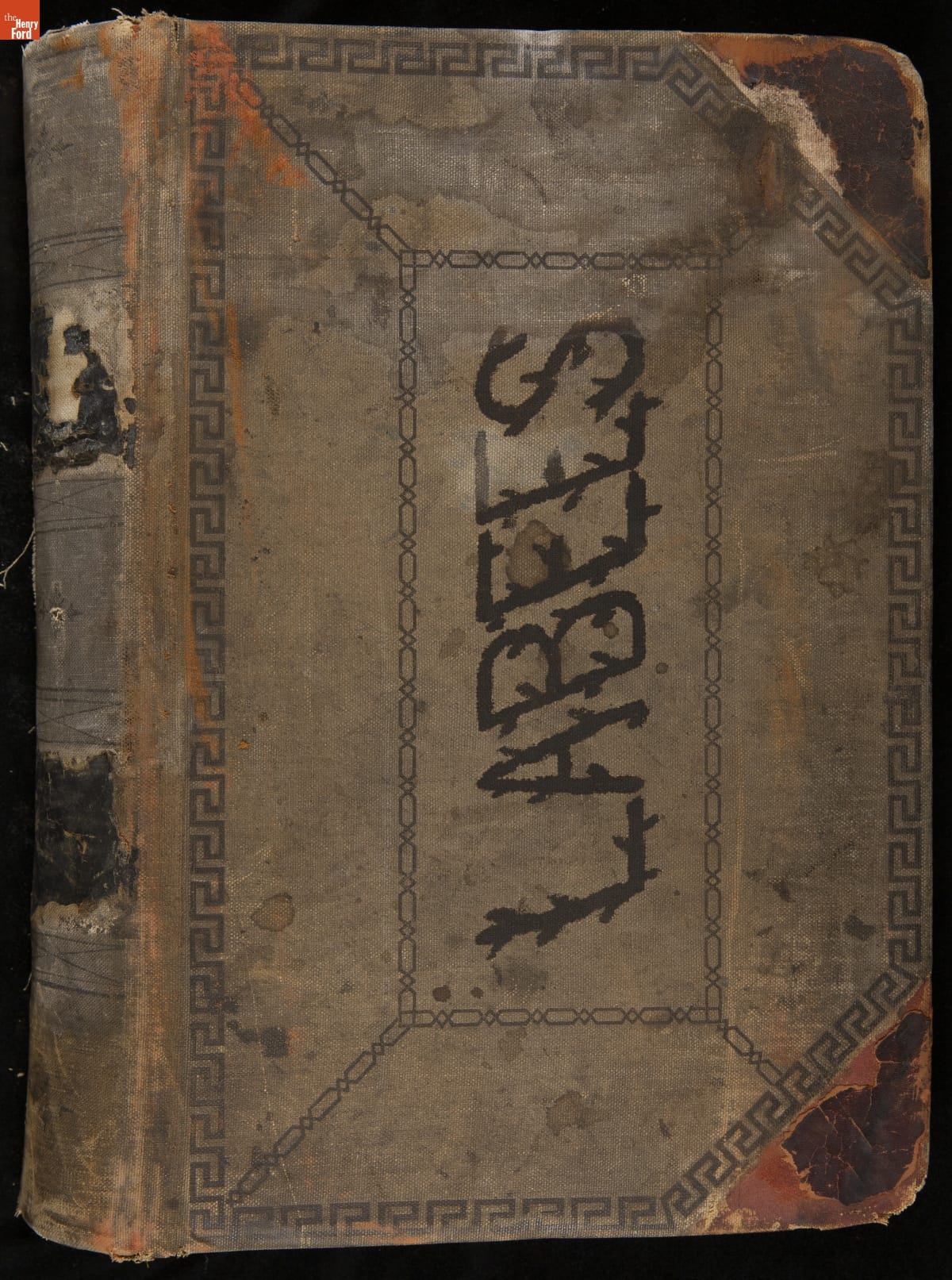
- Inventory of Heinz Company Product Labels, 1890-1896 - This inventory, compiled by the H.J. Heinz Company, contains an extensive collection of product labels for both the H.J. Heinz Company and its predecessor, F. & J. Heinz. Next to each label is a column for debit and for credit, allowing the company's bookkeepers to keep track of how many labels they had purchased.
- 1890-1896
- Collections - Artifact
Inventory of Heinz Company Product Labels, 1890-1896
This inventory, compiled by the H.J. Heinz Company, contains an extensive collection of product labels for both the H.J. Heinz Company and its predecessor, F. & J. Heinz. Next to each label is a column for debit and for credit, allowing the company's bookkeepers to keep track of how many labels they had purchased.
- Estate Inventory of Lawrence McDonald, Filed January 17, 1818 -
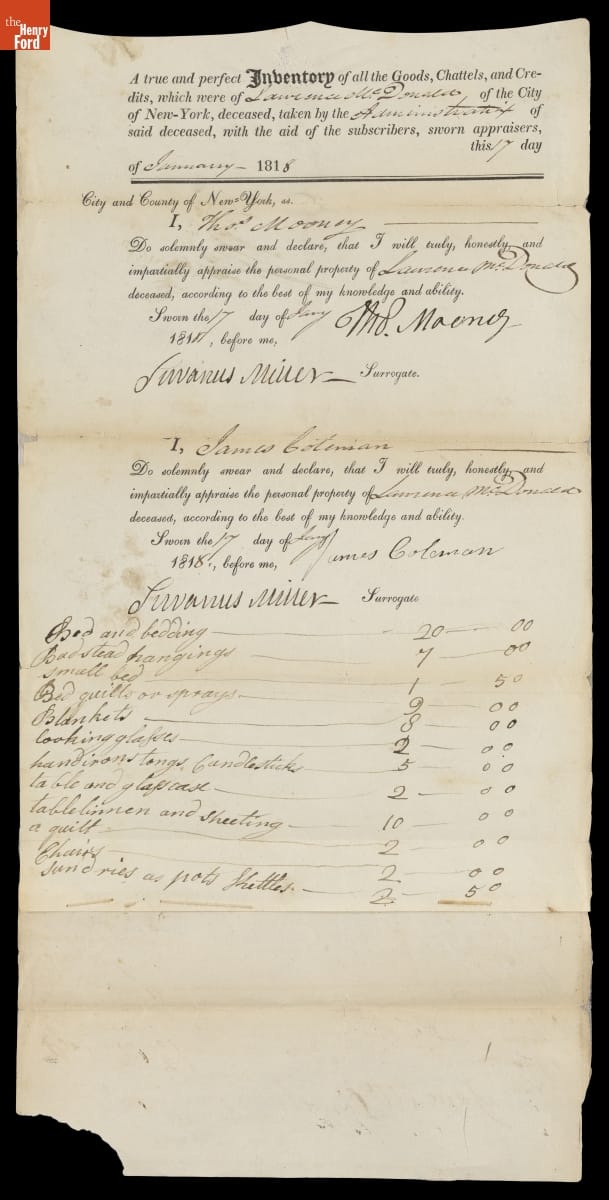
- January 17, 1818
- Collections - Artifact
Estate Inventory of Lawrence McDonald, Filed January 17, 1818
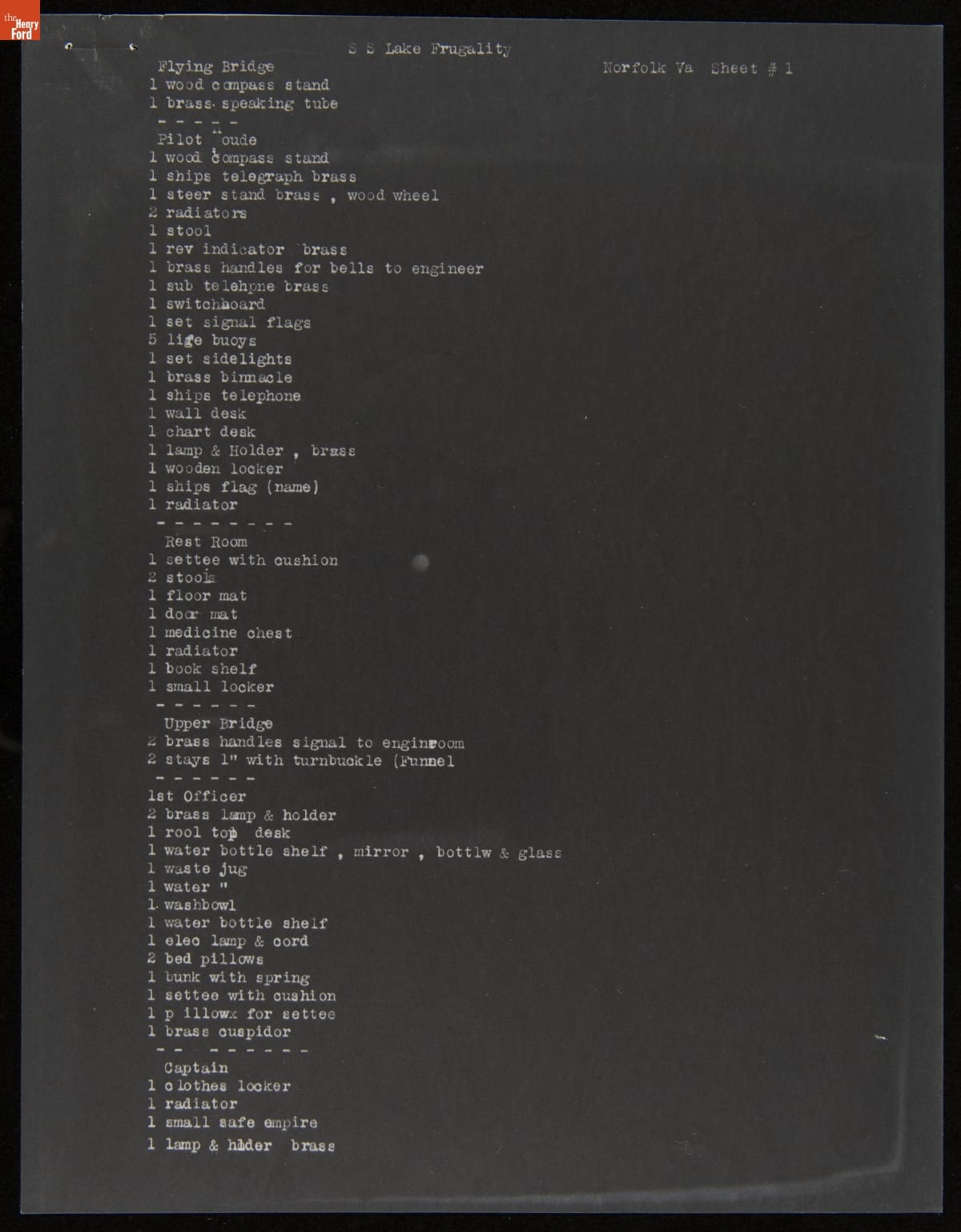
- Inventory of Ford Barge "Lake Frugality," 1923-1926 - Henry Ford purchased 199 surplus World War I merchant ships from the United States government in 1925. Most of these ships were scrapped and the materials were used at Ford's new automobile manufacturing complex on the Rouge River. But 13 were converted into barges, like the <em>Lake Frugality</em>. These barges transported products and material as part of Ford's operation.
- 1923-1926
- Collections - Artifact
Inventory of Ford Barge "Lake Frugality," 1923-1926
Henry Ford purchased 199 surplus World War I merchant ships from the United States government in 1925. Most of these ships were scrapped and the materials were used at Ford's new automobile manufacturing complex on the Rouge River. But 13 were converted into barges, like the Lake Frugality. These barges transported products and material as part of Ford's operation.
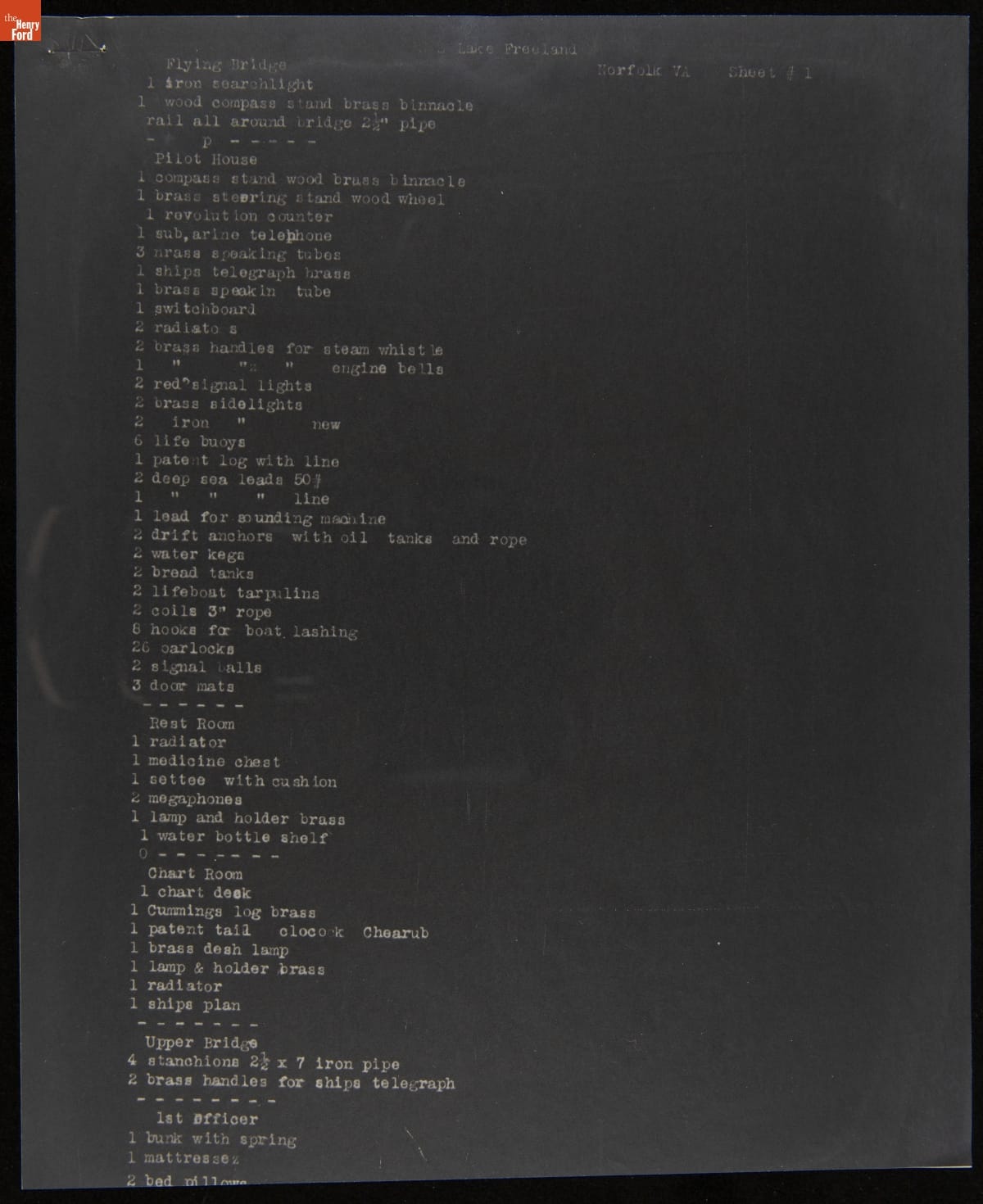
- Inventory of Ford Barge "Lake Freeland," circa 1925-1926 - Henry Ford purchased 199 surplus World War I merchant ships from the United States government in 1925. Most of these ships were scrapped and the materials were used at Ford's new automobile manufacturing complex on the Rouge River. But 13 were converted into barges, like the <em>Lake Freeland</em>. These barges transported products and material as part of Ford's operation.
- circa 1925-1926
- Collections - Artifact
Inventory of Ford Barge "Lake Freeland," circa 1925-1926
Henry Ford purchased 199 surplus World War I merchant ships from the United States government in 1925. Most of these ships were scrapped and the materials were used at Ford's new automobile manufacturing complex on the Rouge River. But 13 were converted into barges, like the Lake Freeland. These barges transported products and material as part of Ford's operation.
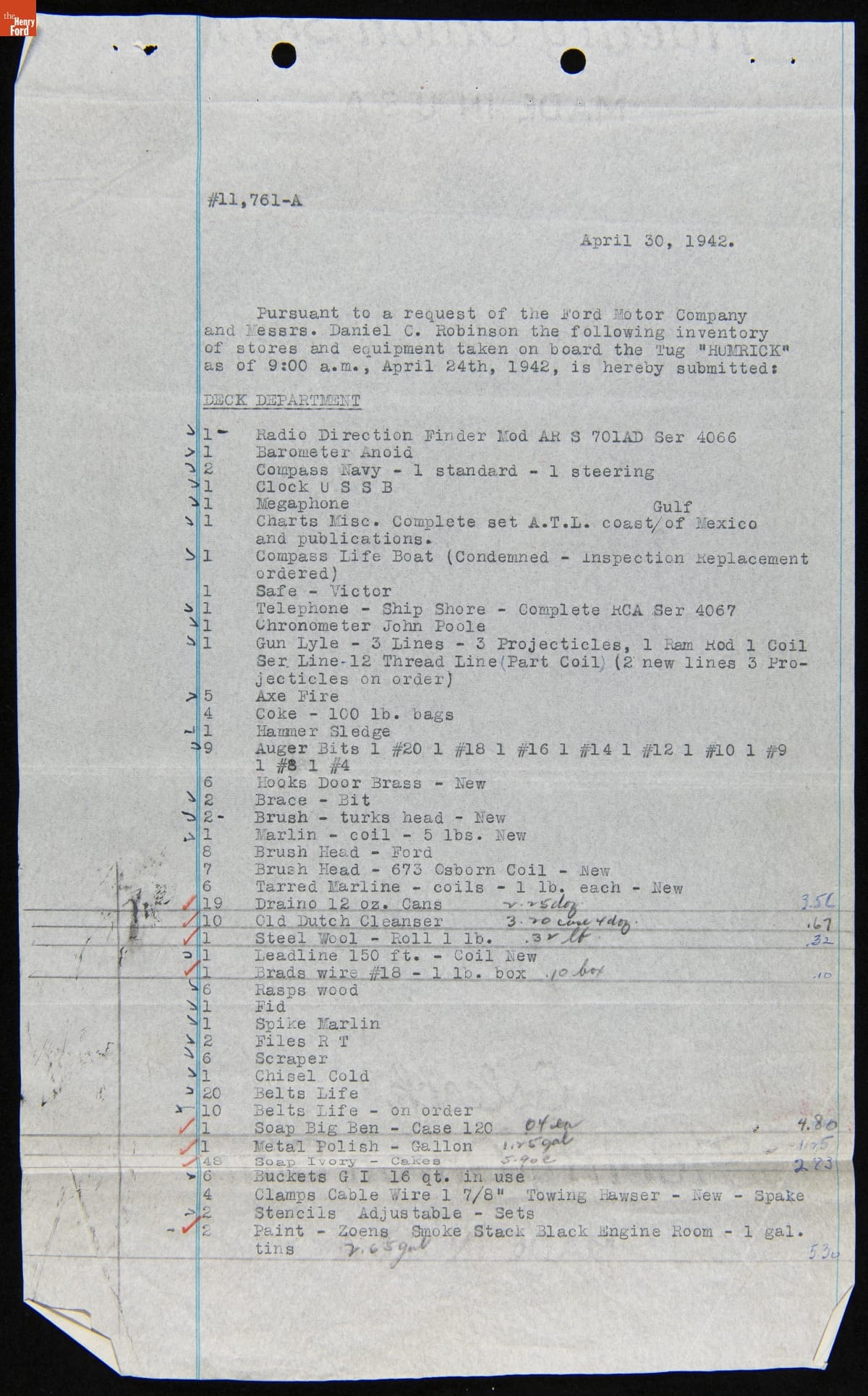
- Inventory of Consumable Stores on Ford Tugboat "Humerick," April 30, 1942 - Ford Motor Company owned a fleet of barges, tugs, canal boats, cargo carriers, and ocean freighters that transported company products and materials before the Second World War. In 1942, with growing military demands, the United States began requisitioning all available ships for wartime service. Government maritime and shipping administrations worked with Ford to identify and acquire ships needed for the war effort.
- April 24, 1942
- Collections - Artifact
Inventory of Consumable Stores on Ford Tugboat "Humerick," April 30, 1942
Ford Motor Company owned a fleet of barges, tugs, canal boats, cargo carriers, and ocean freighters that transported company products and materials before the Second World War. In 1942, with growing military demands, the United States began requisitioning all available ships for wartime service. Government maritime and shipping administrations worked with Ford to identify and acquire ships needed for the war effort.
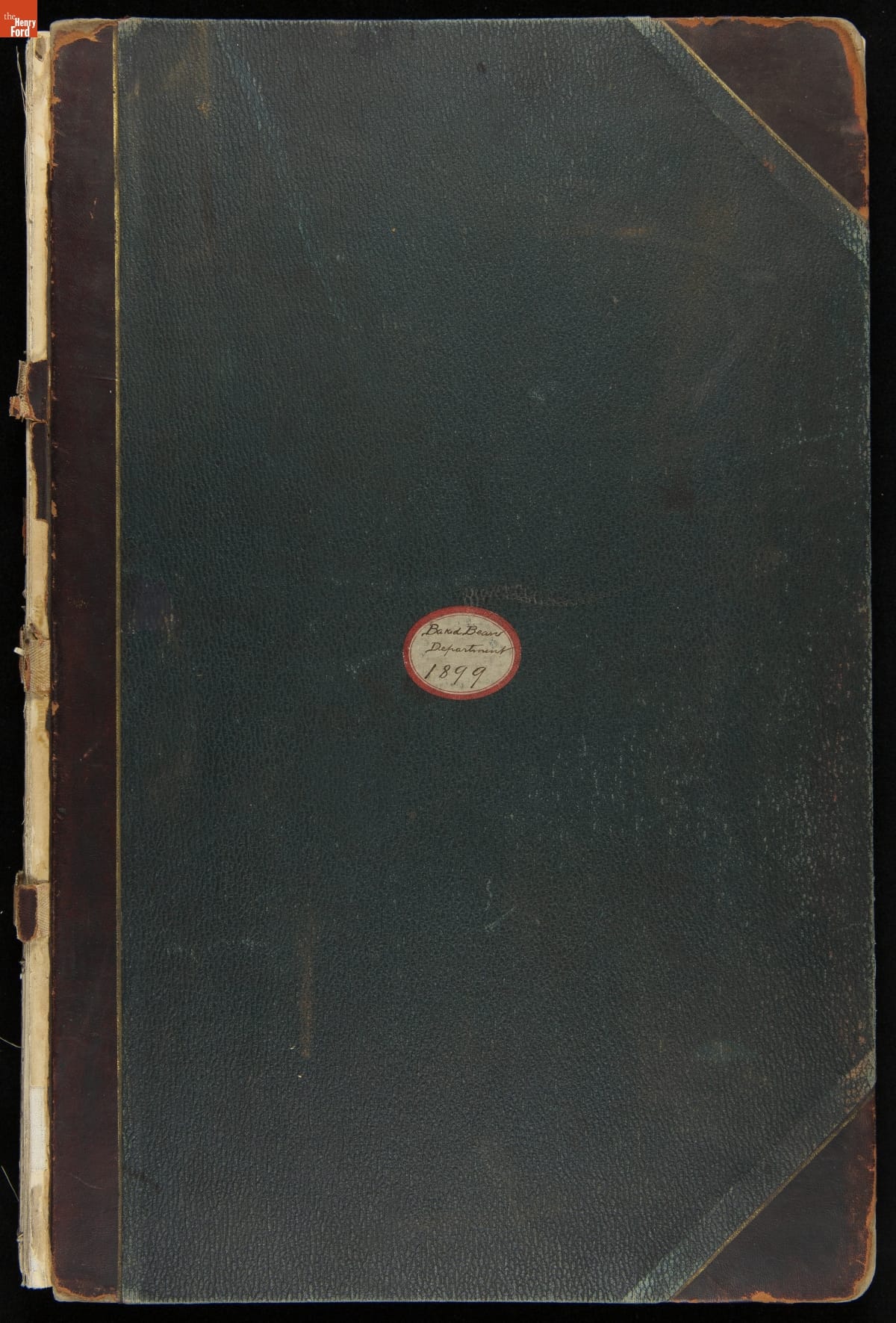
- Inventory for the Heinz Company Canning Department, 1899 - This inventory for the H.J. Heinz Company Canning Department includes a brief history of the department, which canned baked beans, tomato soup, and pork beans, to name a few. Additionally, this book contains a record of the process by the numbers, including the number of cans filled, labeled, and packaged for shipping, and the number of damaged cans per week, among other records.
- 1899
- Collections - Artifact
Inventory for the Heinz Company Canning Department, 1899
This inventory for the H.J. Heinz Company Canning Department includes a brief history of the department, which canned baked beans, tomato soup, and pork beans, to name a few. Additionally, this book contains a record of the process by the numbers, including the number of cans filled, labeled, and packaged for shipping, and the number of damaged cans per week, among other records.
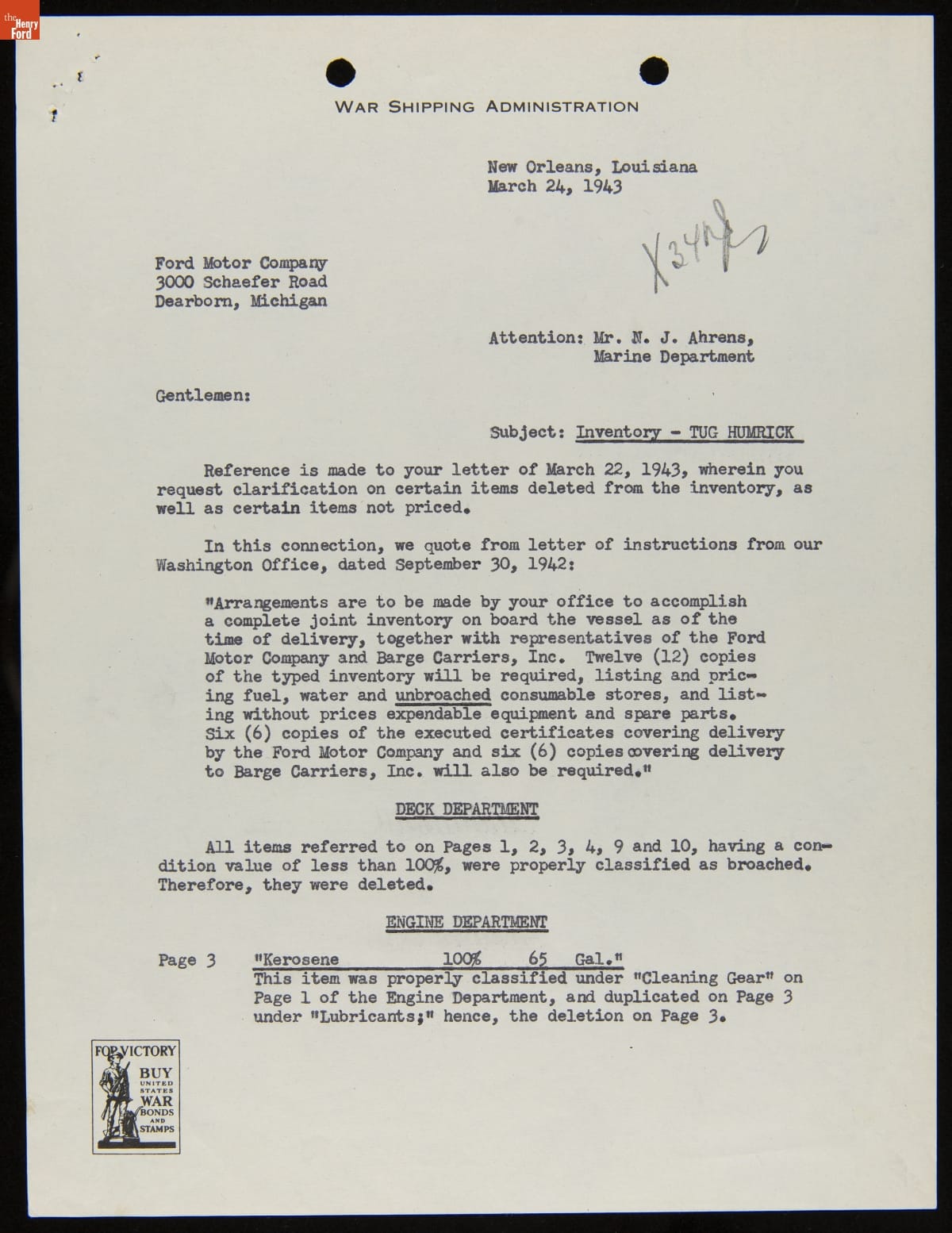
- Letter to Ford Motor Company regarding Inventory Discrepancies on Ford Tugboat "Humerick," March 24, 1943 - Ford Motor Company owned a fleet of barges, tugs, canal boats, cargo carriers, and ocean freighters that transported company products and materials before the Second World War. In 1942, with growing military demands, the United States began requisitioning all available ships for wartime service. Government maritime and shipping administrations worked with Ford to identify and acquire ships needed for the war effort.
- March 22, 1943
- Collections - Artifact
Letter to Ford Motor Company regarding Inventory Discrepancies on Ford Tugboat "Humerick," March 24, 1943
Ford Motor Company owned a fleet of barges, tugs, canal boats, cargo carriers, and ocean freighters that transported company products and materials before the Second World War. In 1942, with growing military demands, the United States began requisitioning all available ships for wartime service. Government maritime and shipping administrations worked with Ford to identify and acquire ships needed for the war effort.