
Search
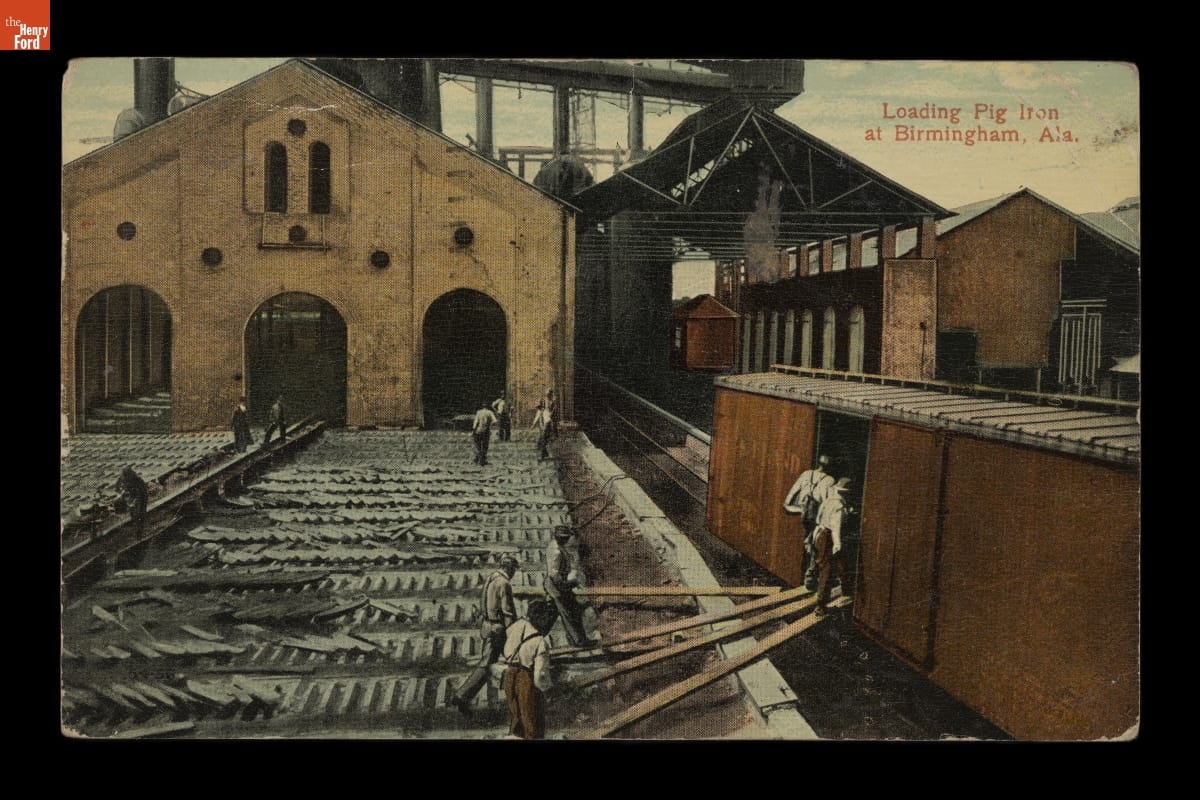
- "Loading Pig Iron at Birmingham, Ala.," Sent to Andrew Purnell, Postmarked October 31, 1916 -
- Collections - Artifact
"Loading Pig Iron at Birmingham, Ala.," Sent to Andrew Purnell, Postmarked October 31, 1916
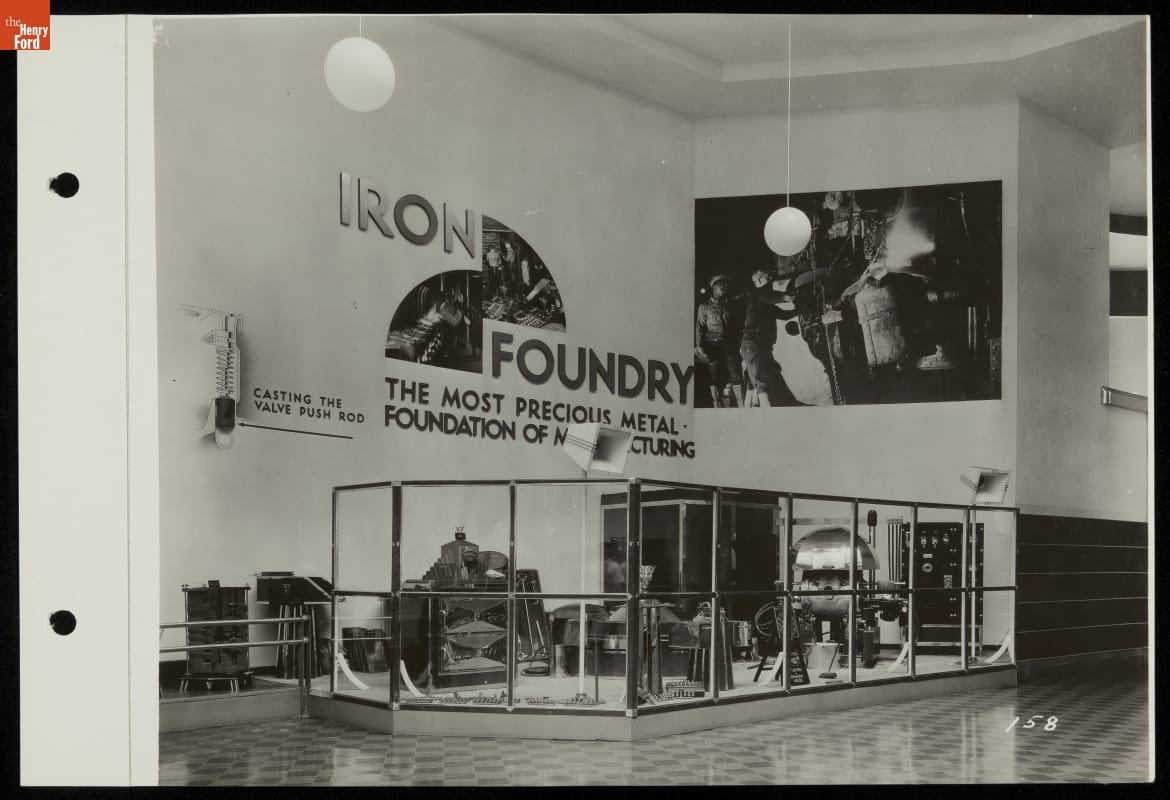
- Foundry Exhibit, Ford Building, California Pacific International Exposition, San Diego, 1935 - Through the 1930s, Ford Motor Company poured resources into exhibitions at regional and world's fairs. Henry Ford believed strongly in the educational value of such displays, and a corporate presence at the fairs benefitted public relations. Ford's popular exhibits and demonstrations -- pictured here in the 1935 California Pacific International Exposition Ford Building -- generated lots of publicity.
- 1935
- Collections - Artifact
Foundry Exhibit, Ford Building, California Pacific International Exposition, San Diego, 1935
Through the 1930s, Ford Motor Company poured resources into exhibitions at regional and world's fairs. Henry Ford believed strongly in the educational value of such displays, and a corporate presence at the fairs benefitted public relations. Ford's popular exhibits and demonstrations -- pictured here in the 1935 California Pacific International Exposition Ford Building -- generated lots of publicity.
- Illustrated Industries and Geography of America, 1882 -
- 1882
- Collections - Artifact
Illustrated Industries and Geography of America, 1882
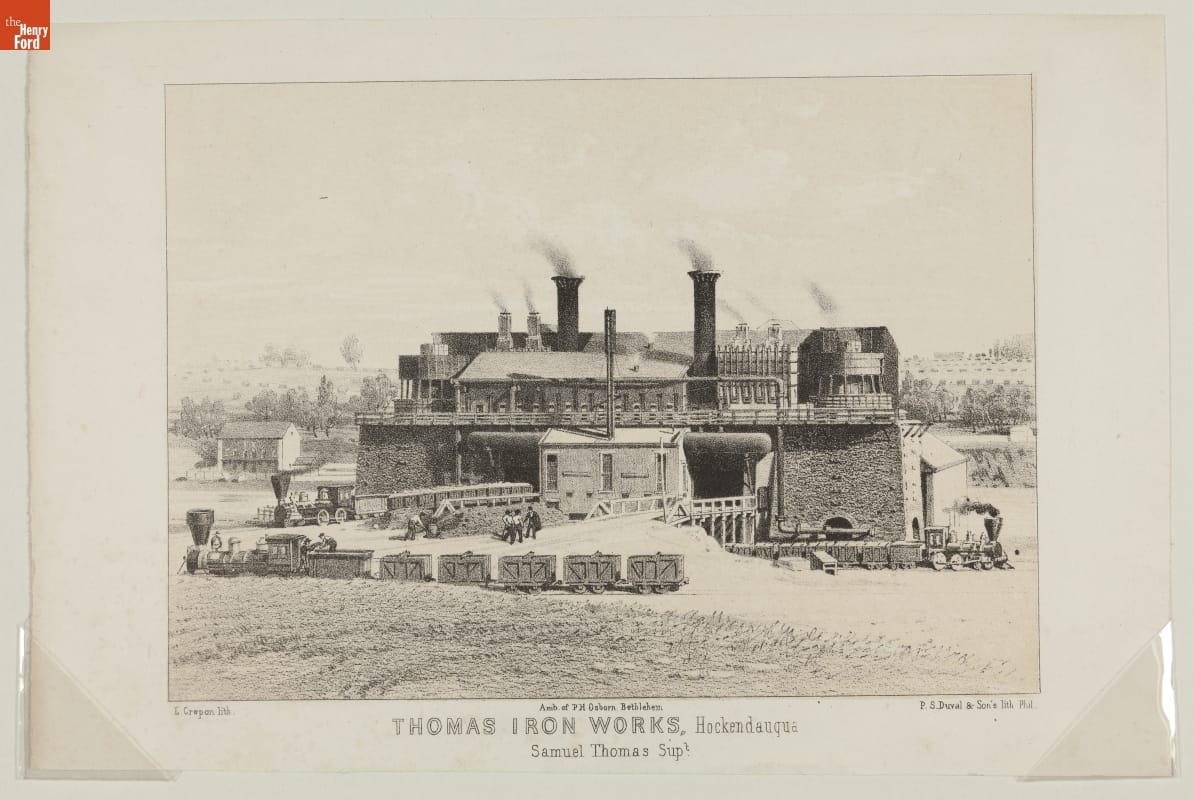
- Lithograph, "Thomas Iron Works, Hockendauqua," circa 1860 - Organized in 1854, the Thomas Iron Works at Hockendauqua, Pennsylvania, were a major iron-making business in the Lehigh Valley until the early 20th century. The company's earliest blast furnaces are depicted in this circa 1860 lithograph.
- circa 1860
- Collections - Artifact
Lithograph, "Thomas Iron Works, Hockendauqua," circa 1860
Organized in 1854, the Thomas Iron Works at Hockendauqua, Pennsylvania, were a major iron-making business in the Lehigh Valley until the early 20th century. The company's earliest blast furnaces are depicted in this circa 1860 lithograph.
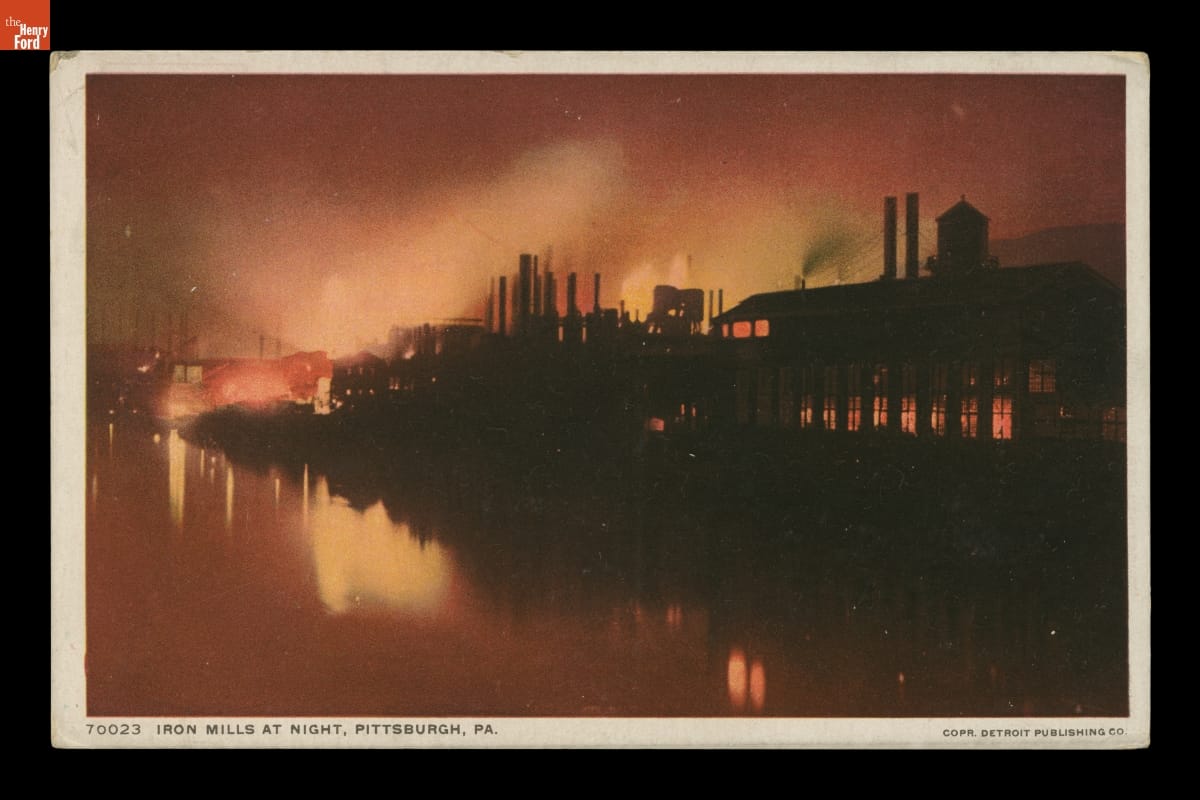
- "Iron Mills at Night, Pittsburgh, Pa," 1910-1920 - From 1895 to 1924, the Detroit Publishing Company was one of the major image publishers in the world. It had a wide-ranging stock of original photographs, many of which were colored using the company's patented "Phostint" process. Popular "Phostint" postcards, the Detroit Publishing Company claimed, were delicately "executed in Nature's Coloring" to be truthful, tasteful, beautiful, and educational.
- circa 1911
- Collections - Artifact
"Iron Mills at Night, Pittsburgh, Pa," 1910-1920
From 1895 to 1924, the Detroit Publishing Company was one of the major image publishers in the world. It had a wide-ranging stock of original photographs, many of which were colored using the company's patented "Phostint" process. Popular "Phostint" postcards, the Detroit Publishing Company claimed, were delicately "executed in Nature's Coloring" to be truthful, tasteful, beautiful, and educational.
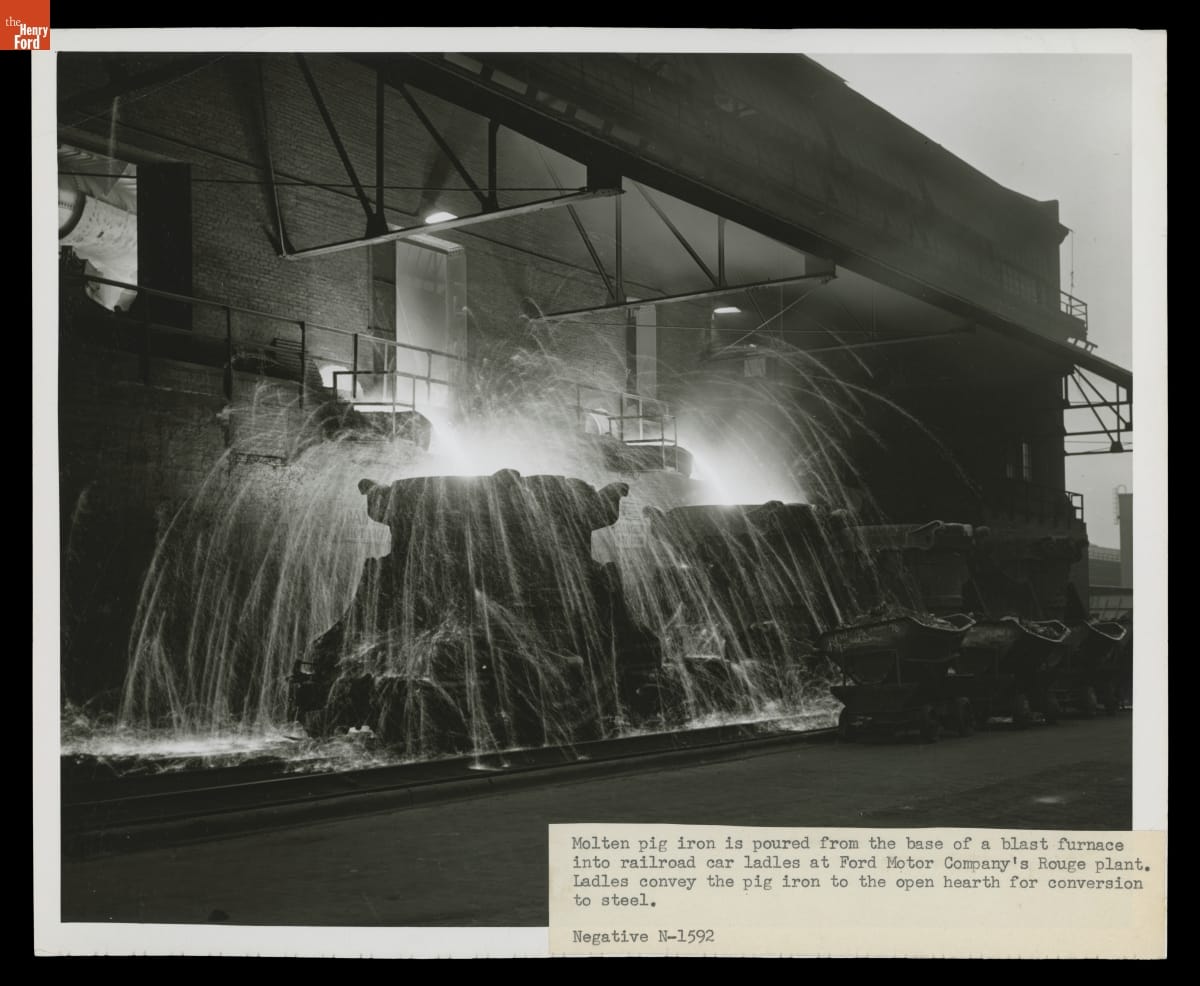
- Pouring Molten Iron from Blast Furnace into Railroad Car Ladles at Ford Motor Company Rouge Plant, circa 1948 - Three blast furnaces at Ford Motor Company's Rouge plant converted raw iron oxide ore into metallic iron. The molten iron was then poured into special railroad car ladles for transport to open-hearth furnaces, where the iron was further processed into steel. Together, the three blast furnaces could produce 6,700 tons of metallic iron every 24 hours.
- circa 1948
- Collections - Artifact
Pouring Molten Iron from Blast Furnace into Railroad Car Ladles at Ford Motor Company Rouge Plant, circa 1948
Three blast furnaces at Ford Motor Company's Rouge plant converted raw iron oxide ore into metallic iron. The molten iron was then poured into special railroad car ladles for transport to open-hearth furnaces, where the iron was further processed into steel. Together, the three blast furnaces could produce 6,700 tons of metallic iron every 24 hours.
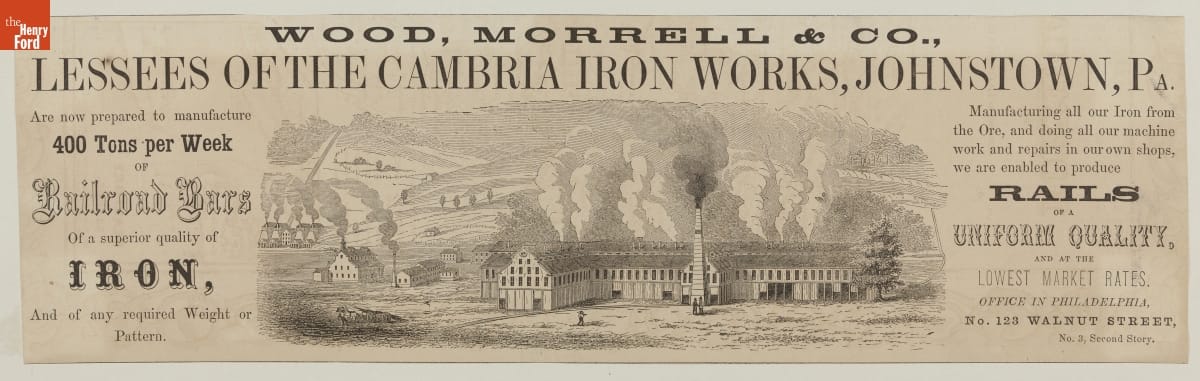
- Broadside, Advertisement for Wood, Morrell & Co., circa 1857 - The late 1850s broadside advertised the capability of the Cambria Iron Works to manufacture "400 tons per week of Railroad Bars." The Johnstown, Pennsylvania, complex was constructed in 1848 and quickly became one of the United States' largest producers of rails for the industry. The Cambria Iron Works closed in 1992.
- 1855-1860
- Collections - Artifact
Broadside, Advertisement for Wood, Morrell & Co., circa 1857
The late 1850s broadside advertised the capability of the Cambria Iron Works to manufacture "400 tons per week of Railroad Bars." The Johnstown, Pennsylvania, complex was constructed in 1848 and quickly became one of the United States' largest producers of rails for the industry. The Cambria Iron Works closed in 1992.