
Search
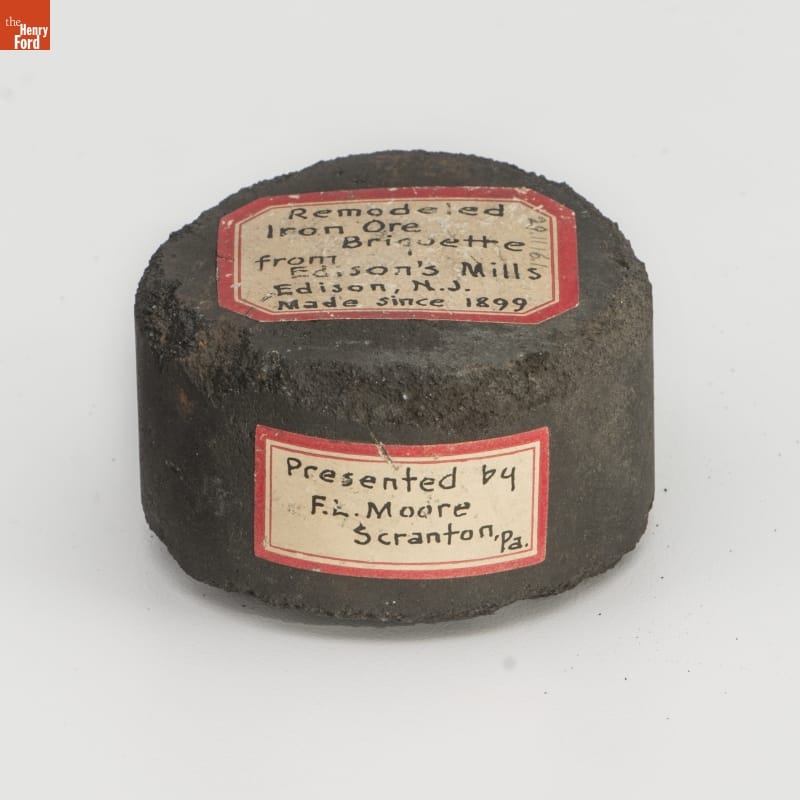
- Iron Ore Briquette from Edison Mines, New Jersey, 1899-1900 - During the 1890s, Thomas Edison launched a New Jersey mining operation to address an iron ore shortage. He designed rock-crushing technology and an electromagnetic ore separator to extract low-grade ore from crushed boulders. The final product -- a briquette made of powdered iron ore -- didn't do well commercially, especially after high-grade ore was discovered around Lake Superior. In 1899, Edison left the industry.
- 1899-1900
- Collections - Artifact
Iron Ore Briquette from Edison Mines, New Jersey, 1899-1900
During the 1890s, Thomas Edison launched a New Jersey mining operation to address an iron ore shortage. He designed rock-crushing technology and an electromagnetic ore separator to extract low-grade ore from crushed boulders. The final product -- a briquette made of powdered iron ore -- didn't do well commercially, especially after high-grade ore was discovered around Lake Superior. In 1899, Edison left the industry.
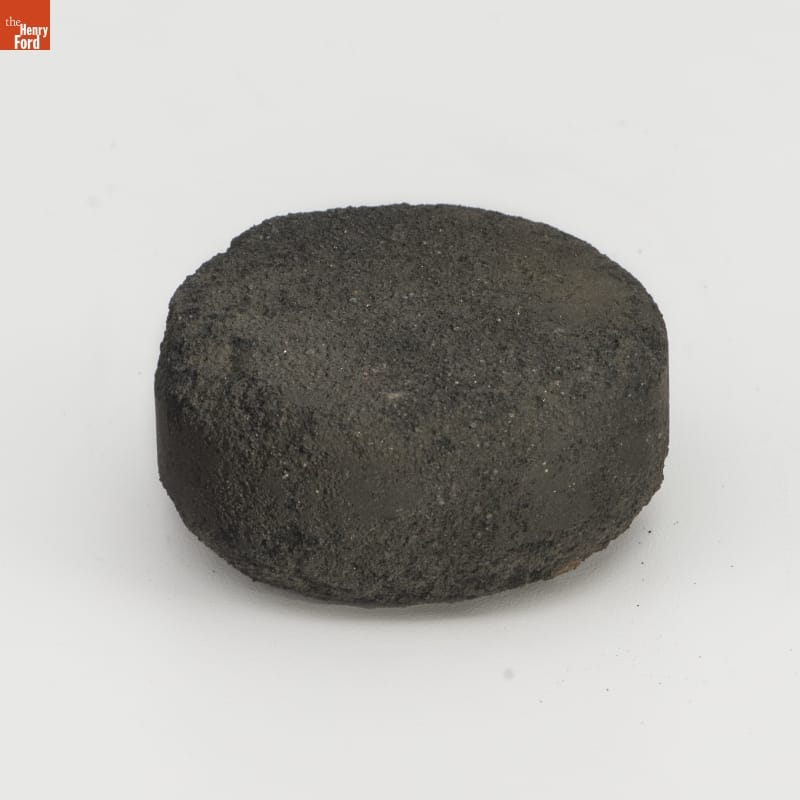
- Iron Ore Briquette from Edison Mines, New Jersey, 1890-1899 - During the 1890s, Thomas Edison launched a New Jersey mining operation to address an iron ore shortage. He designed rock-crushing technology and an electromagnetic ore separator to extract low-grade ore from crushed boulders. The final product -- a briquette made of powdered iron ore -- didn't do well commercially, especially after high-grade ore was discovered around Lake Superior. In 1899, Edison left the industry.
- 1890-1899
- Collections - Artifact
Iron Ore Briquette from Edison Mines, New Jersey, 1890-1899
During the 1890s, Thomas Edison launched a New Jersey mining operation to address an iron ore shortage. He designed rock-crushing technology and an electromagnetic ore separator to extract low-grade ore from crushed boulders. The final product -- a briquette made of powdered iron ore -- didn't do well commercially, especially after high-grade ore was discovered around Lake Superior. In 1899, Edison left the industry.
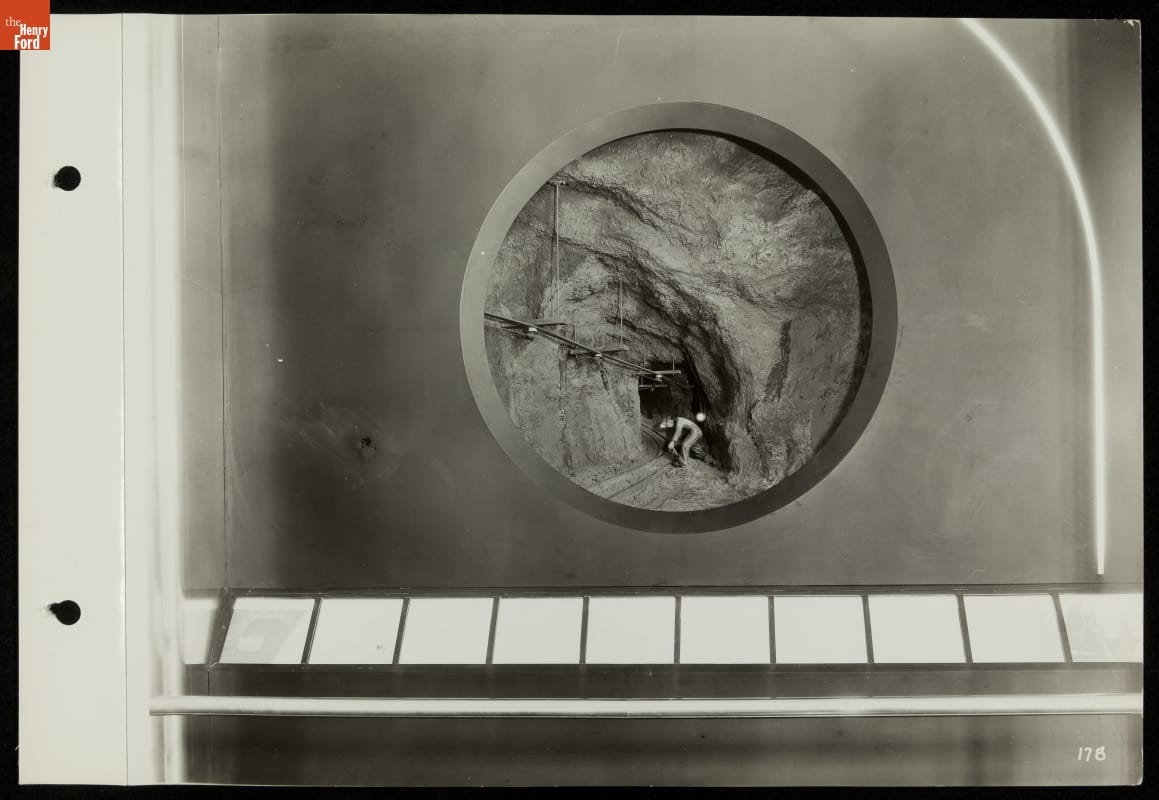
- Diorama of Iron Ore Production, inside the Court of Nations, Ford Building, California Pacific International Exposition, 1935 - Through the 1930s, Ford Motor Company poured resources into exhibitions at regional and world's fairs. Henry Ford believed strongly in the educational value of such displays, and a corporate presence at the fairs benefitted public relations. Ford's popular exhibits and demonstrations -- pictured here in the 1935 California Pacific International Exposition Ford Building -- generated lots of publicity.
- 1935
- Collections - Artifact
Diorama of Iron Ore Production, inside the Court of Nations, Ford Building, California Pacific International Exposition, 1935
Through the 1930s, Ford Motor Company poured resources into exhibitions at regional and world's fairs. Henry Ford believed strongly in the educational value of such displays, and a corporate presence at the fairs benefitted public relations. Ford's popular exhibits and demonstrations -- pictured here in the 1935 California Pacific International Exposition Ford Building -- generated lots of publicity.
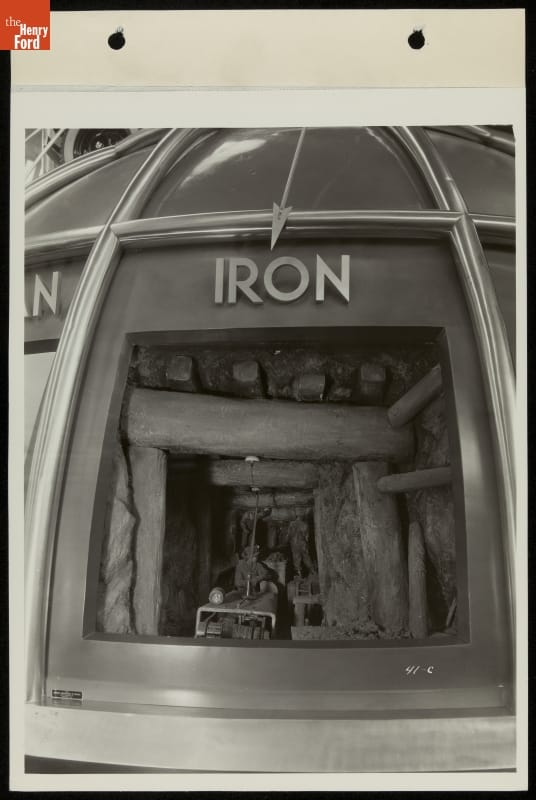
- Iron Mining Diorama, Ford Exhibition Building, Century of Progress International Exposition, Chicago, Illinois, 1934 - Chicago's 1933-34 Century of Progress Exposition used the theme of progress to encourage optimism during the Depression. The Ford Exhibition Building, which sat on eleven acres at the fair and featured industrial demonstrations and informative displays like this, became the most talked-about exhibit of 1934.
- 1934
- Collections - Artifact
Iron Mining Diorama, Ford Exhibition Building, Century of Progress International Exposition, Chicago, Illinois, 1934
Chicago's 1933-34 Century of Progress Exposition used the theme of progress to encourage optimism during the Depression. The Ford Exhibition Building, which sat on eleven acres at the fair and featured industrial demonstrations and informative displays like this, became the most talked-about exhibit of 1934.
- Ford Motor Company's Imperial Iron Ore Mine, Michigamme, Michigan, 1924 - Henry Ford organized the Michigan Iron, Land and Lumber Company in 1920 to administer Ford-owned natural resources in Michigan's Upper Peninsula. The Imperial Mine near Michigamme, Michigan, produced iron ore for Ford factories. The complex included a powerhouse, a shafthouse, a blacksmith shop, a general store, and housing for miners. Ford ended operations at the mine after World War II.
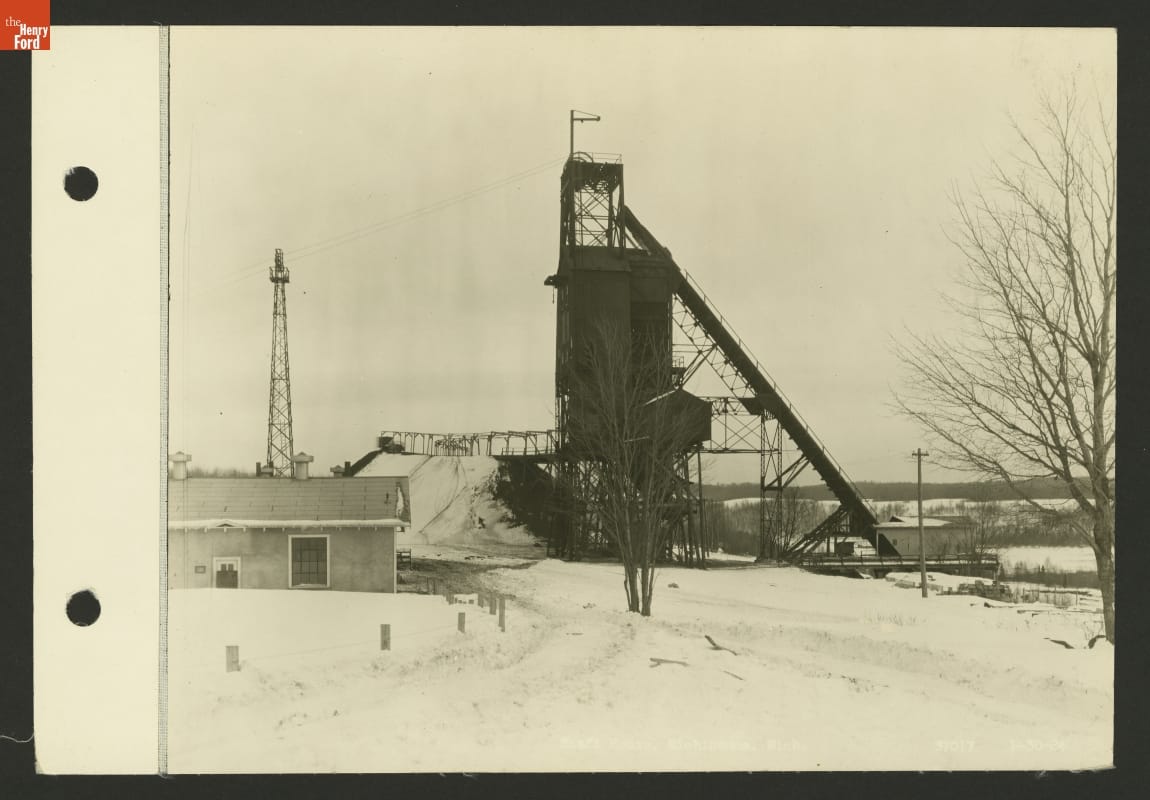
- January 30, 1924
- Collections - Artifact
Ford Motor Company's Imperial Iron Ore Mine, Michigamme, Michigan, 1924
Henry Ford organized the Michigan Iron, Land and Lumber Company in 1920 to administer Ford-owned natural resources in Michigan's Upper Peninsula. The Imperial Mine near Michigamme, Michigan, produced iron ore for Ford factories. The complex included a powerhouse, a shafthouse, a blacksmith shop, a general store, and housing for miners. Ford ended operations at the mine after World War II.
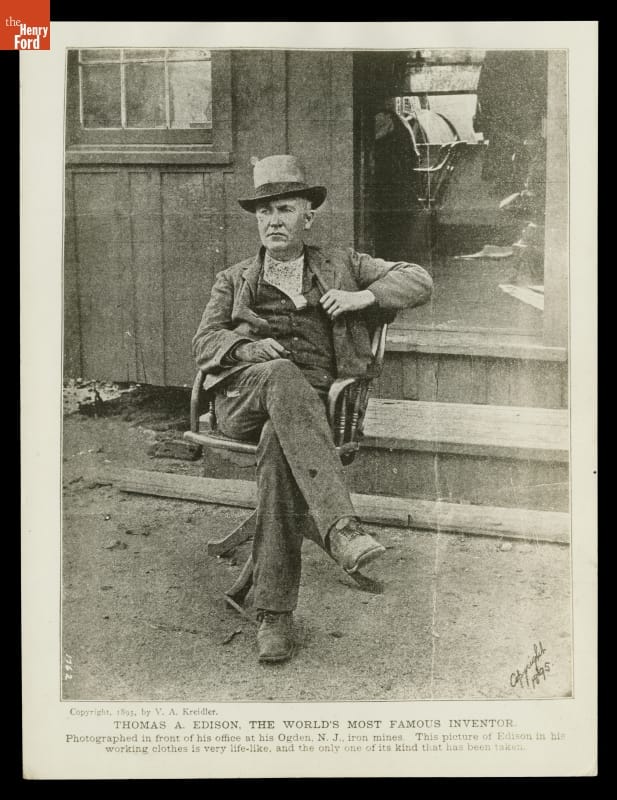
- Thomas Edison at the Edison Ore-Milling Company Office, Ogdensburg, New Jersey, 1895 - During the 1890s, Thomas Edison launched a New Jersey mining operation to address an iron ore shortage. He designed rock-crushing technology and an electromagnetic ore separator to extract low-grade ore from crushed boulders. The final product -- a briquette made of powdered iron ore -- didn't do well commercially, especially after high-grade ore was discovered around Lake Superior. In 1899, Edison left the industry.
- February 14, 1930
- Collections - Artifact
Thomas Edison at the Edison Ore-Milling Company Office, Ogdensburg, New Jersey, 1895
During the 1890s, Thomas Edison launched a New Jersey mining operation to address an iron ore shortage. He designed rock-crushing technology and an electromagnetic ore separator to extract low-grade ore from crushed boulders. The final product -- a briquette made of powdered iron ore -- didn't do well commercially, especially after high-grade ore was discovered around Lake Superior. In 1899, Edison left the industry.
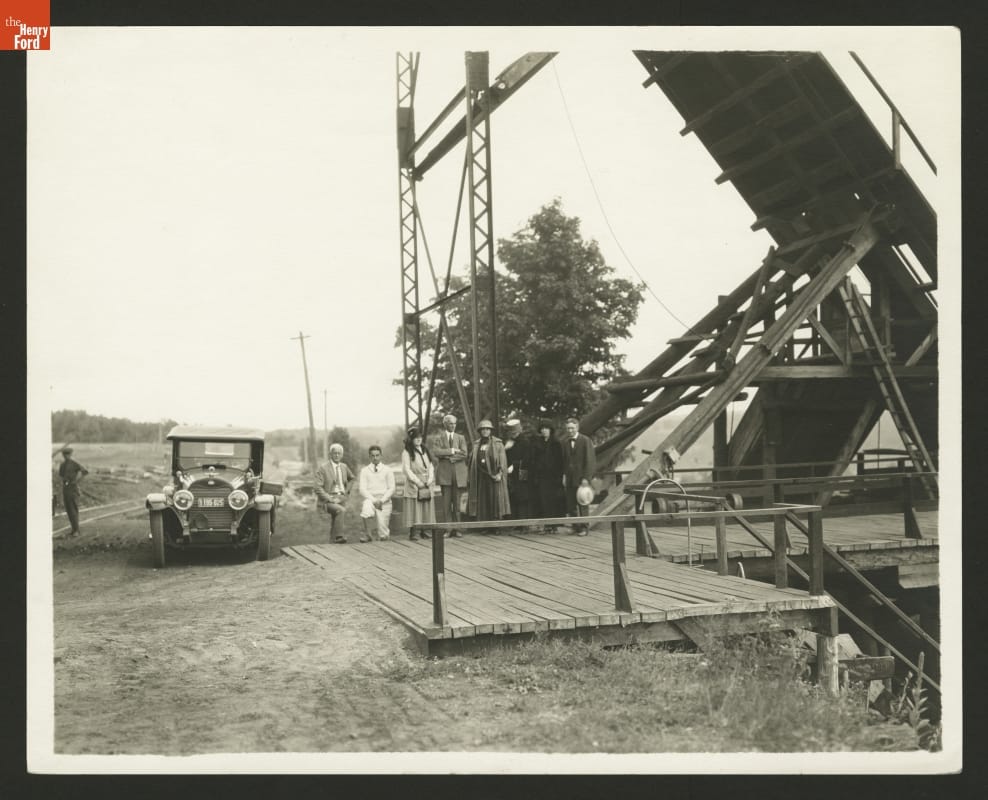
- The "Vagabonds" Visit Ford's Imperial Mine on a Camping Trip, Michigamme, Michigan, 1923 - Between 1916 and 1924, Henry Ford, Thomas Edison, Harvey Firestone and John Burroughs -- the self-styled Vagabonds -- embarked on a series of camping excursions. These Vagabonds enjoyed retreating from the fast-paced world to explore nature and the pre-industrial countryside. In 1923, however, the Vagabonds (minus Burroughs who had died in 1921) visited Michigan's Upper Peninsula and some of Ford's business holdings.
- 1923
- Collections - Artifact
The "Vagabonds" Visit Ford's Imperial Mine on a Camping Trip, Michigamme, Michigan, 1923
Between 1916 and 1924, Henry Ford, Thomas Edison, Harvey Firestone and John Burroughs -- the self-styled Vagabonds -- embarked on a series of camping excursions. These Vagabonds enjoyed retreating from the fast-paced world to explore nature and the pre-industrial countryside. In 1923, however, the Vagabonds (minus Burroughs who had died in 1921) visited Michigan's Upper Peninsula and some of Ford's business holdings.