
Search
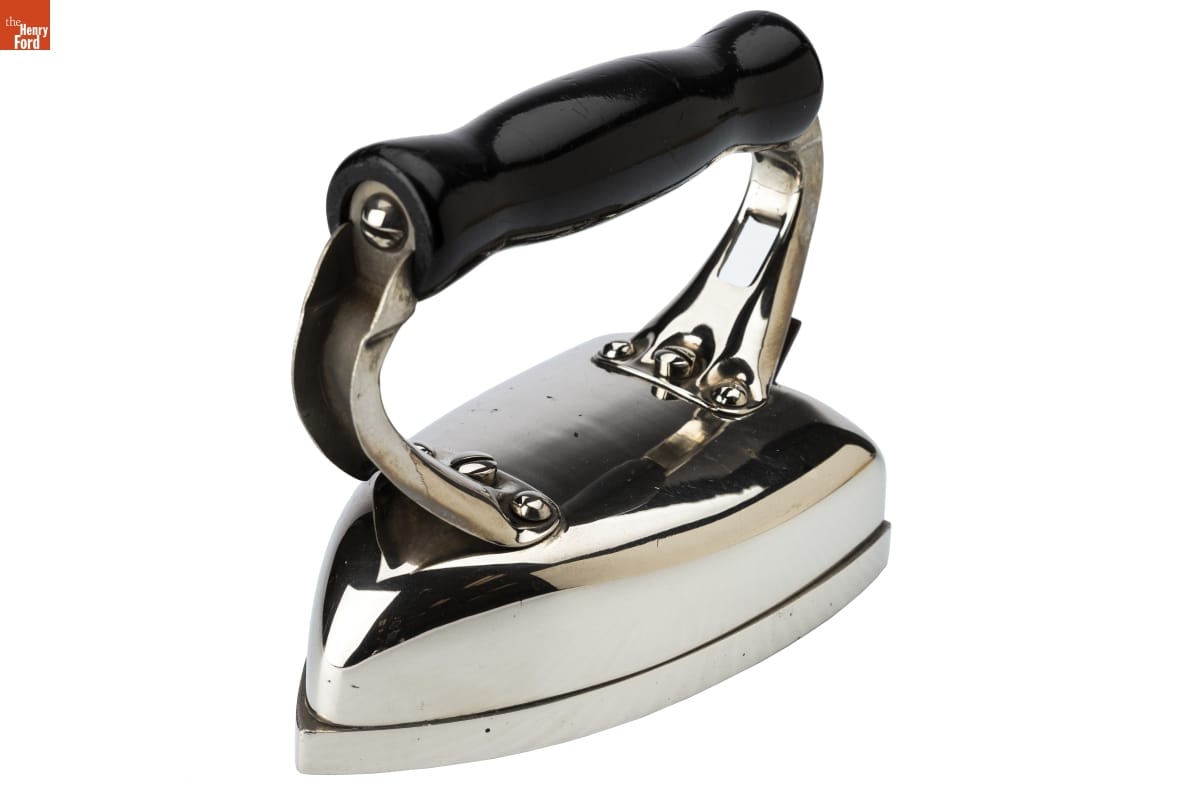
- Westinghouse Electric Iron, 1908-1918 -
- 1908-1918
- Collections - Artifact
Westinghouse Electric Iron, 1908-1918
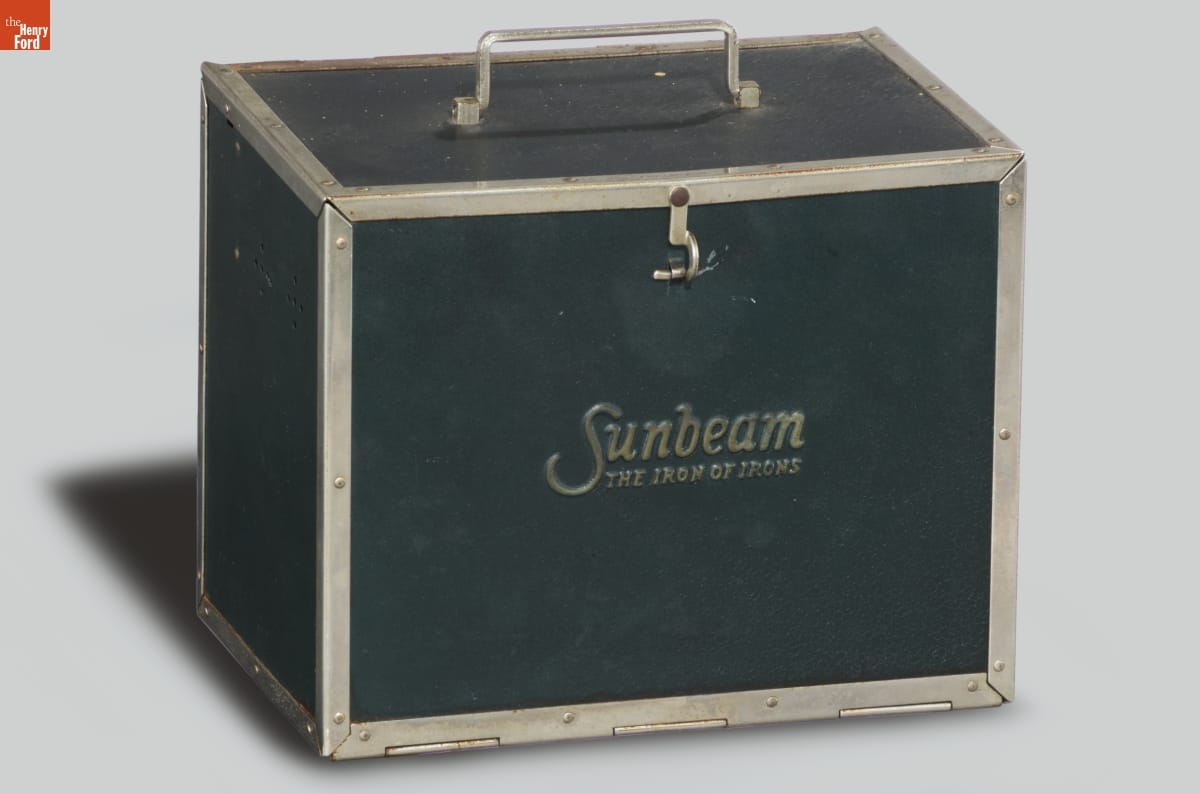
- Sunbeam Electric Iron Box, Used by the Harvey S. Firestone Family, circa 1932 -
- circa 1932
- Collections - Artifact
Sunbeam Electric Iron Box, Used by the Harvey S. Firestone Family, circa 1932
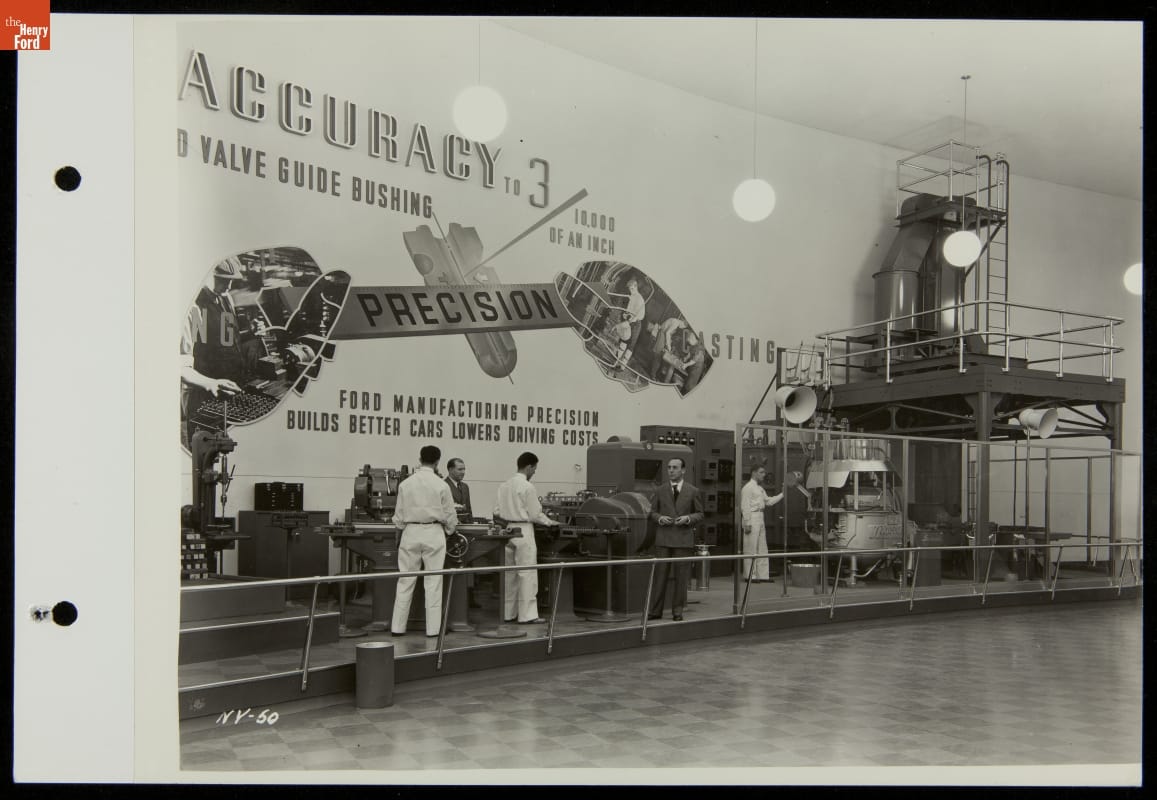
- Foundry at Ford Exposition, New York World's Fair, 1939 - Henry Ford viewed national expositions as business opportunities <EM>and</EM> platforms for public education. During the 1939-40 New York World's Fair, Ford Motor Company spent more than $5 million to build and maintain an elaborate exposition space. Informative displays and manufacturing demonstrations inside Ford's massive fair building offered visitors an in-depth, entertaining, and educational look at industrial processes.
- 1939
- Collections - Artifact
Foundry at Ford Exposition, New York World's Fair, 1939
Henry Ford viewed national expositions as business opportunities and platforms for public education. During the 1939-40 New York World's Fair, Ford Motor Company spent more than $5 million to build and maintain an elaborate exposition space. Informative displays and manufacturing demonstrations inside Ford's massive fair building offered visitors an in-depth, entertaining, and educational look at industrial processes.
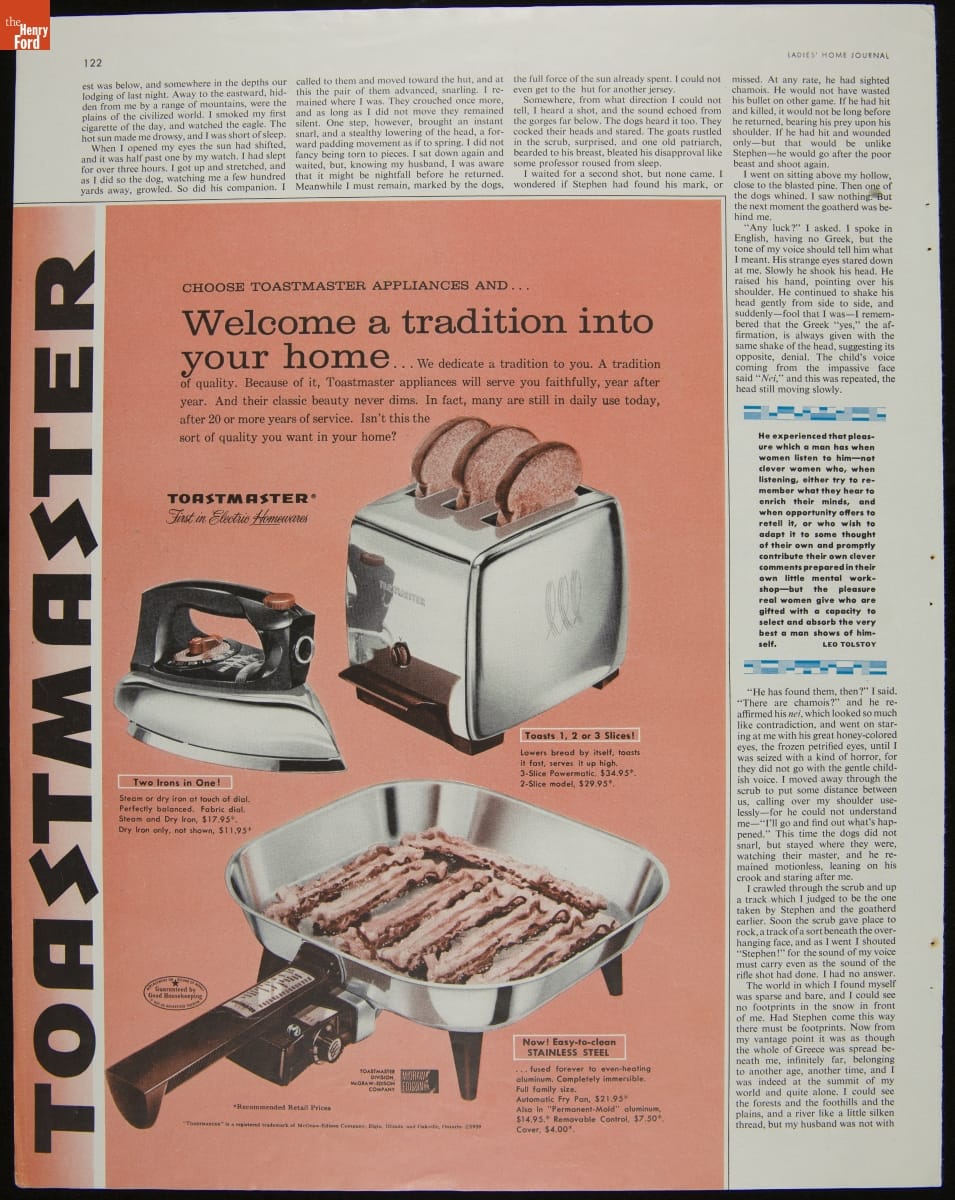
- Advertisement for Toastmaster Appliances, "Welcome a Tradition into Your Home," 1959 -
- September 01, 1959
- Collections - Artifact
Advertisement for Toastmaster Appliances, "Welcome a Tradition into Your Home," 1959
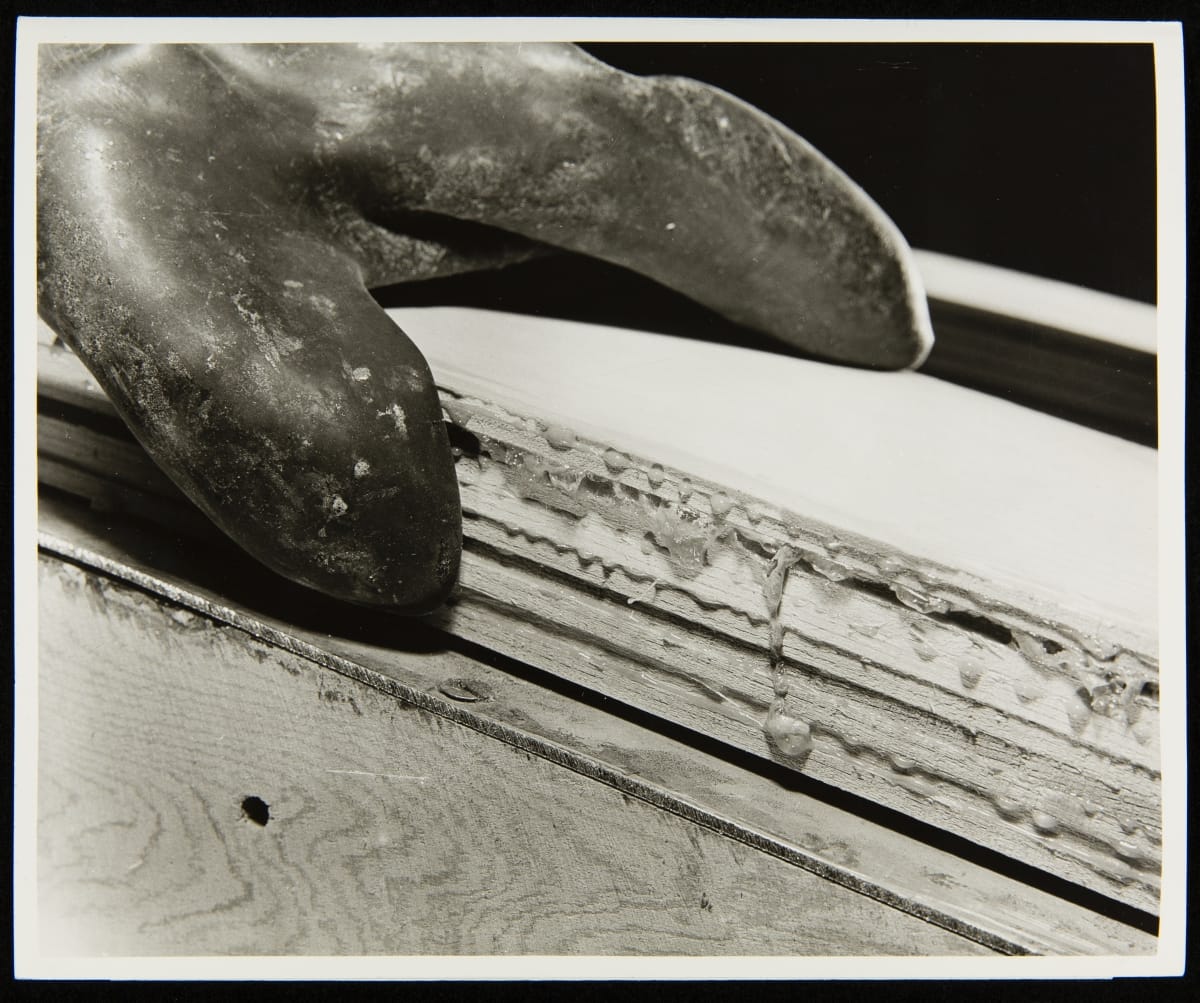
- Close-up of Adhesive on Wood Veneer Door Frame Pillar for Ford Station Wagons, Iron Mountain Plant, March 1949 - Ford Motor Company built wood station wagon bodies at its Iron Mountain plant in Michigan's Upper Peninsula. For 1949, Ford eliminated wood framing from its wagons in favor of steel. Wood was still used on the wagons, but in the form of specially laminated paneling bolted onto the steel frames. Iron Mountain closed when Ford switched to all-steel wagons in 1952.
- circa 1949
- Collections - Artifact
Close-up of Adhesive on Wood Veneer Door Frame Pillar for Ford Station Wagons, Iron Mountain Plant, March 1949
Ford Motor Company built wood station wagon bodies at its Iron Mountain plant in Michigan's Upper Peninsula. For 1949, Ford eliminated wood framing from its wagons in favor of steel. Wood was still used on the wagons, but in the form of specially laminated paneling bolted onto the steel frames. Iron Mountain closed when Ford switched to all-steel wagons in 1952.
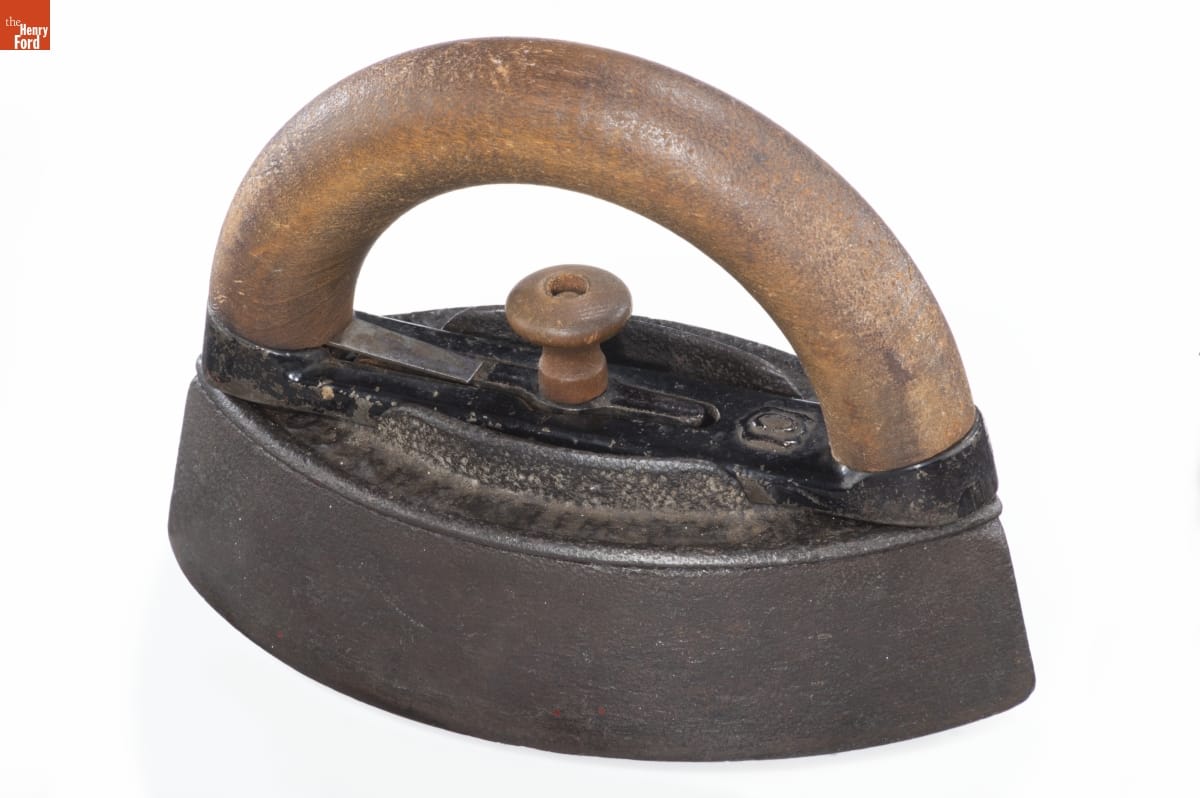
- Flatiron, 1893-1910 - In the 1870s, Mary Florence Potts made ironing easier. Conventional single-piece, cast iron flatirons were heated on stoves -- and the handle got hot! Mrs. Potts invented and patented a detachable wood handle that stayed cool and could be switched between her irons. The irons also featured two pointed ends that allowed users to work in either direction. Mrs. Potts' irons remained popular into the 20th century.
- 1893-1910
- Collections - Artifact
Flatiron, 1893-1910
In the 1870s, Mary Florence Potts made ironing easier. Conventional single-piece, cast iron flatirons were heated on stoves -- and the handle got hot! Mrs. Potts invented and patented a detachable wood handle that stayed cool and could be switched between her irons. The irons also featured two pointed ends that allowed users to work in either direction. Mrs. Potts' irons remained popular into the 20th century.
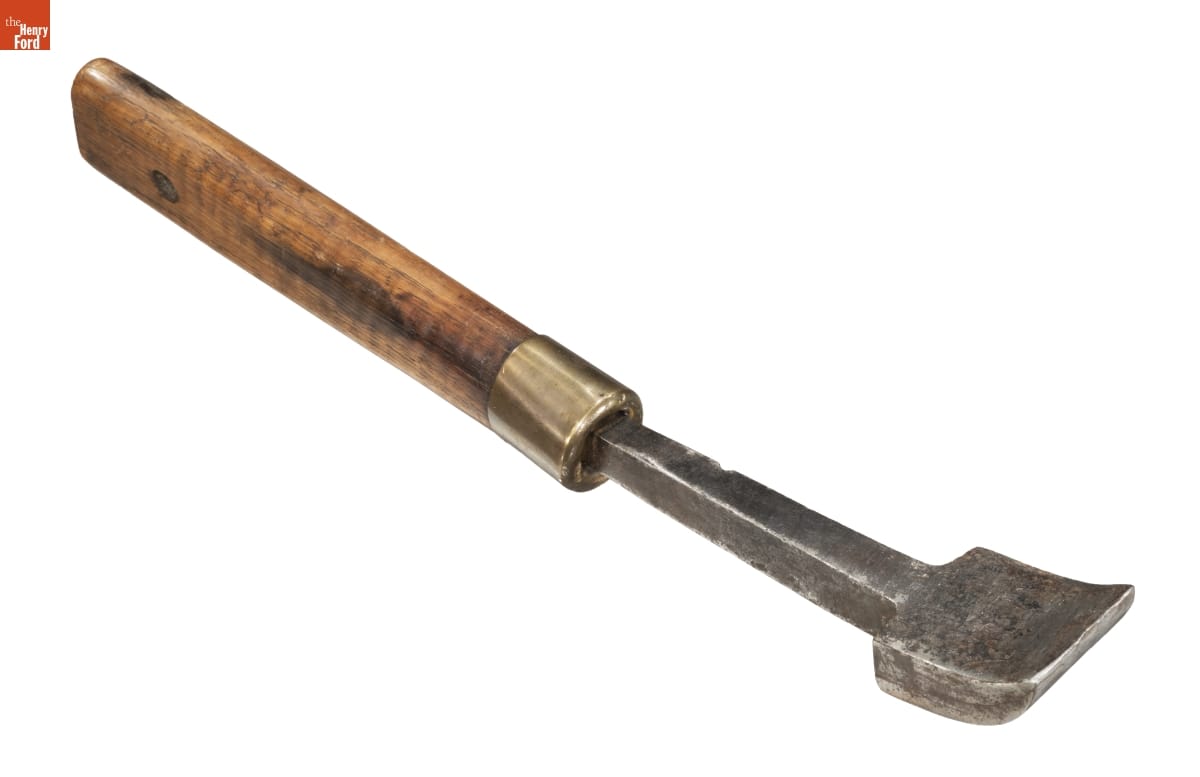
- Polishing Iron -
- Collections - Artifact
Polishing Iron
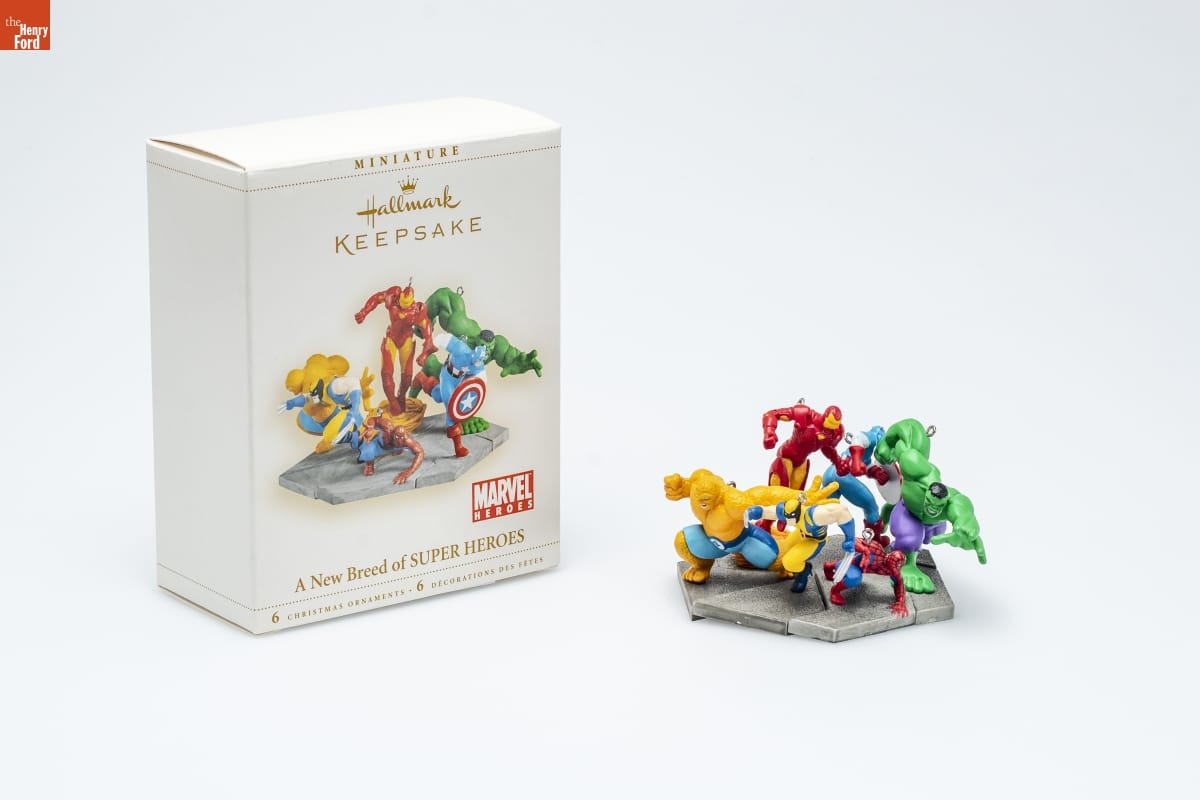
- Hallmark "Marvel: A New Breed of Super Heroes" Miniature Christmas Ornaments, 2006 - Already known for greeting cards, Hallmark introduced a line of Christmas ornaments in 1973. The company's annual release of an increasing array of ornaments revolutionized Christmas decorating, appealing to customers' interest in marking memories and milestones as well as expressing one's personality and unique tastes.
- 2006
- Collections - Artifact
Hallmark "Marvel: A New Breed of Super Heroes" Miniature Christmas Ornaments, 2006
Already known for greeting cards, Hallmark introduced a line of Christmas ornaments in 1973. The company's annual release of an increasing array of ornaments revolutionized Christmas decorating, appealing to customers' interest in marking memories and milestones as well as expressing one's personality and unique tastes.
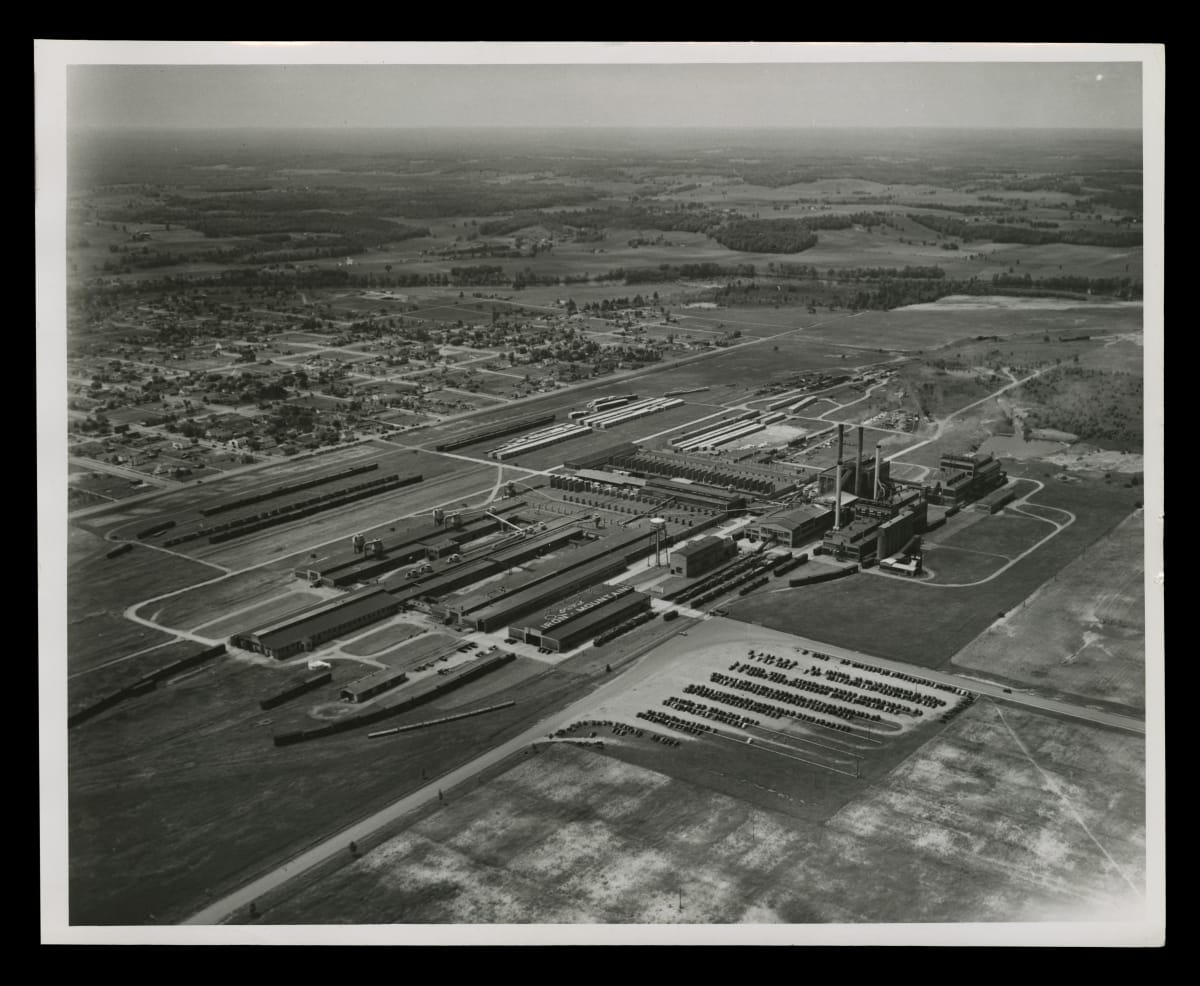
- Aerial View of Ford Motor Company Iron Mountain Plant, Upper Peninsula of Michigan, 1946 - Ford Motor Company's Iron Mountain plant, located in Michigan's Upper Peninsula, produced wood body frames and parts for the automaker's various models. After Ford adopted all-steel sedan bodies for the 1937 model year, Iron Mountain focused on station wagon bodies. Some 300 skilled craftspeople worked at the plant until 1952, when Ford wagons switched to all-steel bodies.
- August 06, 1946
- Collections - Artifact
Aerial View of Ford Motor Company Iron Mountain Plant, Upper Peninsula of Michigan, 1946
Ford Motor Company's Iron Mountain plant, located in Michigan's Upper Peninsula, produced wood body frames and parts for the automaker's various models. After Ford adopted all-steel sedan bodies for the 1937 model year, Iron Mountain focused on station wagon bodies. Some 300 skilled craftspeople worked at the plant until 1952, when Ford wagons switched to all-steel bodies.
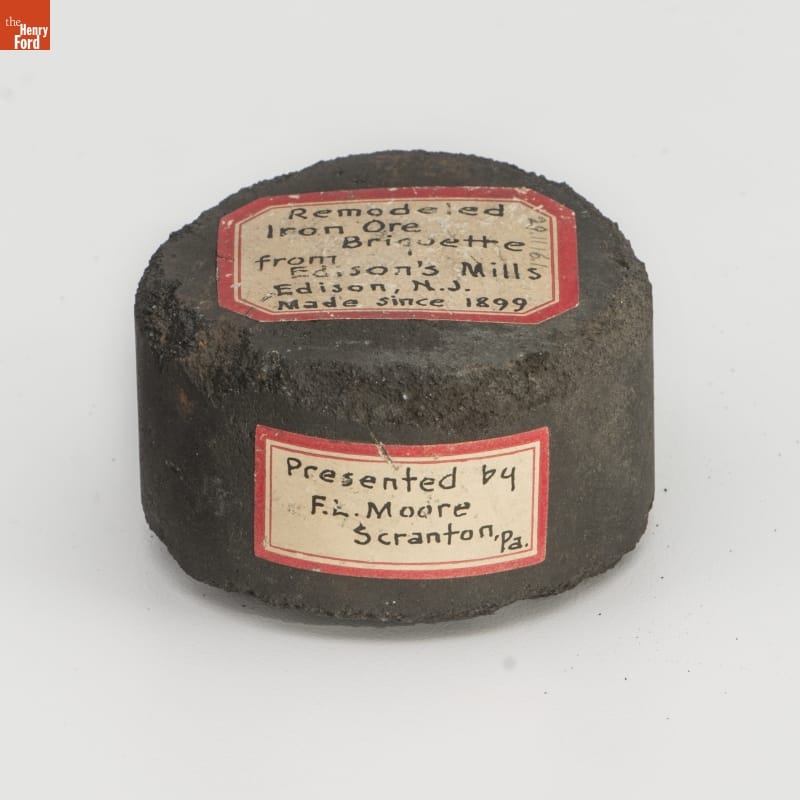
- Iron Ore Briquette from Edison Mines, New Jersey, 1899-1900 - During the 1890s, Thomas Edison launched a New Jersey mining operation to address an iron ore shortage. He designed rock-crushing technology and an electromagnetic ore separator to extract low-grade ore from crushed boulders. The final product -- a briquette made of powdered iron ore -- didn't do well commercially, especially after high-grade ore was discovered around Lake Superior. In 1899, Edison left the industry.
- 1899-1900
- Collections - Artifact
Iron Ore Briquette from Edison Mines, New Jersey, 1899-1900
During the 1890s, Thomas Edison launched a New Jersey mining operation to address an iron ore shortage. He designed rock-crushing technology and an electromagnetic ore separator to extract low-grade ore from crushed boulders. The final product -- a briquette made of powdered iron ore -- didn't do well commercially, especially after high-grade ore was discovered around Lake Superior. In 1899, Edison left the industry.