
Search
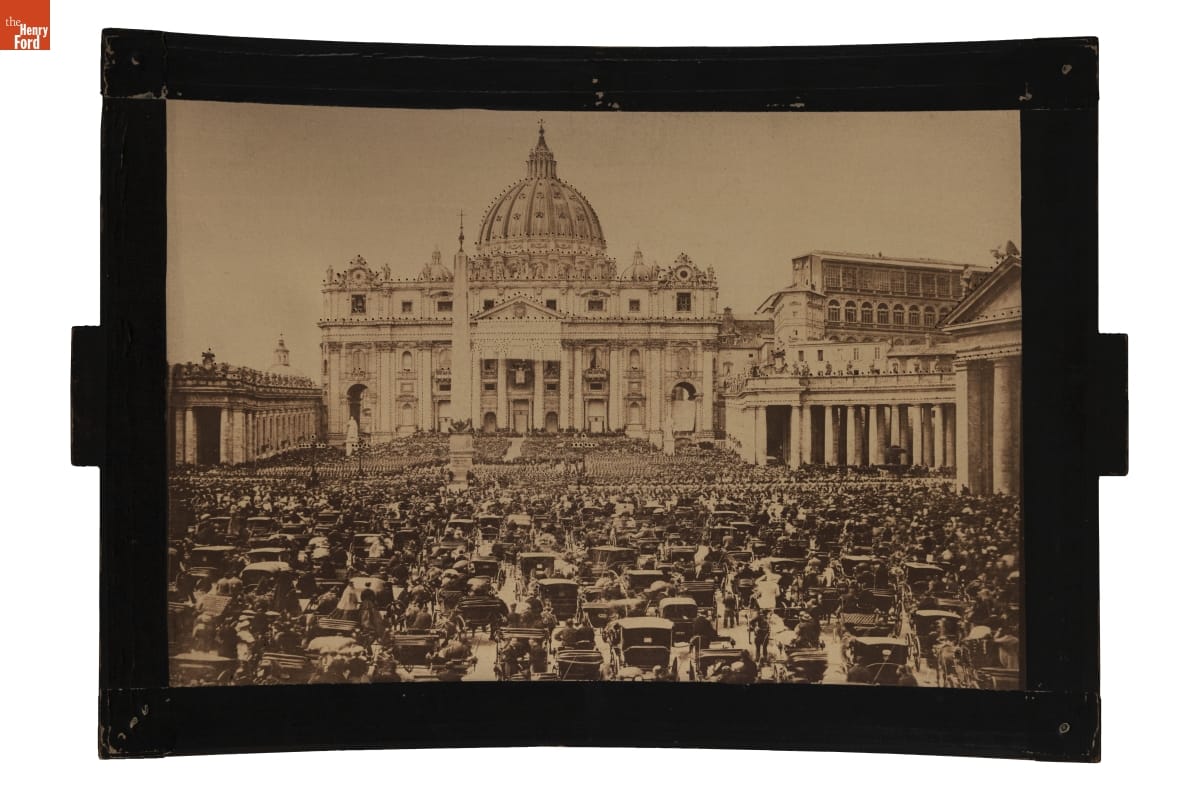
- Megalethoscope Slide, "Benediction of the Pope from St. Peter's on Easter Sunday" - Invented by Carlo Ponti in the early 1860s, a megalethoscope is a device used to view a translucent, multilayered photograph. By opening or closing various panels, a person saw the image change. When lit from behind, pinpricks and paint or colored tissue applied to the back or a secondary layer of the photograph transform the scene to reveal hidden images and create an illusion of nighttime.
- Collections - Artifact
Megalethoscope Slide, "Benediction of the Pope from St. Peter's on Easter Sunday"
Invented by Carlo Ponti in the early 1860s, a megalethoscope is a device used to view a translucent, multilayered photograph. By opening or closing various panels, a person saw the image change. When lit from behind, pinpricks and paint or colored tissue applied to the back or a secondary layer of the photograph transform the scene to reveal hidden images and create an illusion of nighttime.
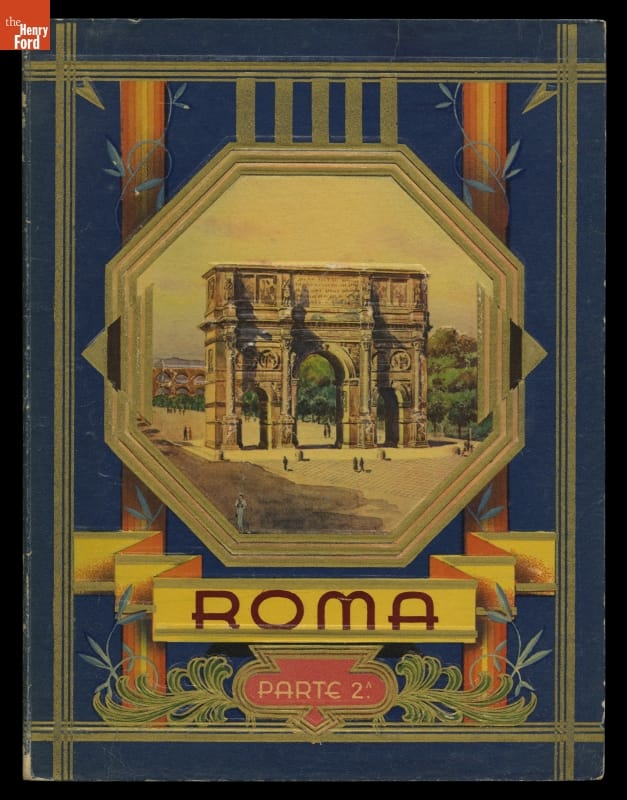
- "Roma, Parte 2," 1928 -
- 1928
- Collections - Artifact
"Roma, Parte 2," 1928
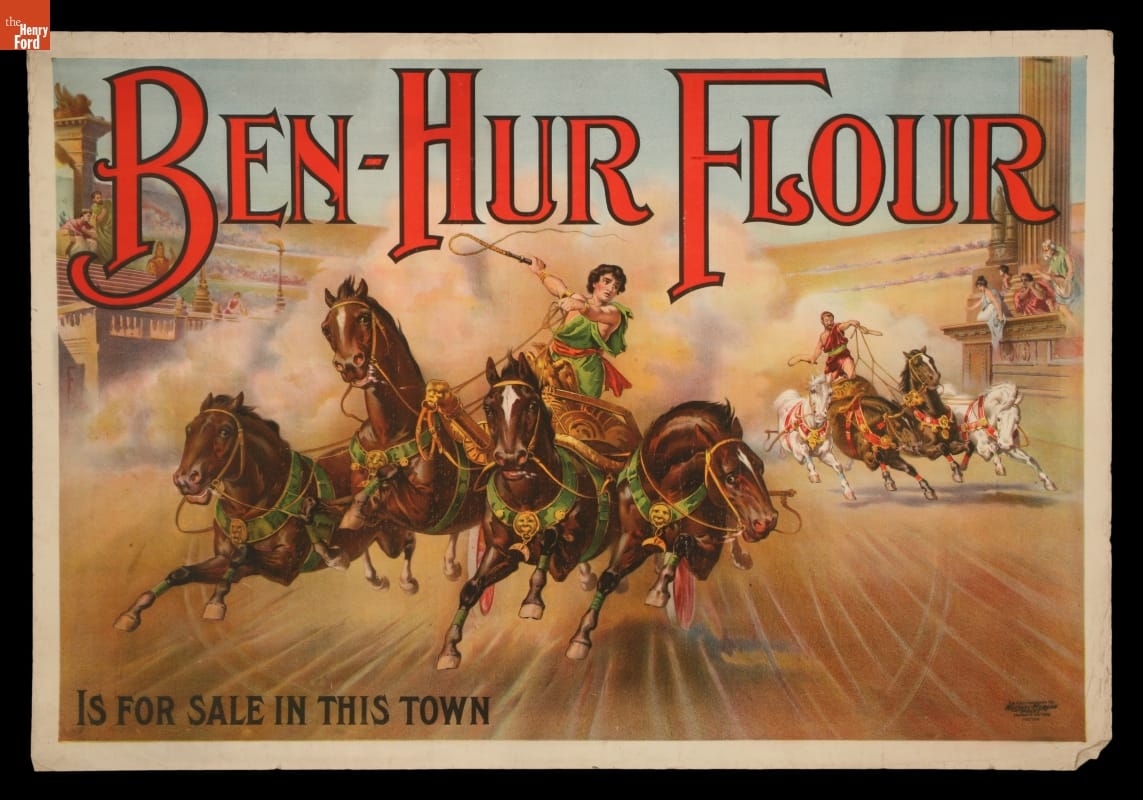
- Advertising Poster, "Ben-Hur Flour is For Sale in This Town," circa 1910 - In the late nineteenth century, printers developed a lithograph method that produced brightly colored posters. Manufacturers quickly adopted the new poster style to advertise their products. The Royal Milling Company of Minneapolis, Minnesota, and Great Falls, Montana, had this advertising poster made in the early 1900s. They chose the Ben-Hur brand name because the story was a popular theatrical drama.
- circa 1910
- Collections - Artifact
Advertising Poster, "Ben-Hur Flour is For Sale in This Town," circa 1910
In the late nineteenth century, printers developed a lithograph method that produced brightly colored posters. Manufacturers quickly adopted the new poster style to advertise their products. The Royal Milling Company of Minneapolis, Minnesota, and Great Falls, Montana, had this advertising poster made in the early 1900s. They chose the Ben-Hur brand name because the story was a popular theatrical drama.
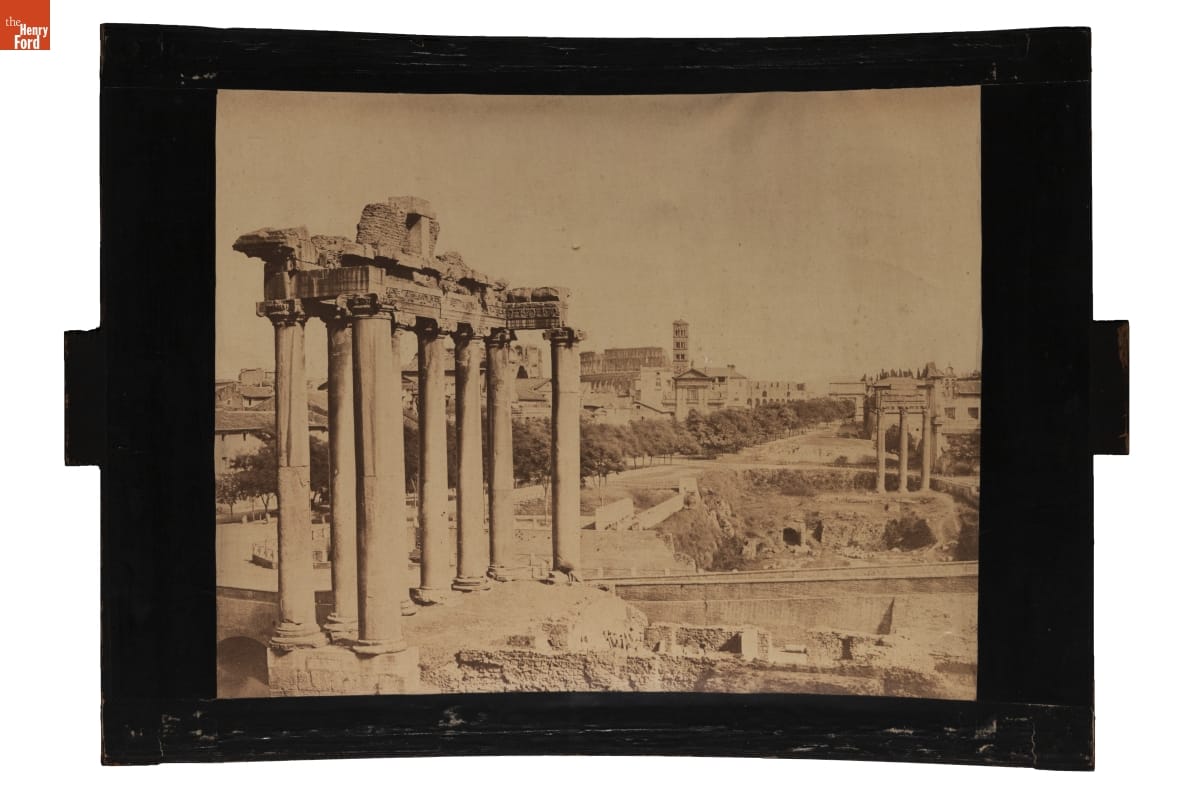
- Megalethoscope Slide, "Rome, Square of the Forum" - Invented by Carlo Ponti in the early 1860s, a megalethoscope is a device used to view a translucent, multilayered photograph. By opening or closing various panels, a person saw the image change. When lit from behind, pinpricks and paint or colored tissue applied to the back or a secondary layer of the photograph transform the scene to reveal hidden images and create an illusion of nighttime.
- 1860-1865
- Collections - Artifact
Megalethoscope Slide, "Rome, Square of the Forum"
Invented by Carlo Ponti in the early 1860s, a megalethoscope is a device used to view a translucent, multilayered photograph. By opening or closing various panels, a person saw the image change. When lit from behind, pinpricks and paint or colored tissue applied to the back or a secondary layer of the photograph transform the scene to reveal hidden images and create an illusion of nighttime.
- Letter from Henry Wadsworth Longfellow, February 27, 1876 -
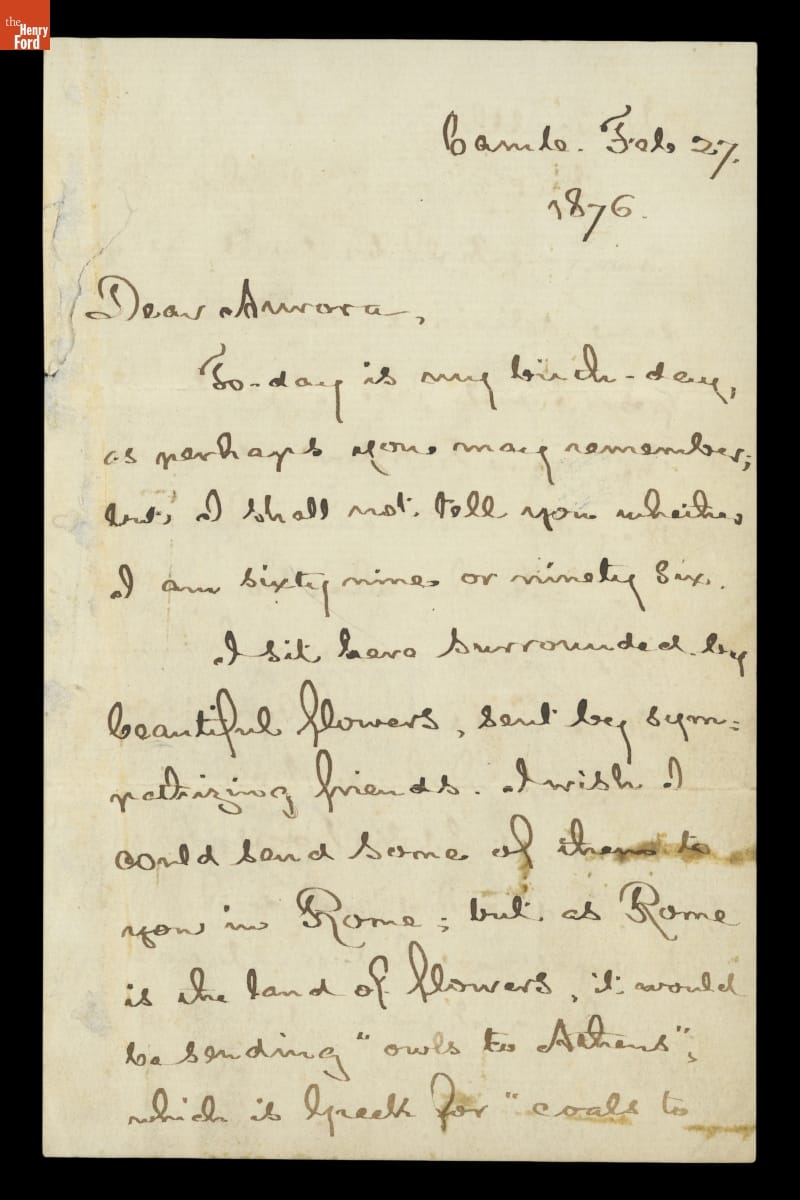
- February 27, 1876
- Collections - Artifact
Letter from Henry Wadsworth Longfellow, February 27, 1876
- Trade Card for C.I. Hood & Co. with Hood's Photos of the World, "St. Peter's, Rome," 1890-1910 - In the late 19th century, trade cards were a major means of advertising goods and services. Patent medicine producer, C.I. Hood & Co., had its own advertising department, creating cookbooks, calendars, and, most abundantly, trade cards. The trade card series, "Hood's Photos of the World," became popular among consumers, as it offered views of far-away places, providing a window to the broader world.
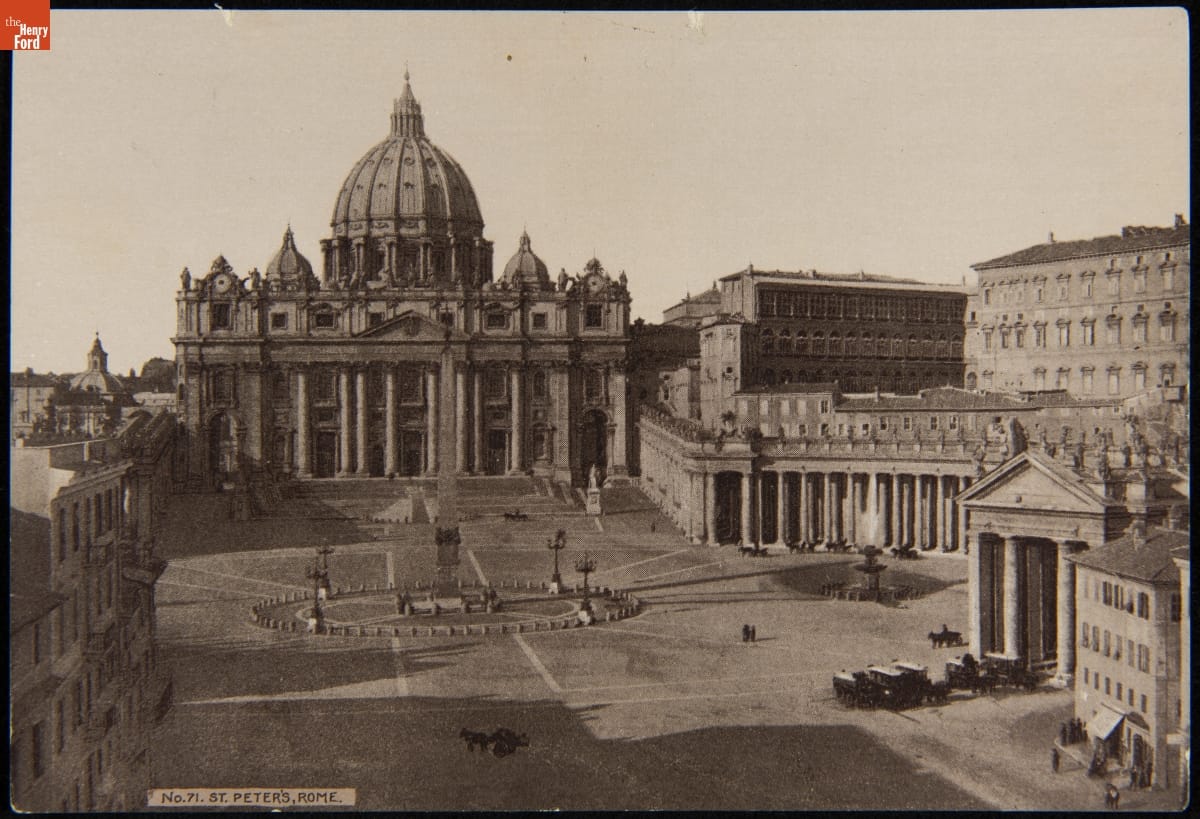
- 1890-1910
- Collections - Artifact
Trade Card for C.I. Hood & Co. with Hood's Photos of the World, "St. Peter's, Rome," 1890-1910
In the late 19th century, trade cards were a major means of advertising goods and services. Patent medicine producer, C.I. Hood & Co., had its own advertising department, creating cookbooks, calendars, and, most abundantly, trade cards. The trade card series, "Hood's Photos of the World," became popular among consumers, as it offered views of far-away places, providing a window to the broader world.
- Trade Card for C.I. Hood & Co. with Hood's Photos of the World, "Colosseum, Rome," 1890-1910 - In the late 19th century, trade cards were a major means of advertising goods and services. Patent medicine producer, C.I. Hood & Co., had its own advertising department, creating cookbooks, calendars, and, most abundantly, trade cards. The trade card series, "Hood's Photos of the World," became popular among consumers, as it offered views of far-away places, providing a window to the broader world.
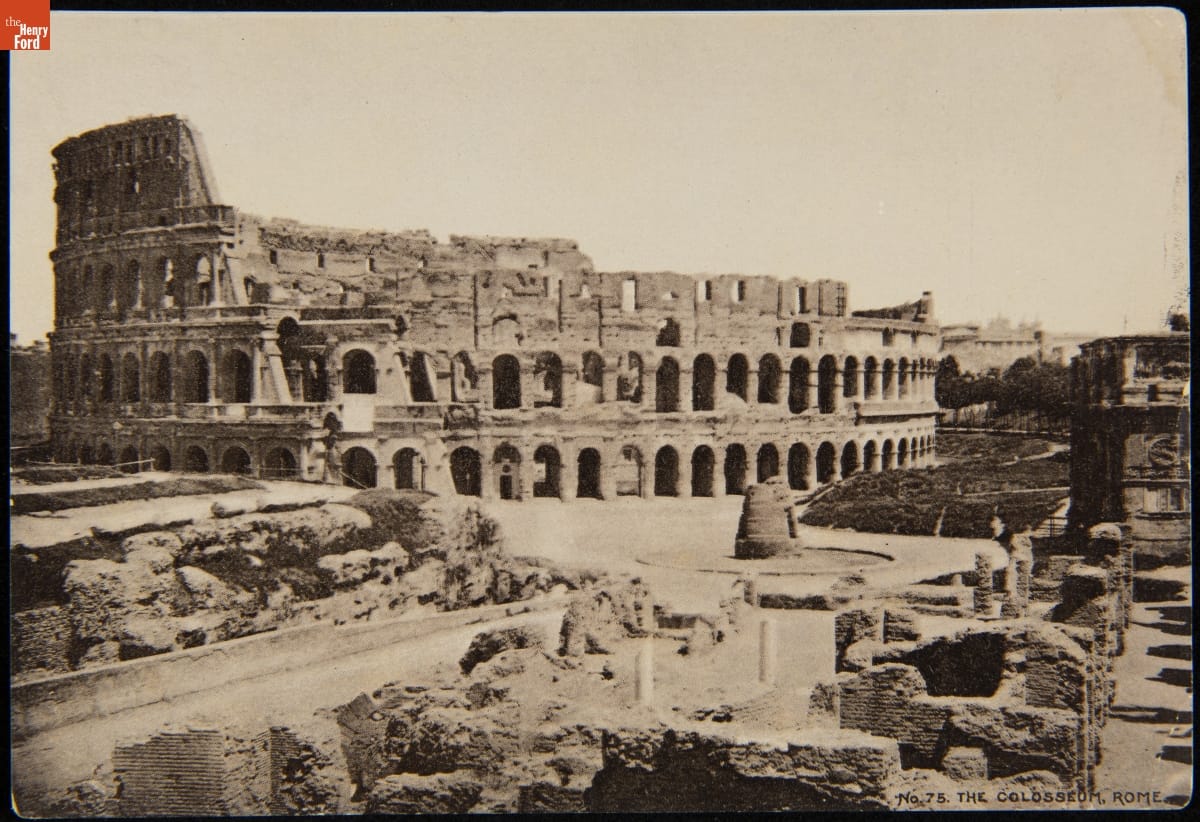
- 1890-1910
- Collections - Artifact
Trade Card for C.I. Hood & Co. with Hood's Photos of the World, "Colosseum, Rome," 1890-1910
In the late 19th century, trade cards were a major means of advertising goods and services. Patent medicine producer, C.I. Hood & Co., had its own advertising department, creating cookbooks, calendars, and, most abundantly, trade cards. The trade card series, "Hood's Photos of the World," became popular among consumers, as it offered views of far-away places, providing a window to the broader world.
- Letter from John Trumbull to James Irvine, June 27, 1820 - John Trumbull wrote this cordial letter to James Irvine, a painter and art dealer from Rome, Italy. Trumbull regretted that the two did not meet before Irvine headed back to Europe. He also mentions that he has completed <EM>Yorktown</EM>, his second of four works commissioned by the U.S. Congress for the Capitol.
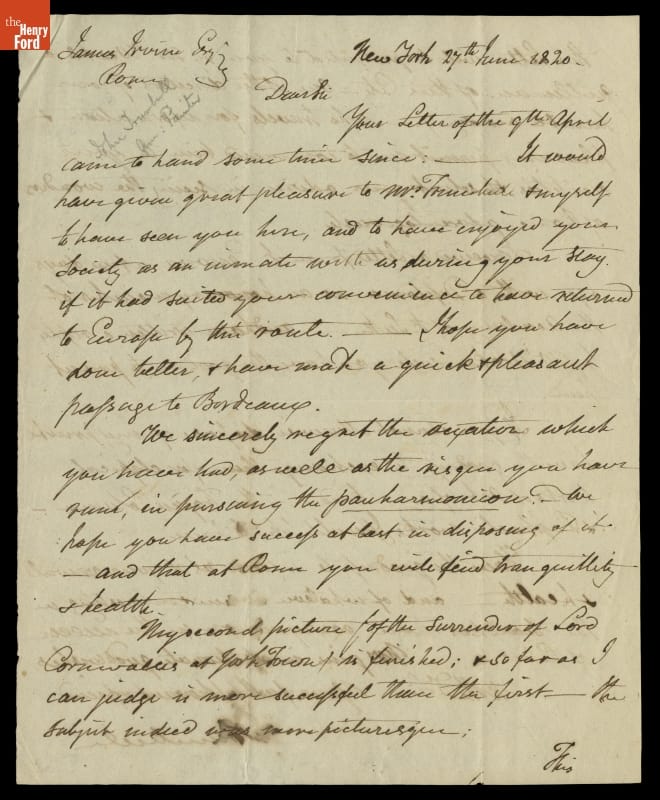
- June 27, 1820
- Collections - Artifact
Letter from John Trumbull to James Irvine, June 27, 1820
John Trumbull wrote this cordial letter to James Irvine, a painter and art dealer from Rome, Italy. Trumbull regretted that the two did not meet before Irvine headed back to Europe. He also mentions that he has completed Yorktown, his second of four works commissioned by the U.S. Congress for the Capitol.
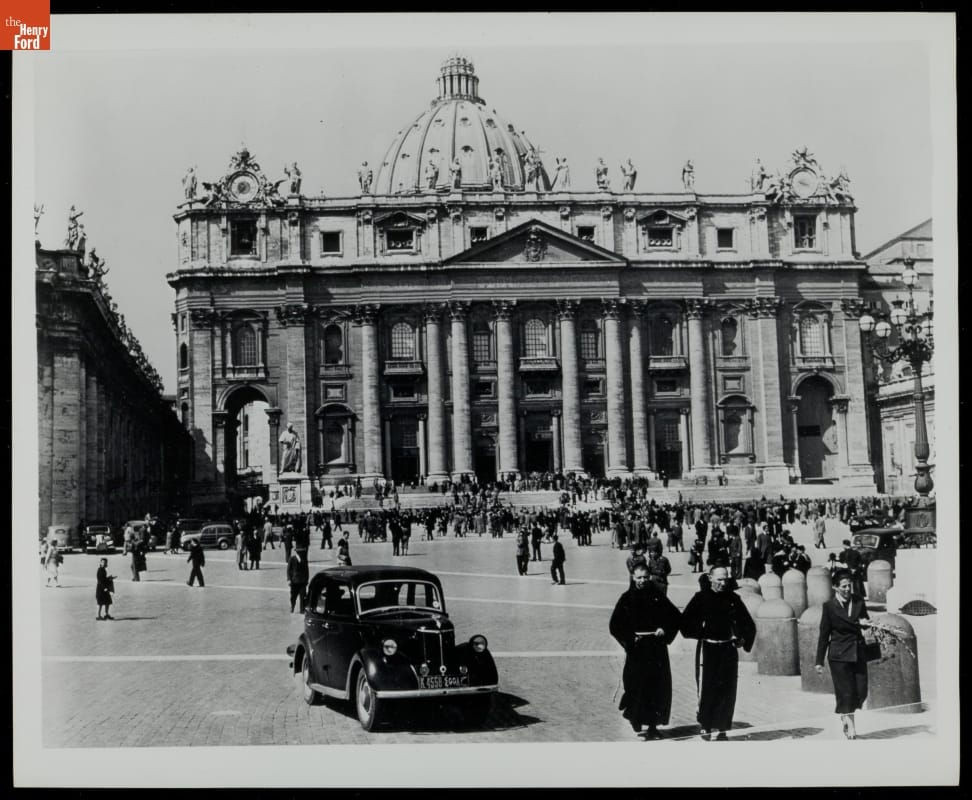
- Saint Peter's Square, Rome, Italy, 1950 - In 1913, Henry Ford established Ford Motor Company's photographic department. Though few internal records describe company photography, remaining photographs reveal a wide range of departmental activity. Over nearly 100 years, Ford photographers documented company ventures, personal affairs, and daily life around the world. This photograph shows automobiles, monks, and visitors in front of Saint Peter's Basilica in Rome.
- circa 1950
- Collections - Artifact
Saint Peter's Square, Rome, Italy, 1950
In 1913, Henry Ford established Ford Motor Company's photographic department. Though few internal records describe company photography, remaining photographs reveal a wide range of departmental activity. Over nearly 100 years, Ford photographers documented company ventures, personal affairs, and daily life around the world. This photograph shows automobiles, monks, and visitors in front of Saint Peter's Basilica in Rome.
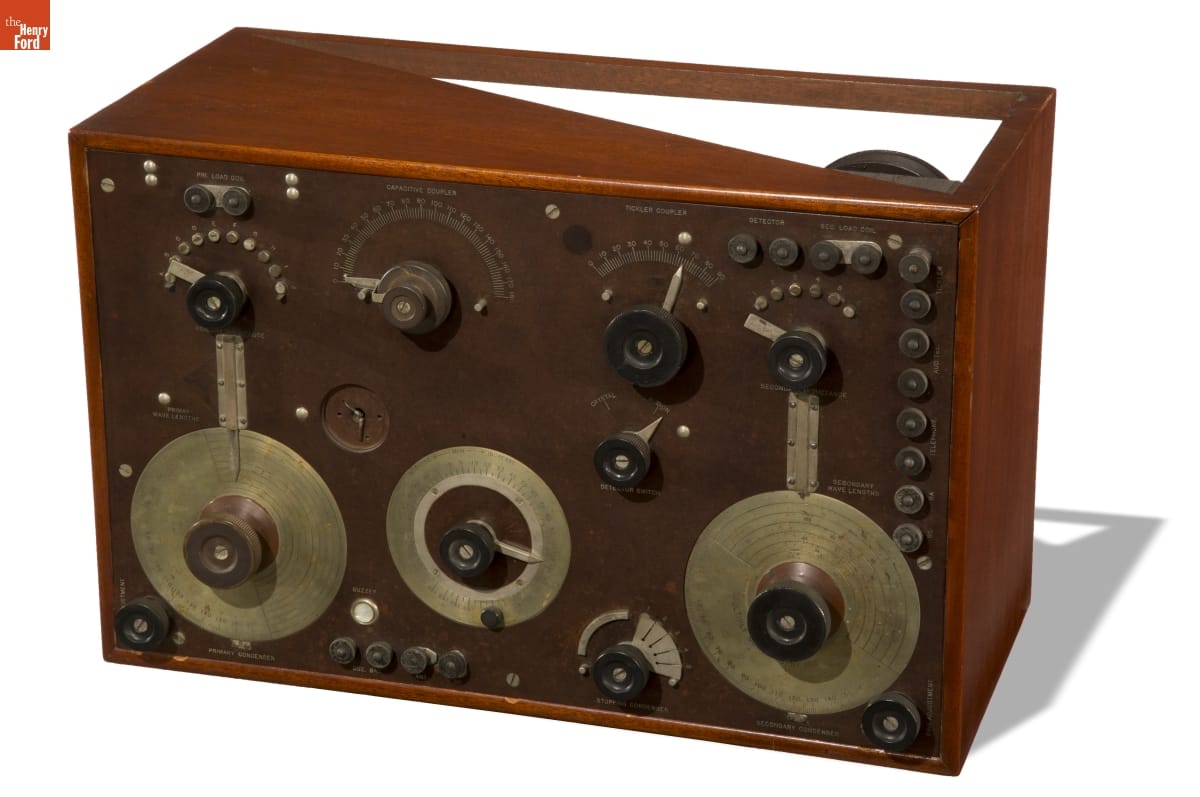
- Radio Receiver Used on the USS George Washington during President Wilson's Trip to France for Peace Negotiations, 1919 - This radio was used on USS <em>George Washington</em> when President Woodrow Wilson made his first voyage to the Paris Peace Conference in 1919. Its donor, Fred Schnell, belonged to an elite group of radio operators working for the US Navy. Using this radio, Schnell transcribed several messages instrumental to the peace talks that ended WWI, including the peace acceptance from Germany.
- 1918-1919
- Collections - Artifact
Radio Receiver Used on the USS George Washington during President Wilson's Trip to France for Peace Negotiations, 1919
This radio was used on USS George Washington when President Woodrow Wilson made his first voyage to the Paris Peace Conference in 1919. Its donor, Fred Schnell, belonged to an elite group of radio operators working for the US Navy. Using this radio, Schnell transcribed several messages instrumental to the peace talks that ended WWI, including the peace acceptance from Germany.