
Search
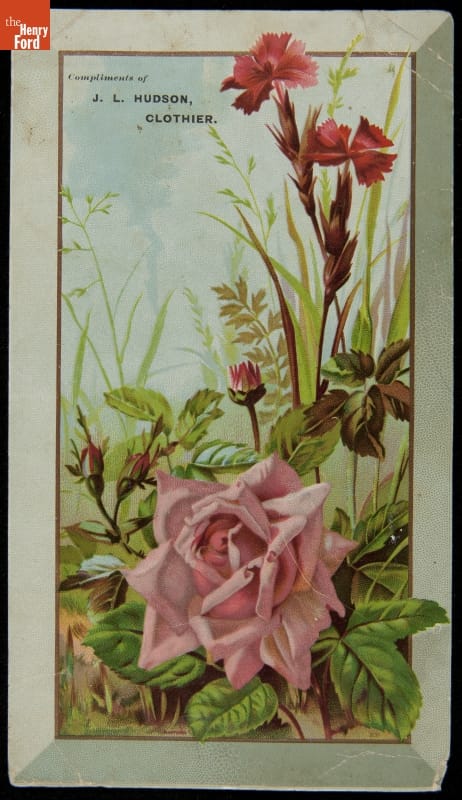
- Trade Card for J.L. Hudson Company, 1881-1890 - In the last third of the nineteenth century, an unprecedented variety of consumer goods and services flooded the American market. Advertisers, armed with new methods of color printing, bombarded potential customers with trade cards. Americans enjoyed and often saved the vibrant little advertisements found in product packages or distributed by local merchants. Many survive as historical records of commercialism in the United States.
- 1881-1890
- Collections - Artifact
Trade Card for J.L. Hudson Company, 1881-1890
In the last third of the nineteenth century, an unprecedented variety of consumer goods and services flooded the American market. Advertisers, armed with new methods of color printing, bombarded potential customers with trade cards. Americans enjoyed and often saved the vibrant little advertisements found in product packages or distributed by local merchants. Many survive as historical records of commercialism in the United States.
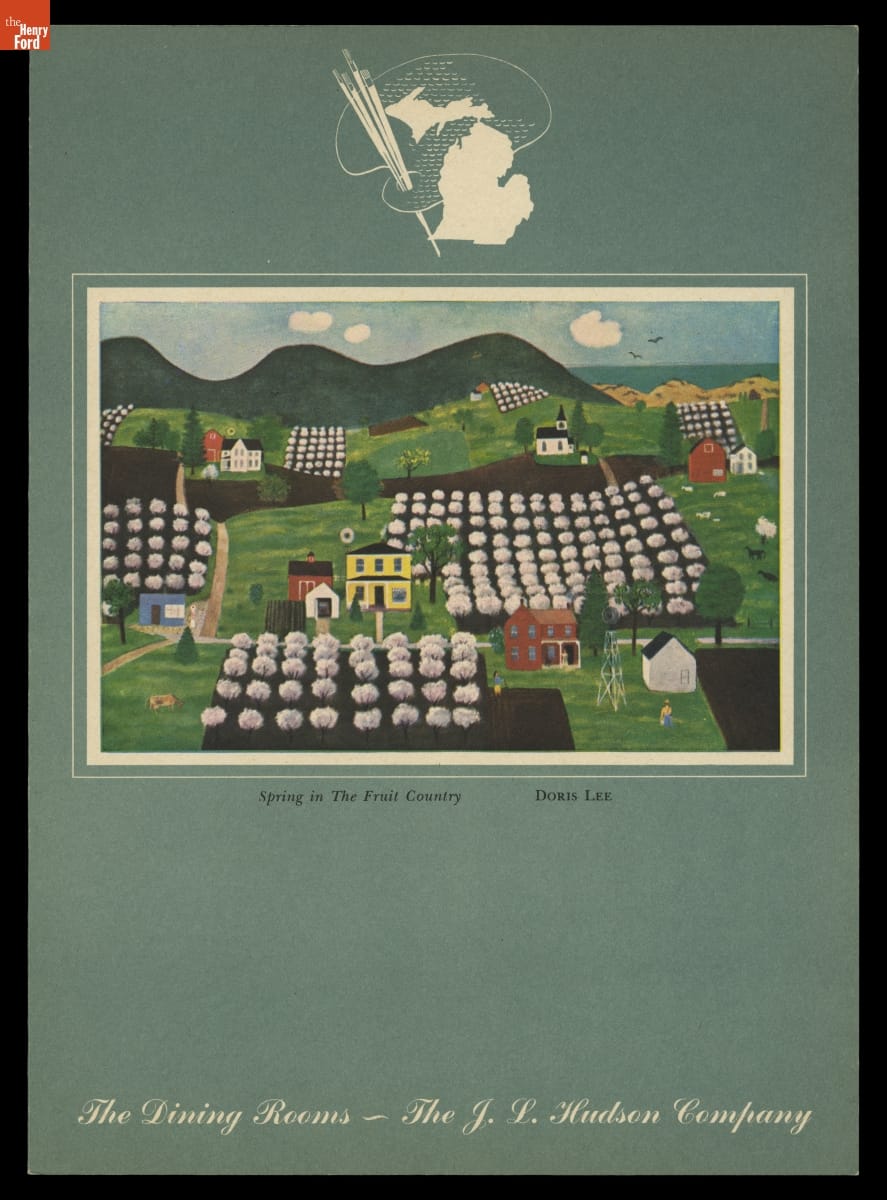
- "The Dining Rooms - The J.L. Hudson Company" Menu Showing "Spring in the Fruit Country," 1949 - In 1946, the J.L. Hudson Company, a Detroit department store, commissioned ten American artists to create works that portrayed the people and places of Michigan. A committee selected 95 paintings that toured the state in the exhibition "Michigan on Canvas." J.L. Hudson also reproduced selected works for the covers of menus used in its Detroit flagship store's dining rooms.
- March 04, 1949
- Collections - Artifact
"The Dining Rooms - The J.L. Hudson Company" Menu Showing "Spring in the Fruit Country," 1949
In 1946, the J.L. Hudson Company, a Detroit department store, commissioned ten American artists to create works that portrayed the people and places of Michigan. A committee selected 95 paintings that toured the state in the exhibition "Michigan on Canvas." J.L. Hudson also reproduced selected works for the covers of menus used in its Detroit flagship store's dining rooms.
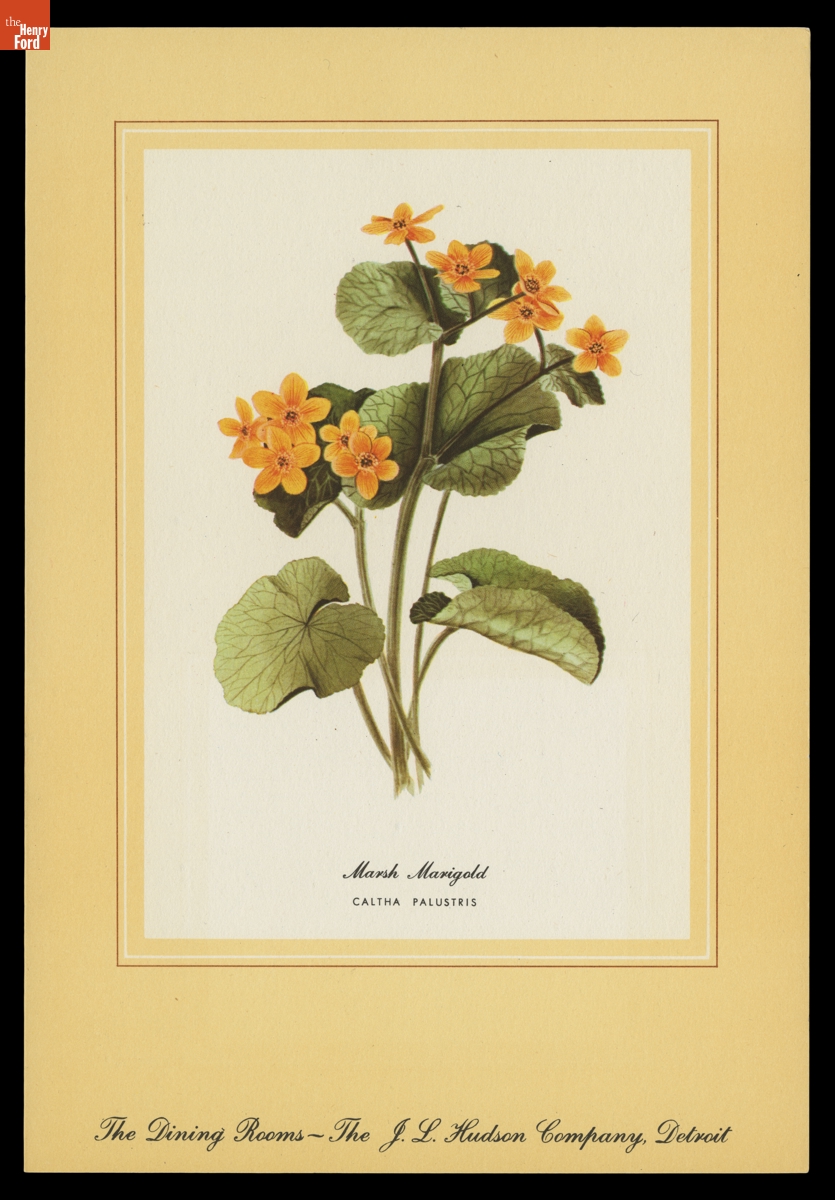
- "Michigan Wild Flowers," Menu from The Dining Rooms at the J. L. Hudson Company, Detroit, Michigan, 1952 -
- June 06, 1952
- Collections - Artifact
"Michigan Wild Flowers," Menu from The Dining Rooms at the J. L. Hudson Company, Detroit, Michigan, 1952
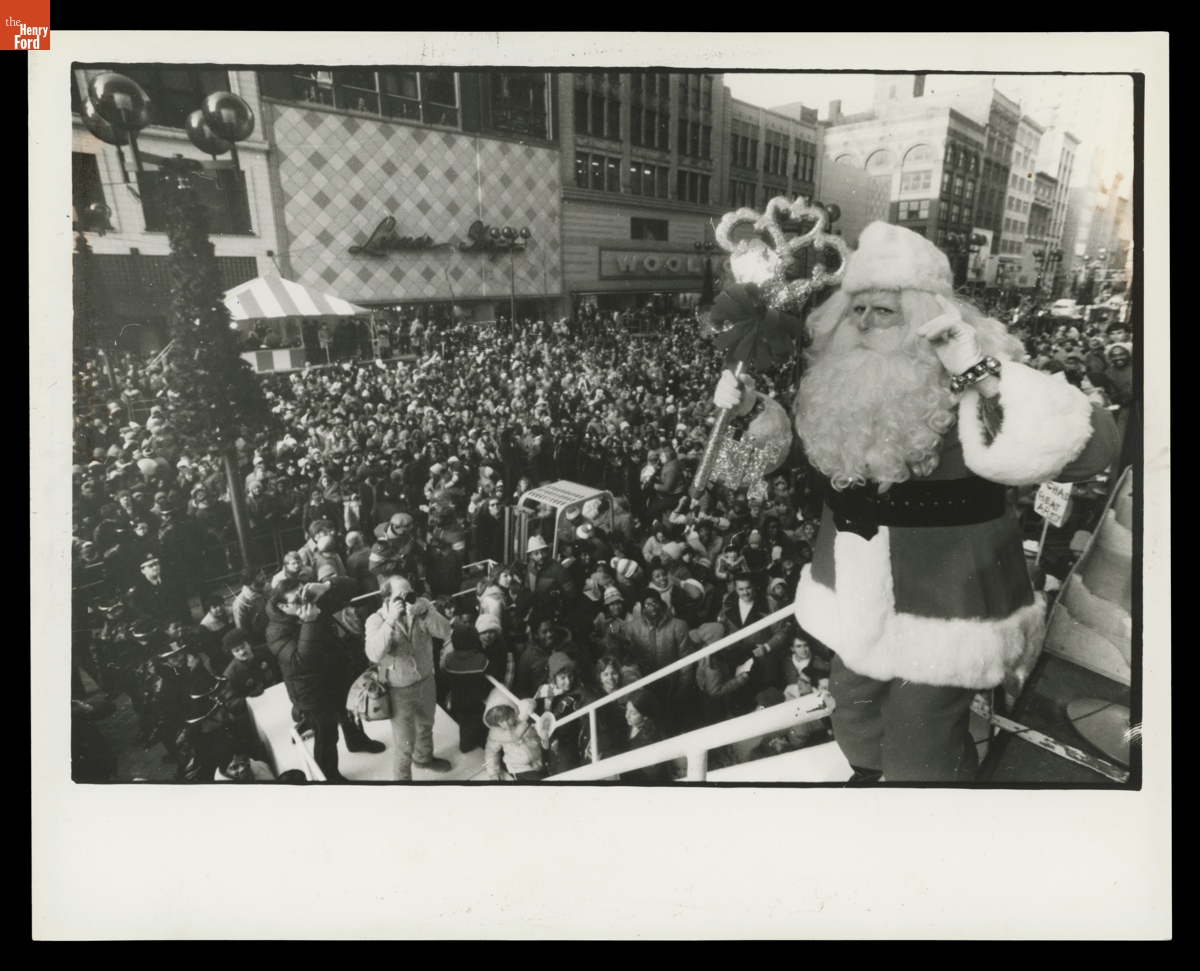
- Santa Claus Waving to the Crowd at J.L. Hudson's Thanksgiving Day Parade, Detroit, Michigan, November 25, 1982 -
- November 25, 1982
- Collections - Artifact
Santa Claus Waving to the Crowd at J.L. Hudson's Thanksgiving Day Parade, Detroit, Michigan, November 25, 1982
- "Christmas Gifts for the Home," 1938 -

- 1938
- Collections - Artifact
"Christmas Gifts for the Home," 1938
- Trade Card for J.L. Hudson Company, 1891 - In the last third of the nineteenth century, an unprecedented variety of consumer goods and services flooded the American market. Advertisers, armed with new methods of color printing, bombarded potential customers with trade cards. Americans enjoyed and often saved the vibrant little advertisements found in product packages or distributed by local merchants. Many survive as historical records of commercialism in the United States.
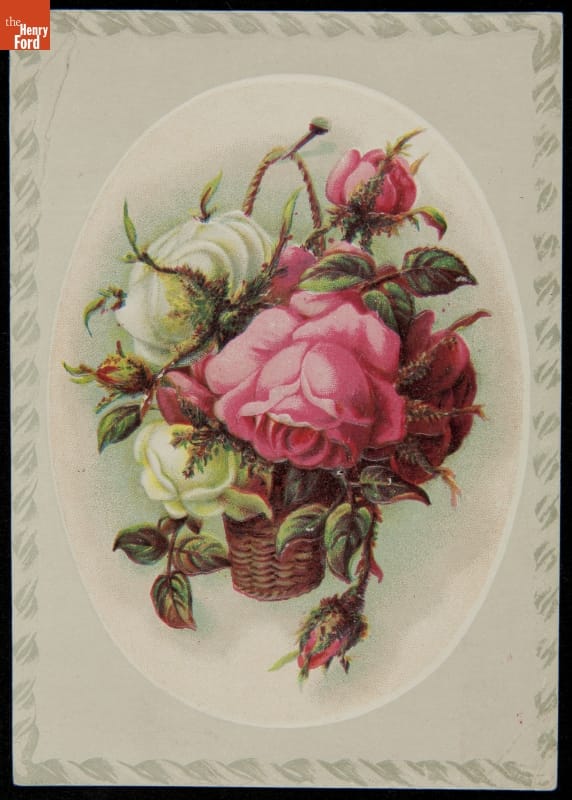
- 1891
- Collections - Artifact
Trade Card for J.L. Hudson Company, 1891
In the last third of the nineteenth century, an unprecedented variety of consumer goods and services flooded the American market. Advertisers, armed with new methods of color printing, bombarded potential customers with trade cards. Americans enjoyed and often saved the vibrant little advertisements found in product packages or distributed by local merchants. Many survive as historical records of commercialism in the United States.
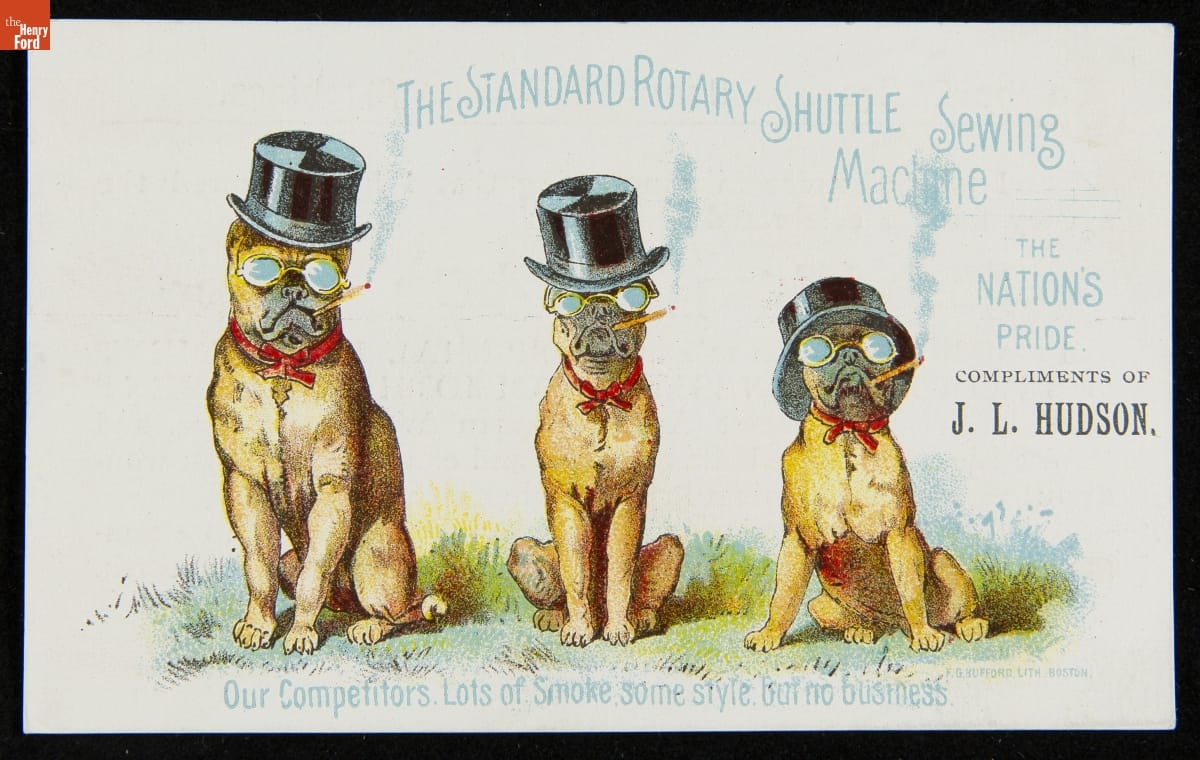
- Trade Card for the Standard Rotary Shuttle Sewing Machine, Standard Sewing Machine Co., 1891-1900 - As color printing gained momentum in the late 19th century, trade cards became a major means of advertising goods and services. Americans enjoyed and often saved the little advertisements found in product packages or distributed by local merchants. This trade card advertises the Standard Sewing Machine Company.
- 1891-1900
- Collections - Artifact
Trade Card for the Standard Rotary Shuttle Sewing Machine, Standard Sewing Machine Co., 1891-1900
As color printing gained momentum in the late 19th century, trade cards became a major means of advertising goods and services. Americans enjoyed and often saved the little advertisements found in product packages or distributed by local merchants. This trade card advertises the Standard Sewing Machine Company.
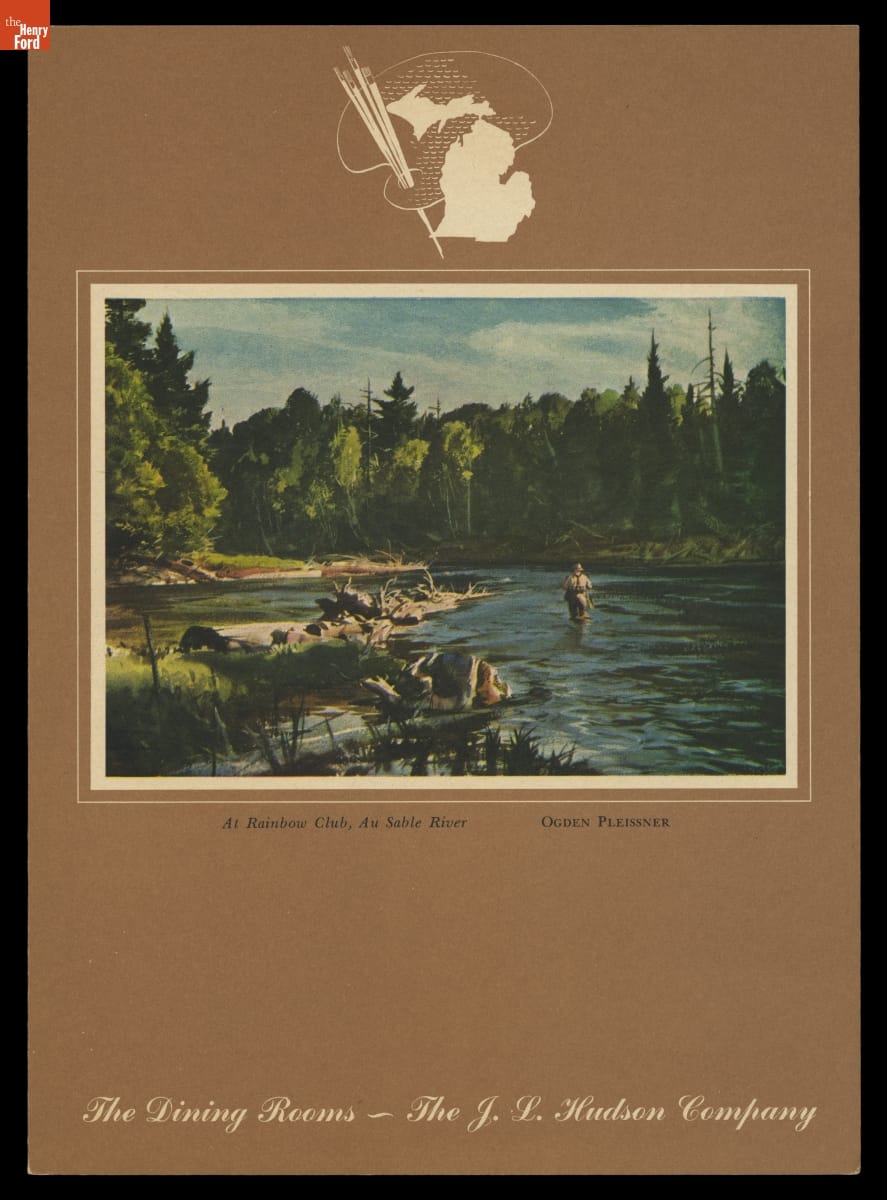
- "The Dining Rooms - The J.L. Hudson Company" Menu Showing "At Rainbow Club, Au Sable River," 1949 - In 1946, the J.L. Hudson Company, a Detroit department store, commissioned ten American artists to create works that portrayed the people and places of Michigan. A committee selected 95 paintings that toured the state in the exhibition "Michigan on Canvas." J.L. Hudson also reproduced selected works for the covers of menus used in its Detroit flagship store's dining rooms.
- March 01, 1949
- Collections - Artifact
"The Dining Rooms - The J.L. Hudson Company" Menu Showing "At Rainbow Club, Au Sable River," 1949
In 1946, the J.L. Hudson Company, a Detroit department store, commissioned ten American artists to create works that portrayed the people and places of Michigan. A committee selected 95 paintings that toured the state in the exhibition "Michigan on Canvas." J.L. Hudson also reproduced selected works for the covers of menus used in its Detroit flagship store's dining rooms.
- "Vogue," Bound Volume, January-March 1969 -

- January 1969-March 1969
- Collections - Artifact
"Vogue," Bound Volume, January-March 1969
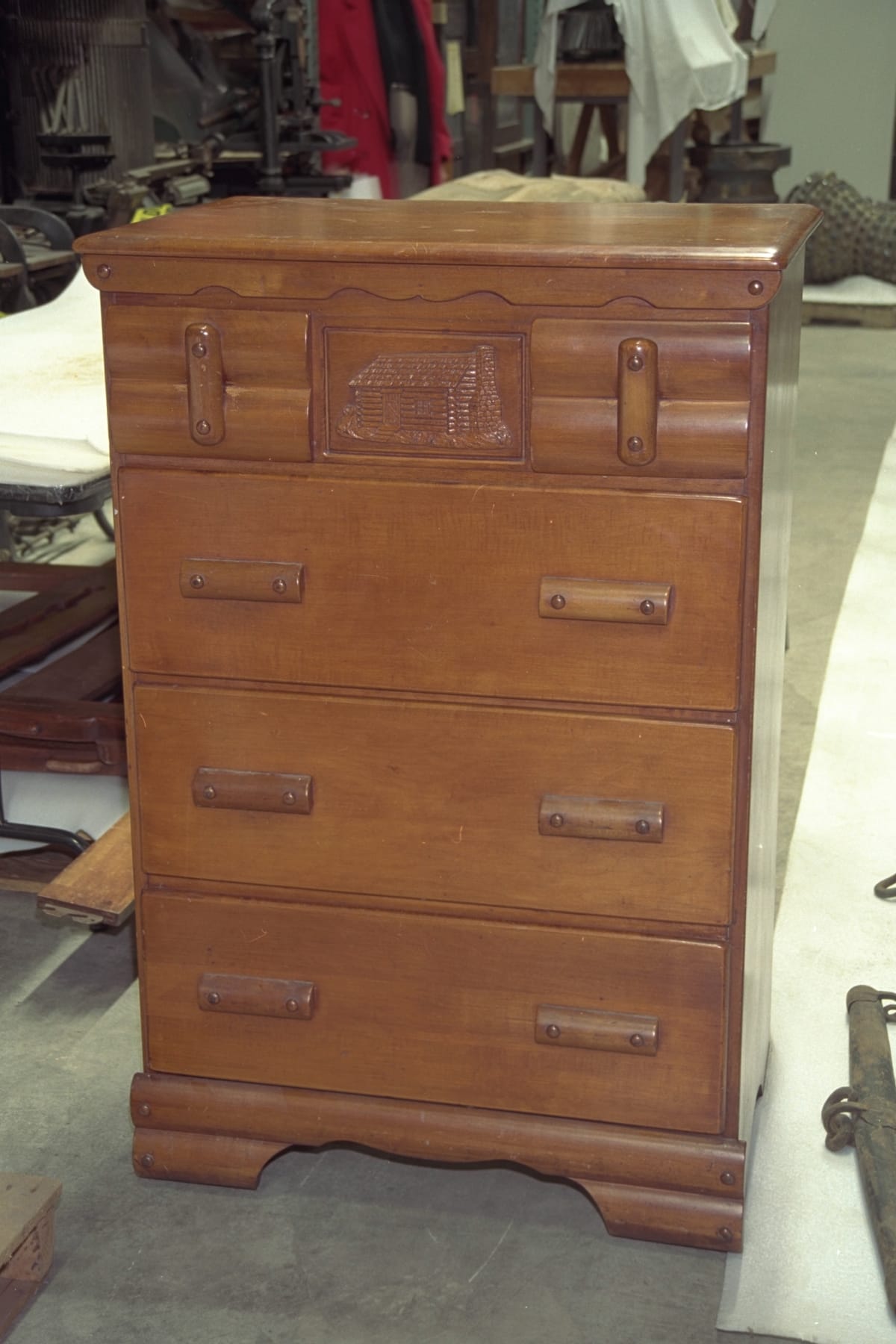
- Chest of Drawers, 1940-1950 - In the tumultuous decade surrounding World War II, many Americans found comfort in imagining simpler, more peaceful times. Some furniture reflected this popular interest in a countrified American past. The maple wood, drawer handles resembling logs, and the log cabin carving on the top drawer of this chest typify the style, which remained popular through the 1950s.
- 1940-1950
- Collections - Artifact
Chest of Drawers, 1940-1950
In the tumultuous decade surrounding World War II, many Americans found comfort in imagining simpler, more peaceful times. Some furniture reflected this popular interest in a countrified American past. The maple wood, drawer handles resembling logs, and the log cabin carving on the top drawer of this chest typify the style, which remained popular through the 1950s.