
Search
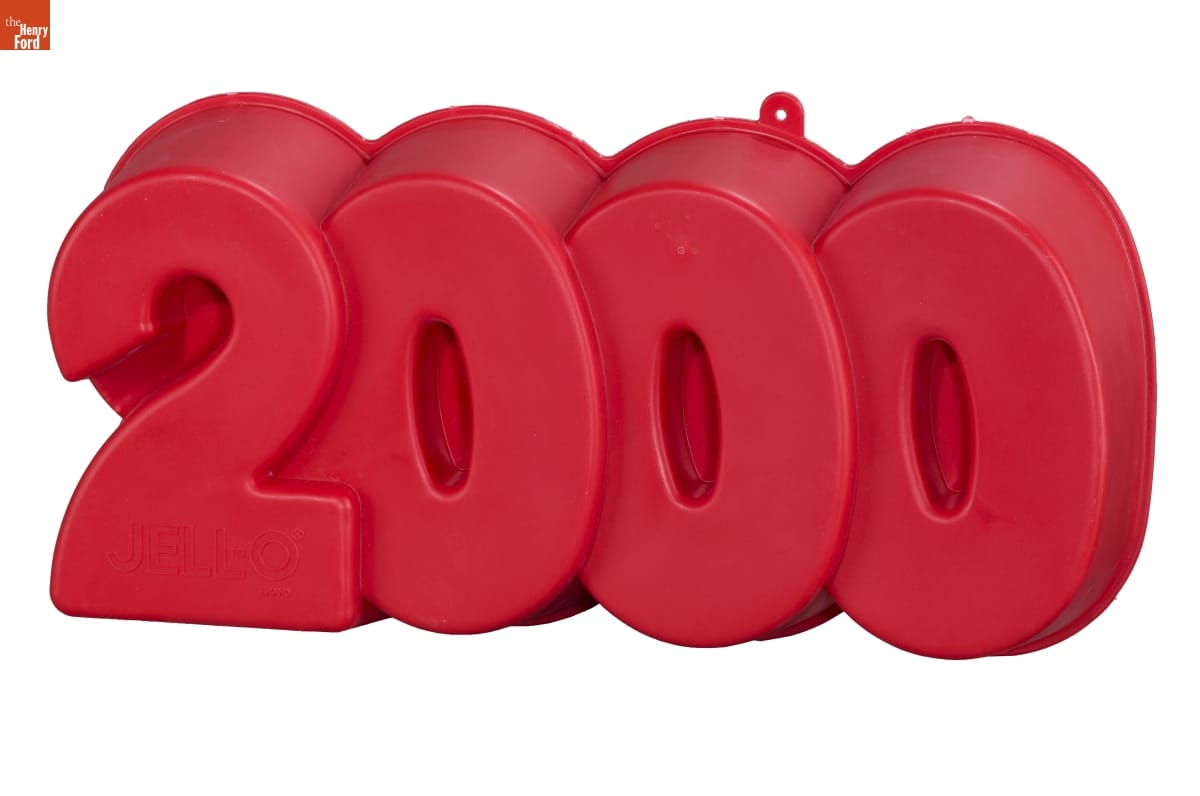
- "Jell-O 2000" Gelatin Mold, circa 1999 - For more than a century, Jell-O has been served at family gatherings, pot-lucks, parties, and barbeques, becoming an American icon. The Jell-O company created this special mold to help customers celebrate Y2K. The person who donated this mold also sent her New Year's Eve Jell-O recipe which called for sparkling club soda, sparkling Jell-O, and champagne. What a way to ring in the new millennium!
- circa 1999
- Collections - Artifact
"Jell-O 2000" Gelatin Mold, circa 1999
For more than a century, Jell-O has been served at family gatherings, pot-lucks, parties, and barbeques, becoming an American icon. The Jell-O company created this special mold to help customers celebrate Y2K. The person who donated this mold also sent her New Year's Eve Jell-O recipe which called for sparkling club soda, sparkling Jell-O, and champagne. What a way to ring in the new millennium!
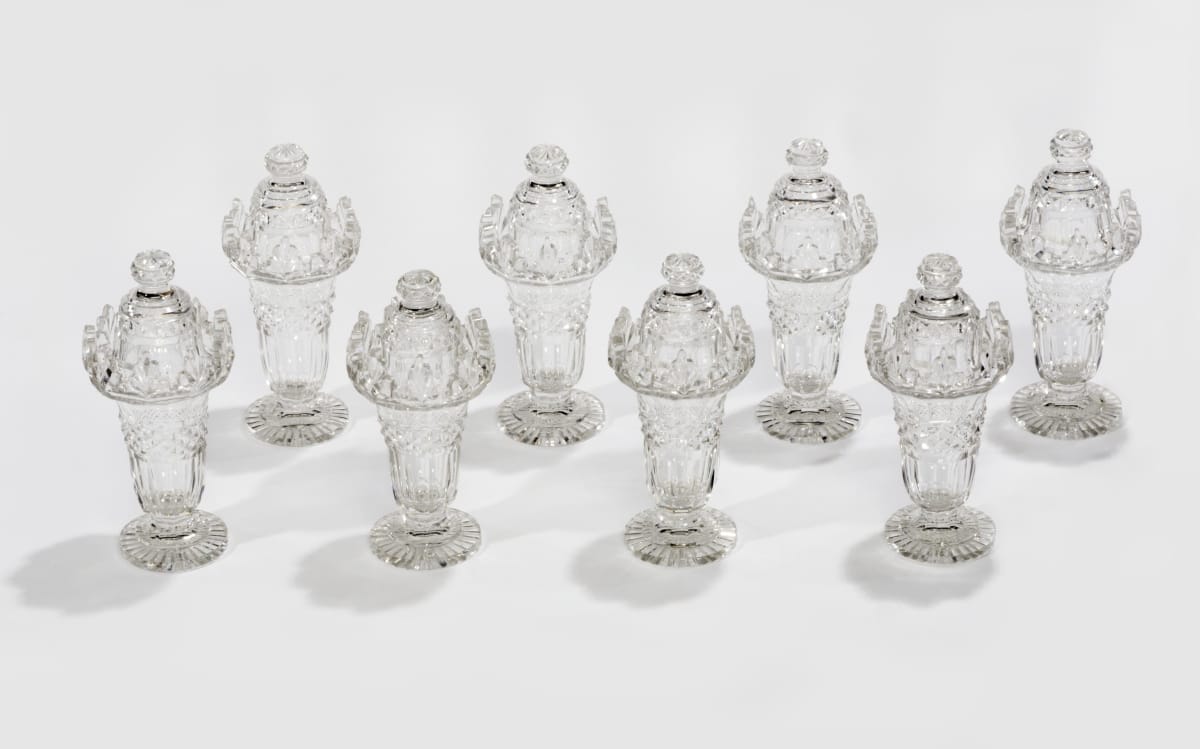
- Custard Cups, 1790-1810 - In the early 18th century, glassmakers in England and Ireland created exquisite translucent cut glassware known as Anglo-Irish glass. Beginning in the 1780s, Anglo-Irish glassmakers found a ready market in America -- now independent from Britain. Americans loved the dazzling interplay of candlelight and glass in their homes, which showed that Americans could attain interiors as fashionable as those in London.
- 1790-1810
- Collections - Artifact
Custard Cups, 1790-1810
In the early 18th century, glassmakers in England and Ireland created exquisite translucent cut glassware known as Anglo-Irish glass. Beginning in the 1780s, Anglo-Irish glassmakers found a ready market in America -- now independent from Britain. Americans loved the dazzling interplay of candlelight and glass in their homes, which showed that Americans could attain interiors as fashionable as those in London.
- Jelly Jar, circa 1925 -
- circa 1925
- Collections - Artifact
Jelly Jar, circa 1925
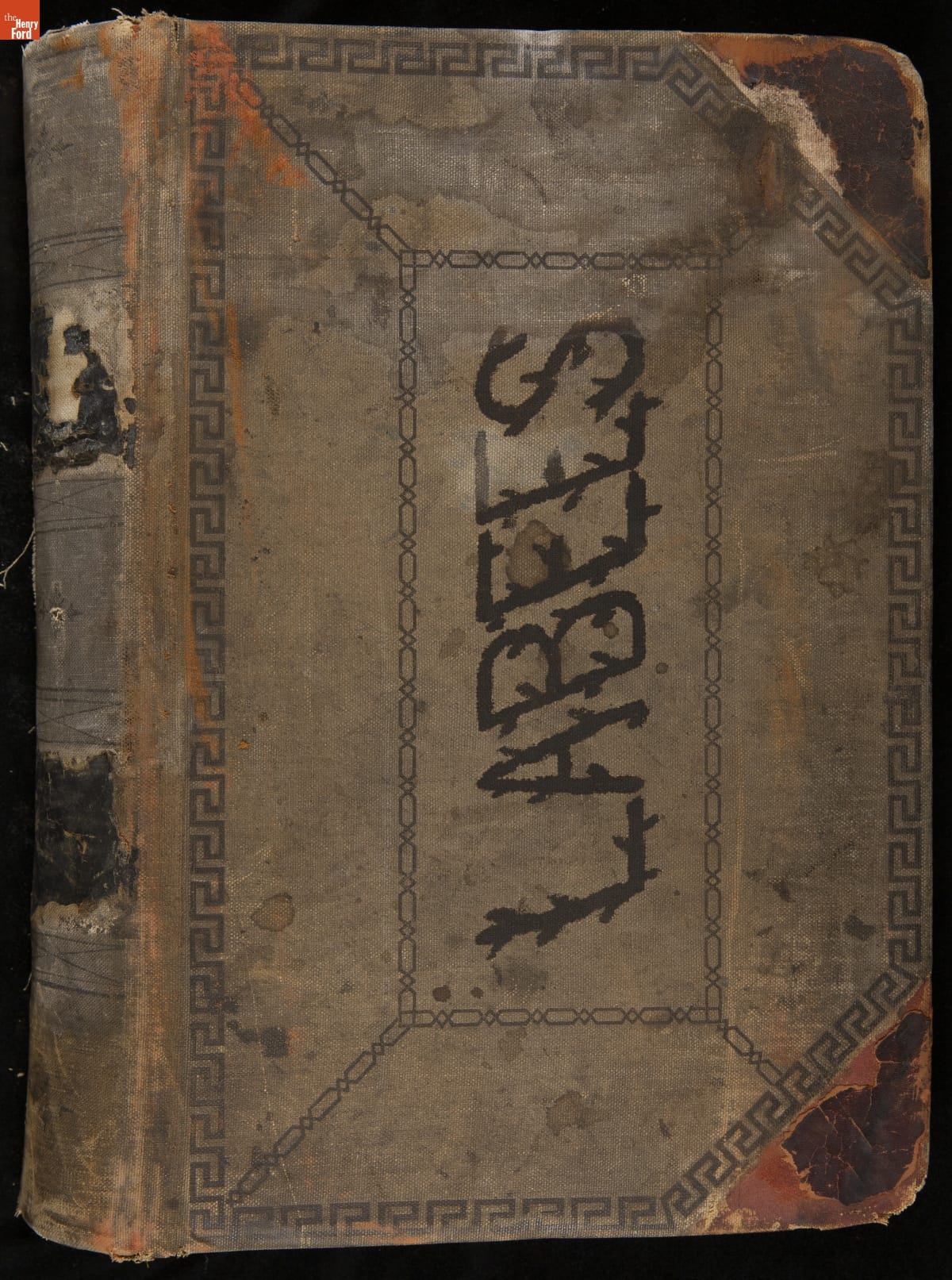
- Inventory of Heinz Company Product Labels, 1890-1896 - This inventory, compiled by the H.J. Heinz Company, contains an extensive collection of product labels for both the H.J. Heinz Company and its predecessor, F. & J. Heinz. Next to each label is a column for debit and for credit, allowing the company's bookkeepers to keep track of how many labels they had purchased.
- 1890-1896
- Collections - Artifact
Inventory of Heinz Company Product Labels, 1890-1896
This inventory, compiled by the H.J. Heinz Company, contains an extensive collection of product labels for both the H.J. Heinz Company and its predecessor, F. & J. Heinz. Next to each label is a column for debit and for credit, allowing the company's bookkeepers to keep track of how many labels they had purchased.
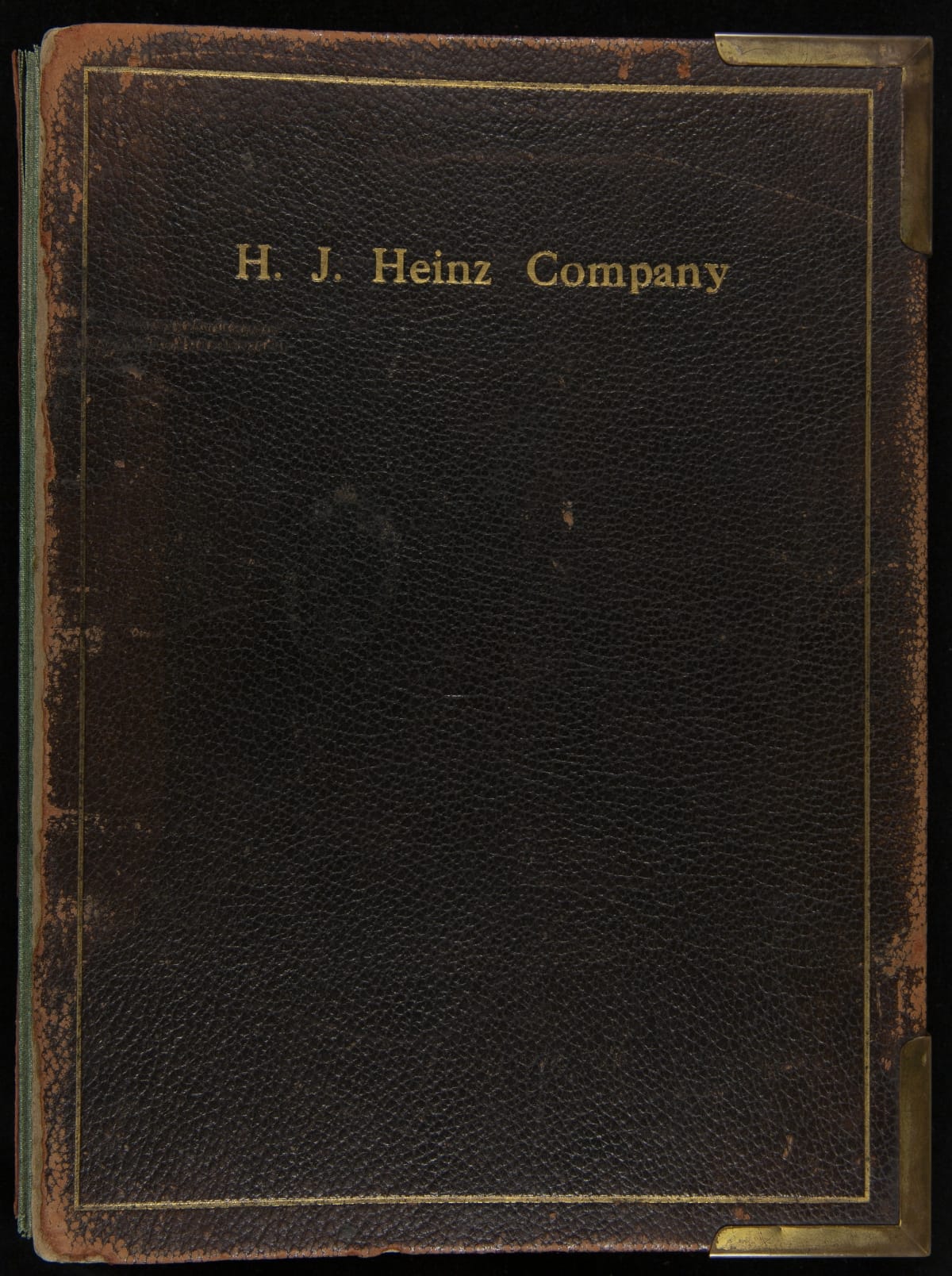
- Sales Catalog of the H. J. Heinz Company and Products, Pittsburgh, Pennsylvania, circa 1910 - With humble beginnings exclusively selling horseradish in 1869, H.J. Heinz continued to expand his product line to build the "House of Heinz" and become a leader in the manufactured food industry. This sales catalog highlights the manufacturing process and provides photographs of the factories, branch houses, and employees. It also contains information and photographs of each of the "57 Varieties" of Heinz products.
- 1910
- Collections - Artifact
Sales Catalog of the H. J. Heinz Company and Products, Pittsburgh, Pennsylvania, circa 1910
With humble beginnings exclusively selling horseradish in 1869, H.J. Heinz continued to expand his product line to build the "House of Heinz" and become a leader in the manufactured food industry. This sales catalog highlights the manufacturing process and provides photographs of the factories, branch houses, and employees. It also contains information and photographs of each of the "57 Varieties" of Heinz products.
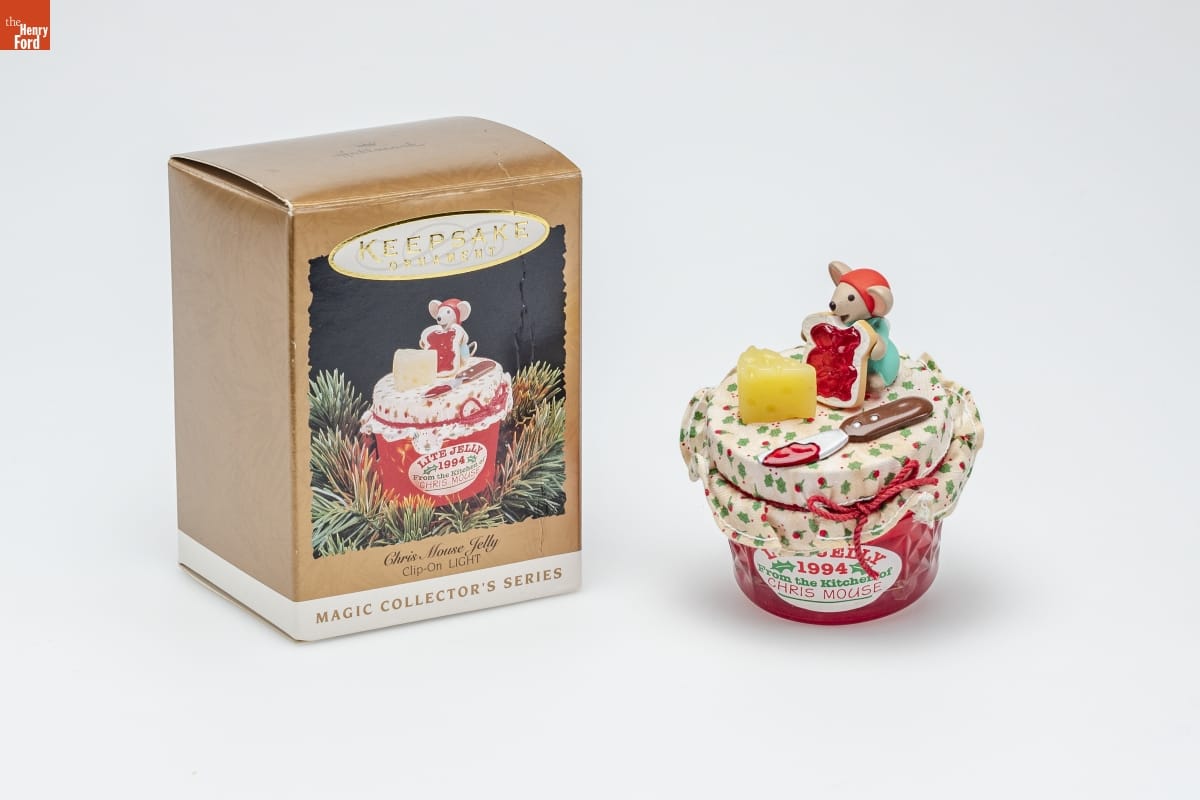
- Hallmark "Chris Mouse Series: Jelly" Christmas Ornament, 1994 - Already known for greeting cards, Hallmark introduced a line of Christmas ornaments in 1973. The company's annual release of an increasing array of ornaments revolutionized Christmas decorating, appealing to customers' interest in marking memories and milestones as well as expressing one's personality and unique tastes.
- 1994
- Collections - Artifact
Hallmark "Chris Mouse Series: Jelly" Christmas Ornament, 1994
Already known for greeting cards, Hallmark introduced a line of Christmas ornaments in 1973. The company's annual release of an increasing array of ornaments revolutionized Christmas decorating, appealing to customers' interest in marking memories and milestones as well as expressing one's personality and unique tastes.
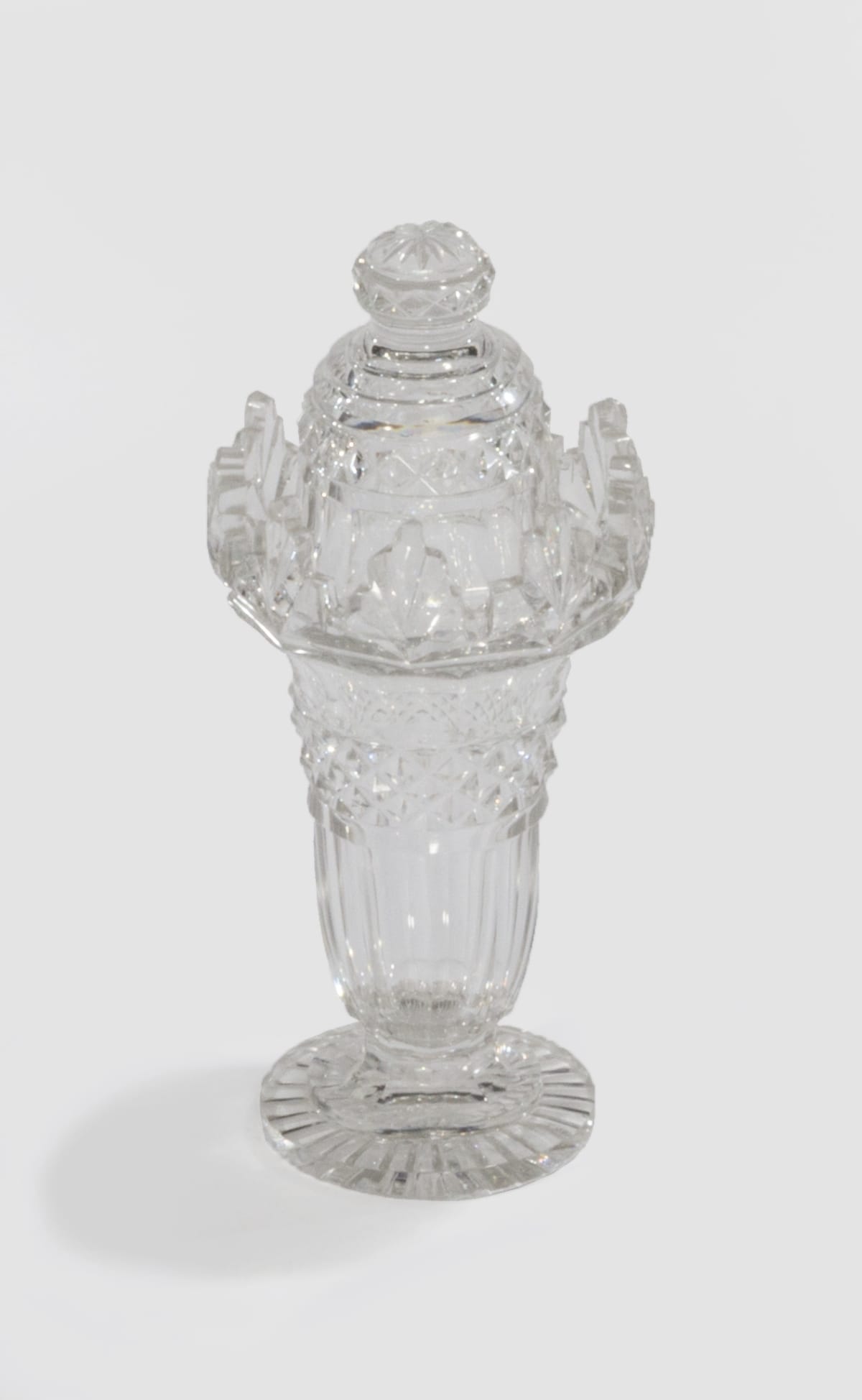
- Custard Cup, 1790-1810 - In the early 18th century, glassmakers in England and Ireland created exquisite translucent cut glassware known as Anglo-Irish glass. Beginning in the 1780s, Anglo-Irish glassmakers found a ready market in America -- now independent from Britain. Americans loved the dazzling interplay of candlelight and glass in their homes, which showed that Americans could attain interiors as fashionable as those in London.
- 1790-1810
- Collections - Artifact
Custard Cup, 1790-1810
In the early 18th century, glassmakers in England and Ireland created exquisite translucent cut glassware known as Anglo-Irish glass. Beginning in the 1780s, Anglo-Irish glassmakers found a ready market in America -- now independent from Britain. Americans loved the dazzling interplay of candlelight and glass in their homes, which showed that Americans could attain interiors as fashionable as those in London.
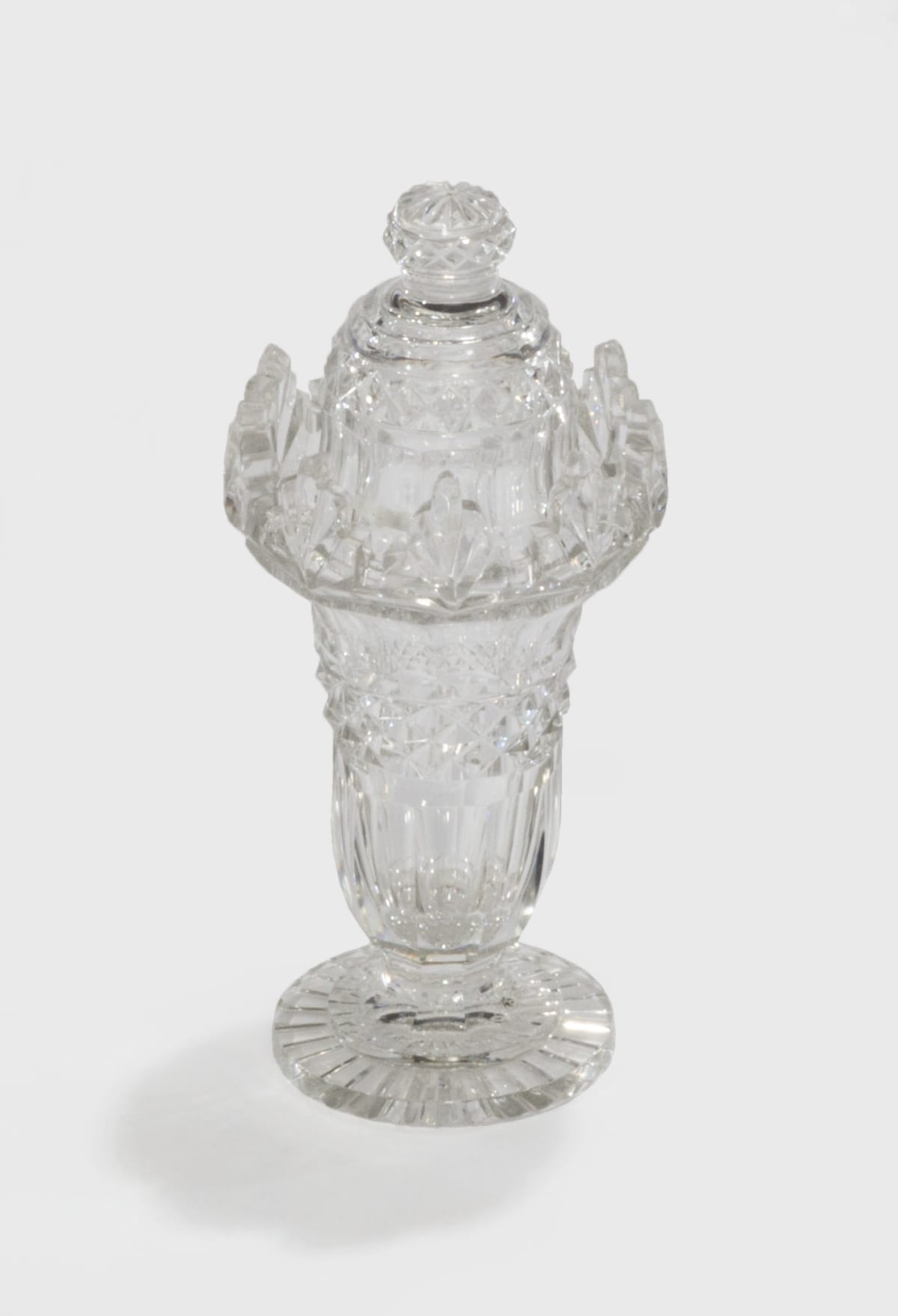
- Custard Cup, 1790-1810 - In the early 18th century, glassmakers in England and Ireland created exquisite translucent cut glassware known as Anglo-Irish glass. Beginning in the 1780s, Anglo-Irish glassmakers found a ready market in America -- now independent from Britain. Americans loved the dazzling interplay of candlelight and glass in their homes, which showed that Americans could attain interiors as fashionable as those in London.
- 1790-1810
- Collections - Artifact
Custard Cup, 1790-1810
In the early 18th century, glassmakers in England and Ireland created exquisite translucent cut glassware known as Anglo-Irish glass. Beginning in the 1780s, Anglo-Irish glassmakers found a ready market in America -- now independent from Britain. Americans loved the dazzling interplay of candlelight and glass in their homes, which showed that Americans could attain interiors as fashionable as those in London.
- Trade Card for Vaseline Brand Products, Chesebrough Manufacturing Co., 1881-1890 - In the last third of the nineteenth century, an unprecedented variety of consumer goods and services flooded the American market. Advertisers, armed with new methods of color printing, bombarded potential customers with trade cards. Americans enjoyed and often saved the vibrant little advertisements found in product packages or distributed by local merchants. Many survive as historical records of commercialism in the United States.
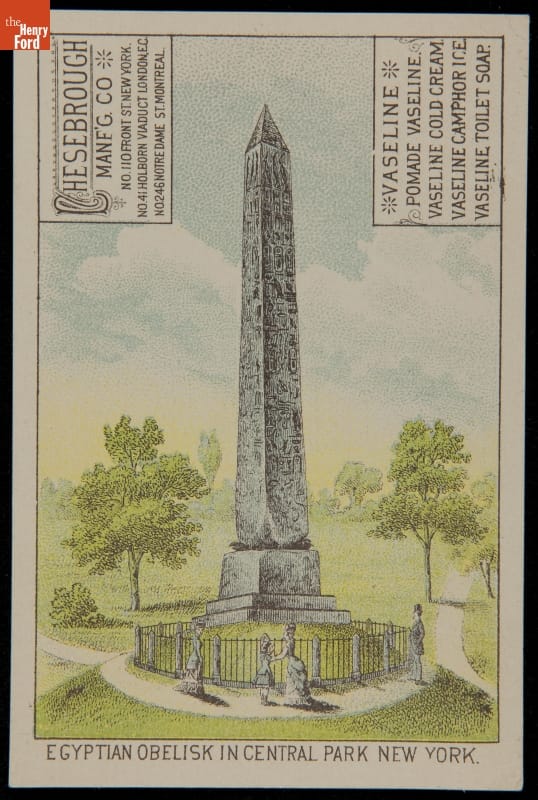
- 1881-1890
- Collections - Artifact
Trade Card for Vaseline Brand Products, Chesebrough Manufacturing Co., 1881-1890
In the last third of the nineteenth century, an unprecedented variety of consumer goods and services flooded the American market. Advertisers, armed with new methods of color printing, bombarded potential customers with trade cards. Americans enjoyed and often saved the vibrant little advertisements found in product packages or distributed by local merchants. Many survive as historical records of commercialism in the United States.
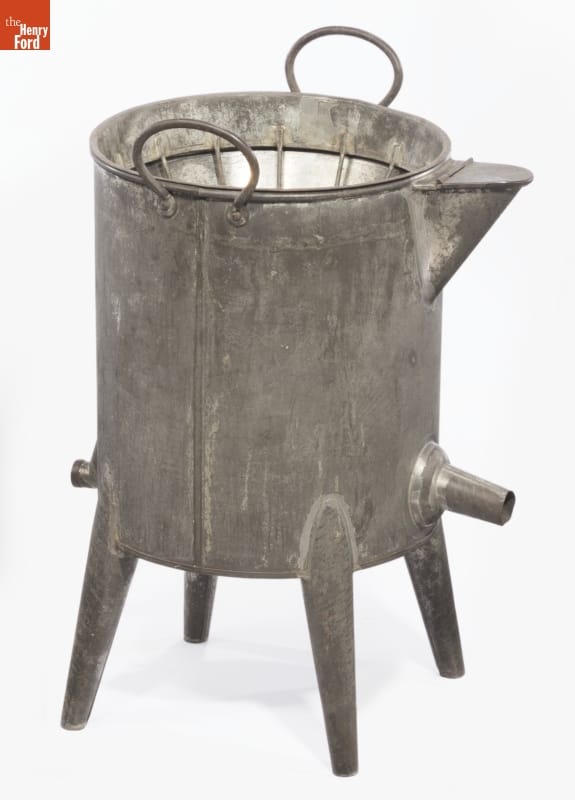
- Jelly Strainer - Tin-plated iron, commonly called "tin," was the dominant material for utilitarian items in 19th-century America. It was lightweight, inexpensive, easy to clean, non-toxic, and durable. Tinware also resisted corrosion and had a pleasing silvery appearance that could be enhanced through decoration. Middle-class Americans happily purchased tinware in place of goods made from earlier materials, like wood or pottery.
- Collections - Artifact
Jelly Strainer
Tin-plated iron, commonly called "tin," was the dominant material for utilitarian items in 19th-century America. It was lightweight, inexpensive, easy to clean, non-toxic, and durable. Tinware also resisted corrosion and had a pleasing silvery appearance that could be enhanced through decoration. Middle-class Americans happily purchased tinware in place of goods made from earlier materials, like wood or pottery.