
Search
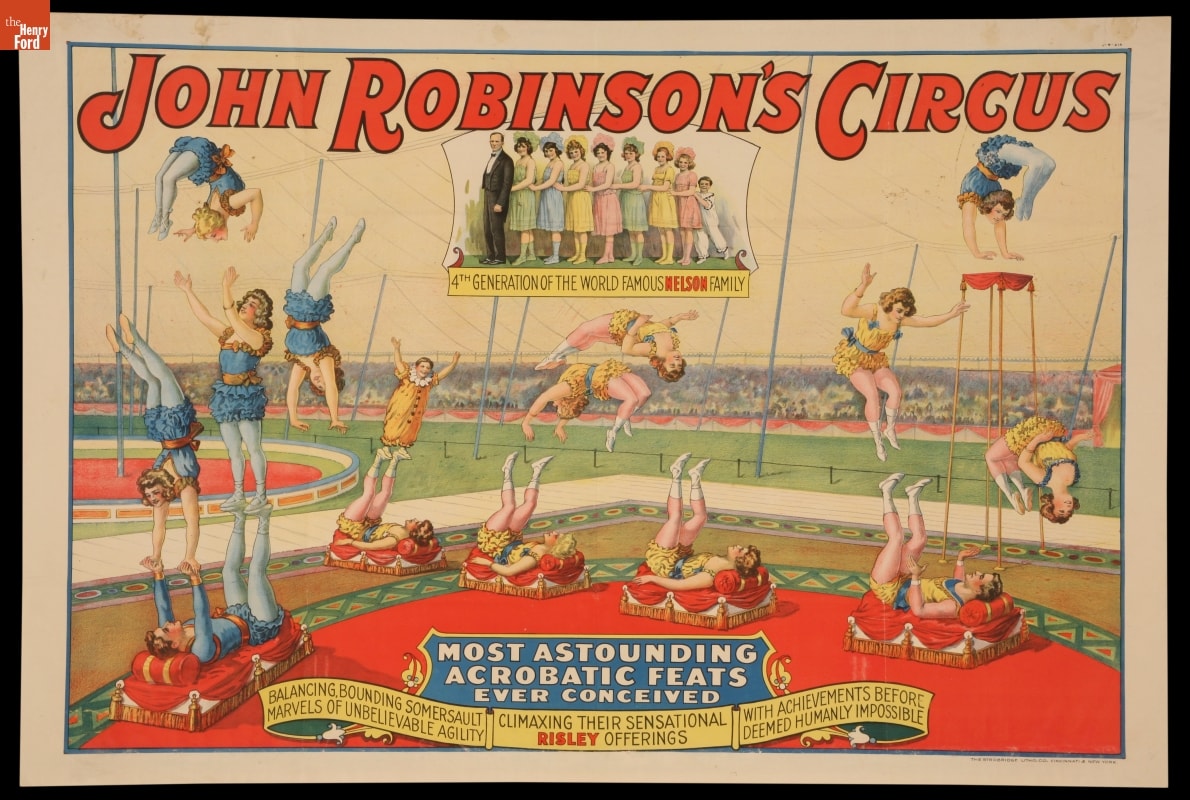
- Circus Poster, "John Robinson's Circus," circa 1925 - In the late nineteenth century, printers developed a lithograph method that produced brightly colored posters. In advance of a circus coming to town, general agents glued these eye-catching generic posters to building walls, fences, and in window displays. To announce when and where the performances would happen, local printers sometimes provided letterpress paper date strips to paste onto the posters' lower margin.
- circa 1925
- Collections - Artifact
Circus Poster, "John Robinson's Circus," circa 1925
In the late nineteenth century, printers developed a lithograph method that produced brightly colored posters. In advance of a circus coming to town, general agents glued these eye-catching generic posters to building walls, fences, and in window displays. To announce when and where the performances would happen, local printers sometimes provided letterpress paper date strips to paste onto the posters' lower margin.
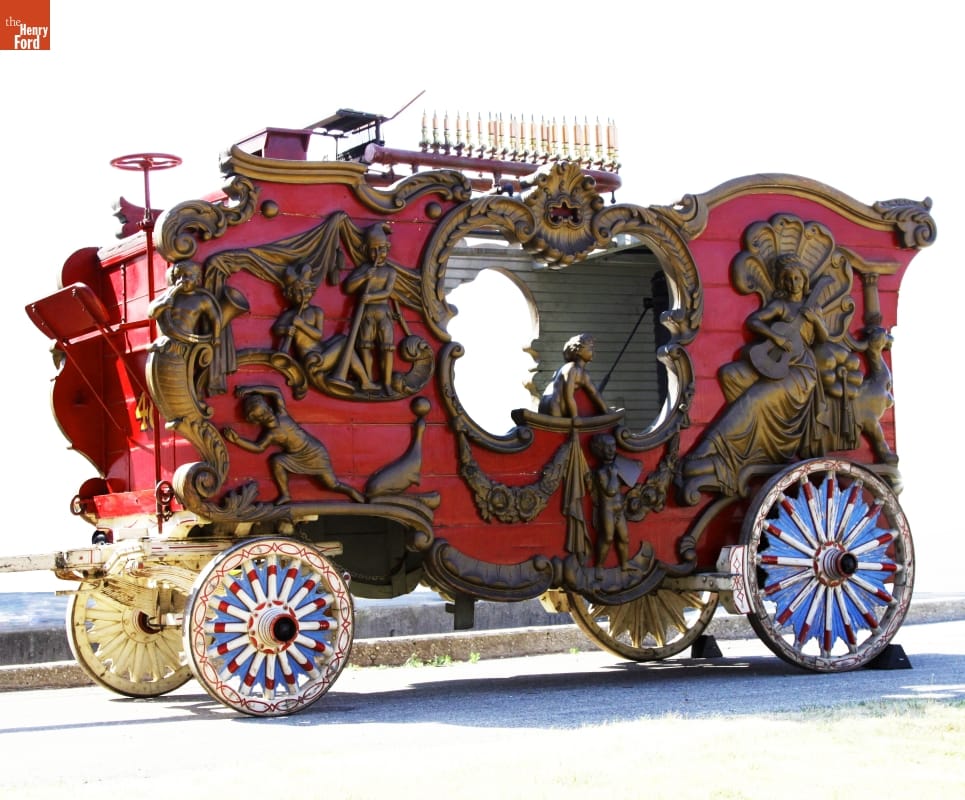
- Calliope Circus Wagon, 1917 - During the late 19th and early 20th centuries, traveling circuses entertained millions of Americans. When a circus arrived in town, it staged a spectacular promotional parade down main street, and the musical steam calliope was a highlight. This calliope was built for the John Robinson Circus of Peru, Indiana, about 1917. Other circuses used it before the calliope's retirement in 1929.
- 1917
- Collections - Artifact
Calliope Circus Wagon, 1917
During the late 19th and early 20th centuries, traveling circuses entertained millions of Americans. When a circus arrived in town, it staged a spectacular promotional parade down main street, and the musical steam calliope was a highlight. This calliope was built for the John Robinson Circus of Peru, Indiana, about 1917. Other circuses used it before the calliope's retirement in 1929.