
Search
- Dow Jones Wire Service Report Clipboard, circa 1940 - In the routine course of business, Ford Motor Company received a steady flow of news and financial reports from the Wall Street Journal. These dispatches came over the teletype machine on November 22, 1963 describing events from the arrival of President John F. Kennedy and his wife Jacqueline in Dallas through the official report of his death several hours later.

- November 22, 1963
- Collections - Artifact
Dow Jones Wire Service Report Clipboard, circa 1940
In the routine course of business, Ford Motor Company received a steady flow of news and financial reports from the Wall Street Journal. These dispatches came over the teletype machine on November 22, 1963 describing events from the arrival of President John F. Kennedy and his wife Jacqueline in Dallas through the official report of his death several hours later.
- Button Promoting the Journal Examiner Trans-Continental Relay, 1896 - In 1896, promoters for the <em>San Francisco Examiner</em> and <em>New York Journal</em> newspapers sponsored a bicycle relay between the two cities. The event had different cyclists traveling over different segments of the route in sequence, moving from west to east. It took just over 13 days to finish the transcontinental relay. "Yellow Fellow" referred to the <em>Journal</em>'s popular <em>Yellow Kid</em> comic strip.

- 1896
- Collections - Artifact
Button Promoting the Journal Examiner Trans-Continental Relay, 1896
In 1896, promoters for the San Francisco Examiner and New York Journal newspapers sponsored a bicycle relay between the two cities. The event had different cyclists traveling over different segments of the route in sequence, moving from west to east. It took just over 13 days to finish the transcontinental relay. "Yellow Fellow" referred to the Journal's popular Yellow Kid comic strip.
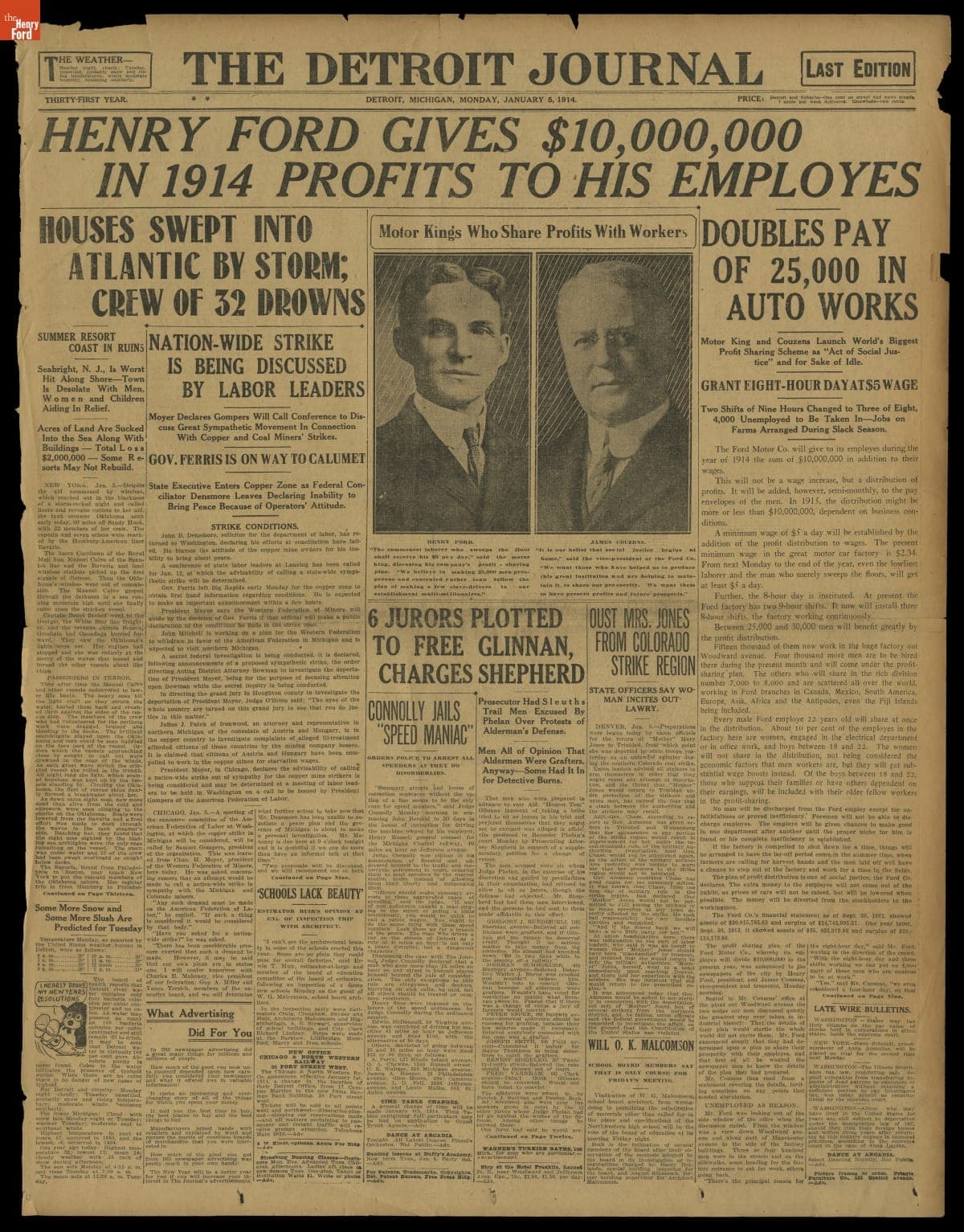
- Newspaper Article, "Henry Ford Gives $10,000,000 in 1914 Profits to His Employes" - When Henry Ford introduced the moving assembly line in 1913 he loved it but his employees didn't. The work was boring and relentless, and worker turnover was high. To get workers to stay, Henry more than doubled their pay, from $2.34 per day to $5 per day. It was headline news in Detroit and around the country.
- January 05, 1914
- Collections - Artifact
Newspaper Article, "Henry Ford Gives $10,000,000 in 1914 Profits to His Employes"
When Henry Ford introduced the moving assembly line in 1913 he loved it but his employees didn't. The work was boring and relentless, and worker turnover was high. To get workers to stay, Henry more than doubled their pay, from $2.34 per day to $5 per day. It was headline news in Detroit and around the country.
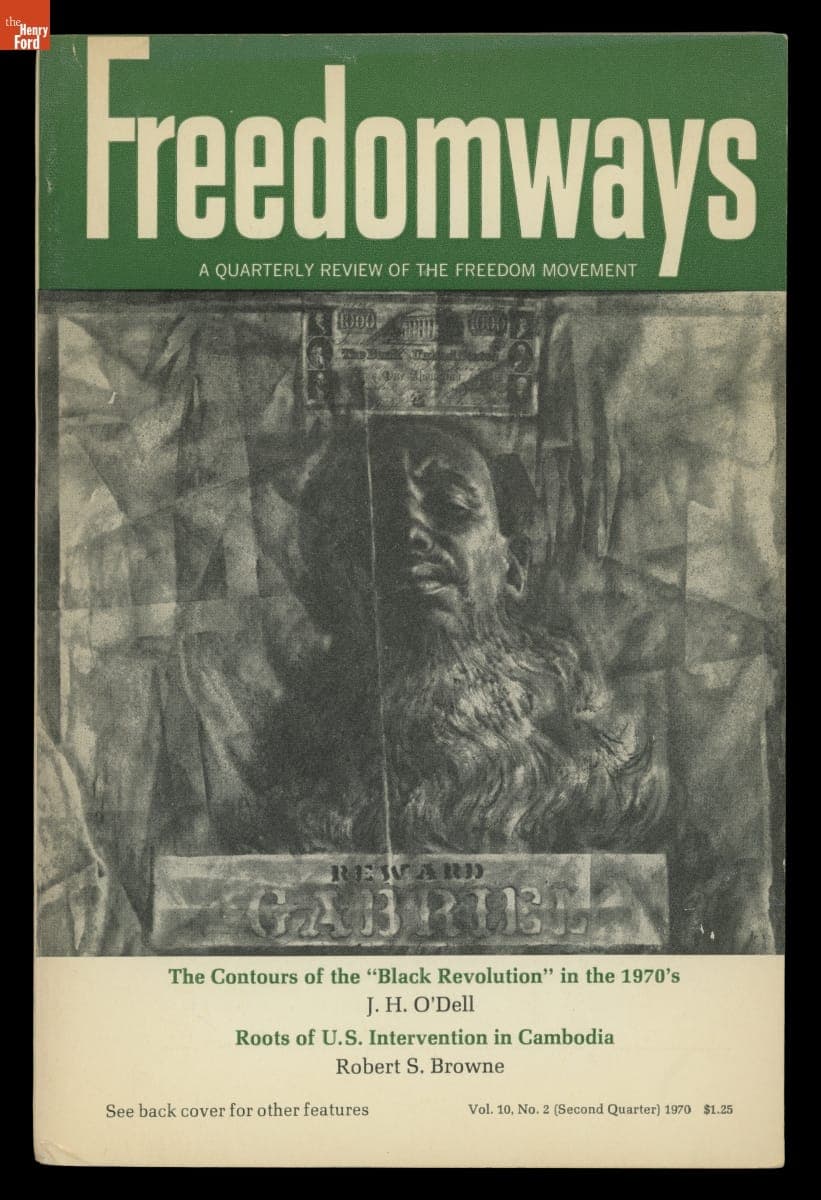
- "Freedomways," Vol. 10, No. 2, Second Quarter, 1970 - In 1961, Louis Burnham, Edward Strong, and W. E. B. Du Bois founded Freedomways, the leading African American theoretical, political, and cultural journal of its time. The journal included written works by leading Black authors, artists, politicians, and activists. The journal also reported on the political movements of the era, especially the American civil rights movement. Publication ceased in 1985.
- 1970
- Collections - Artifact
"Freedomways," Vol. 10, No. 2, Second Quarter, 1970
In 1961, Louis Burnham, Edward Strong, and W. E. B. Du Bois founded Freedomways, the leading African American theoretical, political, and cultural journal of its time. The journal included written works by leading Black authors, artists, politicians, and activists. The journal also reported on the political movements of the era, especially the American civil rights movement. Publication ceased in 1985.
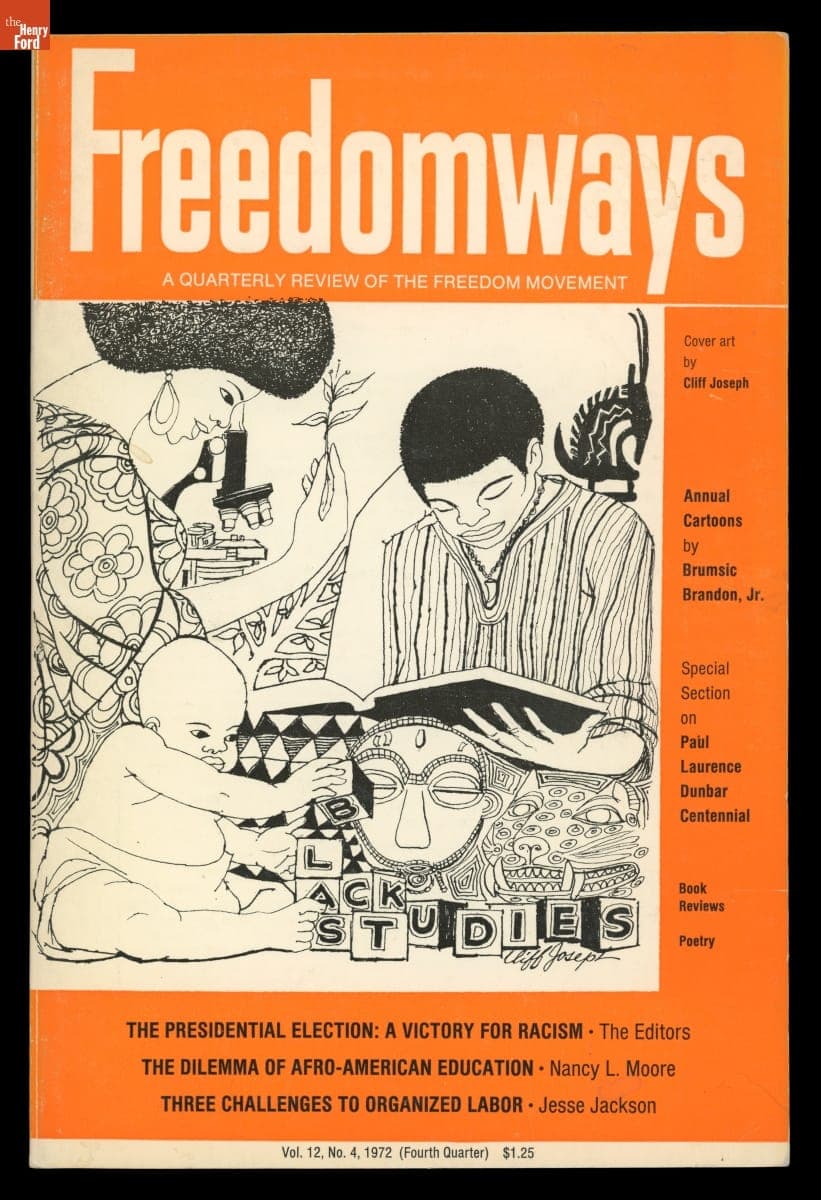
- "Freedomways," Vol. 12, No. 4, Fourth Quarter, 1972 - In 1961, Louis Burnham, Edward Strong, and W. E. B. Du Bois founded Freedomways, the leading African American theoretical, political, and cultural journal of its time. The journal included written works by leading Black authors, artists, politicians, and activists. The journal also reported on the political movements of the era, especially the American civil rights movement. Publication ceased in 1985.
- 1972
- Collections - Artifact
"Freedomways," Vol. 12, No. 4, Fourth Quarter, 1972
In 1961, Louis Burnham, Edward Strong, and W. E. B. Du Bois founded Freedomways, the leading African American theoretical, political, and cultural journal of its time. The journal included written works by leading Black authors, artists, politicians, and activists. The journal also reported on the political movements of the era, especially the American civil rights movement. Publication ceased in 1985.
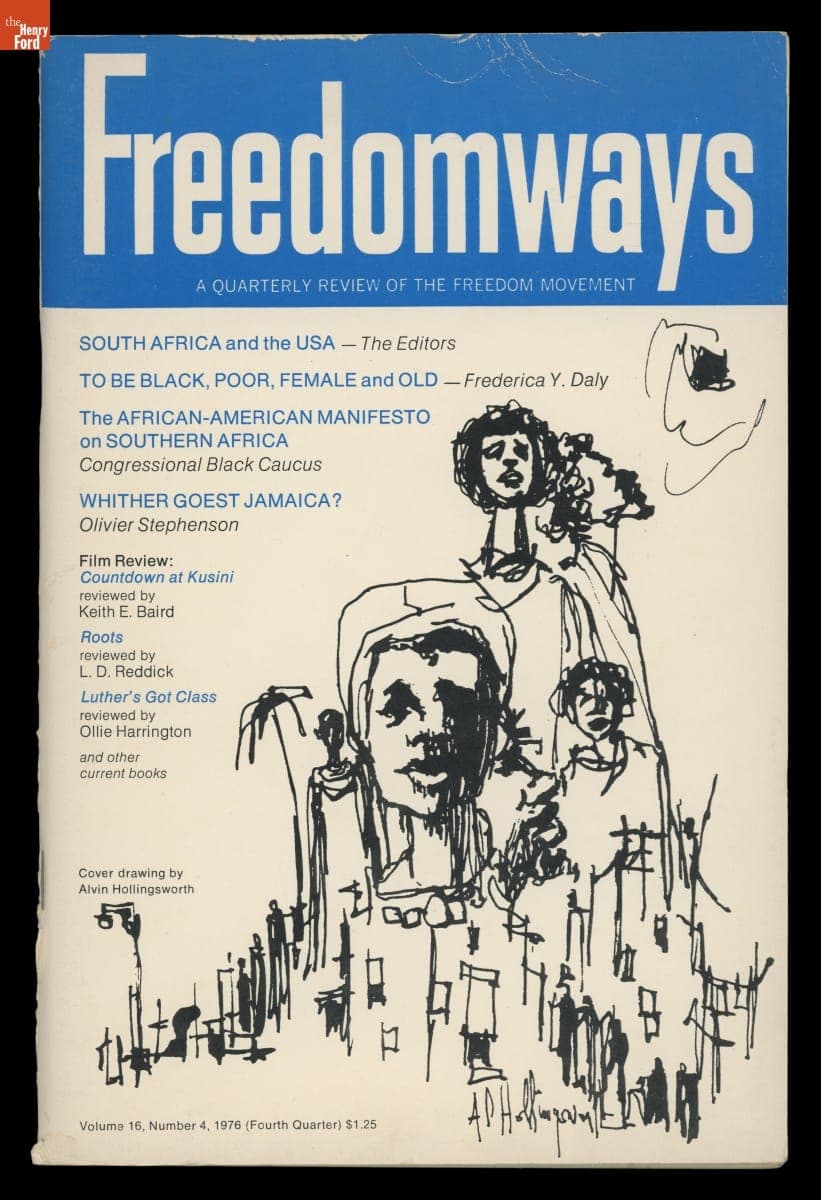
- "Freedomways," Vol. 16, No. 4, Fourth Quarter, 1976 - In 1961, Louis Burnham, Edward Strong, and W. E. B. Du Bois founded Freedomways, the leading African American theoretical, political, and cultural journal of its time. The journal included written works by leading Black authors, artists, politicians, and activists. The journal also reported on the political movements of the era, especially the American civil rights movement. Publication ceased in 1985.
- 1976
- Collections - Artifact
"Freedomways," Vol. 16, No. 4, Fourth Quarter, 1976
In 1961, Louis Burnham, Edward Strong, and W. E. B. Du Bois founded Freedomways, the leading African American theoretical, political, and cultural journal of its time. The journal included written works by leading Black authors, artists, politicians, and activists. The journal also reported on the political movements of the era, especially the American civil rights movement. Publication ceased in 1985.
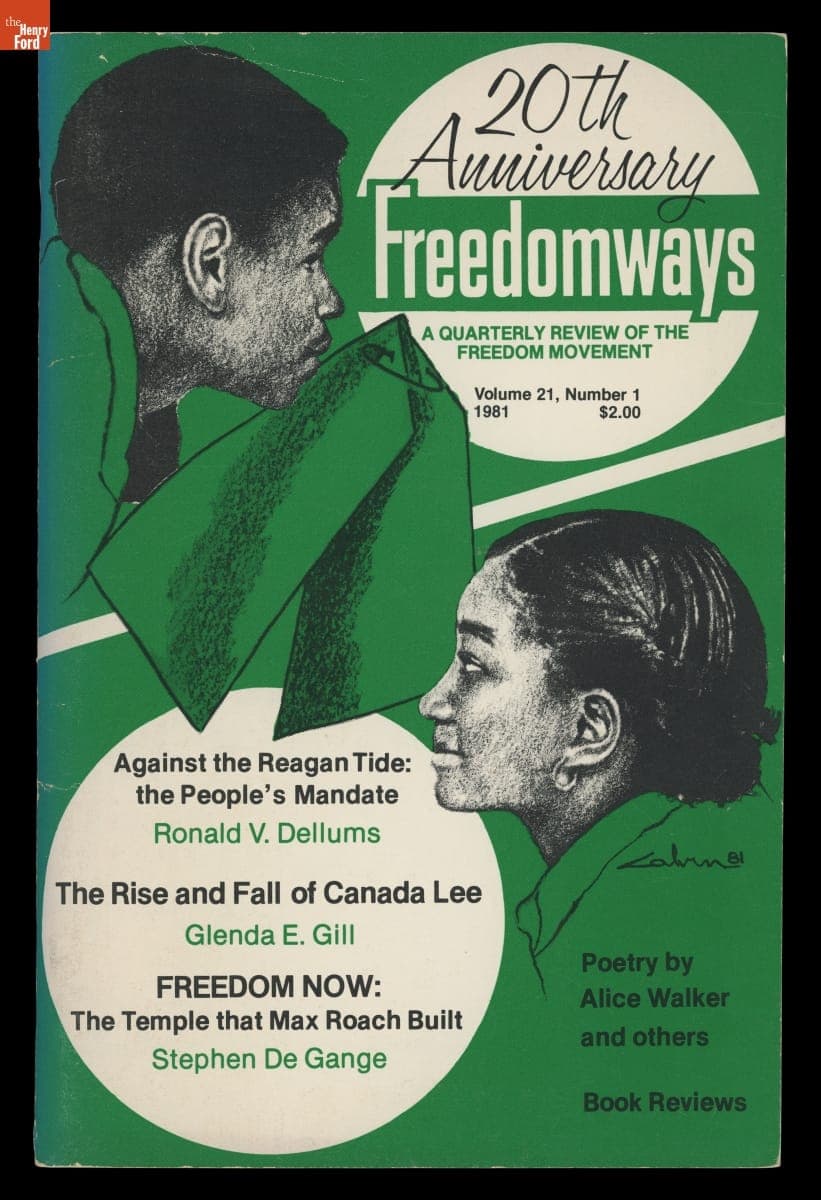
- "Freedomways: 20th Anniversary," Vol. 21, No. 1, First Quarter, 1981 - In 1961, Louis Burnham, Edward Strong, and W. E. B. Du Bois founded Freedomways, the leading African American theoretical, political, and cultural journal of its time. The journal included written works by leading Black authors, artists, politicians, and activists. The journal also reported on the political movements of the era, especially the American civil rights movement. Publication ceased in 1985.
- 1981
- Collections - Artifact
"Freedomways: 20th Anniversary," Vol. 21, No. 1, First Quarter, 1981
In 1961, Louis Burnham, Edward Strong, and W. E. B. Du Bois founded Freedomways, the leading African American theoretical, political, and cultural journal of its time. The journal included written works by leading Black authors, artists, politicians, and activists. The journal also reported on the political movements of the era, especially the American civil rights movement. Publication ceased in 1985.
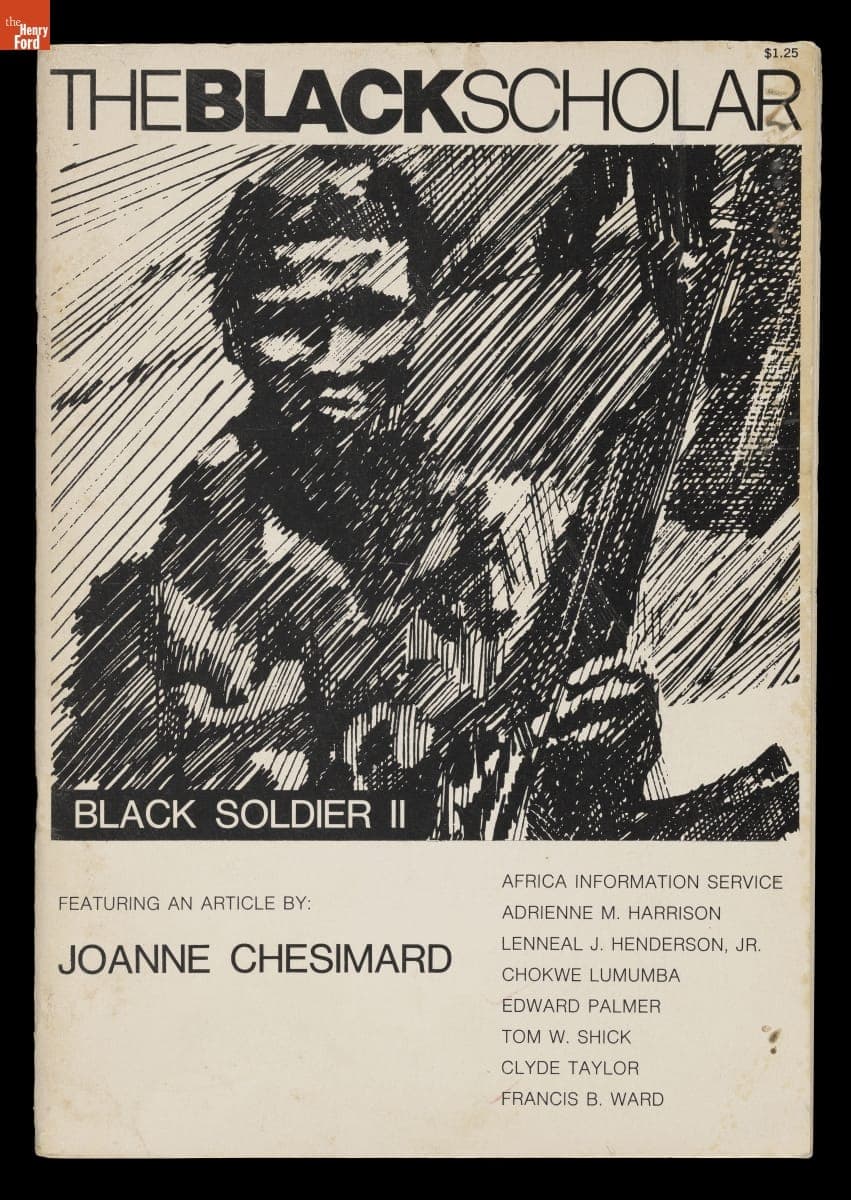
- "The Black Scholar," October 1973 Issue, "Black Soldier II" - In 1969, in the wake of a growing interest in Black American history and culture, Robert Christman and Nathan Hare -- former professors from San Francisco State College -- started <i>The Black Scholar</i>. It was the first scholastic journal that focused on Black, Africana, and Diaspora studies. <i>The Black Scholar</i> has published papers and other works by famous academics, political thinkers, and authors.
- October 01, 1973
- Collections - Artifact
"The Black Scholar," October 1973 Issue, "Black Soldier II"
In 1969, in the wake of a growing interest in Black American history and culture, Robert Christman and Nathan Hare -- former professors from San Francisco State College -- started The Black Scholar. It was the first scholastic journal that focused on Black, Africana, and Diaspora studies. The Black Scholar has published papers and other works by famous academics, political thinkers, and authors.
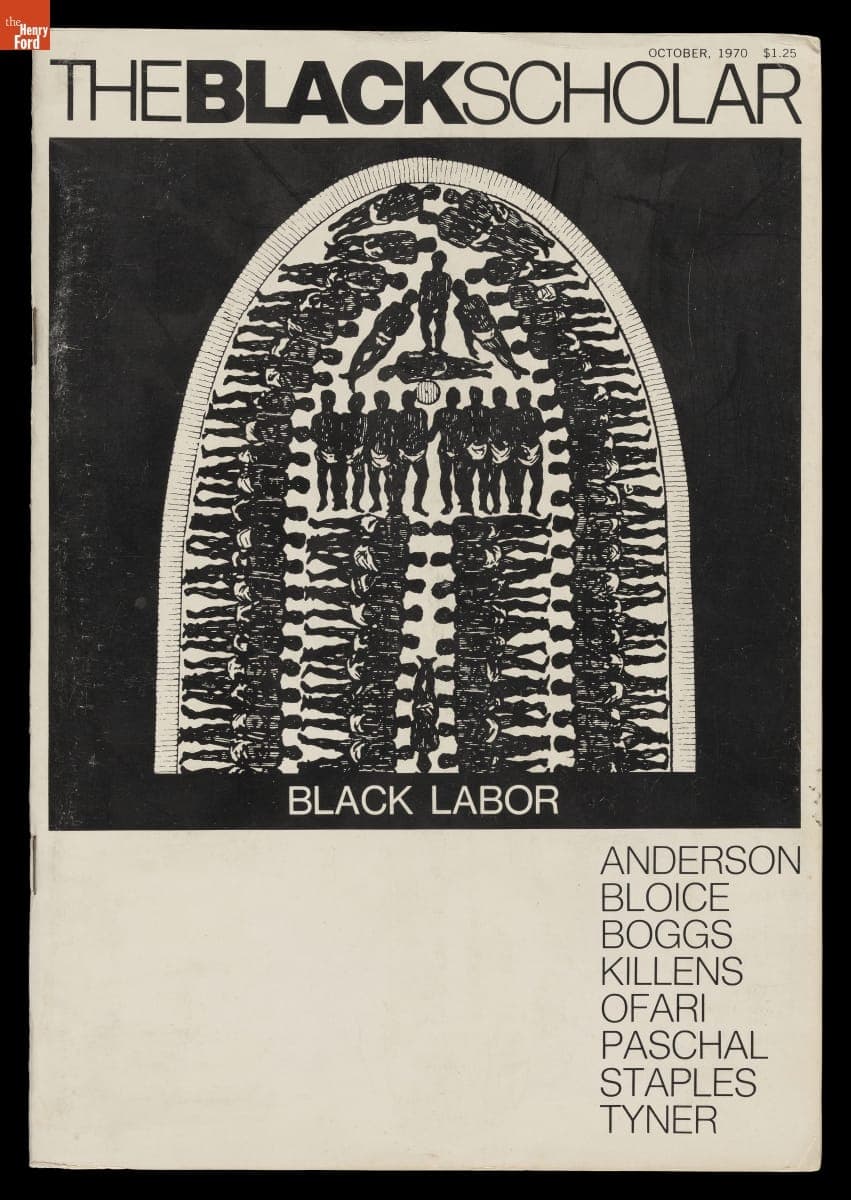
- "The Black Scholar," October 1970 Issue, "Black Labor" - In 1969, in the wake of a growing interest in Black American history and culture, Robert Christman and Nathan Hare -- former professors from San Francisco State College -- started <i>The Black Scholar</i>. It was the first scholastic journal that focused on Black, Africana, and Diaspora studies. <i>The Black Scholar</i> has published papers and other works by famous academics, political thinkers, and authors.
- October 01, 1970
- Collections - Artifact
"The Black Scholar," October 1970 Issue, "Black Labor"
In 1969, in the wake of a growing interest in Black American history and culture, Robert Christman and Nathan Hare -- former professors from San Francisco State College -- started The Black Scholar. It was the first scholastic journal that focused on Black, Africana, and Diaspora studies. The Black Scholar has published papers and other works by famous academics, political thinkers, and authors.
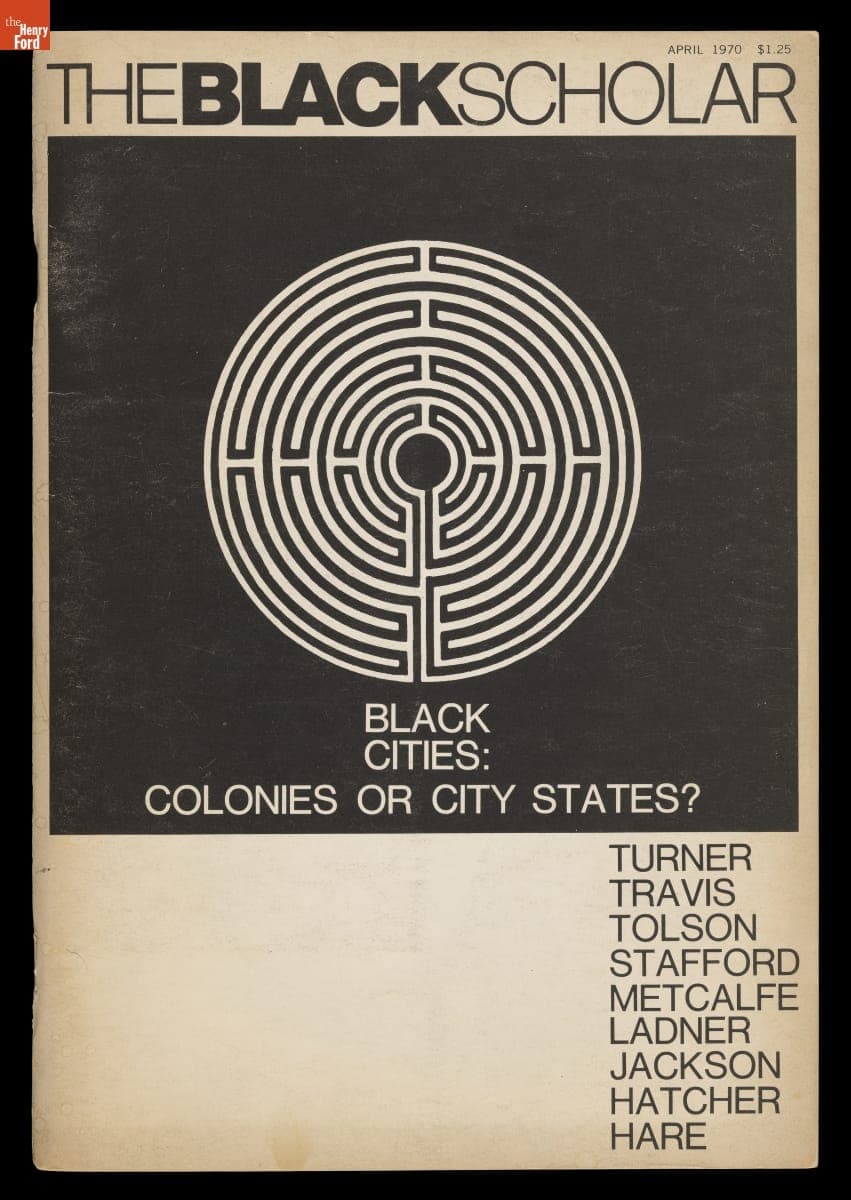
- "The Black Scholar," April 1970 Issue, "Colonies or City States?" - In 1969, in the wake of a growing interest in Black American history and culture, Robert Christman and Nathan Hare -- former professors from San Francisco State College -- started <i>The Black Scholar</i>. It was the first scholastic journal that focused on Black, Africana, and Diaspora studies. <i>The Black Scholar</i> has published papers and other works by famous academics, political thinkers, and authors.
- April 01, 1970
- Collections - Artifact
"The Black Scholar," April 1970 Issue, "Colonies or City States?"
In 1969, in the wake of a growing interest in Black American history and culture, Robert Christman and Nathan Hare -- former professors from San Francisco State College -- started The Black Scholar. It was the first scholastic journal that focused on Black, Africana, and Diaspora studies. The Black Scholar has published papers and other works by famous academics, political thinkers, and authors.