
Search
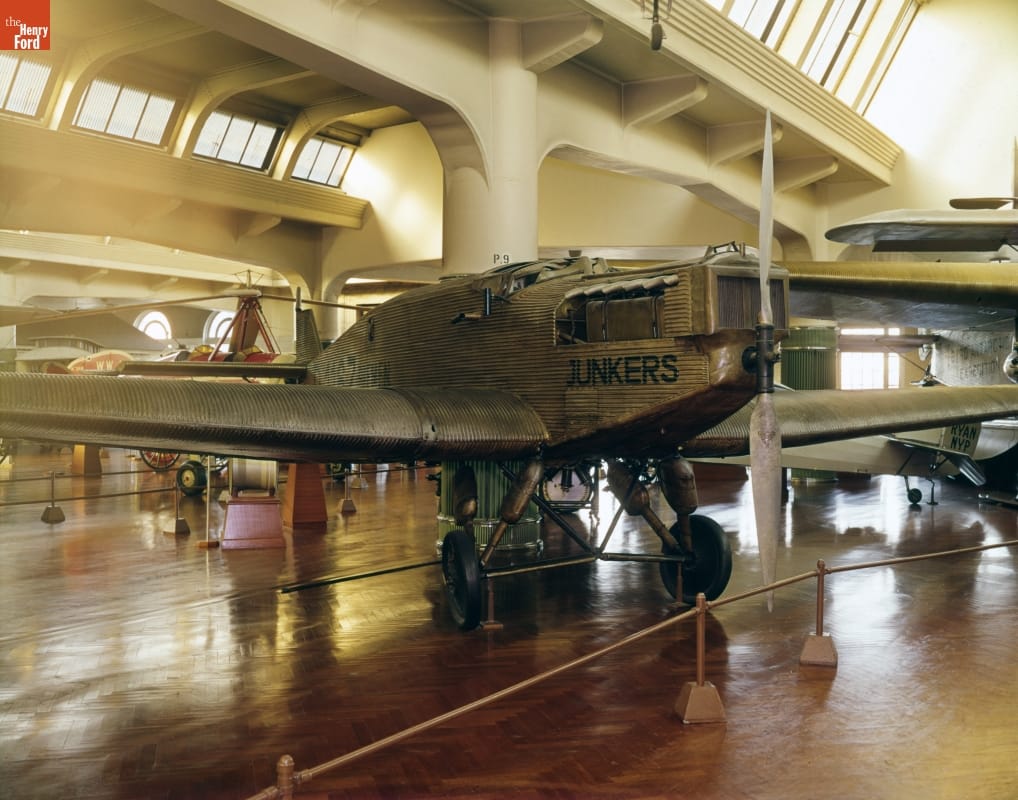
- 1928 Junkers W33 "Bremen" Airplane - The <EM>Bremen</EM> was the first aircraft to fly nonstop from Europe to North America. Hermann Kohl, Ehrenfried Guenther von Huenefeld, and James Fitzmaurice took off from Baldonnel, Ireland, on April 12, 1928, and touched down on Greenly Island, Canada, the next day. The east-to-west crossing, made against prevailing winds, was more difficult than a flight from North America to Europe.
- 1928
- Collections - Artifact
1928 Junkers W33 "Bremen" Airplane
The Bremen was the first aircraft to fly nonstop from Europe to North America. Hermann Kohl, Ehrenfried Guenther von Huenefeld, and James Fitzmaurice took off from Baldonnel, Ireland, on April 12, 1928, and touched down on Greenly Island, Canada, the next day. The east-to-west crossing, made against prevailing winds, was more difficult than a flight from North America to Europe.
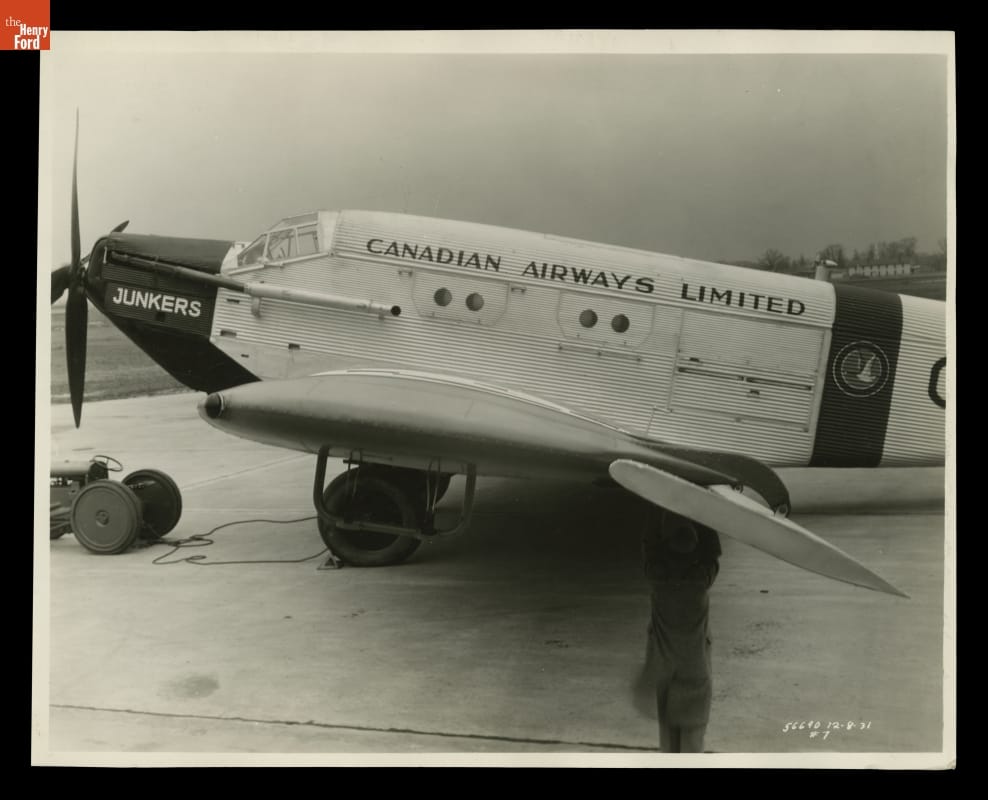
- Junkers Corporation Airplane, "Canadian Airways Limited," December 8, 1931 - German engineer Hugo Junkers pioneered the construction of all-metal airplanes while building craft for the German military during World War I. Junkers built his planes from duralumin, a strong but lightweight aluminum alloy. After the war, Junkers turned to civilian production. This Junkers airplane, lettered for Canadian Airways Limited, paid a visit to Ford Airport in 1931.
- December 08, 1931
- Collections - Artifact
Junkers Corporation Airplane, "Canadian Airways Limited," December 8, 1931
German engineer Hugo Junkers pioneered the construction of all-metal airplanes while building craft for the German military during World War I. Junkers built his planes from duralumin, a strong but lightweight aluminum alloy. After the war, Junkers turned to civilian production. This Junkers airplane, lettered for Canadian Airways Limited, paid a visit to Ford Airport in 1931.
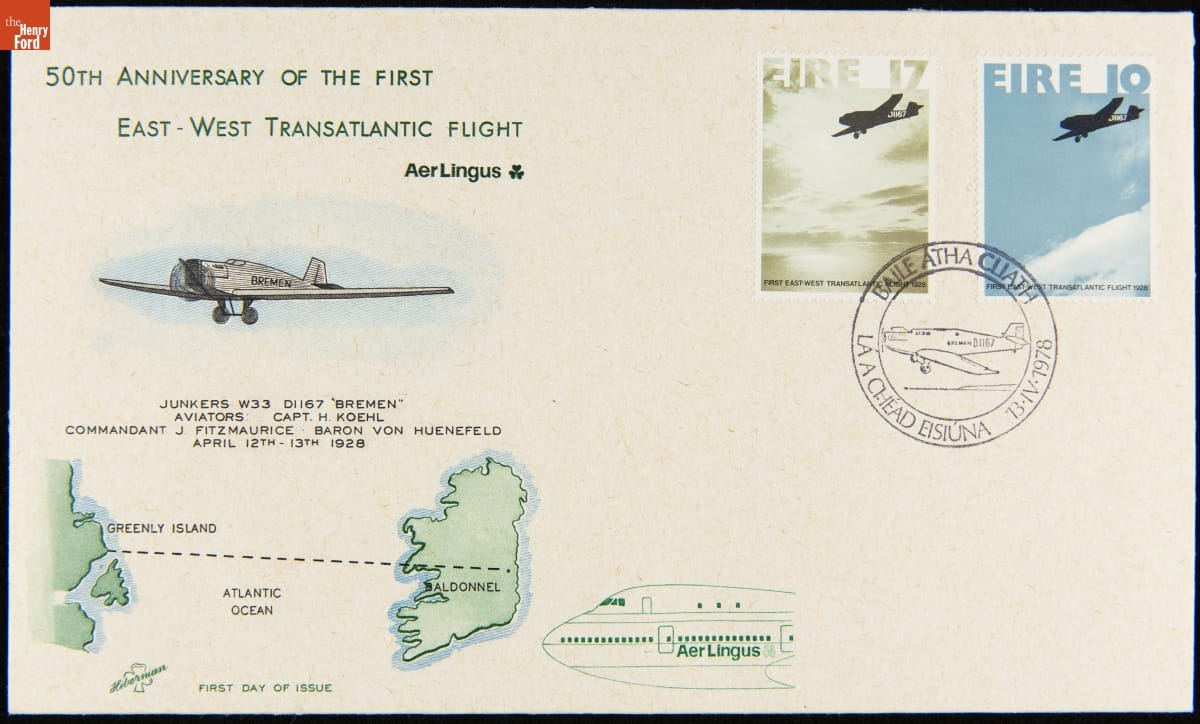
- Aer Lingus Commemorates 50th Anniversary of the 1928 "Bremen" East-West Transatlantic Flight - Ireland's postal service partnered with airline Aer Lingus in 1978 to issue this commemorative first-day cover celebrating the 50th anniversary of the transatlantic flight of the <em>Bremen</em>. Crewed by Hermann Kohl, James Fitzmaurice, and Ehrenfried Guenther von Huenefeld, the <em>Bremen</em>'s flight -- from Baldonnel, Ireland, to Greenly Island, Canada -- was the first east-to-west crossing, made against prevailing westerly winds.
- 1928
- Collections - Artifact
Aer Lingus Commemorates 50th Anniversary of the 1928 "Bremen" East-West Transatlantic Flight
Ireland's postal service partnered with airline Aer Lingus in 1978 to issue this commemorative first-day cover celebrating the 50th anniversary of the transatlantic flight of the Bremen. Crewed by Hermann Kohl, James Fitzmaurice, and Ehrenfried Guenther von Huenefeld, the Bremen's flight -- from Baldonnel, Ireland, to Greenly Island, Canada -- was the first east-to-west crossing, made against prevailing westerly winds.
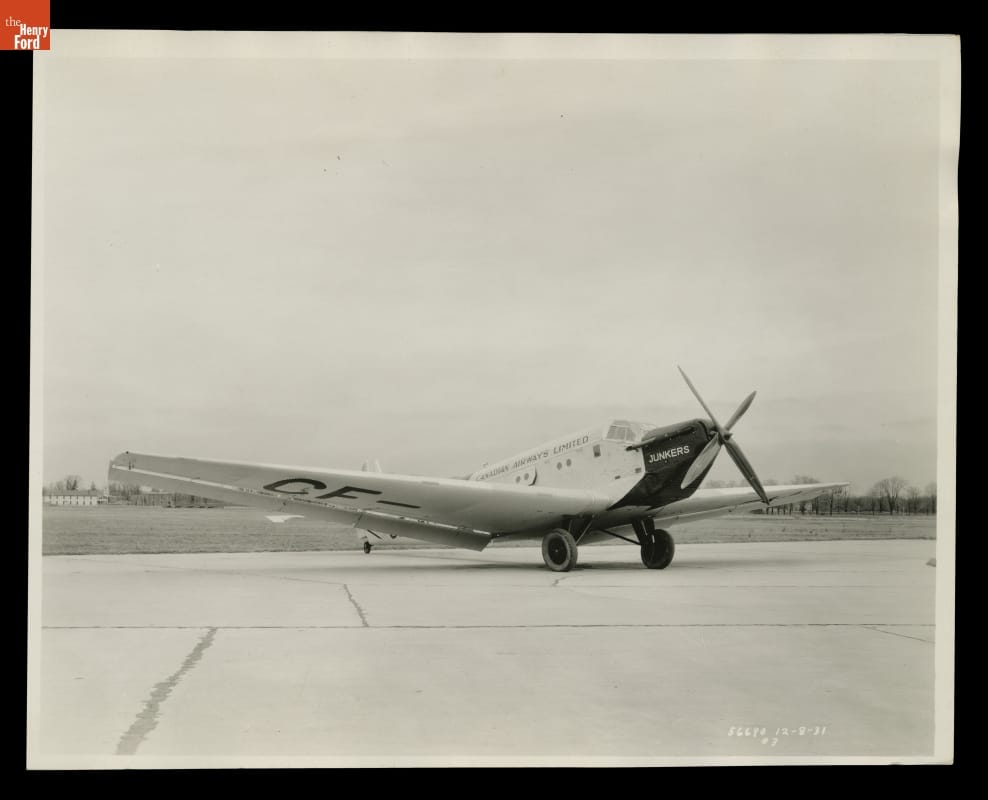
- Junkers Corporation Airplane, "Canadian Airways Limited," December 8, 1931 - German engineer Hugo Junkers pioneered the construction of all-metal airplanes while building craft for the German military during World War I. Junkers built his planes from duralumin, a strong but lightweight aluminum alloy. After the war, Junkers turned to civilian production. This Junkers airplane, lettered for Canadian Airways Limited, paid a visit to Ford Airport in 1931.
- December 08, 1931
- Collections - Artifact
Junkers Corporation Airplane, "Canadian Airways Limited," December 8, 1931
German engineer Hugo Junkers pioneered the construction of all-metal airplanes while building craft for the German military during World War I. Junkers built his planes from duralumin, a strong but lightweight aluminum alloy. After the war, Junkers turned to civilian production. This Junkers airplane, lettered for Canadian Airways Limited, paid a visit to Ford Airport in 1931.
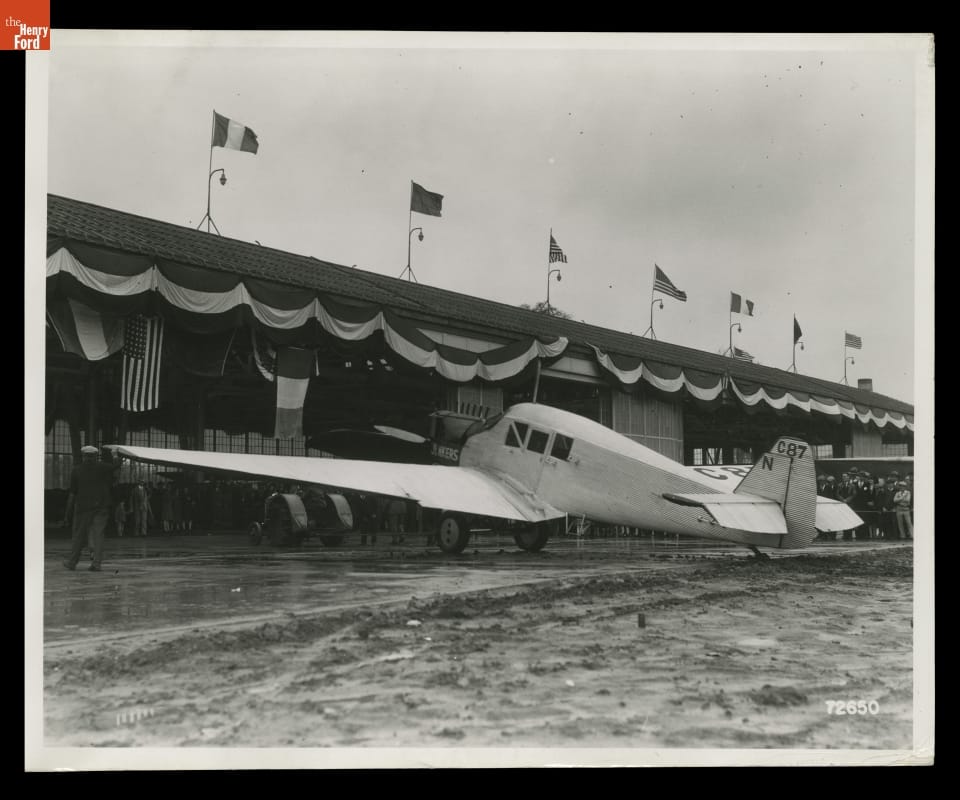
- Junkers Airplane at Ford Airport during Bremen Fliers Visit, May 17, 1928 - An all-metal Junkers airplane sits at Ford Airport in this May 17, 1928, photo. The occasion was a visit by Hugo Junkers and the crew of the Junkers W33 airplane <EM>Bremen</EM>. A month earlier, the <EM>Bremen</EM> made the first nonstop east-to-west flight across the Atlantic Ocean -- a significant challenge that had the crew flying against the prevailing westerly winds.
- May 17, 1928
- Collections - Artifact
Junkers Airplane at Ford Airport during Bremen Fliers Visit, May 17, 1928
An all-metal Junkers airplane sits at Ford Airport in this May 17, 1928, photo. The occasion was a visit by Hugo Junkers and the crew of the Junkers W33 airplane Bremen. A month earlier, the Bremen made the first nonstop east-to-west flight across the Atlantic Ocean -- a significant challenge that had the crew flying against the prevailing westerly winds.
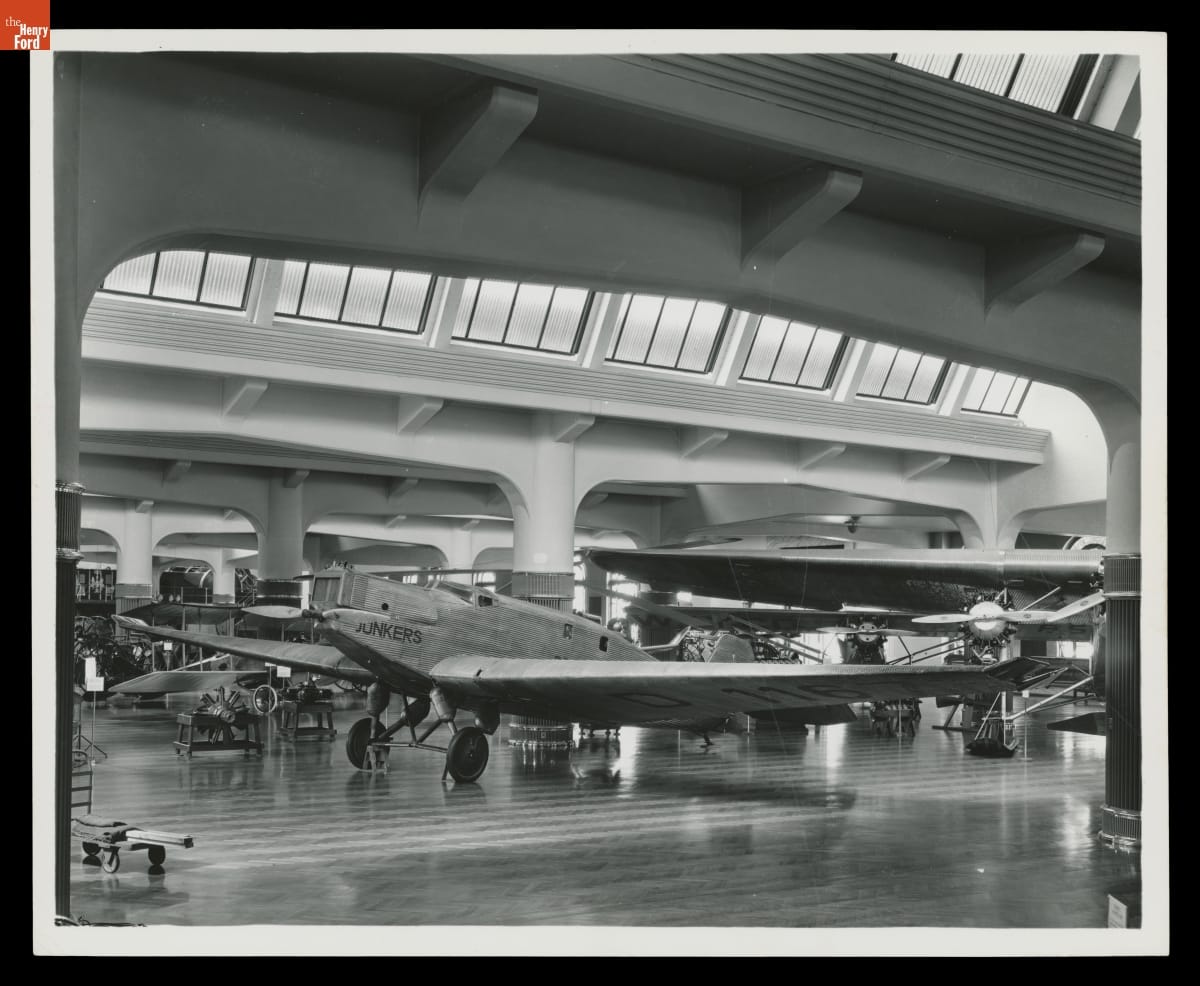
- 1928 Junkers W33 "Bremen" Airplane in Henry Ford Museum, 1938 - The <em>Bremen</em> was the first aircraft to fly nonstop from Europe to North America, traveling against challenging westerly winds. Hermann Kohl, Ehrenfried Guenther von Huenefeld, and James Fitzmaurice took off from Baldonnel, Ireland, on April 12, 1928, and touched down on Greenly Island, Canada, the next day. The Henry Ford acquired the <em>Bremen</em> in 1936.
- July 28, 1938
- Collections - Artifact
1928 Junkers W33 "Bremen" Airplane in Henry Ford Museum, 1938
The Bremen was the first aircraft to fly nonstop from Europe to North America, traveling against challenging westerly winds. Hermann Kohl, Ehrenfried Guenther von Huenefeld, and James Fitzmaurice took off from Baldonnel, Ireland, on April 12, 1928, and touched down on Greenly Island, Canada, the next day. The Henry Ford acquired the Bremen in 1936.
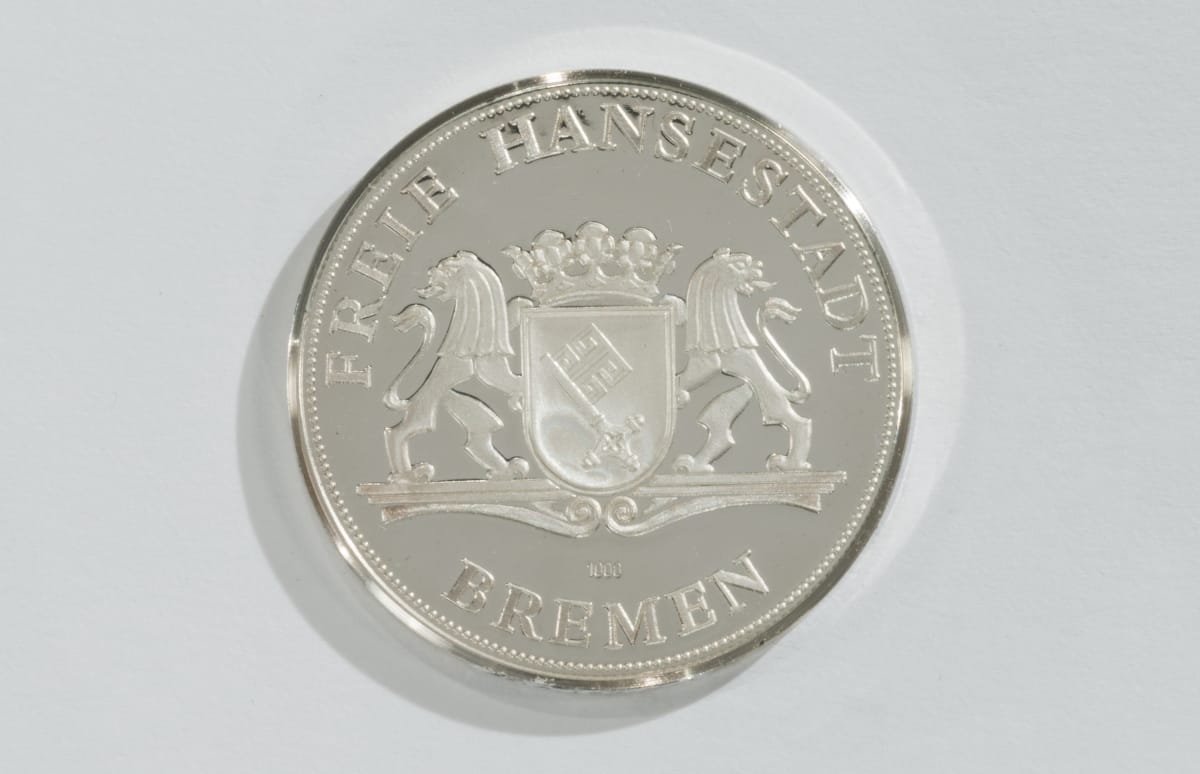
- Coin, Commemorating the 50th Anniversary of the Transatlantic Flight of the Airplane "Bremen," 1978 - The city of Bremen, West Germany, issued this commemorative coin in 1978 to mark the 50th anniversary of the transatlantic flight of the <EM>Bremen</EM>. Crewed by Hermann Kohl, James Fitzmaurice, and Ehrenfried Guenther von Huenefeld, the <EM>Bremen</EM>'s flight was the first east-to-west crossing, made against prevailing westerly winds.
- 1978
- Collections - Artifact
Coin, Commemorating the 50th Anniversary of the Transatlantic Flight of the Airplane "Bremen," 1978
The city of Bremen, West Germany, issued this commemorative coin in 1978 to mark the 50th anniversary of the transatlantic flight of the Bremen. Crewed by Hermann Kohl, James Fitzmaurice, and Ehrenfried Guenther von Huenefeld, the Bremen's flight was the first east-to-west crossing, made against prevailing westerly winds.
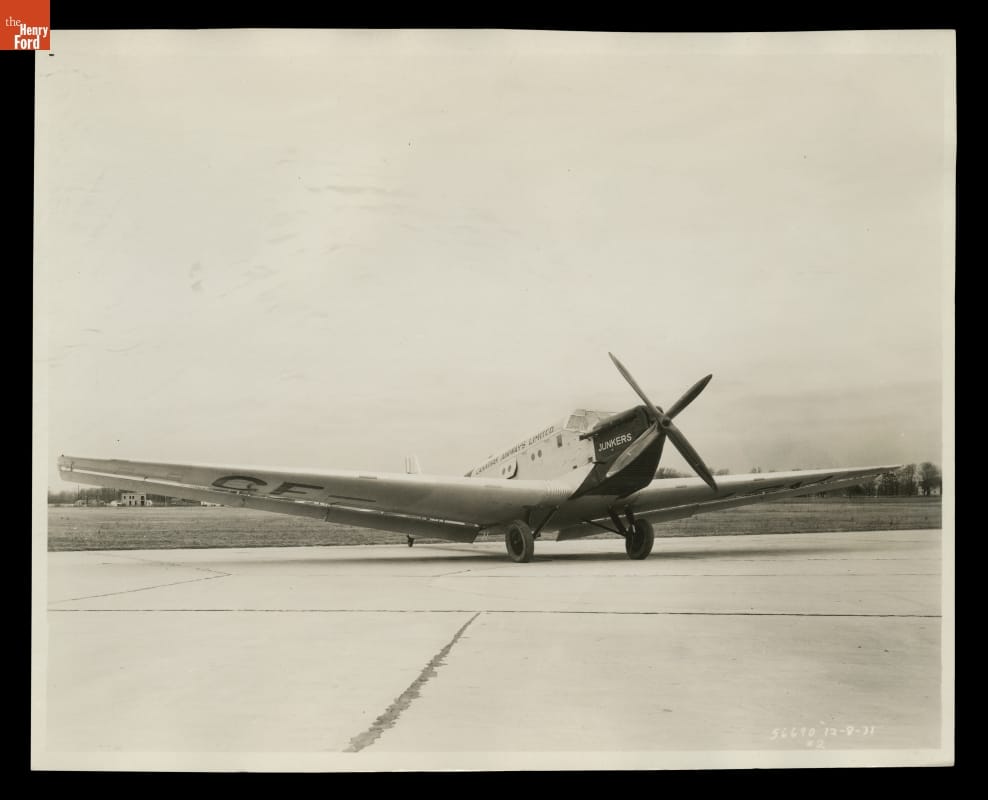
- Junkers Corporation Airplane, "Canadian Airways Limited," December 8, 1931 - German engineer Hugo Junkers pioneered the construction of all-metal airplanes while building craft for the German military during World War I. Junkers built his planes from duralumin, a strong but lightweight aluminum alloy. After the war, Junkers turned to civilian production. This Junkers airplane, lettered for Canadian Airways Limited, paid a visit to Ford Airport in 1931.
- December 08, 1931
- Collections - Artifact
Junkers Corporation Airplane, "Canadian Airways Limited," December 8, 1931
German engineer Hugo Junkers pioneered the construction of all-metal airplanes while building craft for the German military during World War I. Junkers built his planes from duralumin, a strong but lightweight aluminum alloy. After the war, Junkers turned to civilian production. This Junkers airplane, lettered for Canadian Airways Limited, paid a visit to Ford Airport in 1931.
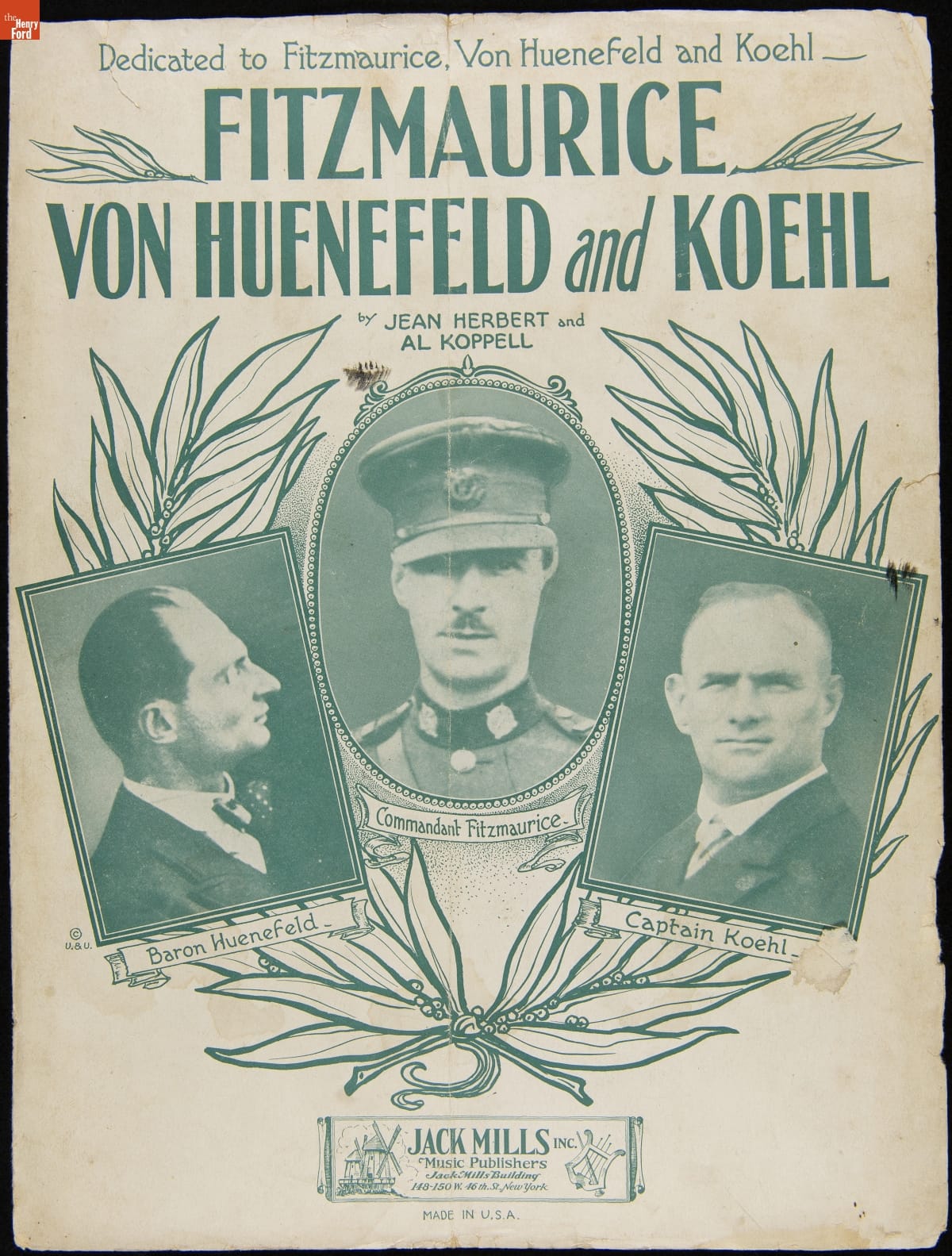
- "Fitzmaurice, von Huenefeld and Koehl," Dedicated to the Crew of the Bremen, 1928 - Irishman James Fitzmaurice and Germans Ehrenfried Gunther von Huenefeld and Hermann Kohl made the first successful nonstop east-to-west flight across the Atlantic Ocean. Their crossing, completed on April 12-13, 1928, against difficult prevailing winds, was made in the Junkers W33 airplane <em>Bremen</em>. The three men were celebrated in this song written by Jean Herbert and Al Koppell.
- April 01, 1928
- Collections - Artifact
"Fitzmaurice, von Huenefeld and Koehl," Dedicated to the Crew of the Bremen, 1928
Irishman James Fitzmaurice and Germans Ehrenfried Gunther von Huenefeld and Hermann Kohl made the first successful nonstop east-to-west flight across the Atlantic Ocean. Their crossing, completed on April 12-13, 1928, against difficult prevailing winds, was made in the Junkers W33 airplane Bremen. The three men were celebrated in this song written by Jean Herbert and Al Koppell.
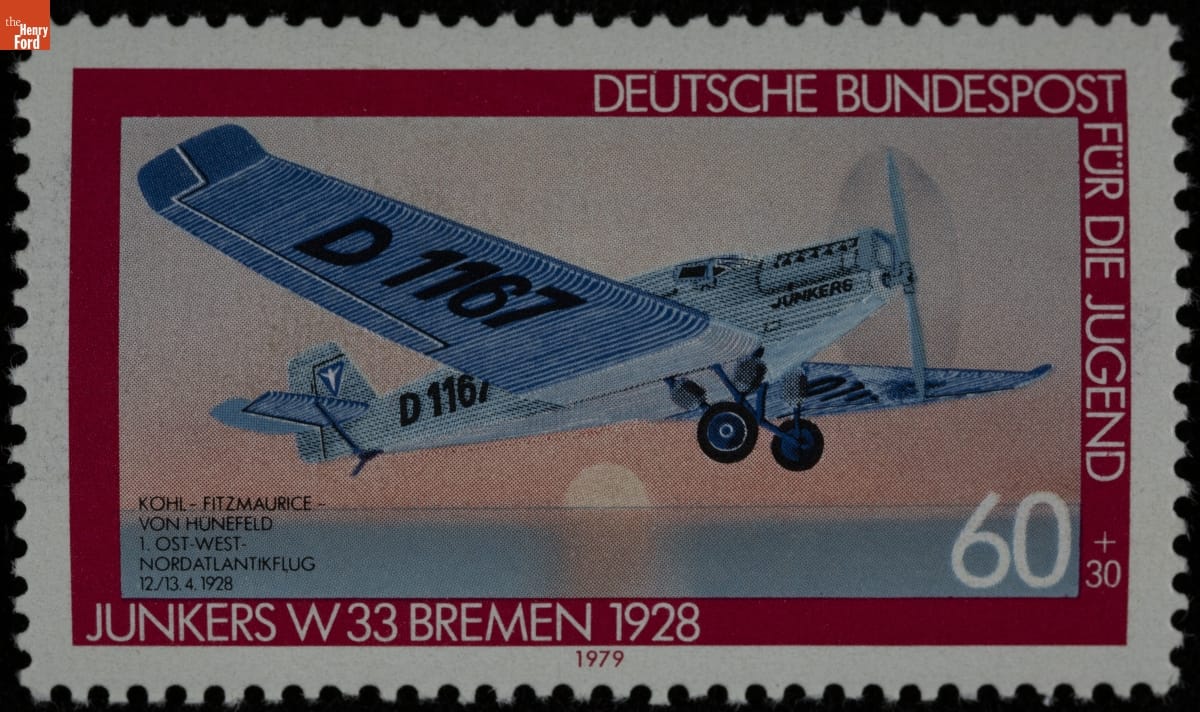
- Commemorative Postage Stamp for the 50th Anniversary of the 1928 "Bremen" Transatlantic Flight - West Germany's postal service issued this commemorative postage stamp in 1979 to mark the 50th anniversary of the transatlantic flight of the <em>Bremen</em>. Crewed by Germans Hermann Kohl and Ehrenfried Guenther von Huenefeld, and Irishman James Fitzmaurice, the <em>Bremen</em>'s flight was the first east-to-west crossing, made against prevailing westerly winds.
- 1928
- Collections - Artifact
Commemorative Postage Stamp for the 50th Anniversary of the 1928 "Bremen" Transatlantic Flight
West Germany's postal service issued this commemorative postage stamp in 1979 to mark the 50th anniversary of the transatlantic flight of the Bremen. Crewed by Germans Hermann Kohl and Ehrenfried Guenther von Huenefeld, and Irishman James Fitzmaurice, the Bremen's flight was the first east-to-west crossing, made against prevailing westerly winds.