
Search
- Customer Watching Service Attendant Test Battery with K.R. Wilson Battery Tester, April 1946 - In an internal combustion car, the battery supplied power for starting the engine and operating the engine's electrical ignition system. It also powered lights and accessories, like a radio, when the engine wasn't running. Testing the battery's ability to hold a charge was a part of routine automobile maintenance.
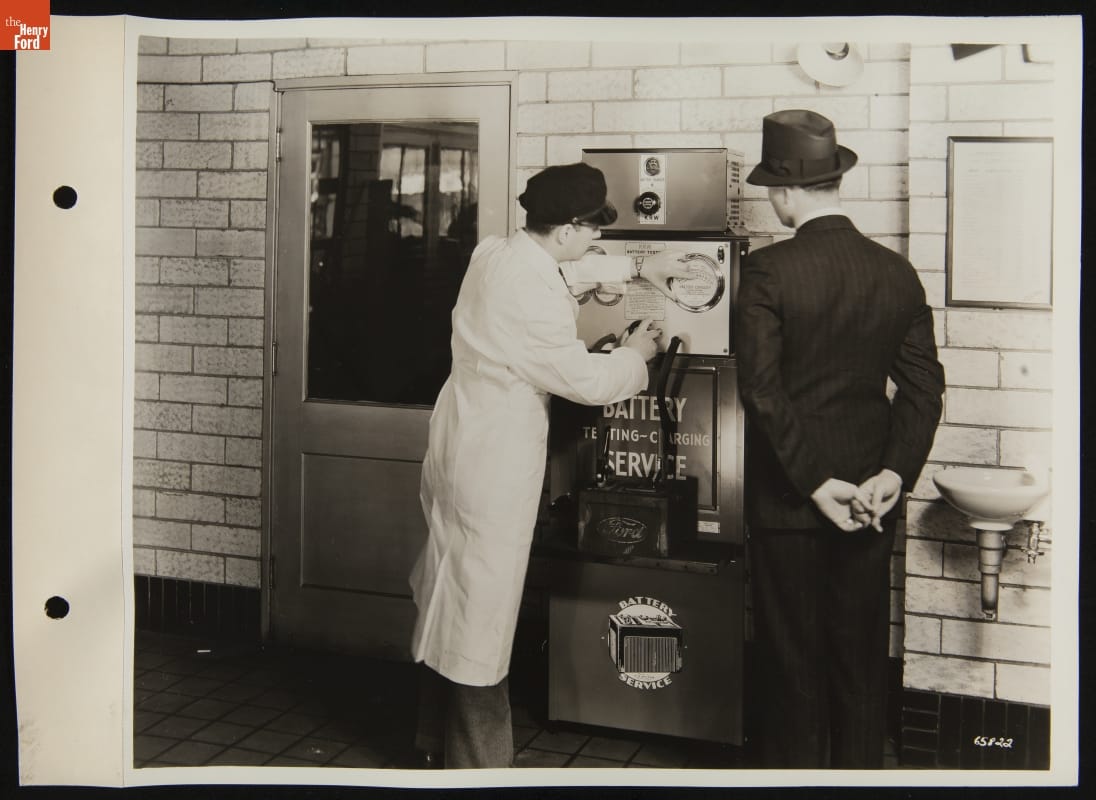
- April 24, 1936
- Collections - Artifact
Customer Watching Service Attendant Test Battery with K.R. Wilson Battery Tester, April 1946
In an internal combustion car, the battery supplied power for starting the engine and operating the engine's electrical ignition system. It also powered lights and accessories, like a radio, when the engine wasn't running. Testing the battery's ability to hold a charge was a part of routine automobile maintenance.
- Customer Watching Service Attendant Test Battery with K.R. Wilson Battery Tester, April 1946 - In an internal combustion car, the battery supplied power for starting the engine and operating the engine's electrical ignition system. It also powered lights and accessories, like a radio, when the engine wasn't running. Testing the battery's ability to hold a charge was a part of routine automobile maintenance.
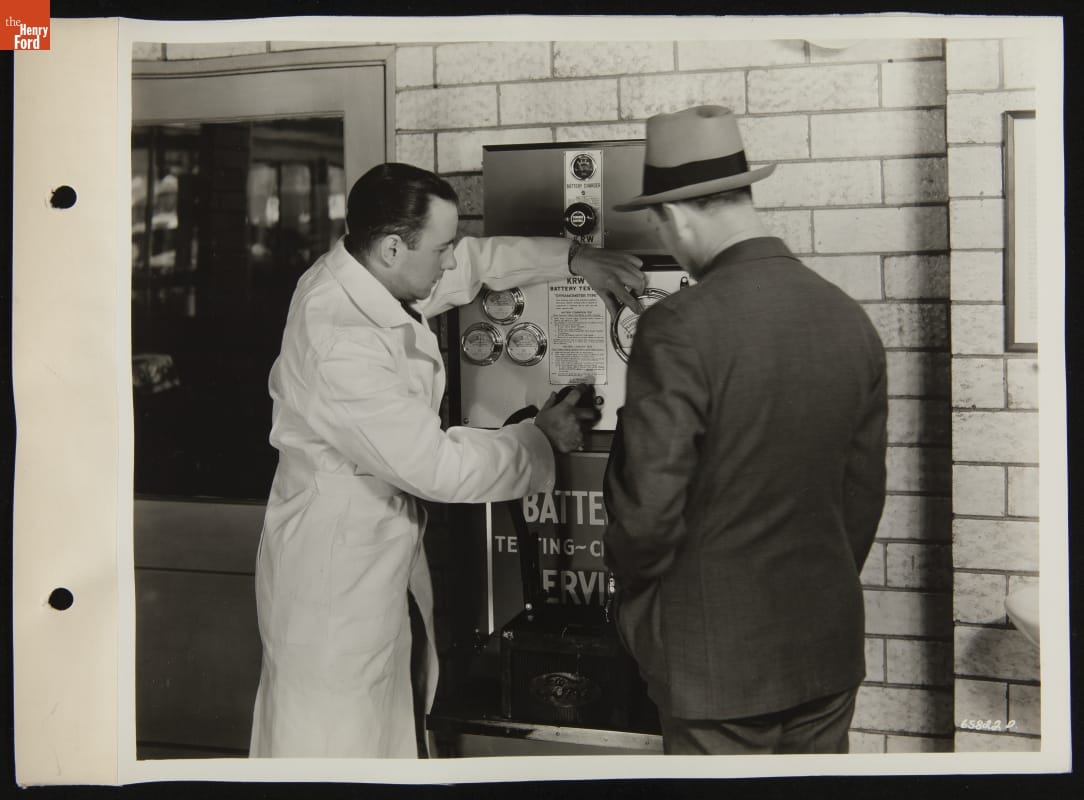
- April 24, 1936
- Collections - Artifact
Customer Watching Service Attendant Test Battery with K.R. Wilson Battery Tester, April 1946
In an internal combustion car, the battery supplied power for starting the engine and operating the engine's electrical ignition system. It also powered lights and accessories, like a radio, when the engine wasn't running. Testing the battery's ability to hold a charge was a part of routine automobile maintenance.
- Service Attendant and Customer at K.R. Wilson Battery Tester, April 1946 - In an internal combustion car, the battery supplied power for starting the engine and operating the engine's electrical ignition system. It also powered lights and accessories, like a radio, when the engine wasn't running. Testing the battery's ability to hold a charge was a part of routine automobile maintenance.
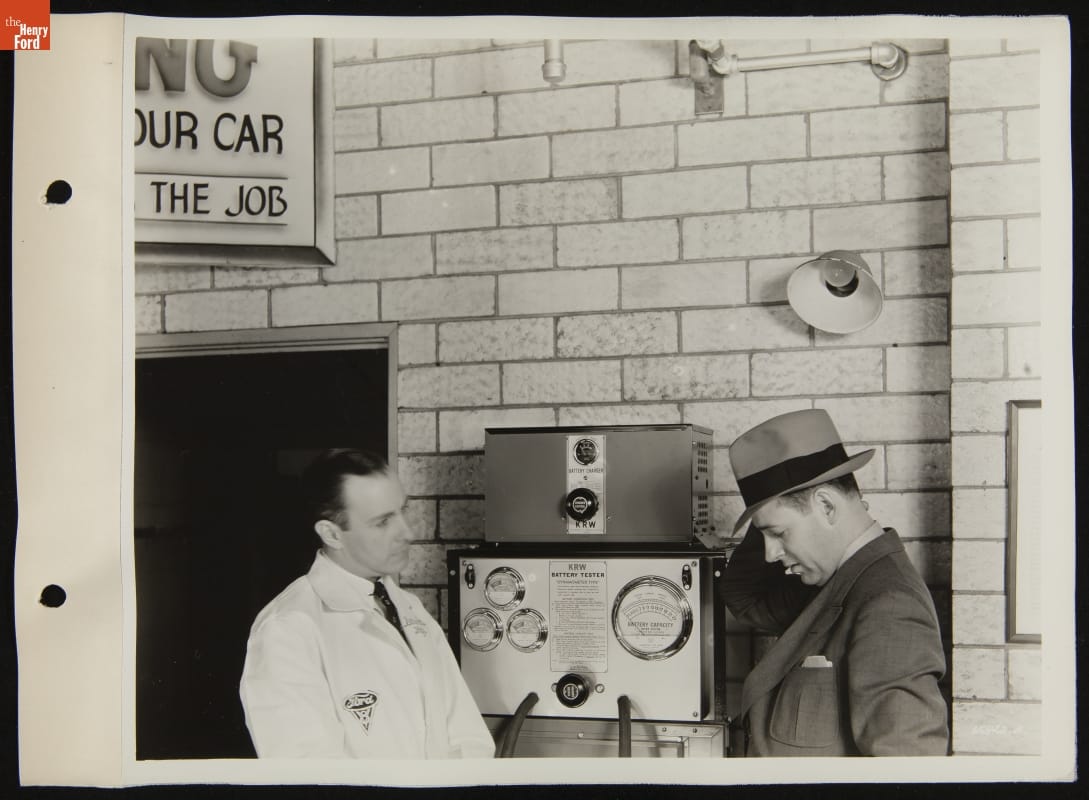
- April 24, 1936
- Collections - Artifact
Service Attendant and Customer at K.R. Wilson Battery Tester, April 1946
In an internal combustion car, the battery supplied power for starting the engine and operating the engine's electrical ignition system. It also powered lights and accessories, like a radio, when the engine wasn't running. Testing the battery's ability to hold a charge was a part of routine automobile maintenance.
- Service Attendant and Customer at KRW Battery Tester and Charger, 1936 - In an internal combustion car, the battery supplied power for starting the engine and operating the engine's electrical ignition system. It also powered lights and accessories, like a radio, when the engine wasn't running. Testing the battery's ability to hold a charge was a part of routine automobile maintenance.
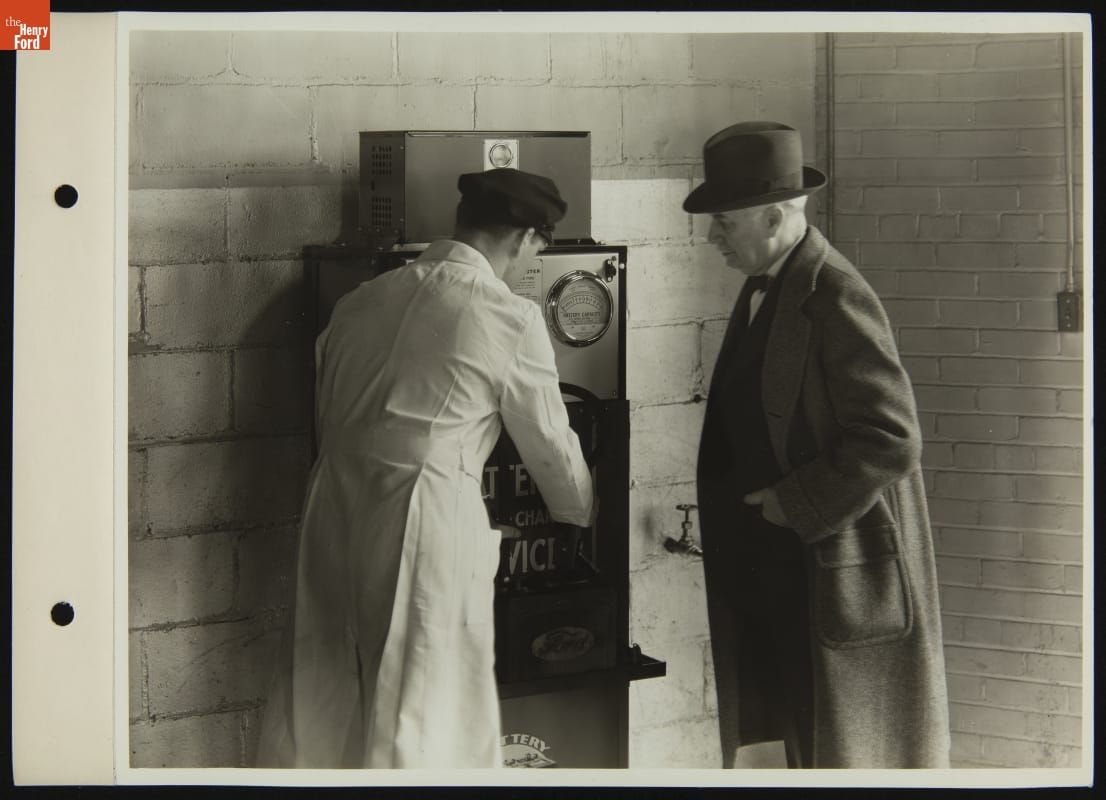
- April 27, 1936
- Collections - Artifact
Service Attendant and Customer at KRW Battery Tester and Charger, 1936
In an internal combustion car, the battery supplied power for starting the engine and operating the engine's electrical ignition system. It also powered lights and accessories, like a radio, when the engine wasn't running. Testing the battery's ability to hold a charge was a part of routine automobile maintenance.
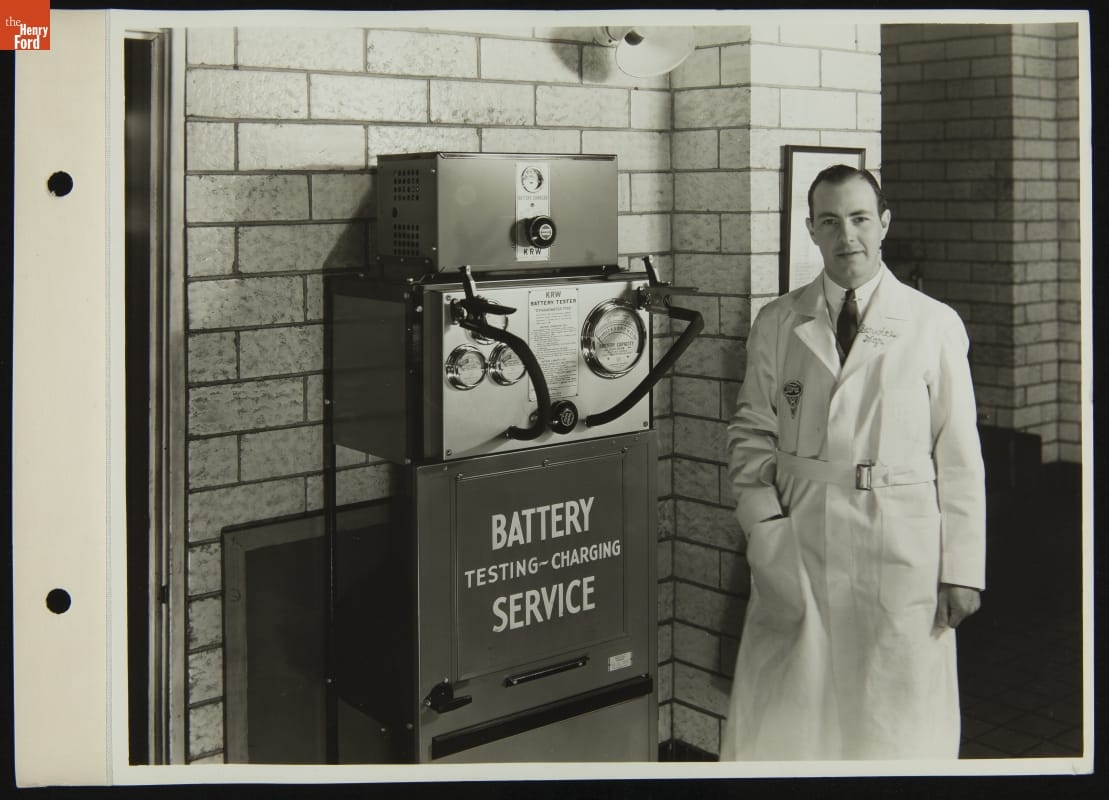
- Service Attendant with KRW Battery Tester and Charger, 1936 - In an internal combustion car, the battery supplied power for starting the engine and operating the engine's electrical ignition system. It also powered lights and accessories, like a radio, when the engine wasn't running. Testing the battery's ability to hold a charge was a part of routine automobile maintenance.
- April 27, 1936
- Collections - Artifact
Service Attendant with KRW Battery Tester and Charger, 1936
In an internal combustion car, the battery supplied power for starting the engine and operating the engine's electrical ignition system. It also powered lights and accessories, like a radio, when the engine wasn't running. Testing the battery's ability to hold a charge was a part of routine automobile maintenance.
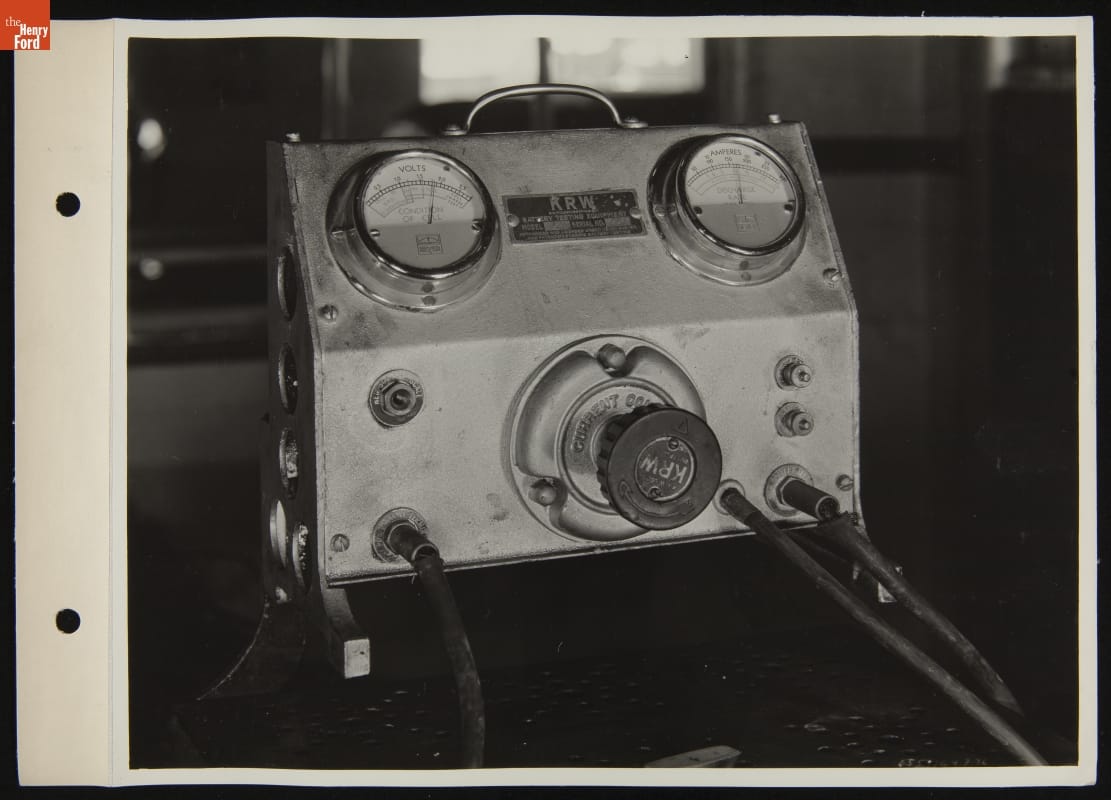
- K.R. Wilson Battery Testing Equipment at Ford Service Station, April 1936 - In 1916, Kirke R. Wilson opened a Ford repair garage in Buffalo, New York. Disappointed with tools available at the time, he began making custom instruments designed specifically for his work. In 1920, Wilson opened a factory and began selling his tools and equipment to other Ford dealers and garages -- the start of a long and profitable relationship.
- April 07, 1936
- Collections - Artifact
K.R. Wilson Battery Testing Equipment at Ford Service Station, April 1936
In 1916, Kirke R. Wilson opened a Ford repair garage in Buffalo, New York. Disappointed with tools available at the time, he began making custom instruments designed specifically for his work. In 1920, Wilson opened a factory and began selling his tools and equipment to other Ford dealers and garages -- the start of a long and profitable relationship.
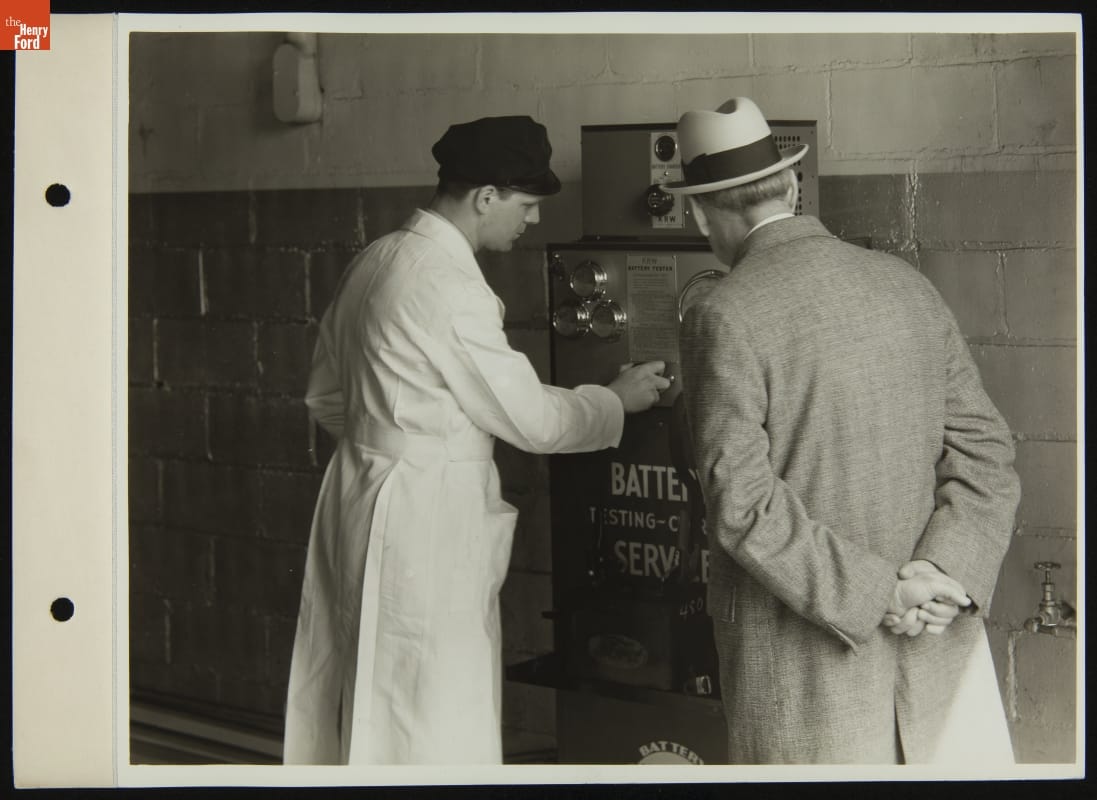
- Service Attendant and Customer at KRW Battery Tester and Charger,1936 - In an internal combustion car, the battery supplied power for starting the engine and operating the engine's electrical ignition system. It also powered lights and accessories, like a radio, when the engine wasn't running. Testing the battery's ability to hold a charge was a part of routine automobile maintenance.
- April 27, 1936
- Collections - Artifact
Service Attendant and Customer at KRW Battery Tester and Charger,1936
In an internal combustion car, the battery supplied power for starting the engine and operating the engine's electrical ignition system. It also powered lights and accessories, like a radio, when the engine wasn't running. Testing the battery's ability to hold a charge was a part of routine automobile maintenance.
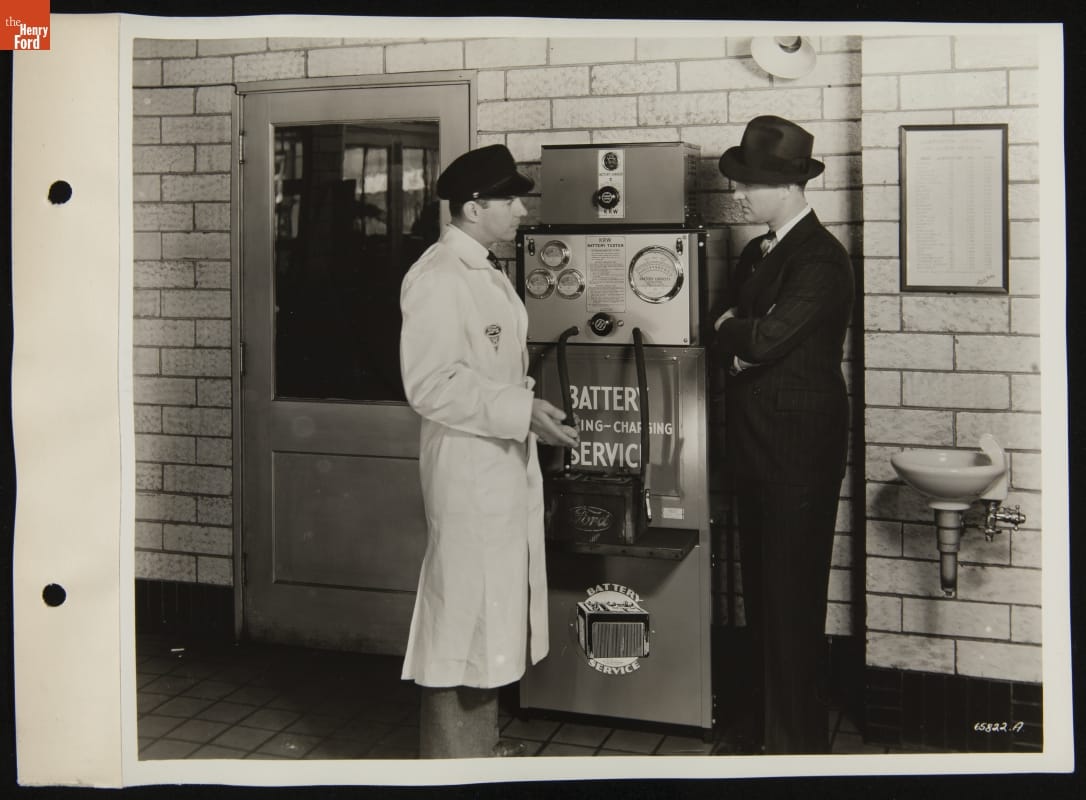
- Service Attendant and Customer at K.R. Wilson Battery Tester, April 1946 - In an internal combustion car, the battery supplied power for starting the engine and operating the engine's electrical ignition system. It also powered lights and accessories, like a radio, when the engine wasn't running. Testing the battery's ability to hold a charge was a part of routine automobile maintenance.
- April 24, 1936
- Collections - Artifact
Service Attendant and Customer at K.R. Wilson Battery Tester, April 1946
In an internal combustion car, the battery supplied power for starting the engine and operating the engine's electrical ignition system. It also powered lights and accessories, like a radio, when the engine wasn't running. Testing the battery's ability to hold a charge was a part of routine automobile maintenance.
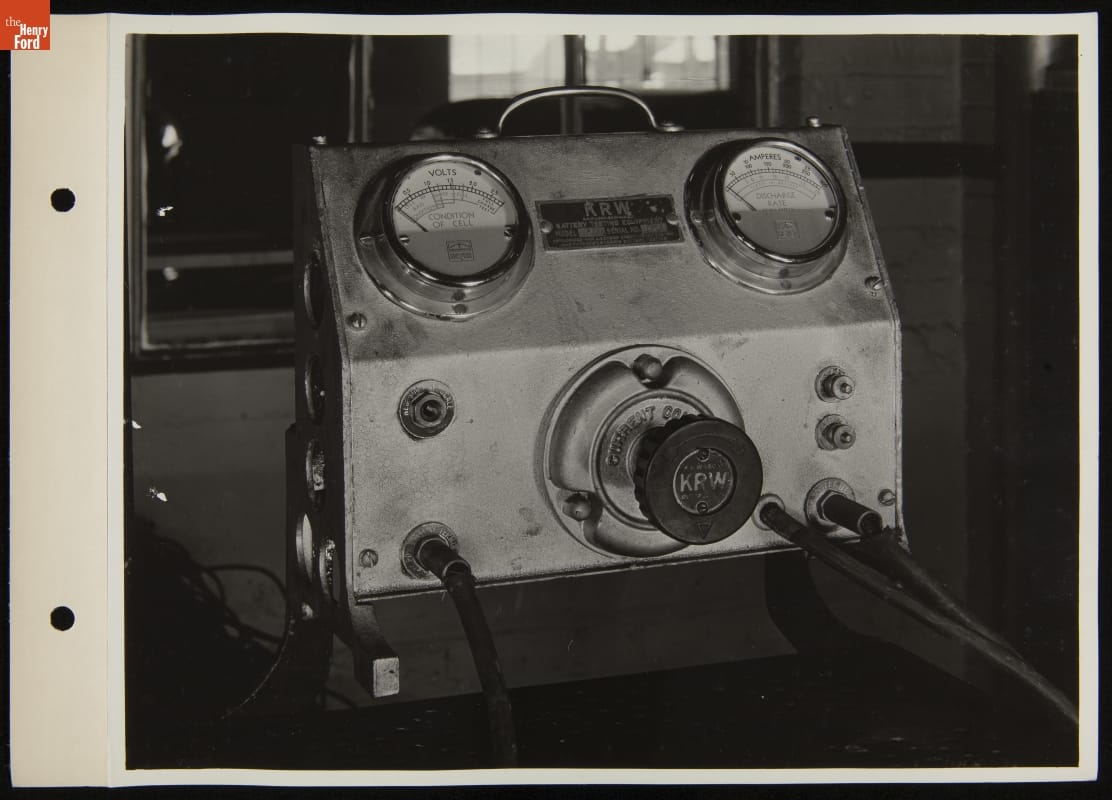
- K.R. Wilson Battery Testing Equipment at Ford Service Station, April 1936 - In 1916, Kirke R. Wilson opened a Ford repair garage in Buffalo, New York. Disappointed with tools available at the time, he began making custom instruments designed specifically for his work. In 1920, Wilson opened a factory and began selling his tools and equipment to other Ford dealers and garages -- the start of a long and profitable relationship.
- April 07, 1936
- Collections - Artifact
K.R. Wilson Battery Testing Equipment at Ford Service Station, April 1936
In 1916, Kirke R. Wilson opened a Ford repair garage in Buffalo, New York. Disappointed with tools available at the time, he began making custom instruments designed specifically for his work. In 1920, Wilson opened a factory and began selling his tools and equipment to other Ford dealers and garages -- the start of a long and profitable relationship.
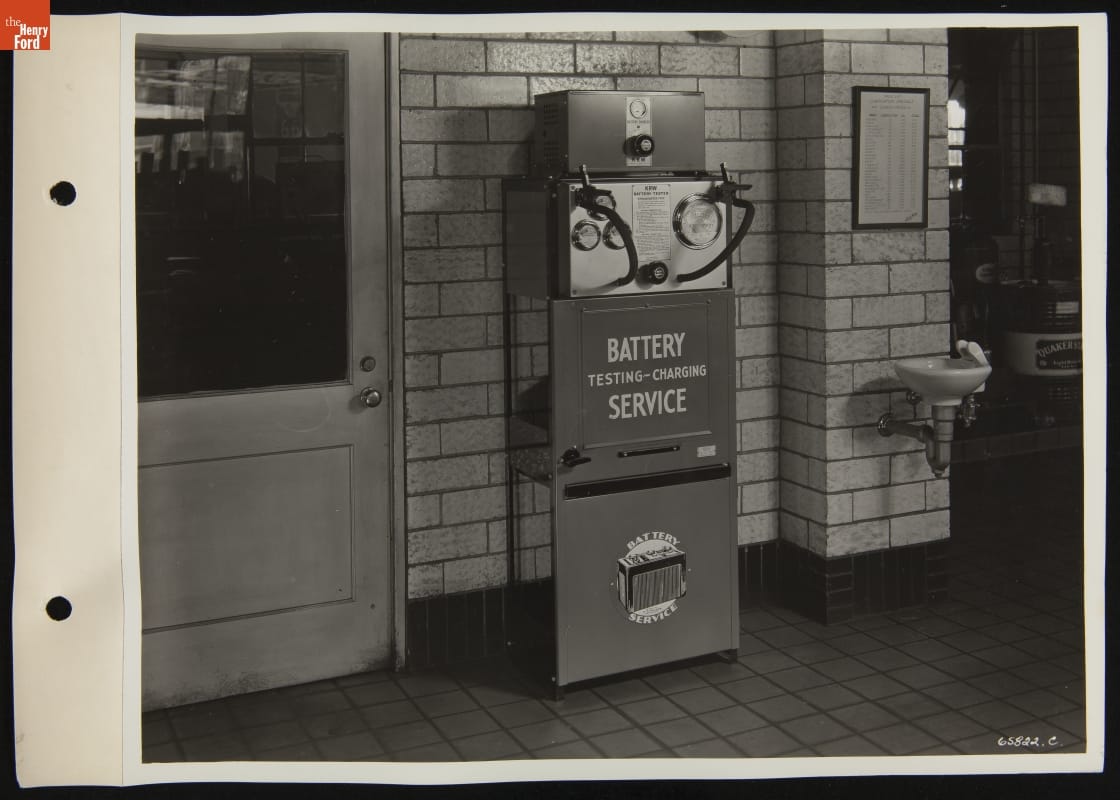
- K.R. Wilson Battery Tester at Ford Super Service Station, April 1946 - In the 1930s, Ford Motor Company promoted the "Super Service Station" concept for its franchisee dealers. These stations provided one-stop shopping for motorists by selling gasoline, motor oil, parts, and accessories along with new Ford vehicles. The stations also provided automotive service and repairs.
- April 24, 1936
- Collections - Artifact
K.R. Wilson Battery Tester at Ford Super Service Station, April 1946
In the 1930s, Ford Motor Company promoted the "Super Service Station" concept for its franchisee dealers. These stations provided one-stop shopping for motorists by selling gasoline, motor oil, parts, and accessories along with new Ford vehicles. The stations also provided automotive service and repairs.