
Search
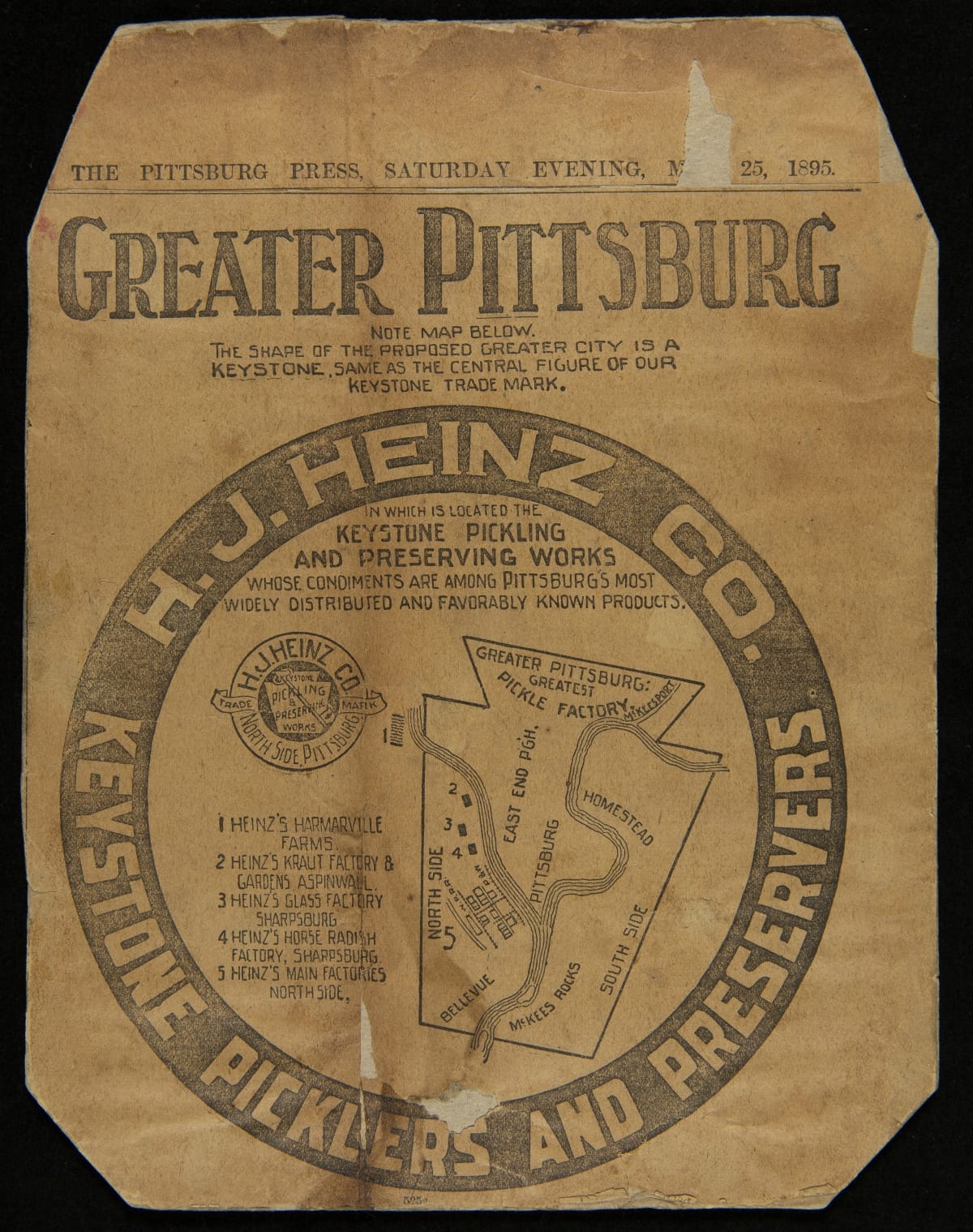
- Newspaper Advertising, "H. J. Heinz Co. Keystone Picklers and Preservers," May 25, 1895 - From very early on in the company's history, the keystone became the symbol of the H.J. Heinz Company. In this newspaper advertisement, a keystone symbol was juxtaposed over a map of the Pittsburgh area showing various Heinz farms and factories.
- May 25, 1895
- Collections - Artifact
Newspaper Advertising, "H. J. Heinz Co. Keystone Picklers and Preservers," May 25, 1895
From very early on in the company's history, the keystone became the symbol of the H.J. Heinz Company. In this newspaper advertisement, a keystone symbol was juxtaposed over a map of the Pittsburgh area showing various Heinz farms and factories.
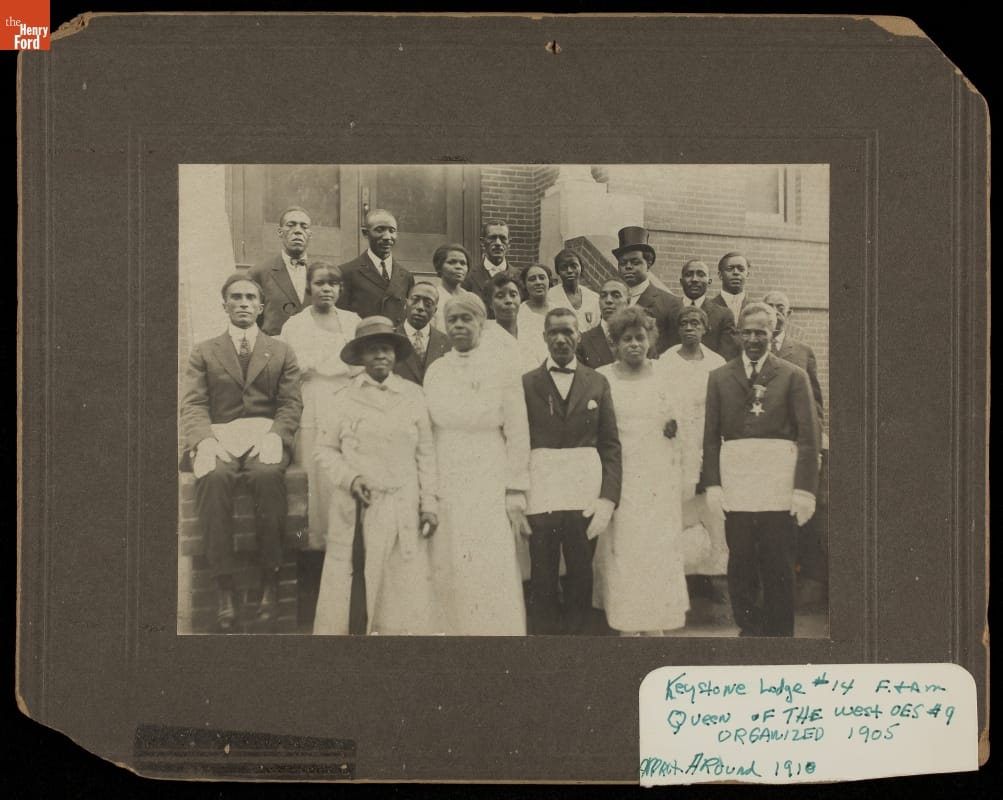
- Members of Keystone Lodge #14 (Freemasons) and Queen of the West (Order of the Eastern Star) #9, circa 1910 -
- circa 1910
- Collections - Artifact
Members of Keystone Lodge #14 (Freemasons) and Queen of the West (Order of the Eastern Star) #9, circa 1910
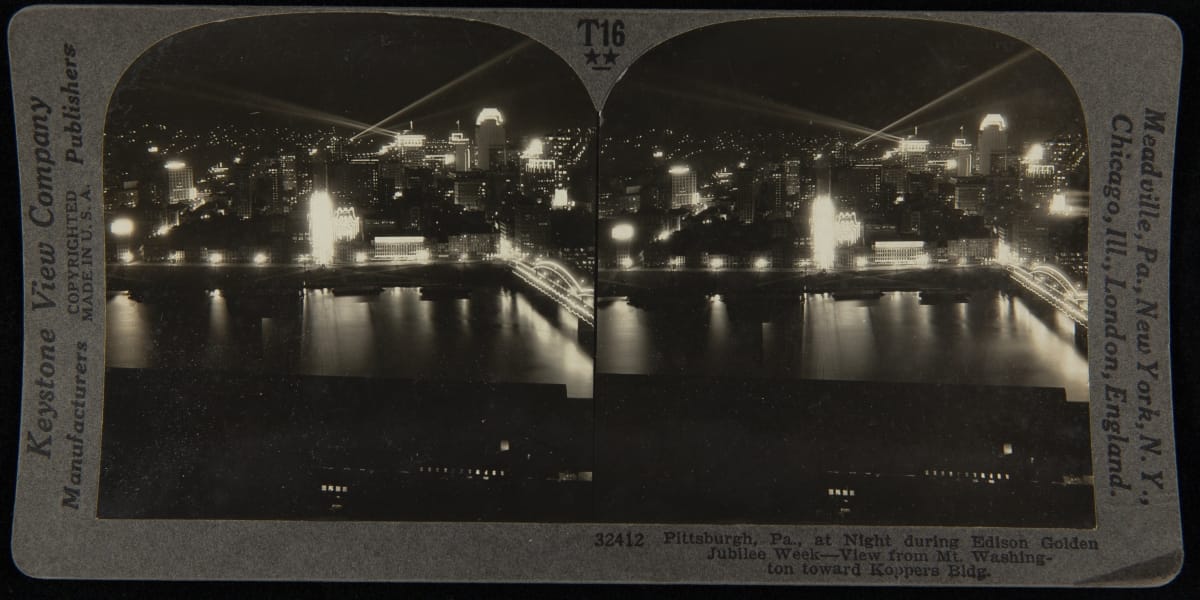
- Pittsburgh at Night during Edison Golden Jubilee Week, October 1929 - In 1929, communities throughout America planned Light's Golden Jubilee celebrations to commemorate the 50th anniversary of Thomas Edison's invention of a practical incandescent lamp. In Pittsburgh, Pennsylvania, "myriads of electric lights" lit up the city's skyline. President Herbert Hoover and members of his cabinet also participated in the celebration.
- October 01, 1929
- Collections - Artifact
Pittsburgh at Night during Edison Golden Jubilee Week, October 1929
In 1929, communities throughout America planned Light's Golden Jubilee celebrations to commemorate the 50th anniversary of Thomas Edison's invention of a practical incandescent lamp. In Pittsburgh, Pennsylvania, "myriads of electric lights" lit up the city's skyline. President Herbert Hoover and members of his cabinet also participated in the celebration.
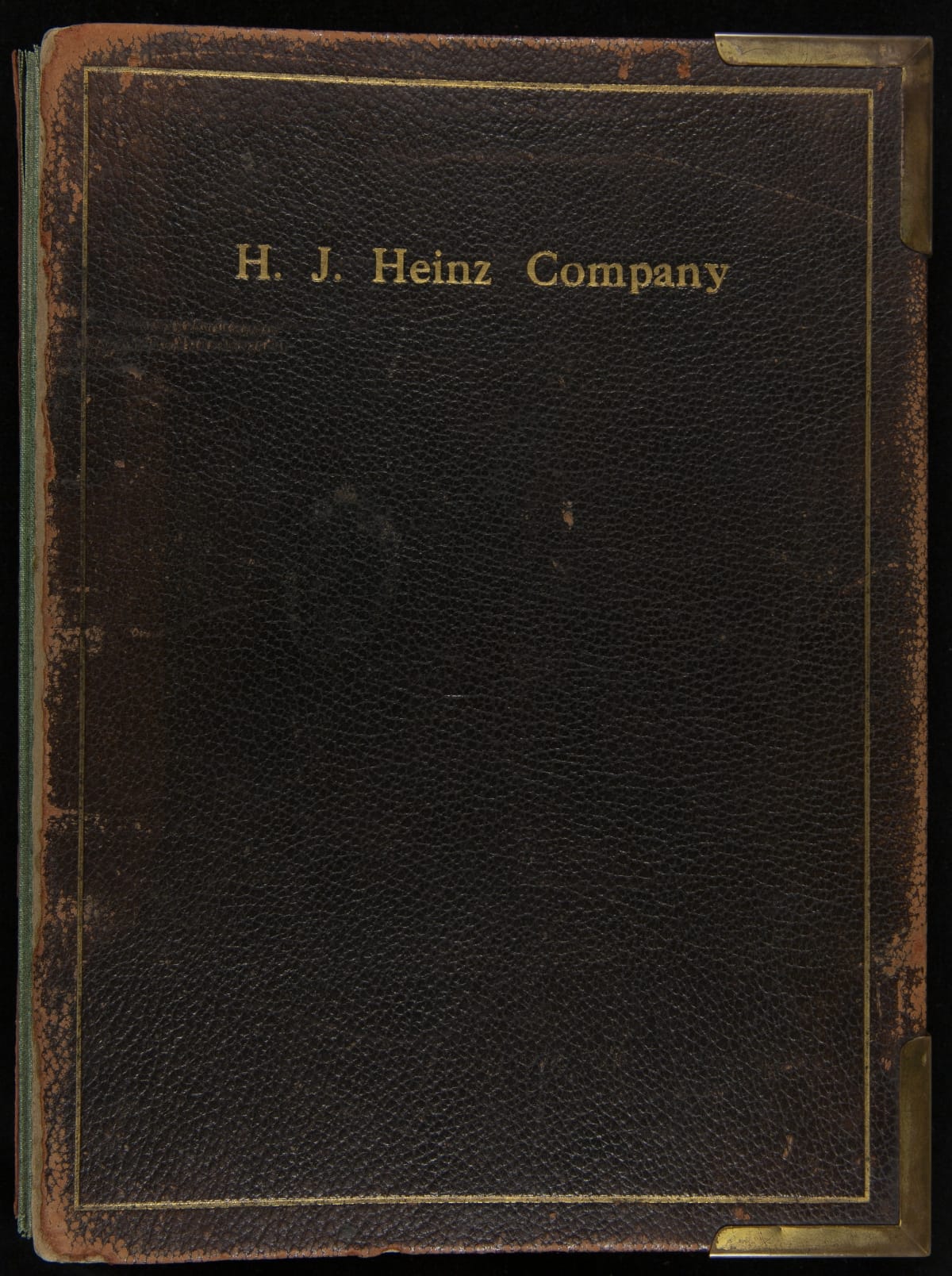
- Sales Catalog of the H. J. Heinz Company and Products, Pittsburgh, Pennsylvania, circa 1910 - With humble beginnings exclusively selling horseradish in 1869, H.J. Heinz continued to expand his product line to build the "House of Heinz" and become a leader in the manufactured food industry. This sales catalog highlights the manufacturing process and provides photographs of the factories, branch houses, and employees. It also contains information and photographs of each of the "57 Varieties" of Heinz products.
- 1910
- Collections - Artifact
Sales Catalog of the H. J. Heinz Company and Products, Pittsburgh, Pennsylvania, circa 1910
With humble beginnings exclusively selling horseradish in 1869, H.J. Heinz continued to expand his product line to build the "House of Heinz" and become a leader in the manufactured food industry. This sales catalog highlights the manufacturing process and provides photographs of the factories, branch houses, and employees. It also contains information and photographs of each of the "57 Varieties" of Heinz products.
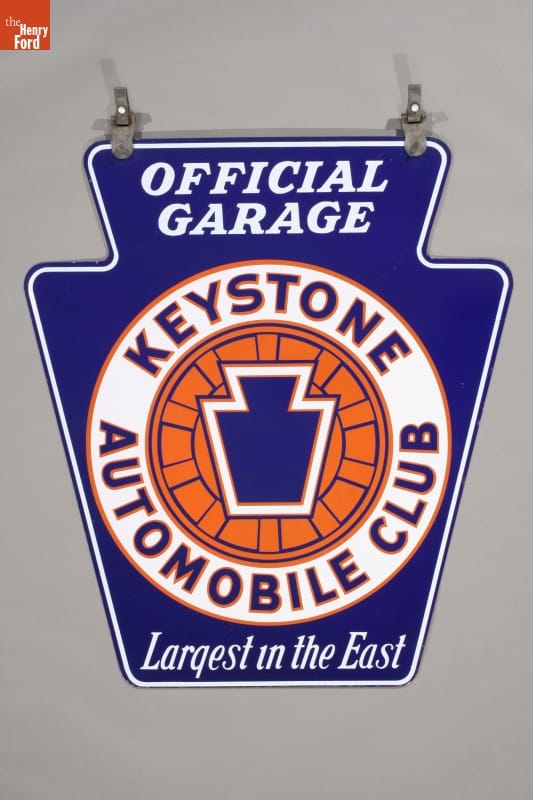
- Keystone Automobile Club Sign, circa 1940 - The Keystone Automobile Club, which partnered with American Automobile Association Mid-Atlantic in 1965, was a membership-based organization that served drivers in the greater Philadelphia area. This sign would indicate to members that this garage was "officially" approved by the club.
- circa 1940
- Collections - Artifact
Keystone Automobile Club Sign, circa 1940
The Keystone Automobile Club, which partnered with American Automobile Association Mid-Atlantic in 1965, was a membership-based organization that served drivers in the greater Philadelphia area. This sign would indicate to members that this garage was "officially" approved by the club.
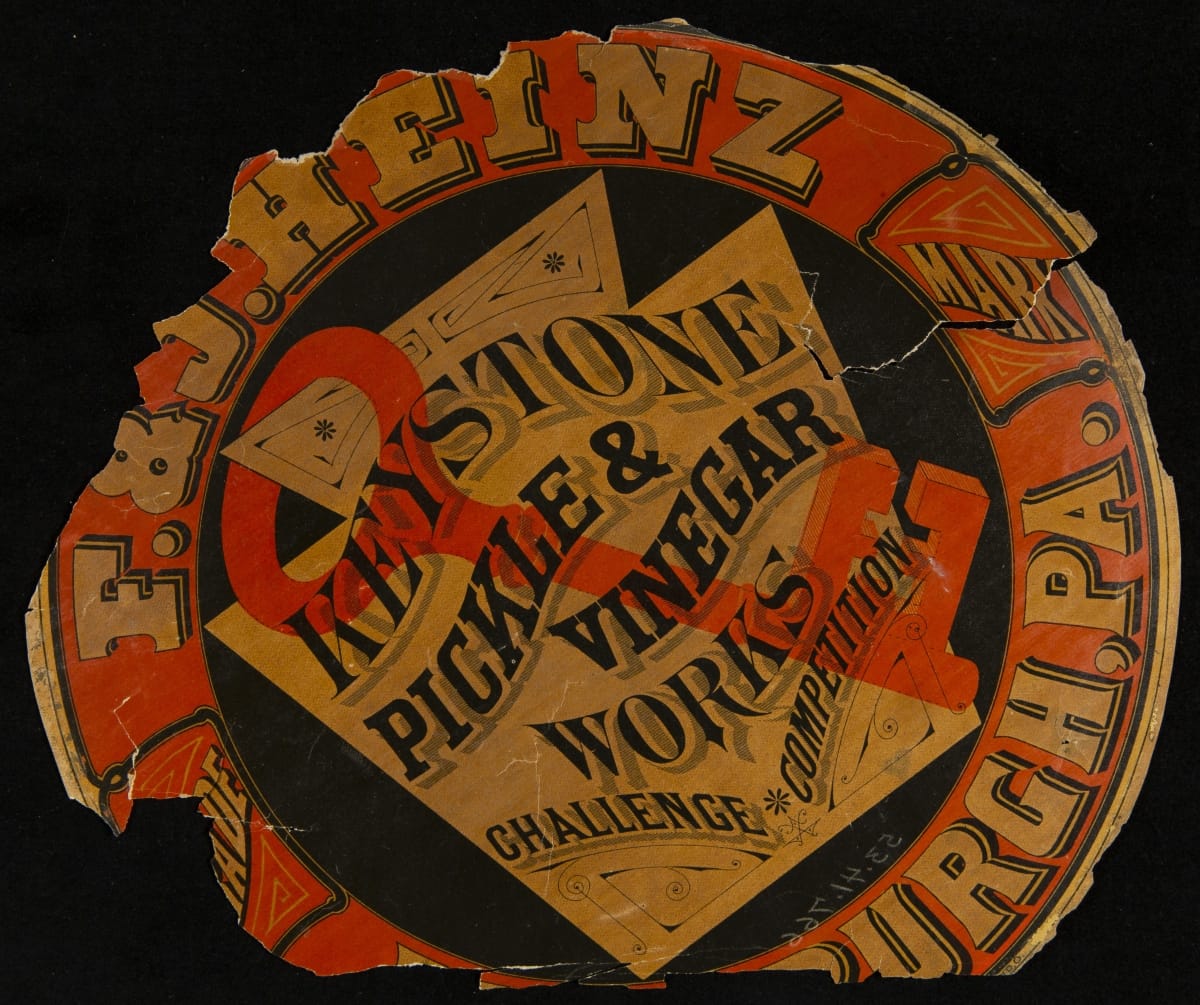
- Barrel Label, "F. & J. Heinz Vinegar," 1876-1888 - After having to close his first business, H.J. Heinz persuaded family members to begin a new company in 1876 -- F. & J. Heinz -- with H.J. Heinz running the company behind the scenes until he could rebuild his reputation and take over the company. This label features the company's signature keystone symbol for its "Keystone Pickle & Vinegar Works" brand.
- 1876-1888
- Collections - Artifact
Barrel Label, "F. & J. Heinz Vinegar," 1876-1888
After having to close his first business, H.J. Heinz persuaded family members to begin a new company in 1876 -- F. & J. Heinz -- with H.J. Heinz running the company behind the scenes until he could rebuild his reputation and take over the company. This label features the company's signature keystone symbol for its "Keystone Pickle & Vinegar Works" brand.
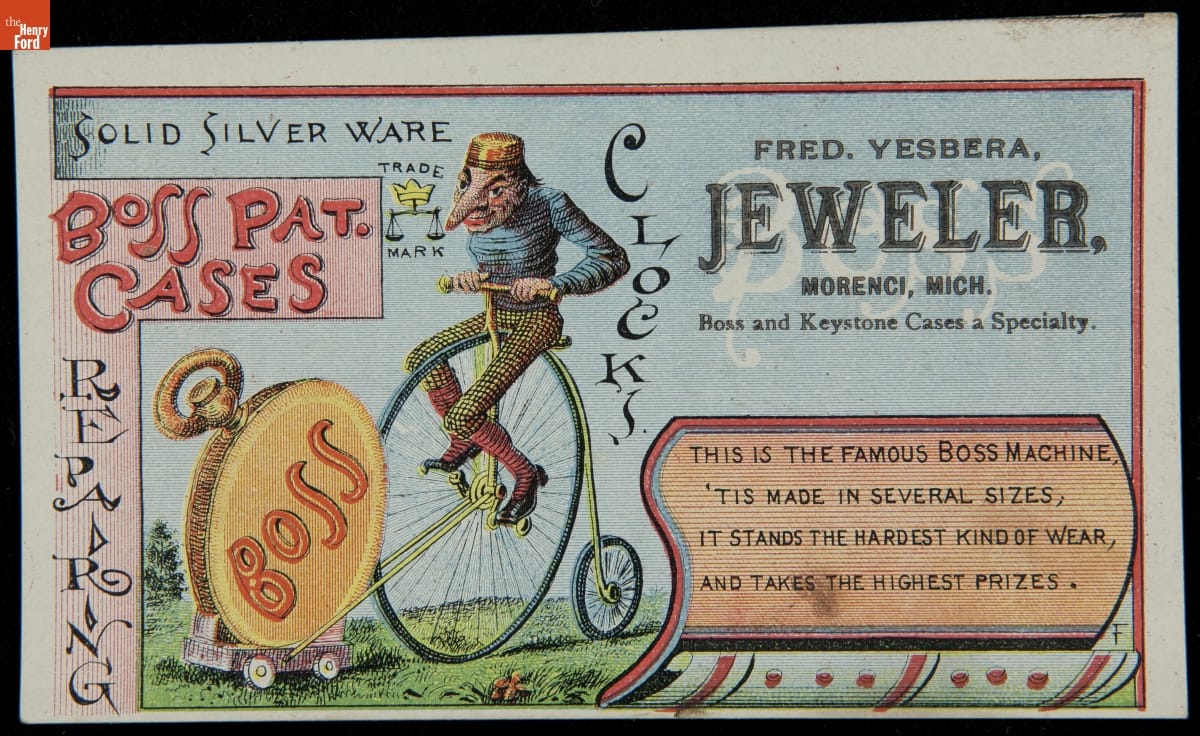
- Trade Card for Boss Watch-Cases, Keystone Watch Case Company and Jeweler, F. J. Yesbera, 1875-1890 - In the last third of the nineteenth century, an unprecedented variety of consumer goods and services flooded the American market. Advertisers, armed with new methods of color printing, bombarded potential customers with trade cards. Americans enjoyed and often saved the vibrant little advertisements found in product packages or distributed by local merchants. Many survive as historical records of commercialism in the United States.
- 1875-1890
- Collections - Artifact
Trade Card for Boss Watch-Cases, Keystone Watch Case Company and Jeweler, F. J. Yesbera, 1875-1890
In the last third of the nineteenth century, an unprecedented variety of consumer goods and services flooded the American market. Advertisers, armed with new methods of color printing, bombarded potential customers with trade cards. Americans enjoyed and often saved the vibrant little advertisements found in product packages or distributed by local merchants. Many survive as historical records of commercialism in the United States.
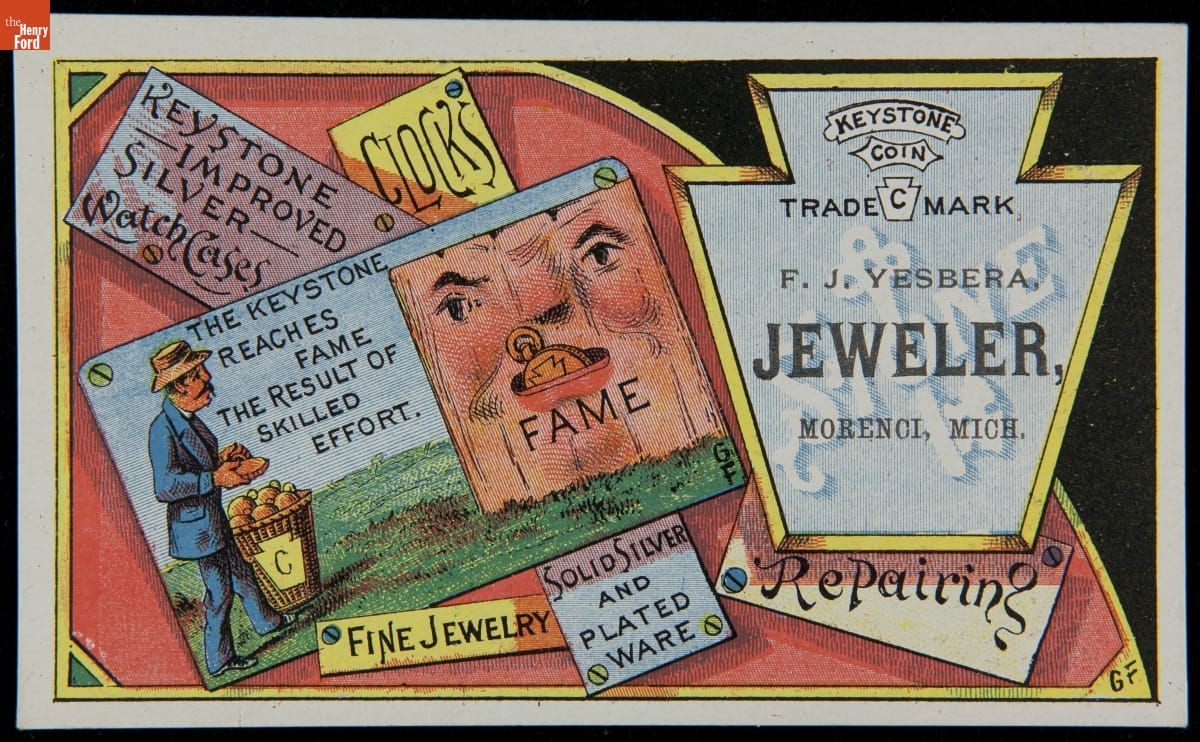
- Trade Card for Keystone Watch Case Company and Jeweler, F.J. Yesbera, 1880-1900 - In the last third of the nineteenth century, an unprecedented variety of consumer goods and services flooded the American market. Advertisers, armed with new methods of color printing, bombarded potential customers with trade cards. Americans enjoyed and often saved the vibrant little advertisements found in product packages or distributed by local merchants. Many survive as historical records of commercialism in the United States.
- 1880-1900
- Collections - Artifact
Trade Card for Keystone Watch Case Company and Jeweler, F.J. Yesbera, 1880-1900
In the last third of the nineteenth century, an unprecedented variety of consumer goods and services flooded the American market. Advertisers, armed with new methods of color printing, bombarded potential customers with trade cards. Americans enjoyed and often saved the vibrant little advertisements found in product packages or distributed by local merchants. Many survive as historical records of commercialism in the United States.
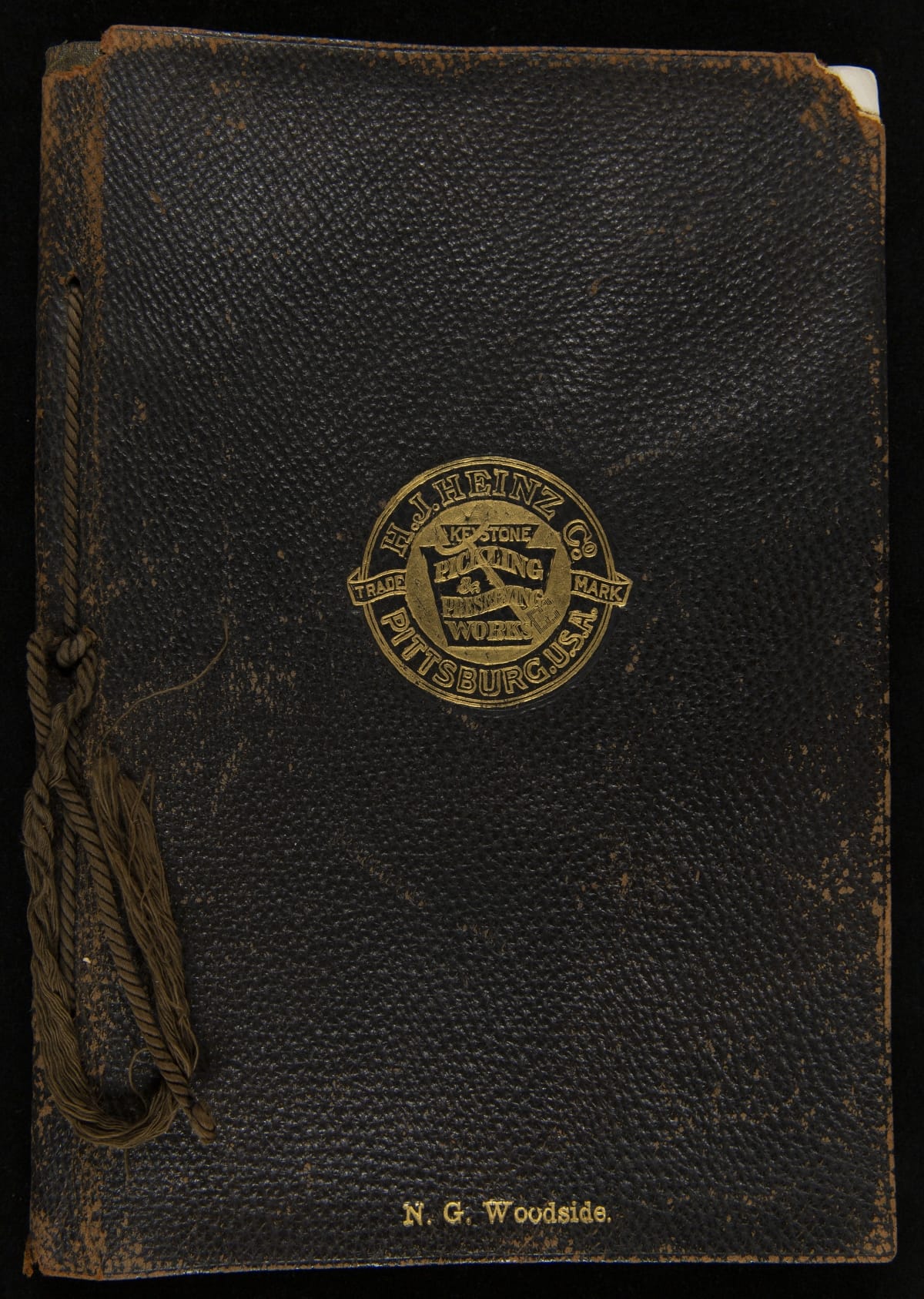
- Illustrated Sales Catalogue of H. J. Heinz Co., "Picklers and Preservers," Owned by N.G. Woodside, 1895 - The H.J. Heinz Company produced trade catalogs to provide grocers with information about the company's many products. This catalog from 1895 includes full-page color illustrations of Heinz products with accompanying descriptions and packaging options. The catalog also provides illustrations and descriptions of the Heinz branch factories and various methods used for shipping.
- 1895
- Collections - Artifact
Illustrated Sales Catalogue of H. J. Heinz Co., "Picklers and Preservers," Owned by N.G. Woodside, 1895
The H.J. Heinz Company produced trade catalogs to provide grocers with information about the company's many products. This catalog from 1895 includes full-page color illustrations of Heinz products with accompanying descriptions and packaging options. The catalog also provides illustrations and descriptions of the Heinz branch factories and various methods used for shipping.
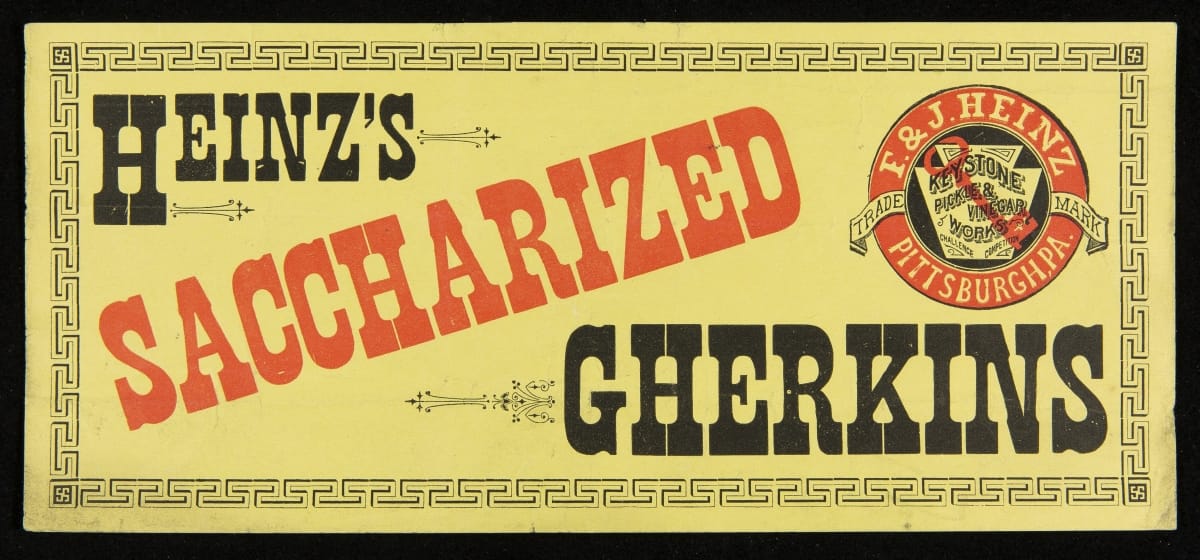
- Crate Label, "F. & J. Heinz Company Saccharized Gherkin Pickles," circa 1880 - After having to close his first business in 1875, H.J. Heinz persuaded family members to begin a new company in 1876 -- F. & J. Heinz -- with H.J. Heinz running the company behind the scenes until he could rebuild his reputation and take over the company. This crate label was for F. & J. Heinz's "Saccharized Gherkins" -- a type of sweet pickle.
- circa 1880
- Collections - Artifact
Crate Label, "F. & J. Heinz Company Saccharized Gherkin Pickles," circa 1880
After having to close his first business in 1875, H.J. Heinz persuaded family members to begin a new company in 1876 -- F. & J. Heinz -- with H.J. Heinz running the company behind the scenes until he could rebuild his reputation and take over the company. This crate label was for F. & J. Heinz's "Saccharized Gherkins" -- a type of sweet pickle.