
Search
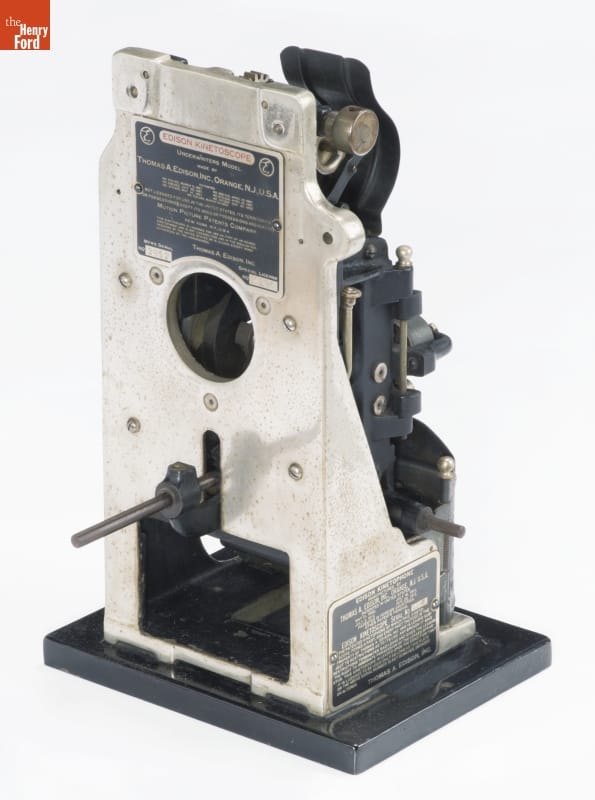
- Edison Kinetoscope, Underwriters Model, 1912-1915 - The kinetoscope was originally a solitary experience. Visitors to "peepshow parlors" paid a nickel to peer into a wooden cabinet through an eyepiece to see a short film loop. But Edison and his competitors wanted to project films on screens for large audiences. The Vitascope, Projecting Kinetoscope, and Kinetophone are examples of Edison's experiments to turn film into a communal experience.
- 1912-1915
- Collections - Artifact
Edison Kinetoscope, Underwriters Model, 1912-1915
The kinetoscope was originally a solitary experience. Visitors to "peepshow parlors" paid a nickel to peer into a wooden cabinet through an eyepiece to see a short film loop. But Edison and his competitors wanted to project films on screens for large audiences. The Vitascope, Projecting Kinetoscope, and Kinetophone are examples of Edison's experiments to turn film into a communal experience.
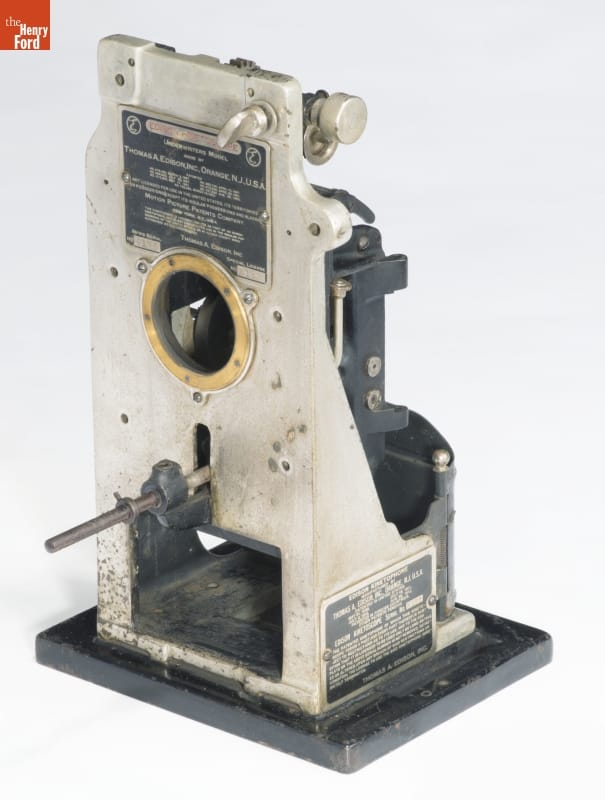
- Edison Kinetoscope, Underwriters Model, 1912-1915 - The kinetoscope was originally a solitary experience. Visitors to "peepshow parlors" paid a nickel to peer into a wooden cabinet through an eyepiece to see a short film loop. But Edison and his competitors wanted to project films on screens for large audiences. The Vitascope, Projecting Kinetoscope, and Kinetophone are examples of Edison's experiments to turn film into a communal experience.
- 1912-1915
- Collections - Artifact
Edison Kinetoscope, Underwriters Model, 1912-1915
The kinetoscope was originally a solitary experience. Visitors to "peepshow parlors" paid a nickel to peer into a wooden cabinet through an eyepiece to see a short film loop. But Edison and his competitors wanted to project films on screens for large audiences. The Vitascope, Projecting Kinetoscope, and Kinetophone are examples of Edison's experiments to turn film into a communal experience.
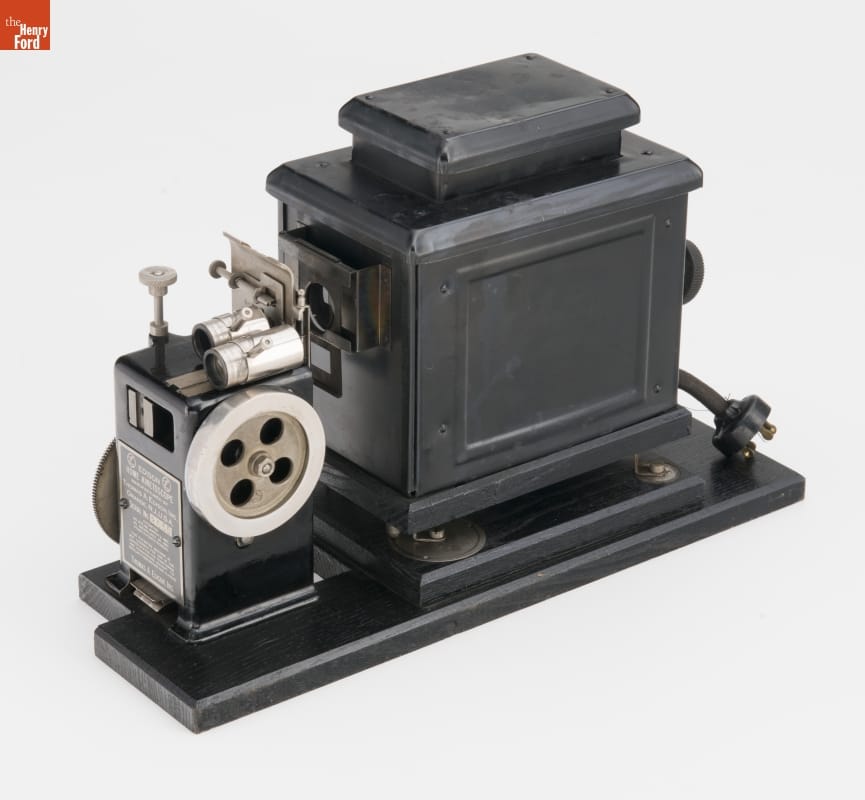
- Edison Home Kinetoscope, 1912-1915 - The kinetoscope was originally a solitary experience. Visitors to "peepshow parlors" paid a nickel to peer into a wooden cabinet through an eyepiece to see a short film loop. But Edison and his competitors wanted to project films on screens for large audiences. The Vitascope, Projecting Kinetoscope, and Kinetophone are examples of Edison's experiments to turn film into a communal experience.
- 1912-1915
- Collections - Artifact
Edison Home Kinetoscope, 1912-1915
The kinetoscope was originally a solitary experience. Visitors to "peepshow parlors" paid a nickel to peer into a wooden cabinet through an eyepiece to see a short film loop. But Edison and his competitors wanted to project films on screens for large audiences. The Vitascope, Projecting Kinetoscope, and Kinetophone are examples of Edison's experiments to turn film into a communal experience.
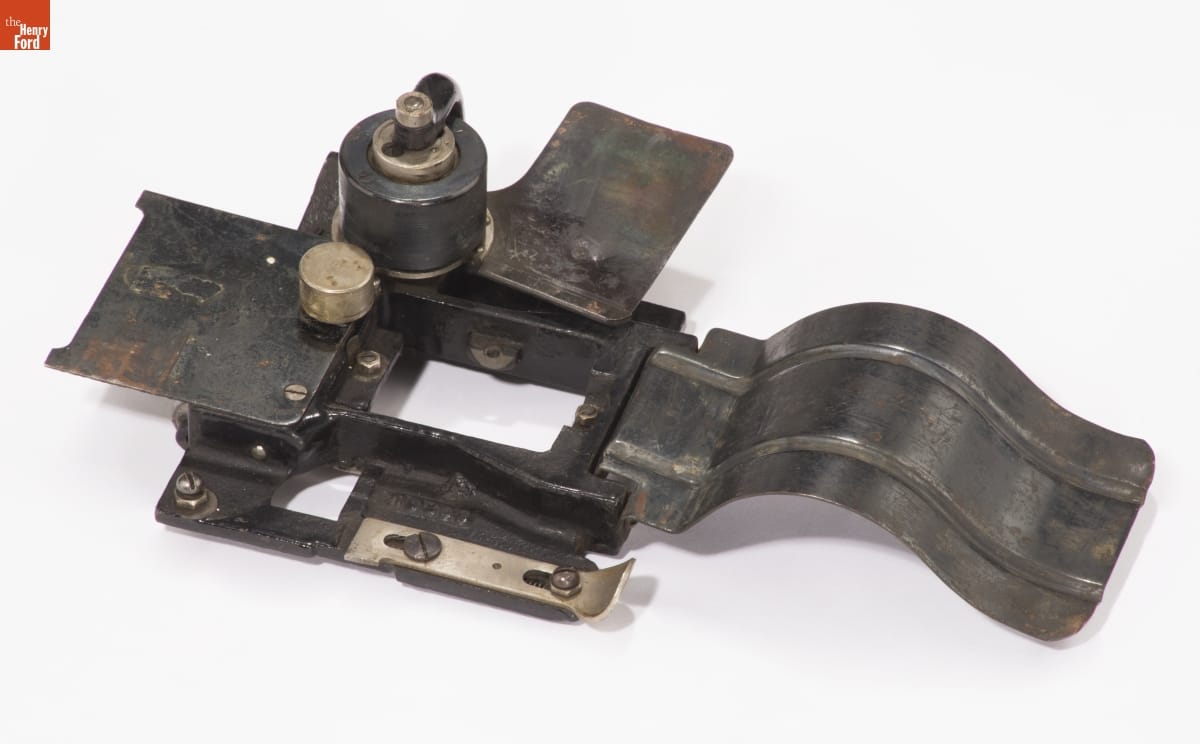
- Edison Projecting Kinetoscope Film Gate, 1905-1915 - In motion-picture projectors, a gate is a rectangular opening where film is held flat by pressure. This opening allows the projector lamp's light to pass through, illuminating the film. Uniform pressure ensures the film is held flat against the focal plane of the lens, creating a projection that is in focus.
- 1905-1915
- Collections - Artifact
Edison Projecting Kinetoscope Film Gate, 1905-1915
In motion-picture projectors, a gate is a rectangular opening where film is held flat by pressure. This opening allows the projector lamp's light to pass through, illuminating the film. Uniform pressure ensures the film is held flat against the focal plane of the lens, creating a projection that is in focus.
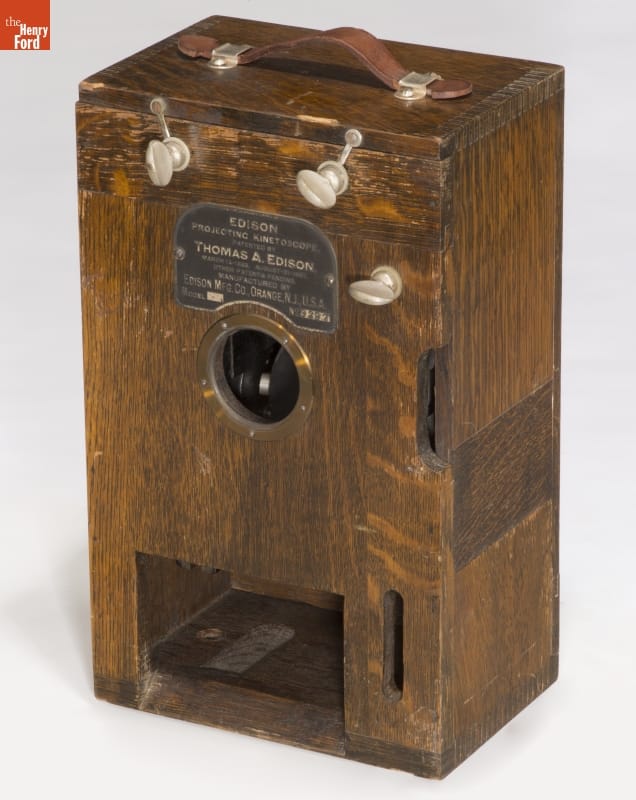
- Edison Projecting Kinetoscope, circa 1901 - The kinetoscope was originally a solitary experience. Visitors to "peepshow parlors" paid a nickel to peer into a wooden cabinet through an eyepiece to see a short film loop. But Edison and his competitors wanted to project films on screens for large audiences. The Vitascope, Projecting Kinetoscope, and Kinetophone are examples of Edison's experiments to turn film into a communal experience.
- circa 1901
- Collections - Artifact
Edison Projecting Kinetoscope, circa 1901
The kinetoscope was originally a solitary experience. Visitors to "peepshow parlors" paid a nickel to peer into a wooden cabinet through an eyepiece to see a short film loop. But Edison and his competitors wanted to project films on screens for large audiences. The Vitascope, Projecting Kinetoscope, and Kinetophone are examples of Edison's experiments to turn film into a communal experience.
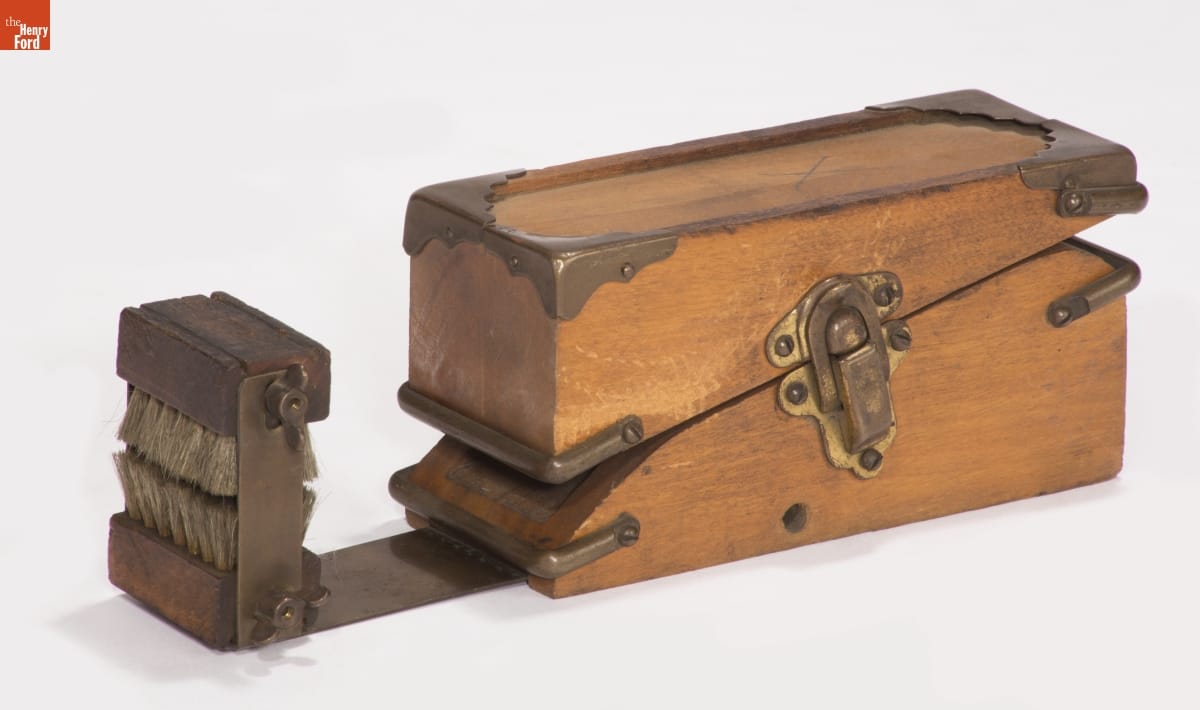
- Edison Kinetoscope Film Cleaner, 1900-1915 -
- 1900-1915
- Collections - Artifact
Edison Kinetoscope Film Cleaner, 1900-1915
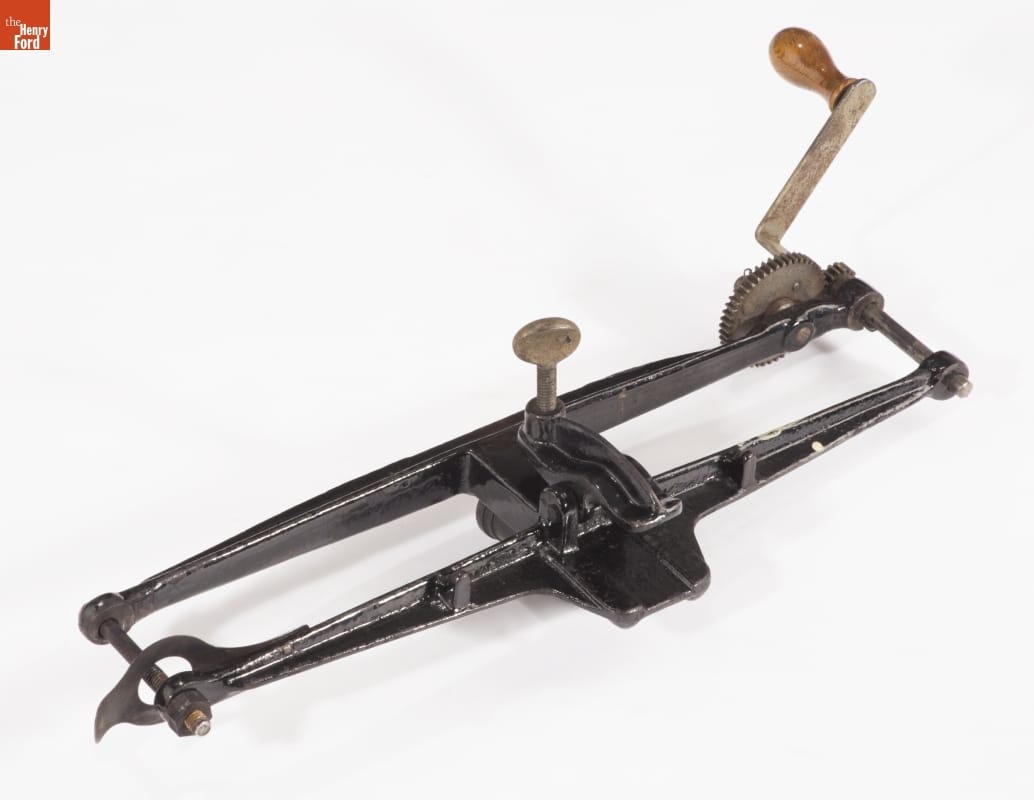
- Kinetoscope Projector Reel Bracket -
- Collections - Artifact
Kinetoscope Projector Reel Bracket
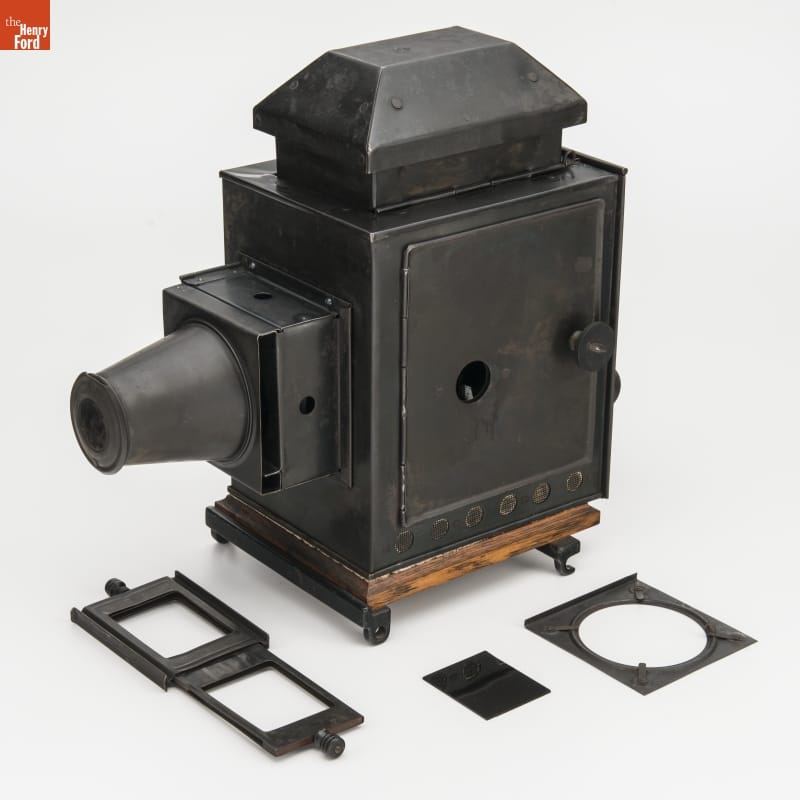
- Lamp House for an Edison Projecting Kinetoscope, 1905-1915 - The kinetoscope was originally a solitary experience. Visitors to "peepshow parlors" paid a nickel to peer into a wooden cabinet through an eyepiece to see a short film loop. But Edison and his competitors wanted to project films on screens for large audiences. The Vitascope, Projecting Kinetoscope, and Kinetophone are examples of Edison's experiments to turn film into a communal experience.
- 1905-1915
- Collections - Artifact
Lamp House for an Edison Projecting Kinetoscope, 1905-1915
The kinetoscope was originally a solitary experience. Visitors to "peepshow parlors" paid a nickel to peer into a wooden cabinet through an eyepiece to see a short film loop. But Edison and his competitors wanted to project films on screens for large audiences. The Vitascope, Projecting Kinetoscope, and Kinetophone are examples of Edison's experiments to turn film into a communal experience.
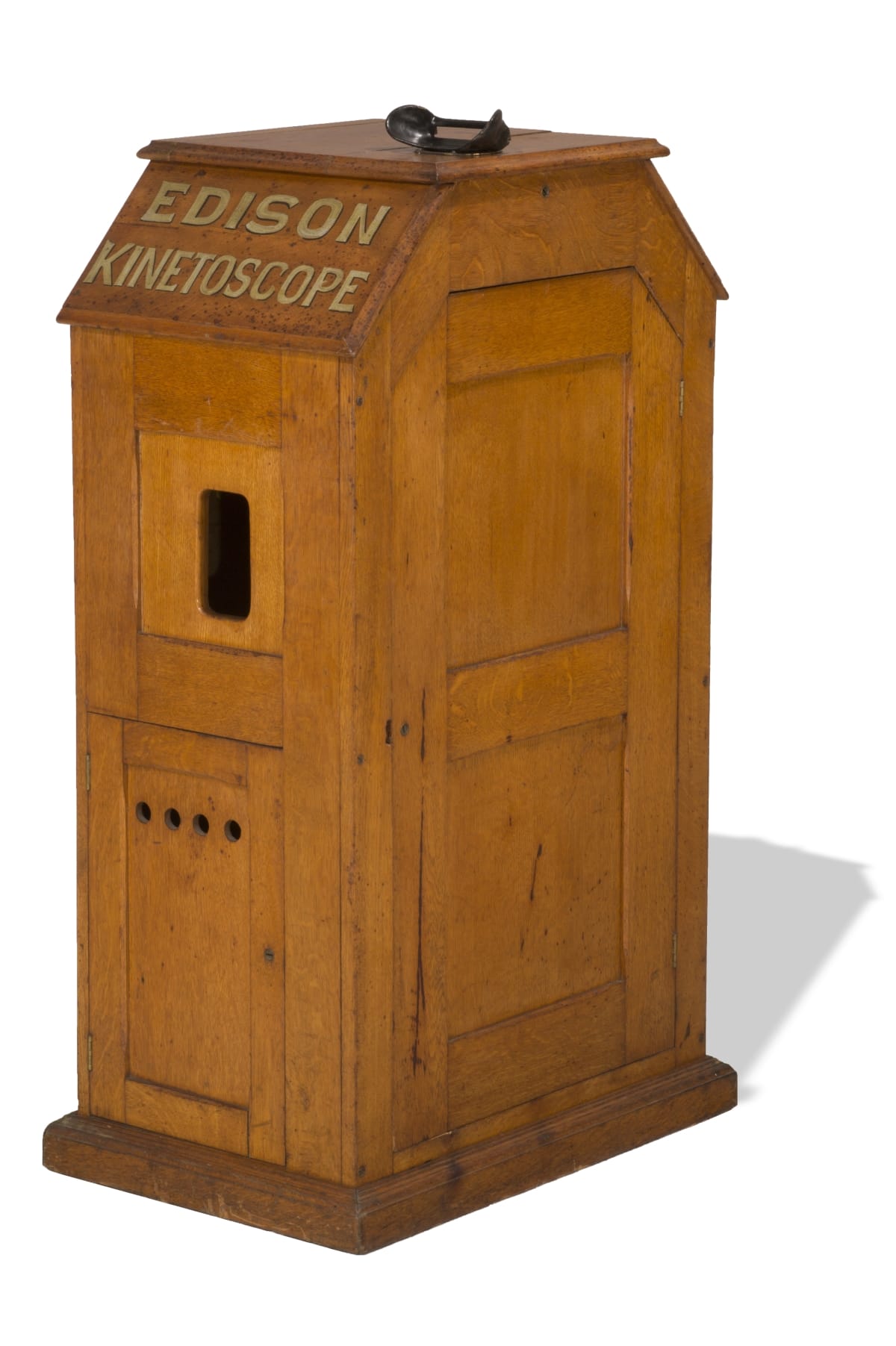
- Edison Kinetoscope, circa 1894 - In 1894, Thomas Edison held the first commercial film exhibition using ten Kinetoscopes like this. "Peepshow parlors" became popular, where galleries of Kinetoscopes featured 15-second films produced at the "Black Maria" studio. For a nickel, viewers could peer through the eyepiece to see silent moving images of dancers, boxers, and novelty acts. Over 900 Kinetoscopes were sold between 1894 and 1895.
- circa 1894
- Collections - Artifact
Edison Kinetoscope, circa 1894
In 1894, Thomas Edison held the first commercial film exhibition using ten Kinetoscopes like this. "Peepshow parlors" became popular, where galleries of Kinetoscopes featured 15-second films produced at the "Black Maria" studio. For a nickel, viewers could peer through the eyepiece to see silent moving images of dancers, boxers, and novelty acts. Over 900 Kinetoscopes were sold between 1894 and 1895.
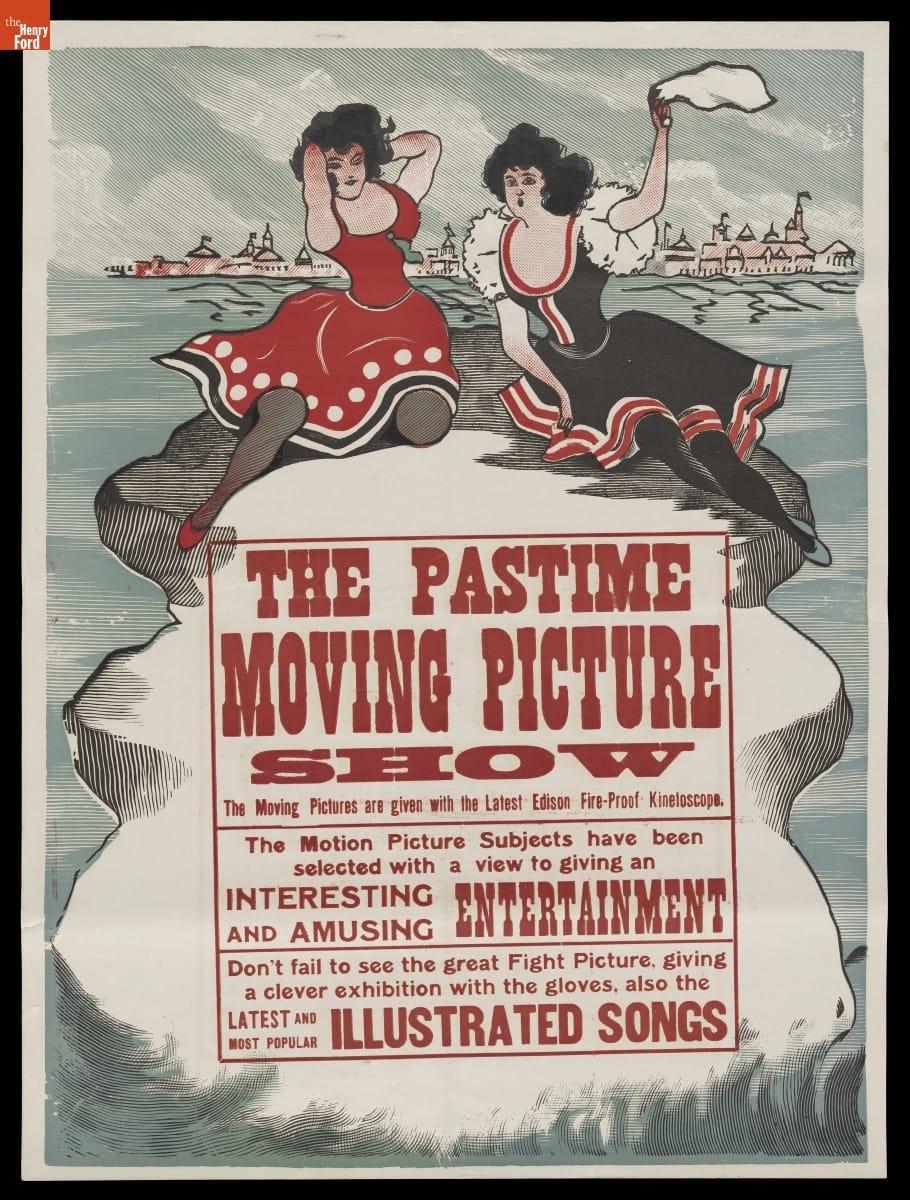
- Poster, Edison Kinetoscope Motion Picture, "Pastime Moving Picture Show," 1904-1906 - This early movie poster was probably used by traveling exhibitors or at amusement parks to advertise short motion pictures viewed on the Edison Projecting Kinetoscope in small movie houses throughout the United States. The number of exhibitors proliferated in this period creating the need for generic types of posters to advertise a wide variety of short motion pictures.
- 1904-1906
- Collections - Artifact
Poster, Edison Kinetoscope Motion Picture, "Pastime Moving Picture Show," 1904-1906
This early movie poster was probably used by traveling exhibitors or at amusement parks to advertise short motion pictures viewed on the Edison Projecting Kinetoscope in small movie houses throughout the United States. The number of exhibitors proliferated in this period creating the need for generic types of posters to advertise a wide variety of short motion pictures.