
Search
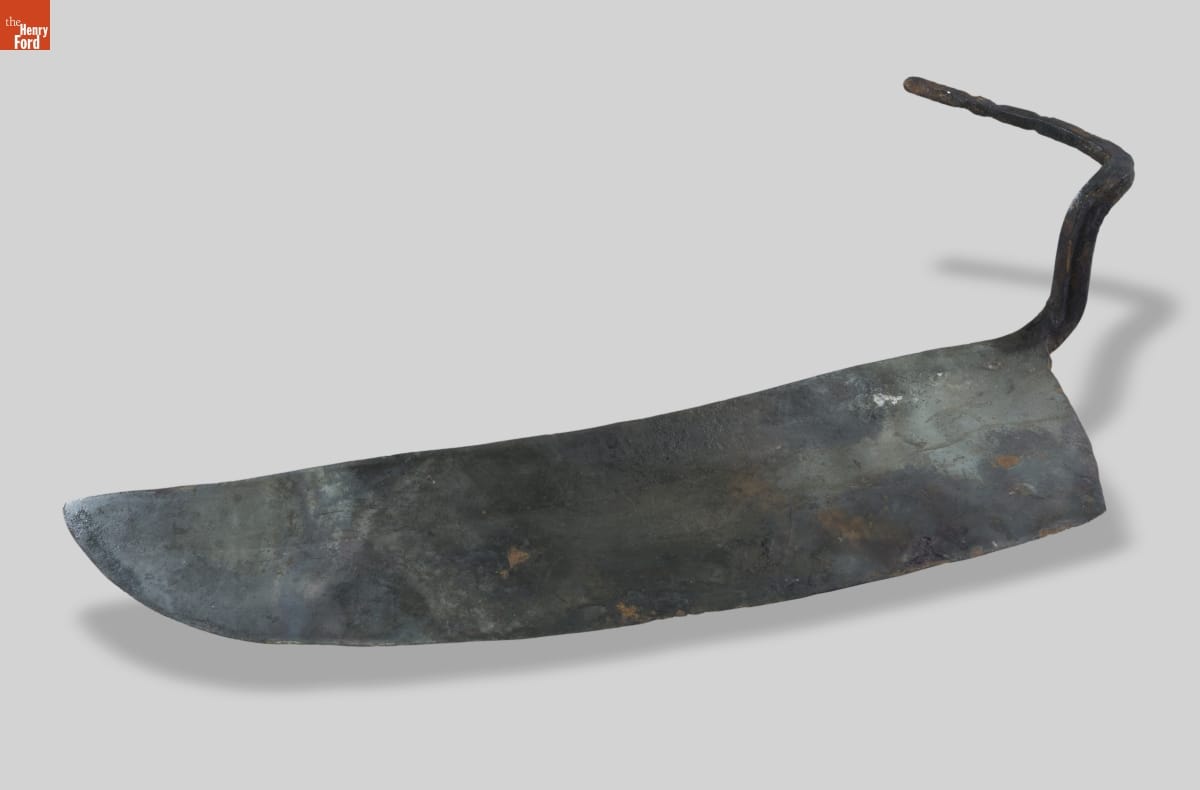
- Hay Knife - Farm families cut and cured enough grass each summer to feed hay to their livestock all winter. Stored hay settled over time and farmers used special knives made by blacksmiths to cut out chunks for feed. The smiths forged wrought-iron blades with a long cutting edge. The wooden handle was set on a tang (a pointed metal extension of the handle) and secured with a metal collar for durability.
- Collections - Artifact
Hay Knife
Farm families cut and cured enough grass each summer to feed hay to their livestock all winter. Stored hay settled over time and farmers used special knives made by blacksmiths to cut out chunks for feed. The smiths forged wrought-iron blades with a long cutting edge. The wooden handle was set on a tang (a pointed metal extension of the handle) and secured with a metal collar for durability.
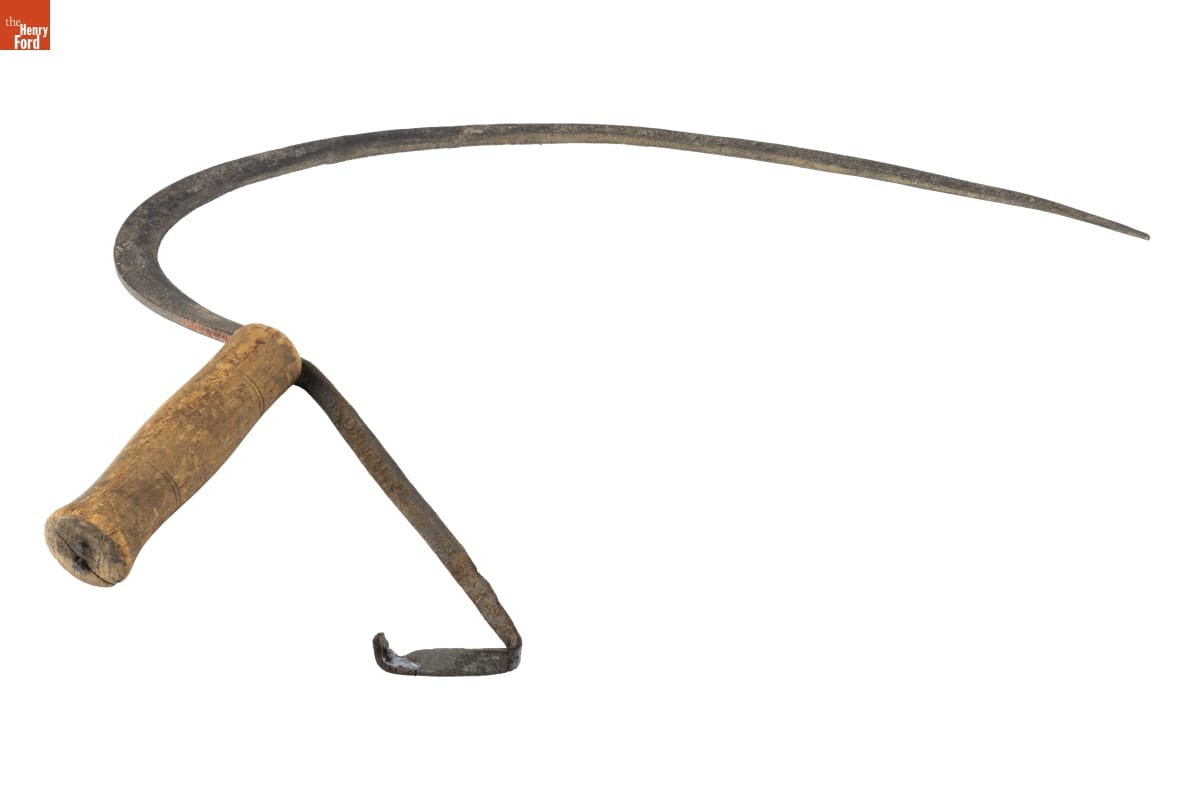
- Sickle, 1800-1840 - Sickles helped farmers harvest grasses and grains. Using this age-old tool, however, was backbreaking work. Laborers constantly had to stoop over to cut and gather the crops. The invention of mid-nineteenth-century mechanized equipment -- reapers and mowers -- made this handheld harvesting tool nearly obsolete. Still, the sickle remained useful on smaller farms or for work around the yard or garden.
- 1800-1840
- Collections - Artifact
Sickle, 1800-1840
Sickles helped farmers harvest grasses and grains. Using this age-old tool, however, was backbreaking work. Laborers constantly had to stoop over to cut and gather the crops. The invention of mid-nineteenth-century mechanized equipment -- reapers and mowers -- made this handheld harvesting tool nearly obsolete. Still, the sickle remained useful on smaller farms or for work around the yard or garden.
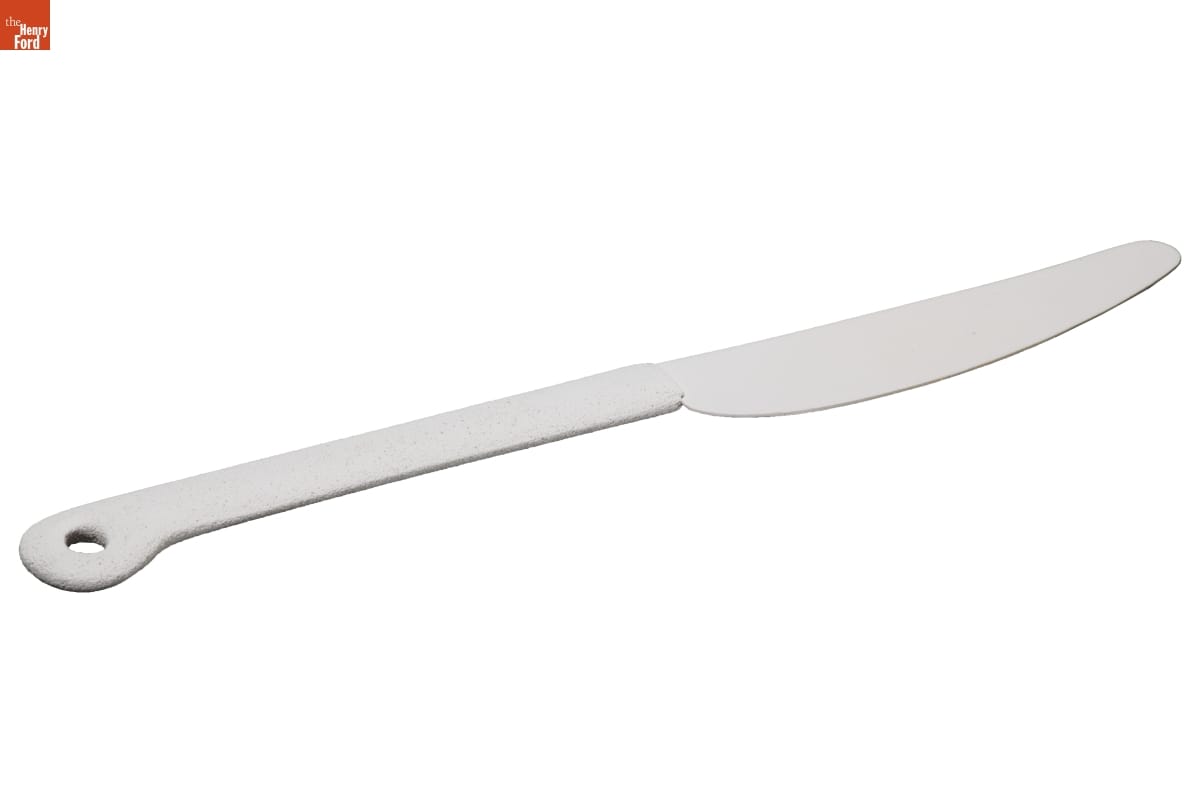
- Knife Model - Starting in the early 1980s--and already established as an internationally recognized architect--Michael Graves began to pursue a parallel career as a product designer. Over the following three and a half decades he and his collaborators designed everything from humble household goods to limited edition luxury items for clients as diverse as Steuben, Alessi, Target, J. C. Penney, and Disney.
- Collections - Artifact
Knife Model
Starting in the early 1980s--and already established as an internationally recognized architect--Michael Graves began to pursue a parallel career as a product designer. Over the following three and a half decades he and his collaborators designed everything from humble household goods to limited edition luxury items for clients as diverse as Steuben, Alessi, Target, J. C. Penney, and Disney.
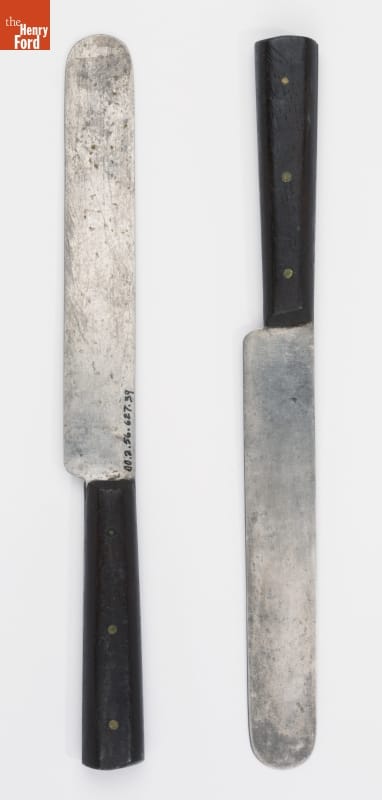
- Table Knife Used on Henry Ford's "Vagabonds" Camping Trips 1920-1930 - Henry Ford, Thomas Edison, Harvey Firestone and naturalist John Burroughs embarked on a series of camping trips between 1916 and 1924. These self-proclaimed Vagabonds loved to explore nature and the pre-industrial landscape, but they also camped in style. This group of well-to-do adventurers brought along service staff and all needed amenities, including a set of utilitarian flatware.
- 1920-1930
- Collections - Artifact
Table Knife Used on Henry Ford's "Vagabonds" Camping Trips 1920-1930
Henry Ford, Thomas Edison, Harvey Firestone and naturalist John Burroughs embarked on a series of camping trips between 1916 and 1924. These self-proclaimed Vagabonds loved to explore nature and the pre-industrial landscape, but they also camped in style. This group of well-to-do adventurers brought along service staff and all needed amenities, including a set of utilitarian flatware.
- Corn Knife, circa 1890 - Before late nineteenth century agricultural mechanization, sharp-bladed knives were used to harvest corn. Farmers would swing these blades to cut the cornstalk near its base. The stalks then were bundled into shocks to dry. Later, the ears would be harvested and the stalks made into cattle fodder. Different regions of the U. S. produced stylistic variations of these corn harvesting blades.
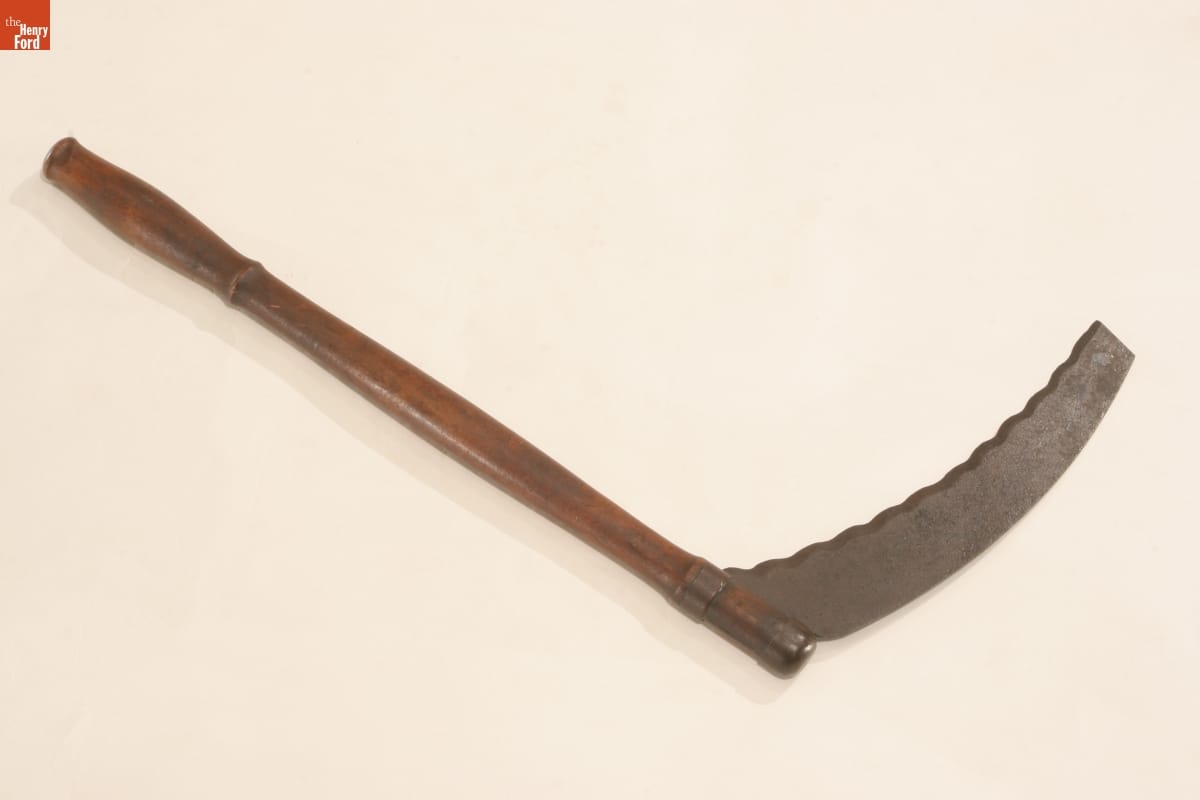
- circa 1890
- Collections - Artifact
Corn Knife, circa 1890
Before late nineteenth century agricultural mechanization, sharp-bladed knives were used to harvest corn. Farmers would swing these blades to cut the cornstalk near its base. The stalks then were bundled into shocks to dry. Later, the ears would be harvested and the stalks made into cattle fodder. Different regions of the U. S. produced stylistic variations of these corn harvesting blades.
- Hay Knife, circa 1850 -
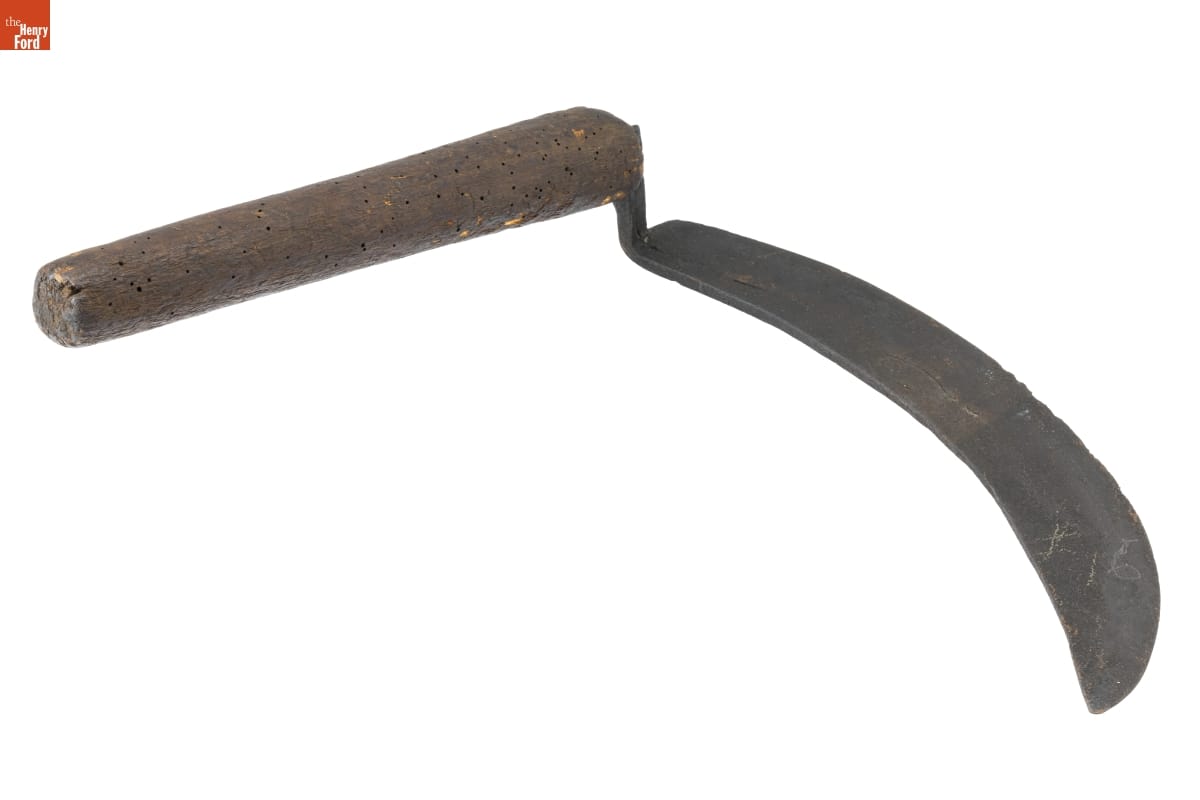
- circa 1850
- Collections - Artifact
Hay Knife, circa 1850
- Chopping Knife with Trough -
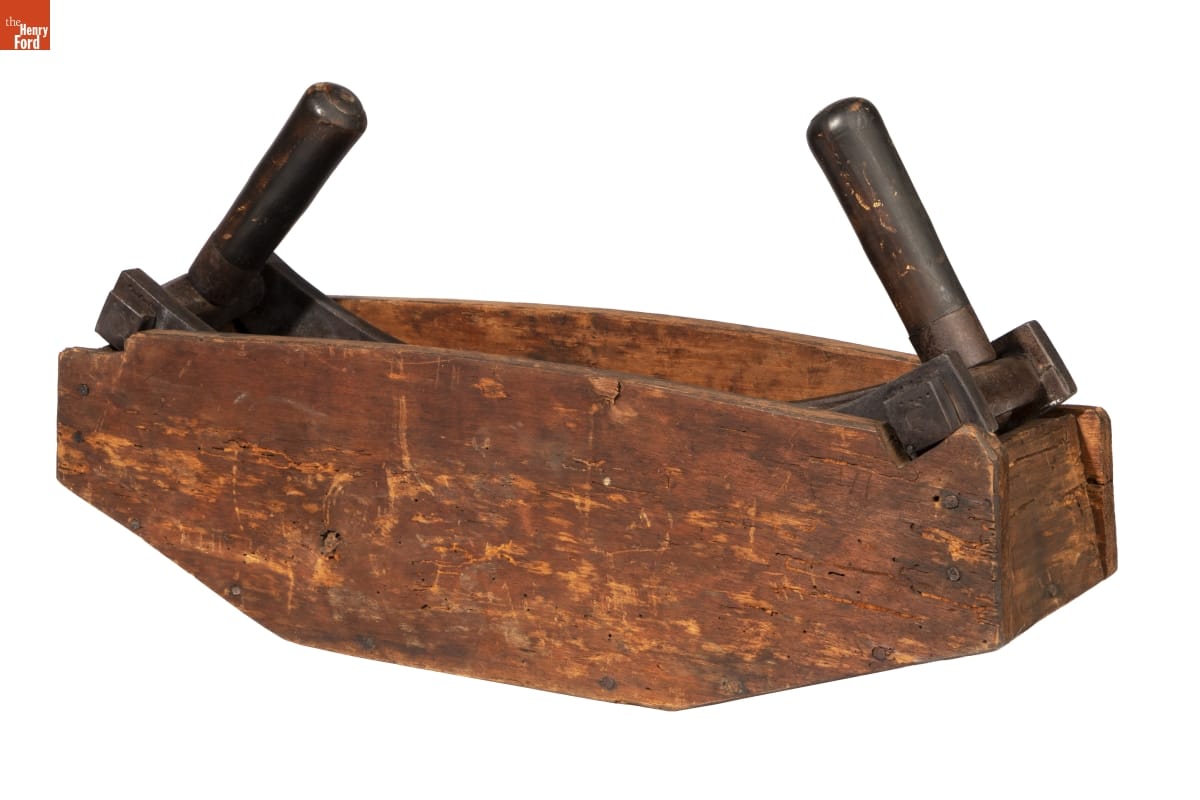
- Collections - Artifact
Chopping Knife with Trough
- Cane Knife, circa 1880 -
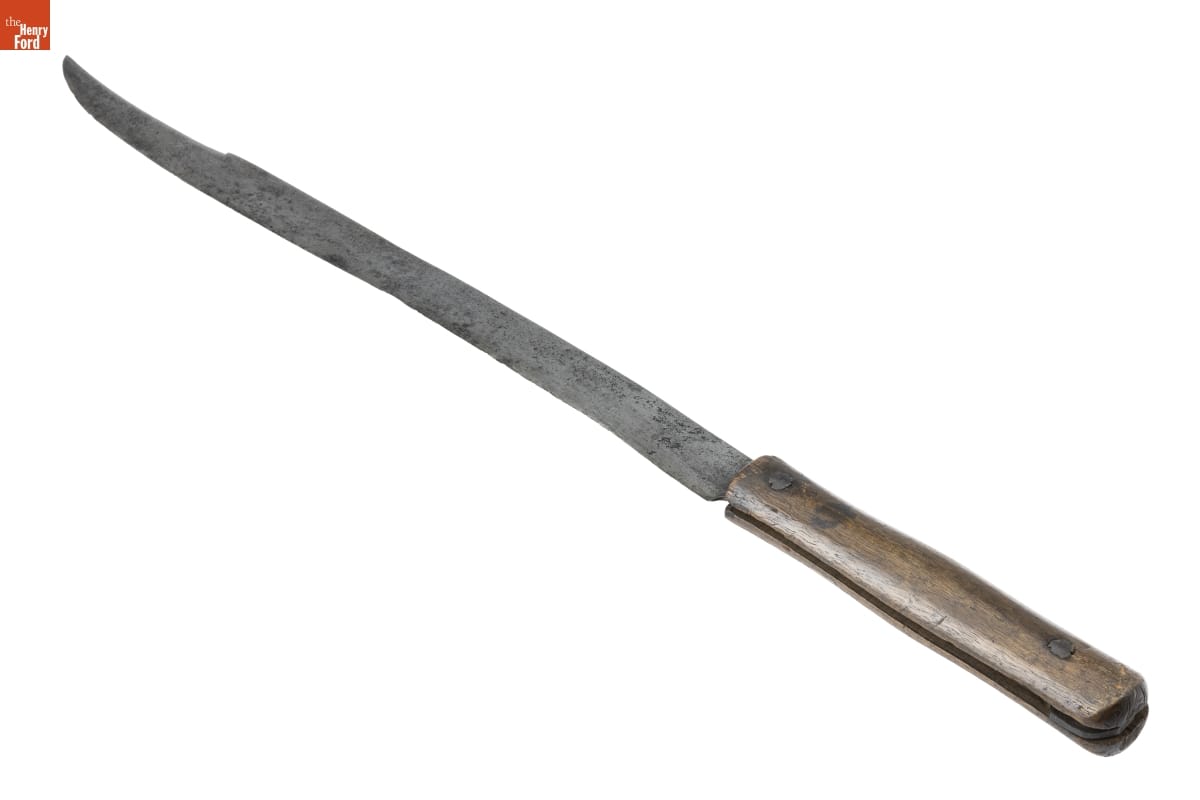
- circa 1880
- Collections - Artifact
Cane Knife, circa 1880
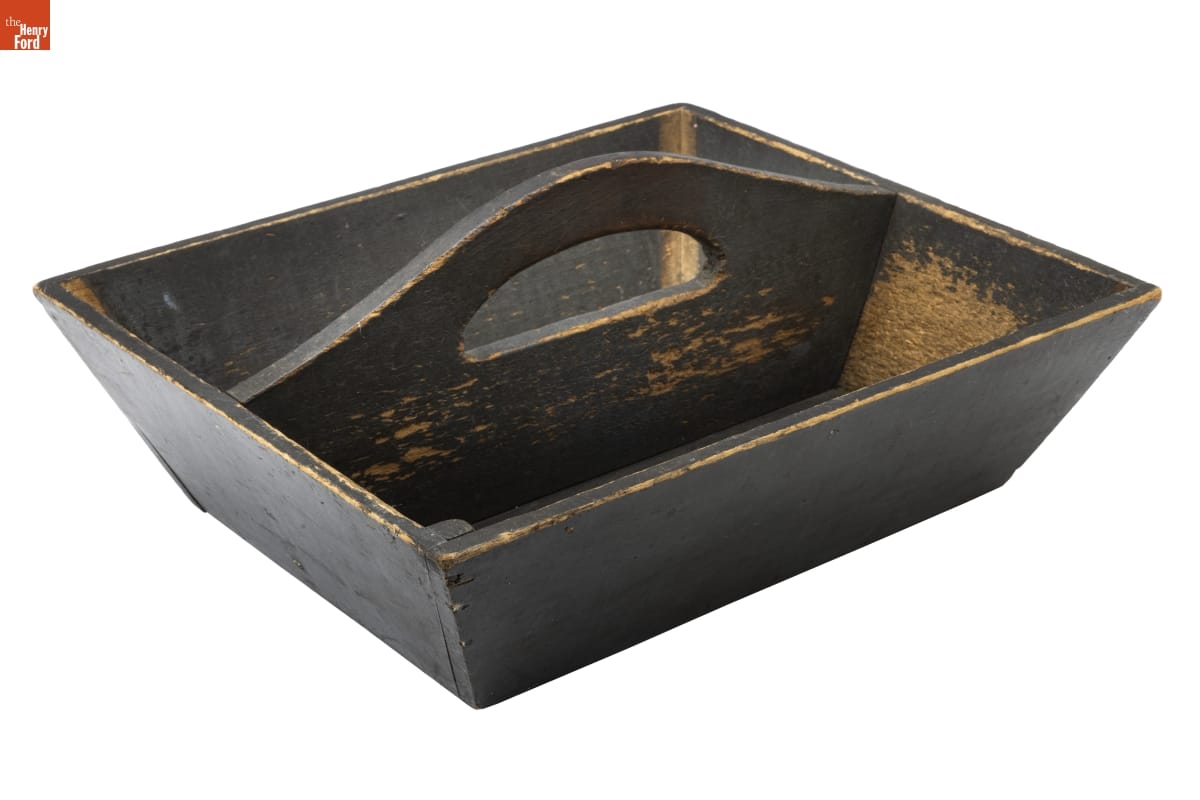
- Knife Box - This wooden tray or "box" held knives, forks, spoons, and other table utensils. A person would carry this inexpensive tray to the table to dispense or collect cutlery. This tray has flared sides, but others could have fancy, scrolled edges or colorfully painted decorations.
- Collections - Artifact
Knife Box
This wooden tray or "box" held knives, forks, spoons, and other table utensils. A person would carry this inexpensive tray to the table to dispense or collect cutlery. This tray has flared sides, but others could have fancy, scrolled edges or colorfully painted decorations.
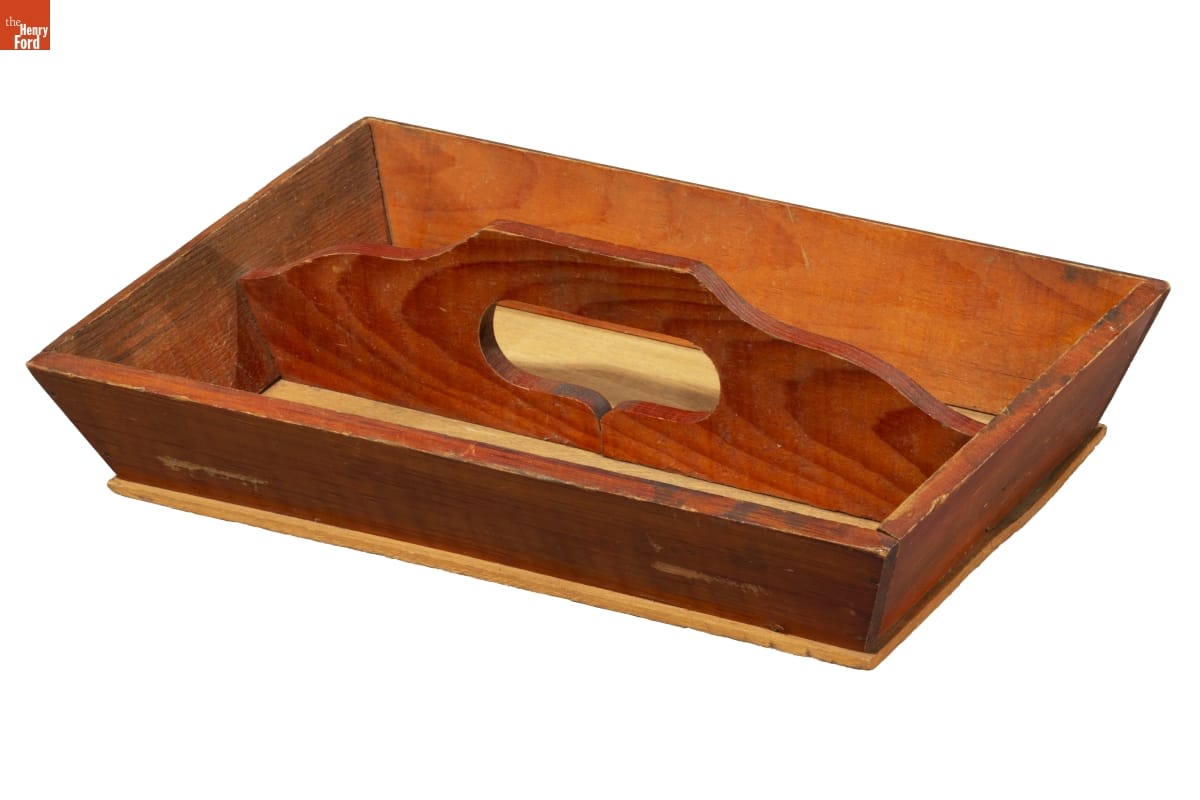
- Knife Box - This wooden tray or "box" held knives, forks, spoons, and other table utensils. A person would carry this inexpensive tray to the table to dispense or collect cutlery. This tray has flared sides, but others could have fancy, scrolled edges or colorfully painted decorations.
- Collections - Artifact
Knife Box
This wooden tray or "box" held knives, forks, spoons, and other table utensils. A person would carry this inexpensive tray to the table to dispense or collect cutlery. This tray has flared sides, but others could have fancy, scrolled edges or colorfully painted decorations.