
Search
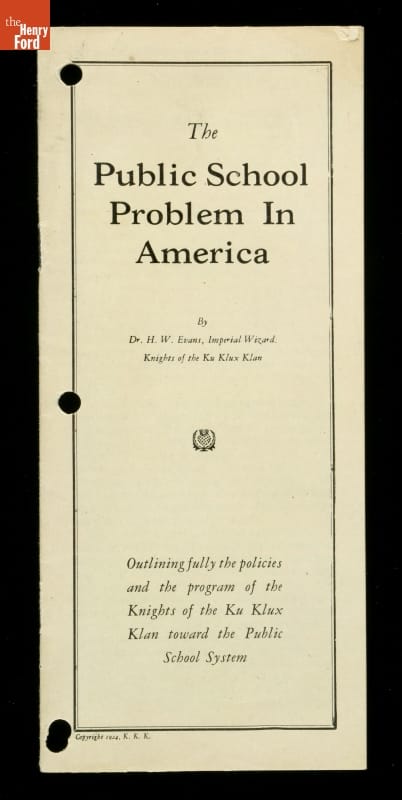
- "The Public School Problem in America," 1924 - This 1924 Ku Klux Klan-authored pamphlet attacked the problems of the American public educational system -- lack of school funding and high rates of illiteracy. The pamphlet also stirred up fears about immigrants and Catholics -- targets of Klan assaults. These groups, the Klan believed, were not becoming assimilated into an American way of life because of poor schooling or the role of church-dominated institutions.
- 1924
- Collections - Artifact
"The Public School Problem in America," 1924
This 1924 Ku Klux Klan-authored pamphlet attacked the problems of the American public educational system -- lack of school funding and high rates of illiteracy. The pamphlet also stirred up fears about immigrants and Catholics -- targets of Klan assaults. These groups, the Klan believed, were not becoming assimilated into an American way of life because of poor schooling or the role of church-dominated institutions.
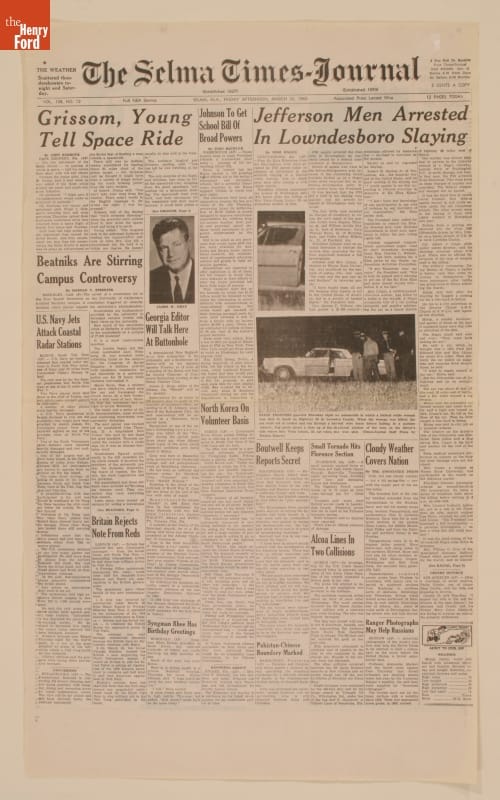
- Newspaper, Selma Times-Journal, March 26, 1965 -
- March 26, 1965
- Collections - Artifact
Newspaper, Selma Times-Journal, March 26, 1965
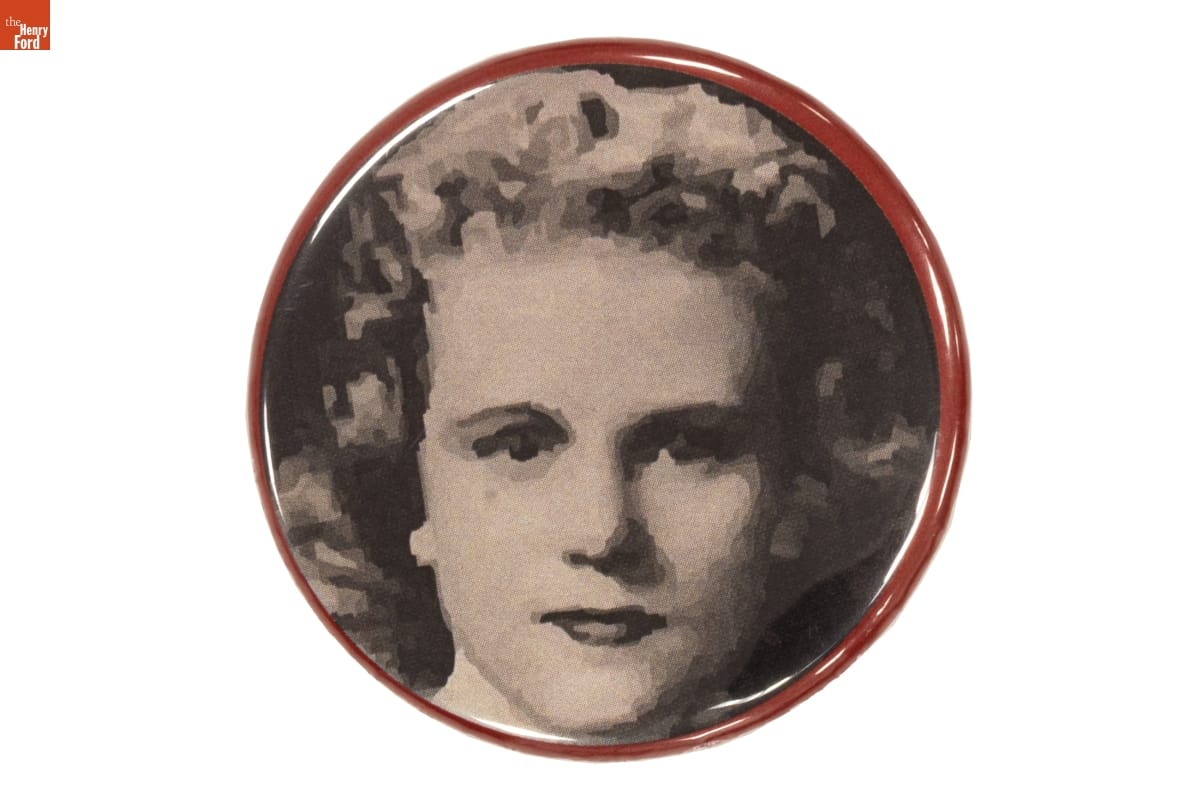
- Viola Liuzzo Button - Viola Liuzzo of Detroit, Michigan, traveled to Selma, Alabama to participate in the voting rights movement. On March 25, 1965, members of the Ku Klux Klan murdered Liuzzo in her car while she was driving Alabama-based activist Leroy Moton. In 2023, the city of Detroit honored Liuzzo's sacrifice by naming a park after her; buttons depicting her were given out at the dedication ceremony.
- Collections - Artifact
Viola Liuzzo Button
Viola Liuzzo of Detroit, Michigan, traveled to Selma, Alabama to participate in the voting rights movement. On March 25, 1965, members of the Ku Klux Klan murdered Liuzzo in her car while she was driving Alabama-based activist Leroy Moton. In 2023, the city of Detroit honored Liuzzo's sacrifice by naming a park after her; buttons depicting her were given out at the dedication ceremony.
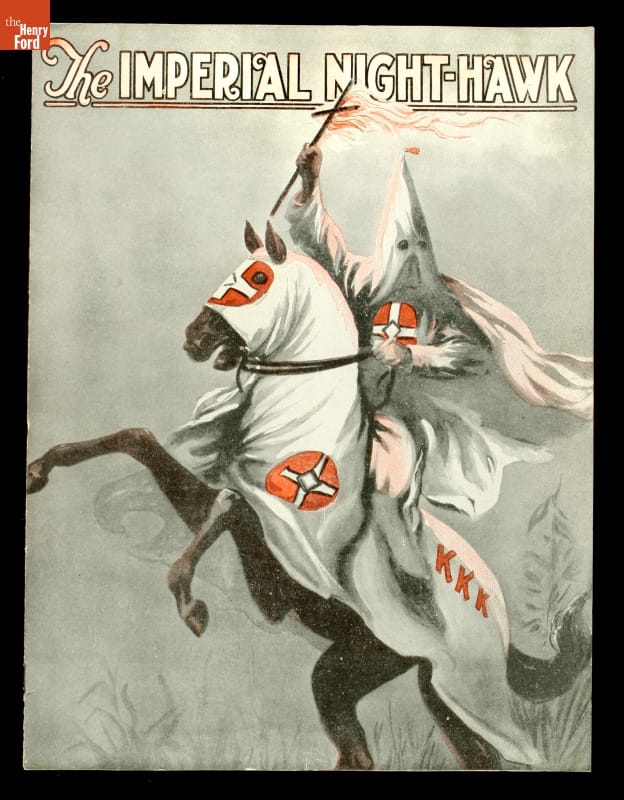
- Periodical, "Imperial Knight-Hawk," Knights of the Ku Klux Klan, June 25, 1924 - The Knights of the Ku Klux Klan published <EM>The Imperial Night-Hawk</EM>. This periodical kept members apprised of Klan activity throughout the country. Of course, the organization's illegal activities and vigilantism were not found on these pages.
- June 25, 1924
- Collections - Artifact
Periodical, "Imperial Knight-Hawk," Knights of the Ku Klux Klan, June 25, 1924
The Knights of the Ku Klux Klan published The Imperial Night-Hawk. This periodical kept members apprised of Klan activity throughout the country. Of course, the organization's illegal activities and vigilantism were not found on these pages.
- Viola Liuzzo Button - Viola Liuzzo of Detroit, Michigan, traveled to Selma, Alabama to participate in the voting rights movement. On March 25, 1965, members of the Ku Klux Klan murdered Liuzzo in her car while she was driving Alabama-based activist Leroy Moton. In 2023, the city of Detroit honored Liuzzo's sacrifice by naming a park after her; buttons depicting her were given out at the dedication ceremony.
- Collections - Artifact
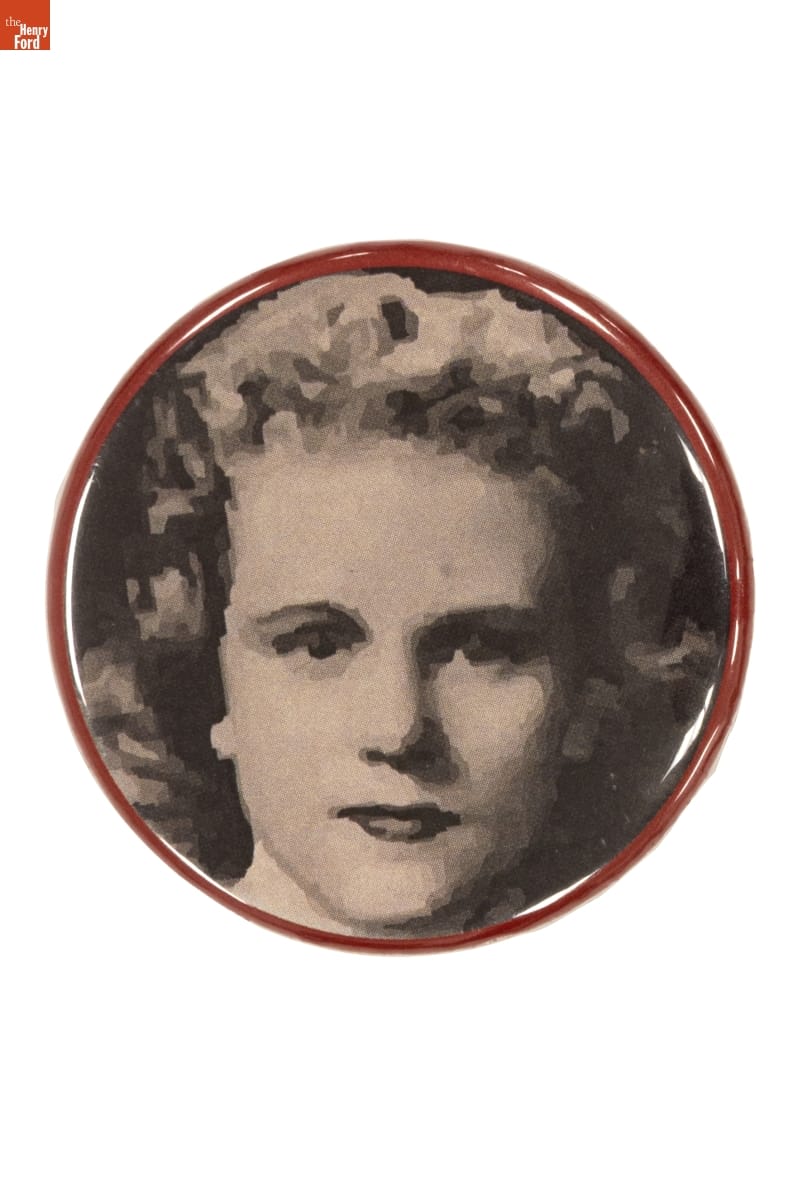
Viola Liuzzo Button
Viola Liuzzo of Detroit, Michigan, traveled to Selma, Alabama to participate in the voting rights movement. On March 25, 1965, members of the Ku Klux Klan murdered Liuzzo in her car while she was driving Alabama-based activist Leroy Moton. In 2023, the city of Detroit honored Liuzzo's sacrifice by naming a park after her; buttons depicting her were given out at the dedication ceremony.
- "Sisters in Life/Sisters in Struggle" Button - Viola Liuzzo and Sarah Evans had a close friendship, and both participated in the Detroit, Michigan chapter of the NAACP. After Liuzzo was murdered by members of the Ku Klux Klan in 1965, Evans raised Liuzzo's five children. The city of Detroit honored Liuzzo's sacrifice by naming a park after her in 2023; buttons depicting both women were given out at the dedication ceremony.
- Collections - Artifact
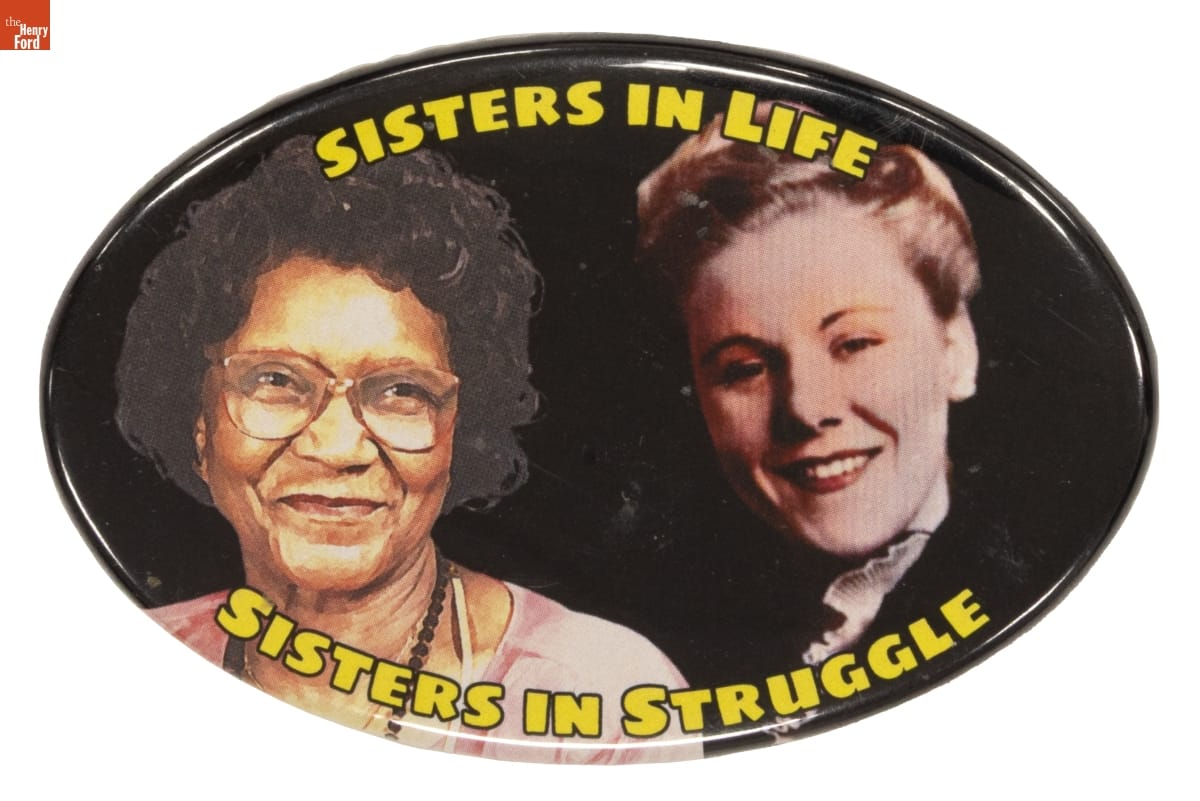
"Sisters in Life/Sisters in Struggle" Button
Viola Liuzzo and Sarah Evans had a close friendship, and both participated in the Detroit, Michigan chapter of the NAACP. After Liuzzo was murdered by members of the Ku Klux Klan in 1965, Evans raised Liuzzo's five children. The city of Detroit honored Liuzzo's sacrifice by naming a park after her in 2023; buttons depicting both women were given out at the dedication ceremony.
- "Klansman's Manual," Knights of the Ku Klux Klan, 1924 - The Ku Klux Klan created this manual for it members in 1924. It laid out the guiding principles of the organization. Their goal was to preserve the supremacy -- or supreme power -- of the "White Race" and stem the perceived threat of non-Protestant and foreign influences to America.
- 1924
- Collections - Artifact
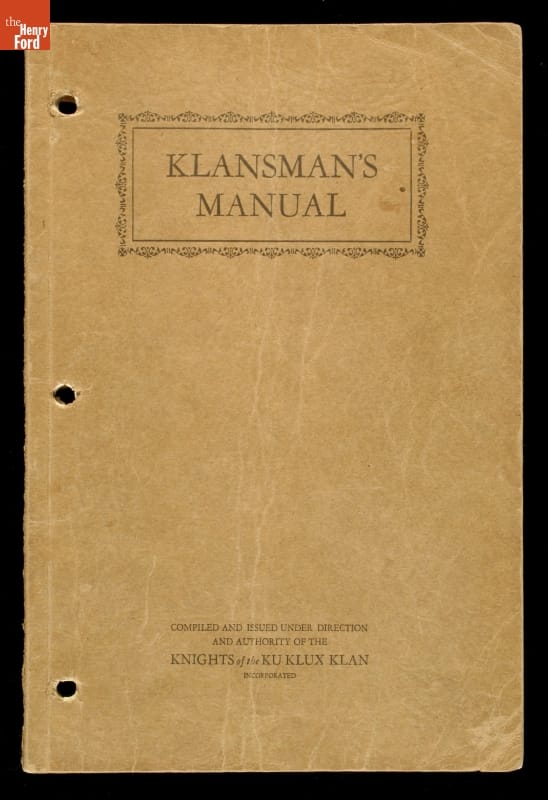
"Klansman's Manual," Knights of the Ku Klux Klan, 1924
The Ku Klux Klan created this manual for it members in 1924. It laid out the guiding principles of the organization. Their goal was to preserve the supremacy -- or supreme power -- of the "White Race" and stem the perceived threat of non-Protestant and foreign influences to America.
- Broadside,"Klans Cross Burning and Public Speaking," June 4, 1966 - This 1966 broadside urged those who were "WHITE" to attend a Ku Klux Klan cross burning in Georgia. The Klan created fear and produced violence and murders with the goal of preserving the supremacy of the "White Race." Their terror efforts ultimately failed to deter Americans, both black and white, from seeking equality.
- June 04, 1966
- Collections - Artifact
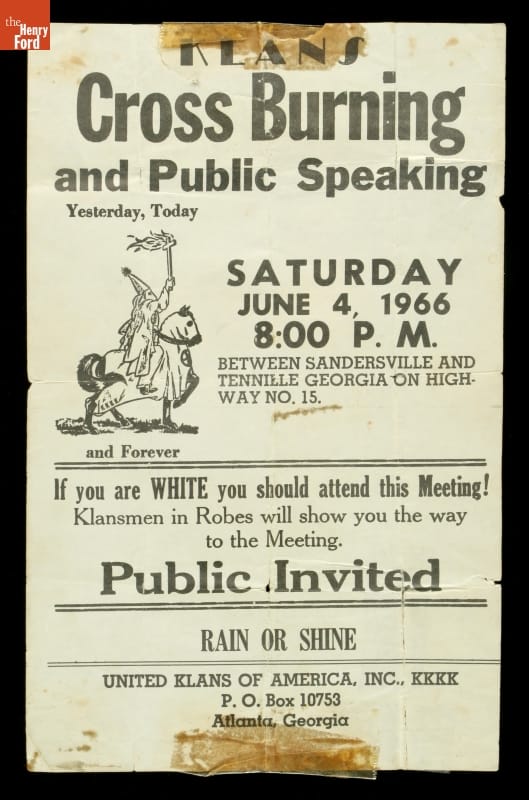
Broadside,"Klans Cross Burning and Public Speaking," June 4, 1966
This 1966 broadside urged those who were "WHITE" to attend a Ku Klux Klan cross burning in Georgia. The Klan created fear and produced violence and murders with the goal of preserving the supremacy of the "White Race." Their terror efforts ultimately failed to deter Americans, both black and white, from seeking equality.
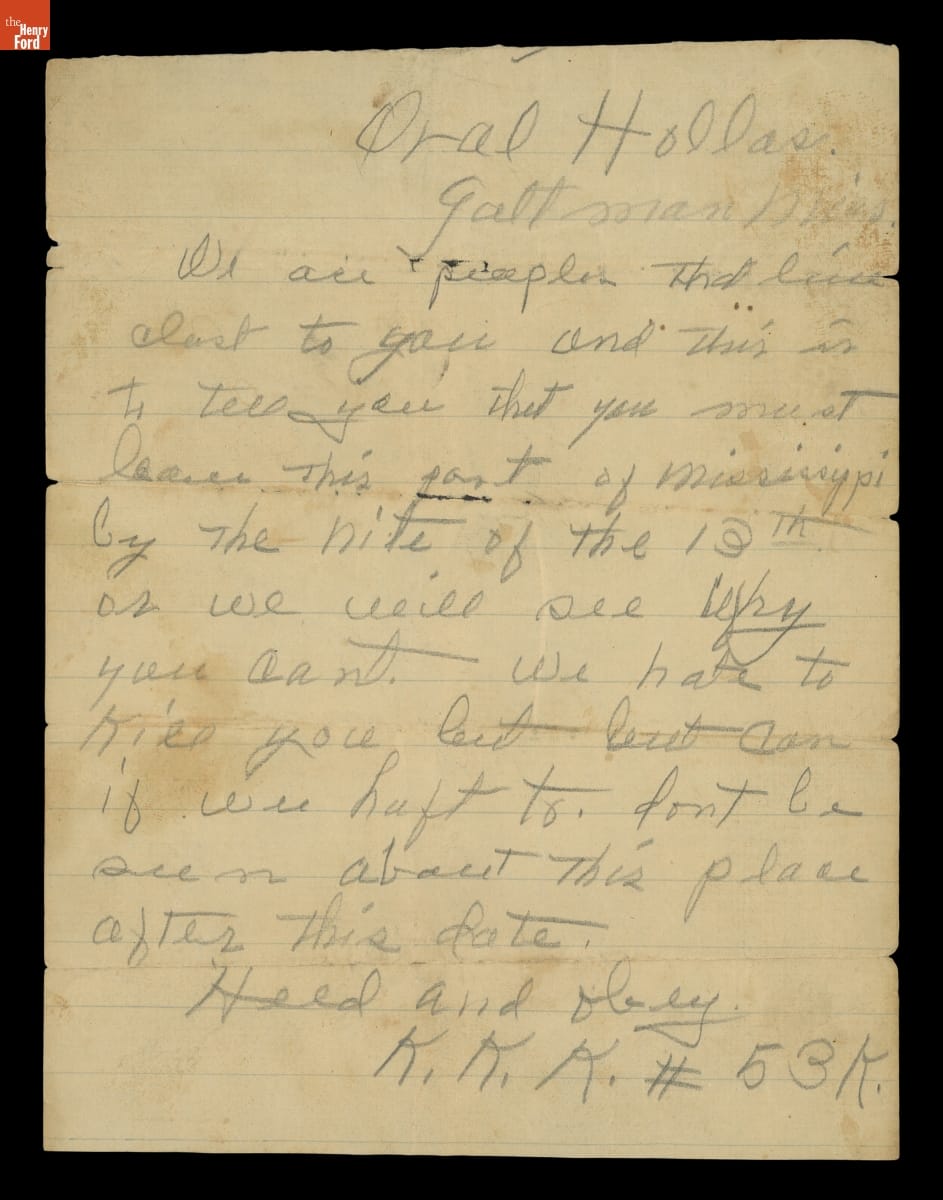
- Handwritten Note to Uril Franklin Hollis from the Ku Klux Klan, circa 1924 - Uril Franklin Hollis, a Black man, received this threatening note from the local KKK in Gattman, Mississippi, sometime in the early 1920s. Hollis heeded his white neighbors' warning and moved to Hamtramck, Michigan, where he found work in the auto industry. Life was precarious for Black Americans in the South, while jobs in northern cities offered hope of economic security and a seeming respite from threats and violence.
- circa 1924
- Collections - Artifact
Handwritten Note to Uril Franklin Hollis from the Ku Klux Klan, circa 1924
Uril Franklin Hollis, a Black man, received this threatening note from the local KKK in Gattman, Mississippi, sometime in the early 1920s. Hollis heeded his white neighbors' warning and moved to Hamtramck, Michigan, where he found work in the auto industry. Life was precarious for Black Americans in the South, while jobs in northern cities offered hope of economic security and a seeming respite from threats and violence.
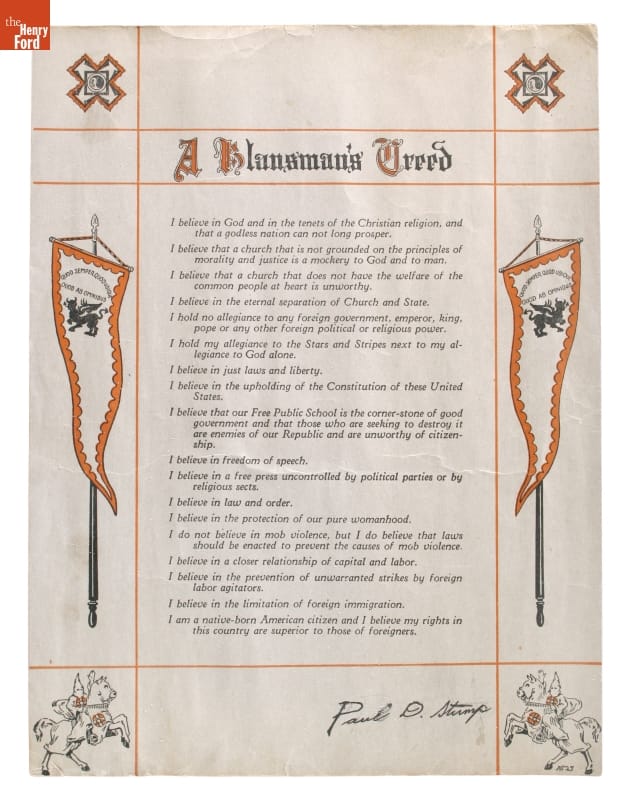
- Anti-immigrant Ku Klux Klan Creed, circa 1922 - Many native-born Americans viewed immigrants with fear at the beginning of the 20th century. Economic instability and social tensions were blamed on foreigners, and the "immigrant problem" became a national focus. This anti-immigrant document released from the Ku Klux Klan announces members' belief in protecting traditional American ideals from immigrants, reflecting the fear that many native-born Americans felt.
- circa 1922
- Collections - Artifact
Anti-immigrant Ku Klux Klan Creed, circa 1922
Many native-born Americans viewed immigrants with fear at the beginning of the 20th century. Economic instability and social tensions were blamed on foreigners, and the "immigrant problem" became a national focus. This anti-immigrant document released from the Ku Klux Klan announces members' belief in protecting traditional American ideals from immigrants, reflecting the fear that many native-born Americans felt.