
Search
- Dope Room, Plant "G," Curtiss Aeroplane and Motor Company, April 1918 - Many early airplanes had wings and fuselages covered in lightweight fabric. Manufacturers coated the fabric with a lacquer commonly called dope. The coating increased the fabric's airtightness and weather resistance. This 1918 photograph shows a dope room at the Curtiss Aeroplane and Motor Company. In liquid form, dope could be highly flammable -- note the "Smoking Prohibited" sign.
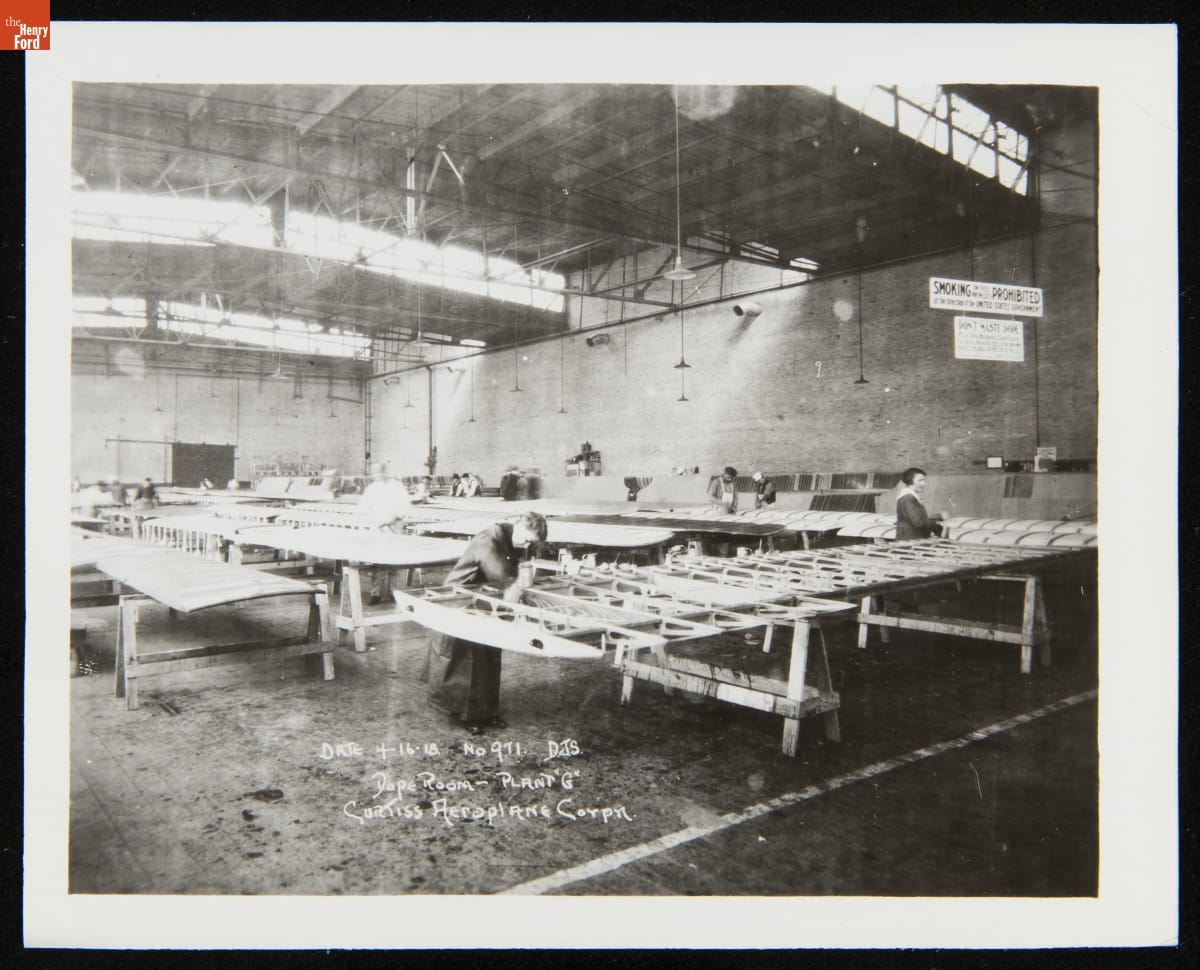
- April 16, 1918
- Collections - Artifact
Dope Room, Plant "G," Curtiss Aeroplane and Motor Company, April 1918
Many early airplanes had wings and fuselages covered in lightweight fabric. Manufacturers coated the fabric with a lacquer commonly called dope. The coating increased the fabric's airtightness and weather resistance. This 1918 photograph shows a dope room at the Curtiss Aeroplane and Motor Company. In liquid form, dope could be highly flammable -- note the "Smoking Prohibited" sign.
- Dope Room at Curtiss Aeroplane Plant "G," 1918 - Many early airplanes had wings and fuselages covered in lightweight fabric. Manufacturers coated the fabric with a lacquer commonly called dope. The coating increased the fabric's airtightness and weather resistance. This 1918 photograph shows a dope room at the Curtiss Aeroplane and Motor Company. In liquid form, dope could be highly flammable -- note the "Smoking Prohibited" sign.
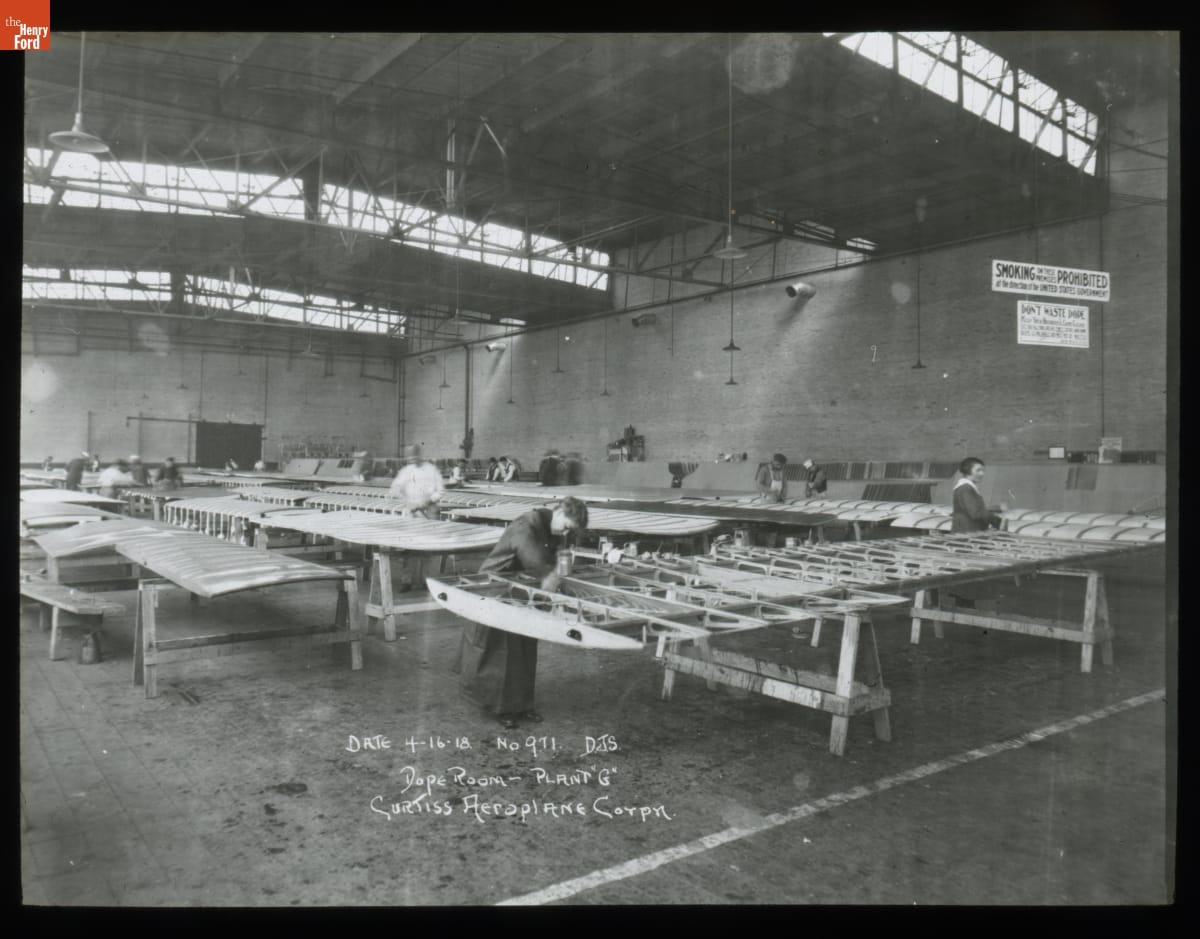
- April 16, 1918
- Collections - Artifact
Dope Room at Curtiss Aeroplane Plant "G," 1918
Many early airplanes had wings and fuselages covered in lightweight fabric. Manufacturers coated the fabric with a lacquer commonly called dope. The coating increased the fabric's airtightness and weather resistance. This 1918 photograph shows a dope room at the Curtiss Aeroplane and Motor Company. In liquid form, dope could be highly flammable -- note the "Smoking Prohibited" sign.