
Search
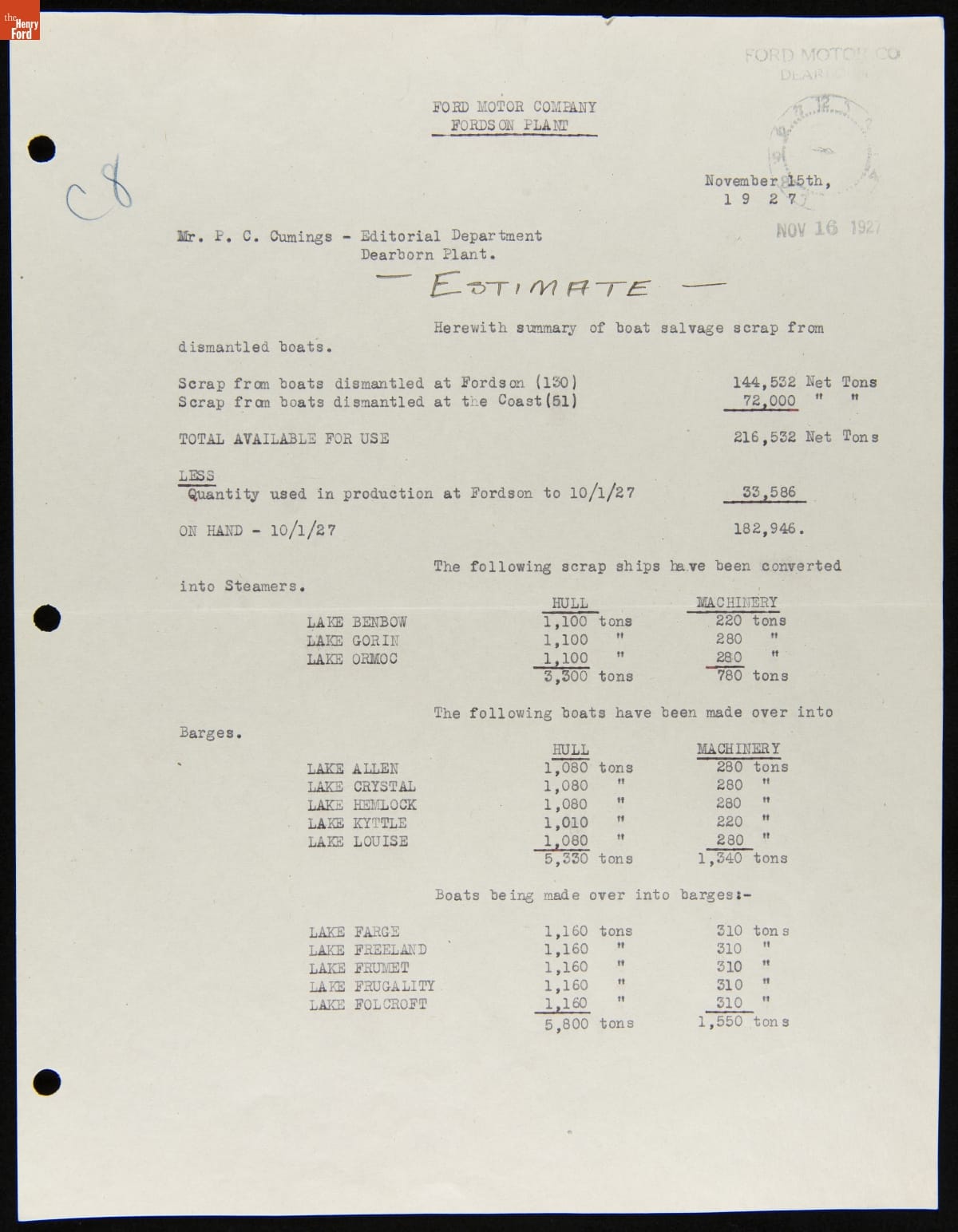
- Summary of Scrap from Dismantled Boats in the Ford Motor Company Ship Salvage Program, November 15, 1927 - Henry Ford purchased 199 surplus World War I merchant ships from the United States government in 1925. Many of these ships were towed to Ford's River Rouge Plant and dismantled -- their steel, metal, and salvageable parts were recycled. The other vessels were refurbished or converted to help transport raw materials and finished products as part of Ford's operations.
- October 01, 1927
- Collections - Artifact
Summary of Scrap from Dismantled Boats in the Ford Motor Company Ship Salvage Program, November 15, 1927
Henry Ford purchased 199 surplus World War I merchant ships from the United States government in 1925. Many of these ships were towed to Ford's River Rouge Plant and dismantled -- their steel, metal, and salvageable parts were recycled. The other vessels were refurbished or converted to help transport raw materials and finished products as part of Ford's operations.
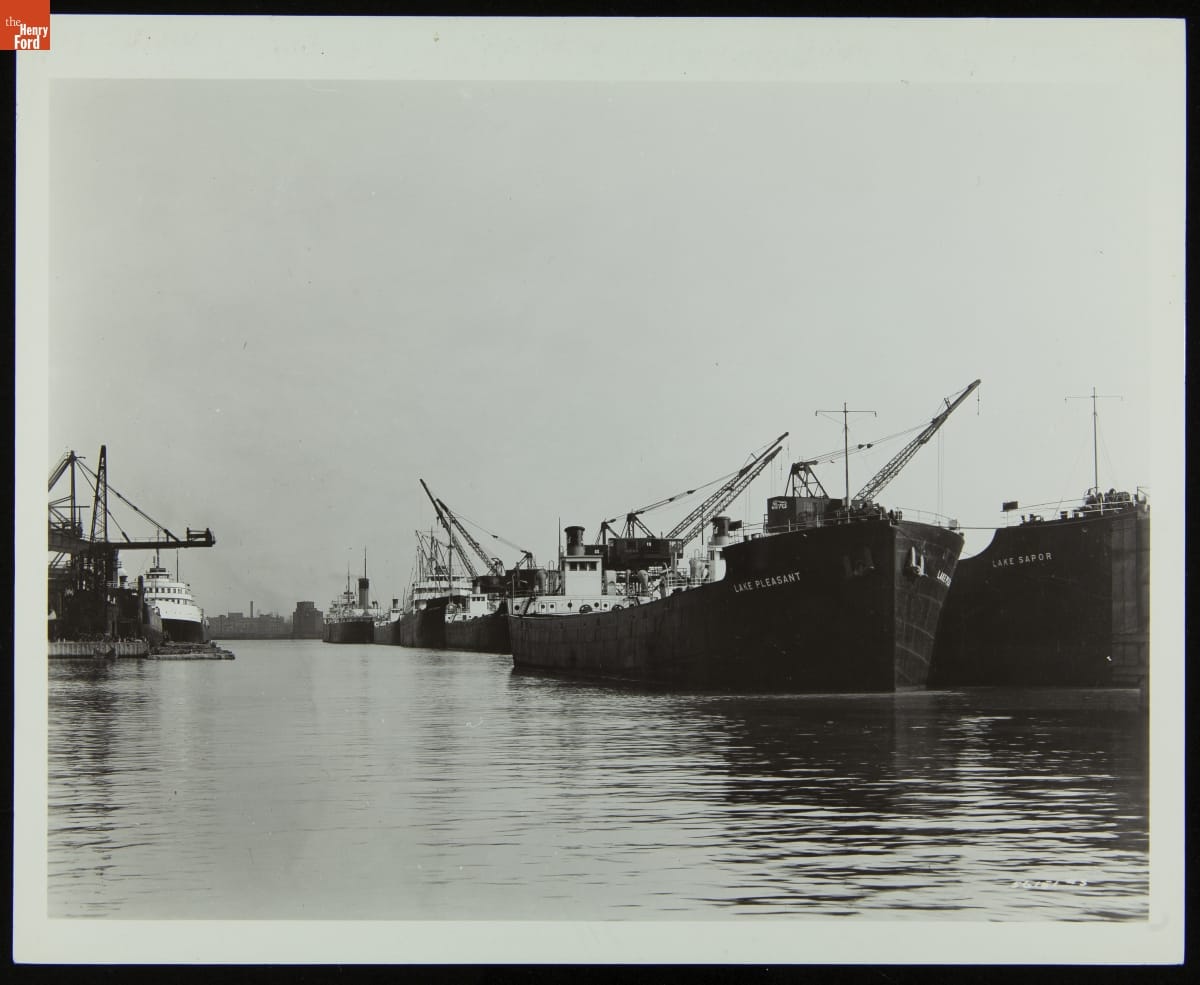
- Ford Freighters in Boat Slip at the Ford Rouge Plant, April 28, 1931 - Henry Ford purchased 199 surplus World War I merchant ships from the United States government in 1925. Most of these ships were scrapped and the materials were used at Ford's new automobile manufacturing complex on the Rouge River. But 13 were converted into barges, like the <em>Lake Pleasant</em> and <em>Lake Sapor</em>. These barges transported products and material as part of Ford's operation.
- April 28, 1931
- Collections - Artifact
Ford Freighters in Boat Slip at the Ford Rouge Plant, April 28, 1931
Henry Ford purchased 199 surplus World War I merchant ships from the United States government in 1925. Most of these ships were scrapped and the materials were used at Ford's new automobile manufacturing complex on the Rouge River. But 13 were converted into barges, like the Lake Pleasant and Lake Sapor. These barges transported products and material as part of Ford's operation.
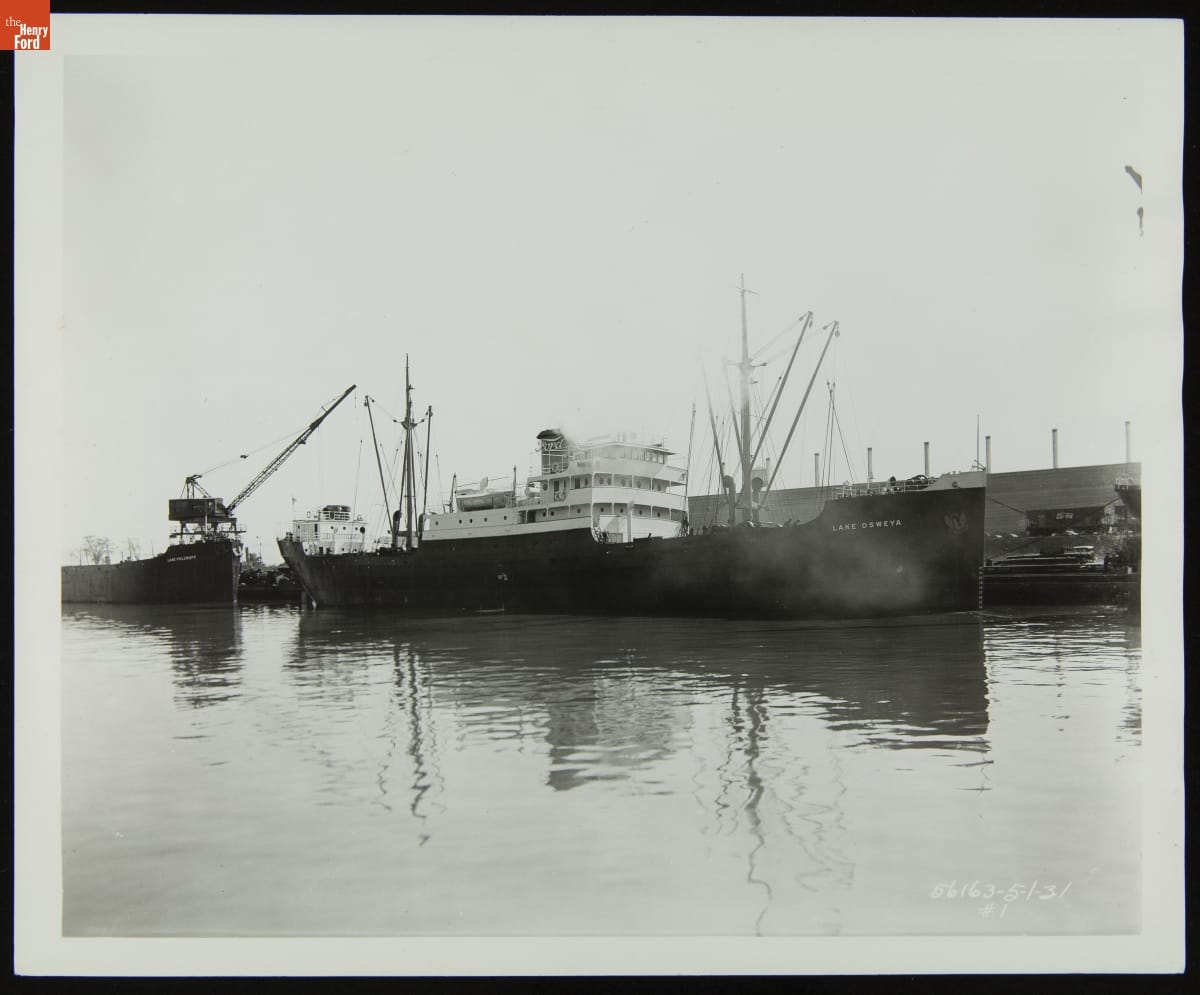
- Ford Freighter "Lake Osweya" Docked at Rouge River Factory, Dearborn, Michigan, May 1, 1931 - Henry Ford purchased 199 surplus World War I merchant ships from the United States government in 1925. Most of these ships were scrapped. But a few, like the <em>Lake Osweya</em>, were refitted into ocean-going freighters that transported automobiles, parts, and supplies to Ford plants located in cities along the American seaboard.
- May 01, 1931
- Collections - Artifact
Ford Freighter "Lake Osweya" Docked at Rouge River Factory, Dearborn, Michigan, May 1, 1931
Henry Ford purchased 199 surplus World War I merchant ships from the United States government in 1925. Most of these ships were scrapped. But a few, like the Lake Osweya, were refitted into ocean-going freighters that transported automobiles, parts, and supplies to Ford plants located in cities along the American seaboard.
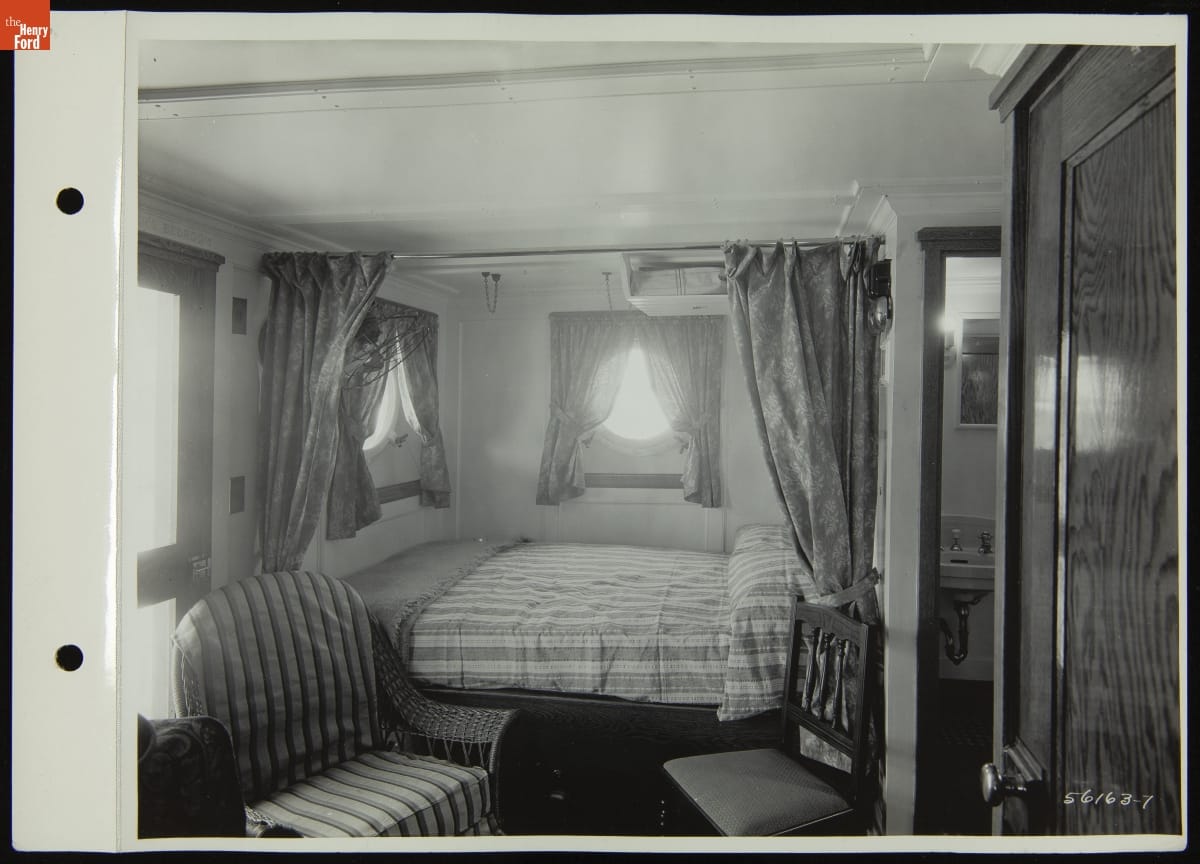
- Bedroom on Ford Towboat "Lake Osweya," May 1, 1931 - Henry Ford purchased 199 surplus World War I merchant ships from the United States government in 1925. Most of these ships were scrapped. But a few, like the <em>Lake Osweya</em>, were refitted into ocean-going freighters that transported automobiles, parts, and supplies to Ford plants located in cities along the American seaboard.
- May 01, 1931
- Collections - Artifact
Bedroom on Ford Towboat "Lake Osweya," May 1, 1931
Henry Ford purchased 199 surplus World War I merchant ships from the United States government in 1925. Most of these ships were scrapped. But a few, like the Lake Osweya, were refitted into ocean-going freighters that transported automobiles, parts, and supplies to Ford plants located in cities along the American seaboard.
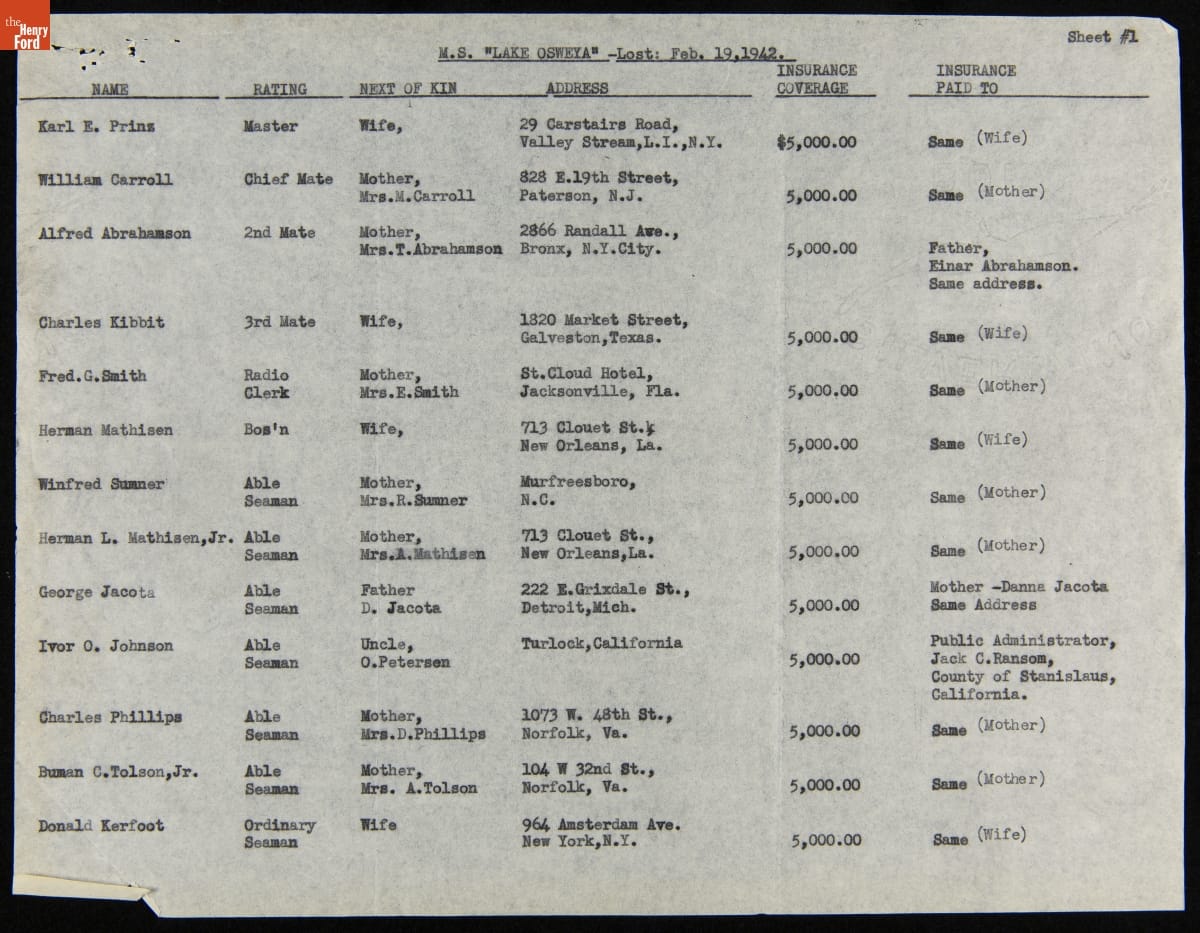
- Lost Crew List of the Sunk Ford Freighter "Lake Osweya," February 19, 1942 - In early 1942, the United States government requisitioned the Ford Motor Company's ocean-going freighter <em>Lake Osweya</em> for wartime service. The ship was refitted and armed in early February and departed from New York for convoy service on February 17. Less than two days out, the <em>Lake Osweya</em> was spotted by a German submarine and sunk. Both crew and ship were lost.
- February 19, 1942
- Collections - Artifact
Lost Crew List of the Sunk Ford Freighter "Lake Osweya," February 19, 1942
In early 1942, the United States government requisitioned the Ford Motor Company's ocean-going freighter Lake Osweya for wartime service. The ship was refitted and armed in early February and departed from New York for convoy service on February 17. Less than two days out, the Lake Osweya was spotted by a German submarine and sunk. Both crew and ship were lost.
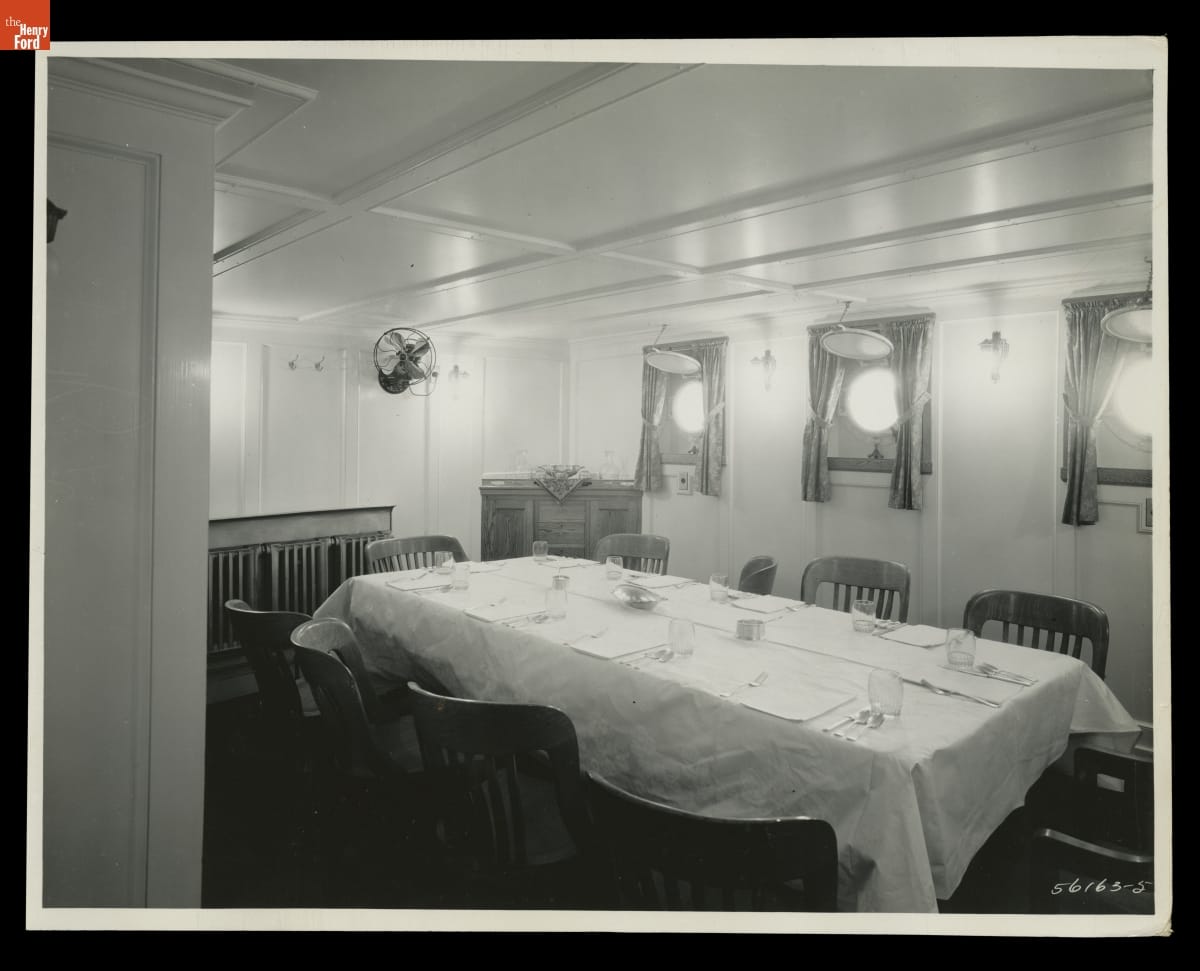
- Dining Room aboard the Ford Motor Company Ship Lake Osweya, May 1930 - Henry Ford purchased 199 surplus World War I merchant ships from the United States government in 1925. Most of these ships were scrapped. But a few, like the <em>Lake Osweya</em>, were refitted into ocean-going freighters that transported automobiles, parts, and supplies to Ford plants located in cities along the American seaboard.
- May 01, 1930
- Collections - Artifact
Dining Room aboard the Ford Motor Company Ship Lake Osweya, May 1930
Henry Ford purchased 199 surplus World War I merchant ships from the United States government in 1925. Most of these ships were scrapped. But a few, like the Lake Osweya, were refitted into ocean-going freighters that transported automobiles, parts, and supplies to Ford plants located in cities along the American seaboard.
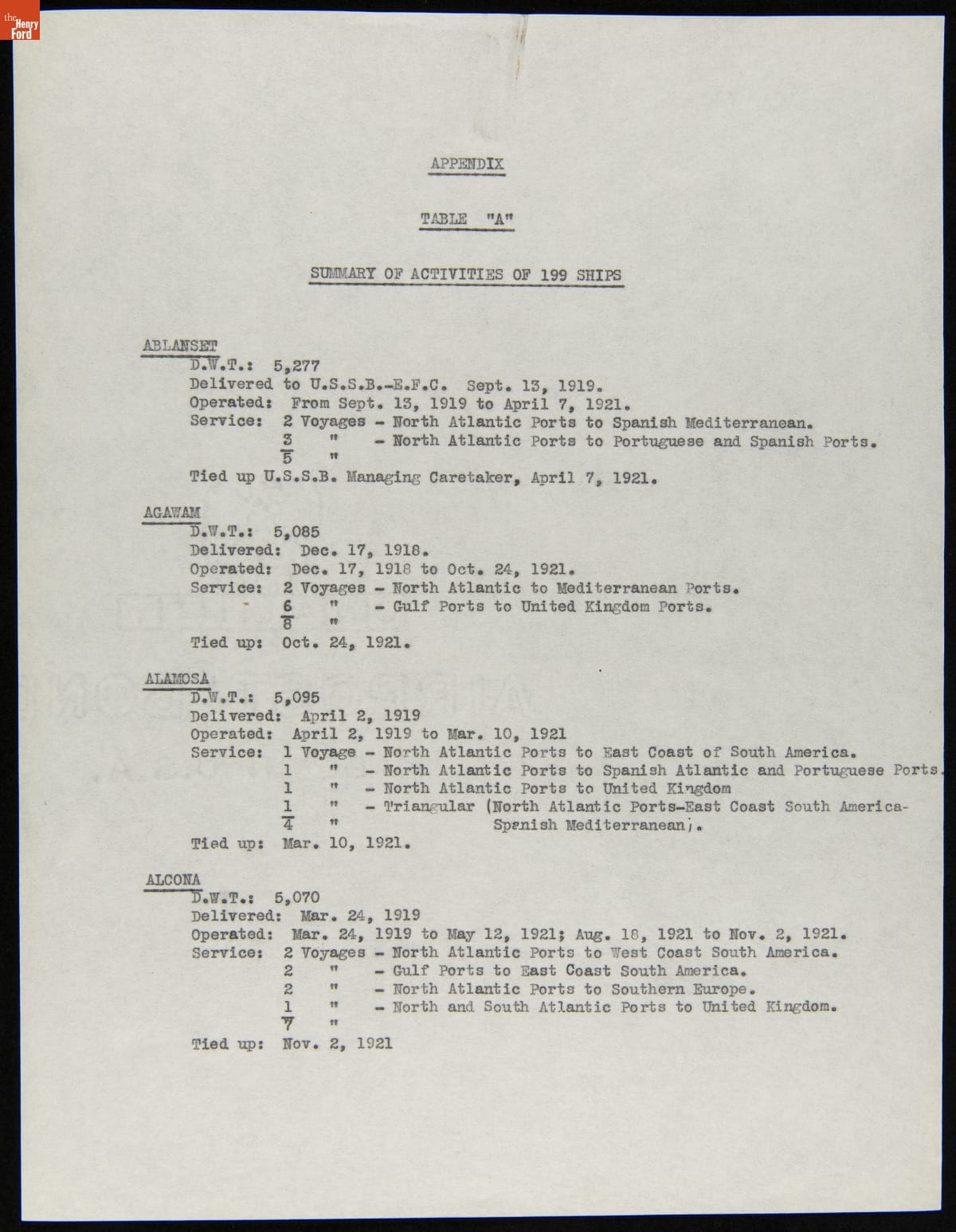
- Summary of Activity for 199 Ships Purchased for the Ford Ship Salvage Program, 1926 - Henry Ford purchased 199 surplus World War I merchant ships from the United States government in 1925. Many of these ships were towed to Ford's River Rouge Plant and dismantled -- their steel, metal, and salvageable parts were recycled. The other vessels were refurbished or converted to help transport raw materials and finished products as part of Ford's operations.
- circa 1926
- Collections - Artifact
Summary of Activity for 199 Ships Purchased for the Ford Ship Salvage Program, 1926
Henry Ford purchased 199 surplus World War I merchant ships from the United States government in 1925. Many of these ships were towed to Ford's River Rouge Plant and dismantled -- their steel, metal, and salvageable parts were recycled. The other vessels were refurbished or converted to help transport raw materials and finished products as part of Ford's operations.