
Search
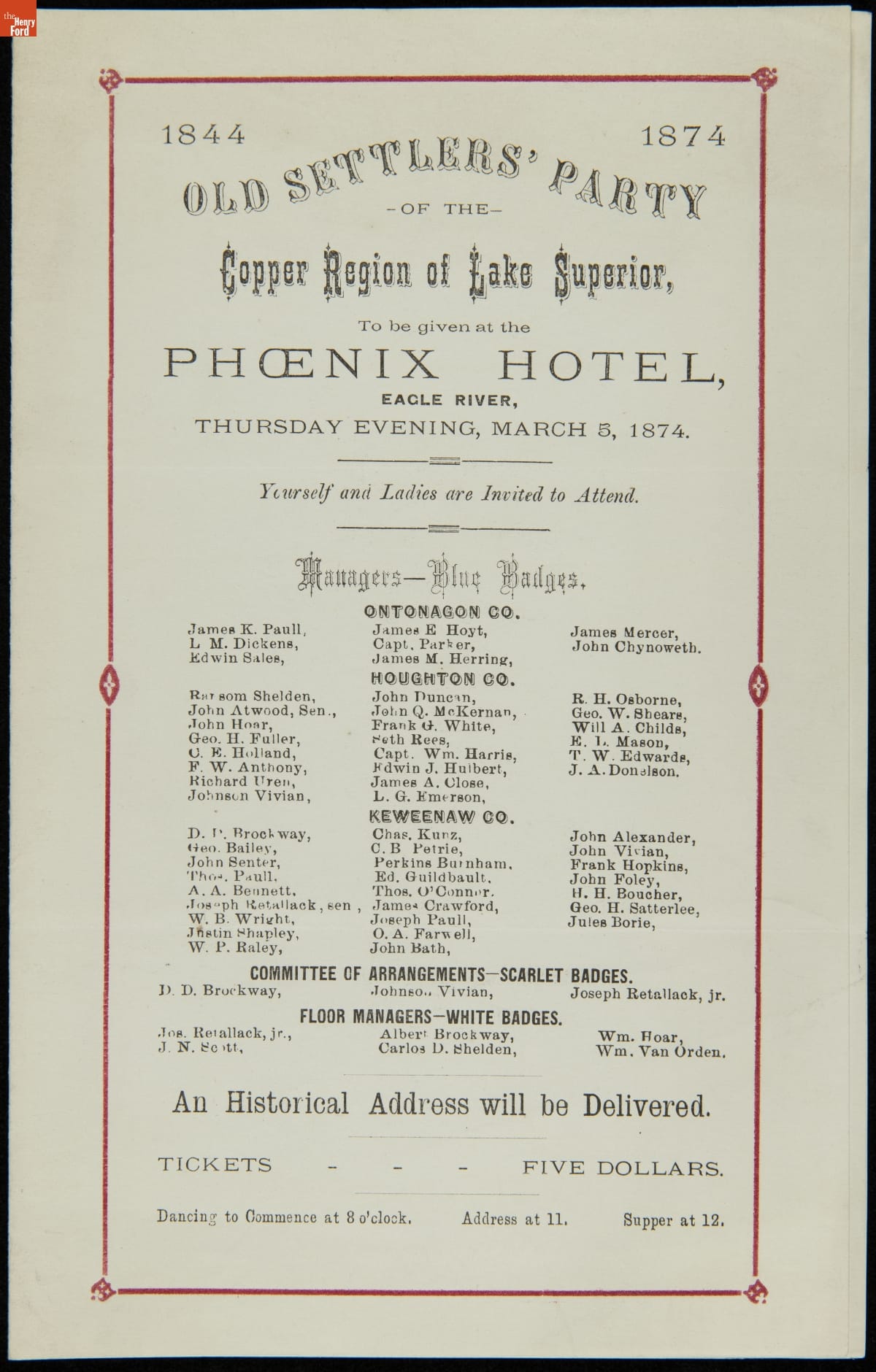
- Program, "Old Settlers' Party of the Copper Region of Lake Superior," Phoenix Hotel, Eagle River, Michigan, March 5, 1874 -
- March 05, 1874
- Collections - Artifact
Program, "Old Settlers' Party of the Copper Region of Lake Superior," Phoenix Hotel, Eagle River, Michigan, March 5, 1874
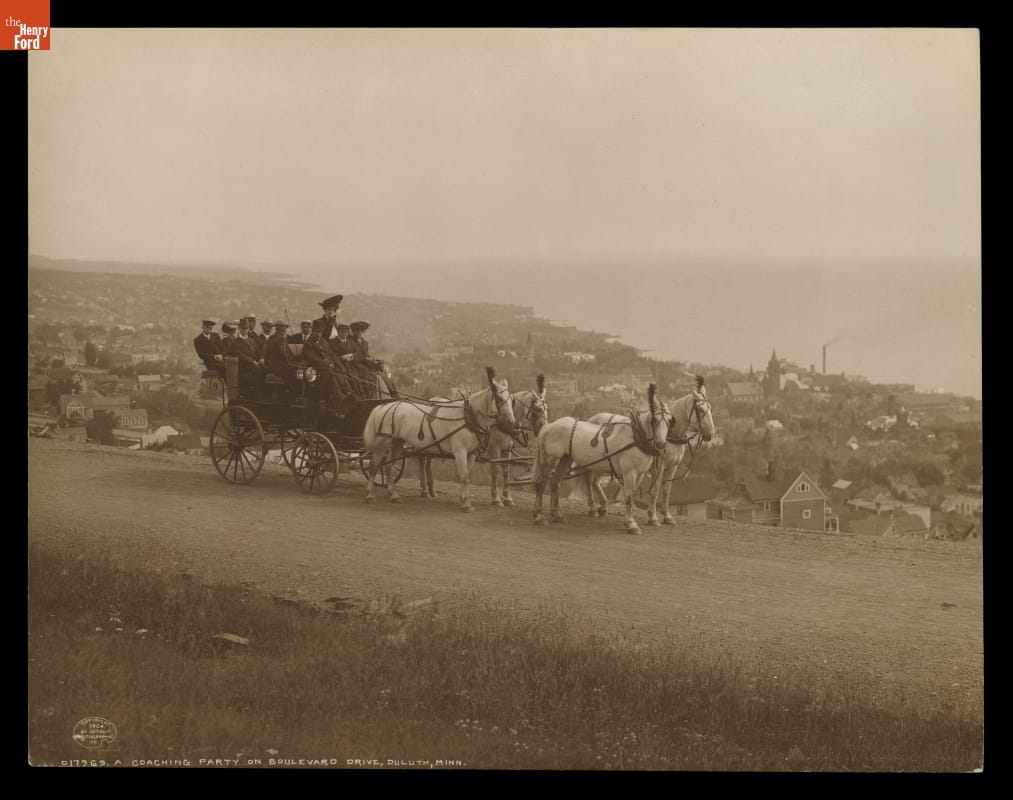
- "Coaching Party on Boulevard Drive, Duluth, Minnesota," 1904 - From 1895 to 1924, the Detroit Publishing Company was one of the major image publishers in the world. The company's wide-ranging stock of original photographs documented life and landscapes from across the nation and around the globe. From the tens of thousands of negatives, the company created prints, postcards, lantern slides, panoramas, and other merchandise for sale to educators, businessmen, advertisers, homeowners and travelers.
- circa 1904
- Collections - Artifact
"Coaching Party on Boulevard Drive, Duluth, Minnesota," 1904
From 1895 to 1924, the Detroit Publishing Company was one of the major image publishers in the world. The company's wide-ranging stock of original photographs documented life and landscapes from across the nation and around the globe. From the tens of thousands of negatives, the company created prints, postcards, lantern slides, panoramas, and other merchandise for sale to educators, businessmen, advertisers, homeowners and travelers.
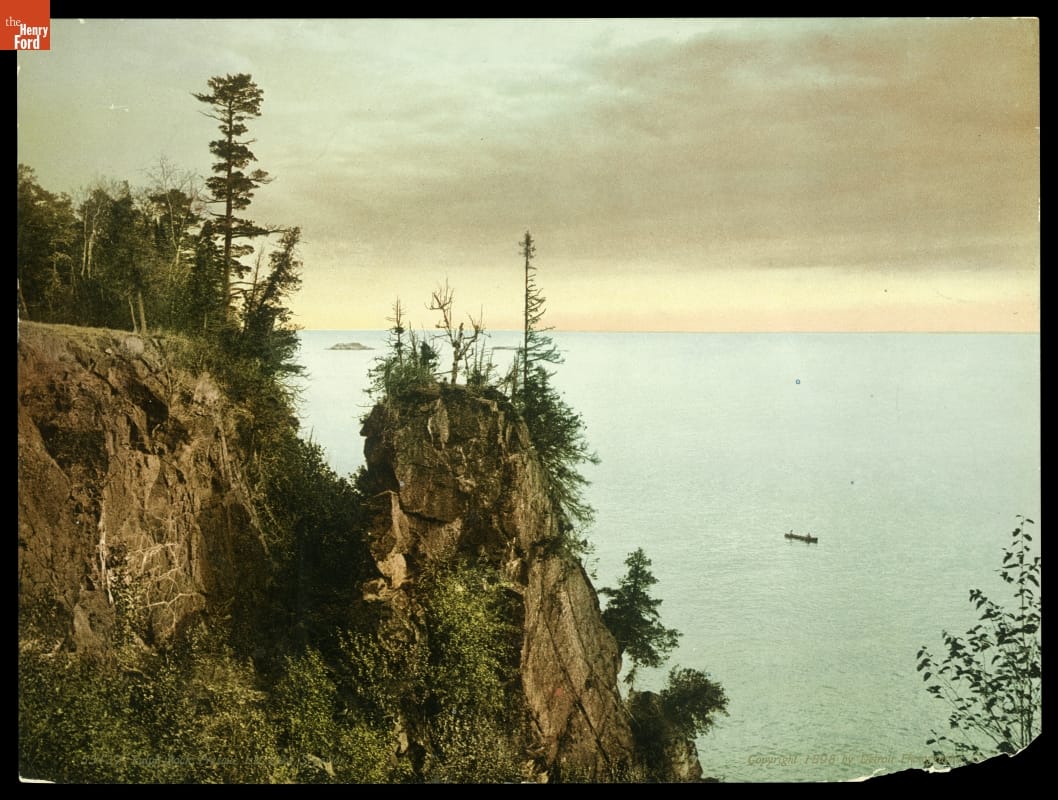
- "Pulpit Rock on Presque Isle," Lake Superior near Marquette, Michigan, 1898 - From 1895 to 1924, the Detroit Publishing Company was one of the major image publishers in the world. The company had a wide-ranging stock of original photographs, including many scenes from around the world. These colorful prints were reproduced for ads, purchased to decorate homes and offices, bought as souvenirs, and used as teaching tools in schools and libraries.
- 1898
- Collections - Artifact
"Pulpit Rock on Presque Isle," Lake Superior near Marquette, Michigan, 1898
From 1895 to 1924, the Detroit Publishing Company was one of the major image publishers in the world. The company had a wide-ranging stock of original photographs, including many scenes from around the world. These colorful prints were reproduced for ads, purchased to decorate homes and offices, bought as souvenirs, and used as teaching tools in schools and libraries.
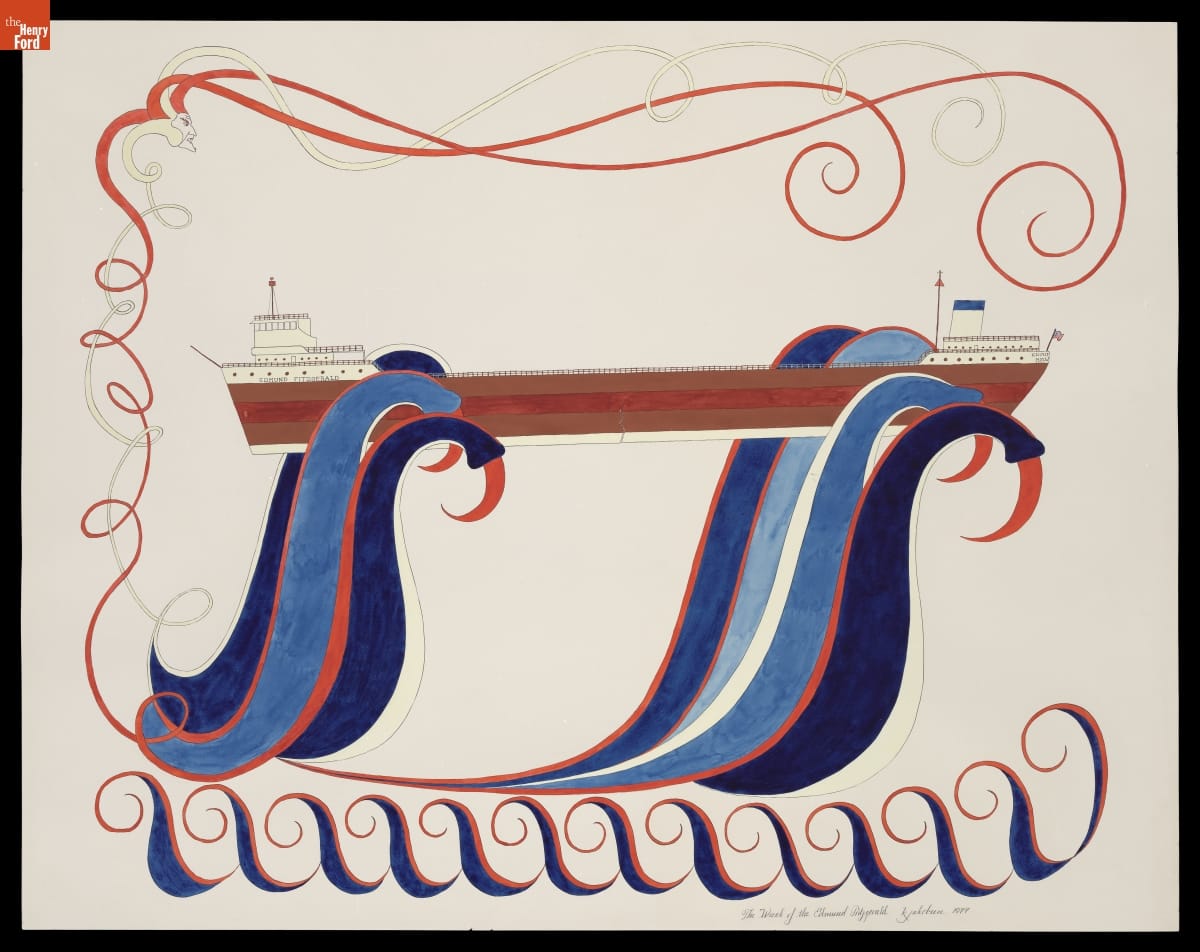
- "Wreck of the Edmund Fitzgerald," Drawing by Kathy Jakobsen, 1977 - On November 10, 1975, Great Lakes freighter <em>Edmund Fitzgerald</em> sank in Lake Superior during a severe storm with near hurricane-force winds and 35-foot-high waves. All 29 crewmen aboard perished. Moved by this tragedy, folk artist and Michigan resident Kathy Jakobsen created this highly stylized ink and watercolor tribute in 1977.
- November 10, 1975
- Collections - Artifact
"Wreck of the Edmund Fitzgerald," Drawing by Kathy Jakobsen, 1977
On November 10, 1975, Great Lakes freighter Edmund Fitzgerald sank in Lake Superior during a severe storm with near hurricane-force winds and 35-foot-high waves. All 29 crewmen aboard perished. Moved by this tragedy, folk artist and Michigan resident Kathy Jakobsen created this highly stylized ink and watercolor tribute in 1977.
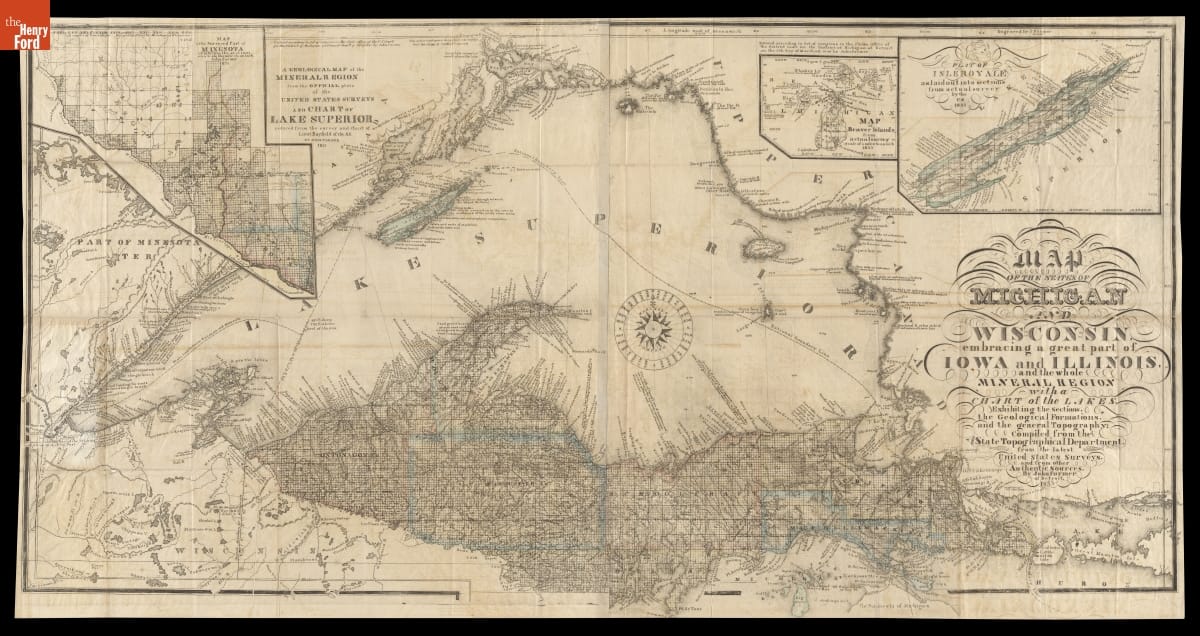
- "Map of the States of Michigan and Wisconsin, Embracing a Great Part of Iowa and Illinois," 1855 - This map shows Michigan's Upper Peninsula as it appeared in 1855. That year, construction crews completed the first lock at Sault Ste. Marie, Michigan, which allowed boats to travel uninterrupted between Lake Superior and the other Great Lakes. The lock made it possible for the state to more fully tap this region's rich copper and iron deposits.
- 1855
- Collections - Artifact
"Map of the States of Michigan and Wisconsin, Embracing a Great Part of Iowa and Illinois," 1855
This map shows Michigan's Upper Peninsula as it appeared in 1855. That year, construction crews completed the first lock at Sault Ste. Marie, Michigan, which allowed boats to travel uninterrupted between Lake Superior and the other Great Lakes. The lock made it possible for the state to more fully tap this region's rich copper and iron deposits.
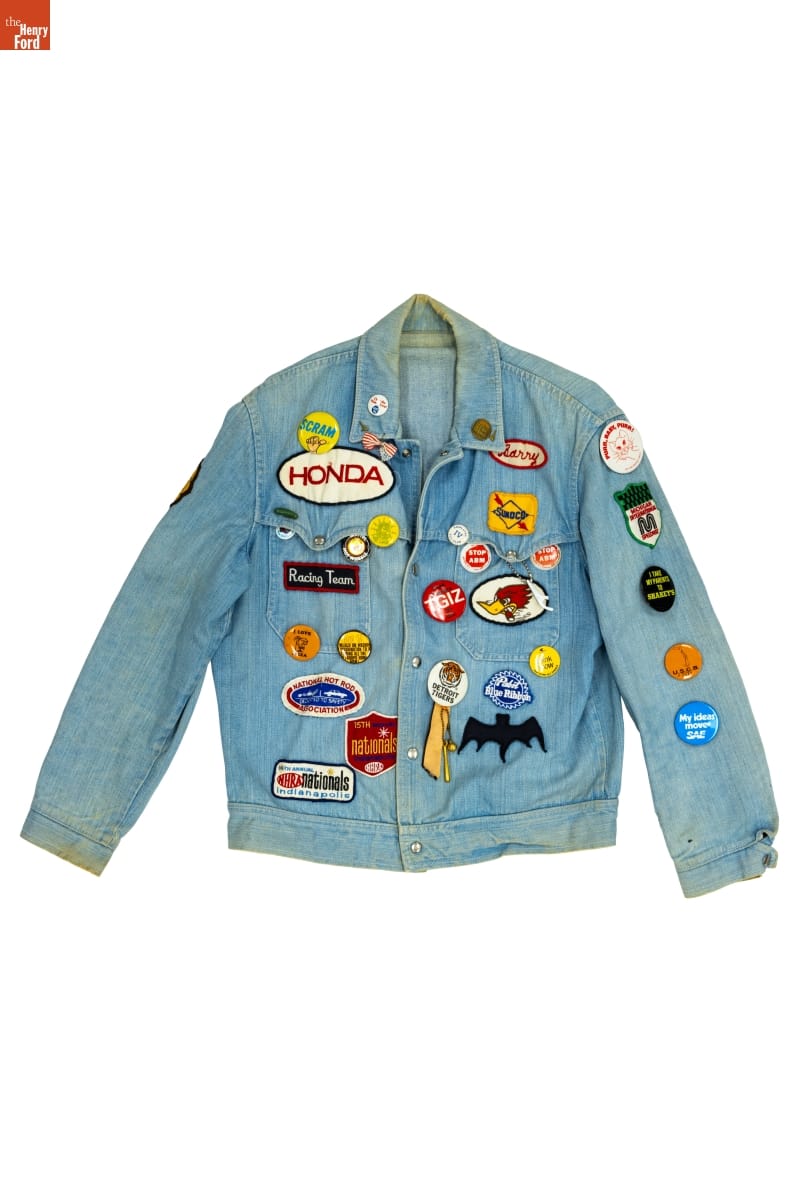
- Denim Jacket, circa 1968 - Barry Egen and Wayne Snyder of Monroe, Michigan, raced their custom-built motorcycle "Revolution" at nearby Milan Dragway in the late 1960s. They exhibited their Honda-powered racer in car and motorcycle shows, too. Egen decorated this denim jacket with patches and buttons from racing sponsors and events, along with other favorite organizations and causes.
- circa 1968
- Collections - Artifact
Denim Jacket, circa 1968
Barry Egen and Wayne Snyder of Monroe, Michigan, raced their custom-built motorcycle "Revolution" at nearby Milan Dragway in the late 1960s. They exhibited their Honda-powered racer in car and motorcycle shows, too. Egen decorated this denim jacket with patches and buttons from racing sponsors and events, along with other favorite organizations and causes.
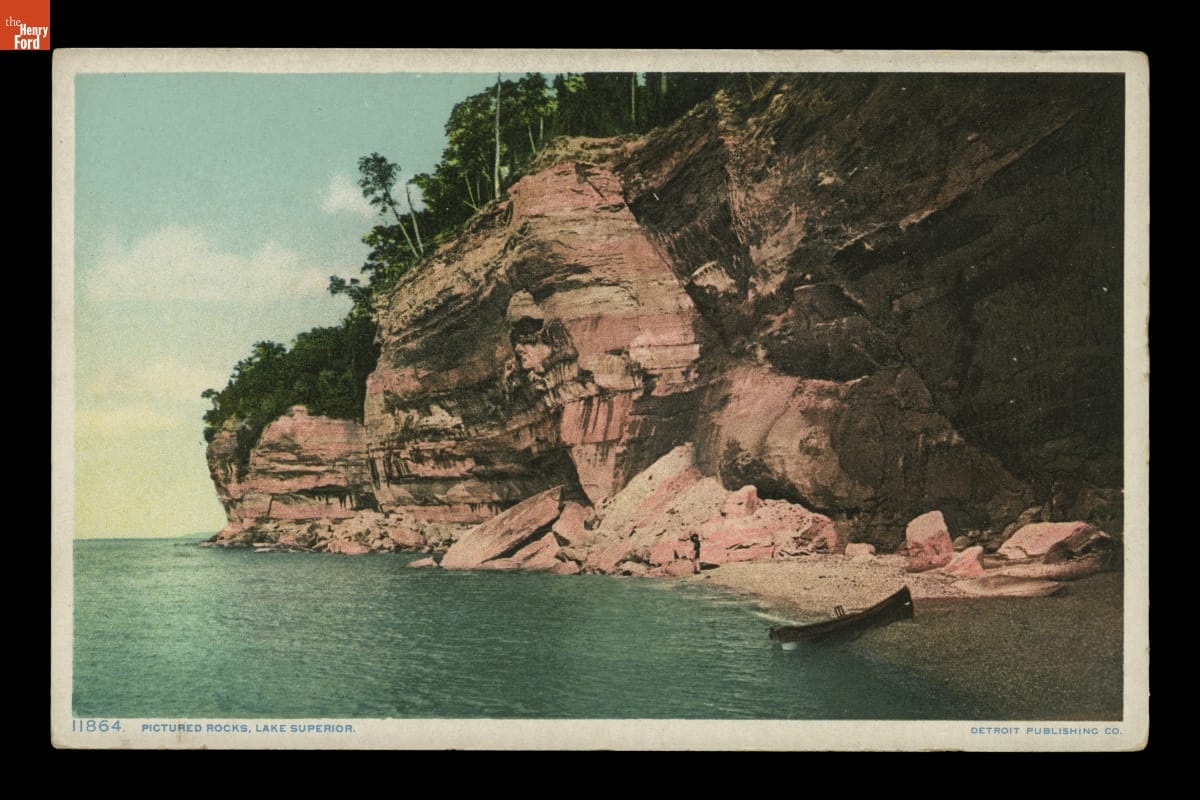
- Pictured Rocks National Lakeshore on Lake Superior, Munising Michigan, circa 1908 - From 1895 to 1924, the Detroit Publishing Company was one of the major image publishers in the world. It had a wide-ranging stock of original photographs, many of which were colored using the company's patented "Phostint" process. Popular "Phostint" postcards, the Detroit Publishing Company claimed, were delicately "executed in Nature's Coloring" to be truthful, tasteful, beautiful, and educational.
- circa 1908
- Collections - Artifact
Pictured Rocks National Lakeshore on Lake Superior, Munising Michigan, circa 1908
From 1895 to 1924, the Detroit Publishing Company was one of the major image publishers in the world. It had a wide-ranging stock of original photographs, many of which were colored using the company's patented "Phostint" process. Popular "Phostint" postcards, the Detroit Publishing Company claimed, were delicately "executed in Nature's Coloring" to be truthful, tasteful, beautiful, and educational.
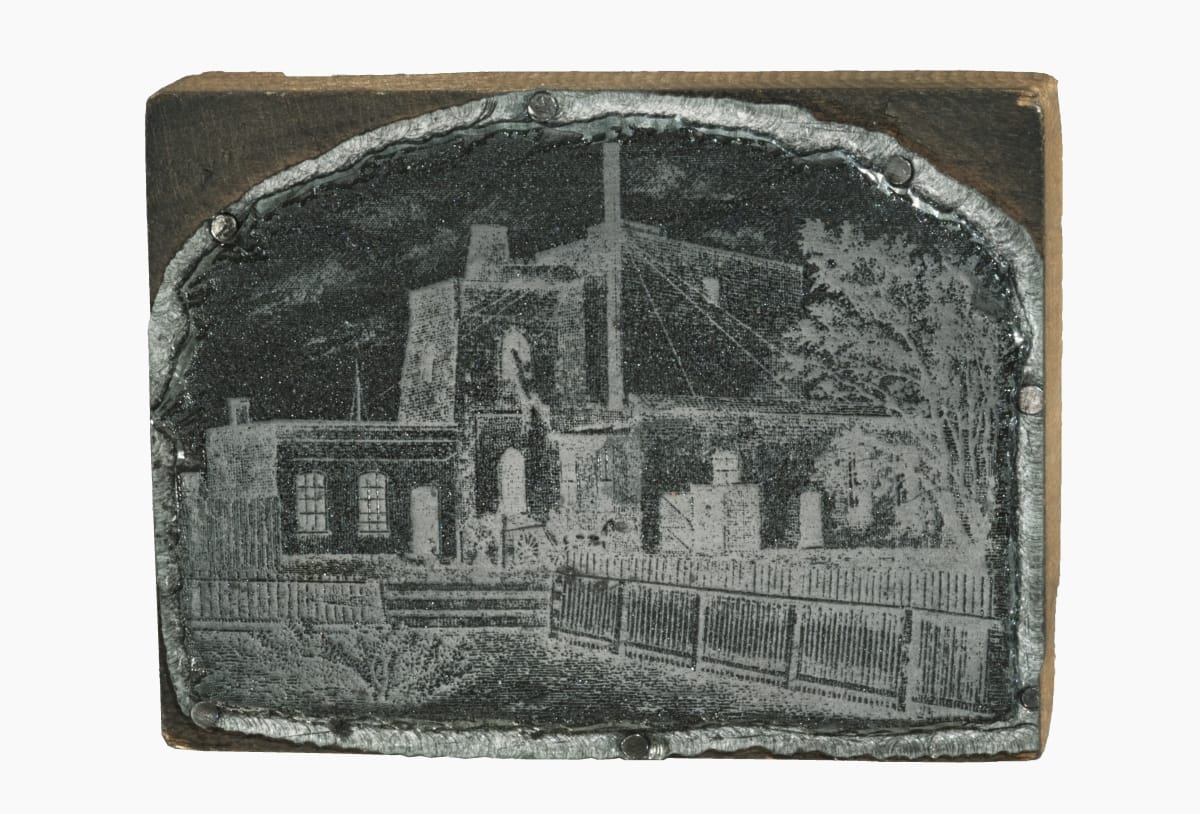
- Printing Plate with Image of Detroit and Lake Superior Iron Mfg. Co., Hamtramck, Michigan -
- circa 1866
- Collections - Artifact
Printing Plate with Image of Detroit and Lake Superior Iron Mfg. Co., Hamtramck, Michigan
- Flour Mills along the Waterfront, Duluth, Minnesota, 1902 - From 1895 to 1924, the Detroit Publishing Company was one of the major image publishers in the world. The company's wide-ranging stock of original photographs documented life and landscapes from across the nation and around the globe. From the tens of thousands of negatives, the company created prints, postcards, lantern slides, panoramas, and other merchandise for sale to educators, businessmen, advertisers, homeowners and travelers.
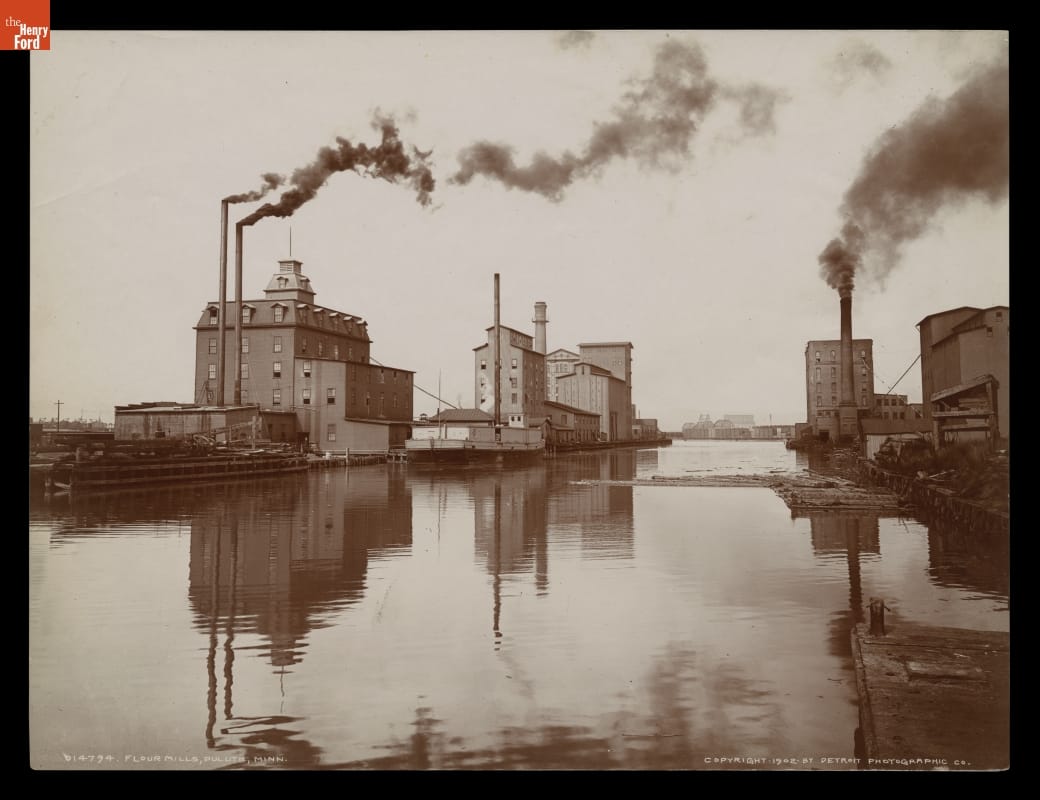
- 1902
- Collections - Artifact
Flour Mills along the Waterfront, Duluth, Minnesota, 1902
From 1895 to 1924, the Detroit Publishing Company was one of the major image publishers in the world. The company's wide-ranging stock of original photographs documented life and landscapes from across the nation and around the globe. From the tens of thousands of negatives, the company created prints, postcards, lantern slides, panoramas, and other merchandise for sale to educators, businessmen, advertisers, homeowners and travelers.
- View from Incline Railway, Duluth, Minnesota, circa 1908 - From 1895 to 1924, the Detroit Publishing Company was one of the major image publishers in the world. It had a wide-ranging stock of original photographs, many of which were colored using the company's patented "Phostint" process. Popular "Phostint" postcards, the Detroit Publishing Company claimed, were delicately "executed in Nature's Coloring" to be truthful, tasteful, beautiful, and educational.
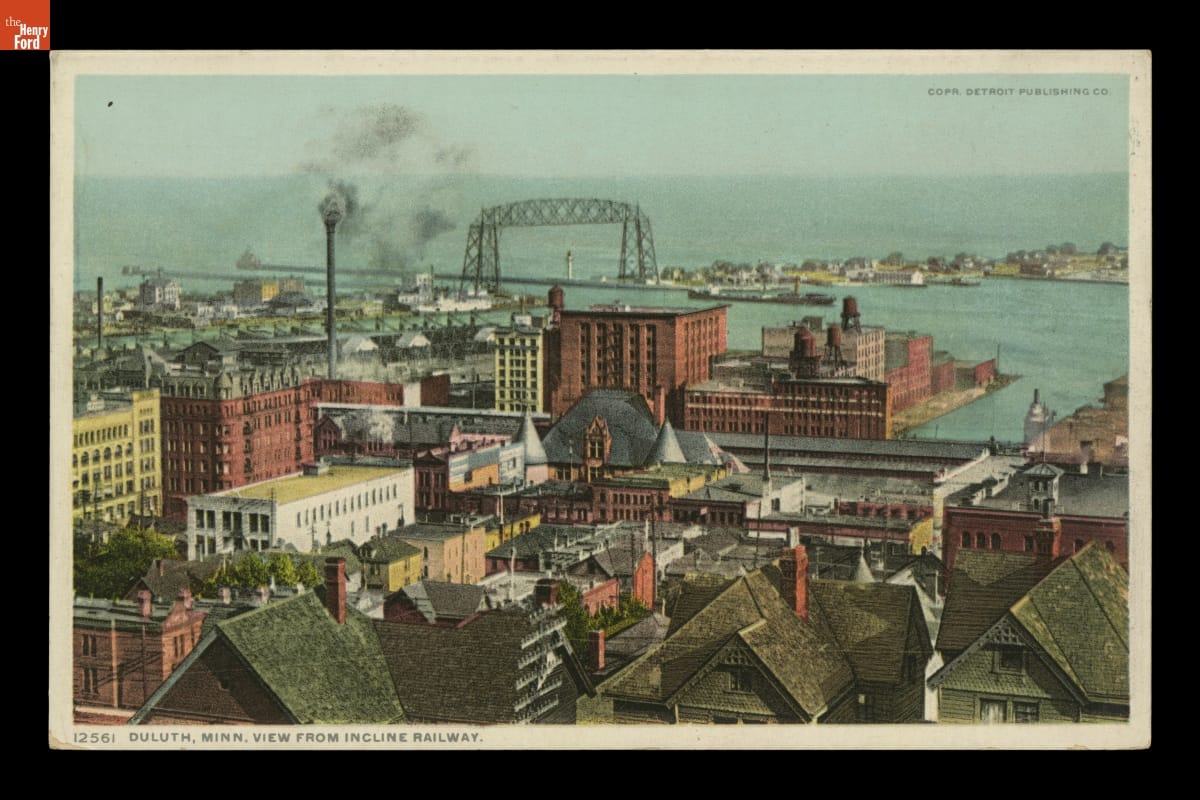
- circa 1908
- Collections - Artifact
View from Incline Railway, Duluth, Minnesota, circa 1908
From 1895 to 1924, the Detroit Publishing Company was one of the major image publishers in the world. It had a wide-ranging stock of original photographs, many of which were colored using the company's patented "Phostint" process. Popular "Phostint" postcards, the Detroit Publishing Company claimed, were delicately "executed in Nature's Coloring" to be truthful, tasteful, beautiful, and educational.