
Search
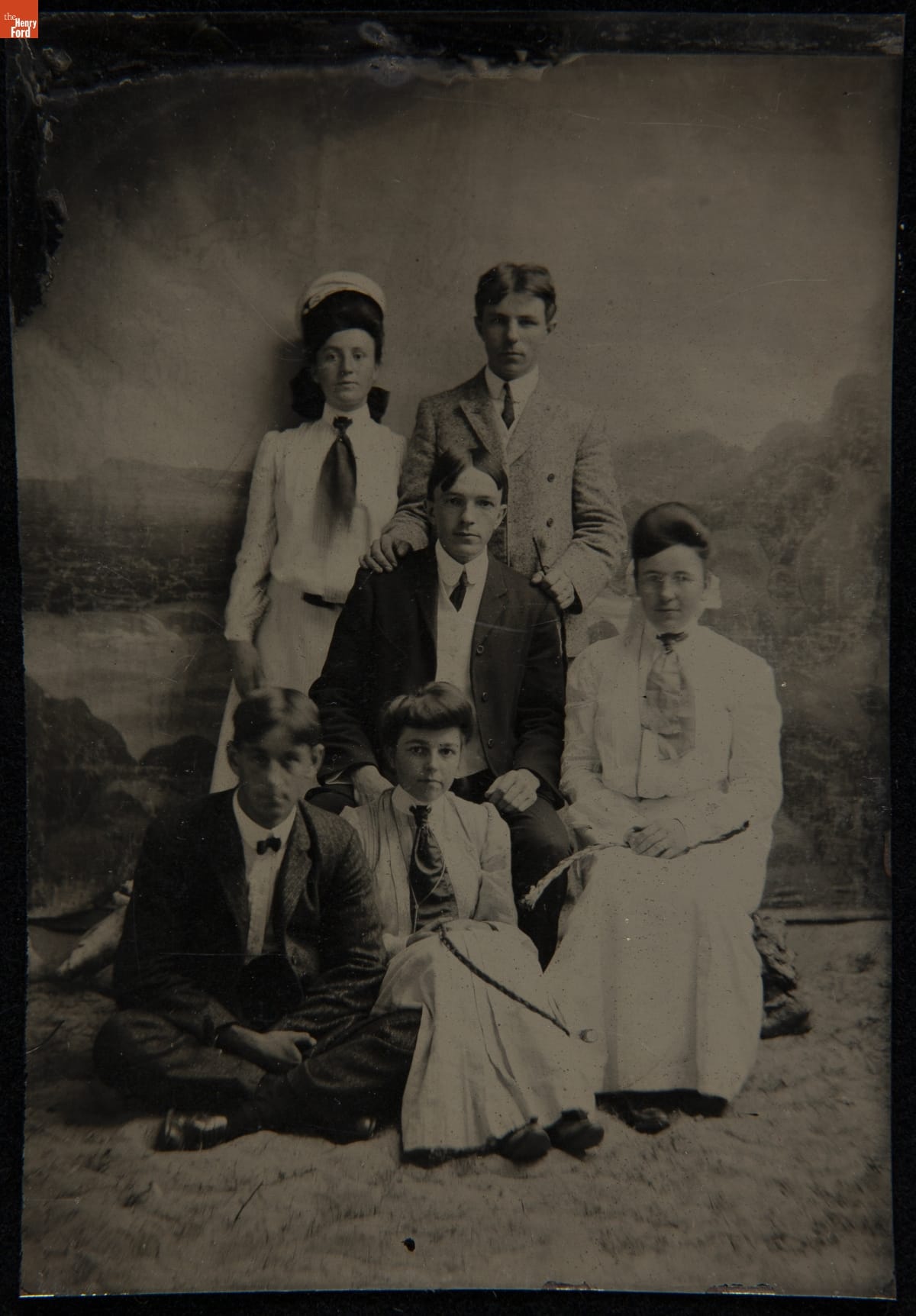
- Three Men and Three Women Pose in Front of a Painted Backdrop, circa 1910 - Tintypes, the popular "instant photographs" of the 19th century, could be produced in a matter of minutes at a price most people could afford. Tintypes democratized photography. Beginning in the mid-1850s, they gave more people than ever before the chance to have a real likeness of themselves--capturing unique glimpses of how everyday Americans looked and lived.
- circa 1910
- Collections - Artifact
Three Men and Three Women Pose in Front of a Painted Backdrop, circa 1910
Tintypes, the popular "instant photographs" of the 19th century, could be produced in a matter of minutes at a price most people could afford. Tintypes democratized photography. Beginning in the mid-1850s, they gave more people than ever before the chance to have a real likeness of themselves--capturing unique glimpses of how everyday Americans looked and lived.
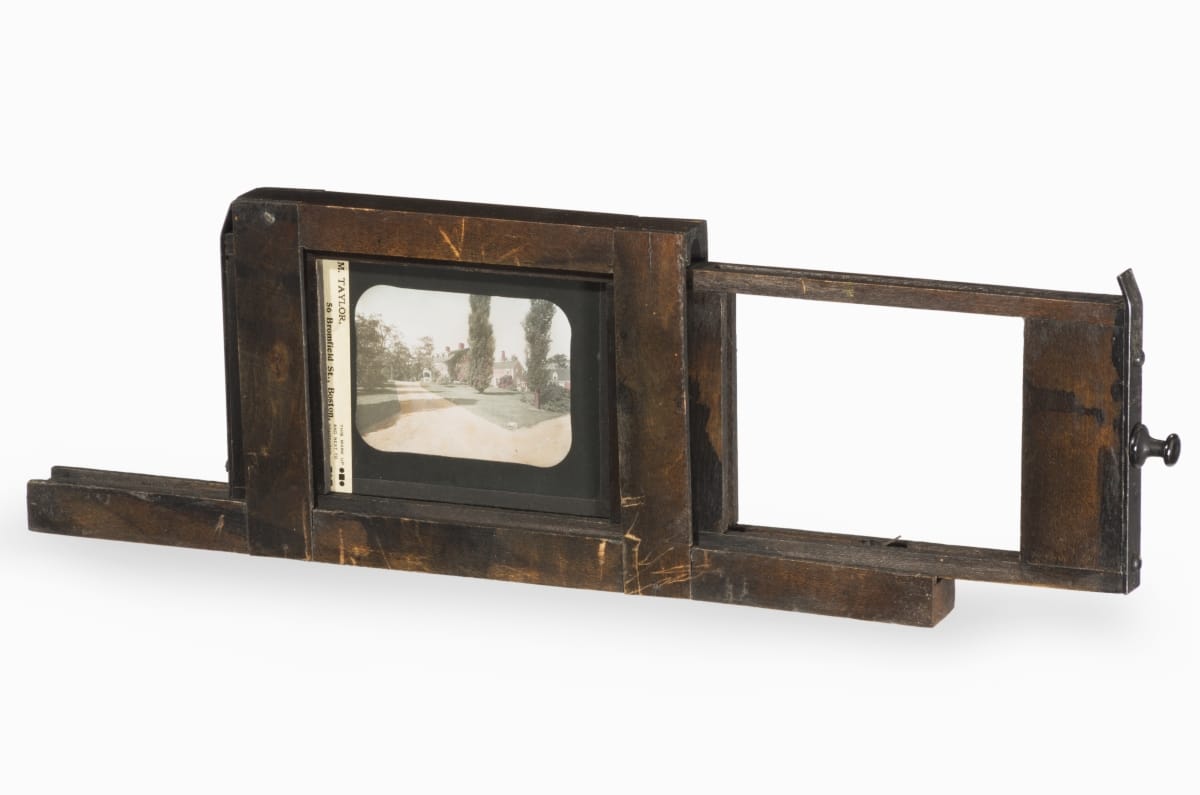
- S.M. Taylor Lantern Slide, Landscape, circa 1900 - Magic lanterns use a concave mirror and light source to project images on glass slides with painted or photographic scenes. Developed in the 17th century, magic lanterns predate slide projectors and motion pictures. In the hands of magicians, they became "lanterns of fright," projecting wondrous images and apparitions. Slide themes ranged widely: exotic travel, folklore, advertising, history, science, and art.
- circa 1900
- Collections - Artifact
S.M. Taylor Lantern Slide, Landscape, circa 1900
Magic lanterns use a concave mirror and light source to project images on glass slides with painted or photographic scenes. Developed in the 17th century, magic lanterns predate slide projectors and motion pictures. In the hands of magicians, they became "lanterns of fright," projecting wondrous images and apparitions. Slide themes ranged widely: exotic travel, folklore, advertising, history, science, and art.
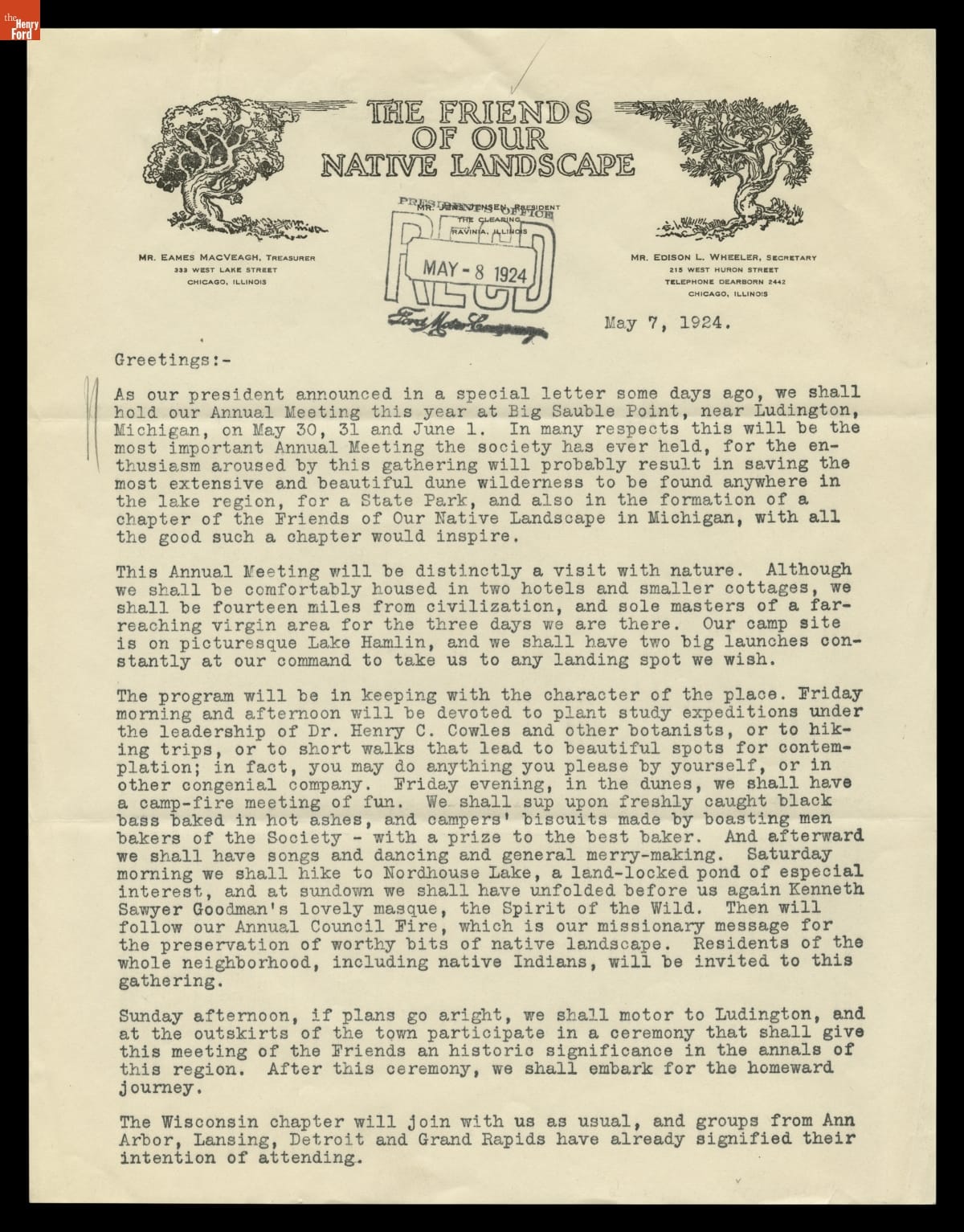
- Letter from the Friends of Our Native Landscape to Edsel B. Ford, May 7, 1924 - Famed landscape architect Jens Jensen and a group of influential Illinois citizens formed The Friends of Our Native Landscape in 1913. The environmental organization advocated for the preservation of sites of scenic beauty. Jensen used his connections with wealthy and like-minded individuals, such as Edsel Ford, to expand the organization and further its mission throughout the Midwest.
- May 07, 1924
- Collections - Artifact
Letter from the Friends of Our Native Landscape to Edsel B. Ford, May 7, 1924
Famed landscape architect Jens Jensen and a group of influential Illinois citizens formed The Friends of Our Native Landscape in 1913. The environmental organization advocated for the preservation of sites of scenic beauty. Jensen used his connections with wealthy and like-minded individuals, such as Edsel Ford, to expand the organization and further its mission throughout the Midwest.
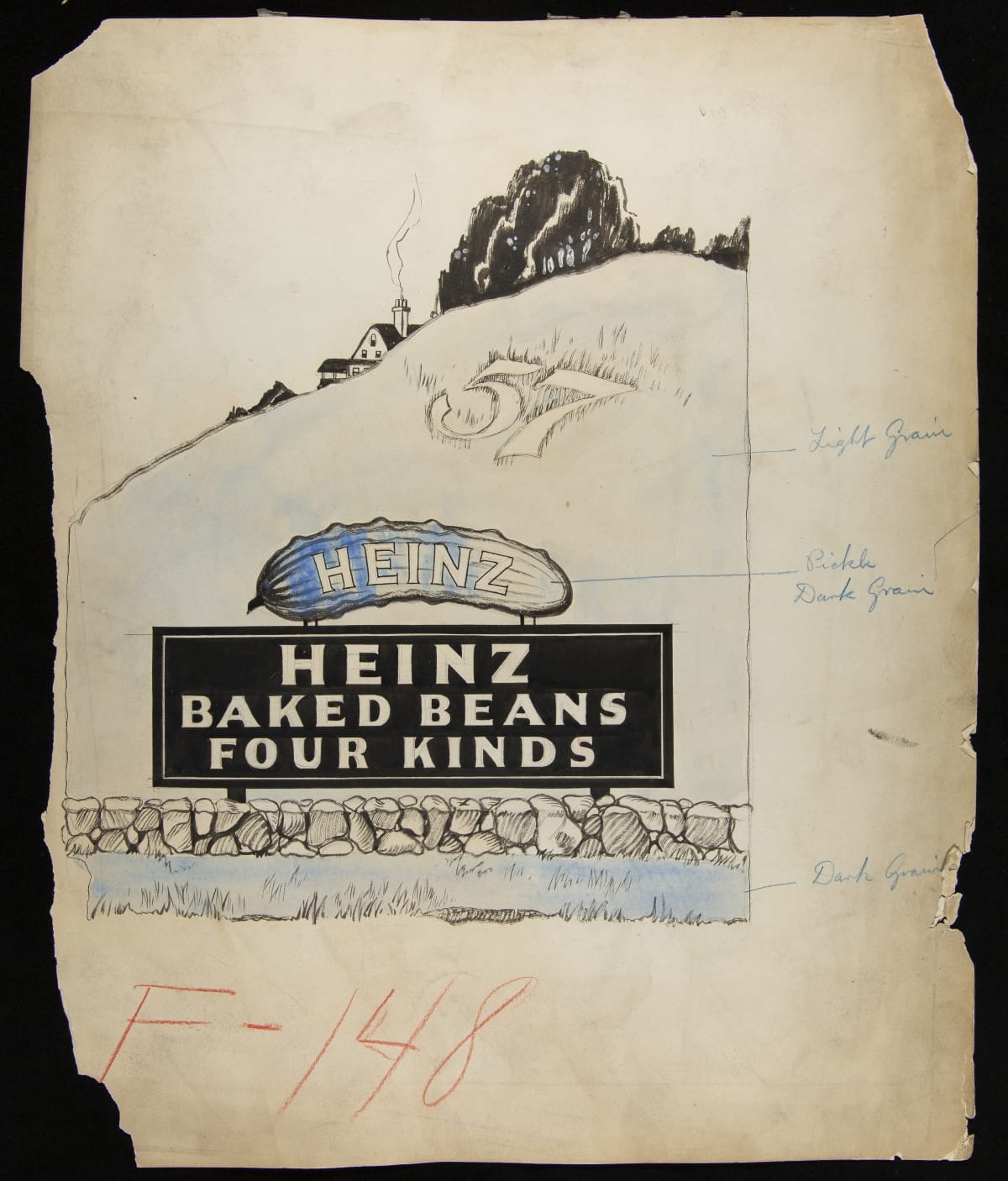
- Advertising Layout for Heinz Baked Beans, circa 1925 - The H.J. Heinz Company employed ambitious and comprehensive advertising strategies to meet consumers at home, in stores, and everywhere in between. Advertising layouts were a step in the marketing process where the drawing, size, color, and arrangement were taken into consideration before the final advertisement was created. This layout shows an advertisement for Heinz Baked Beans.
- circa 1925
- Collections - Artifact
Advertising Layout for Heinz Baked Beans, circa 1925
The H.J. Heinz Company employed ambitious and comprehensive advertising strategies to meet consumers at home, in stores, and everywhere in between. Advertising layouts were a step in the marketing process where the drawing, size, color, and arrangement were taken into consideration before the final advertisement was created. This layout shows an advertisement for Heinz Baked Beans.
- Letter from the Friends of Our Native Landscape to Edsel B. Ford, May 15, 1924 - Famed landscape architect Jens Jensen and a group of influential Illinois citizens formed The Friends of Our Native Landscape in 1913. The environmental organization advocated for the preservation of sites of scenic beauty. Jensen used his connections with wealthy and like-minded individuals, such as Edsel Ford, to expand the organization and further its mission throughout the Midwest.
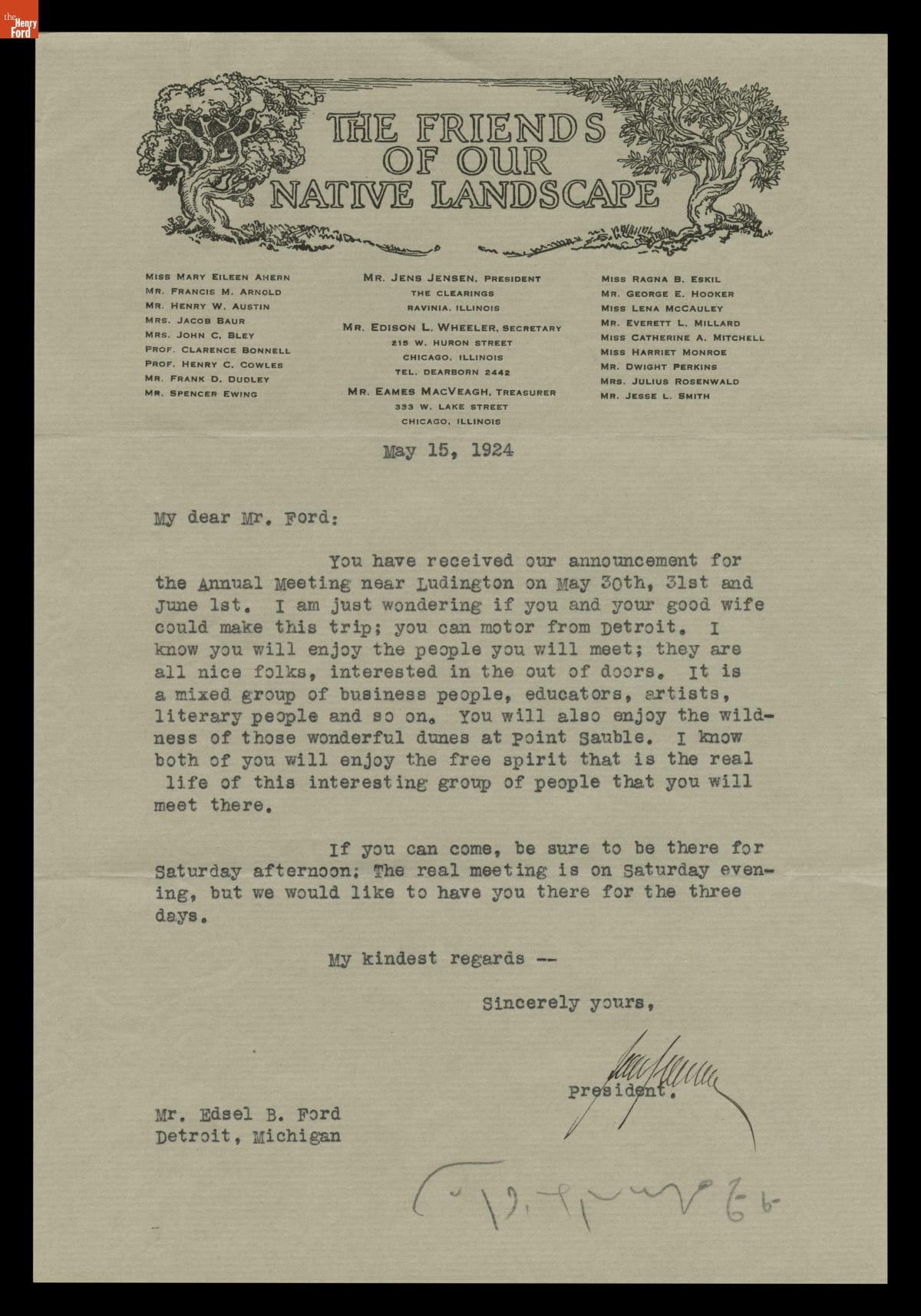
- May 15, 1924
- Collections - Artifact
Letter from the Friends of Our Native Landscape to Edsel B. Ford, May 15, 1924
Famed landscape architect Jens Jensen and a group of influential Illinois citizens formed The Friends of Our Native Landscape in 1913. The environmental organization advocated for the preservation of sites of scenic beauty. Jensen used his connections with wealthy and like-minded individuals, such as Edsel Ford, to expand the organization and further its mission throughout the Midwest.