
Search
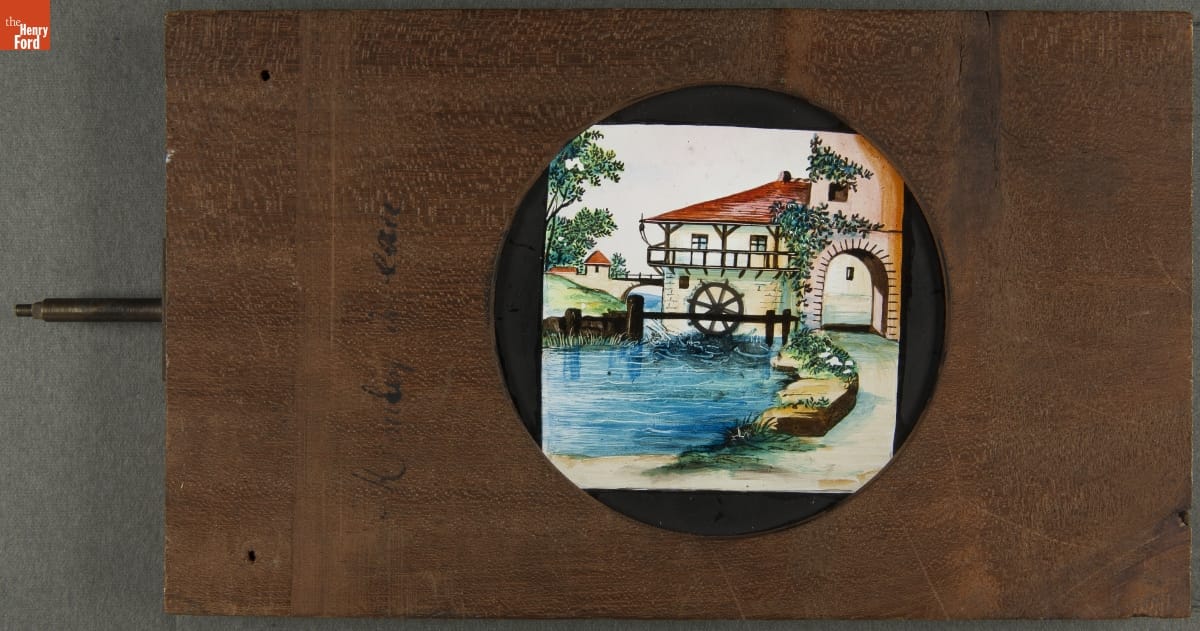
- Mechanical Lantern Slide, "The Water Wheel," 1860-1900 - Magic lanterns use a concave mirror and light source to project images on glass slides with painted or photographic scenes. Developed in the 17th century, magic lanterns predate slide projectors and motion pictures. In the hands of magicians, they became "lanterns of fright," projecting wondrous images and apparitions. Slide themes ranged widely: exotic travel, folklore, advertising, history, science, and art.
- 1860-1900
- Collections - Artifact
Mechanical Lantern Slide, "The Water Wheel," 1860-1900
Magic lanterns use a concave mirror and light source to project images on glass slides with painted or photographic scenes. Developed in the 17th century, magic lanterns predate slide projectors and motion pictures. In the hands of magicians, they became "lanterns of fright," projecting wondrous images and apparitions. Slide themes ranged widely: exotic travel, folklore, advertising, history, science, and art.
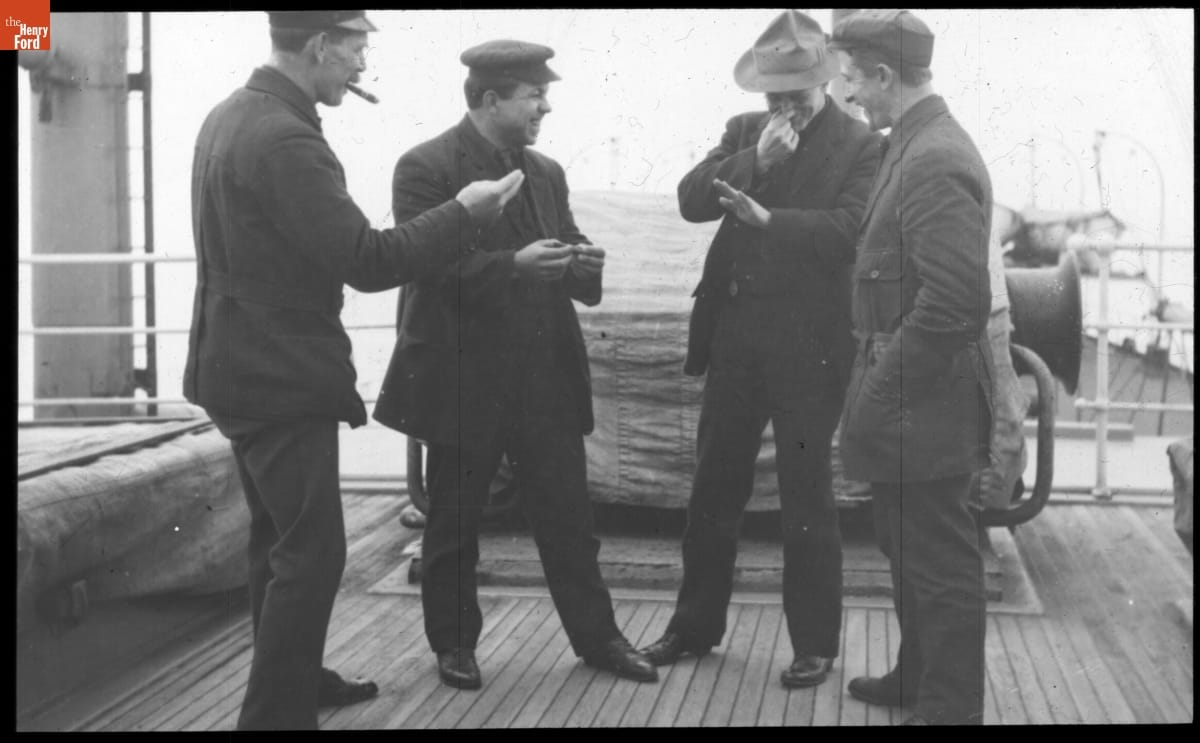
- The Thomas Flyer Team aboard the SS Shawmut, Journeying to Japan, New York to Paris Race, 1908 - In early April, officials for the 1908 New York to Paris race decided that the remaining teams should ship their vehicles from the west coast of the United States to Asia. Instead of crossing the Bering Strait from Alaska into Russia, the race would begin again in Vladivostok. The now-trailing American team crossed the Pacific on the SS <em>Shawmut</em>.
- 1908
- Collections - Artifact
The Thomas Flyer Team aboard the SS Shawmut, Journeying to Japan, New York to Paris Race, 1908
In early April, officials for the 1908 New York to Paris race decided that the remaining teams should ship their vehicles from the west coast of the United States to Asia. Instead of crossing the Bering Strait from Alaska into Russia, the race would begin again in Vladivostok. The now-trailing American team crossed the Pacific on the SS Shawmut.
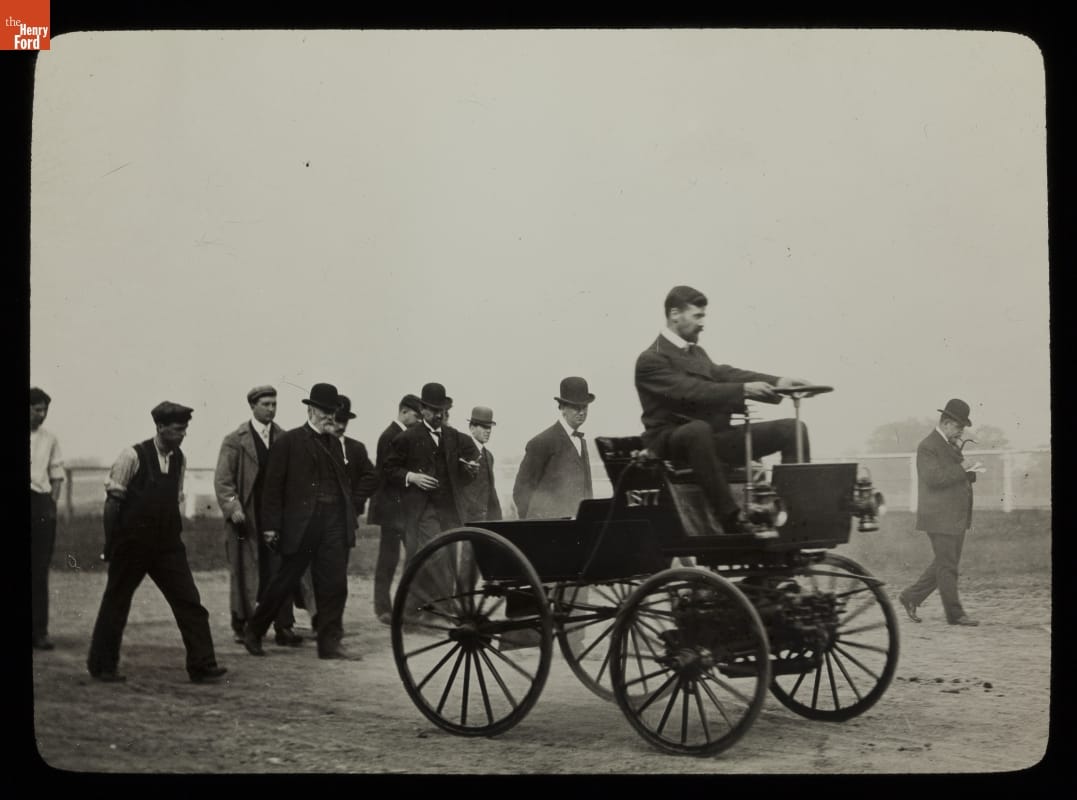
- Driving the Selden Motor Buggy during the Selden Patent Suit - George Selden conceived -- but didn't build -- a self-propelled gasoline-powered vehicle in 1877 and patented the idea in 1895. The Association of Licensed Automobile Manufacturers enforced Selden's patent, but Henry Ford fought ALAM in court. This car was completed for Selden in 1907 as evidence for the legal battle. Ford ultimately won, freeing himself and other automakers from paying royalties to ALAM.
- 1907-1911
- Collections - Artifact
Driving the Selden Motor Buggy during the Selden Patent Suit
George Selden conceived -- but didn't build -- a self-propelled gasoline-powered vehicle in 1877 and patented the idea in 1895. The Association of Licensed Automobile Manufacturers enforced Selden's patent, but Henry Ford fought ALAM in court. This car was completed for Selden in 1907 as evidence for the legal battle. Ford ultimately won, freeing himself and other automakers from paying royalties to ALAM.
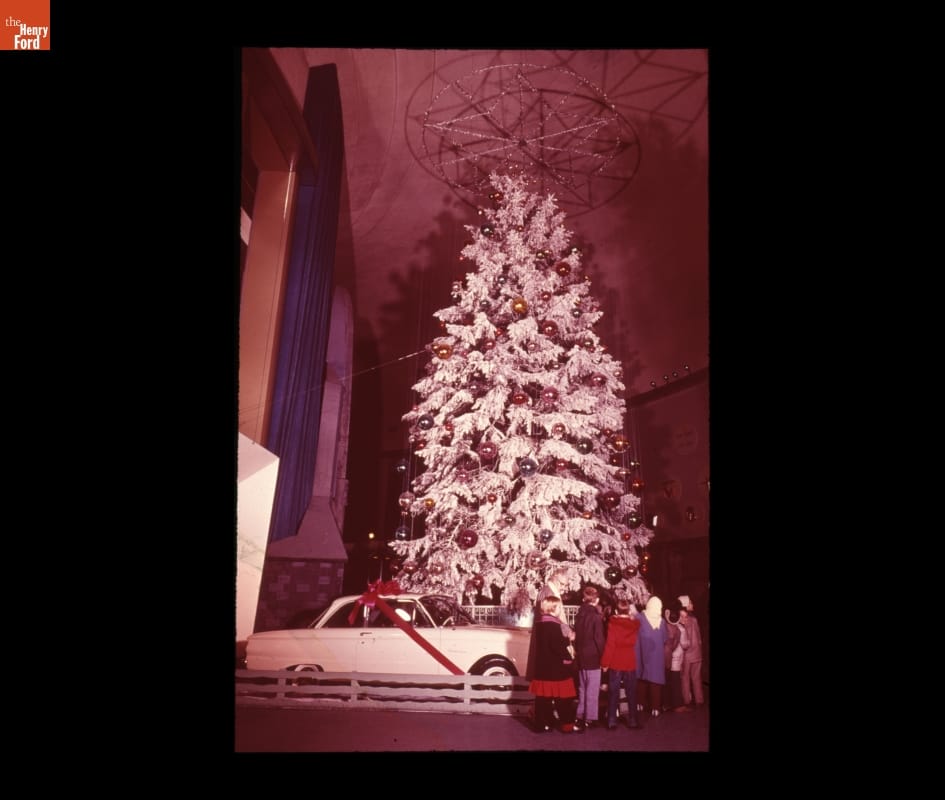
- Ford Falcon Automobile and Christmas Tree Inside the Ford Rotunda Building, Dearborn, Michigan, 1959 - After the Chicago Century of Progress Exposition ended in 1934, Ford Motor Company brought back its central Rotunda building from that fair to Dearborn, to serve as a visitor center and starting point for Rouge Plant tours. However, its biggest draw between 1953 and 1961 was the annual "Christmas Fantasy," shown here. Unfortunately, the Rotunda burned down in November 1962.
- 1959
- Collections - Artifact
Ford Falcon Automobile and Christmas Tree Inside the Ford Rotunda Building, Dearborn, Michigan, 1959
After the Chicago Century of Progress Exposition ended in 1934, Ford Motor Company brought back its central Rotunda building from that fair to Dearborn, to serve as a visitor center and starting point for Rouge Plant tours. However, its biggest draw between 1953 and 1961 was the annual "Christmas Fantasy," shown here. Unfortunately, the Rotunda burned down in November 1962.
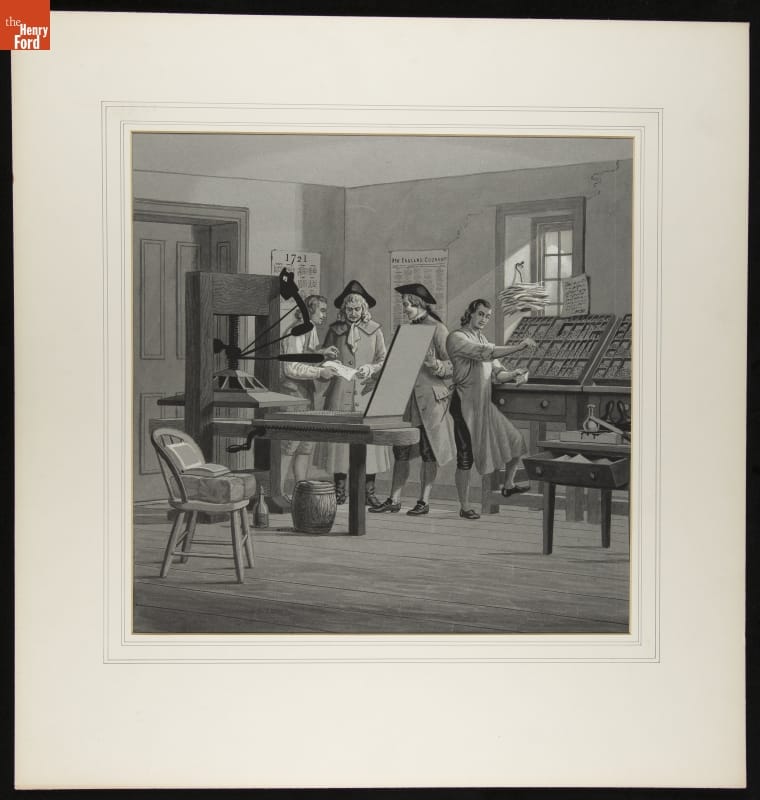
- "Franklin as a Printer, Overhearing Remarks of Visitors about His Contributions," Drawing for Magic Lantern Slide, 1902-1903 - Joseph Boggs Beale created artwork that was reproduced to make magic lantern slides. His works include some of the most artistic slide illustrations made in the late-19th and early-20th centuries. Beale was also prolific, producing more than 2000 images used in over 250 different lantern slide sets. This drawing, part of Beale's "Life of Benjamin Franklin" set, depicts Franklin working in his brother's printshop.
- 1902-1903
- Collections - Artifact
"Franklin as a Printer, Overhearing Remarks of Visitors about His Contributions," Drawing for Magic Lantern Slide, 1902-1903
Joseph Boggs Beale created artwork that was reproduced to make magic lantern slides. His works include some of the most artistic slide illustrations made in the late-19th and early-20th centuries. Beale was also prolific, producing more than 2000 images used in over 250 different lantern slide sets. This drawing, part of Beale's "Life of Benjamin Franklin" set, depicts Franklin working in his brother's printshop.
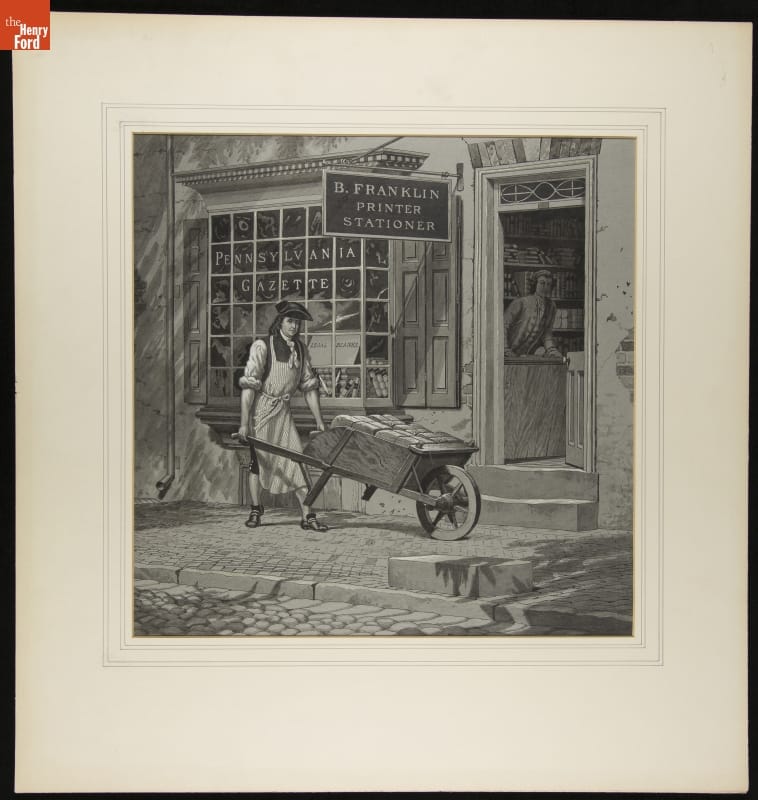
- "Franklin Acting as His Own Porter When in Business," Drawing for Magic Lantern Slide, 1902-1903 - Joseph Boggs Beale created artwork that was reproduced to make magic lantern slides. His works include some of the most artistic slide illustrations made in the late-19th and early-20th centuries. Beale was also prolific, producing more than 2000 images used in over 250 different lantern slide sets. This drawing, part of Beale's "Life of Benjamin Franklin" set, depicts Franklin delivering goods to his printshop.
- 1902-1903
- Collections - Artifact
"Franklin Acting as His Own Porter When in Business," Drawing for Magic Lantern Slide, 1902-1903
Joseph Boggs Beale created artwork that was reproduced to make magic lantern slides. His works include some of the most artistic slide illustrations made in the late-19th and early-20th centuries. Beale was also prolific, producing more than 2000 images used in over 250 different lantern slide sets. This drawing, part of Beale's "Life of Benjamin Franklin" set, depicts Franklin delivering goods to his printshop.
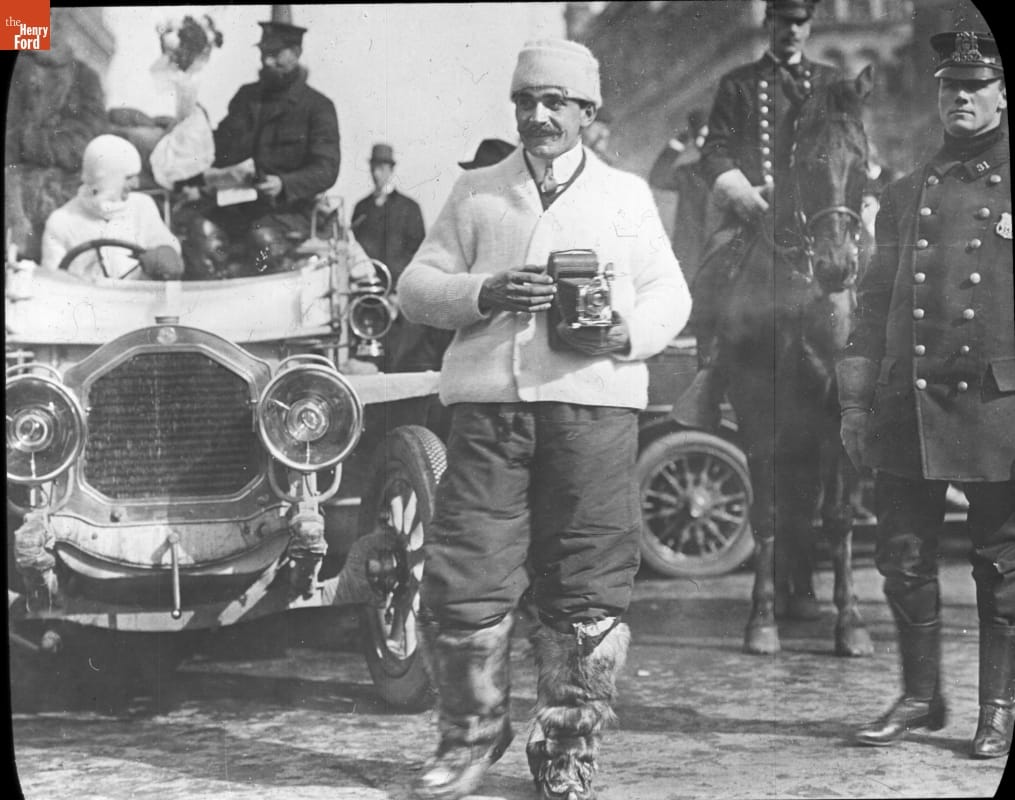
- De Dion-Bouton Mechanic Alphonse Autran with Camera before the New York to Paris Race, New York City, 1908 - In 1908, six automobiles raced around the globe from New York City to Paris, France. The contest took 169 days, covered 22,000 miles and spanned three continents. The cars and their racing teams had to endure cold, snow, mud, poor roads and other hardships. The cars started from New York's Times Square on February 12 and attracted a great crowd.
- February 12, 1908
- Collections - Artifact
De Dion-Bouton Mechanic Alphonse Autran with Camera before the New York to Paris Race, New York City, 1908
In 1908, six automobiles raced around the globe from New York City to Paris, France. The contest took 169 days, covered 22,000 miles and spanned three continents. The cars and their racing teams had to endure cold, snow, mud, poor roads and other hardships. The cars started from New York's Times Square on February 12 and attracted a great crowd.
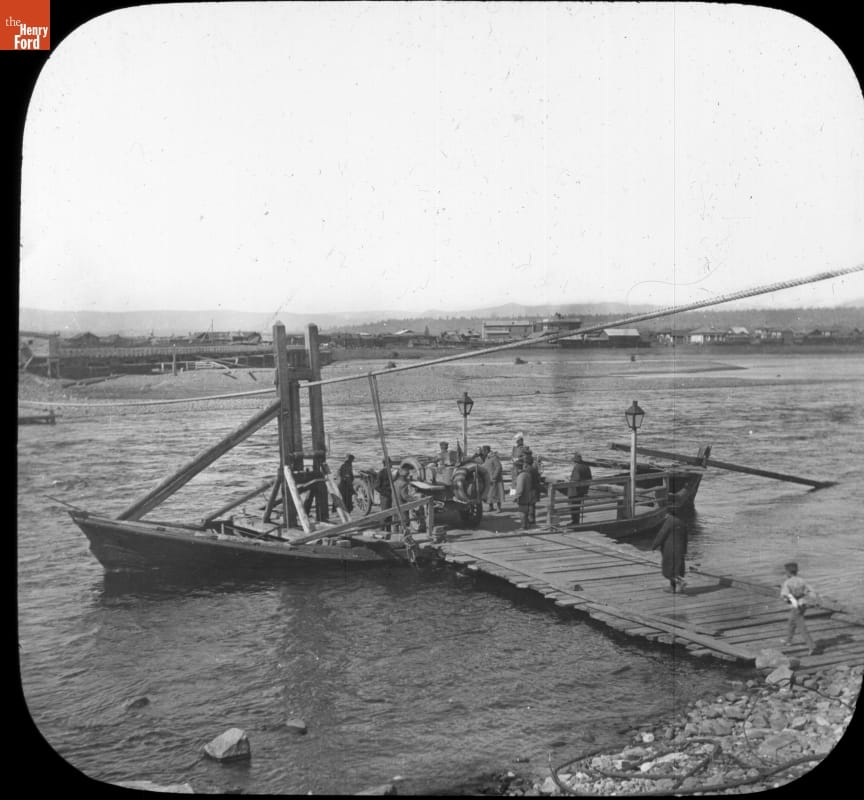
- Thomas Flyer aboard Ferry, Kazan, Russia, New York to Paris Race, 1908 - In February 1908, six automobiles began an around-the-world race from New York City to Paris, France. The contest took 169 days, covered 22,000 miles and spanned three continents. In May, the three remaining teams left Vladivostok, Russia, heading west. Each team would have to navigate around, over or through any lake, river or stream blocking their progress.
- 1908
- Collections - Artifact
Thomas Flyer aboard Ferry, Kazan, Russia, New York to Paris Race, 1908
In February 1908, six automobiles began an around-the-world race from New York City to Paris, France. The contest took 169 days, covered 22,000 miles and spanned three continents. In May, the three remaining teams left Vladivostok, Russia, heading west. Each team would have to navigate around, over or through any lake, river or stream blocking their progress.
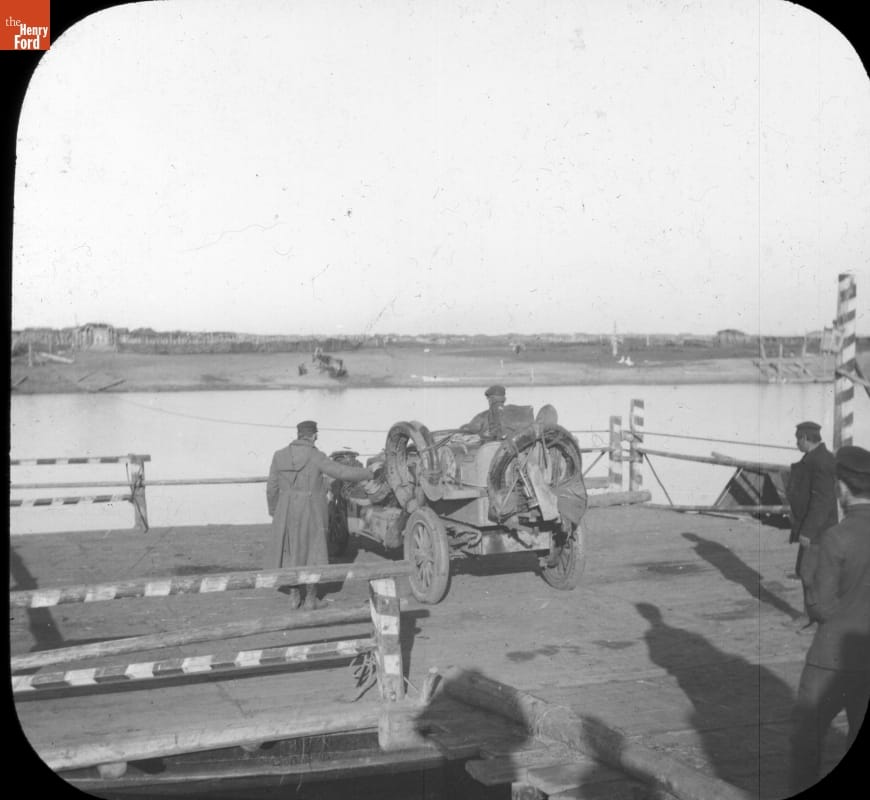
- George Schuster with the Thomas Flyer aboard a Russion Ferry in the New York to Paris Race, 1908 - In February 1908, six automobiles began an around-the-world race from New York City to Paris, France. The contest took 169 days, covered 22,000 miles and spanned three continents. In May, the three remaining teams left Vladivostok, Russia, heading west. Each team would have to navigate around, over or through any lake, river or stream blocking their progress.
- 1908
- Collections - Artifact
George Schuster with the Thomas Flyer aboard a Russion Ferry in the New York to Paris Race, 1908
In February 1908, six automobiles began an around-the-world race from New York City to Paris, France. The contest took 169 days, covered 22,000 miles and spanned three continents. In May, the three remaining teams left Vladivostok, Russia, heading west. Each team would have to navigate around, over or through any lake, river or stream blocking their progress.
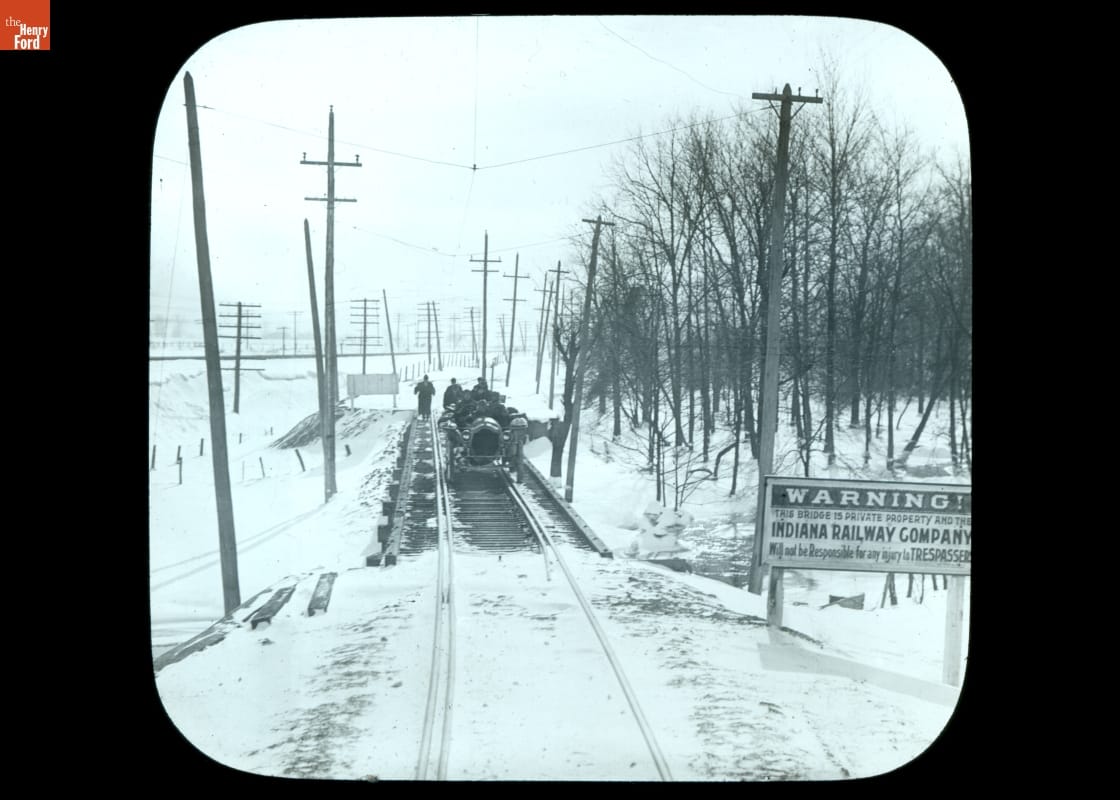
- Thomas Flyer on a Railroad Trestle near Goshen, Indiana during the New York to Paris Race, 1908 - In 1908, six automobiles raced around the globe from New York City to Paris, France. The contest took 169 days, covered 22,000 miles and spanned three continents. The cars and their racing teams had to endure cold, snow, mud, poor roads and other hardships. Drivers found ways around poor road conditions by using established rail lines -- usually with the railway company's approval.
- 1908
- Collections - Artifact
Thomas Flyer on a Railroad Trestle near Goshen, Indiana during the New York to Paris Race, 1908
In 1908, six automobiles raced around the globe from New York City to Paris, France. The contest took 169 days, covered 22,000 miles and spanned three continents. The cars and their racing teams had to endure cold, snow, mud, poor roads and other hardships. Drivers found ways around poor road conditions by using established rail lines -- usually with the railway company's approval.