
Search
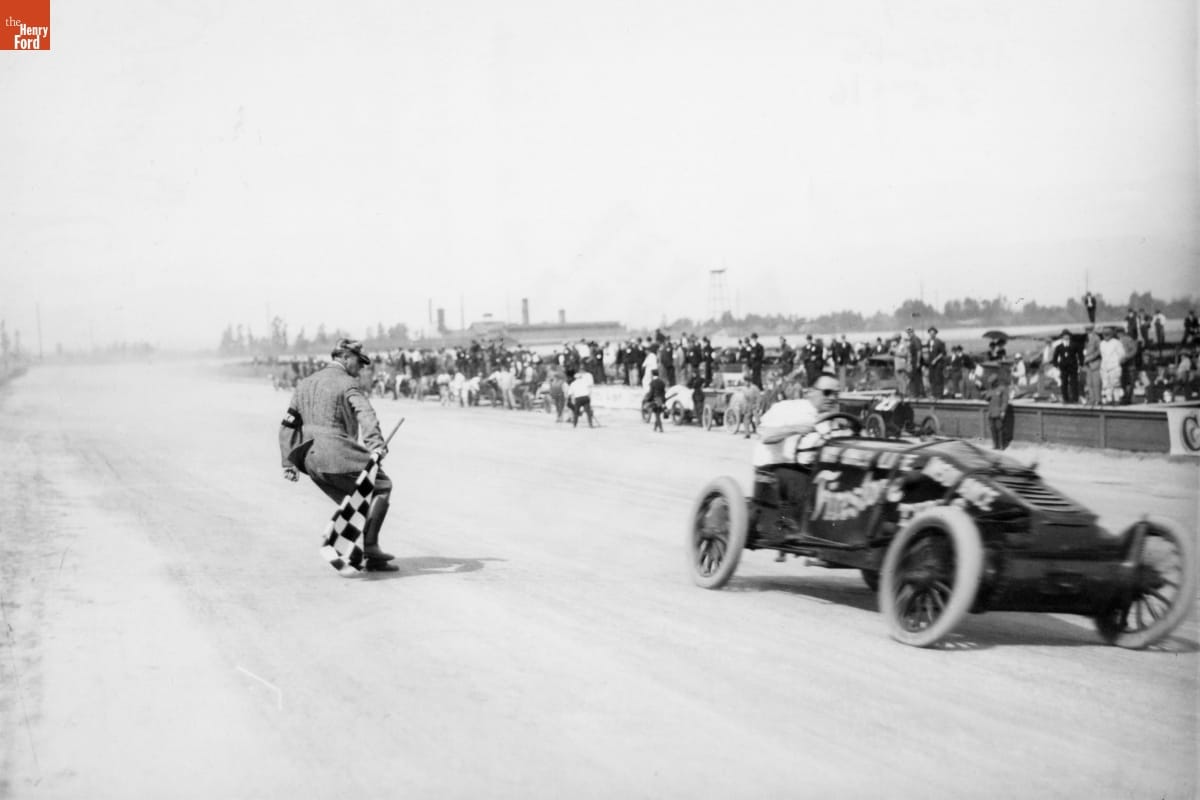
- Barney Oldfield Driving a Christie Race Car at Ascot Speedway, March 5, 1916 -
- March 05, 1916
- Collections - Artifact
Barney Oldfield Driving a Christie Race Car at Ascot Speedway, March 5, 1916
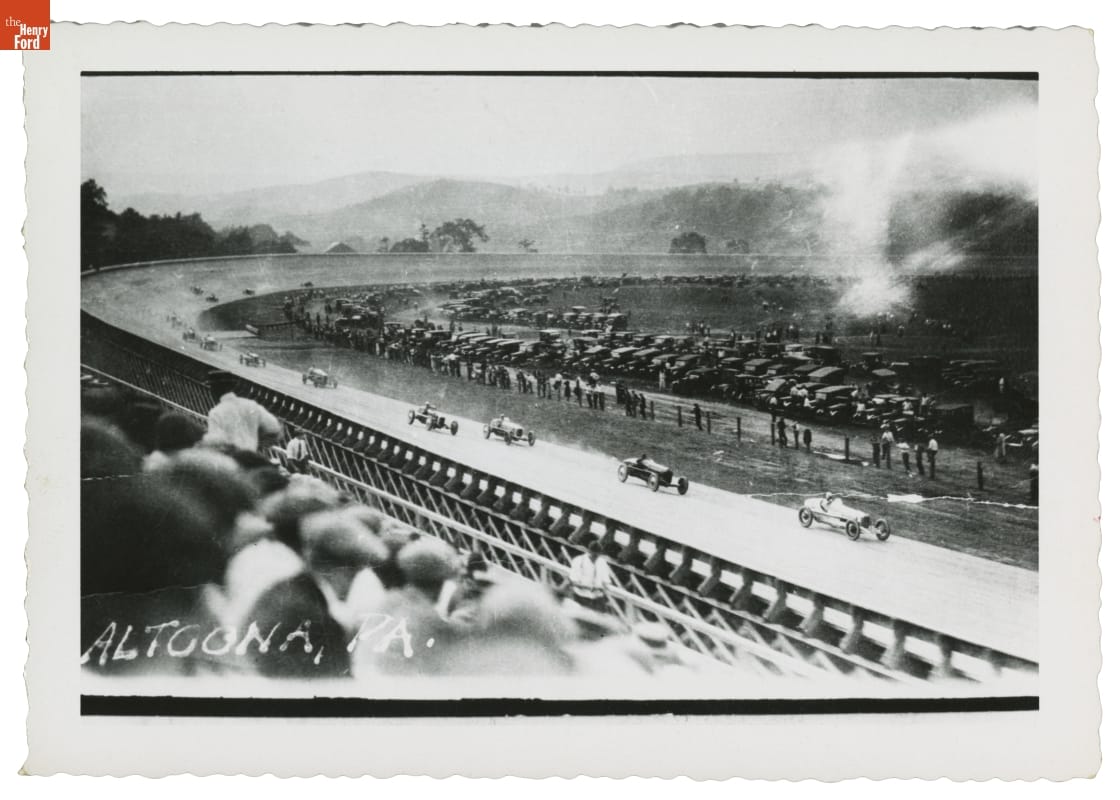
- Board Track Racing, Altoona, Pennsylvania, 1923-1929 - As automobile racing speeds increased, repurposed dirt horse tracks became inadequate. In the 1910s promoters turned to wooden boards, which provided a smooth road surface and were less expensive than bricks or concrete. But rotting wood required frequent replacement. Improvements in concrete and asphalt made board tracks obsolete in the 1930s. The 1.25-mile board track at Altoona, Pennsylvania, operated from 1923-1931.
- 1923-1929
- Collections - Artifact
Board Track Racing, Altoona, Pennsylvania, 1923-1929
As automobile racing speeds increased, repurposed dirt horse tracks became inadequate. In the 1910s promoters turned to wooden boards, which provided a smooth road surface and were less expensive than bricks or concrete. But rotting wood required frequent replacement. Improvements in concrete and asphalt made board tracks obsolete in the 1930s. The 1.25-mile board track at Altoona, Pennsylvania, operated from 1923-1931.
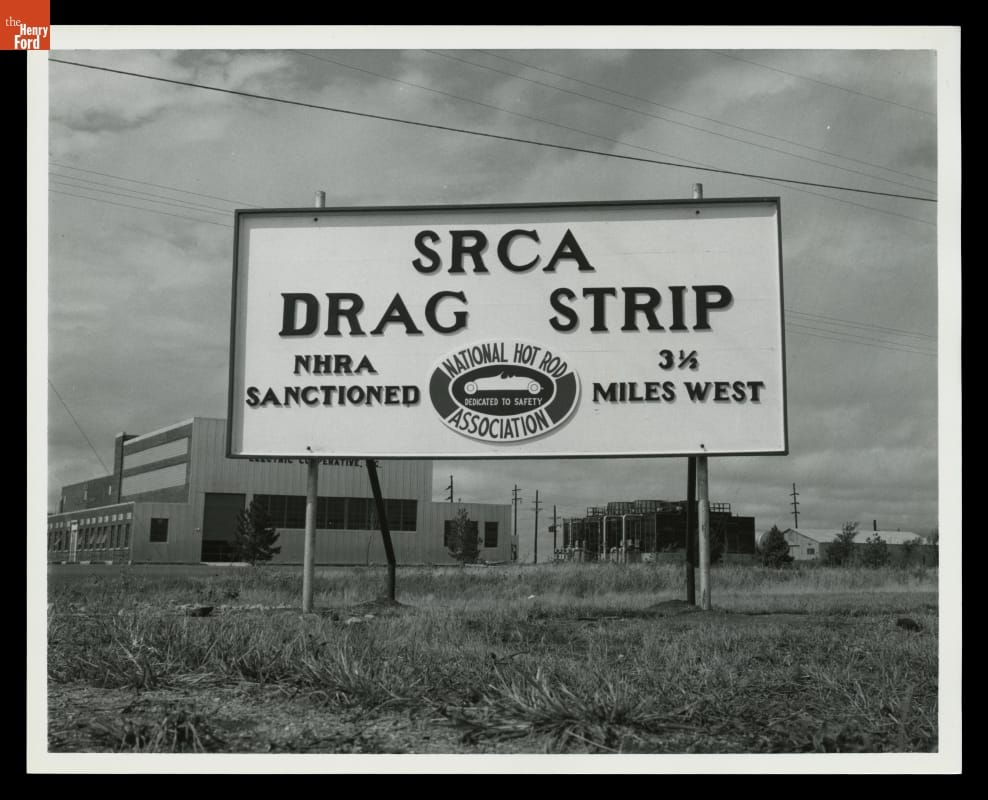
- Sign for the SRCA Drag Strip, Great Bend, Kansas, 1955 - The Sunflower Rod and Custom Association -- named for its home state of Kansas, the Sunflower State -- was formed in 1954 and joined the National Hot Rod Association a year later. NHRA established competition rules and safety regulations for drag racing. It sanctioned races at its member drag strips, like SRCA's facility in Great Bend, Kansas.
- 1955
- Collections - Artifact
Sign for the SRCA Drag Strip, Great Bend, Kansas, 1955
The Sunflower Rod and Custom Association -- named for its home state of Kansas, the Sunflower State -- was formed in 1954 and joined the National Hot Rod Association a year later. NHRA established competition rules and safety regulations for drag racing. It sanctioned races at its member drag strips, like SRCA's facility in Great Bend, Kansas.
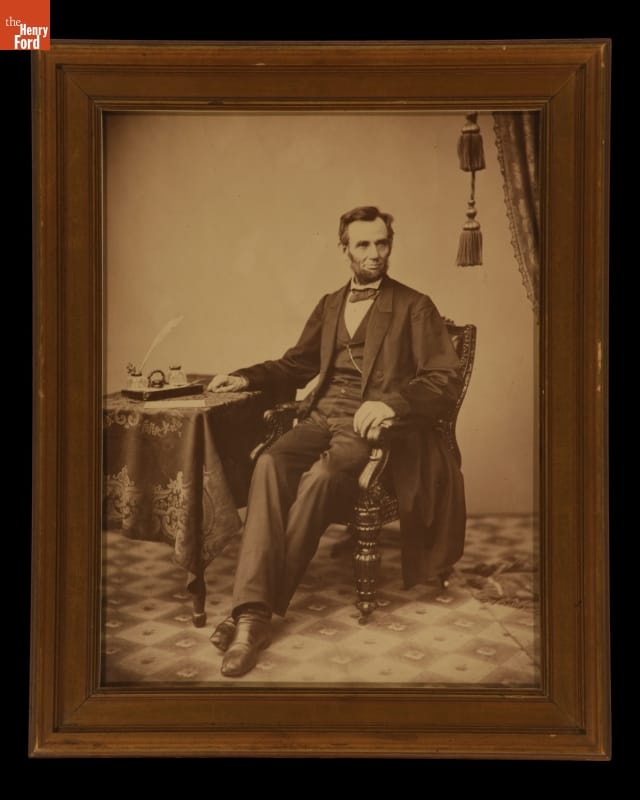
- Portrait of Abraham Lincoln, Taken by Alexander Gardner, Washington, D.C., November 8, 1863 - President Abraham Lincoln made himself readily available to many photographers of the era, leaving a large and varied photo legacy. This unusual full-length portrait of Lincoln was taken by Alexander Gardner in his Washington, D.C., studio on Sunday, November 8, 1863. This contact print was made by Frederick Hill Meserve in the early 20th century from the original 1863 glass plate negative, which measured 20x16 inches.
- November 08, 1863
- Collections - Artifact
Portrait of Abraham Lincoln, Taken by Alexander Gardner, Washington, D.C., November 8, 1863
President Abraham Lincoln made himself readily available to many photographers of the era, leaving a large and varied photo legacy. This unusual full-length portrait of Lincoln was taken by Alexander Gardner in his Washington, D.C., studio on Sunday, November 8, 1863. This contact print was made by Frederick Hill Meserve in the early 20th century from the original 1863 glass plate negative, which measured 20x16 inches.
- Sign for the SRCA Drag Strip, Great Bend, Kansas, 1955 - The Sunflower Rod and Custom Association -- named for its home state of Kansas, the Sunflower State -- was formed in 1954 and joined the National Hot Rod Association a year later. NHRA established competition rules and safety regulations for drag racing. It sanctioned races at its member drag strips, like SRCA's facility in Great Bend, Kansas.
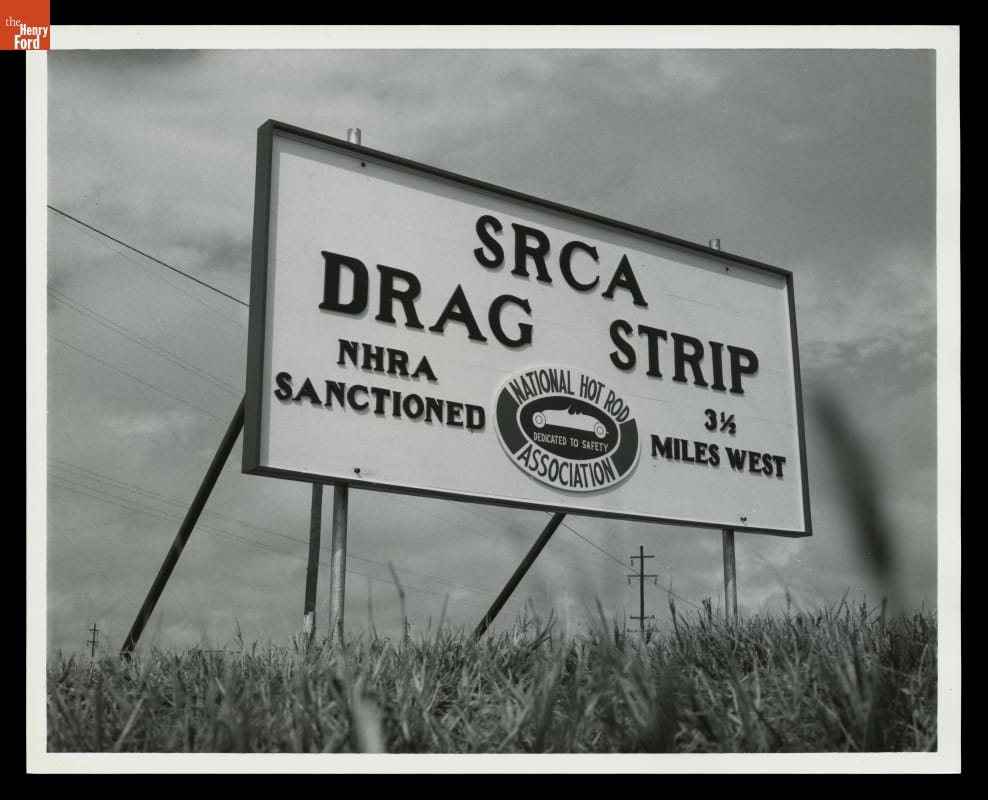
- 1955
- Collections - Artifact
Sign for the SRCA Drag Strip, Great Bend, Kansas, 1955
The Sunflower Rod and Custom Association -- named for its home state of Kansas, the Sunflower State -- was formed in 1954 and joined the National Hot Rod Association a year later. NHRA established competition rules and safety regulations for drag racing. It sanctioned races at its member drag strips, like SRCA's facility in Great Bend, Kansas.
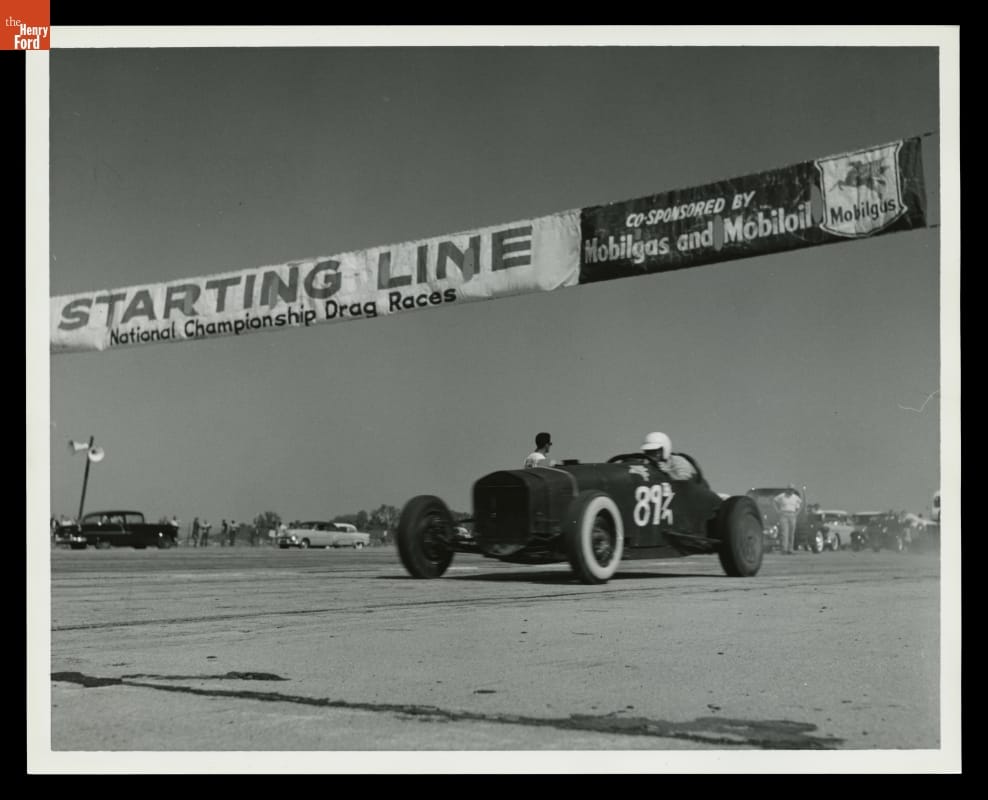
- Car at the Starting Line of the NHRA Nationals, Great Bend, Kansas, 1955 - Drag races are run like tournaments. Two cars face off in each race, with the pairings usually based on the cars' qualifying times. The winner advances to the next round while the loser is eliminated. The driver who wins each of her or his races wins the championship trophy and earns the title of Top Eliminator.
- 1955
- Collections - Artifact
Car at the Starting Line of the NHRA Nationals, Great Bend, Kansas, 1955
Drag races are run like tournaments. Two cars face off in each race, with the pairings usually based on the cars' qualifying times. The winner advances to the next round while the loser is eliminated. The driver who wins each of her or his races wins the championship trophy and earns the title of Top Eliminator.
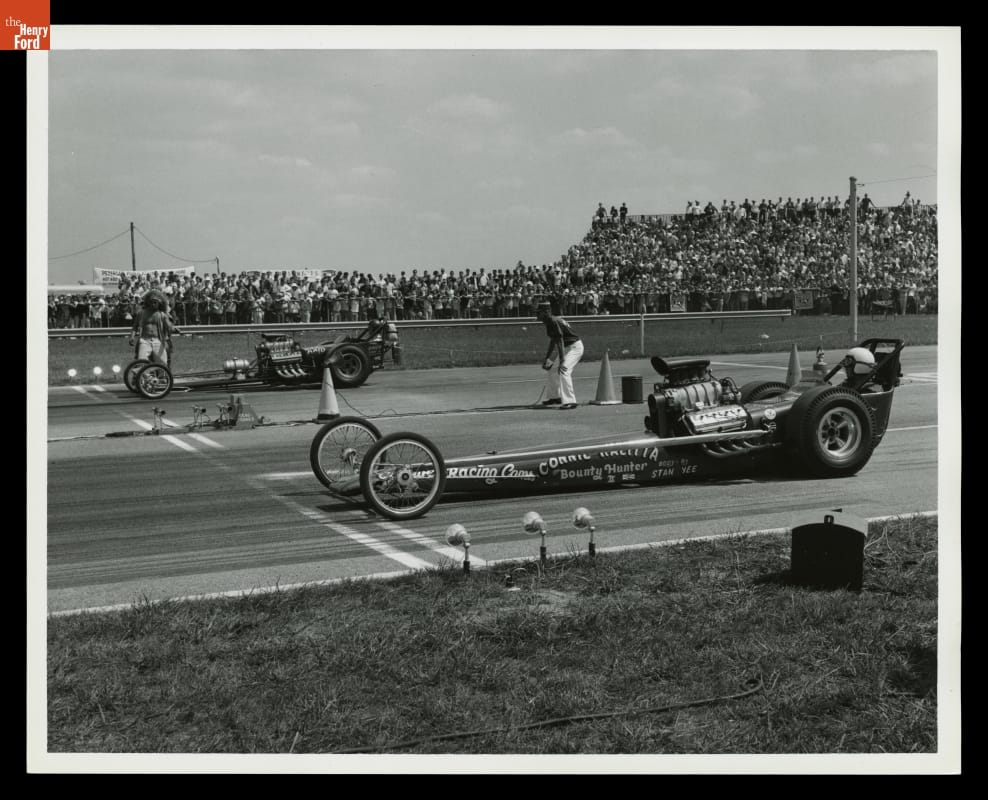
- Connie Kalitta at the NHRA Nationals, Indianapolis, Indiana, 1963 - Michigan native Connie Kalitta started drag racing in the 1950s and, within a decade, he ranked among the sport's best. He kept a "most wanted" list of drivers he intended to beat, and then crossed off their names when he did so. The habit earned Kalitta the nickname "Bounty Hunter." He won ten NHRA national events between 1967 and 1994.
- 1963
- Collections - Artifact
Connie Kalitta at the NHRA Nationals, Indianapolis, Indiana, 1963
Michigan native Connie Kalitta started drag racing in the 1950s and, within a decade, he ranked among the sport's best. He kept a "most wanted" list of drivers he intended to beat, and then crossed off their names when he did so. The habit earned Kalitta the nickname "Bounty Hunter." He won ten NHRA national events between 1967 and 1994.
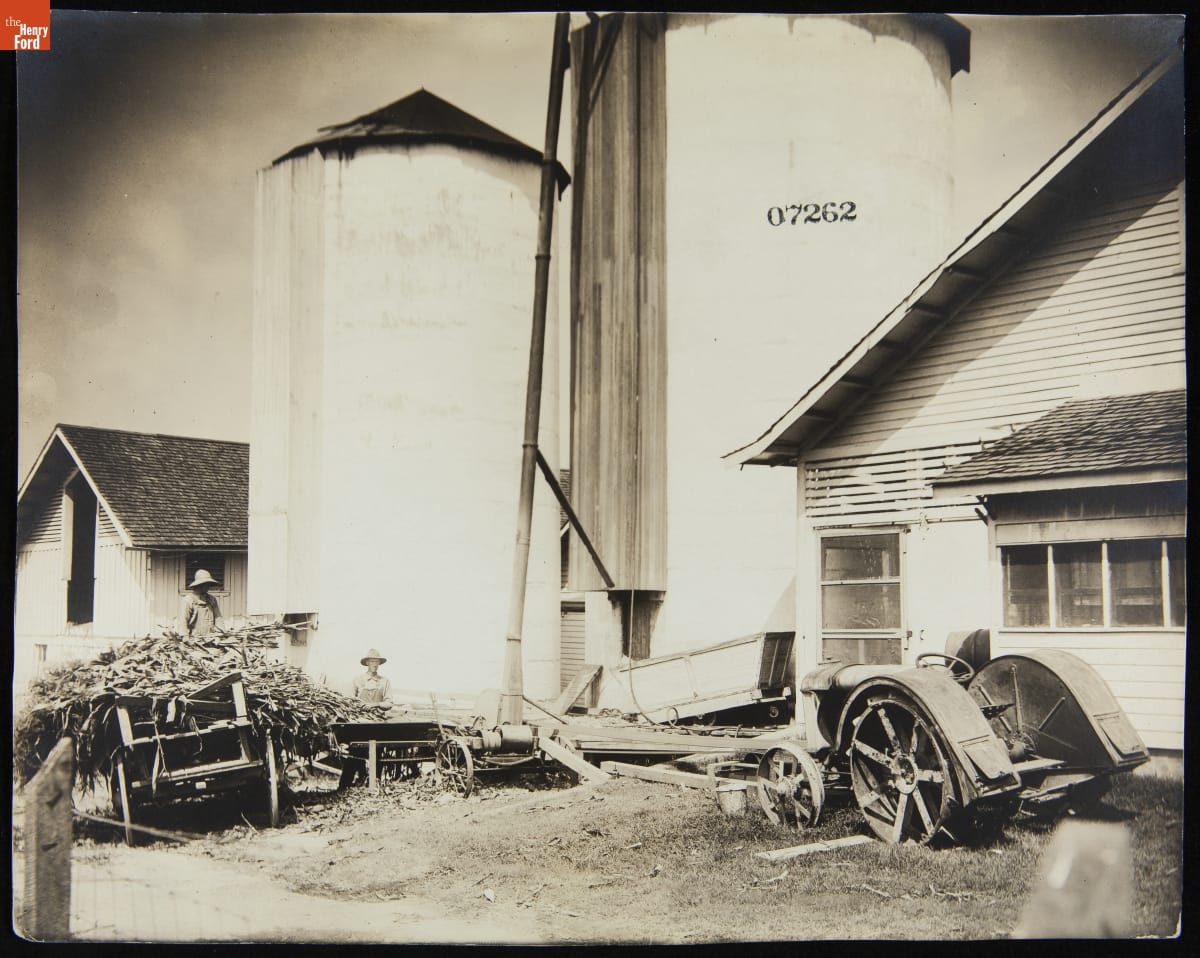
- Fordson Tractor Attachment Loading Corn into Silo, 1926 -
- circa 1926
- Collections - Artifact
Fordson Tractor Attachment Loading Corn into Silo, 1926
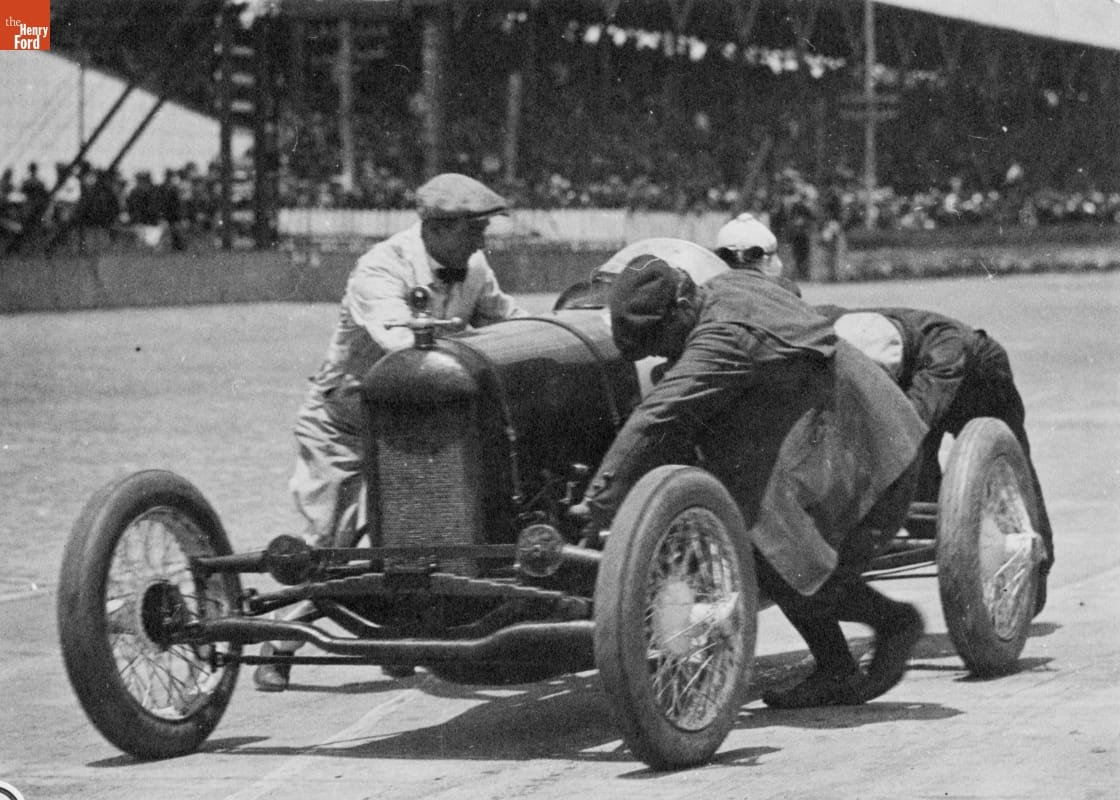
- Three Men Pushing a Barber-Warnock Special Race Car off the Track at Indianapolis Motor Speedway, probably 1924 - Hale Barber and Clarence Warnock established the Barber-Warnock Ford dealership in Indianapolis in 1917 and were active supporters of the Indianapolis 500 race on a 2.5-mile oval track originally paved with brick and one of the most popular and well-known races in the country. In the mid-1920s, Barber-Warnock moved from fans and supporters to participants by sponsoring specially built Model Ts. In 1924, Barber-Warnock entered three "specials" built by the Chevrolet brothers -- Louis, Gaston, and Arthur -- under the Frontenac name. Although fairly powerful and fast, the "Fronty Fords" were no match for the rest of the field, finishing a disappointing 14th, 16th, and 17th.
- 1924
- Collections - Artifact
Three Men Pushing a Barber-Warnock Special Race Car off the Track at Indianapolis Motor Speedway, probably 1924
Hale Barber and Clarence Warnock established the Barber-Warnock Ford dealership in Indianapolis in 1917 and were active supporters of the Indianapolis 500 race on a 2.5-mile oval track originally paved with brick and one of the most popular and well-known races in the country. In the mid-1920s, Barber-Warnock moved from fans and supporters to participants by sponsoring specially built Model Ts. In 1924, Barber-Warnock entered three "specials" built by the Chevrolet brothers -- Louis, Gaston, and Arthur -- under the Frontenac name. Although fairly powerful and fast, the "Fronty Fords" were no match for the rest of the field, finishing a disappointing 14th, 16th, and 17th.
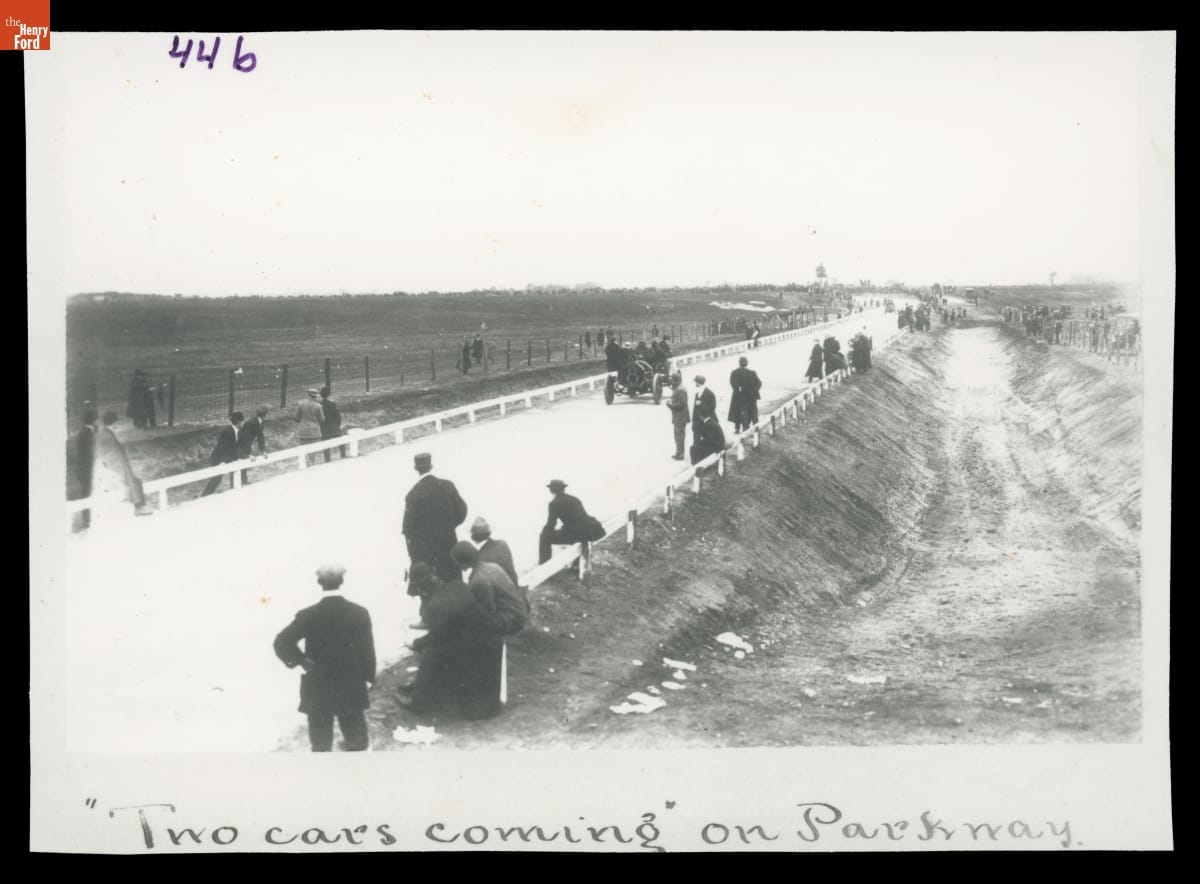
- "Two Cars Coming on Parkway," Vanderbilt Cup Race, Long Island, New York, 1908 - In 1908, portions of the Vanderbilt Cup race circuit were moved to the newly built Long Island Motor Parkway. The parkway -- one of the world's first paved, limited-access highways -- provided a safer route for racers and spectators alike. Nevertheless, some fans still insisted on getting too close to the action.
- October 24, 1908
- Collections - Artifact
"Two Cars Coming on Parkway," Vanderbilt Cup Race, Long Island, New York, 1908
In 1908, portions of the Vanderbilt Cup race circuit were moved to the newly built Long Island Motor Parkway. The parkway -- one of the world's first paved, limited-access highways -- provided a safer route for racers and spectators alike. Nevertheless, some fans still insisted on getting too close to the action.