
Search
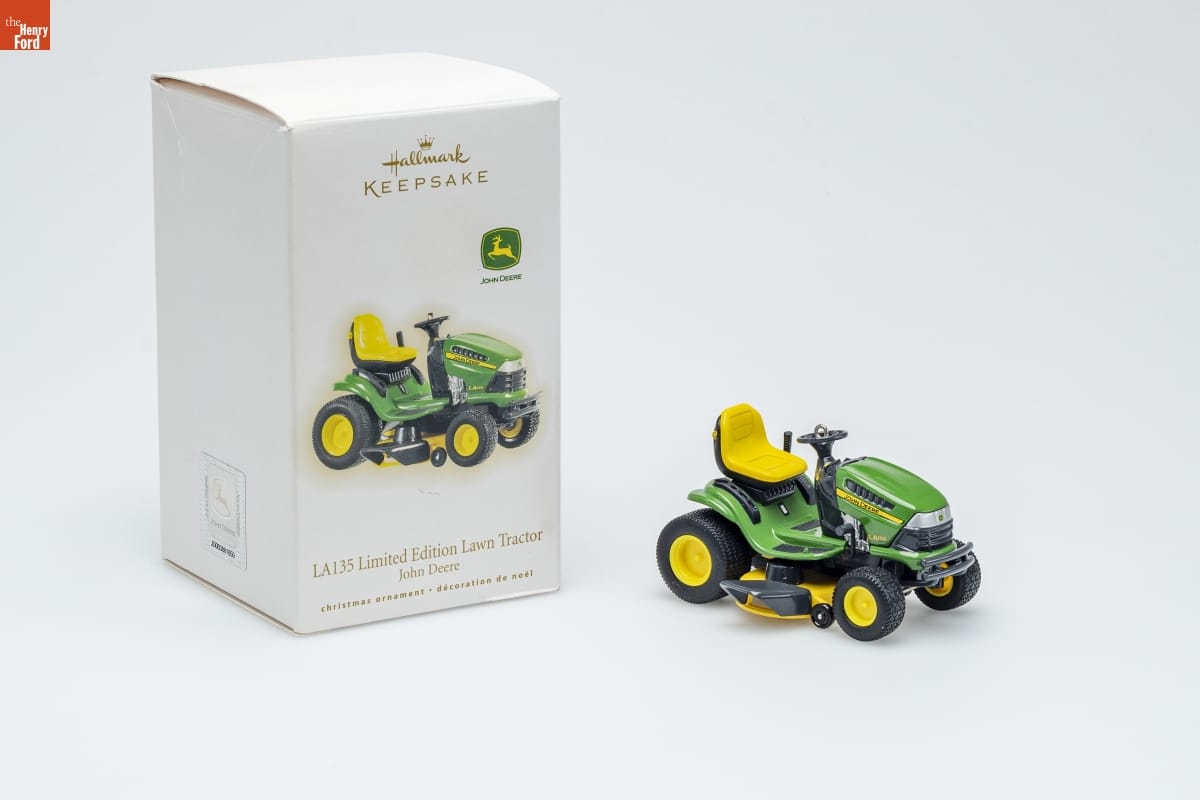
- Hallmark "John Deere LA135 Limited Edition Lawn Tractor" Christmas Ornament, 2009 - Already known for greeting cards, Hallmark introduced a line of Christmas ornaments in 1973. The company's annual release of an increasing array of ornaments revolutionized Christmas decorating, appealing to customers' interest in marking memories and milestones as well as expressing one's personality and unique tastes.
- 2009
- Collections - Artifact
Hallmark "John Deere LA135 Limited Edition Lawn Tractor" Christmas Ornament, 2009
Already known for greeting cards, Hallmark introduced a line of Christmas ornaments in 1973. The company's annual release of an increasing array of ornaments revolutionized Christmas decorating, appealing to customers' interest in marking memories and milestones as well as expressing one's personality and unique tastes.
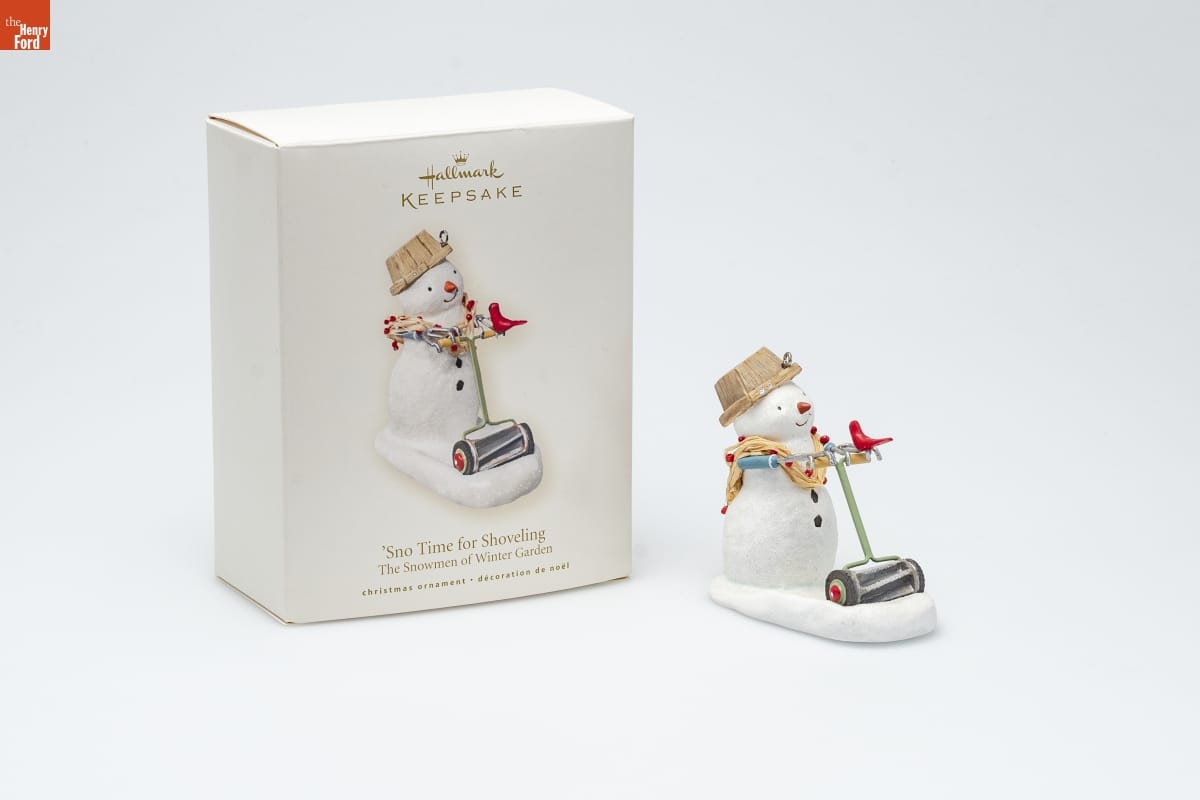
- Hallmark "The Snowmen of Winter Garden Collection: 'Sno Time for Shoveling" Christmas Ornament, 2007 - Already known for greeting cards, Hallmark introduced a line of Christmas ornaments in 1973. The company's annual release of an increasing array of ornaments revolutionized Christmas decorating, appealing to customers' interest in marking memories and milestones as well as expressing one's personality and unique tastes.
- 2007
- Collections - Artifact
Hallmark "The Snowmen of Winter Garden Collection: 'Sno Time for Shoveling" Christmas Ornament, 2007
Already known for greeting cards, Hallmark introduced a line of Christmas ornaments in 1973. The company's annual release of an increasing array of ornaments revolutionized Christmas decorating, appealing to customers' interest in marking memories and milestones as well as expressing one's personality and unique tastes.
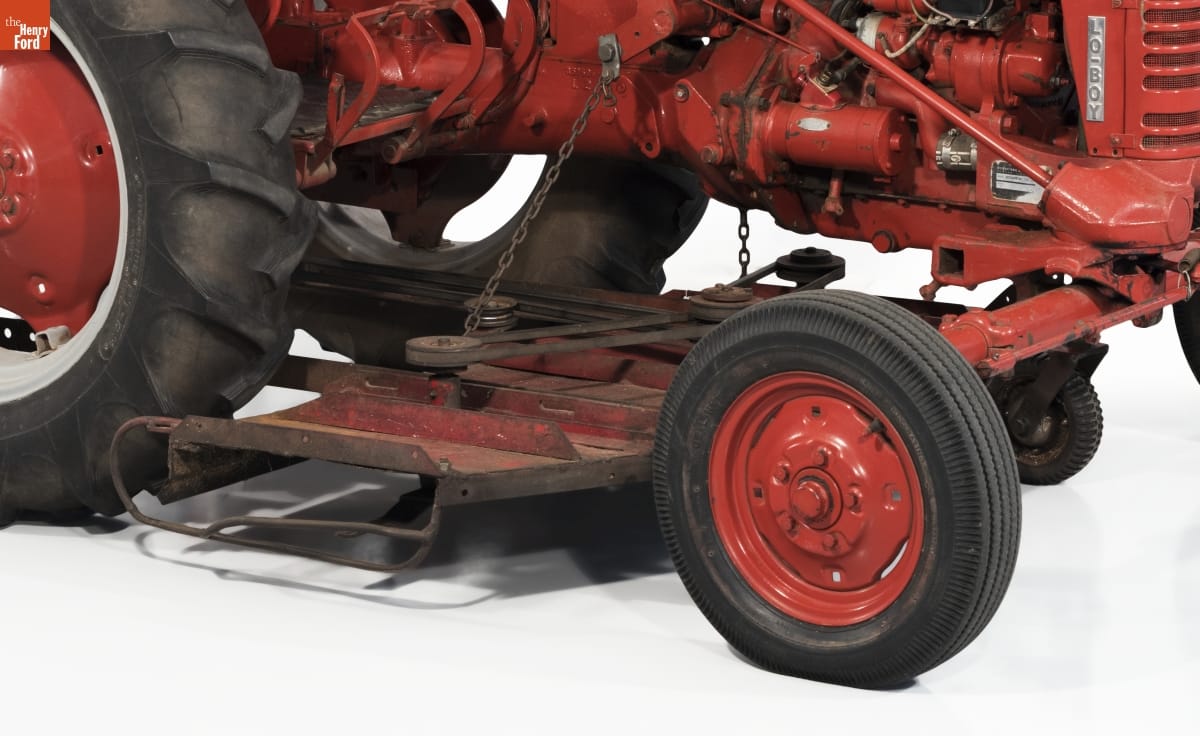
- Prototype Lawn Mower, Designed by Norman Swanson, circa 1956 - Norman Swanson created this prototype lawn mower that he used to mow his family's land in suburban Warrenville, Illinois. He configured a multiple-cutter system and mounted it under his International Harvester Cub Lo-Boy tractor. He also designed a deflector above the blades to better pulverize the grass clippings. Swanson received patents for these two lawn mowing innovations in 1959.
- circa 1956
- Collections - Artifact
Prototype Lawn Mower, Designed by Norman Swanson, circa 1956
Norman Swanson created this prototype lawn mower that he used to mow his family's land in suburban Warrenville, Illinois. He configured a multiple-cutter system and mounted it under his International Harvester Cub Lo-Boy tractor. He also designed a deflector above the blades to better pulverize the grass clippings. Swanson received patents for these two lawn mowing innovations in 1959.
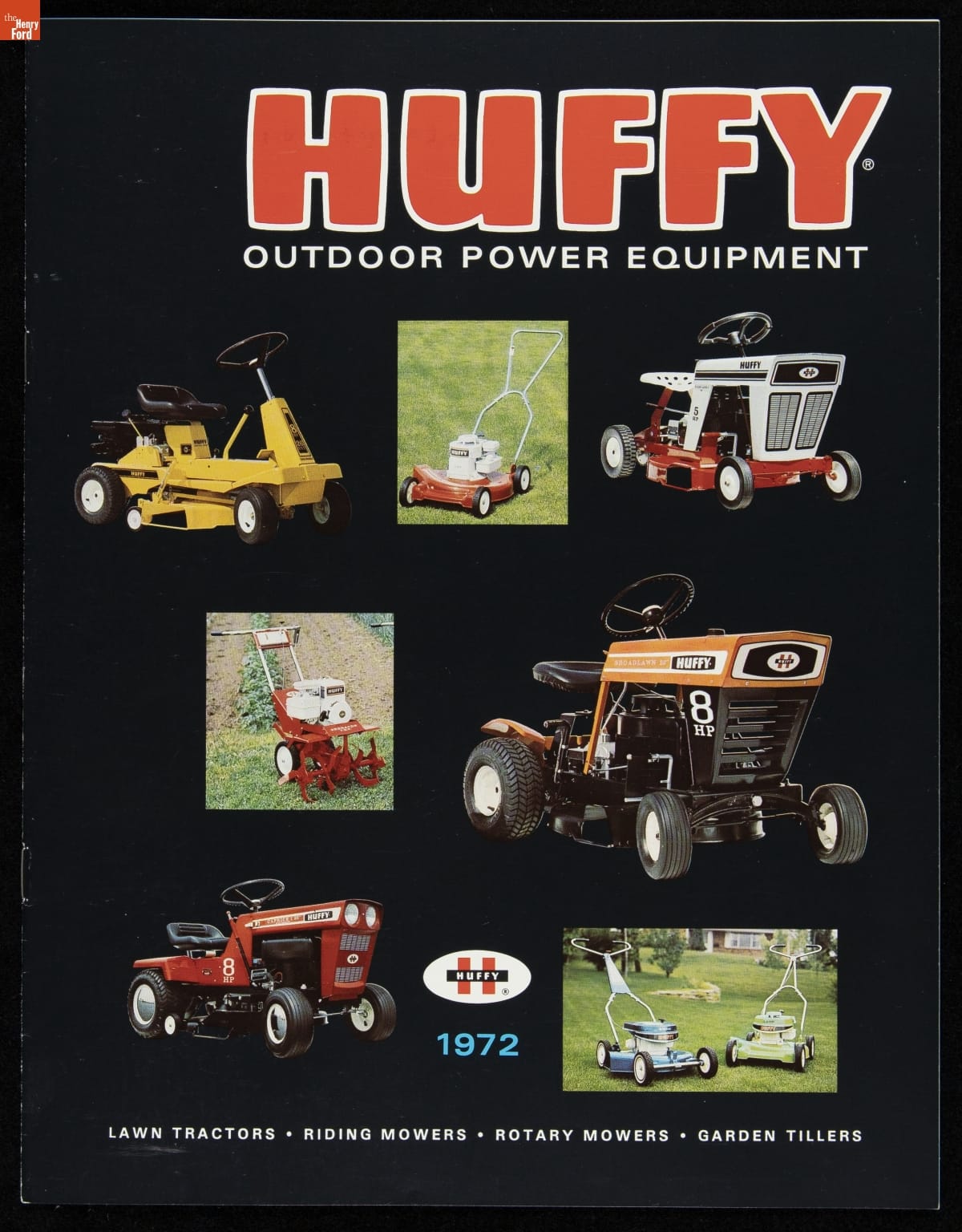
- Huffman Manufacturing Company Catalog, "Huffy Outdoor Power Equipment," 1972 - With the rise of the suburban neighborhood at the end of the 19th century, and its explosive growth in the years that followed World War II, maintaining a "perfect" lawn became the new standard. Manufacturers promoted a whole set of specialty equipment to support this American obsession.
- 1972
- Collections - Artifact
Huffman Manufacturing Company Catalog, "Huffy Outdoor Power Equipment," 1972
With the rise of the suburban neighborhood at the end of the 19th century, and its explosive growth in the years that followed World War II, maintaining a "perfect" lawn became the new standard. Manufacturers promoted a whole set of specialty equipment to support this American obsession.
- Gilson Brothers Company Catalog, "Gilson Riding Mowers," 1972 - With the rise of the suburban neighborhood at the end of the 19th century, and its explosive growth in the years that followed World War II, maintaining a "perfect" lawn became the new standard. Manufacturers promoted a whole set of specialty equipment to support this American obsession.
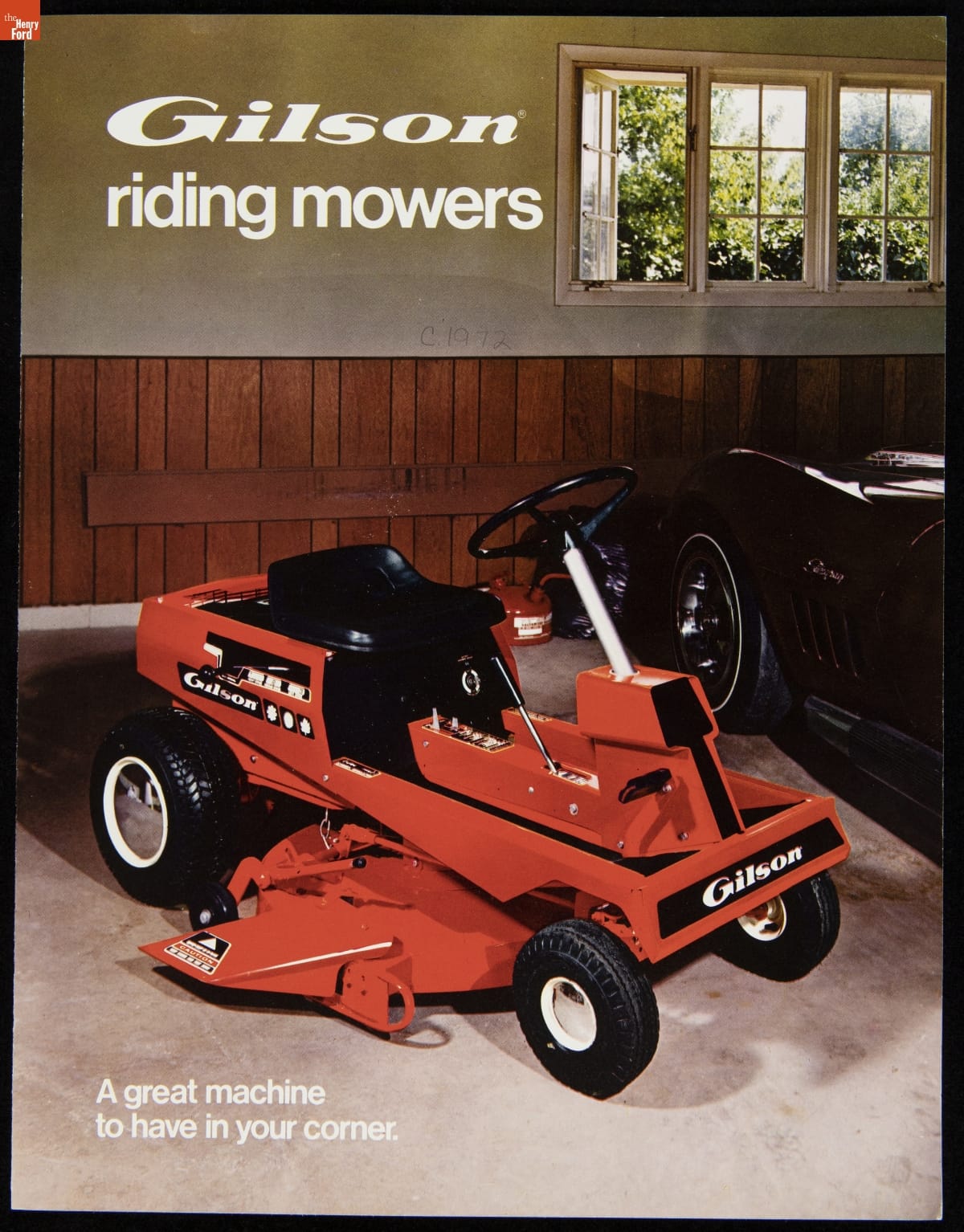
- 1972
- Collections - Artifact
Gilson Brothers Company Catalog, "Gilson Riding Mowers," 1972
With the rise of the suburban neighborhood at the end of the 19th century, and its explosive growth in the years that followed World War II, maintaining a "perfect" lawn became the new standard. Manufacturers promoted a whole set of specialty equipment to support this American obsession.
- Huffman Manufacturing Company Catalog, "Huffy Outdoor Power Equipment for 1965" - With the rise of the suburban neighborhood at the end of the 19th century, and its explosive growth in the years that followed World War II, maintaining a "perfect" lawn became the new standard. Manufacturers promoted a whole set of specialty equipment to support this American obsession.
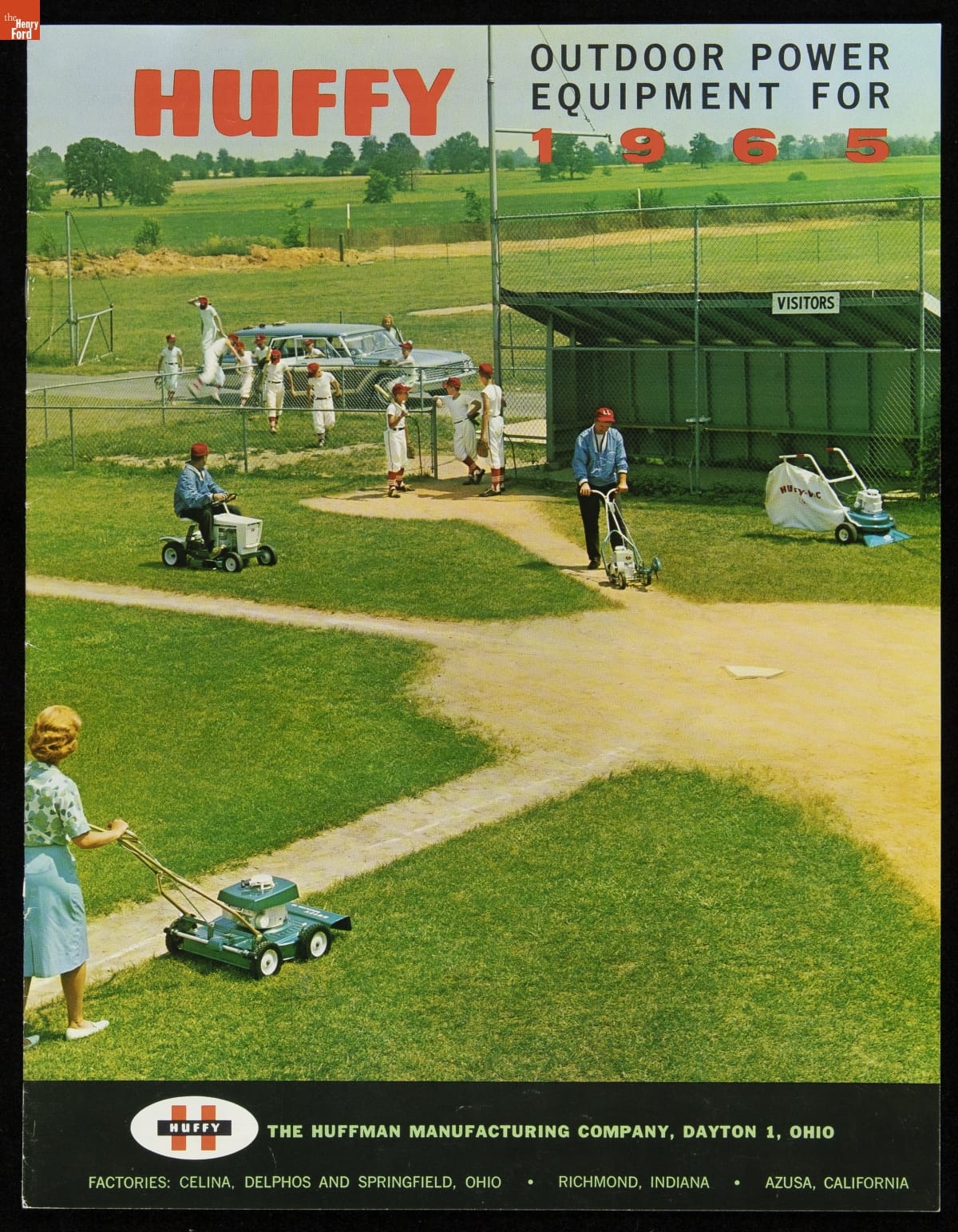
- 1965
- Collections - Artifact
Huffman Manufacturing Company Catalog, "Huffy Outdoor Power Equipment for 1965"
With the rise of the suburban neighborhood at the end of the 19th century, and its explosive growth in the years that followed World War II, maintaining a "perfect" lawn became the new standard. Manufacturers promoted a whole set of specialty equipment to support this American obsession.
- Roto-Hoe Company Sales Brochure, "Turf-Star II Islander: The Sophisticated Riding Mower Now with Automatic Drive," 1972 - With the rise of the suburban neighborhood at the end of the 19th century, and its explosive growth in the years that followed World War II, maintaining a "perfect" lawn became the new standard. Manufacturers promoted a whole set of specialty equipment to support this American obsession.
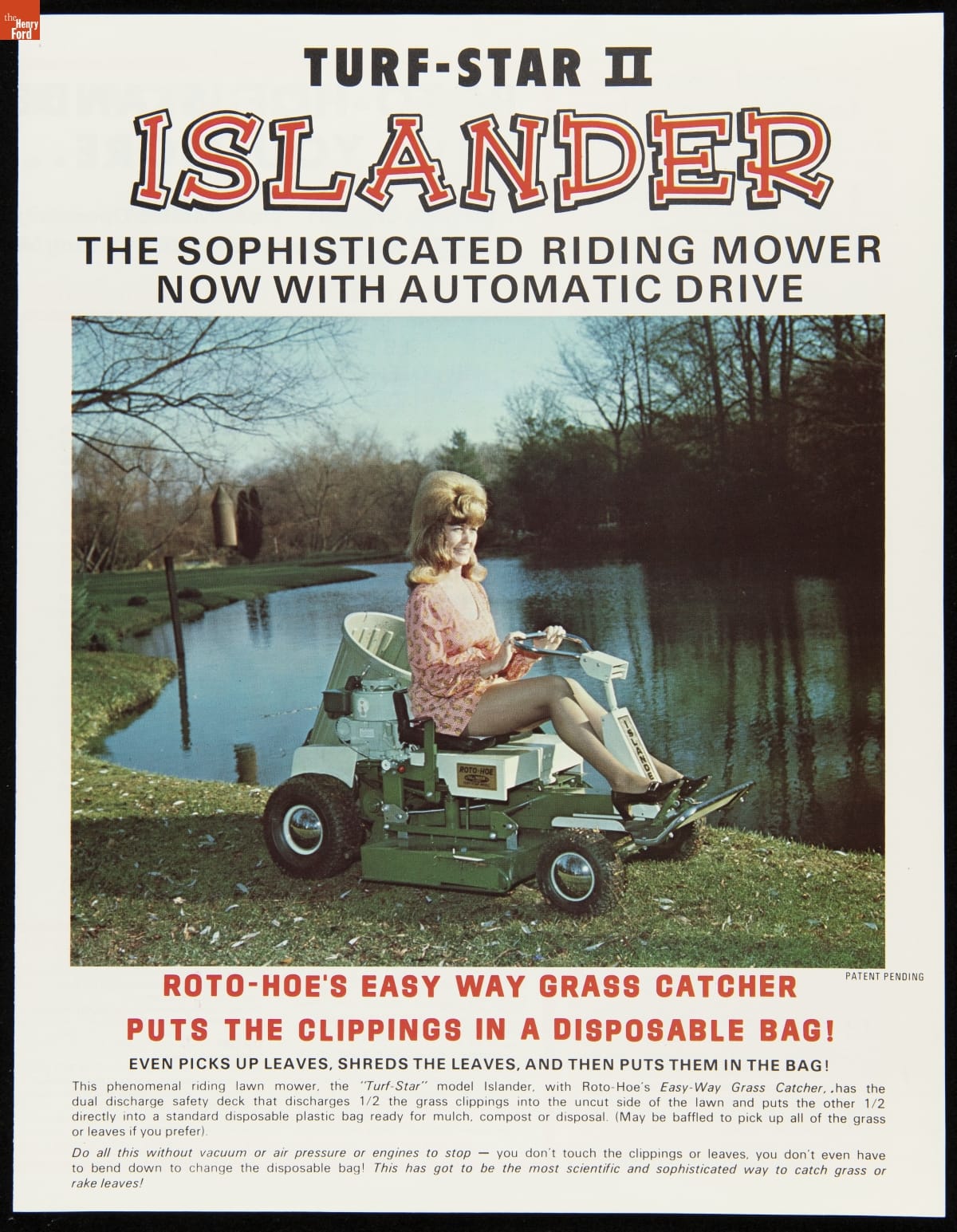
- 1972
- Collections - Artifact
Roto-Hoe Company Sales Brochure, "Turf-Star II Islander: The Sophisticated Riding Mower Now with Automatic Drive," 1972
With the rise of the suburban neighborhood at the end of the 19th century, and its explosive growth in the years that followed World War II, maintaining a "perfect" lawn became the new standard. Manufacturers promoted a whole set of specialty equipment to support this American obsession.
- Roto-Hoe Company Sales Brochure, "Roto-Hoe Model 700 Four Season Lawn and Garden Equipment," 1971 - With the rise of the suburban neighborhood at the end of the 19th century, and its explosive growth in the years that followed World War II, maintaining a "perfect" lawn became the new standard. Manufacturers promoted a whole set of specialty equipment to support this American obsession.
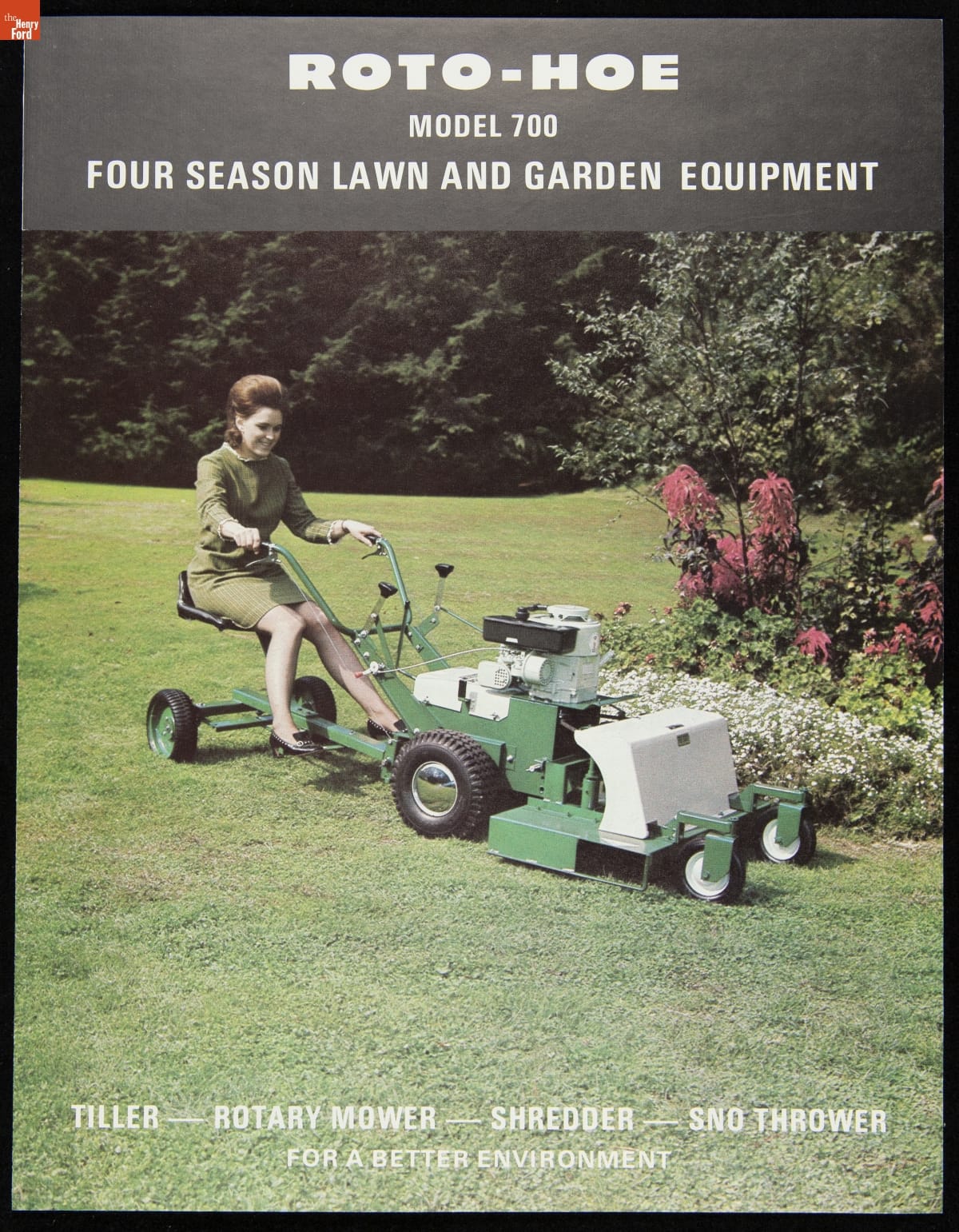
- 1971
- Collections - Artifact
Roto-Hoe Company Sales Brochure, "Roto-Hoe Model 700 Four Season Lawn and Garden Equipment," 1971
With the rise of the suburban neighborhood at the end of the 19th century, and its explosive growth in the years that followed World War II, maintaining a "perfect" lawn became the new standard. Manufacturers promoted a whole set of specialty equipment to support this American obsession.
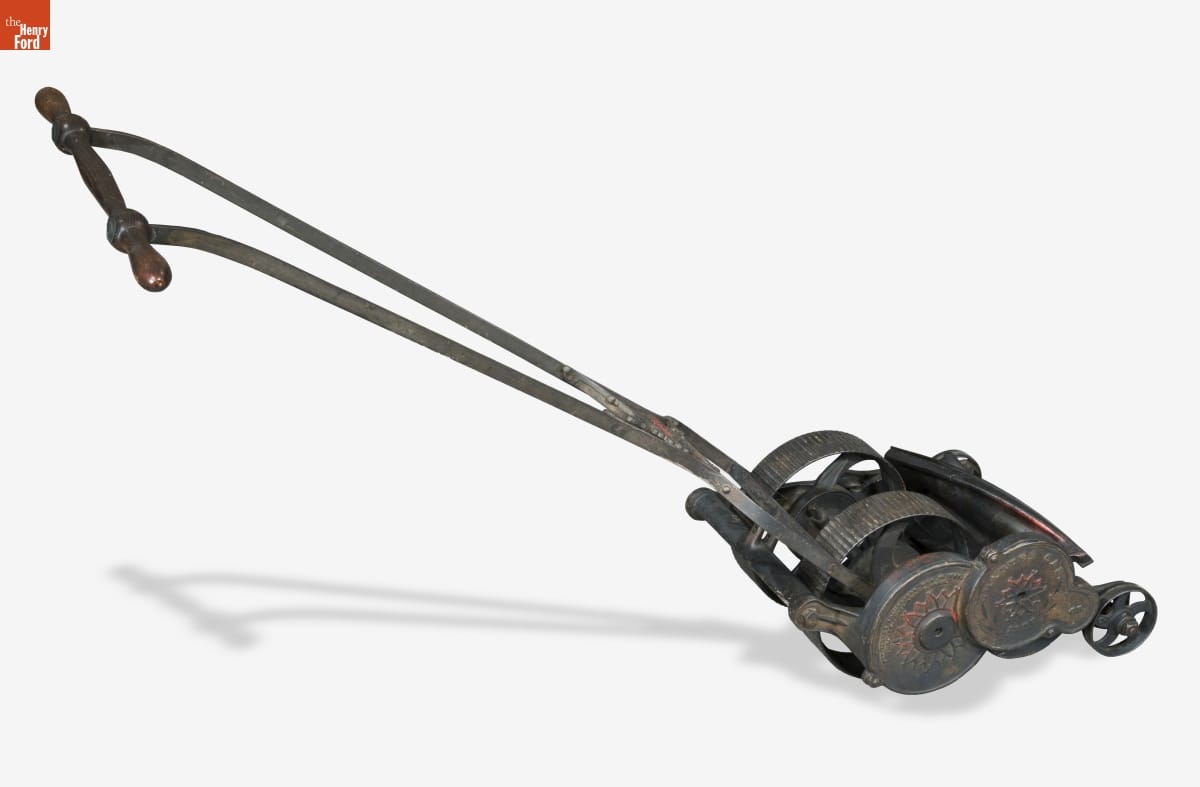
- The Hills Archimedean "Charter Oak" Lawn Mower, 1872-1900 - Lawns require regular maintenance. First patented in the United States in 1868, cylinder- or reel-type mowers became an enduring, affordable option for anyone with a small lawn. The basic form consisted of blades that rotated around a horizontal axis, cutting the grass as the user pushed the machine. Advertisements touted this "Charter Oak" model as "the most beautiful and perfect Lawn Mower in the world."
- 1872-1900
- Collections - Artifact
The Hills Archimedean "Charter Oak" Lawn Mower, 1872-1900
Lawns require regular maintenance. First patented in the United States in 1868, cylinder- or reel-type mowers became an enduring, affordable option for anyone with a small lawn. The basic form consisted of blades that rotated around a horizontal axis, cutting the grass as the user pushed the machine. Advertisements touted this "Charter Oak" model as "the most beautiful and perfect Lawn Mower in the world."
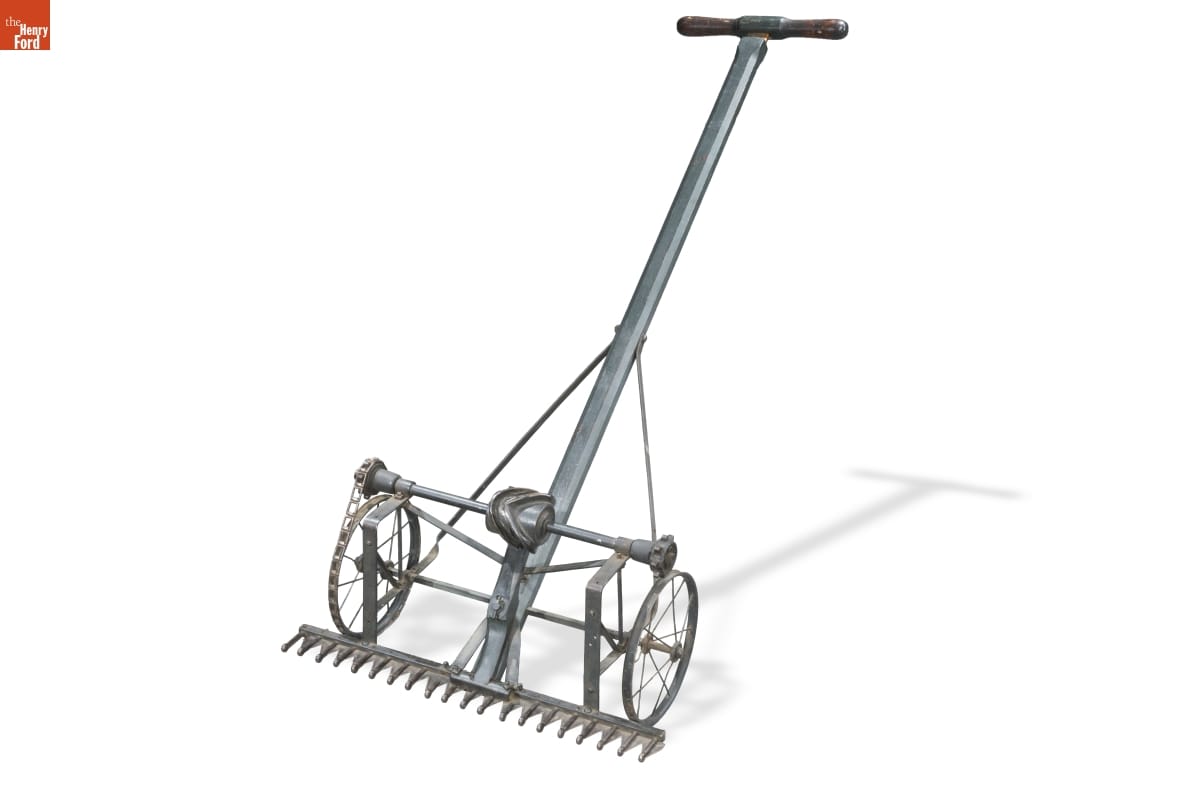
- Lawn Mower, 1868 - In the years following the American Civil War, improved transit allowed suburbs to grow around cities. Well-kept lawns were a key feature of a suburban home, and the lawn mower was an essential tool. A chain drive powered the sideways cutting action of this early push mower.
- 1868
- Collections - Artifact
Lawn Mower, 1868
In the years following the American Civil War, improved transit allowed suburbs to grow around cities. Well-kept lawns were a key feature of a suburban home, and the lawn mower was an essential tool. A chain drive powered the sideways cutting action of this early push mower.