
Search
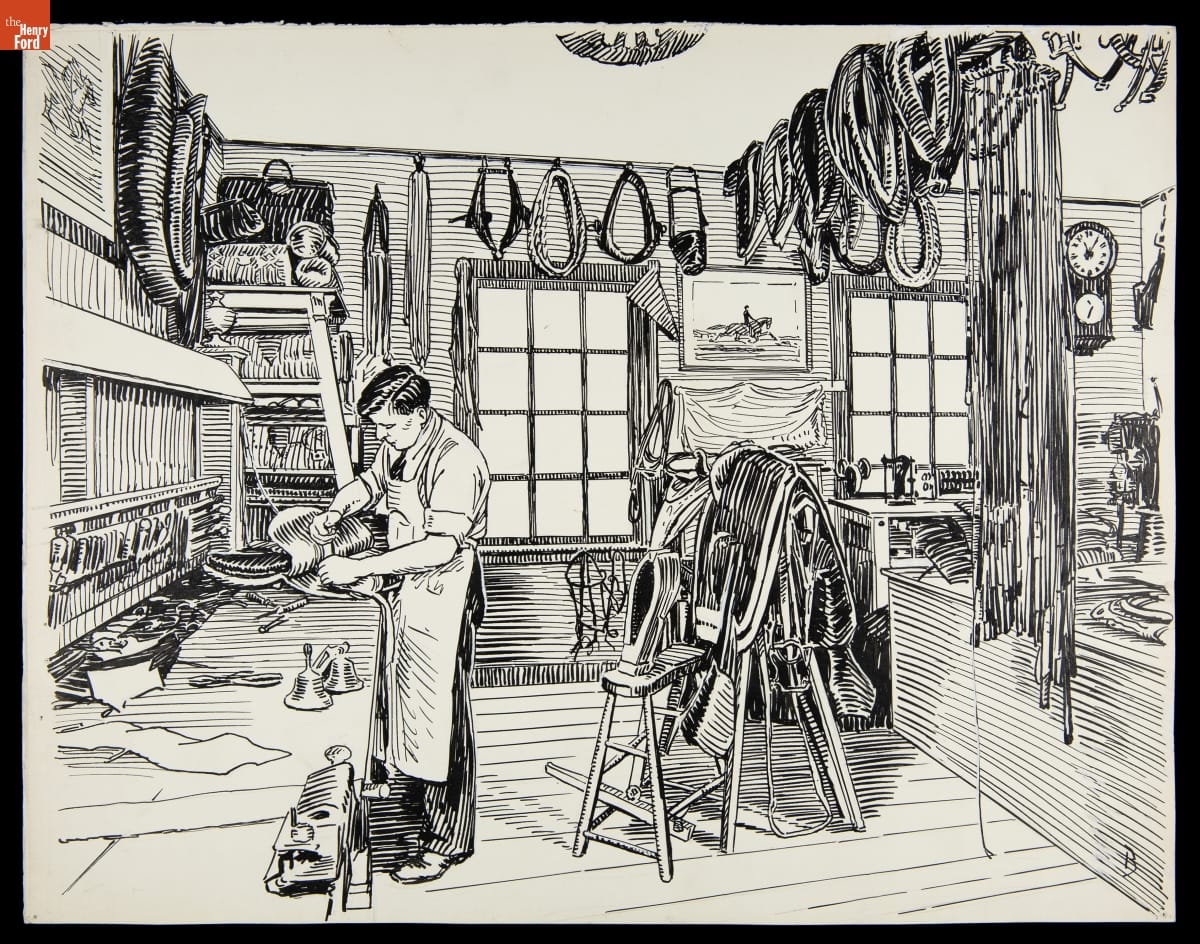
- Leather Shop in Henry Ford Museum "Street of Shops" Exhibit, circa 1941 - Henry Ford encouraged and appreciated the work of artist and illustrator Irving Bacon. In 1915, Bacon joined the Photographic Department of Ford Motor Company after he returned from studying art in Europe. Over the next thirty years, Bacon painted scenes depicting Ford's life, created portraiture, and illustrated articles for company publications. This drawing depicts the Street of Shops exhibit in the Henry Ford Museum.
- circa 1941
- Collections - Artifact
Leather Shop in Henry Ford Museum "Street of Shops" Exhibit, circa 1941
Henry Ford encouraged and appreciated the work of artist and illustrator Irving Bacon. In 1915, Bacon joined the Photographic Department of Ford Motor Company after he returned from studying art in Europe. Over the next thirty years, Bacon painted scenes depicting Ford's life, created portraiture, and illustrated articles for company publications. This drawing depicts the Street of Shops exhibit in the Henry Ford Museum.
- Stirrups with Stirrup Leathers -
- Collections - Artifact
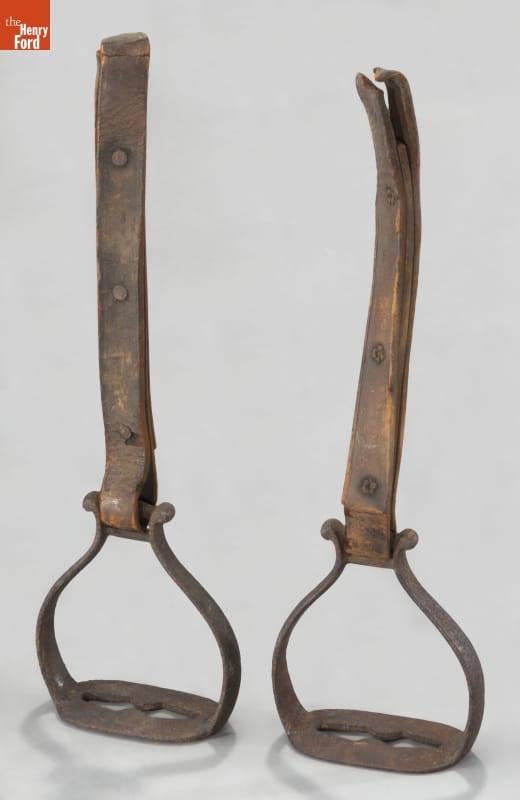
Stirrups with Stirrup Leathers
- Leather Shop in Henry Ford Museum "Street of Shops" Exhibit, February 1941 -
- February 19, 1941
- Collections - Artifact
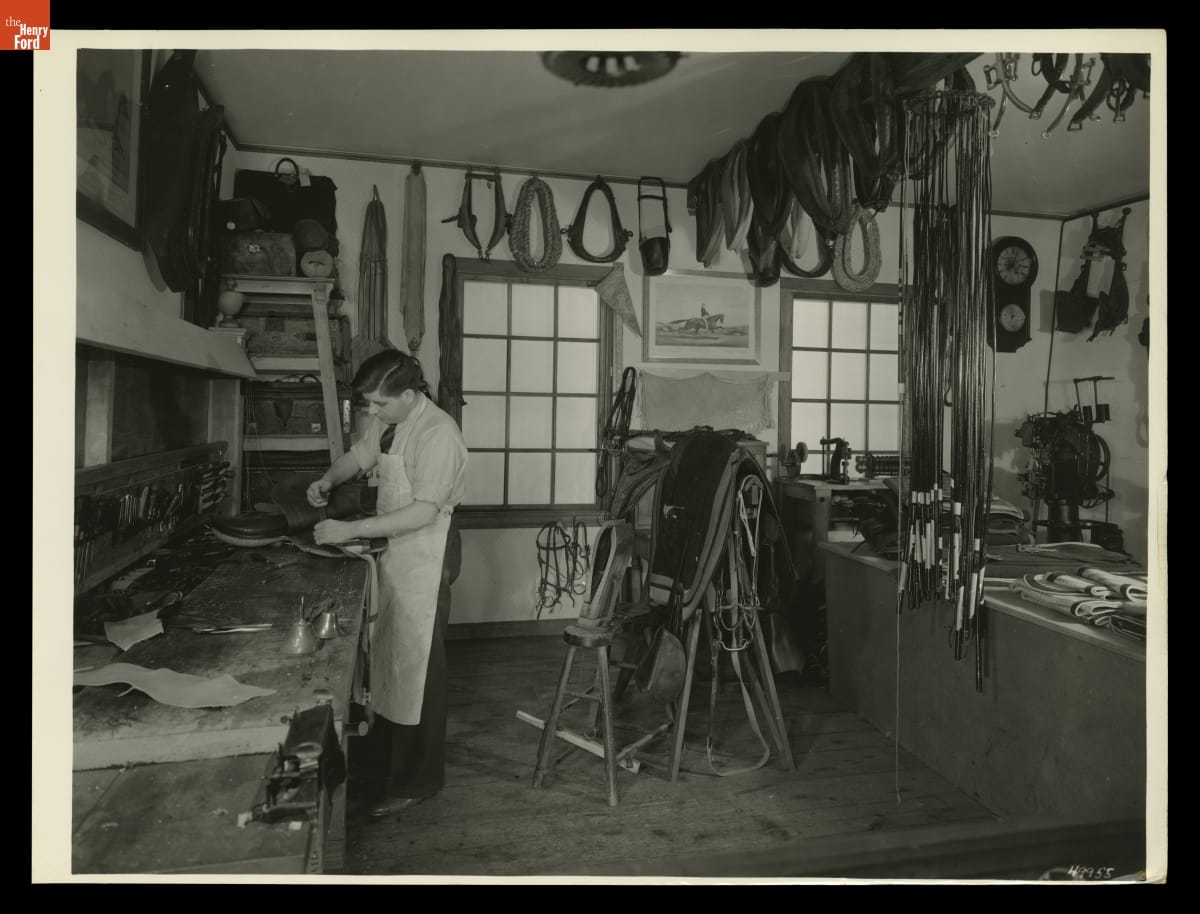
Leather Shop in Henry Ford Museum "Street of Shops" Exhibit, February 1941
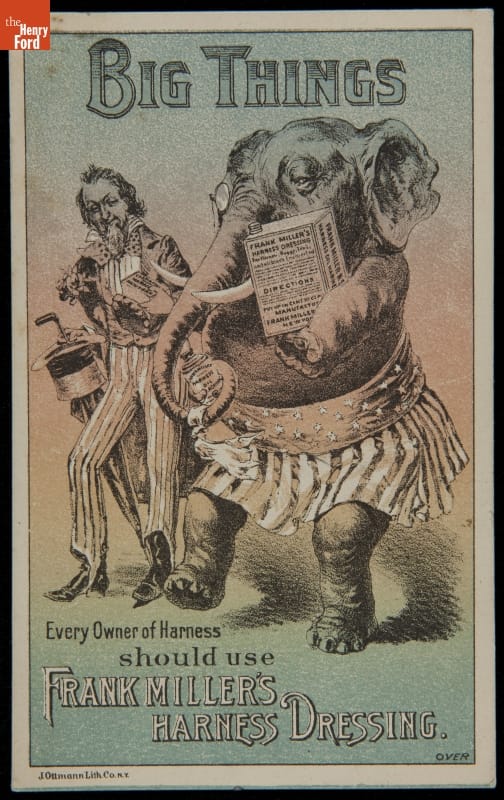
- Trade Card for Frank Miller's Harness Dressing, 1885-1900 - In the last third of the nineteenth century, an unprecedented variety of consumer goods and services flooded the American market. Advertisers, armed with new methods of color printing, bombarded potential customers with trade cards. Americans enjoyed and often saved the vibrant little advertisements found in product packages or distributed by local merchants. Many survive as historical records of commercialism in the United States.
- 1885-1900
- Collections - Artifact
Trade Card for Frank Miller's Harness Dressing, 1885-1900
In the last third of the nineteenth century, an unprecedented variety of consumer goods and services flooded the American market. Advertisers, armed with new methods of color printing, bombarded potential customers with trade cards. Americans enjoyed and often saved the vibrant little advertisements found in product packages or distributed by local merchants. Many survive as historical records of commercialism in the United States.
- Leatherworking Kit, 1940-1950 -
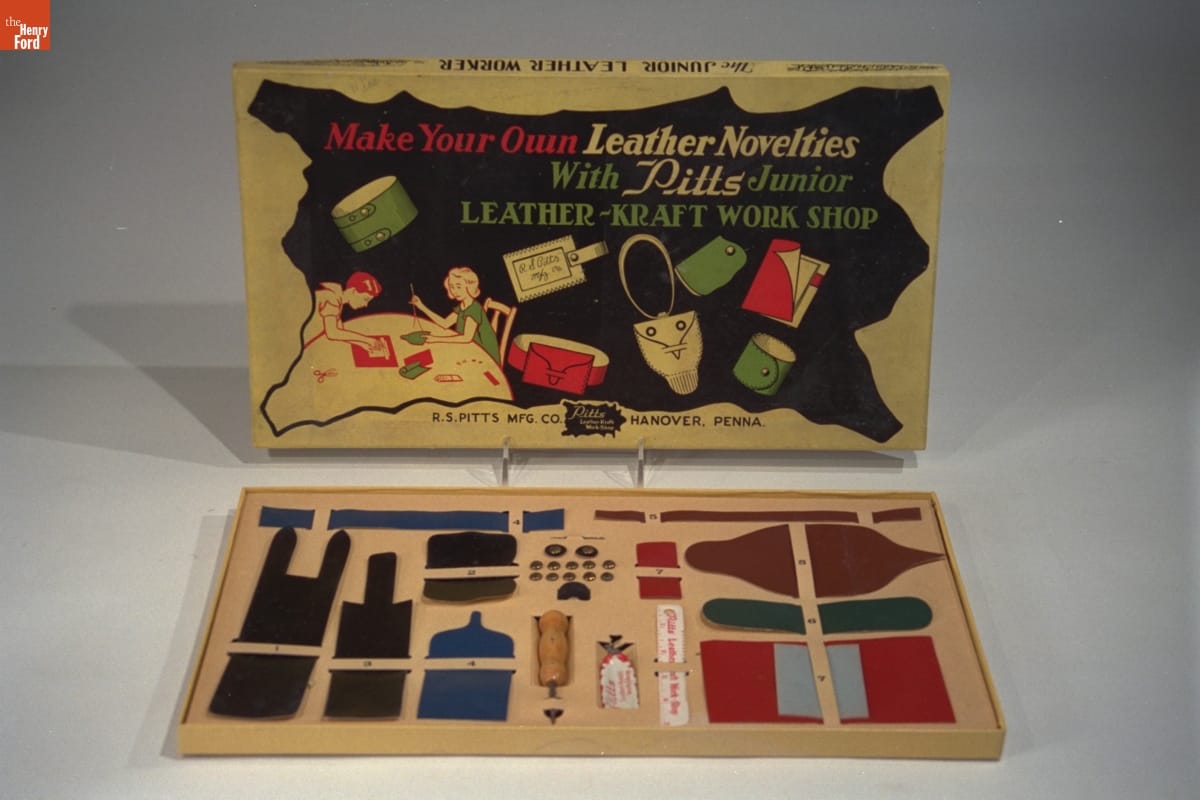
- 1940-1950
- Collections - Artifact
Leatherworking Kit, 1940-1950
- Leather Display, Ford Exposition, New York World's Fair, 1939 - Ford Motor Company poured resources into the 1939-40 New York World's Fair, spending more than $5 million to construct and maintain its elaborate and well-attended exposition space. Ford's massive exhibition building attracted fairgoers with industrial demonstrations and informative displays. The huge, revolving "Ford Cycle of Production" - which explained how raw materials became Ford automobile parts - particularly impressed visitors.
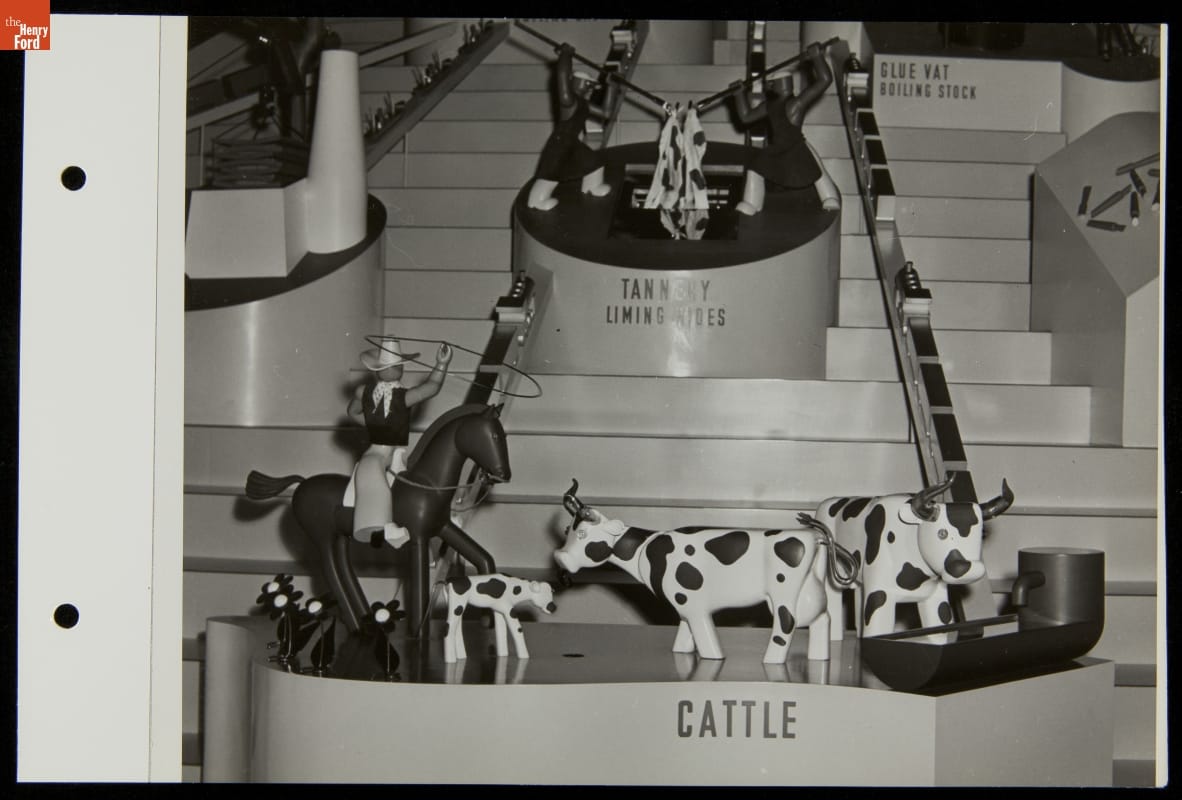
- June 10, 1939
- Collections - Artifact
Leather Display, Ford Exposition, New York World's Fair, 1939
Ford Motor Company poured resources into the 1939-40 New York World's Fair, spending more than $5 million to construct and maintain its elaborate and well-attended exposition space. Ford's massive exhibition building attracted fairgoers with industrial demonstrations and informative displays. The huge, revolving "Ford Cycle of Production" - which explained how raw materials became Ford automobile parts - particularly impressed visitors.
- Leather Jacket, circa 1968 - Amateur racers Barry Egen and Wayne Snyder of Monroe, Michigan, competed with their custom-built motorcycle at nearby Milan Dragway in the late 1960s. The bike, named "Revolution," was powered by a 350-cubic-centimeter, straight-twin Honda engine and posted race times in the low 12-second range. Egen wore this protective leather jacket when racing.
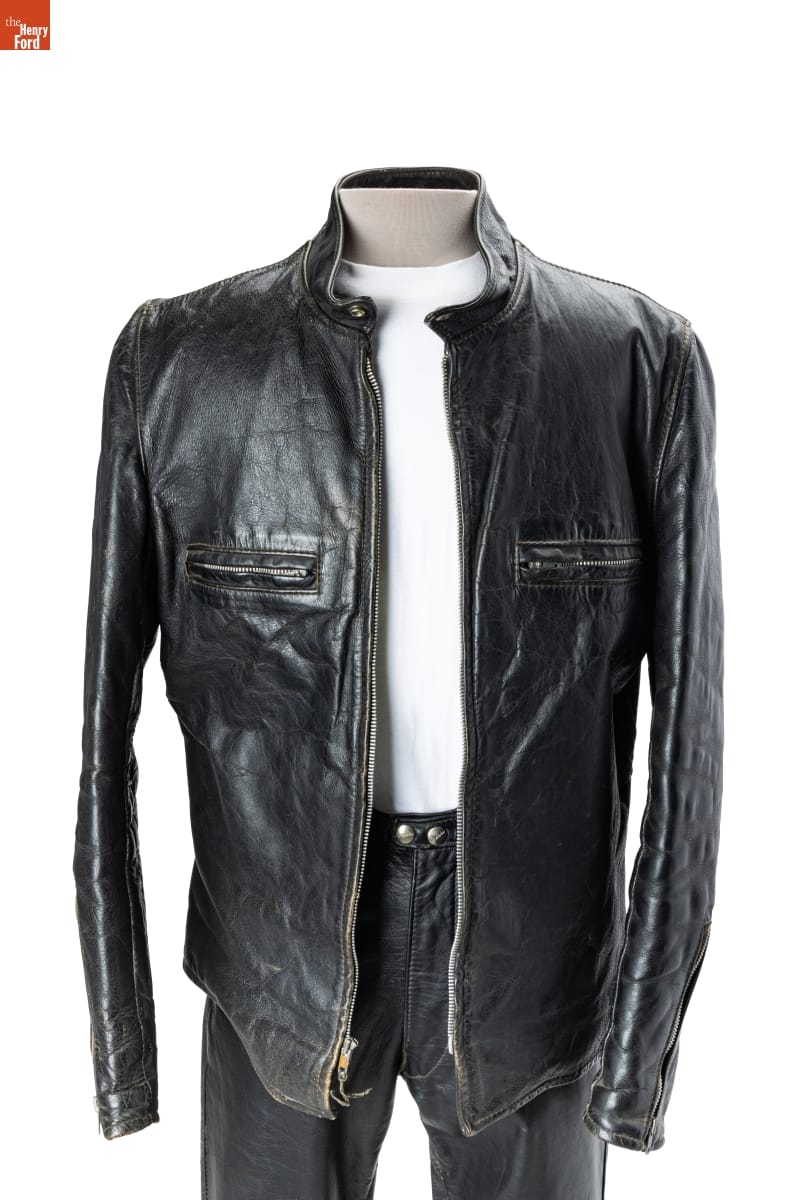
- circa 1968
- Collections - Artifact
Leather Jacket, circa 1968
Amateur racers Barry Egen and Wayne Snyder of Monroe, Michigan, competed with their custom-built motorcycle at nearby Milan Dragway in the late 1960s. The bike, named "Revolution," was powered by a 350-cubic-centimeter, straight-twin Honda engine and posted race times in the low 12-second range. Egen wore this protective leather jacket when racing.
- Trade Card for George S. Colburn, "Loaded with Colburn's Dressing," 1883 - In the last third of the nineteenth century, an unprecedented variety of consumer goods and services flooded the American market. Advertisers, armed with new methods of color printing, bombarded potential customers with trade cards. Americans enjoyed and often saved the vibrant little advertisements found in product packages or distributed by local merchants. Many survive as historical records of commercialism in the United States.
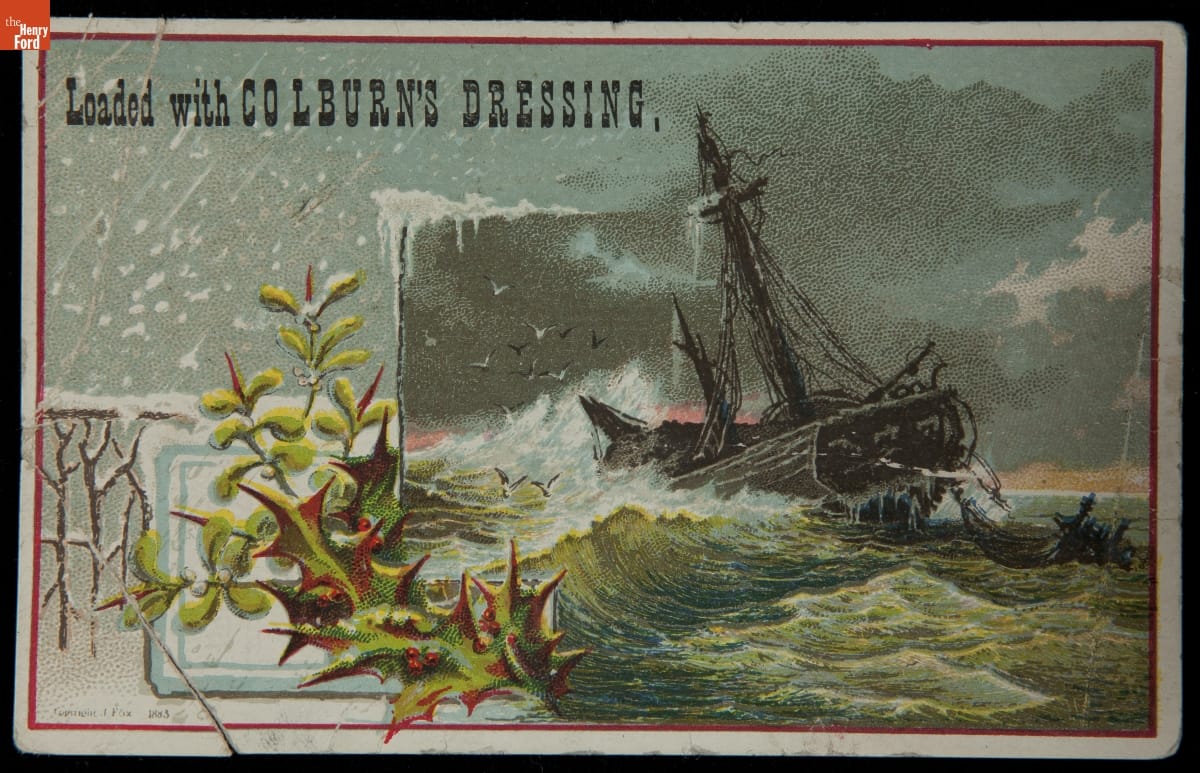
- 1883
- Collections - Artifact
Trade Card for George S. Colburn, "Loaded with Colburn's Dressing," 1883
In the last third of the nineteenth century, an unprecedented variety of consumer goods and services flooded the American market. Advertisers, armed with new methods of color printing, bombarded potential customers with trade cards. Americans enjoyed and often saved the vibrant little advertisements found in product packages or distributed by local merchants. Many survive as historical records of commercialism in the United States.
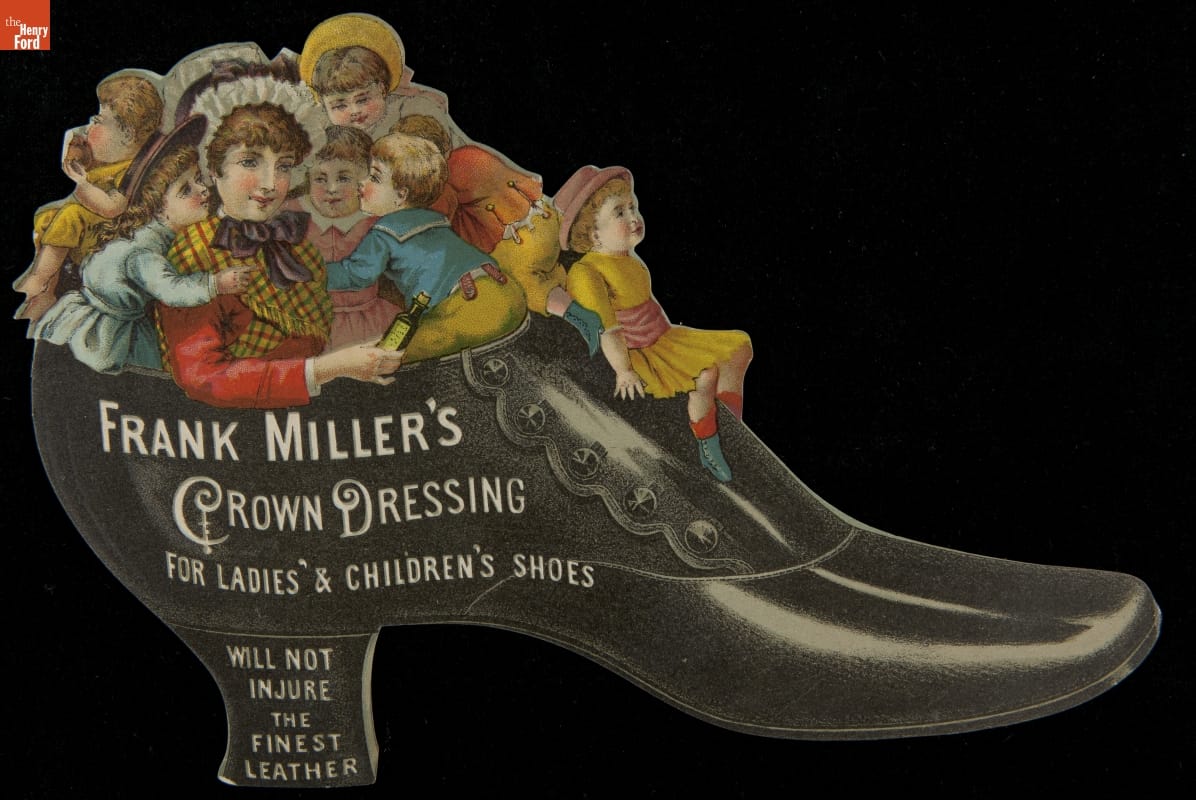
- Trade Card for Frank Miller's Crown Dressing, 1880-1900 - In the last third of the nineteenth century, an unprecedented variety of consumer goods and services flooded the American market. Advertisers, armed with new methods of color printing, bombarded potential customers with trade cards. Americans enjoyed and often saved the vibrant little advertisements found in product packages or distributed by local merchants. Many survive as historical records of commercialism in the United States.
- 1880-1900
- Collections - Artifact
Trade Card for Frank Miller's Crown Dressing, 1880-1900
In the last third of the nineteenth century, an unprecedented variety of consumer goods and services flooded the American market. Advertisers, armed with new methods of color printing, bombarded potential customers with trade cards. Americans enjoyed and often saved the vibrant little advertisements found in product packages or distributed by local merchants. Many survive as historical records of commercialism in the United States.
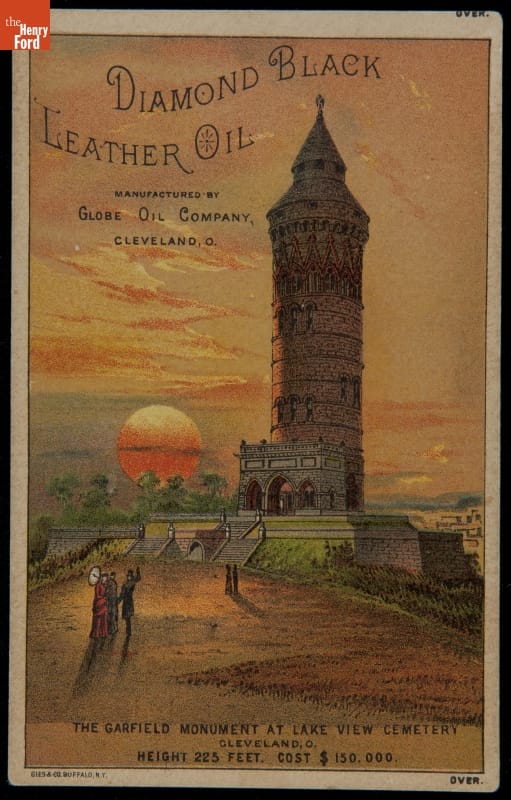
- Trade Card for Diamond Black Leather Oil, Globe Oil Company, 1890 - In the last third of the nineteenth century, an unprecedented variety of consumer goods and services flooded the American market. Advertisers, armed with new methods of color printing, bombarded potential customers with trade cards. Americans enjoyed and often saved the vibrant little advertisements found in product packages or distributed by local merchants. Many survive as historical records of commercialism in the United States.
- 1890
- Collections - Artifact
Trade Card for Diamond Black Leather Oil, Globe Oil Company, 1890
In the last third of the nineteenth century, an unprecedented variety of consumer goods and services flooded the American market. Advertisers, armed with new methods of color printing, bombarded potential customers with trade cards. Americans enjoyed and often saved the vibrant little advertisements found in product packages or distributed by local merchants. Many survive as historical records of commercialism in the United States.