
Search
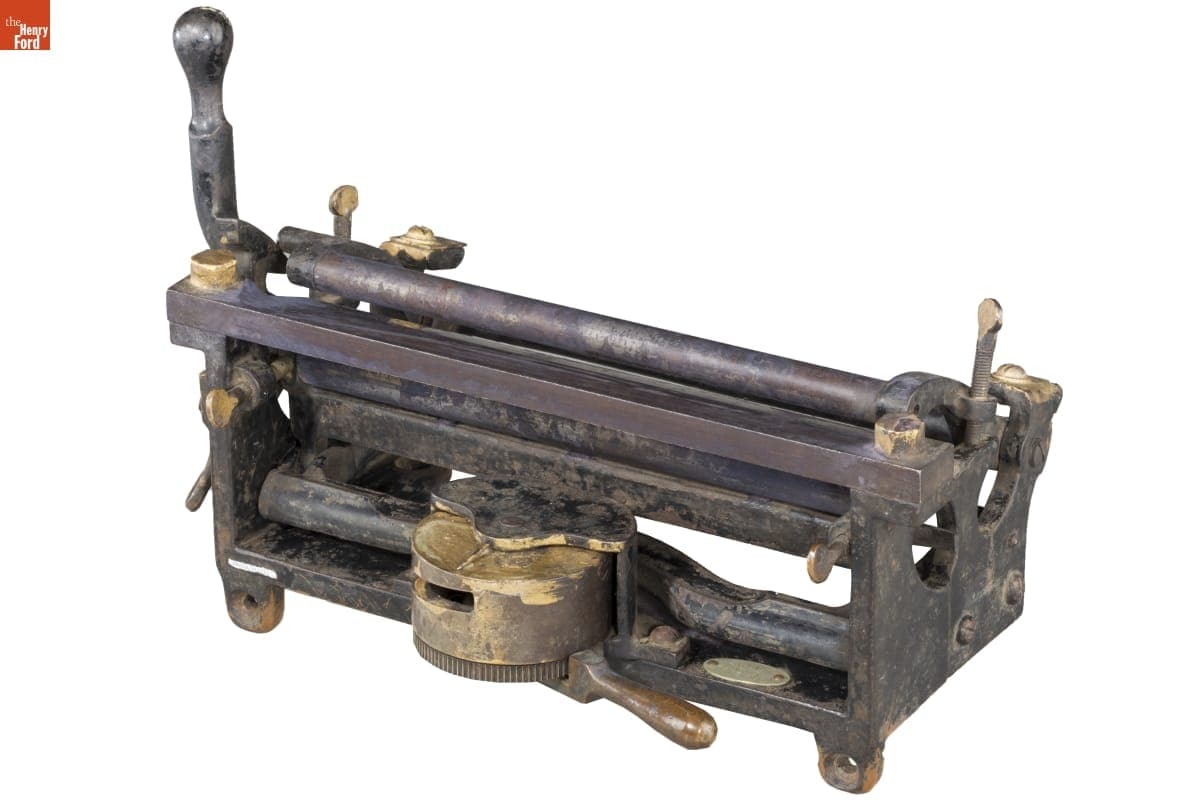
- Krebs Leather Splitter, circa 1890 - John Theodore Krebs patented his leather splitting machine in 1884. Leather splitters were designed primarily for use in the harness and saddle industry. A leatherworker fed a thick leather strap into the splitter then pulled it through the roller and blade mechanism. This reduced or "split" the piece of leather into a layer of uniform, workable thickness.
- circa 1890
- Collections - Artifact
Krebs Leather Splitter, circa 1890
John Theodore Krebs patented his leather splitting machine in 1884. Leather splitters were designed primarily for use in the harness and saddle industry. A leatherworker fed a thick leather strap into the splitter then pulled it through the roller and blade mechanism. This reduced or "split" the piece of leather into a layer of uniform, workable thickness.
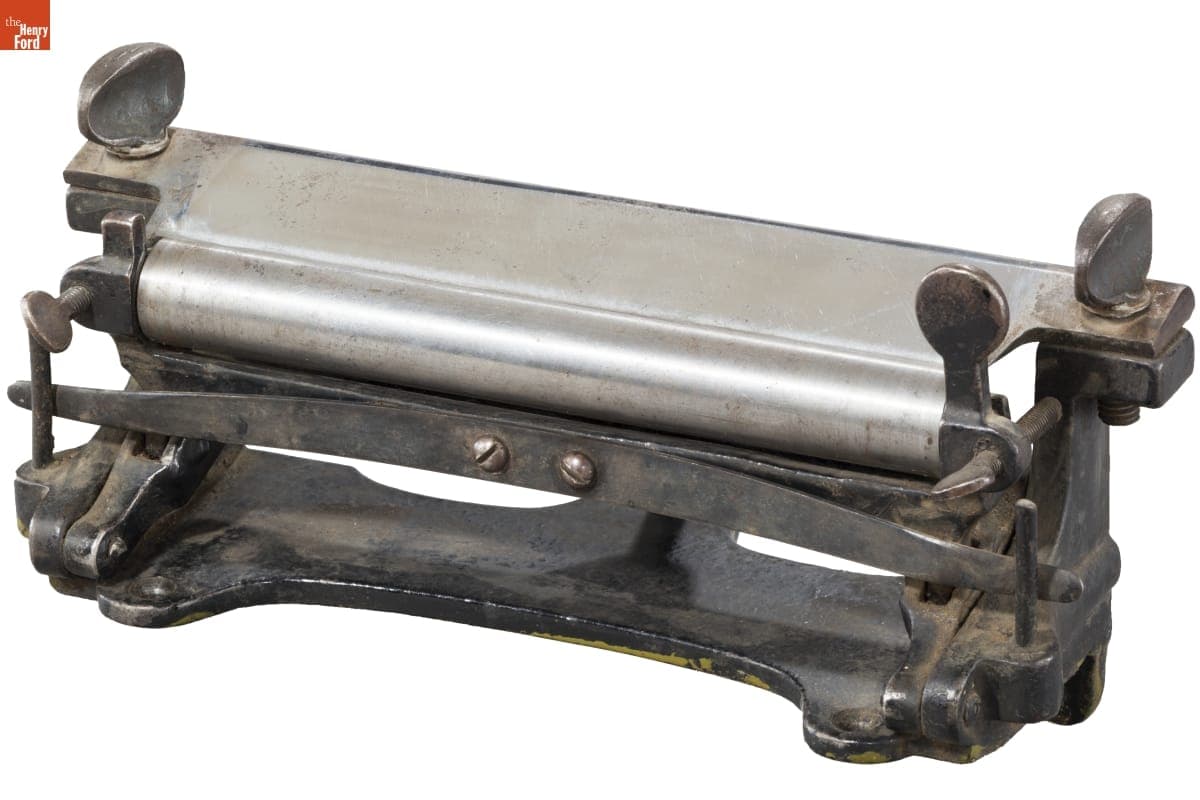
- C.S. Osborne & Co. No. 86 Leather Splitter - Leather splitters were designed primarily for use in the harness and saddle industry. A leatherworker fed a thick leather strap into the splitter then pulled it through the roller and blade mechanism. This reduced or "split" the piece of leather into a layer of uniform, workable thickness. This machine was produced by C. S. Osborne and Company, one of the oldest manufacturers of leatherworking tools.
- Collections - Artifact
C.S. Osborne & Co. No. 86 Leather Splitter
Leather splitters were designed primarily for use in the harness and saddle industry. A leatherworker fed a thick leather strap into the splitter then pulled it through the roller and blade mechanism. This reduced or "split" the piece of leather into a layer of uniform, workable thickness. This machine was produced by C. S. Osborne and Company, one of the oldest manufacturers of leatherworking tools.