
Search
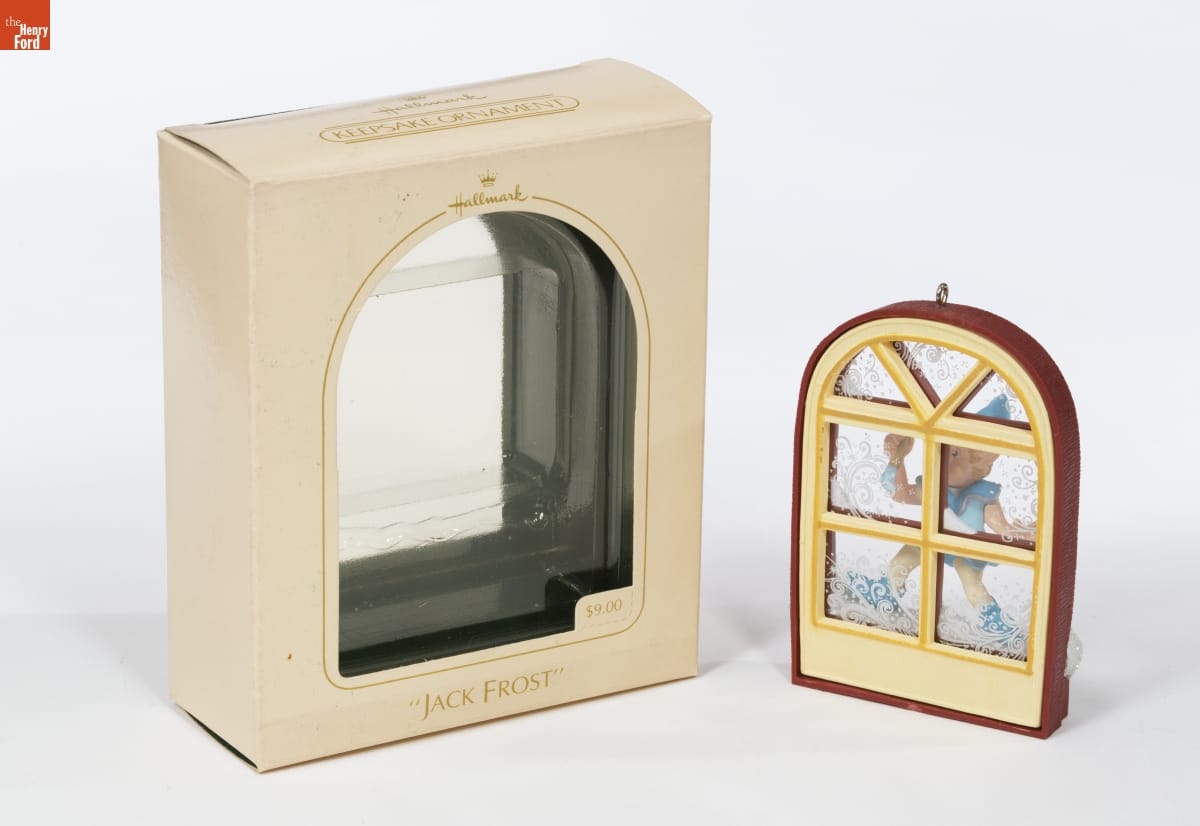
- Hallmark "Jack Frost" Christmas Ornament, 1983 - Already known for greeting cards, Hallmark introduced a line of Christmas ornaments in 1973. The company's annual release of an increasing array of ornaments revolutionized Christmas decorating, appealing to customers' interest in marking memories and milestones as well as expressing one's personality and unique tastes.
- 1983
- Collections - Artifact
Hallmark "Jack Frost" Christmas Ornament, 1983
Already known for greeting cards, Hallmark introduced a line of Christmas ornaments in 1973. The company's annual release of an increasing array of ornaments revolutionized Christmas decorating, appealing to customers' interest in marking memories and milestones as well as expressing one's personality and unique tastes.
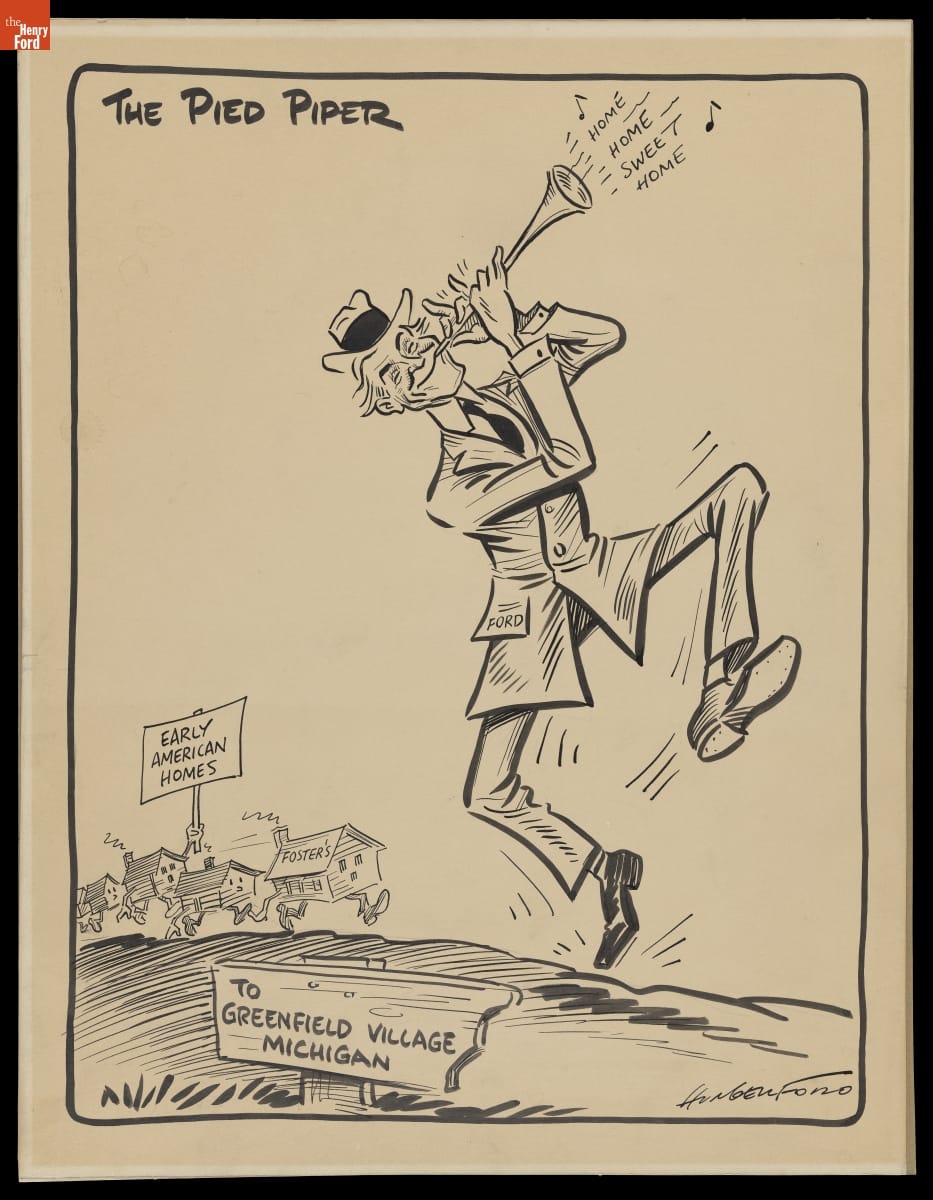
- "The Pied Piper," Depicting Henry Ford Leading Early American Homes to Greenfield Village, 1935 -
- 1935
- Collections - Artifact
"The Pied Piper," Depicting Henry Ford Leading Early American Homes to Greenfield Village, 1935
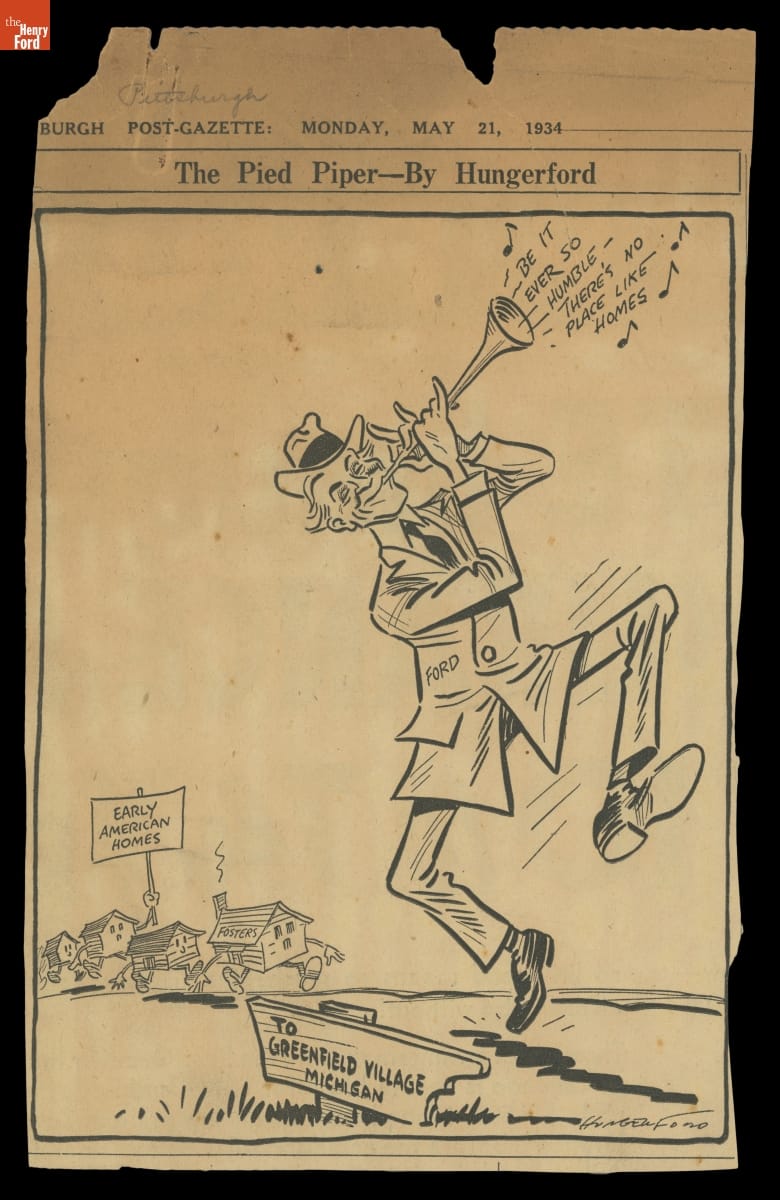
- "The Pied Piper," Depicting Henry Ford Leading Early American Homes to Greenfield Village, 1934 -
- May 21, 1934
- Collections - Artifact
"The Pied Piper," Depicting Henry Ford Leading Early American Homes to Greenfield Village, 1934
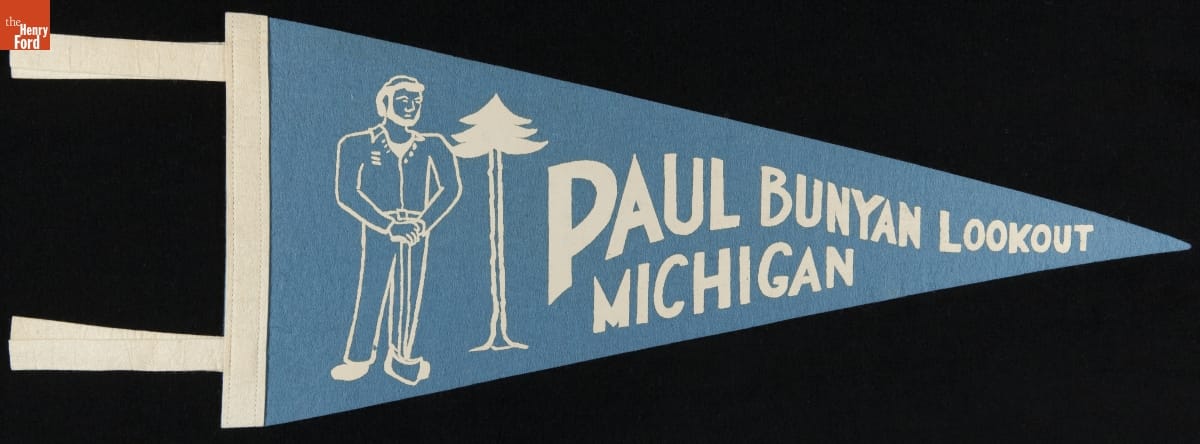
- Pennant, "Paul Bunyan Lookout, Michigan," 1940-1965 - After World War II, highways were flooded with family vacationers out to enjoy their new cars and all that America had to offer. New attractions vied for the attention of passing auto tourists. Travelers could find several Paul Bunyan statues scattered throughout Michigan. This pennant shows the one located near Ossineke, Michigan.
- 1940-1965
- Collections - Artifact
Pennant, "Paul Bunyan Lookout, Michigan," 1940-1965
After World War II, highways were flooded with family vacationers out to enjoy their new cars and all that America had to offer. New attractions vied for the attention of passing auto tourists. Travelers could find several Paul Bunyan statues scattered throughout Michigan. This pennant shows the one located near Ossineke, Michigan.
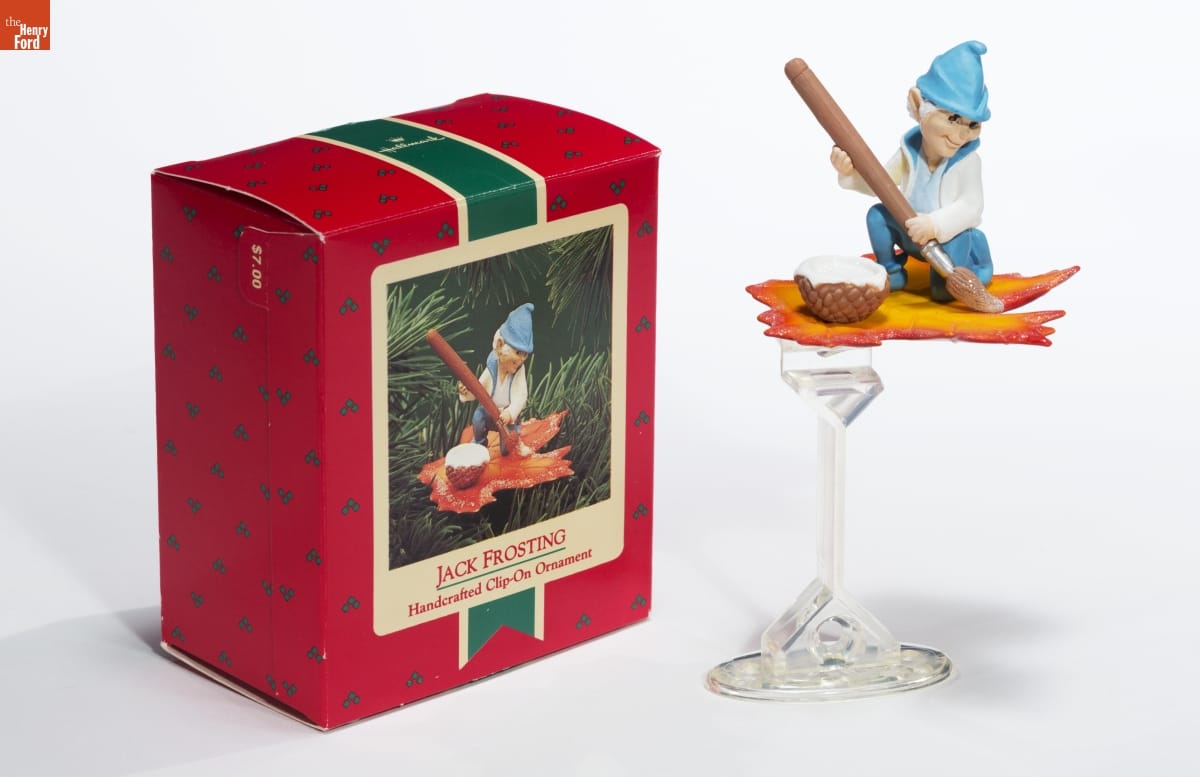
- Hallmark "Jack Frosting" Christmas Ornament, 1987 - Already known for greeting cards, Hallmark introduced a line of Christmas ornaments in 1973. The company's annual release of an increasing array of ornaments revolutionized Christmas decorating, appealing to customers' interest in marking memories and milestones as well as expressing one's personality and unique tastes.
- 1987
- Collections - Artifact
Hallmark "Jack Frosting" Christmas Ornament, 1987
Already known for greeting cards, Hallmark introduced a line of Christmas ornaments in 1973. The company's annual release of an increasing array of ornaments revolutionized Christmas decorating, appealing to customers' interest in marking memories and milestones as well as expressing one's personality and unique tastes.
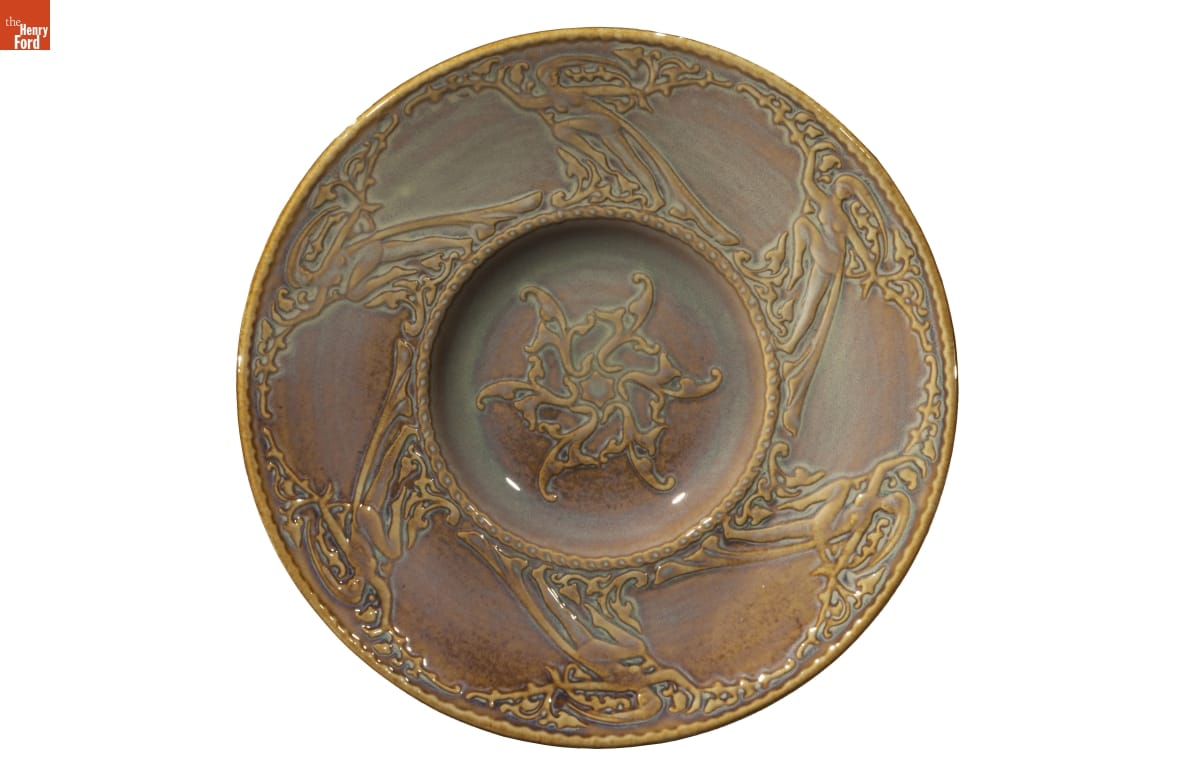
- Plate, 1920-1930 - The Cowan Pottery near Cleveland, Ohio, produced exceptional artistic and commercial wares during its heyday, from 1920 to 1931. Hiring the best local talent, the pottery produced pieces influenced by the Arts and Crafts and Art Deco styles. This plate shows the classical myth of Apollo and Daphne, at the point where the wood nymph Daphne transforms into a laurel tree.
- 1920-1930
- Collections - Artifact
Plate, 1920-1930
The Cowan Pottery near Cleveland, Ohio, produced exceptional artistic and commercial wares during its heyday, from 1920 to 1931. Hiring the best local talent, the pottery produced pieces influenced by the Arts and Crafts and Art Deco styles. This plate shows the classical myth of Apollo and Daphne, at the point where the wood nymph Daphne transforms into a laurel tree.
- "The Pied Piper," Depicting Henry Ford Leading Early American Homes to Greenfield Village, 1934 -
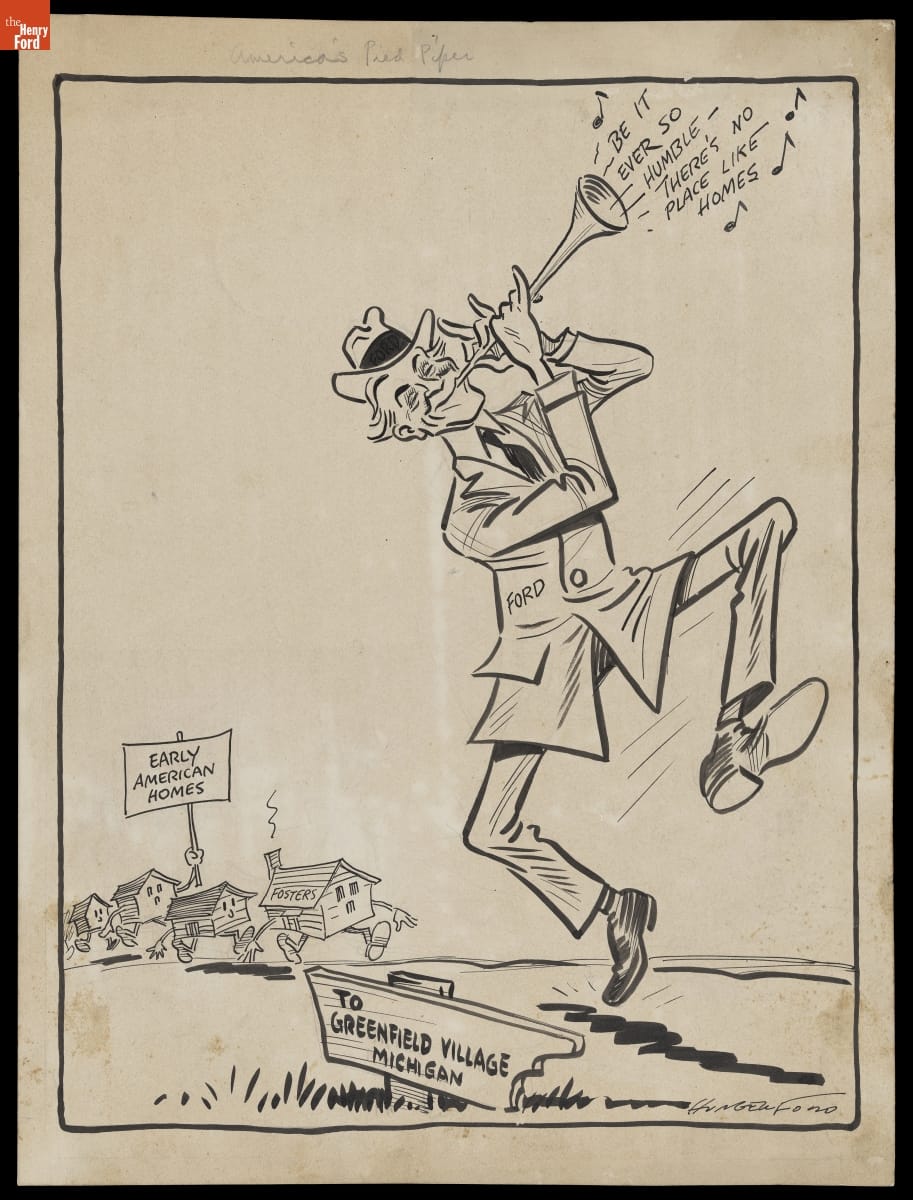
- May 21, 1934
- Collections - Artifact
"The Pied Piper," Depicting Henry Ford Leading Early American Homes to Greenfield Village, 1934
- Chromolithograph, "Gambrinus und Seine Apostel in America," 1867 -
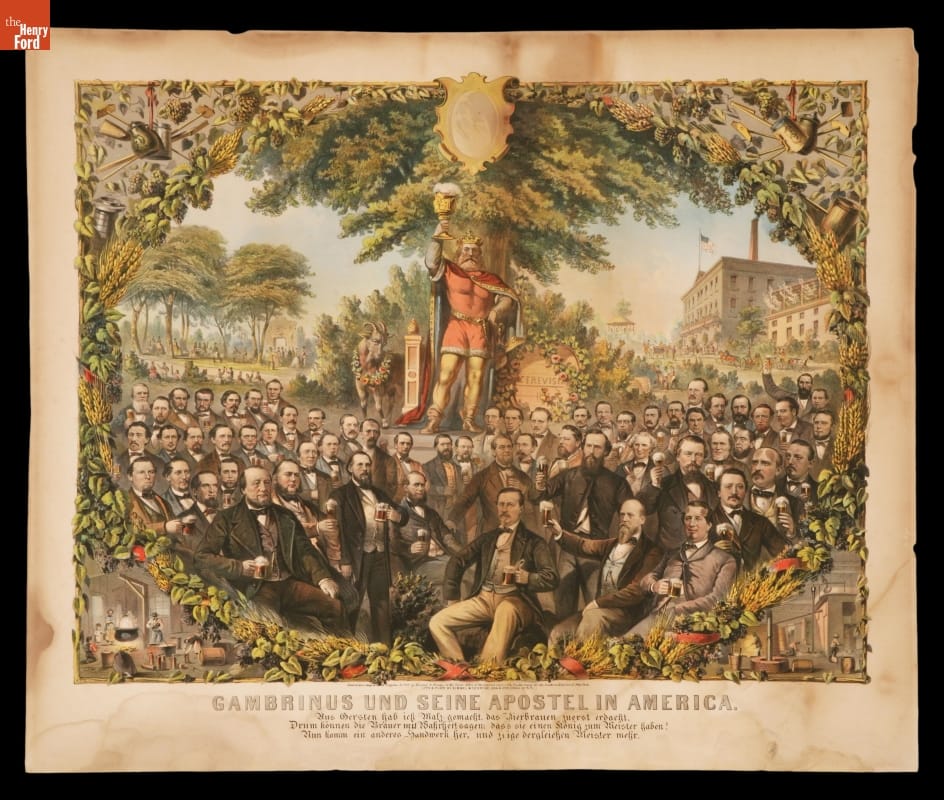
- 1867
- Collections - Artifact
Chromolithograph, "Gambrinus und Seine Apostel in America," 1867
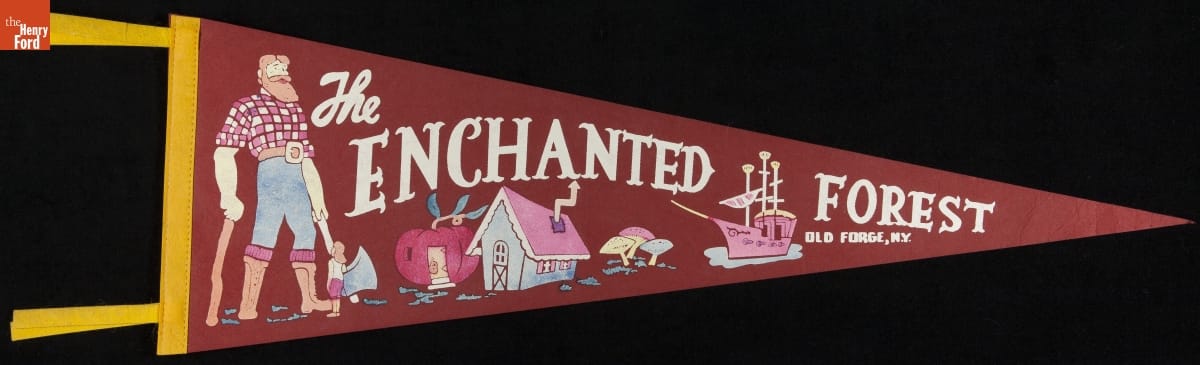
- Pennant, "The Enchanted Forest, Old Forge, N.Y.," 1956-1970 -
- 1956-1970
- Collections - Artifact
Pennant, "The Enchanted Forest, Old Forge, N.Y.," 1956-1970
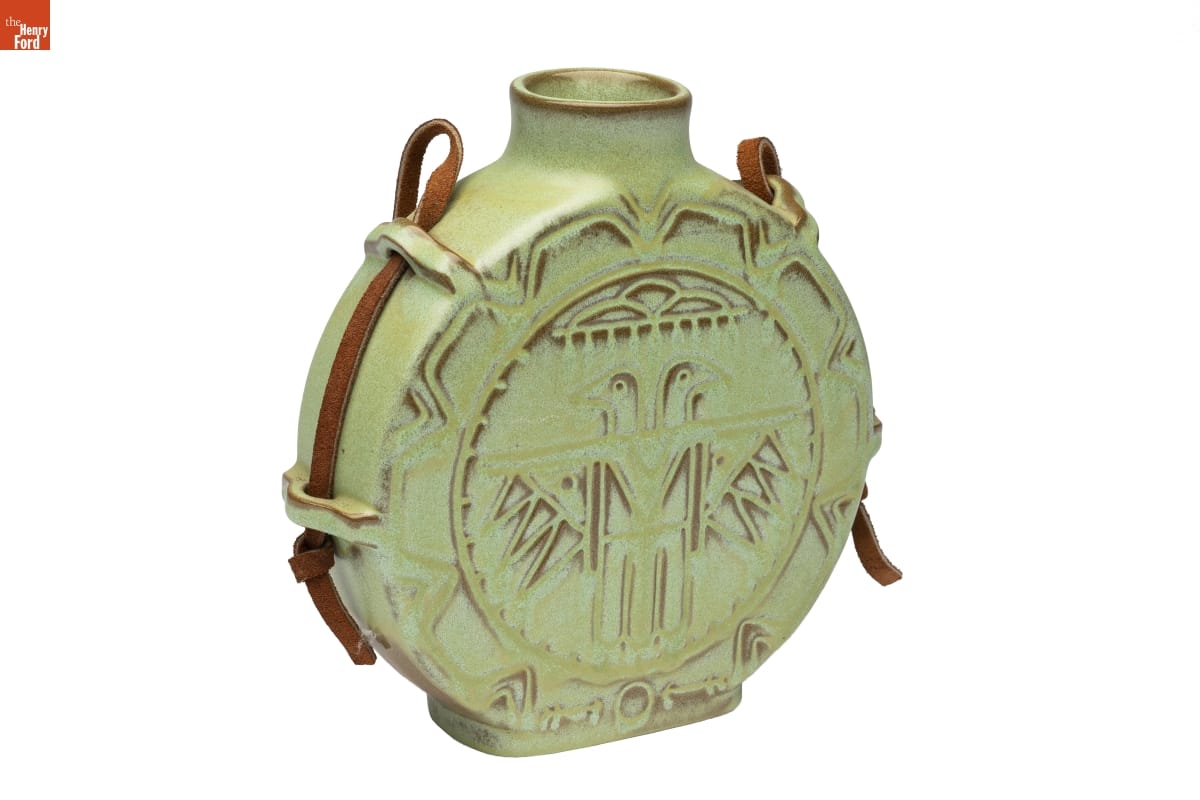
- Thunderbird Canteen with Strap, 1942 - The native clays of Oklahoma provided a foundation for the decorative ceramics and dinnerware produced by Frankoma Pottery. John Frank, who headed the ceramics department at the University of Oklahoma, and his wife Grace Lee began the business in 1933. They moved to Sapulpa, Oklahoma, in 1938 and sold their Southwestern-inspired wares coated with prairie-colored glazes at an affordable price. The pottery remained family-owned until 1990.
- 1942
- Collections - Artifact
Thunderbird Canteen with Strap, 1942
The native clays of Oklahoma provided a foundation for the decorative ceramics and dinnerware produced by Frankoma Pottery. John Frank, who headed the ceramics department at the University of Oklahoma, and his wife Grace Lee began the business in 1933. They moved to Sapulpa, Oklahoma, in 1938 and sold their Southwestern-inspired wares coated with prairie-colored glazes at an affordable price. The pottery remained family-owned until 1990.