
Search
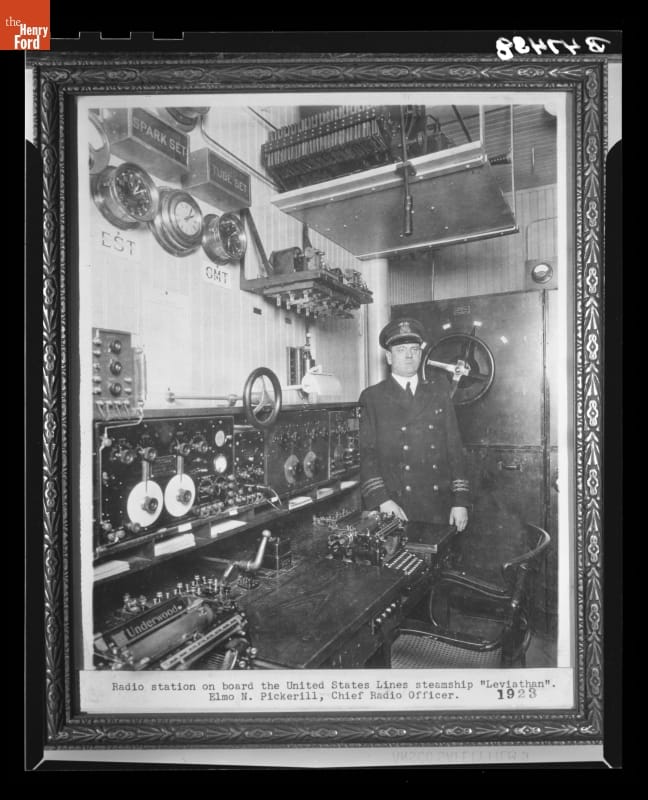
- Chief Radio Officer Elmo Pickerill in the Radio Station on the SS Leviathan, 1923 -
- 1923
- Collections - Artifact
Chief Radio Officer Elmo Pickerill in the Radio Station on the SS Leviathan, 1923
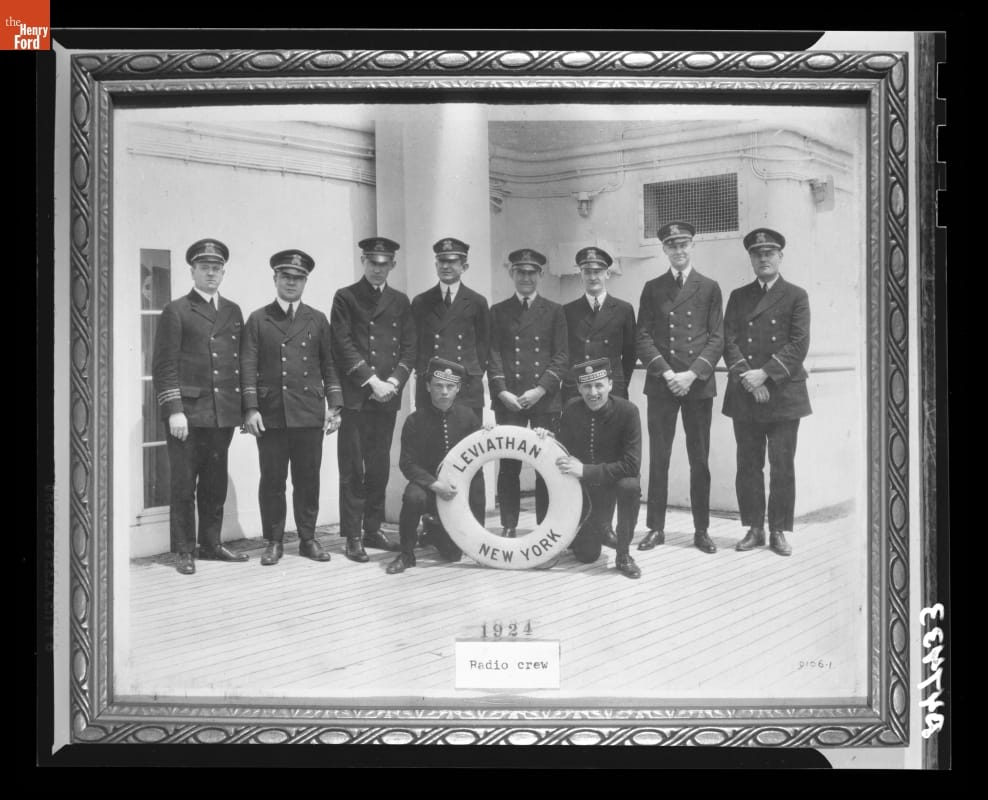
- Radio Crew of the SS Leviathan, 1924 -
- 1924
- Collections - Artifact
Radio Crew of the SS Leviathan, 1924
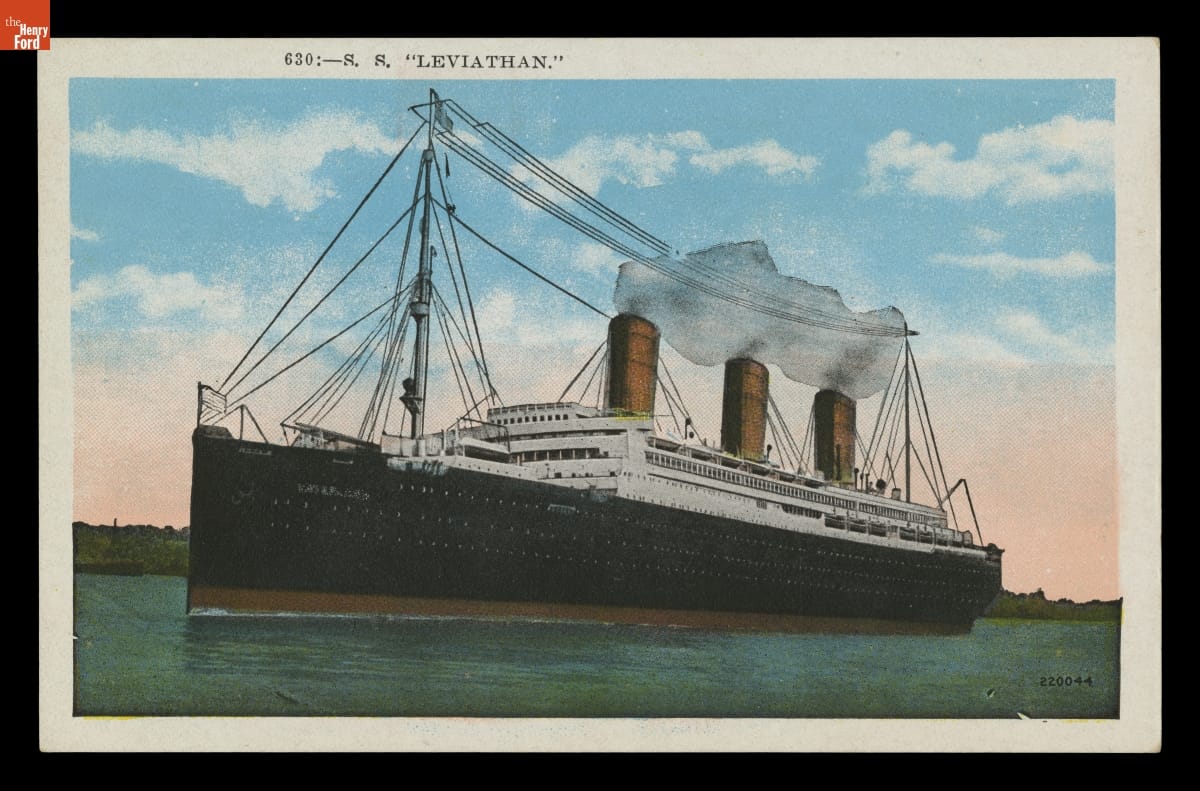
- Postcard, "SS Leviathan," circa 1926 - The SS <EM>Leviathan</EM> first set sail in 1913 as the German passenger ship SS <EM>Vaterland</EM>. In 1917, it was seized by the U.S. Navy as a troop carrier, and at the end of World War I, transformed into a transatlantic luxury liner. From 1923-1934, the <EM>Leviathan</EM> sailed as a commercial tourist ship, with an opulent "Pompeian" swimming pool and a Ritz-Carlton restaurant.
- circa 1926
- Collections - Artifact
Postcard, "SS Leviathan," circa 1926
The SS Leviathan first set sail in 1913 as the German passenger ship SS Vaterland. In 1917, it was seized by the U.S. Navy as a troop carrier, and at the end of World War I, transformed into a transatlantic luxury liner. From 1923-1934, the Leviathan sailed as a commercial tourist ship, with an opulent "Pompeian" swimming pool and a Ritz-Carlton restaurant.
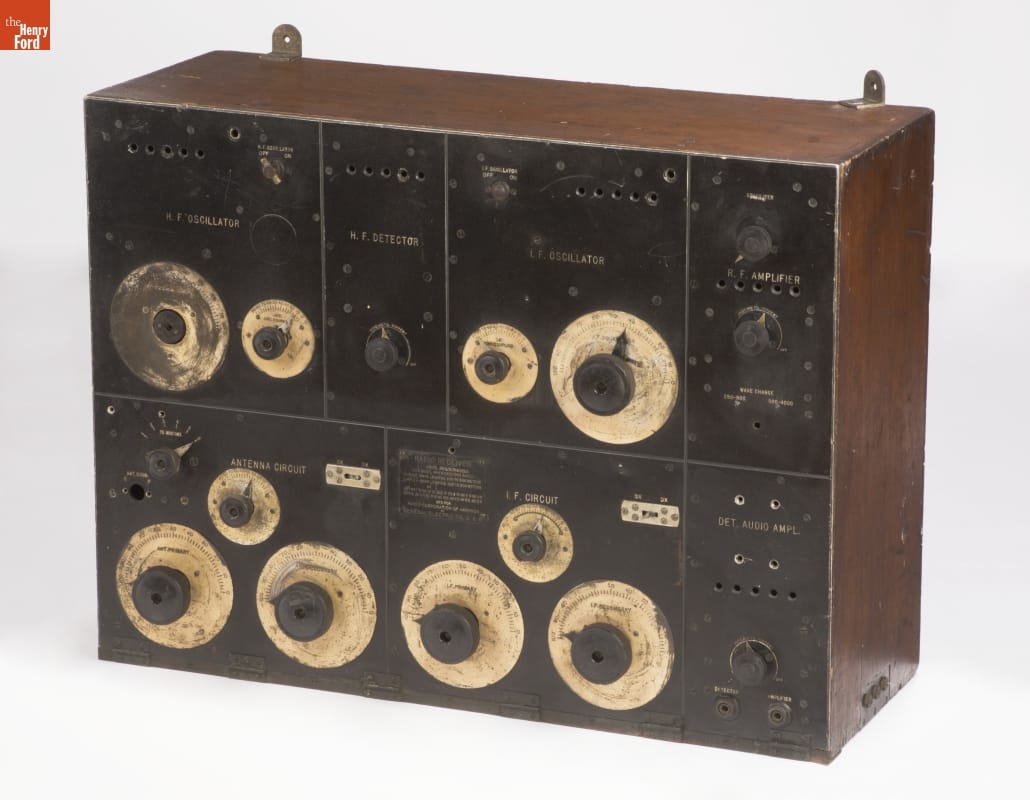
- RCA Dual Frequency Radio Receiver, Used on the SS Leviathan, circa 1922 - This unique duplex radio, used aboard the SS <EM>Leviathan</EM>, could receive two frequencies at the same time--one for commercial stations, and one for ship communication. The <EM>Leviathan</EM> first set sail as a German-owned passenger ship in 1913, was seized by Americans and turned over to the Navy in 1917, and was transformed into a transatlantic luxury liner in 1923.
- circa 1922
- Collections - Artifact
RCA Dual Frequency Radio Receiver, Used on the SS Leviathan, circa 1922
This unique duplex radio, used aboard the SS Leviathan, could receive two frequencies at the same time--one for commercial stations, and one for ship communication. The Leviathan first set sail as a German-owned passenger ship in 1913, was seized by Americans and turned over to the Navy in 1917, and was transformed into a transatlantic luxury liner in 1923.
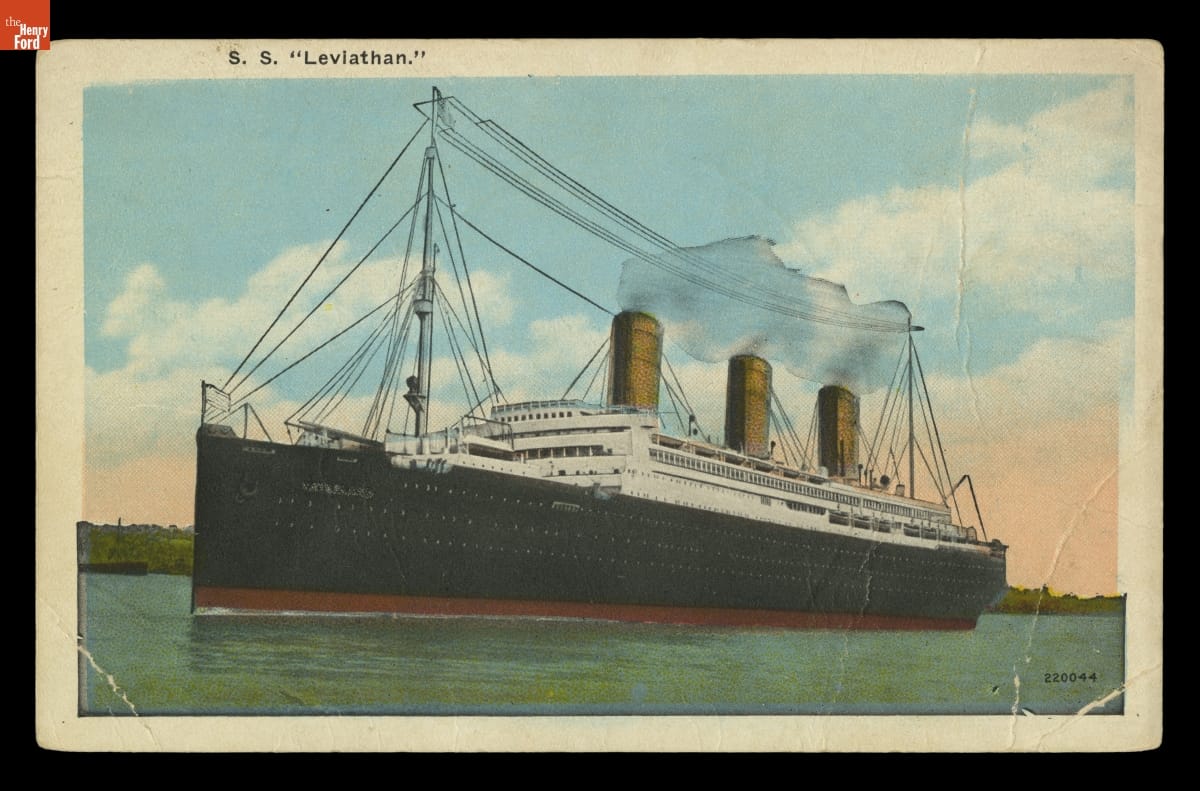
- Postcard, "SS Leviathan," Dated 1926 - The SS <EM>Leviathan</EM> first set sail in 1913 as the German passenger ship SS <EM>Vaterland</EM>. In 1917, it was seized by the U.S. Navy as a troop carrier, and at the end of World War I, transformed into a transatlantic luxury liner. From 1923-1934, the <EM>Leviathan</EM> sailed as a commercial tourist ship, with an opulent "Pompeian" swimming pool and a Ritz-Carlton restaurant.
- April 12, 1926
- Collections - Artifact
Postcard, "SS Leviathan," Dated 1926
The SS Leviathan first set sail in 1913 as the German passenger ship SS Vaterland. In 1917, it was seized by the U.S. Navy as a troop carrier, and at the end of World War I, transformed into a transatlantic luxury liner. From 1923-1934, the Leviathan sailed as a commercial tourist ship, with an opulent "Pompeian" swimming pool and a Ritz-Carlton restaurant.
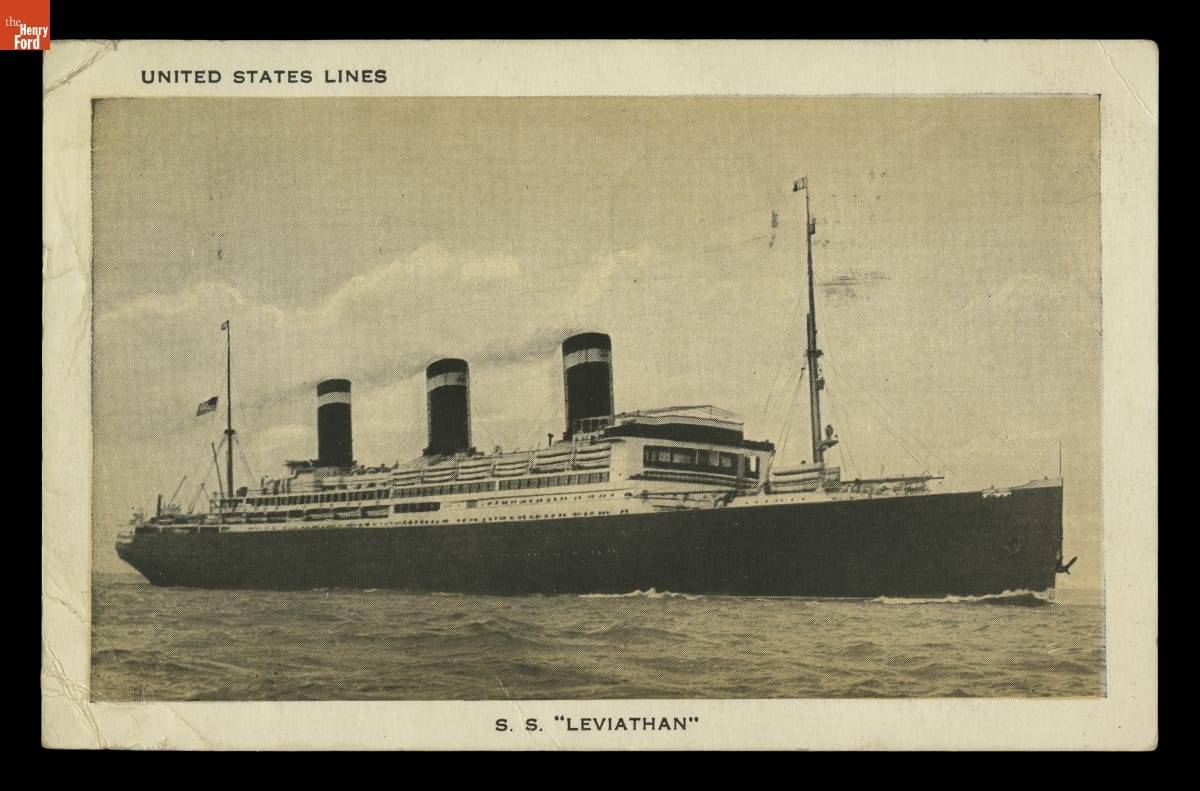
- Postcard, "SS Leviathan," Postmarked September 1929 - The SS <EM>Leviathan</EM> first set sail in 1913 as the German passenger ship SS <EM>Vaterland</EM>. In 1917, it was seized by the U.S. Navy as a troop carrier, and at the end of World War I, transformed into a transatlantic luxury liner. From 1923-1934, the <EM>Leviathan</EM> sailed as a commercial tourist ship, with an opulent "Pompeian" swimming pool and a Ritz-Carlton restaurant.
- September 22, 1929
- Collections - Artifact
Postcard, "SS Leviathan," Postmarked September 1929
The SS Leviathan first set sail in 1913 as the German passenger ship SS Vaterland. In 1917, it was seized by the U.S. Navy as a troop carrier, and at the end of World War I, transformed into a transatlantic luxury liner. From 1923-1934, the Leviathan sailed as a commercial tourist ship, with an opulent "Pompeian" swimming pool and a Ritz-Carlton restaurant.