
Search
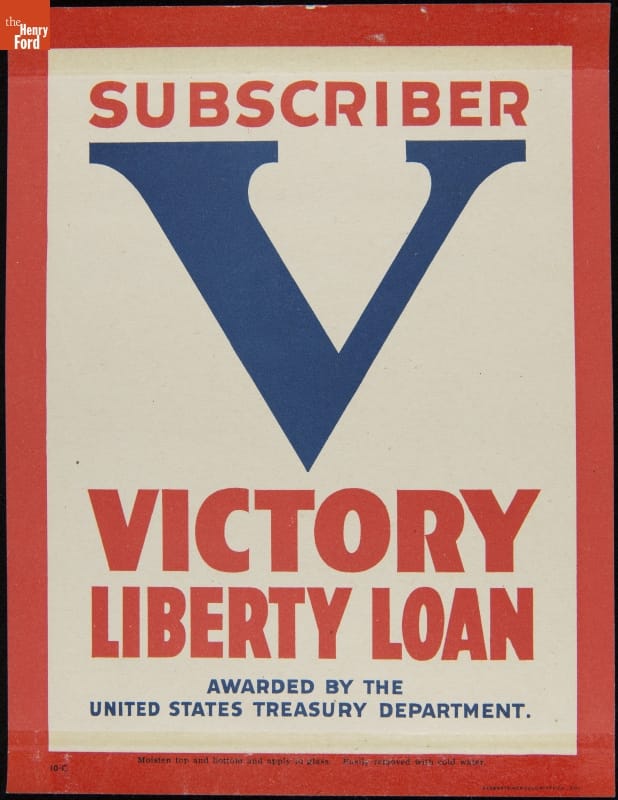
- "Subscriber "V" Victory Liberty Loan" Window Sign, 1917-1918 - During World War I, the United States government issued bonds to help finance the war effort. American citizens, businesses, and especially financial institutions purchased bonds, raising more than 17 billion dollars. Donors to the Liberty and Victory Loan bond drives could adhere signs, like this one, to their windows to let everyone know they were doing their part.
- 1917-1918
- Collections - Artifact
"Subscriber "V" Victory Liberty Loan" Window Sign, 1917-1918
During World War I, the United States government issued bonds to help finance the war effort. American citizens, businesses, and especially financial institutions purchased bonds, raising more than 17 billion dollars. Donors to the Liberty and Victory Loan bond drives could adhere signs, like this one, to their windows to let everyone know they were doing their part.
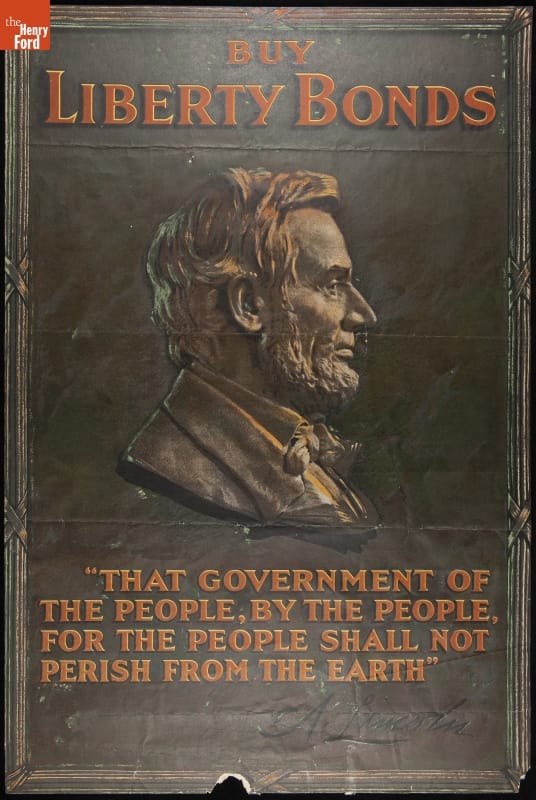
- World War I Poster, "Buy Liberty Bonds," circa 1917 - During the First World War, Abraham Lincoln's reputation extended to the international arena. For, who could more perfectly symbolize the international fight for freedom--the fight to make the world safe for democracy--than America's own Abraham Lincoln? Excerpts of his most stirring speeches were revived on posters, encouraging Americans to "Buy Liberty Bonds" and "Save Food for World Relief."
- 1917
- Collections - Artifact
World War I Poster, "Buy Liberty Bonds," circa 1917
During the First World War, Abraham Lincoln's reputation extended to the international arena. For, who could more perfectly symbolize the international fight for freedom--the fight to make the world safe for democracy--than America's own Abraham Lincoln? Excerpts of his most stirring speeches were revived on posters, encouraging Americans to "Buy Liberty Bonds" and "Save Food for World Relief."
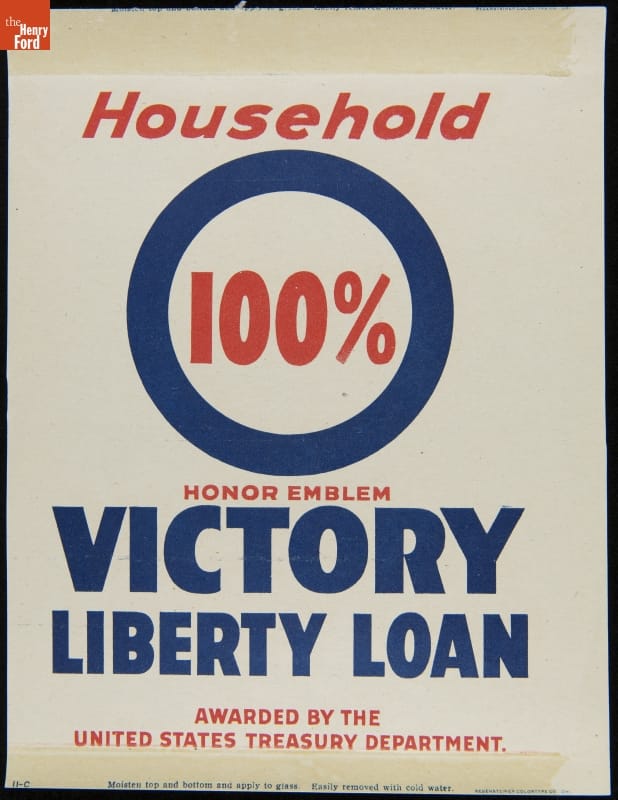
- "Household 100% Honor Emblem Victory Liberty Loan," Window Sign, 1917-1918 - During World War I, the United States government issued bonds to help finance the war effort. American citizens, businesses, and especially financial institutions purchased bonds, raising more than 17 billion dollars. Donors to the Liberty and Victory Loan bond drives could adhere signs, like this one, to their windows to let everyone know they were doing their part.
- 1917-1918
- Collections - Artifact
"Household 100% Honor Emblem Victory Liberty Loan," Window Sign, 1917-1918
During World War I, the United States government issued bonds to help finance the war effort. American citizens, businesses, and especially financial institutions purchased bonds, raising more than 17 billion dollars. Donors to the Liberty and Victory Loan bond drives could adhere signs, like this one, to their windows to let everyone know they were doing their part.
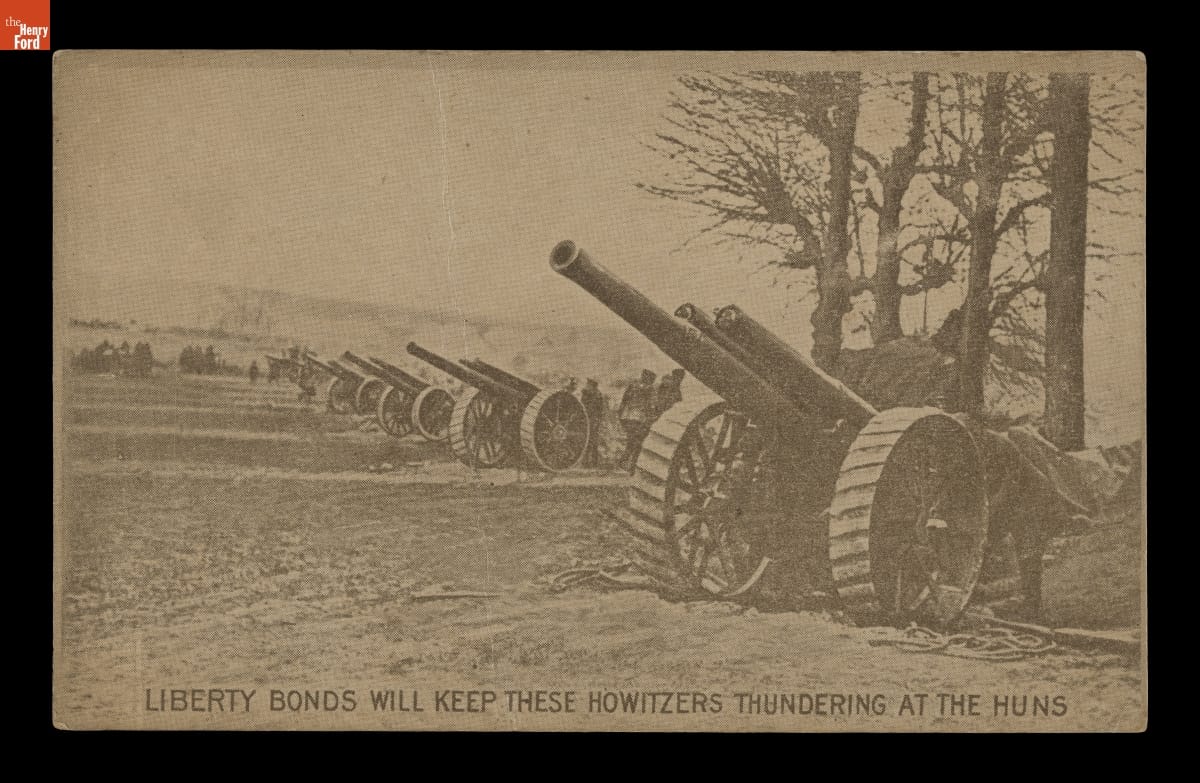
- "Liberty Bonds Will Keep These Howitzers Thundering at the Huns," circa 1918 - Andrew Purnell Jr. (1898-1975) was born in Selma, Alabama. He joined the all-Black 303rd Stevedore Regiment (with later unit designations) in December 1917. Private Purnell was stationed in Bordeaux, France. He returned to the U.S. in 1919, married, and worked as a railroad freight handler. Like many service members, Purnell kept cards, letters, photographs, and souvenirs from his time in the military.
- circa 1918
- Collections - Artifact
"Liberty Bonds Will Keep These Howitzers Thundering at the Huns," circa 1918
Andrew Purnell Jr. (1898-1975) was born in Selma, Alabama. He joined the all-Black 303rd Stevedore Regiment (with later unit designations) in December 1917. Private Purnell was stationed in Bordeaux, France. He returned to the U.S. in 1919, married, and worked as a railroad freight handler. Like many service members, Purnell kept cards, letters, photographs, and souvenirs from his time in the military.
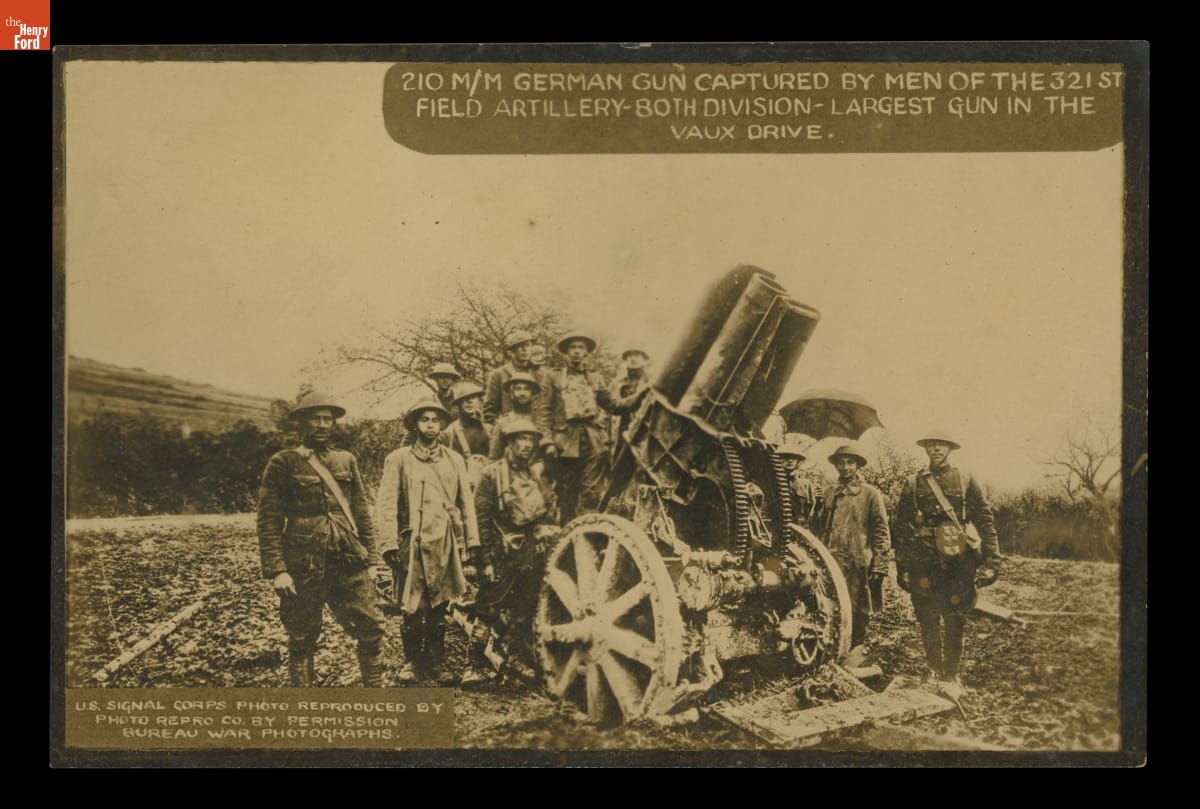
- "210 M/M German Gun Captured by Men of the 321st Field Artillery-8th Division-Largest Gun in the Vaux Drive," 1918 - Andrew Purnell Jr. (1898-1975) was born in Selma, Alabama. He joined the all-Black 303rd Stevedore Regiment (with later unit designations) in December 1917. Private Purnell was stationed in Bordeaux, France. He returned to the U.S. in 1919, married, and worked as a railroad freight handler. Like many service members, Purnell kept cards, letters, photographs, and souvenirs from his time in the military.
- November 15, 1918
- Collections - Artifact
"210 M/M German Gun Captured by Men of the 321st Field Artillery-8th Division-Largest Gun in the Vaux Drive," 1918
Andrew Purnell Jr. (1898-1975) was born in Selma, Alabama. He joined the all-Black 303rd Stevedore Regiment (with later unit designations) in December 1917. Private Purnell was stationed in Bordeaux, France. He returned to the U.S. in 1919, married, and worked as a railroad freight handler. Like many service members, Purnell kept cards, letters, photographs, and souvenirs from his time in the military.
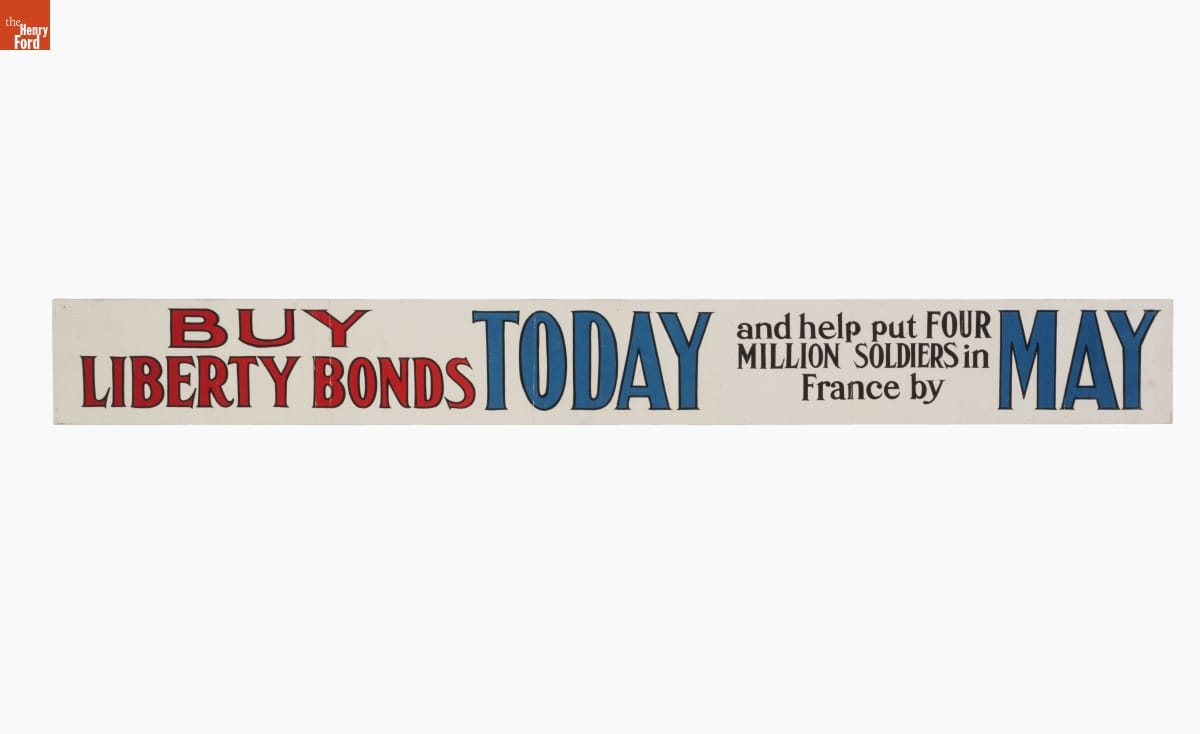
- "Buy Liberty Bonds Today and Help Put Four Million Soldiers in France by May" Window Sign, 1918 - During World War I, the United States government issued bonds to help finance the war effort. American citizens, businesses, and especially financial institutions purchased bonds, raising more than 17 billion dollars. Donors to the Liberty and Victory Loan bond drives could adhere signs, like this one, to their windows to let everyone know they were doing their part.
- 1918
- Collections - Artifact
"Buy Liberty Bonds Today and Help Put Four Million Soldiers in France by May" Window Sign, 1918
During World War I, the United States government issued bonds to help finance the war effort. American citizens, businesses, and especially financial institutions purchased bonds, raising more than 17 billion dollars. Donors to the Liberty and Victory Loan bond drives could adhere signs, like this one, to their windows to let everyone know they were doing their part.
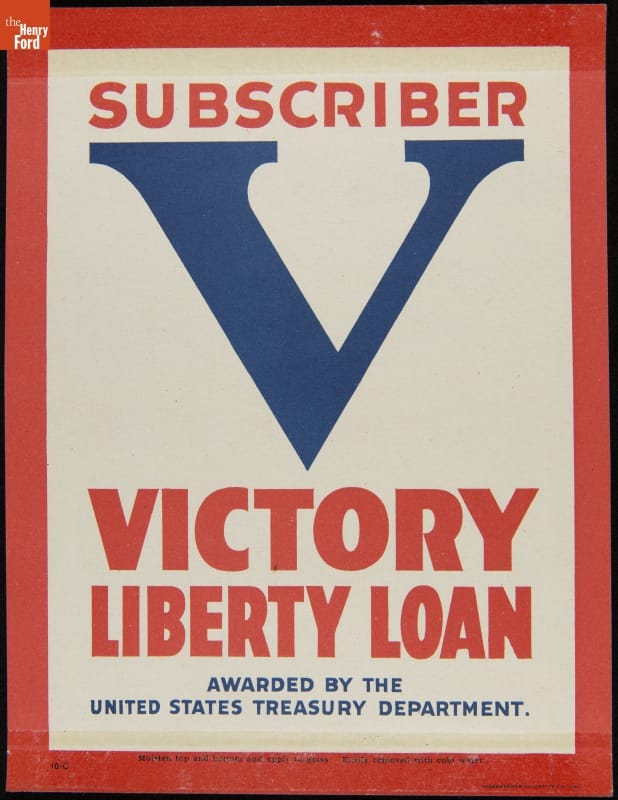
- "Subscriber "V" Victory Liberty Loan," Window Sign, 1917-1918 - During World War I, the United States government issued bonds to help finance the war effort. American citizens, businesses, and especially financial institutions purchased bonds, raising more than 17 billion dollars. Donors to the Liberty and Victory Loan bond drives could adhere signs, like this one, to their windows to let everyone know they were doing their part.
- 1917-1918
- Collections - Artifact
"Subscriber "V" Victory Liberty Loan," Window Sign, 1917-1918
During World War I, the United States government issued bonds to help finance the war effort. American citizens, businesses, and especially financial institutions purchased bonds, raising more than 17 billion dollars. Donors to the Liberty and Victory Loan bond drives could adhere signs, like this one, to their windows to let everyone know they were doing their part.
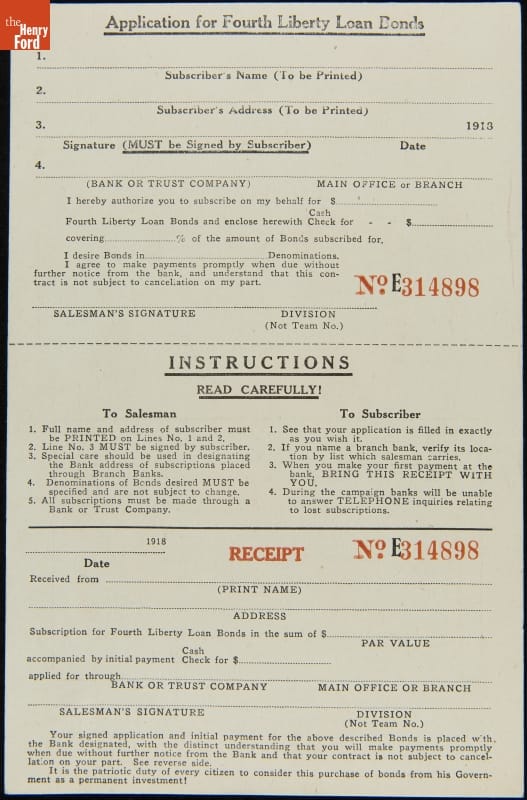
- Application for Fourth Liberty Loan Bonds, 1918 -
- September 01, 1918
- Collections - Artifact
Application for Fourth Liberty Loan Bonds, 1918
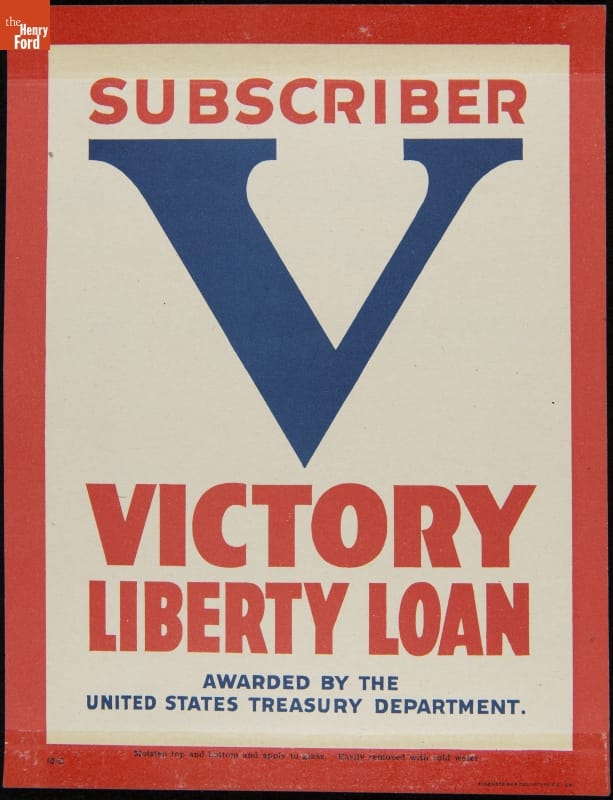
- "Subscriber "V" Victory Liberty Loan," Window Sign, 1917-1918 - During World War I, the United States government issued bonds to help finance the war effort. American citizens, businesses, and especially financial institutions purchased bonds, raising more than 17 billion dollars. Donors to the Liberty and Victory Loan bond drives could adhere signs, like this one, to their windows to let everyone know they were doing their part.
- 1917-1918
- Collections - Artifact
"Subscriber "V" Victory Liberty Loan," Window Sign, 1917-1918
During World War I, the United States government issued bonds to help finance the war effort. American citizens, businesses, and especially financial institutions purchased bonds, raising more than 17 billion dollars. Donors to the Liberty and Victory Loan bond drives could adhere signs, like this one, to their windows to let everyone know they were doing their part.
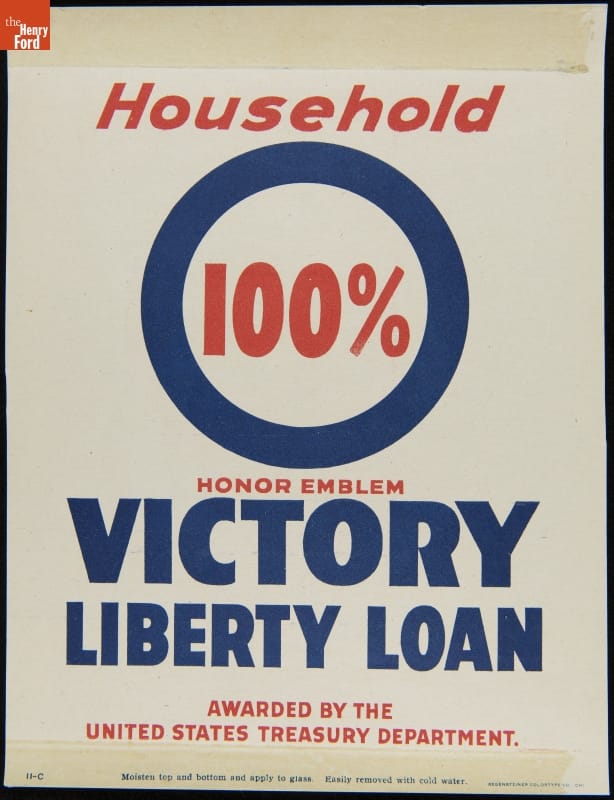
- "Household 100% Honor Emblem Victory Liberty Loan," Window Sign, 1917-1918 - During World War I, the United States government issued bonds to help finance the war effort. American citizens, businesses, and especially financial institutions purchased bonds, raising more than 17 billion dollars. Donors to the Liberty and Victory Loan bond drives could adhere signs, like this one, to their windows to let everyone know they were doing their part.
- 1917-1918
- Collections - Artifact
"Household 100% Honor Emblem Victory Liberty Loan," Window Sign, 1917-1918
During World War I, the United States government issued bonds to help finance the war effort. American citizens, businesses, and especially financial institutions purchased bonds, raising more than 17 billion dollars. Donors to the Liberty and Victory Loan bond drives could adhere signs, like this one, to their windows to let everyone know they were doing their part.