
Search
- Flask, 1824-1825 - Glass factories in America began producing inexpensive, mold-formed flasks in the early 1800s. These figured flasks, often decorated with symbols of national pride or political or cultural affiliation, appealed to America's common man. In the mid-1820s, General Lafayette, a French aristocrat who helped America win its independence, revisited the United States. His image adorned flasks commemorating his tour.
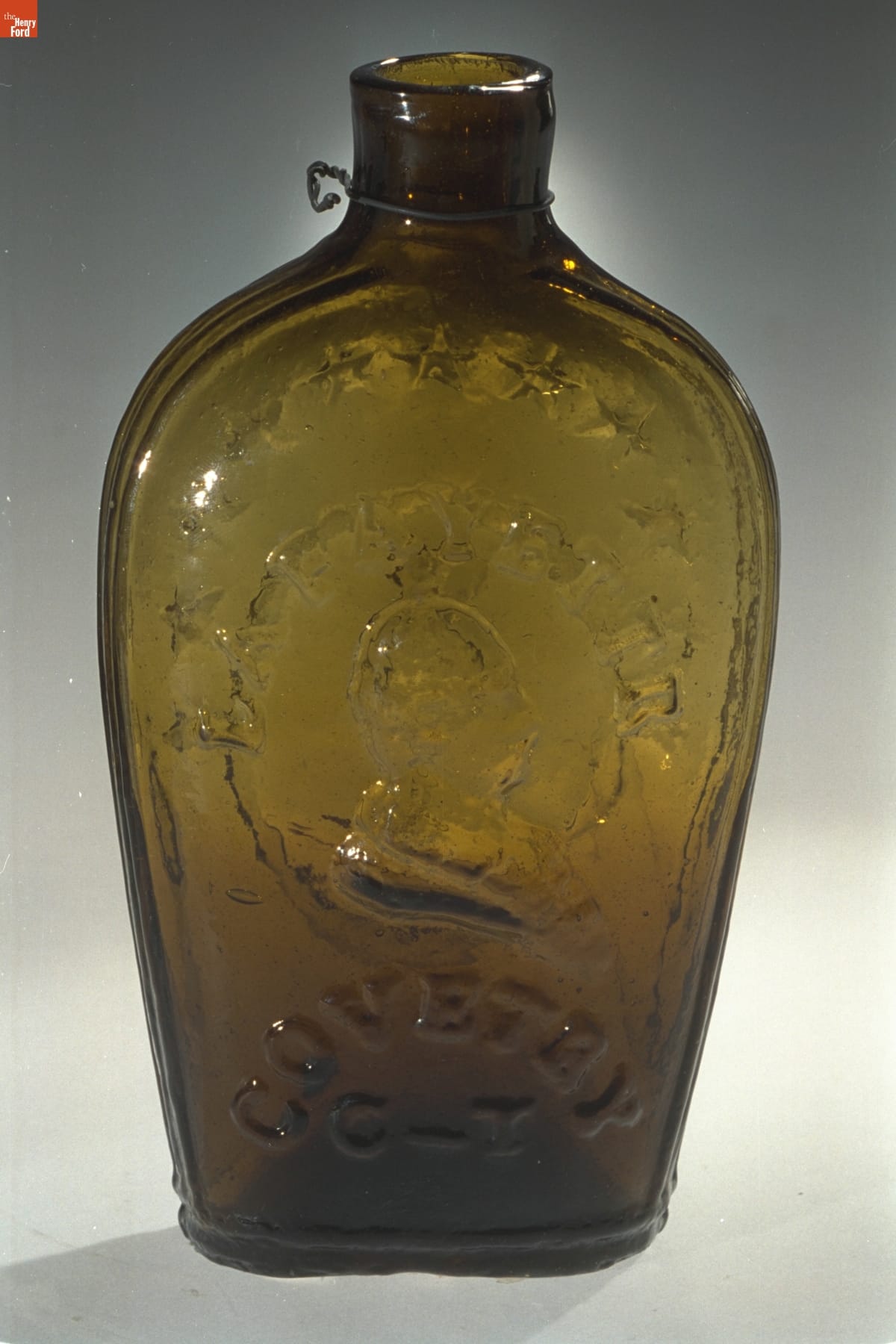
- 1824-1825
- Collections - Artifact
Flask, 1824-1825
Glass factories in America began producing inexpensive, mold-formed flasks in the early 1800s. These figured flasks, often decorated with symbols of national pride or political or cultural affiliation, appealed to America's common man. In the mid-1820s, General Lafayette, a French aristocrat who helped America win its independence, revisited the United States. His image adorned flasks commemorating his tour.
- Flask, 1824-1825 - Glass factories in America began producing inexpensive, mold-formed flasks in the early 1800s. These figured flasks, often decorated with symbols of national pride or political or cultural affiliation, appealed to America's common man. In the mid-1820s, General Lafayette, a French aristocrat who helped America win its independence, revisited the United States. His image adorned flasks commemorating his tour.
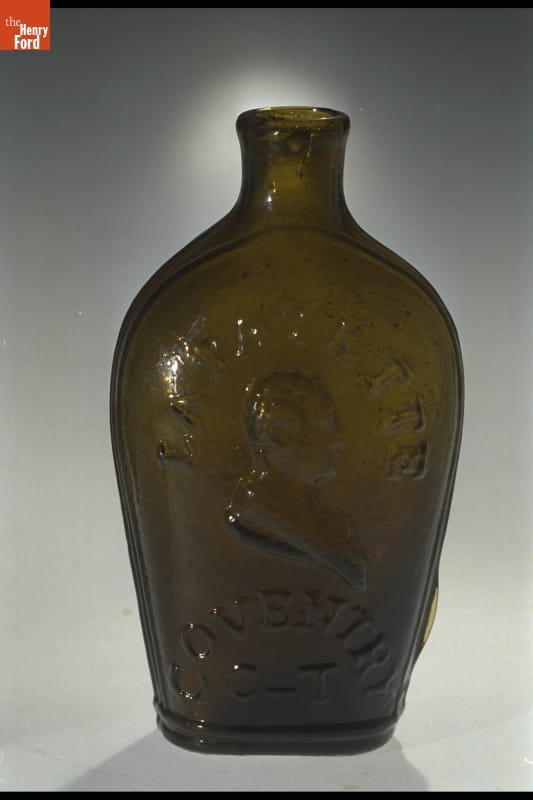
- 1824-1825
- Collections - Artifact
Flask, 1824-1825
Glass factories in America began producing inexpensive, mold-formed flasks in the early 1800s. These figured flasks, often decorated with symbols of national pride or political or cultural affiliation, appealed to America's common man. In the mid-1820s, General Lafayette, a French aristocrat who helped America win its independence, revisited the United States. His image adorned flasks commemorating his tour.