
Search
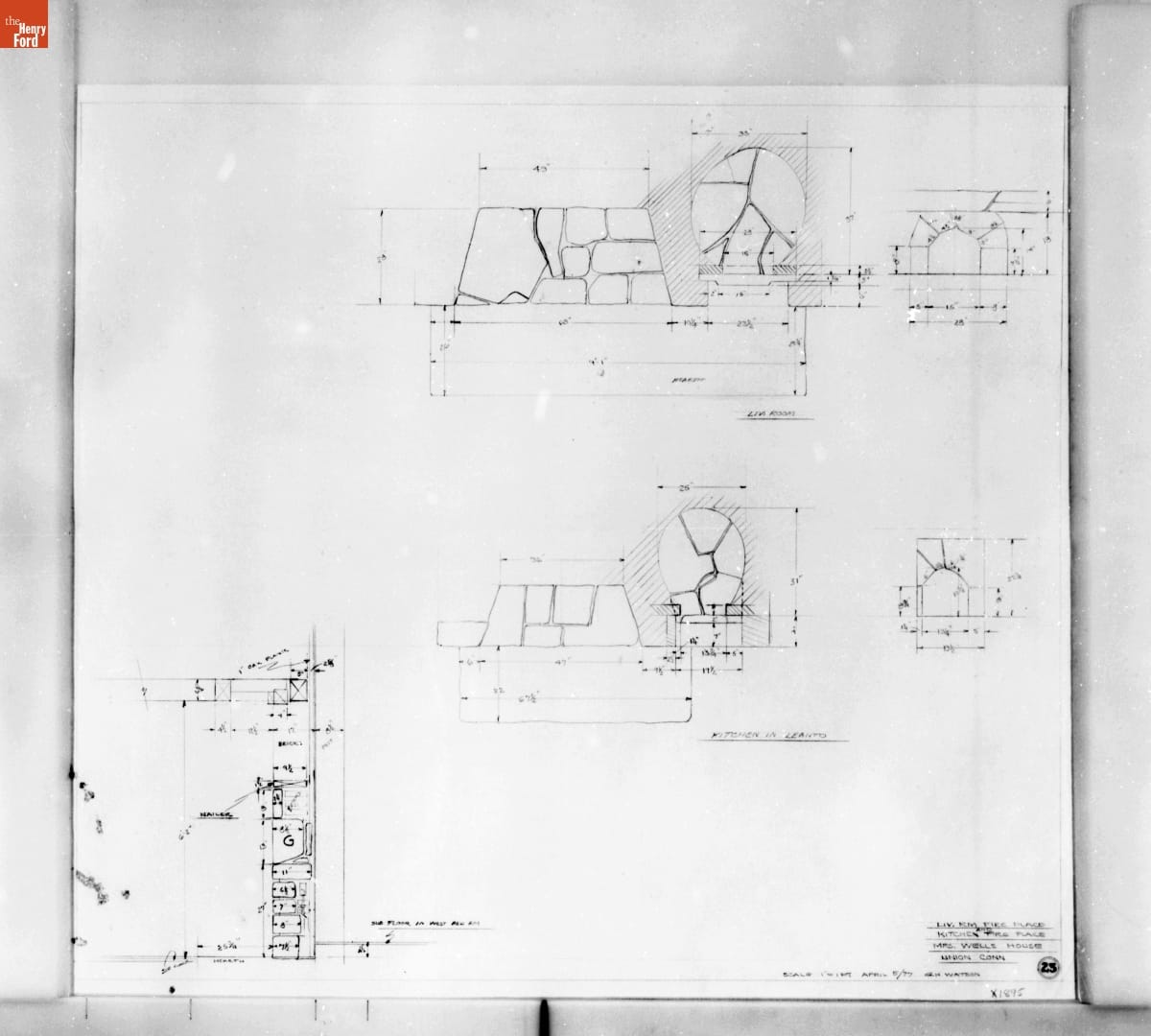
- Drawing, "Liv. Rm Fire Place and Kitchen Fire Place Mrs. Wells House Union Conn" (now Daggett Farmhouse), April 5, 1977 -
- April 05, 1977
- Collections - Artifact
Drawing, "Liv. Rm Fire Place and Kitchen Fire Place Mrs. Wells House Union Conn" (now Daggett Farmhouse), April 5, 1977
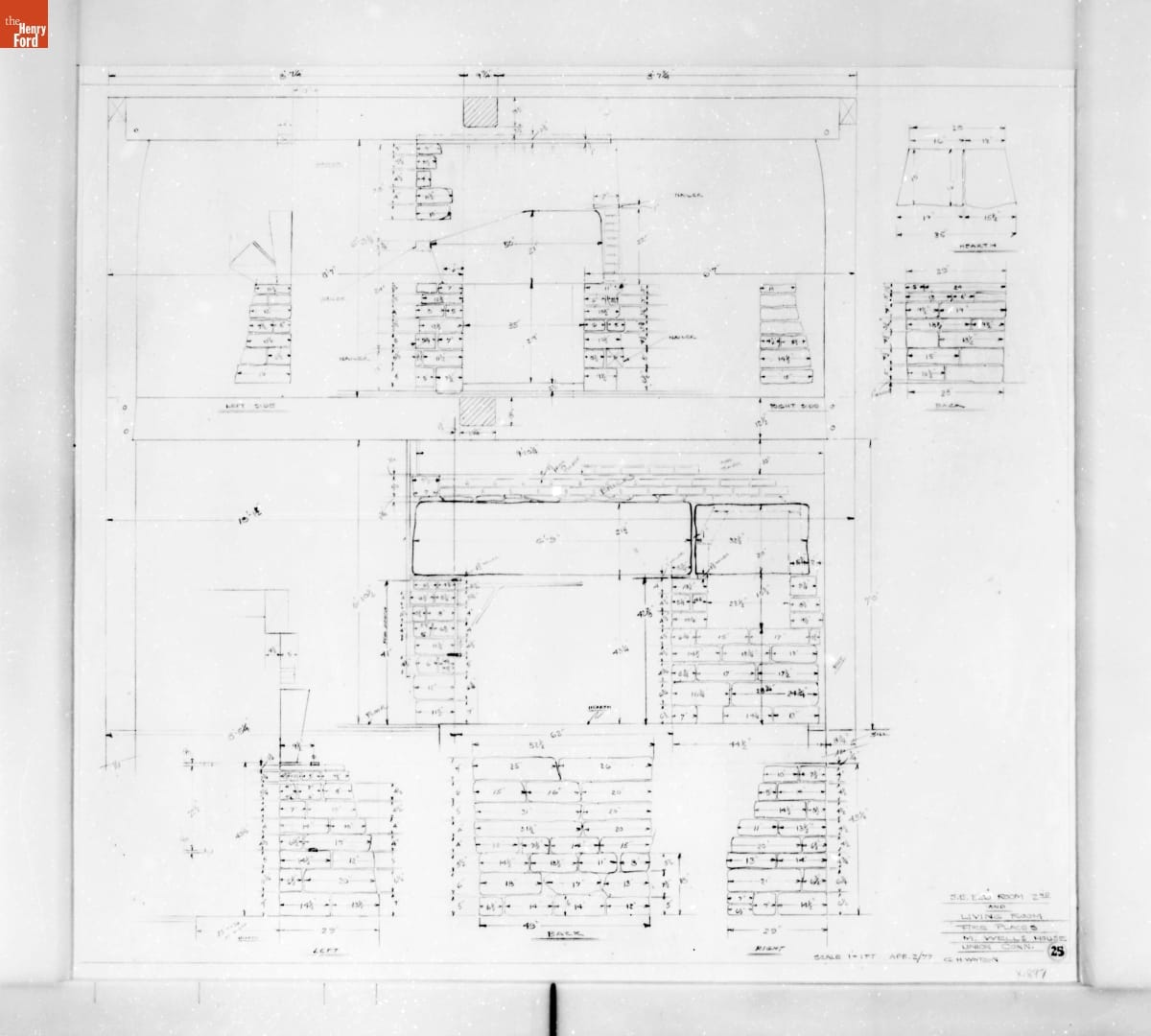
- Drawing, "S.E. Bed Room 2nd and Living Room Fire Places M. Wells House Union Conn." (now Daggett Farmhouse), April 2, 1977 -
- April 02, 1977
- Collections - Artifact
Drawing, "S.E. Bed Room 2nd and Living Room Fire Places M. Wells House Union Conn." (now Daggett Farmhouse), April 2, 1977
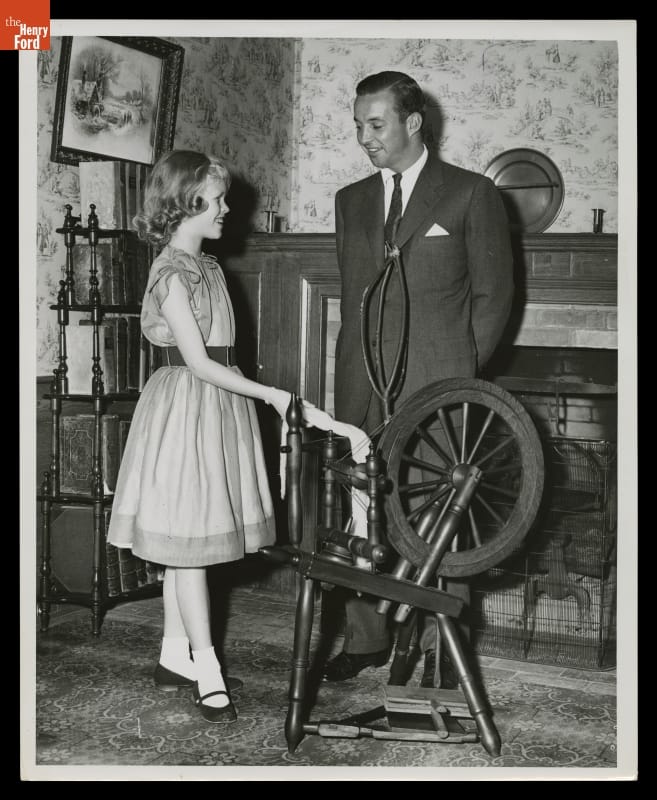
- William Clay Ford and Karen Dayne at the Opening of Ford Home in Greenfield Village, April 1, 1953 - William Clay Ford (1925-2014) was Henry Ford's grandson and the youngest of Edsel and Eleanor Clay Ford's four children. In 1951, he became Chairman of the Board of Trustees of the Edison Institute (now The Henry Ford). On April 1, 1953, William officially opened his grandfather Henry's birthplace and childhood home to the public in Greenfield Village.
- April 01, 1953
- Collections - Artifact
William Clay Ford and Karen Dayne at the Opening of Ford Home in Greenfield Village, April 1, 1953
William Clay Ford (1925-2014) was Henry Ford's grandson and the youngest of Edsel and Eleanor Clay Ford's four children. In 1951, he became Chairman of the Board of Trustees of the Edison Institute (now The Henry Ford). On April 1, 1953, William officially opened his grandfather Henry's birthplace and childhood home to the public in Greenfield Village.
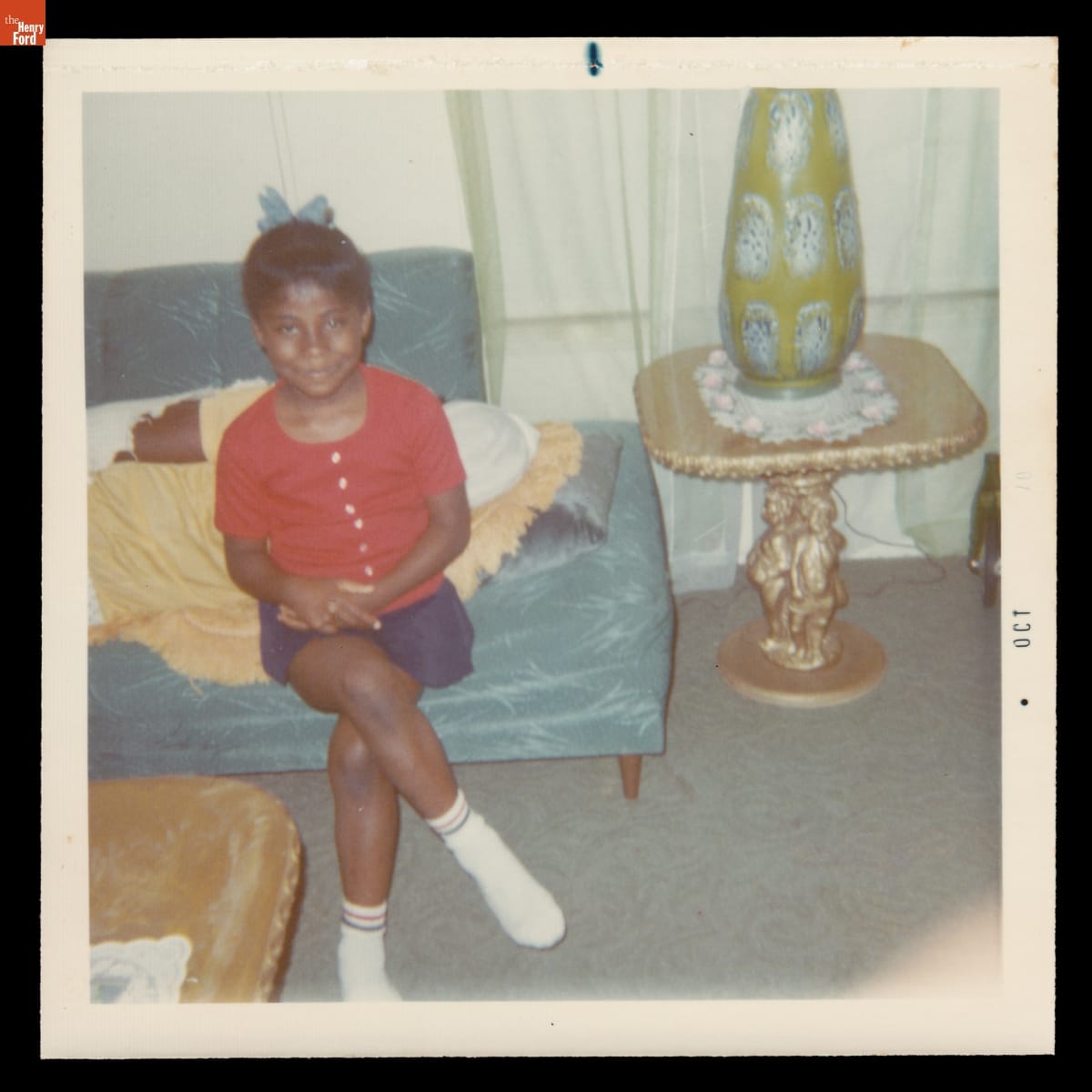
- Girl Sitting on a Sofa, October 1970 -
- October 01, 1970
- Collections - Artifact
Girl Sitting on a Sofa, October 1970
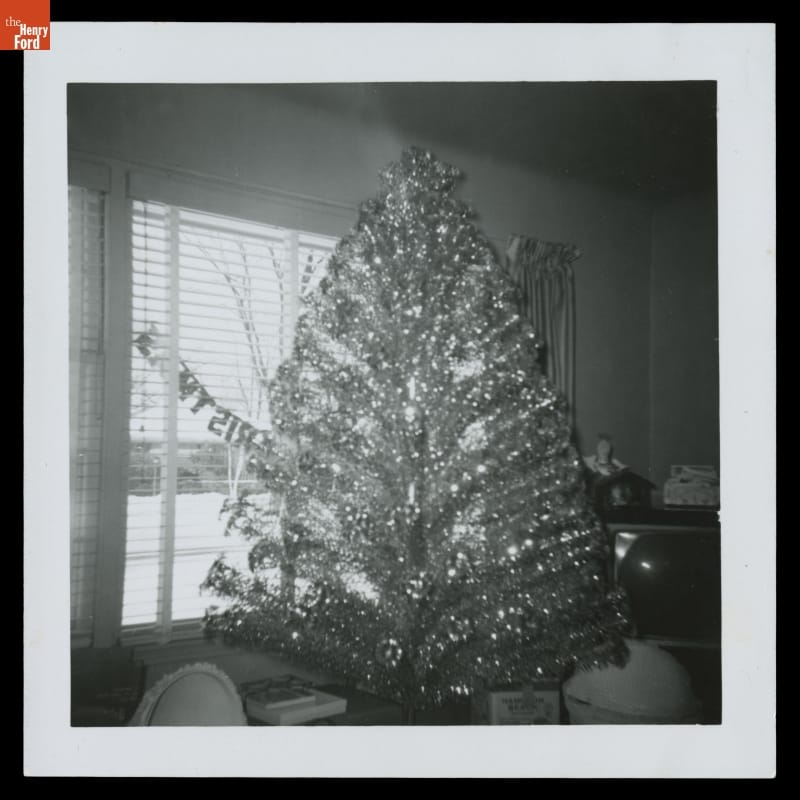
- Aluminum Christmas Tree at a Living Room Window, December 1962 - Aluminum Christmas trees gleamed in millions of American homes during the 1960s. The trees were lightweight, easy to care for, and eye-catching, especially when illuminated by light from a revolving color wheel. The trees fell out of style by the early 1970s, yet are fondly remembered and sometimes still shine in homes during the Christmas season.
- December 01, 1962
- Collections - Artifact
Aluminum Christmas Tree at a Living Room Window, December 1962
Aluminum Christmas trees gleamed in millions of American homes during the 1960s. The trees were lightweight, easy to care for, and eye-catching, especially when illuminated by light from a revolving color wheel. The trees fell out of style by the early 1970s, yet are fondly remembered and sometimes still shine in homes during the Christmas season.
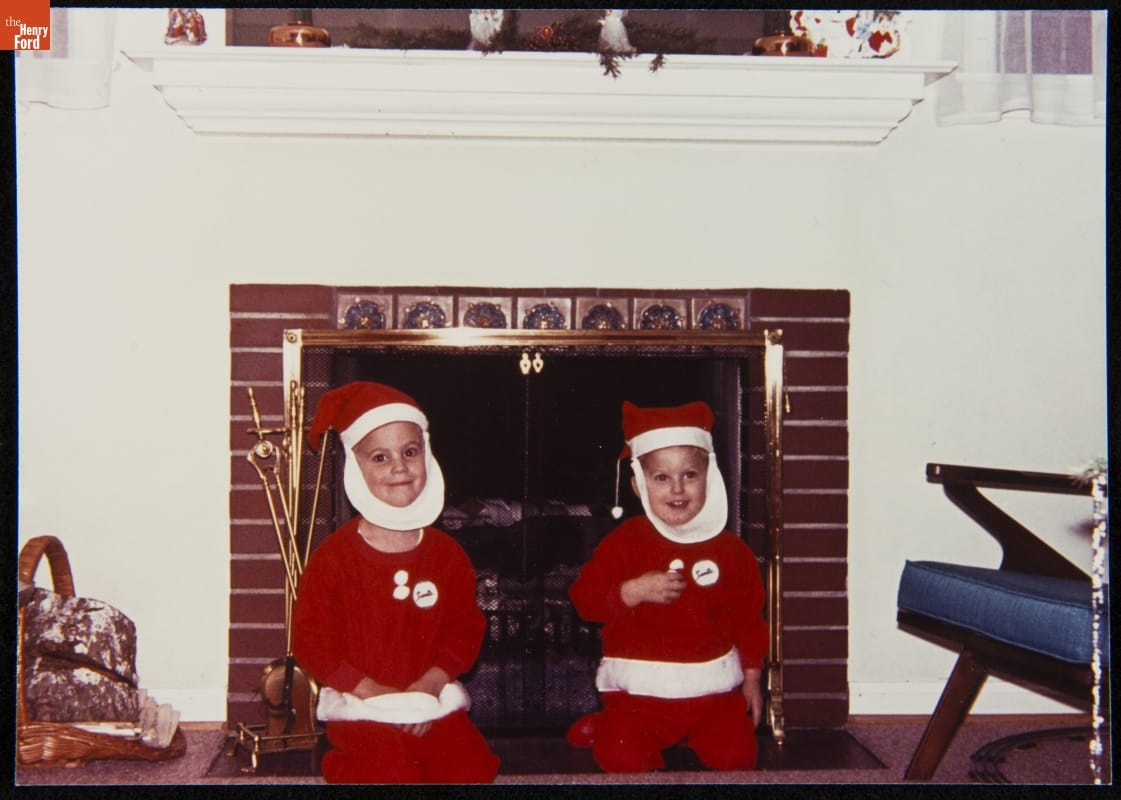
- Children Wearing Santa Pajamas at Christmas, December 1963 -
- December 01, 1963
- Collections - Artifact
Children Wearing Santa Pajamas at Christmas, December 1963
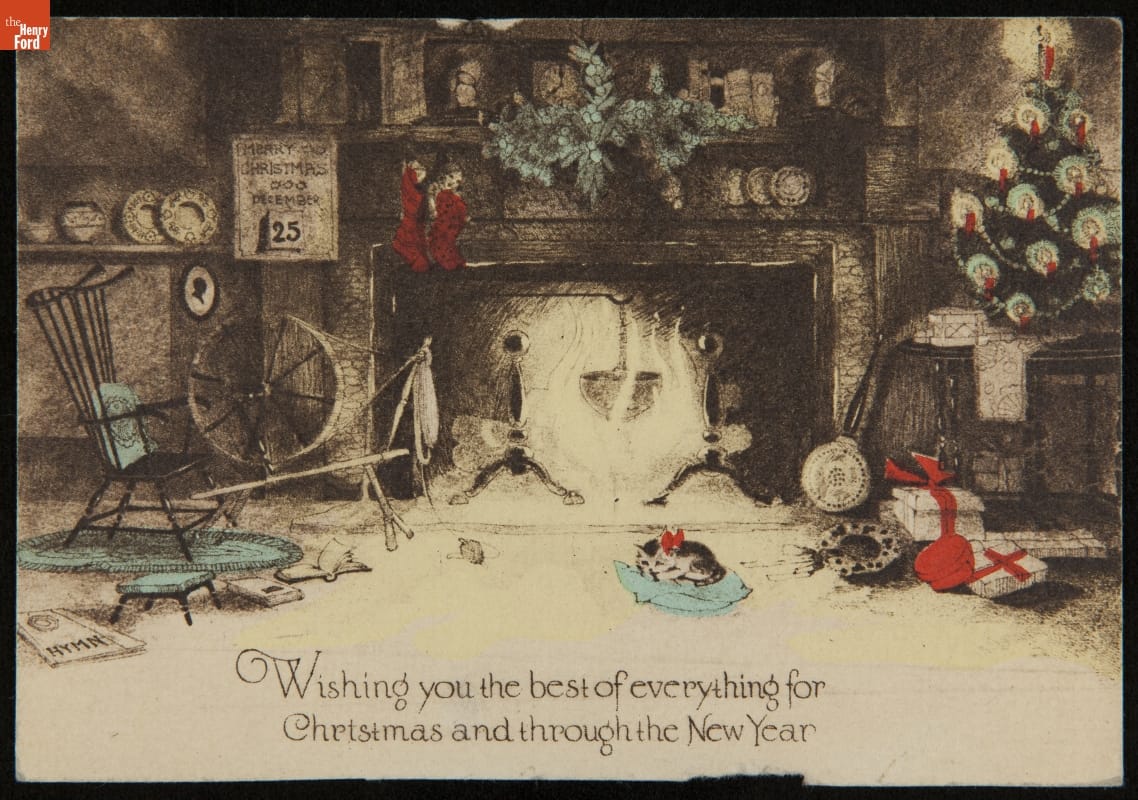
- Christmas Greeting Postcard, circa 1935 - Colorful, commercially designed greeting cards were popular during early 20th-century America--especially on holidays. Friends and neighbors customarily exchanged cards wishing one another a Merry Christmas or Happy New Year. This is one of a genre of Christmas cards that harkened back to a nostalgic pre-industrial era--a time when Christmas as we know it today never actually existed!
- circa 1935
- Collections - Artifact
Christmas Greeting Postcard, circa 1935
Colorful, commercially designed greeting cards were popular during early 20th-century America--especially on holidays. Friends and neighbors customarily exchanged cards wishing one another a Merry Christmas or Happy New Year. This is one of a genre of Christmas cards that harkened back to a nostalgic pre-industrial era--a time when Christmas as we know it today never actually existed!
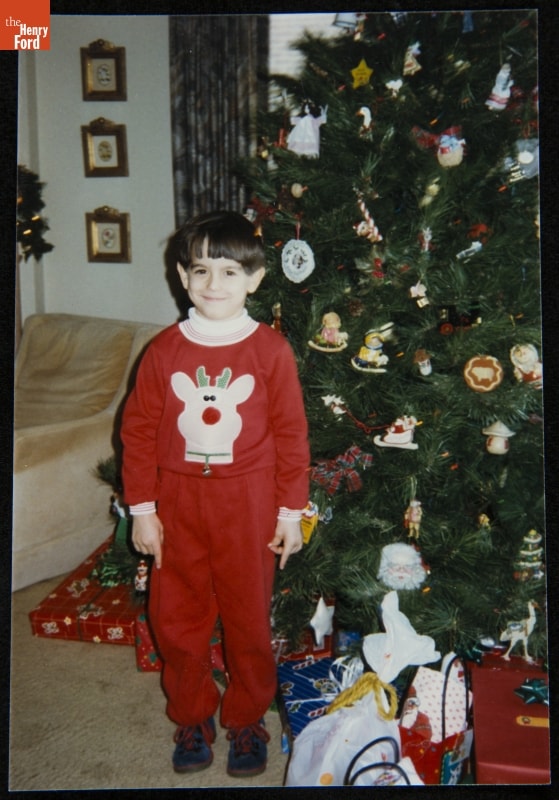
- Sean Calvin at Christmas, 1987 -
- 1987
- Collections - Artifact
Sean Calvin at Christmas, 1987
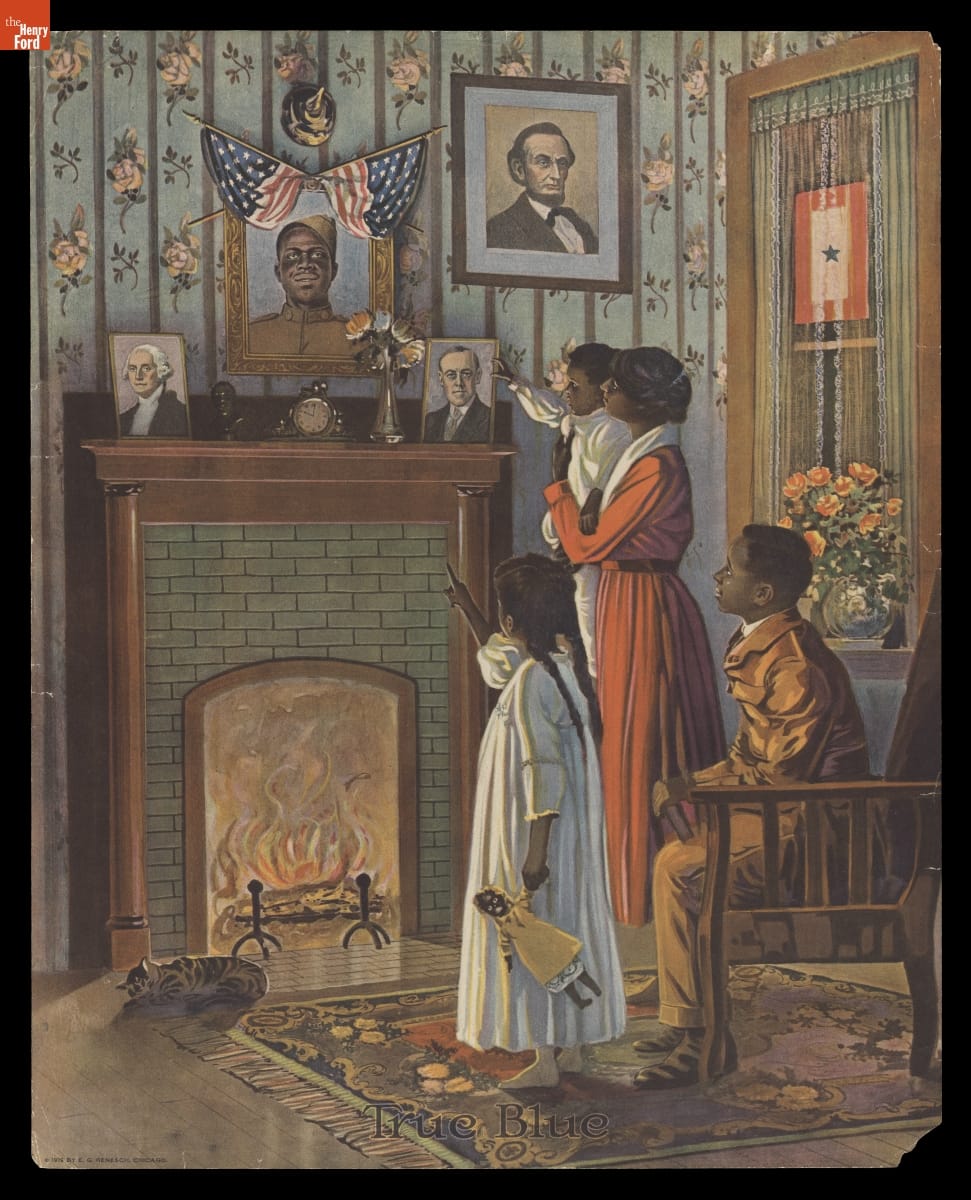
- World War I Poster, "True Blue," 1919 - During World War I, Abraham Lincoln's image was revived as a symbol of wisdom, courage, and sacrifice both at home and abroad. Posters like this were certainly propaganda but they succeeded in motivating the American public to support the war effort. African Americans' loyalty to Lincoln inspired thousands to enlist and bravely serve their country--though largely in segregated units.
- 1919
- Collections - Artifact
World War I Poster, "True Blue," 1919
During World War I, Abraham Lincoln's image was revived as a symbol of wisdom, courage, and sacrifice both at home and abroad. Posters like this were certainly propaganda but they succeeded in motivating the American public to support the war effort. African Americans' loyalty to Lincoln inspired thousands to enlist and bravely serve their country--though largely in segregated units.
- Living Room at Fair Lane, Home of Henry Ford, 1919 - In the early 1910s, Henry and Clara Ford selected 1300 acres of farmland in Dearborn, Michigan, as the site for a new house -- shunning the eastern suburbs chosen by many of Detroit's wealthy citizens. In 1916, the couple moved into their newly constructed 31,000-square-foot home. The mansion contained 56 rooms including seven bedrooms, fifteen baths, and other standard living spaces.

- 1919
- Collections - Artifact
Living Room at Fair Lane, Home of Henry Ford, 1919
In the early 1910s, Henry and Clara Ford selected 1300 acres of farmland in Dearborn, Michigan, as the site for a new house -- shunning the eastern suburbs chosen by many of Detroit's wealthy citizens. In 1916, the couple moved into their newly constructed 31,000-square-foot home. The mansion contained 56 rooms including seven bedrooms, fifteen baths, and other standard living spaces.